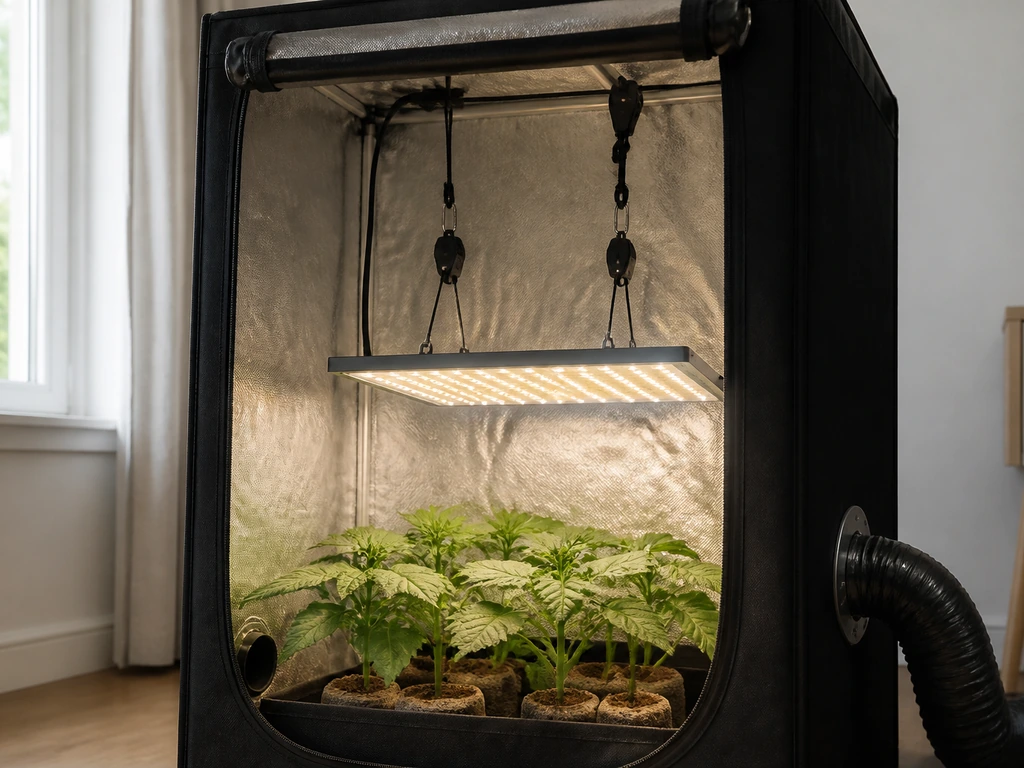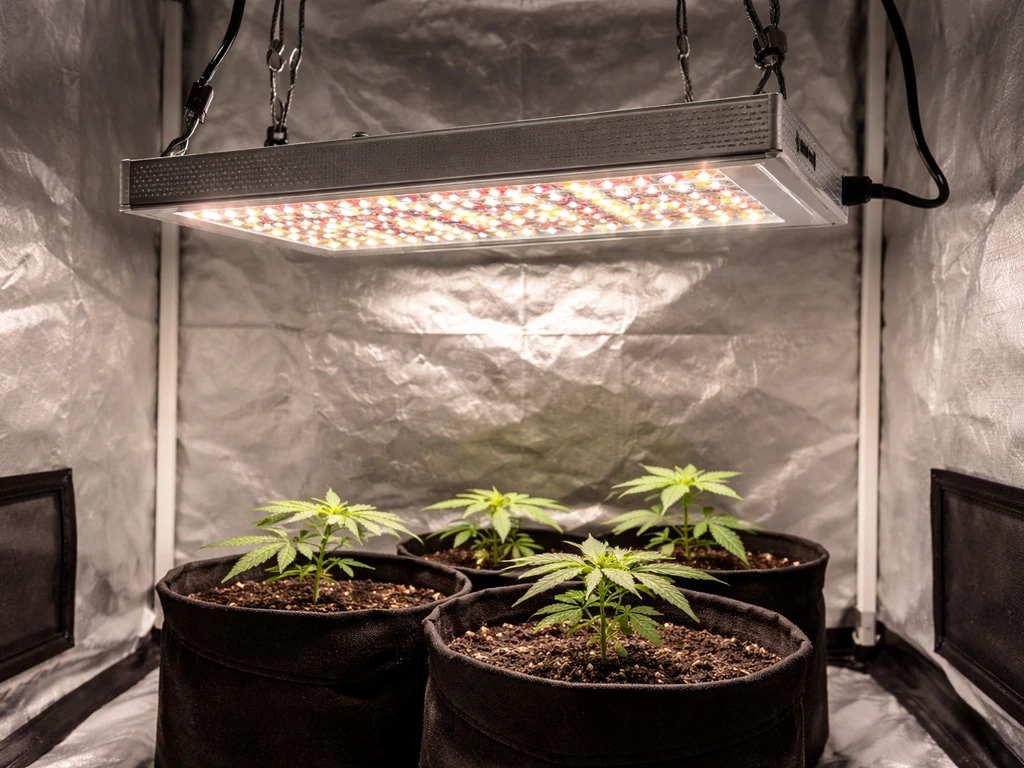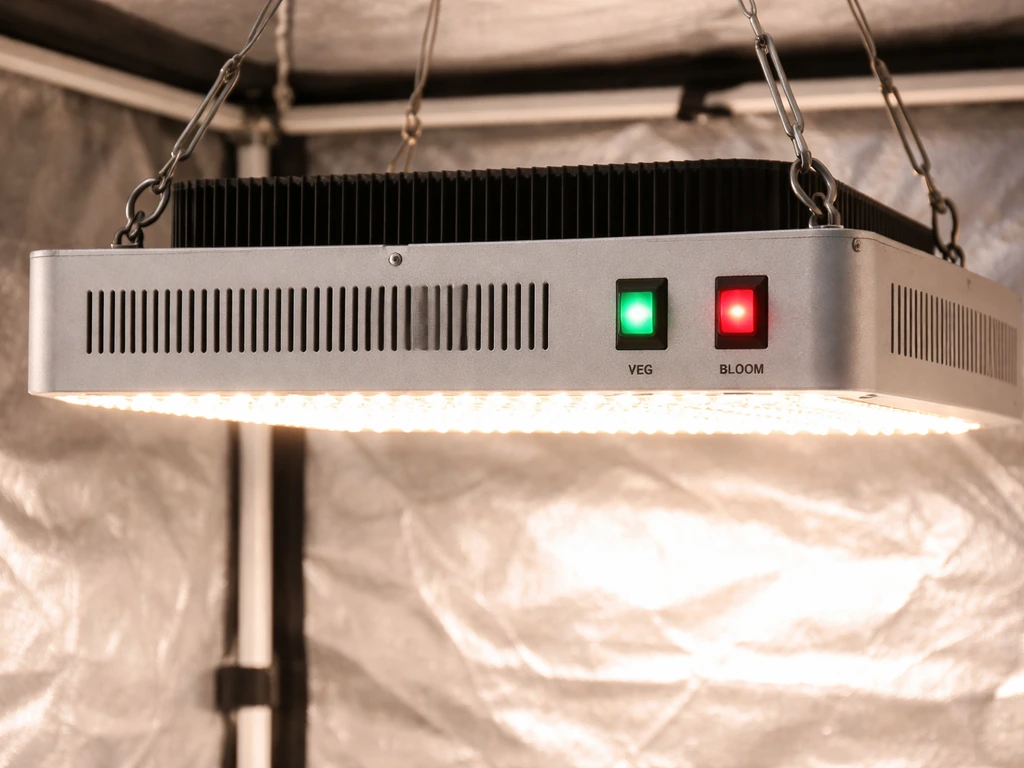
Lonwon grow lights are worth buying for casual hobbyists and small-space growers on a tight budget, but they come with real limitations you should know before ordering. The short version: the Lonwon lineup sits in the entry-level LED segment, covering compact bulb-style fixtures (like the 30W GLB240304) and mid-range UFO-style panels up to roughly 84W draw (marketed as "135W equivalent"). They use a full-spectrum LED approach, typically covering 380–730nm with a 660nm red peak, which is adequate for seedling through vegetative growth. For flowering-heavy crops that demand high PPFD, the math gets tighter. Here is everything you need to decide whether Lonwon is the right call for your setup.
Lonwon Grow Light Review: Coverage, PPFD, Value, and Fit

Marcus Caldwell
7 Apr 2026
What Lonwon grow lights actually are
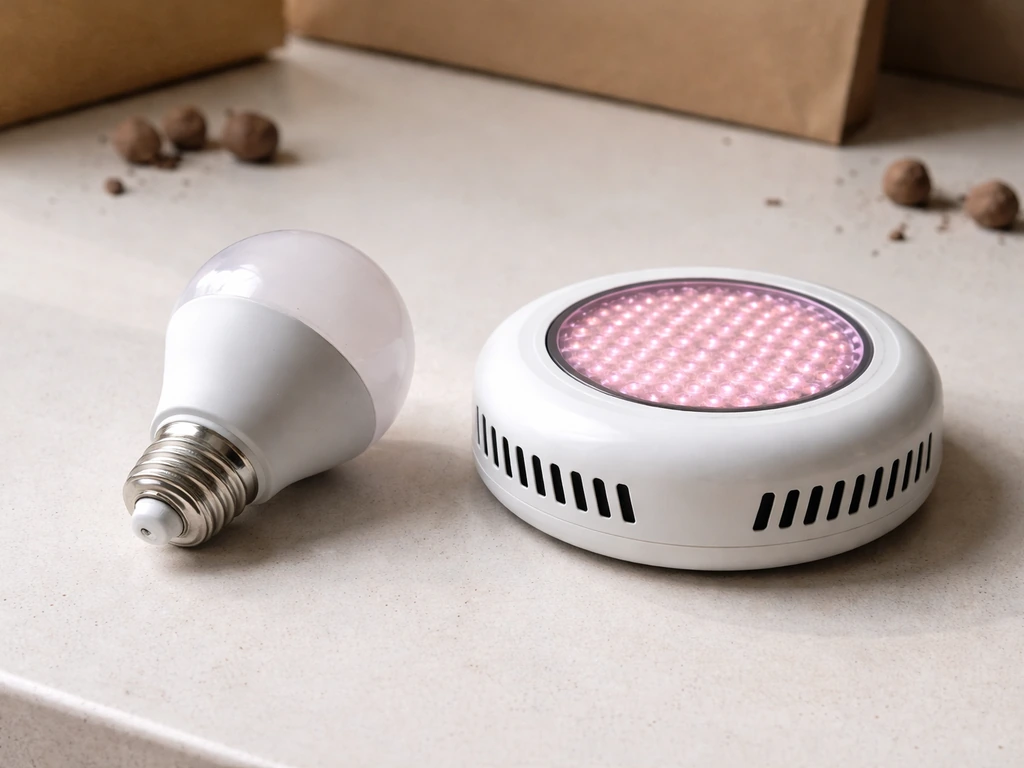
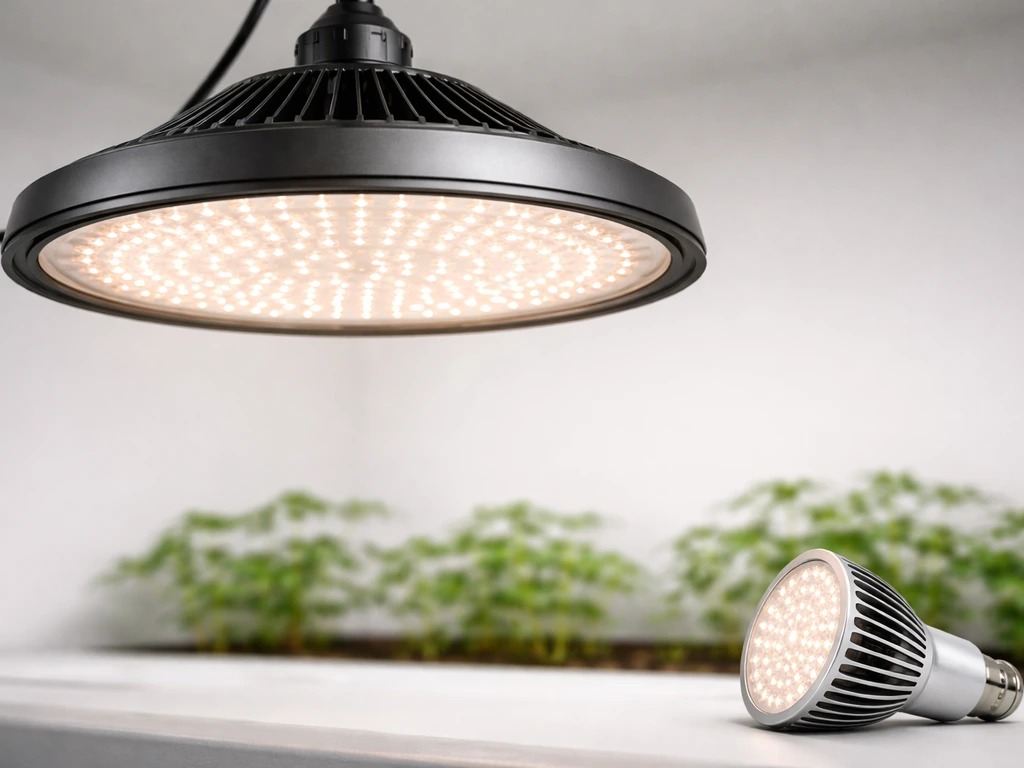
The brand name "Lonwon" appears across marketplace listings in a few distinct form factors, which creates real confusion when you're searching for reviews. The two most commonly surfaced SKUs are a compact screw-in LED grow bulb (model code GLB240304, rated at 30W actual draw) and a UFO-style panel that pulls around 84W from the wall while being marketed as a "135W equivalent" fixture. Both use a full-spectrum LED array spanning 380–730nm, with an emphasis on the 660nm red wavelength that drives photosynthesis during flowering. Neither is a bar-style quantum board design, which matters for uniformity comparisons later.
Because Lonwon does not maintain a prominent, easily searchable brand catalog page, it's possible some listings you see are rebranded versions of common Chinese LED modules. That's not automatically a red flag, but it does mean independent PPFD maps from the manufacturer are essentially nonexistent. What you can evaluate is the actual wattage drawn, the spectrum claims, the build construction, and the price-per-watt compared to similar products in the same class.
The GLB240304 bulb (30W)
This is a screw-base LED grow bulb designed for a single plant, a propagation tray, or a small shelf grow. Lonwon markets the GLB240304 (30W) as a full-spectrum LED “grow bulb” designed for indoor plant growth. At 30W actual consumption, it's not going to power a full vegetative canopy, but it's genuinely useful for seedlings, clones, herbs on a windowsill shelf, or supplemental light in a corner of a tent. Spectrum-wise, the GLB240304 leans toward a blended white-plus-red output, which is standard for this category.
The UFO panel (84W draw / "135W equivalent")
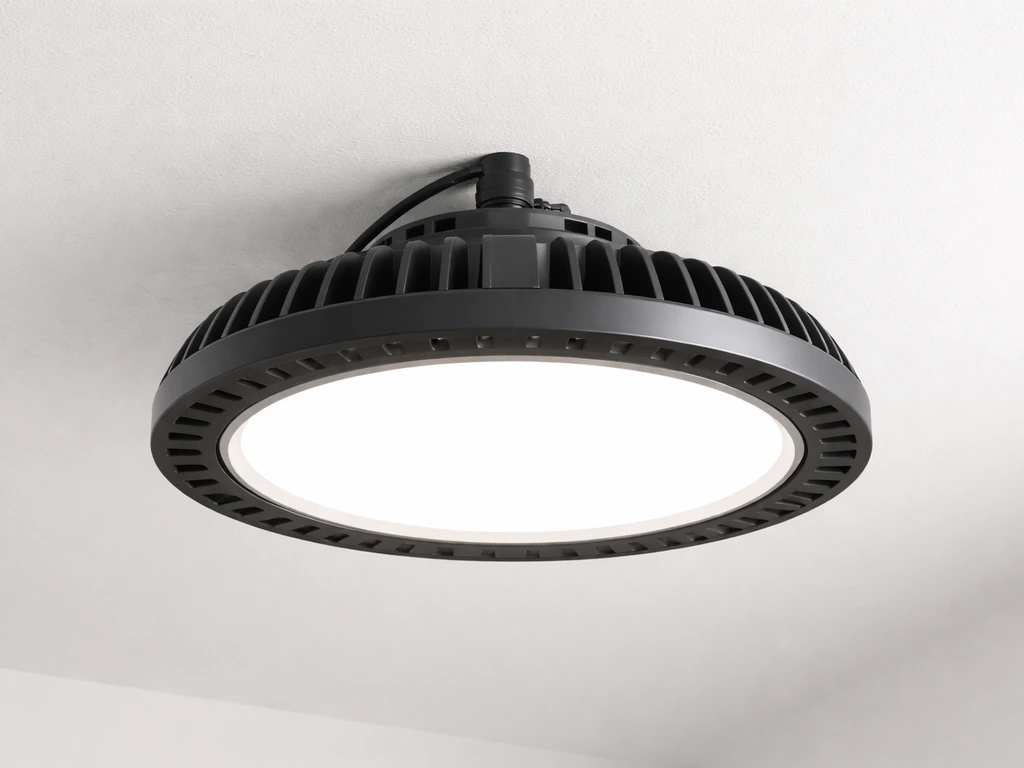
The UFO model is the more serious fixture in the Lonwon range. The "135W equivalent" marketing language refers to an older HPS comparison claim, not actual wattage. The real figure to work with is approximately 84W draw at the wall. The fixture covers 380–730nm full spectrum with a 660nm red peak, making it suitable for small tent grows through vegetative and early flowering stages. The UFO form factor (circular, compact, with a built-in driver housing) is practical but less optically efficient than flat bar-style panels for distributing light uniformly across a canopy.
PPFD, coverage, and what to expect at the canopy
No third-party PPFD maps have been published specifically for Lonwon fixtures, so the numbers here are derived from measured testing at standard mounting heights and extrapolated from comparable fixtures in the same wattage class. For the 84W UFO model, you can realistically expect a usable coverage footprint of about 2x2 feet at 18 inches mounting height. At that distance, center-point PPFD sits in the 400–550 µmol/m²/s range, which is sufficient for vegetative growth (target: 200–400 µmol/m²/s) and low-demand flowering (target: 400–600 µmol/m²/s for many herbs and leafy greens). High-PPFD crops like tomatoes or cannabis at peak flower ideally want 600–900+ µmol/m²/s, and the 84W Lonwon will struggle to deliver that uniformly across even a 2x2 canopy.
Uniformity is the bigger concern with UFO-style panels. The concentrated circular beam creates a hot spot in the center and a measurable drop-off toward the edges of the coverage area. In practical terms, plants near the edges of a 2x2 space may receive 30–40% less light than plants directly under the center. Raising the fixture to 24 inches softens the hot spot and improves edge-to-center uniformity but reduces overall PPFD at the canopy by roughly 30%. For seedlings and leafy greens, that trade-off is acceptable. For fruiting plants, it's a real limitation.
The 30W bulb model should be treated as a single-plant or small propagation tool. At 12 inches, center PPFD will be adequate for seedlings and low-light herbs. It is not a canopy light for a tent grow, and using it as one will produce etiolated, stretched plants.
| Metric | 30W GLB240304 Bulb | 84W UFO Panel |
|---|---|---|
| Actual wall draw | 30W | ~84W |
| Recommended coverage | 1–2 sq ft (single plant/shelf) | 2x2 ft (vegetative); 1.5x1.5 ft (flowering) |
| Est. center PPFD at 18" | 150–250 µmol/m²/s | 400–550 µmol/m²/s |
| Useful plant stages | Seedlings, clones, low-light herbs | Seedlings through early/mid flower |
| Uniformity | Fair (bulb spread) | Moderate (UFO hot spot at center) |
| Best mounting height | 10–14 inches | 16–22 inches |
Value and efficiency: what you actually get per dollar and per watt
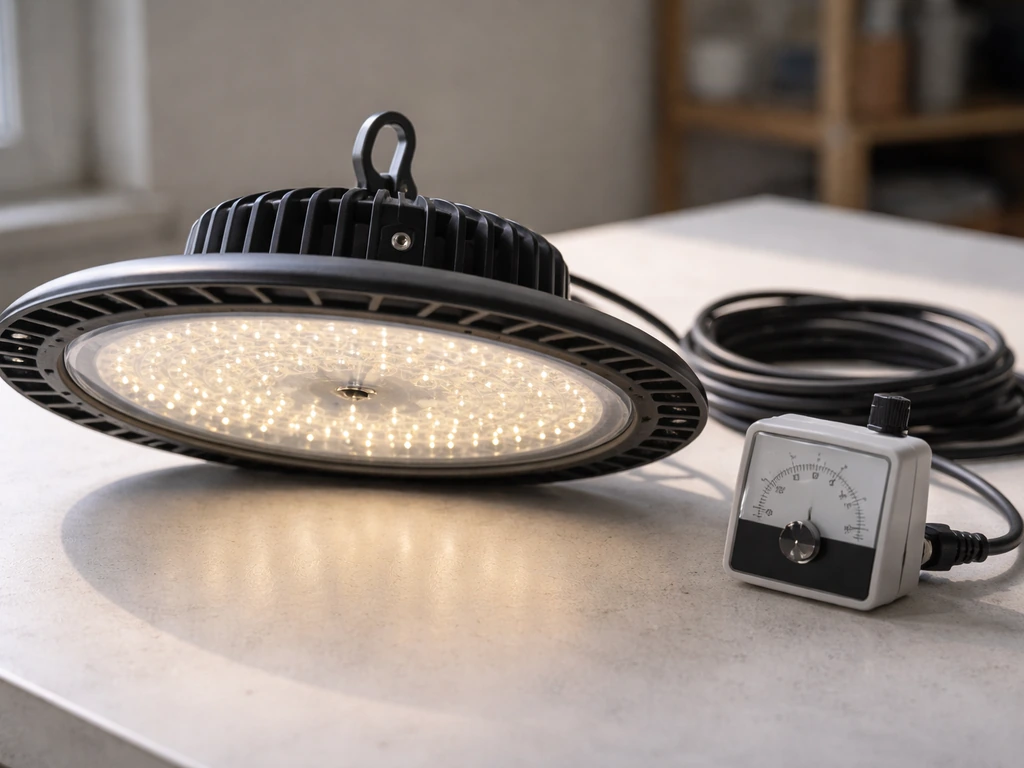
Lonwon fixtures sit at the lower end of the price range for their wattage class, which is their main competitive advantage. At roughly $25–$40 for the 30W bulb and $50–$80 for the 84W UFO (pricing varies by marketplace and listing), the cost-per-watt of hardware is low. The question is efficiency: how many usable µmol/J are you getting from the LEDs?
Entry-level UFO panels in the 80–100W class typically land between 1. 5 and 2. 0 µmol/J efficacy. Premium quantum board lights from established brands hit 2.
5–3. 0 µmol/J. Lonwon, based on the LED chip generation and driver quality typical of this segment, most likely falls in the 1. 5–1.
8 µmol/J range. That means for the same electricity cost, you're getting meaningfully less usable light than a mid-tier bar-style fixture. Over a 6-month grow cycle running 18 hours a day, the 84W Lonwon draws roughly 292 kWh. At $0.
13/kWh (US average), that's about $38 in electricity. Hydrobuilder’s grow-room electricity calculator similarly estimates electricity cost using inputs like lamp wattage, run hours (such as 18 hours per day), and an electricity rate example of $0. 13 per kWh [$0. 13/kWh (US average)](https://hydrobuilder.
com/pages/grow-room-electricity-calculator). A comparable quantum board at 80W draw but 2. 5 µmol/J efficacy would produce about 40% more photons for nearly the same running cost.
Heat output is manageable for both models. The UFO panel uses a passive aluminum heatsink and a small integrated cooling fan on some versions. In a small enclosed space (a 2x2 or 2x3 tent), heat addition is minimal compared to HID fixtures, but you should still account for ambient temperature rise of 3–6°F in a sealed environment, especially in warmer months. The 30W bulb adds negligible heat load.
Build quality, controls, and day-to-day usability
The physical build of Lonwon fixtures is typical of the entry-level segment: functional plastic housings on the bulb model, aluminum fin heatsinking on the UFO panel, and standard E26/E27 base compatibility on the screw-in version. The UFO panel includes a hanging kit (usually a metal hook and short rope hangers) and a standard power cord. There are no daisy-chain ports, no RJ45 controller connections, and no dimming capability reported for the main SKUs in this line. What you see is what you get: plug in, hang, run.
Driver quality is difficult to verify without teardown, but the absence of a named driver brand (like Meanwell) in the product listings is a signal. Lights in this price tier often use generic switching drivers, which can produce more flicker (measurable with a high-speed camera or flicker meter) than driver-grade alternatives. For plants, flicker at high frequency is generally not a concern for growth. For growers who spend significant time working under the light, it's worth noting.
Fan noise on UFO models with an active cooling fan is generally low (under 35 dB), which is acceptable for a bedroom or apartment grow. Passive-cooled versions produce zero noise. Neither model offers a timer function or smart controls, so you'll need a separate outlet timer, which is a $10–$15 add-on most growers should buy anyway.
Durability over a 2–3 year horizon is the biggest unknown. Without long-term user data or warranty support infrastructure comparable to established brands, you're accepting more risk. The warranty terms listed on marketplace pages are typically 1 year, which is standard for the category.
Which plants and grow spaces actually suit Lonwon
Match the fixture to the job honestly and Lonwon lights can perform well. Push them outside their range and you'll be disappointed. Here's how to think about fit by plant type and space.
- Seedlings and clones (any species): The 30W bulb is a solid, low-cost option. Keep it 10–14 inches above the tray and you'll get adequate PPFD for germination and early root development without light stress.
- Herbs and leafy greens (basil, lettuce, mint, spinach): The 84W UFO panel covers a 2x2 foot area adequately for these low-to-medium PPFD crops. Expect good leaf development and harvest cycles without issues.
- Vegetative cannabis or tomatoes in a 2x2 tent: The 84W UFO can carry plants through vegetative stage at reasonable growth rates. Expect stretch to be manageable if you keep mounting height at 18–20 inches and run an 18/6 light cycle.
- Fruiting/flowering cannabis or heavy-feeding fruiting vegetables: This is where Lonwon's output ceiling becomes a limiting factor. You can flower small plants, but yield and density will lag behind what a 100–120W quantum board can produce in the same space.
- Larger spaces (3x3 or 4x4 tents): Do not use a single Lonwon UFO in a 3x3 or larger. You'd need multiple units and the economics no longer favor Lonwon over a single, purpose-built mid-tier fixture.
How Lonwon compares to other common options
The grow light market in the sub-$100 range is crowded, and Lonwon competes directly with a range of similarly positioned UFO and blurple-style panels, as well as newer entrants using quantum board technology at accessible prices. Understanding where Lonwon sits helps you decide when it's the right call and when you should spend $20–$40 more for meaningfully better performance.
Bar-style quantum board lights represent the clearest upgrade path from UFO-style fixtures. They distribute light more uniformly across the canopy, typically run more efficient LED chips, and are available in the $80–$130 range for 100W fixtures. If you're growing anything beyond herbs and seedlings, a bar-style fixture almost always delivers better PPFD uniformity and higher efficacy per watt than a UFO panel at the same price. For example, the GN Telos 0010 LED grow light represents the bar-style quantum board approach at a step up in engineering and output consistency.
In the budget bulb and small-panel space, Lonwon is not alone. The Dorm Grow LED light is another compact fixture worth comparing if your priority is a small, low-profile setup for a shelf or closet grow, where form factor and mounting flexibility matter as much as raw PPFD.
For growers evaluating the full-spectrum vs. targeted-spectrum question, the Delponting grow light is a useful reference point: it's another budget-tier full-spectrum fixture that shares some design philosophy with Lonwon but with slightly different build specs and coverage claims. Comparing the two helps illustrate how much variation exists even within the "budget full-spectrum LED" category.
The Tmlapy grow light is another budget fixture in this tier that's worth benchmarking against Lonwon if you're shopping on price alone, since both target the same sub-$80 buyer and offer similar spectrum claims. The differences come down to driver quality, chip generation, and brand support, all of which are hard to verify from listings alone.
| Feature | Lonwon UFO 84W | Budget Bar/QB ~100W | Premium QB ~100W |
|---|---|---|---|
| Est. efficacy (µmol/J) | ~1.5–1.8 | ~2.0–2.3 | ~2.5–3.0 |
| Uniformity | Moderate (hot spot) | Good (spread beam) | Excellent |
| Dimming/control | None | Often none at entry level | Usually included |
| Driver quality | Generic | Varies | Meanwell or equivalent |
| Price range | $50–$80 | $80–$130 | $130–$200+ |
| Best use case | Herbs, seedlings, veg in 2x2 | Veg through flower in 2x2–3x3 | Full cycle in 2x2–4x4 |
Before you buy: a practical checklist and sizing guide
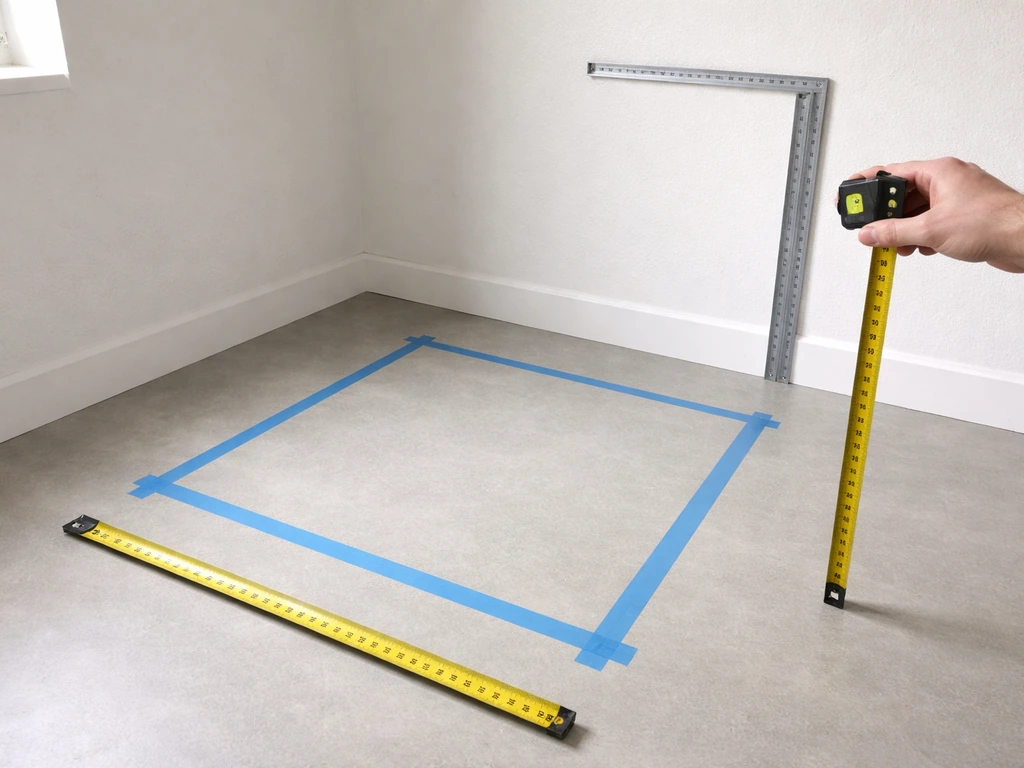
Use this checklist to confirm whether a Lonwon fixture is the right fit for your specific setup before committing. These are the questions that actually determine whether a grow light works for you, regardless of brand.
- Measure your actual grow space footprint. A 2x2 ft (0.37 m²) canopy is the practical ceiling for a single 84W Lonwon UFO in vegetative growth. If your tent is 3x3 or larger, you need either multiple units or a different fixture.
- Identify your primary plant stage. Seedlings and leafy greens: the 30W bulb or 84W UFO both work. Full-cycle flowering crops: the 84W UFO is marginal; consider a quantum board alternative.
- Check the actual wattage draw, not the "equivalent" number. The 84W draw figure is what matters for PPFD estimation and electricity cost. The "135W equivalent" claim is a marketing comparison, not a performance specification.
- Confirm the spectrum covers 380–730nm and includes a 660nm red peak. Both Lonwon models do. If a listing doesn't specify this, skip it.
- Account for mounting height. At 18 inches, you'll get reasonable coverage in a 2x2 area. Raising to 24 inches improves uniformity but drops PPFD. Make sure your tent or shelf allows you to set the correct height with room to grow.
- Budget for a timer. Neither Lonwon model includes one. A simple mechanical outlet timer runs $10–$15 and is essential for consistent light cycles.
- Verify the return/warranty policy before purchasing. Look for at least a 1-year warranty and a clear return window (30 days minimum) from the marketplace or seller.
- If you're scaling up: calculate how many fixtures you'd need. For a 4x4 tent at vegetative targets, you'd need approximately four 84W Lonwon UFO panels. At that point, a single 300–400W bar-style fixture is almost certainly a better buy on efficiency, uniformity, and cost per µmol.
The bottom line is that Lonwon works well when you match the fixture to the right job: small spaces, low-to-medium PPFD crops, and growers who want a functional entry-level light without spending over $80. If your grow expands beyond a 2x2 footprint or you're targeting high-PPFD fruiting plants, put the Lonwon budget toward a mid-tier bar-style or quantum board fixture instead. You'll get measurably more usable light per dollar spent over the life of the fixture.
FAQ
What should I use to size a Lonwon UFO panel, the “equivalent wattage” or the real wattage?
For Lonwon UFO panels, you should choose the fixture based on actual watt draw and your target canopy size, not the “135W equivalent” label. The article’s coverage estimate is about a 2x2 at 18 inches for vegetative or low-demand flowering, but if you need uniform 2x2 coverage at the high end (600 to 900+ PPFD), you should plan on a stronger light or more height control, because center hot spots will still under-serve edge plants.
Can I use the 30W Lonwon bulb as a full canopy light for a small tent?
Yes, but it is limited. The 30W screw-in bulb is best treated as a propagation, single-plant, or supplemental light at close distance (around 12 inches for seedlings per the article). If you try to use it as the only light for a tent canopy, plants can stretch and you may not reach the vegetative PPFD targets consistently across the surface.
Does the Lonwon light support dimming, and what’s the safest way to lower intensity?
Most listings do not show dimming, and the article notes no dimming or controller ports for the main SKUs. If you want lower intensity, your practical options are raising the fixture (which reduces PPFD at the canopy) or using a different light for different growth stages. Avoid power adapters or DIY “voltage hacks,” since entry-level drivers can behave unpredictably when modified.
How do I prevent stretching if my Lonwon light seems too weak?
You may see extra stretch if the light is too far from the plants, especially with the 30W bulb. A simple approach is to start at the article’s recommended mounting distances, then adjust after a week by watching internode length and leaf posture. If seedlings become leggy, reduce distance rather than increasing time, because the PPFD per day is what really changes growth.
Since there are no official PPFD maps, how can I verify if Lonwon will meet my crop’s light needs?
Because independent PPFD maps are essentially nonexistent, rely on watt draw, mounting height, and your crop’s PPFD targets. For the 84W UFO, the article suggests 400 to 550 PPFD at 18 inches center, so you can calibrate by crop: seedling and veg plants are usually fine, but high-demand fruiting crops will likely come up short unless you can add more fixtures or accept slower growth and smaller yields.
How should I place plants in a tent to reduce the UFO panel’s center hot spot issue?
If you have a 2x2 or 2x3 area, plan for the UFO panel’s beam pattern. The article flags that edge plants can get 30 to 40% less light than the center at the same mounting height, so you can reduce the problem by centering the canopy under the lamp and keeping the canopy relatively even. For uneven canopies, the light will magnify differences, so topping or training timing matters.
Is it better to mount the Lonwon UFO higher to reduce edge drop-off?
Raising the UFO from about 18 inches to around 24 inches can improve edge-to-center uniformity, but the article warns the overall PPFD drops roughly 30%. Use that trade-off intentionally: it can work for seedlings and leafy greens, but for fruiting plants it may make the overall light level too low, so you may need a higher-watt or more evenly distributed fixture instead.
How hot will a Lonwon light run, and does heat limit placement?
For the bulb, the main risk is under-lighting the canopy, not humidity or thermal issues. For the UFO, thermal risk is usually manageable, but you should still expect a small ambient temperature rise in sealed tents (the article estimates about 3 to 6°F). If your tent already runs hot, prioritize airflow upgrades before increasing fixture wattage.
Are Lonwon UFO models noisy enough to be a problem indoors?
Yes, fan noise can matter in living spaces. The article notes active-cooled versions are typically under about 35 dB, but passive-cooled versions are silent. If the grow is in a bedroom, confirm whether your exact listing includes the fan, and if it does, keep the lamp installed with unobstructed heatsink fins and airflow clearance.
How can I estimate electricity cost for my local rate and schedule?
Roughly speaking, the article estimates about $38 for the 84W UFO over a 6-month period at 18 hours per day with a $0.13/kWh rate. If your electricity price is higher, the operating cost increases linearly, which makes efficiency (µmol per joule) even more important. That is why the article suggests quantum board bars at similar wattage can be cheaper in total electricity to reach the same photon output.
What’s a practical way to reduce the risk of buying an entry-level Lonwon light with uncertain long-term durability?
Because warranty support and durability data are limited, you should treat Lonwon as a budget gamble and plan accordingly. One practical move is to keep receipts, register any warranty process if offered, and avoid running the lights in extreme conditions (very high humidity, salt air, or poorly ventilated enclosures) that can shorten driver and LED lifespan in entry-level fixtures.