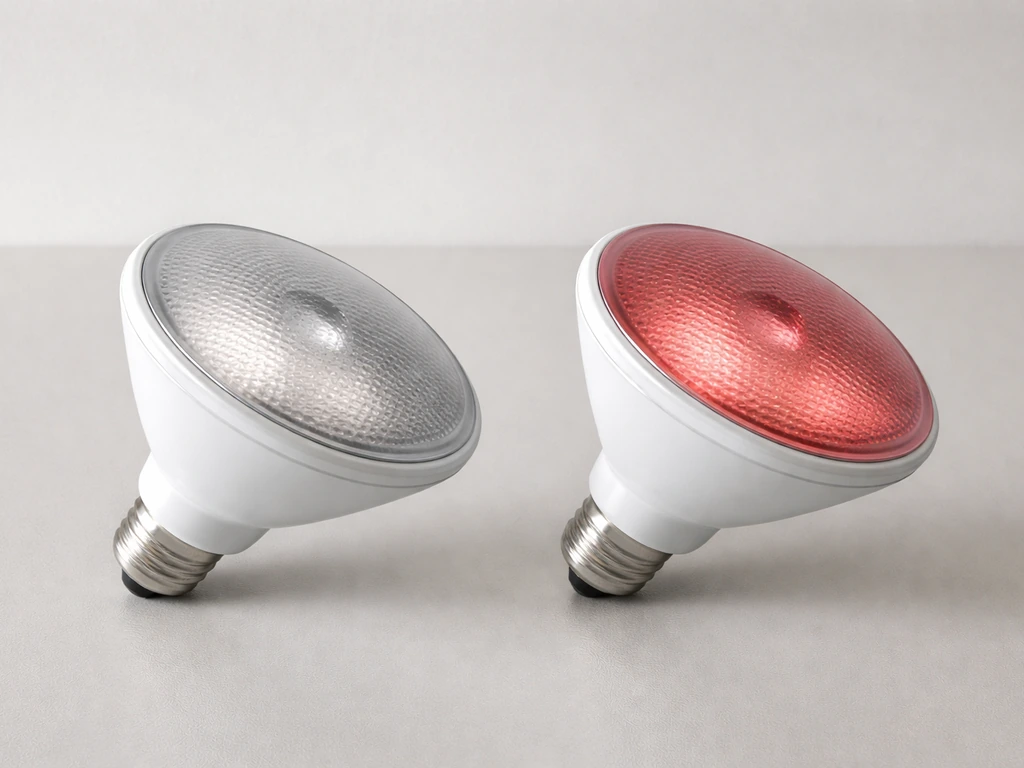
The GE PAR38 grow light is a solid, no-fuss option for hobbyist indoor gardeners who want a plug-in bulb that fits standard sockets without buying a dedicated fixture. There are two main variants to know about: the 32W balanced spectrum (SKU 93101232) and the 30W red reproductive spectrum (SKU 93101233). Both are E26 medium base, non-dimmable PAR38 bulbs with a marketed PPF of 50 µmol/s and a rated life of 25,000 hours. This review focuses primarily on the 32W balanced variant, which is the one most indoor gardeners should consider first, but I'll cover the red 30W version too so you can pick the right tool for your stage of growth.
GE PAR38 Grow Light Review: Best Use, Coverage, and Value

Marcus Caldwell
16 Apr 2026
What the GE PAR38 grow light is and who it's made for
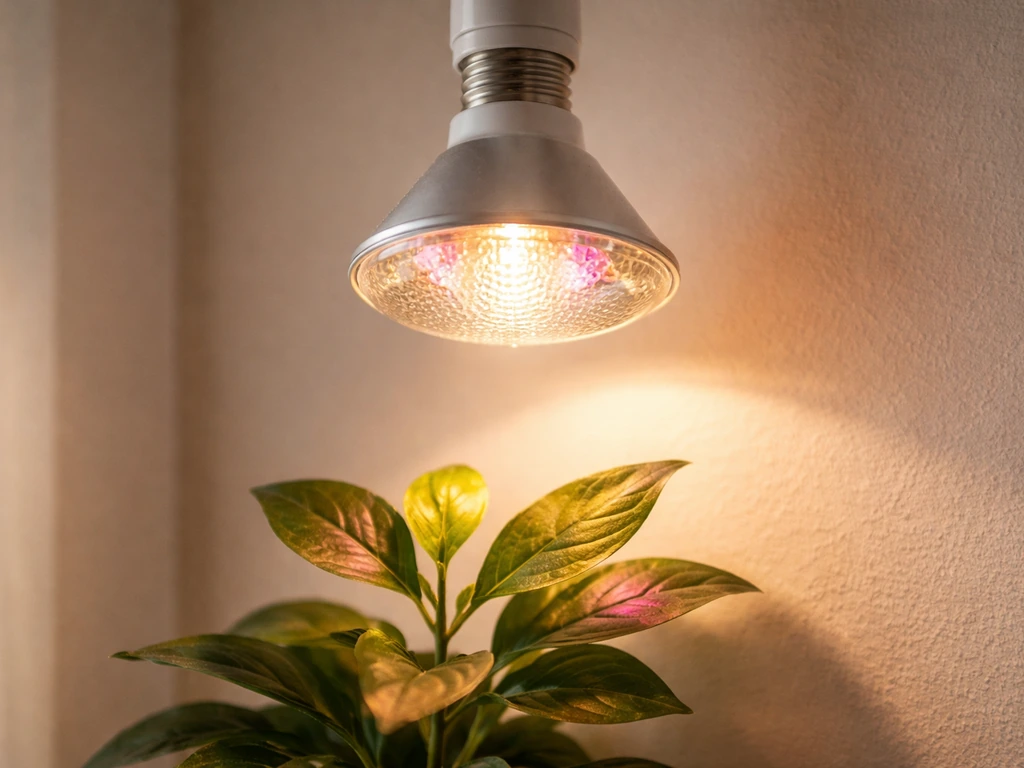
GE's PAR38 grow bulbs are designed for exactly the kind of grower who doesn't want to deal with specialty lighting systems. You screw them into any standard E26 medium-base socket, point them at your plants, and you're done. That simplicity is the whole point. These aren't bar lights or quantum boards. They're single-bulb grow solutions that fit pendant lamps, clamp lights, and track fixtures most people already own.
The 32W balanced spectrum model (93101232) is aimed at seeds, seedlings, and leafy greens. Its flux ratio is 3 red to 1 blue, which supports vegetative growth well. The 30W red spectrum model (93101233) leans heavily into flowering and fruiting, making it the better pick if you're running a tomato, pepper, or herb plant through its reproductive stage. Both carry a CRI of 80 and the same 25,000-hour lifespan rating, which is competitive for the category.
Who is this bulb actually for? Apartment growers with a windowsill or small shelf setup. Someone supplementing natural light on a cloudy-season houseplant. A hobbyist starting seeds indoors before transplanting outside. If you're trying to run a full vegetable tent or cover more than a couple of square feet, this single-bulb format is going to feel limiting fast. It's genuinely useful in the right application, but it's not a replacement for a purpose-built fixture covering a 2x2 or larger footprint.
Pros and cons at a glance
- Fits any standard E26 socket, so no new fixture required
- Two spectrum variants let you match the bulb to your growth stage
- 25,000-hour rated lifespan is solid for a single-bulb grow light
- Simple to set up with zero learning curve
- GE brand reliability and widely available through multiple retailers
- 50 µmol/s PPF is modest but usable for small-footprint grows and supplemental lighting
- Non-dimmable, so you can't dial back intensity for sensitive seedlings
- 50 µmol/s PPF is on the lower end compared to dedicated LED panels at similar or lower price points
- Single-bulb coverage is limited, typically one or two small plants
- The 15W variant (if you encounter it) is underwhelming; stick to 32W
- Pricing varies significantly by retailer, from around $38 to over $50 depending on variant and source
- No built-in timer, no programmable controls
The headline takeaway: real-world growers using the 32W balanced version report noticeably improved growth on houseplants like Monsteras, and the bulb gets recommended in hobbyist communities specifically at the 32W level. The 15W version has a poor reputation by comparison, so if you see a cheaper GE PAR38 grow bulb and the wattage seems low, that's probably why.
Spectrum, PPF, and coverage: what you're actually getting
Both variants are marketed at 50 µmol/s PPF. For context, most indoor plants in vegetative growth need somewhere between 200 and 400 µmol/m²/s at the canopy (PPFD), and flowering plants often want more. A single bulb at 50 µmol/s total output is going to deliver meaningful PPFD only in a tight coverage zone, especially at closer distances. The 24 to 30 inch recommended placement distance from seller guidance gives you a starting point, but understand that PPFD drops off quickly with distance from a single bulb.
At 24 inches, you're realistically covering the area of a single medium plant. At 30 inches, coverage spreads slightly but intensity drops. For supplemental lighting on one or two plants, or for seedling trays where you don't need high PPFD, this works. For a serious grow where you need consistent canopy coverage across multiple plants, you'd need several of these bulbs or a different solution entirely.
The 32W balanced spectrum has a 3:1 red-to-blue flux ratio. That's a fairly standard vegetative-stage ratio. It provides enough blue to keep plants compact and enough red to drive photosynthesis efficiently. It's not a full-spectrum white light, so don't expect it to look visually appealing in a living space. The 30W red variant tilts the ratio heavily toward red wavelengths, which makes sense for flowering and fruiting but isn't ideal as your only light source for vegetative plants.
Heat, power draw, and build quality
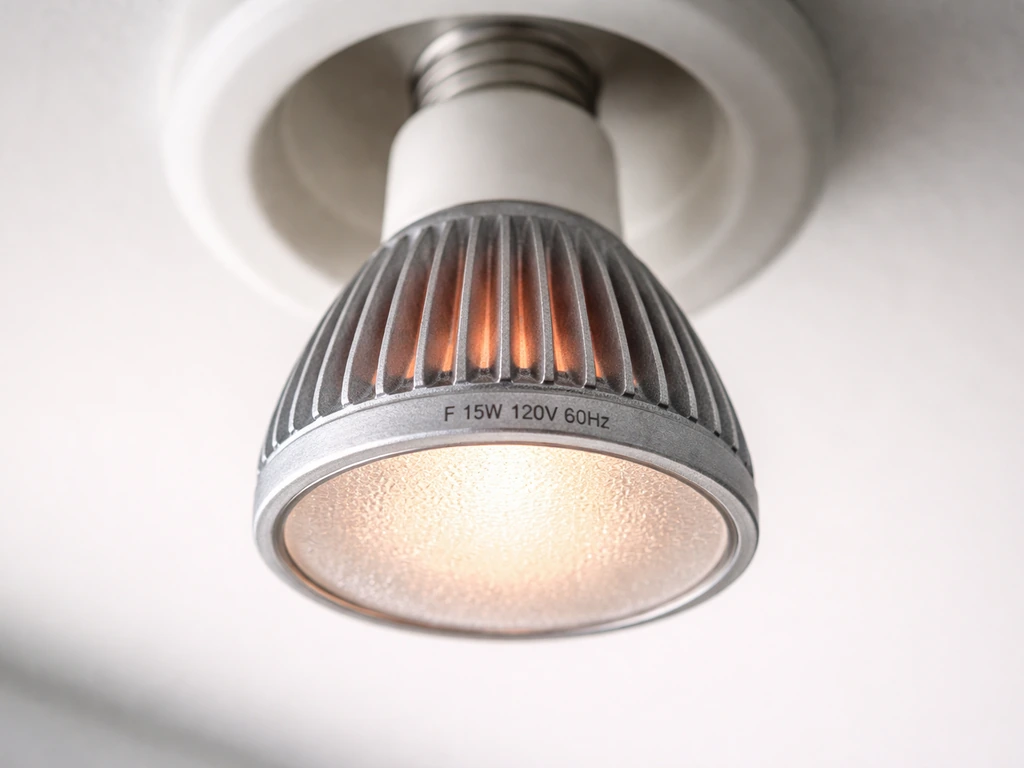
At 32W, the balanced variant runs warm but not hot to the touch in a well-ventilated socket. PAR38 bulbs by design have a heat sink built into the body, and GE's version handles thermal management adequately for normal use. Running it in an enclosed fixture will raise temperatures more, so stick to open or semi-open lamp heads.
Power draw is honest to spec. The 32W model actually draws close to its rated wattage, unlike some budget brands that inflate wattage claims. At that draw and the 50 µmol/s output, the efficiency works out to roughly 1.56 µmol/J, which is acceptable but not exceptional. Dedicated LED panels at similar wattages often hit 2.0 µmol/J or better.
Build quality is what you'd expect from GE: the plastic housing feels sturdy, the E26 base fits securely without wobble, and the diodes are well-protected. There are community reports of GE grow bulbs eventually failing, mostly tied to driver issues rather than the diodes themselves. That said, for a 25,000-hour rated bulb used 16 hours a day, you're looking at roughly 4 to 5 years of use before you'd expect failure, which is reasonable for the price point.
Installation, socket compatibility, and setup tips
Setup is literally screwing in a bulb. The E26 medium base fits the most common socket in North America, so compatibility issues are almost nonexistent. Pendant clamp lights, track lighting, and spider-style grow light fixtures with E26 sockets all work fine. The one limitation worth calling out: these bulbs are non-dimmable. Using them in a dimmable socket won't damage the bulb, but it may cause flickering or inconsistent behavior, so plug them into a non-dimmed circuit.
For indoor grows, start with the bulb 24 inches above your canopy. If you're seeing slow growth or stretching toward the light, move it closer to 18 to 20 inches. If tips are bleaching or curling, back it off. Because you can't dim the bulb, distance is your only intensity control, so get comfortable adjusting the physical height of your lamp or plant stand.
Running the balanced 32W version on an 18/6 light schedule (18 hours on, 6 hours off) works well for vegetative growth and seedlings. Switch to the red 30W variant for flowering, or if you're committed to a single bulb, use the 12/12 schedule with the balanced version and understand you may get slightly less aggressive flowering compared to a red-heavy spectrum. Add a basic outlet timer and you won't have to think about it again.
One practical tip: if you're growing plants that tend to lean toward the light source, rotate your pot every few days. A single-point light source creates directional growth in a way that a multi-bar fixture doesn't, so staying on top of rotation keeps your plant canopy even.
How GE PAR38 pricing and value stack up against alternatives
The 32W balanced variant (93101232) runs around $44.99 at some retailers, while the 30W red variant (93101233) shows up anywhere from about $37.77 to $52.99 depending on where you shop. That's a notable price spread for what is essentially the same form factor with a different spectrum, so it's worth checking multiple sources before buying.
| Metric | GE PAR38 32W Balanced | GE PAR38 30W Red | Budget T5 Bar (comparable wattage) | Dedicated LED Panel (30-40W) |
|---|---|---|---|---|
| PPF (marketed) | 50 µmol/s | 50 µmol/s | Varies (~30-55 µmol/s) | Varies (~60-100+ µmol/s) |
| Efficiency (approx.) | ~1.56 µmol/J | ~1.67 µmol/J | ~1.0-1.5 µmol/J | ~2.0-2.8 µmol/J |
| Coverage footprint | 1-2 small plants | 1-2 small plants | 1-2 ft row | 2x2 to 4x4 ft |
| Socket/fixture needed | Any E26 socket | Any E26 socket | Dedicated fixture | Dedicated fixture/mount |
| Dimmable | No | No | Sometimes | Often yes |
| Approx. street price | ~$45 | ~$38-53 | ~$20-40 | ~$50-150+ |
| Rated lifespan | 25,000 hours | 25,000 hours | 20,000-50,000 hours | 30,000-50,000 hours |
At roughly $45 for 50 µmol/s, the GE PAR38 isn't the most efficient dollar-per-µmol option on the market. A dedicated LED panel at 30 to 40W can deliver significantly higher PPF and better canopy coverage for a similar or moderately higher investment. However, those panels require their own mounting setup, and the GE bulb slots into infrastructure you probably already own. That convenience premium is real and legitimate for casual growers.
If you're comparing within the single-bulb category, the GE PAR38 is a credible choice from a brand with real quality control. If you're comparing against bar-style tube grow lights, it's worth looking at options like those covered in a Barrina T5 grow lights review, which shows how bar-format T5 LEDs often deliver broader coverage per dollar. And for strip/tube LED alternatives in the T8 format, a Barrina LED T8 grow light review gives you a useful point of comparison for shelf-style grows where a PAR38 bulb would be awkward to position.
For growers considering other single-brand LED options with more complete spectrum engineering, a Bionic grow light review walks through how some newer brands approach full-spectrum output differently. And if you want a broader sense of how a value-focused brand's product lineup compares across form factors, the Barrina grow light review is a solid reference for understanding what you give up and what you gain by going with a dedicated grow light brand versus a general lighting manufacturer like GE.
Who should buy this, and who should skip it
Buy the GE PAR38 if:
- You want a grow light that screws into a lamp you already own
- You're supplementing natural light for one to three houseplants
- You're starting seeds or growing herbs at small scale
- You don't want to deal with mounting hardware, drivers, or fixtures
- You're growing leafy greens or foliage plants where the vegetative spectrum is enough (32W balanced version)
- You need the red variant specifically for a fruiting or flowering plant in an existing lamp setup
Skip the GE PAR38 if:
- You're trying to cover more than a couple of plants or a 2x2 foot space
- You want dimmability for fine-tuned intensity control
- You're comparing raw PAR output per dollar (dedicated panels win)
- You're running a serious grow that demands consistently high PPFD across the canopy
- You've seen a GE PAR38 listed at 15W — that version is not worth your money based on user feedback
How to judge whether it's working for your plants
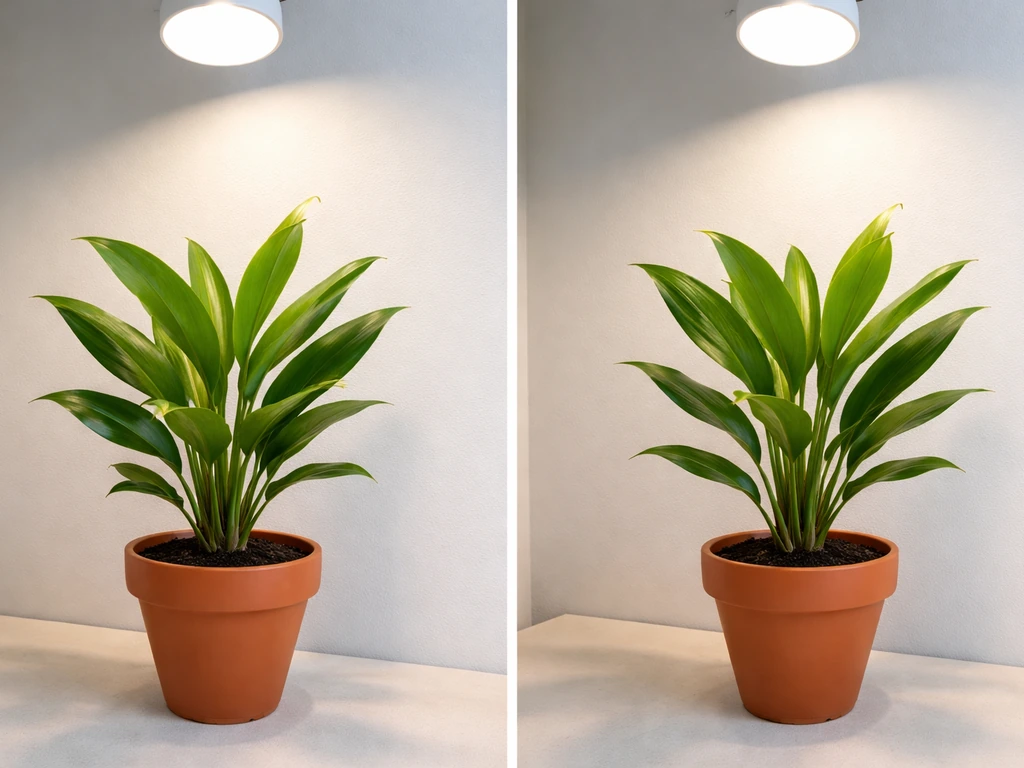
After the first two weeks under the GE PAR38, look for compact, upright growth with leaves orienting toward the light but not straining dramatically toward it. New growth nodes should appear on a normal schedule for the species. If stems are elongating and internodal spacing is getting long (etiolation), the bulb is either too far away or the PPF is insufficient for that plant's needs at that stage. Move it 4 to 6 inches closer first. If that doesn't help within another week or two, you may need a higher-output light.
If leaf tips are yellowing or showing signs of light stress (bleaching, upward cupping), back the bulb off by 4 to 6 inches or reduce your photoperiod slightly. Since you can't dim the bulb, distance and hours-on are your two levers. Most growers find the balanced 32W version works well at 20 to 26 inches for medium-sized houseplants and roughly 12 to 18 inches for seedlings.
For flowering plants using the red 30W variant, watch for the transition from vegetative to reproductive growth within 2 to 4 weeks of switching to a 12/12 schedule. If flowering initiation is slow, the red spectrum alone may not be delivering enough total PPFD at your distance. Try closing the gap to 18 inches and make sure the plant isn't receiving unwanted light during its dark period, which can disrupt the photoperiod trigger regardless of which grow light you're using.
Bottom line: the GE PAR38 32W balanced spectrum is the version worth buying if you go this route. It's a legitimate grow light from a reliable manufacturer, it works as advertised in the right context, and the E26 form factor is genuinely convenient. Just be clear-eyed about what it is: a single-bulb supplemental grow light suited for small-scale, low-complexity indoor growing. Match your expectations to the tool, and it delivers.
FAQ
Is the GE PAR38 grow light safe to use in enclosed fixtures like a covered ceiling light or a small cabinet lamp head?
It can run warm, so avoid fully enclosed setups. Use it in an open or semi-open lamp head with airflow, and if the socket area feels hot after 30 to 60 minutes, switch to a more ventilated fixture or increase spacing from the plant to reduce heat buildup stress.
Can I use the GE PAR38 on a dimmer to fine-tune intensity?
The bulbs are non-dimmable. If you place them on a dimmer, you may get flicker or inconsistent output. The practical workaround is to keep the bulb on full power and adjust distance (18 to 24 inches) or photoperiod with a timer.
How many GE PAR38 bulbs do I need to light a 2x2 grow area?
Plan on more than one bulb, because a single PAR38 only covers a small footprint at usable intensity. For a 2x2, most setups end up using an array (for example, multiple bulbs distributed across the canopy) or switching to a panel or bar light that’s designed for even coverage.
Will the 32W balanced bulb work for flowering if I only have the non-red model?
Yes, but expect slower or less intense flowering. If you’re using the 12/12 schedule with the balanced 32W, raise light delivery by moving closer (commonly toward the 18-inch range) and make sure the dark period stays uninterrupted.
What’s the best way to prevent stretching or leaning with a single PAR38 bulb?
Rotate the pot every few days, and set initial height around 20 to 24 inches above the canopy. If you still see elongation after 1 to 2 weeks, lower the bulb by 4 to 6 inches, since distance is your main intensity control.
Can I use the red 30W PAR38 for seedlings right away?
It’s not ideal for early vegetative growth because the spectrum is heavily red. If you must use it, compensate by keeping seedlings closer to the light and watching for slower, lankier growth, then transition to the 32W balanced bulb when the plants establish.
How do I know if the bulb is too close (besides plant height changes)?
Watch for leaf tip bleaching, upward cupping, or dry-looking edges. Those are common signs of excess intensity. Back the bulb off by 4 to 6 inches and, if needed, reduce the photoperiod slightly because you cannot dial intensity down electrically.
Does using an outlet timer with the GE PAR38 affect performance?
Using a basic outlet timer is fine. The key is preventing power interruptions during the dark period, since brief accidental on periods can disrupt photoperiod triggers, especially when you’re trying to induce flowering.
What should I expect for lifespan if I run it 16 hours per day?
At the 25,000-hour rated lifespan, 16 hours daily is roughly 4 years of operation, with some variation from driver performance. If it begins to dim, fail intermittently, or flicker, treat it as a driver-related issue and replace rather than continuing long-term.
Is the marketed PPF (50 µmol/s) the same as the PPFD my plant receives?
No. PPF is the total light output from the bulb, PPFD is the light intensity at the canopy. With a single bulb, PPFD drops quickly as distance increases, so rely on height adjustments and plant response rather than assuming 50 µmol/s translates directly to your leaves.
Do I need a separate fixture to use these bulbs with plants?
You can use them with most existing E26 medium-base sockets, including pendant, clamp, and track-style fixtures. The practical requirement is that the fixture position allows you to control distance to the canopy (commonly 18 to 26 inches), since that determines whether the plant receives enough intensity.