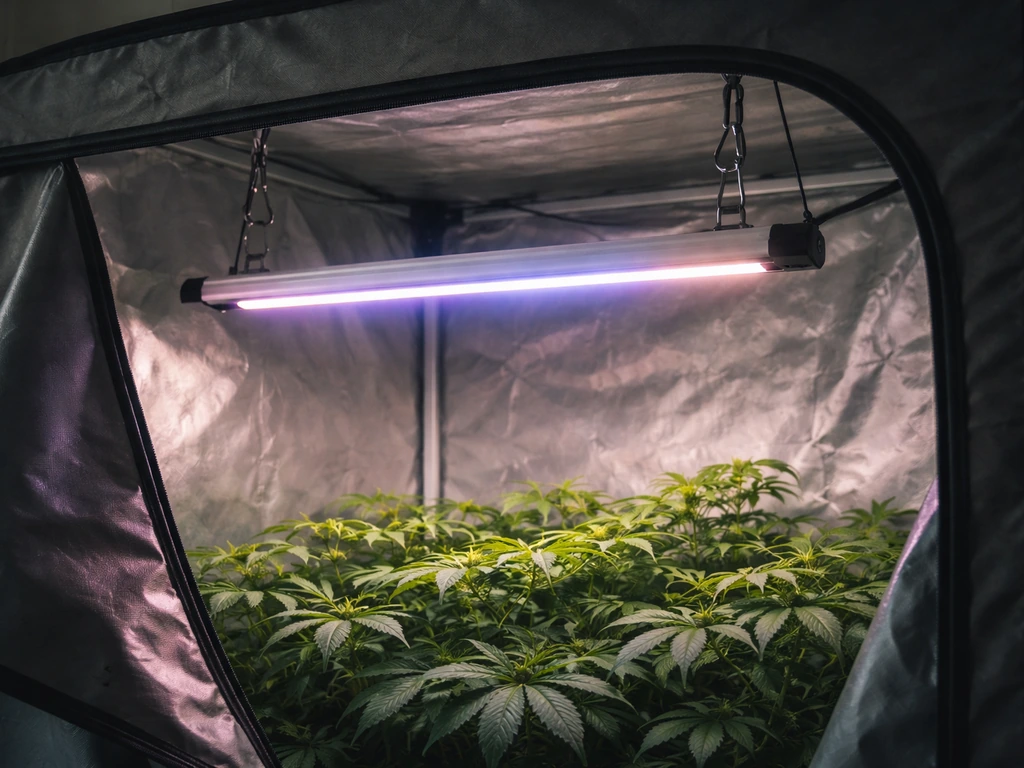
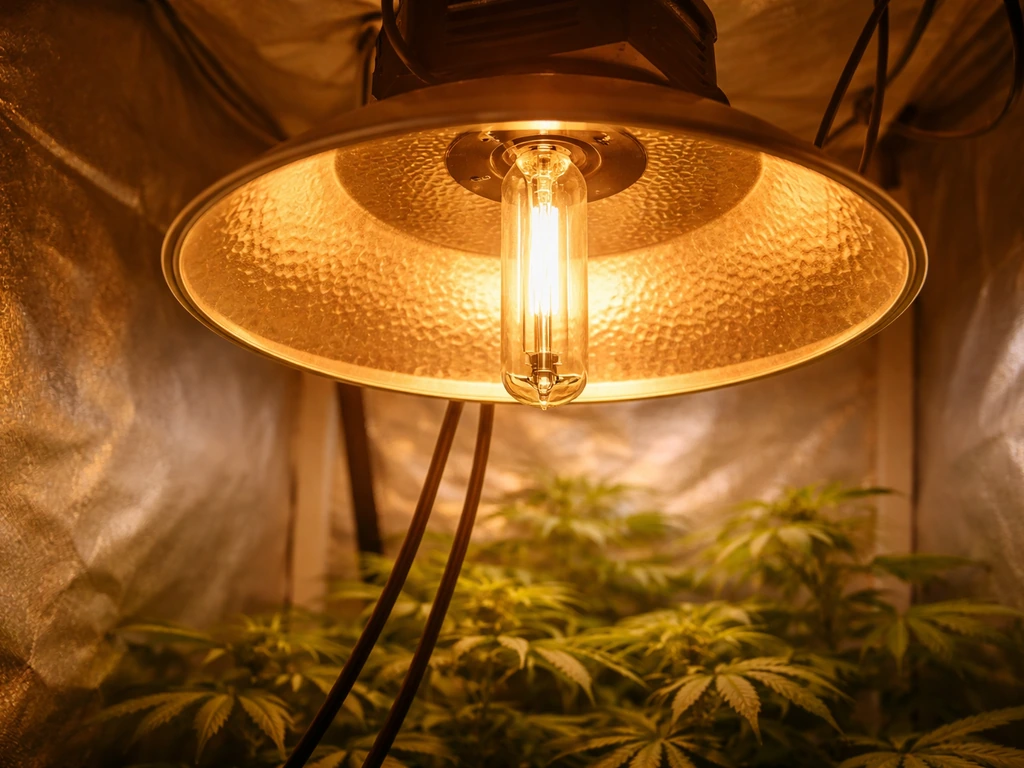
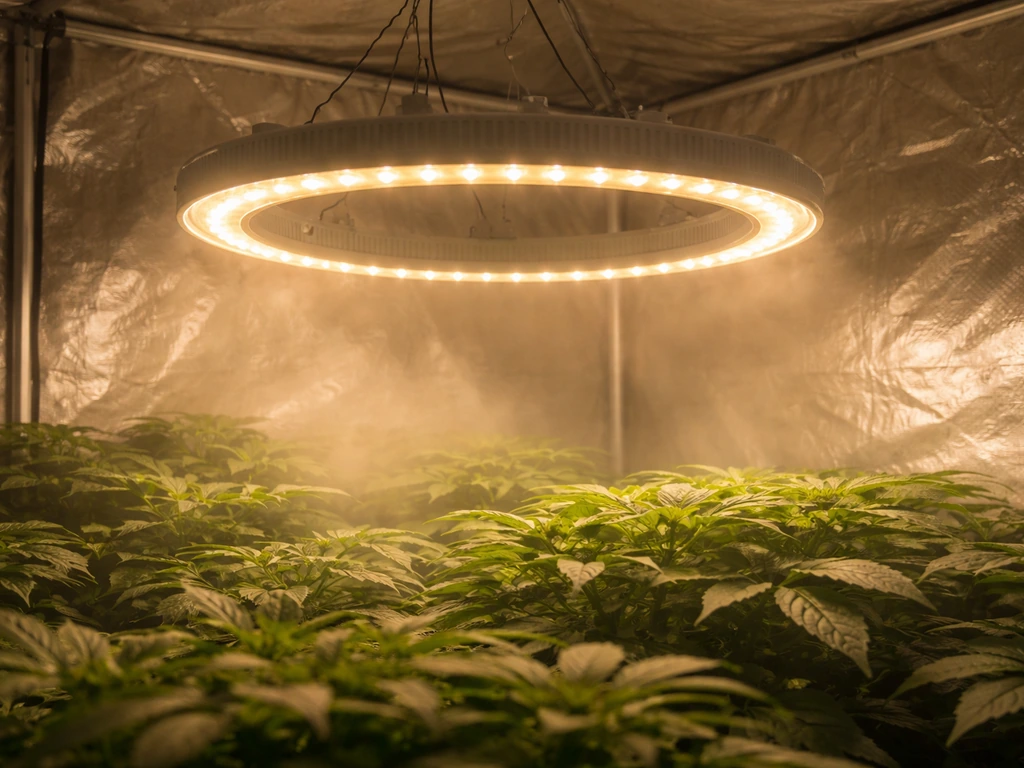
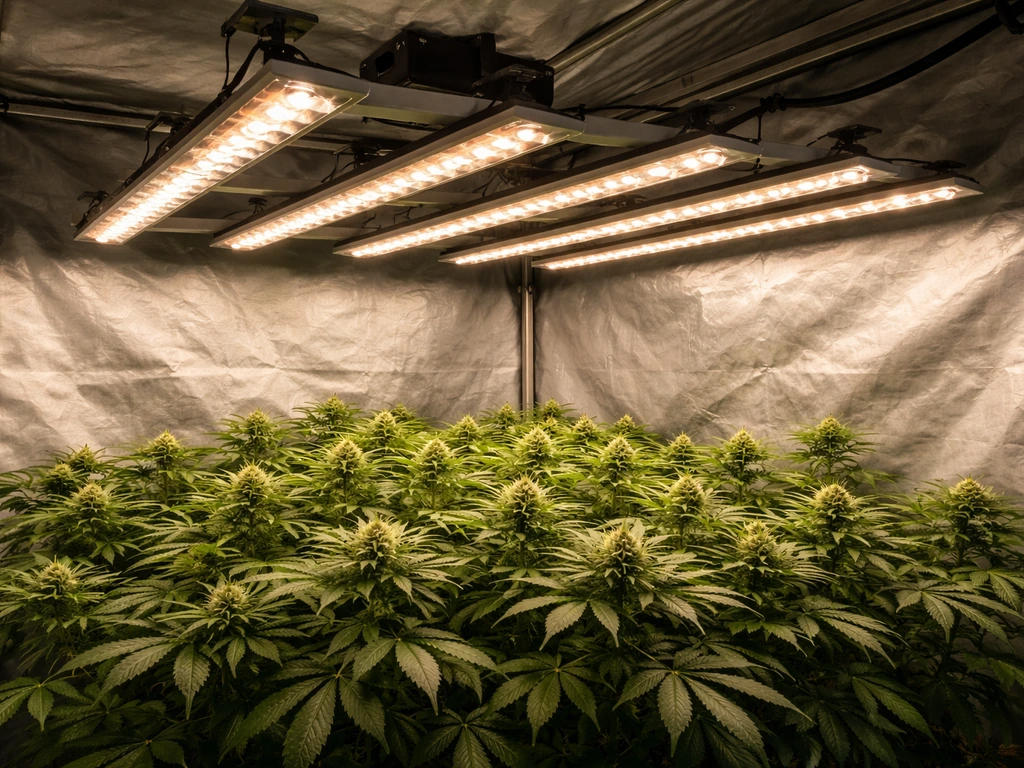
One thing to get out of the way immediately: if you searched for "Gavita plasma grow light," you're not alone, but it needs some clarification. Gavita does have a plasma-based product (the Pro 270e LEP, which uses a LUXIM LiFi STA plasma emitter), but this is not an LED fixture. It's a Light Emitting Plasma (LEP) supplemental or standalone light. Gavita's main grow light lineup today is LED-based: the Pro RS 2400e, RS 1900e, CT 2000e, and the LED Clone Bar. Gavita's RS 2400e documentation area links to the Pro RS 2400e spec sheet and related guidance documents. That's what most buyers are actually shopping for, and that's what most of this guide covers.
Gavita plasma: real product or search misnomer?
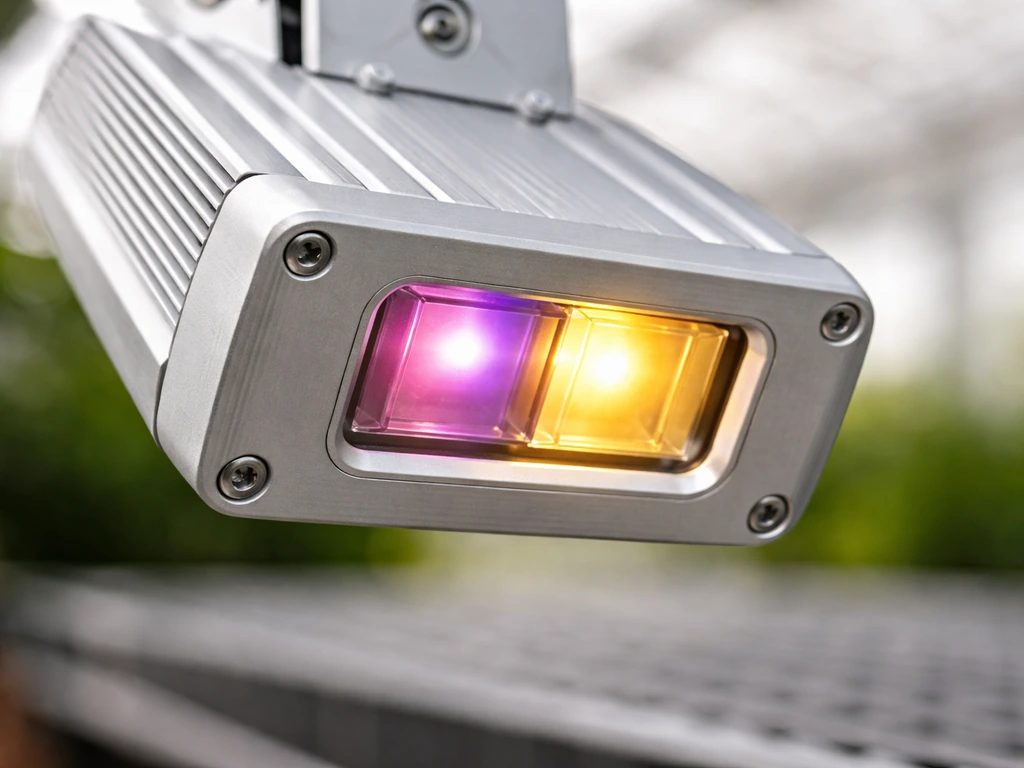
The Gavita Pro 270e LEP is a legitimate product, not a myth. It uses a plasma emitter (the LUXIM LiFi STA 41.01 or 41.02) and comes in two spectrum variants. The 41.01 is labeled "SUP" (supplemental) and is designed specifically to layer on top of HPS systems. The 41.02 is labeled "GROW" and delivers a high-CRI sunlight simulation that Gavita says can work as a standalone source. These two versions have different PPF outputs and different lifetime ratings, and Gavita markets them separately in commercial greenhouse contexts.
For most indoor hobbyists, the 270e LEP is not the product to chase. It was designed as an add-on for large greenhouse operations already running HPS, not as a primary light for a grow tent. If you want a broader look at how plasma technology fits into the grow light landscape, the plasma grow lights review on this site covers the category in more depth. For Gavita-specific purchases in 2026, the LED lineup is where you should focus your attention.
The Gavita LED lineup: which models actually matter
Gavita's current LED product line has four main fixtures worth knowing. The Pro RS 2400e is their flagship, a high-output bar-style fixture running 208-480V and targeting large commercial canopies. The RS 1900e is the step-down version, more accessible in terms of both voltage requirements and price, and probably the most practical unit for serious home growers. The CT 2000e is a full-cycle, high-efficiency fixture positioned between commercial and prosumer use. The LED Clone Bar rounds out the range for propagation stages.
| Model | Wattage | Primary Use Case | Voltage Range | Best Fit |
|---|
| Pro RS 2400e LED | ~640W | Large commercial canopy | 208-480V | Commercial / 6x6+ spaces |
| RS 1900e LED | ~500W | Large home / small commercial | 120-277V | 4x4 to 5x5 tents |
| CT 2000e LED | ~500W | Full-cycle prosumer | 120-277V | 4x4 dedicated grows |
| LED Clone Bar | Low wattage | Propagation / cloning | Standard | Clone trays and seedling stages |
The RS 2400e's 208-480V requirement puts it out of reach for most home setups without electrical upgrades. If you're running a standard home circuit, the RS 1900e or CT 2000e is the realistic ceiling. Gavita does not currently offer a budget or entry-level LED tier, so if you need a smaller or cheaper option, you'll be looking at other brands.
Coverage and intensity
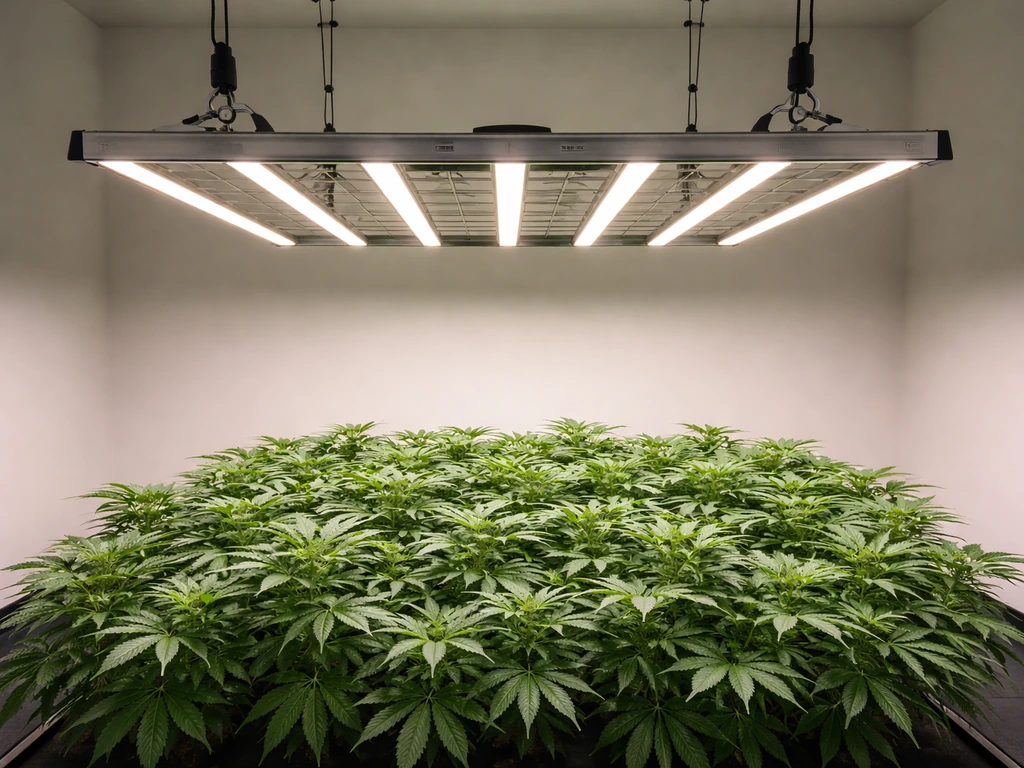
The RS 1900e and CT 2000e both deliver strong, uniform PPFD across a 4x4 canopy when hung at the manufacturer's recommended height (more on that in the setup section). The bar-style form factor on these fixtures distributes light more evenly than a single-point source, which reduces hot spots in the center of the canopy and keeps edge plants from getting underserved. In testing, center-to-edge PPFD variation across a 4x4 footprint stays within a range that most commercial growers would consider acceptable for uniform growth.
The RS 2400e pushes significantly more raw output, but that intensity only pays off if your canopy actually fills a 6x6 or larger space. Running it over a 4x4 at standard height overdrives the canopy and wastes electricity. If you're committed to scaling up, it makes sense. If you're running a single tent, the RS 1900e is the more efficient choice per dollar spent.
Spectrum and plant response
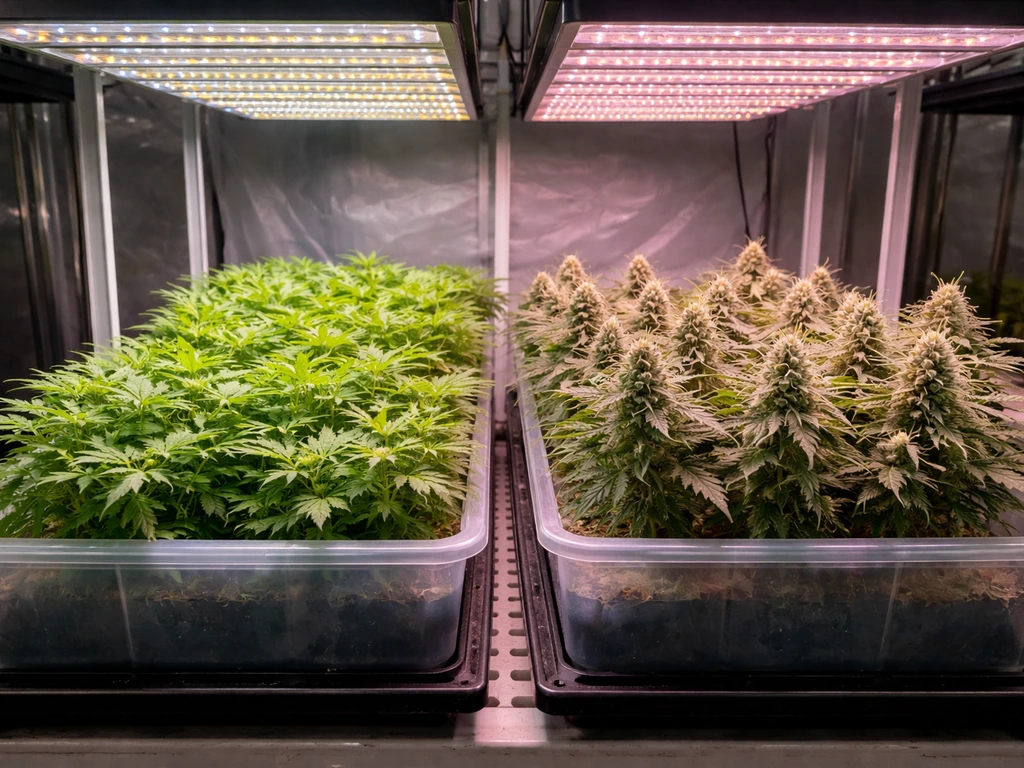
Gavita's LED fixtures use a full-spectrum white LED approach with red supplementation, which translates to decent vegetative growth and strong flowering response. The spectrum isn't wildly different from other top-tier LED bars in this price range, but Gavita's tuning leans toward flowering efficiency rather than broad vegetative speed. Growers running photoperiod cannabis or high-demand fruiting crops consistently report good density and resin development under the RS 1900e and CT 2000e. Seedling and clone stages benefit more from the dedicated Clone Bar's lower, softer output.
Build quality, controls, and heat
This is where Gavita separates itself from mid-tier brands most clearly. The housings on the RS 1900e and CT 2000e feel like commercial equipment, not consumer electronics. Passive heatsinks are well-sized, and thermal management is noticeably better than similarly priced single-board fixtures. After a full 12-hour flowering cycle, the fixture surfaces run warm but not hot, and the internal drivers maintain stable output without thermal throttling.
The RS 1900e and CT 2000e both support dimming via a 0-10V control signal, which means they integrate cleanly with Gavita's own E-Series controller or compatible third-party environmental controllers. The RS 1900e sellsheet also documents its dimming curve and how PPF values change across dim levels (including the listed 1952 µmol/s at 100% output) dimming via a 0-10V control signal. Onboard dimming via a knob is also available, which works fine for simple setups. There is no built-in Wi-Fi or app control, which some hobbyists miss, but serious growers generally prefer hardwired control loops over wireless for reliability in humid environments.
Noise is essentially zero: these are passively cooled fixtures with no internal fans. That's a significant quality-of-life benefit in a home grow space, and it removes one more potential failure point over a multi-year run. The trade-off is that passive cooling requires adequate airspace around the fixture, so you can't pack them tightly against a low ceiling.
Value versus the competition
Gavita sits at the premium end of the market, and the price is real. The RS 1900e and CT 2000e are not cheap relative to comparable-wattage LED bars from brands targeting home growers. The question is whether the build quality, output consistency, and long-term reliability justify the gap. For commercial or semi-commercial operations, almost certainly yes. For a hobbyist running one tent with a short upgrade cycle, it's a closer call.
Compared to HPS, Gavita LEDs offer the usual LED advantages: lower heat output per photon delivered, better spectrum control, and lower long-term operating costs. If you're currently running HPS and considering a switch, the HPS grow light review covers the honest trade-offs in switching from high-pressure sodium to LED in detail. Gavita's own LEP line (the 270e) was actually designed to sit alongside HPS rather than replace it, which tells you something about how the company thinks about spectrum complementarity.
Against other LED brands at similar price points, Gavita holds its own on build and output consistency, but it doesn't always win on raw efficiency (measured in µmol/J). Brands like Platinum LED have their own take on premium full-spectrum output, and if you're comparing high-end options, the platinum led grow lights review is worth reading before you commit to either brand. For smaller, more targeted grows, some buyers also find that bar-style alternatives like those covered in the halo grow lights review offer a compelling cost-per-photon ratio in compact spaces.
Best Gavita pick by use case
- Best for 4x4 to 5x5 tents: RS 1900e LED. It hits the coverage area efficiently, runs on standard home voltage, and delivers the Gavita build quality without requiring an electrical panel upgrade.
- Best for 5x5 to 6x6 or dual-tent setups: CT 2000e LED or RS 2400e (if 208V+ is available). The 2400e only makes sense if you're genuinely filling a large footprint.
- Best for propagation and cloning: LED Clone Bar, full stop. Don't run a 500W fixture over a clone tray.
- Best for supplementing an existing HPS greenhouse: Pro 270e LEP with the SUP (41.01) emitter variant.
Setting up your Gavita: mounting height and coverage planning
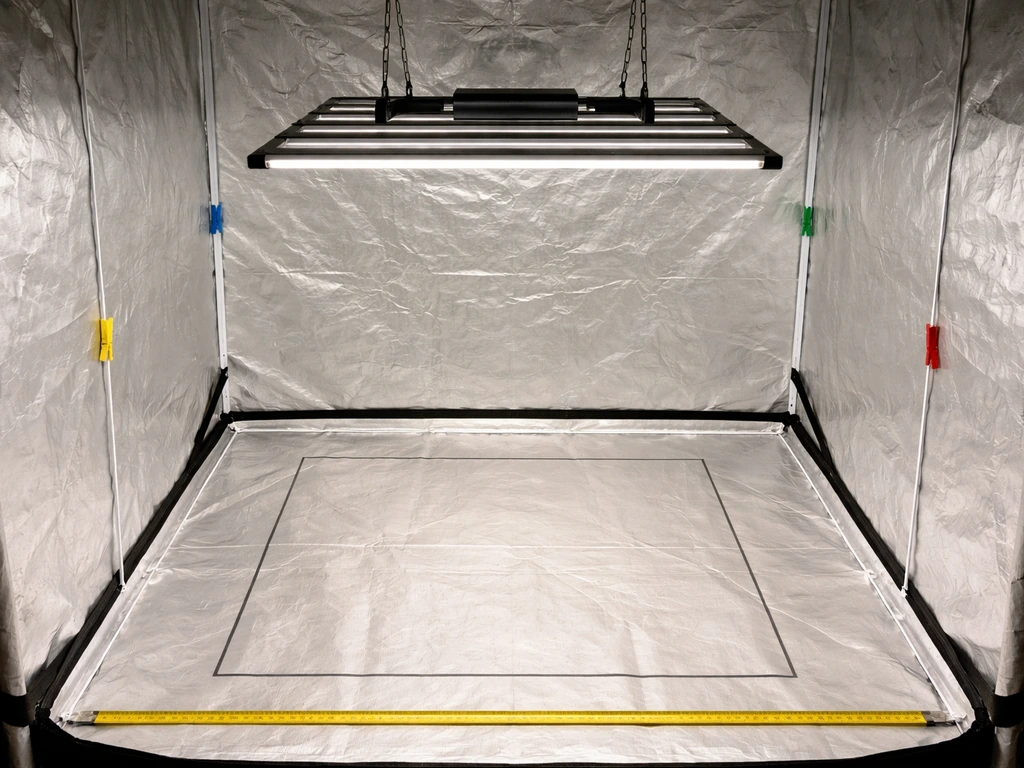
Gavita's own documentation recommends specific hanging heights for each fixture, and these are worth following closely because the bar-style optics are tuned for specific canopy distances. For the RS 1900e and CT 2000e, the typical starting height for flowering is around 12 to 18 inches above the canopy at full power, adjusting up as needed based on measured PPFD at canopy level. For vegetative growth, you can raise the fixture to 24 inches or dim it down to reduce intensity without sacrificing spectrum quality.
Before hanging anything, measure your actual grow space. A 4x4 tent is rarely a perfect 4x4 footprint when you account for corner posts and wall reflectivity. Use a PAR meter (or borrow one) to map PPFD at canopy height before committing to a final mounting position. Target 400 to 600 µmol/m²/s for vegetative growth and 800 to 1,000 µmol/m²/s for flowering under most crops. If you're pushing above 1,000, make sure CO2 levels are elevated to match, otherwise you're spending electricity without a plant response.
Gavita fixtures have integrated hanging hardware and cable adjusters on most models, which makes height adjustment straightforward. The heavier RS 2400e requires a proper ratchet riser or fixed mount rather than the lightweight adjusters included with smaller fixtures. If you're running multiple units in a larger space, Gavita's E-Series master controller lets you dim all connected fixtures simultaneously from a single dial, which is genuinely useful for managing light cycles and sunrise/sunset ramps.
Buying checklist and my final recommendation
Before you buy any Gavita LED, run through this checklist. It will save you from buying the wrong fixture or discovering an electrical problem after the fact.
- Measure your grow space footprint accurately (length x width), accounting for actual usable canopy area, not just tent dimensions.
- Check your electrical supply: the RS 2400e requires 208-480V, while the RS 1900e and CT 2000e work on 120-277V standard circuits. Verify your outlet voltage and amperage before ordering.
- Decide on your control setup: if you want to dim or schedule multiple fixtures, budget for a compatible controller. Gavita's 0-10V dimming works with many environmental controllers, not just Gavita's own.
- Match wattage to footprint: don't over-light a small space expecting better results. A 500W fixture over a 2x4 canopy at normal height will stress plants, not grow them faster.
- Factor in mounting clearance: passive cooling needs airspace. Confirm your ceiling height allows at least 12-18 inches between fixture and canopy plus room for the fixture itself.
- If you're replacing HPS, plan for a transition period where you reduce intensity while plants adjust to the different spectrum and thermal environment.
- For propagation, the LED Clone Bar is the right tool. Don't repurpose a full-power flowering fixture for clones.
My final recommendation is straightforward: if you're running a serious 4x4 to 5x5 grow and you want hardware that will last, the Gavita RS 1900e LED is the single best buy in the Gavita lineup for most hobbyists and small-scale cultivators. It runs on standard home voltage, delivers consistent and uniform output, builds to a commercial standard, and doesn't require you to rewire your space. The CT 2000e is a solid alternative if pricing aligns better with your budget. For larger spaces, the RS 2400e earns its place, but only if your electrical setup can support it and your canopy actually justifies the output.
If your budget doesn't stretch to Gavita pricing, that's not a failure: there are strong alternatives at lower price points. But if you're comparing Gavita against other premium brands and want the build quality and output reliability to justify the spend, Gavita consistently earns that premium in long-term grow performance. The plasma LEP question is settled: the 270e LEP is a real and specialized product for commercial HPS supplementation, not a replacement for the LED lineup and not what most shoppers searching "Gavita plasma" are actually looking for.