What a Halo grow light is and who it's actually for
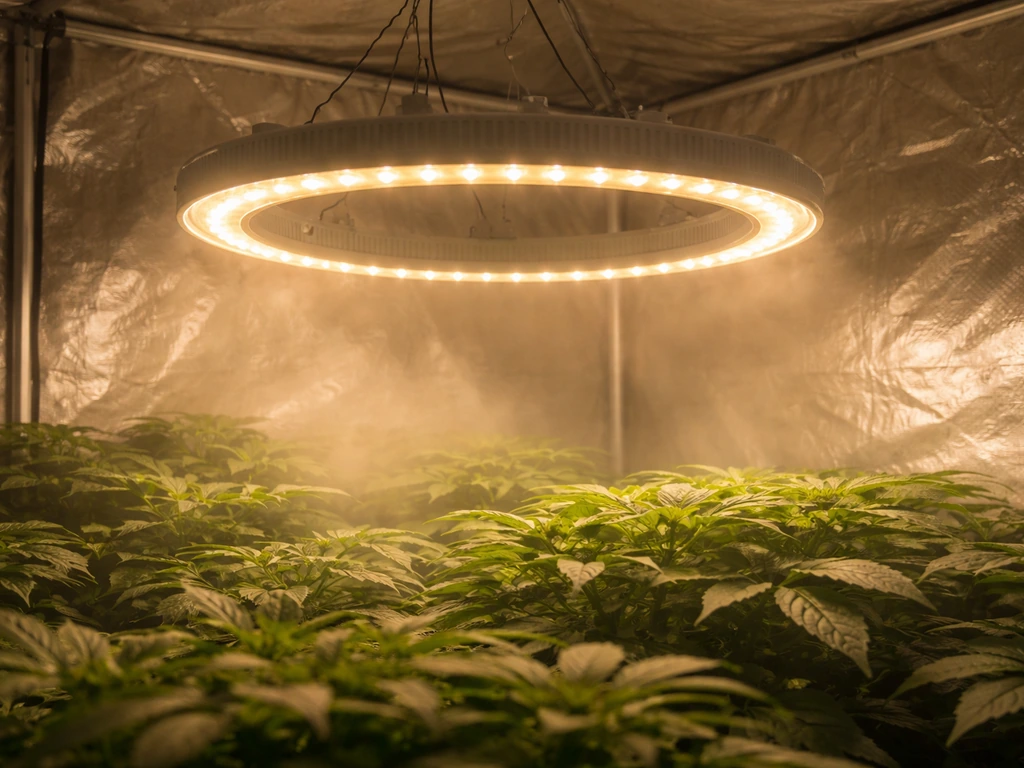
The Halo grow light line comes from ESTTECH Inc., a brand that has been quietly building a reputation in commercial and semi-commercial indoor cultivation. The core Halo "i Pro" series (400i Pro, 600i Pro, 900i Pro) are fixed-form LED fixtures designed around a flat, bar-free panel format with polycarbonate lensed optics. There's also a separate Halo EOS family (notably the EOS 720W) sold through some retailers with a bar-style LED design, so it's worth knowing which line you're looking at before you buy. This review covers both, but leans on the i Pro series since that's the flagship Esttech product with the most detailed published specs.
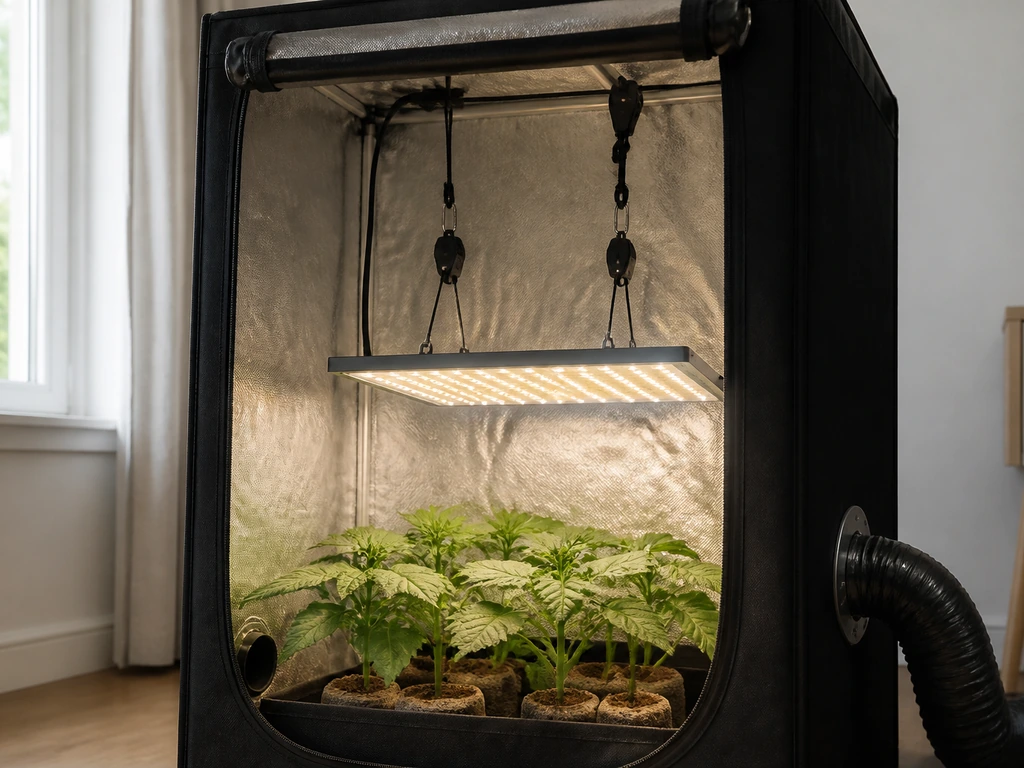
Who are these lights for? Honestly, the Halo i Pro series is aimed at serious hobbyists and small commercial operators who want a fixture that can hang over a 4x4 ft canopy and push high PPFD without requiring constant tinkering. The 600i Pro and 900i Pro in particular have shown up in multi-light commercial grids alongside Gavita HPS and Fluence bar LEDs, which tells you something about where the brand positions itself. If you're growing in a 2x2 tent as a casual hobby grower, the entry-level 400i Pro is the practical pick. If you're dialing in a dedicated veg or flower room, the 900i Pro is the one to seriously consider.
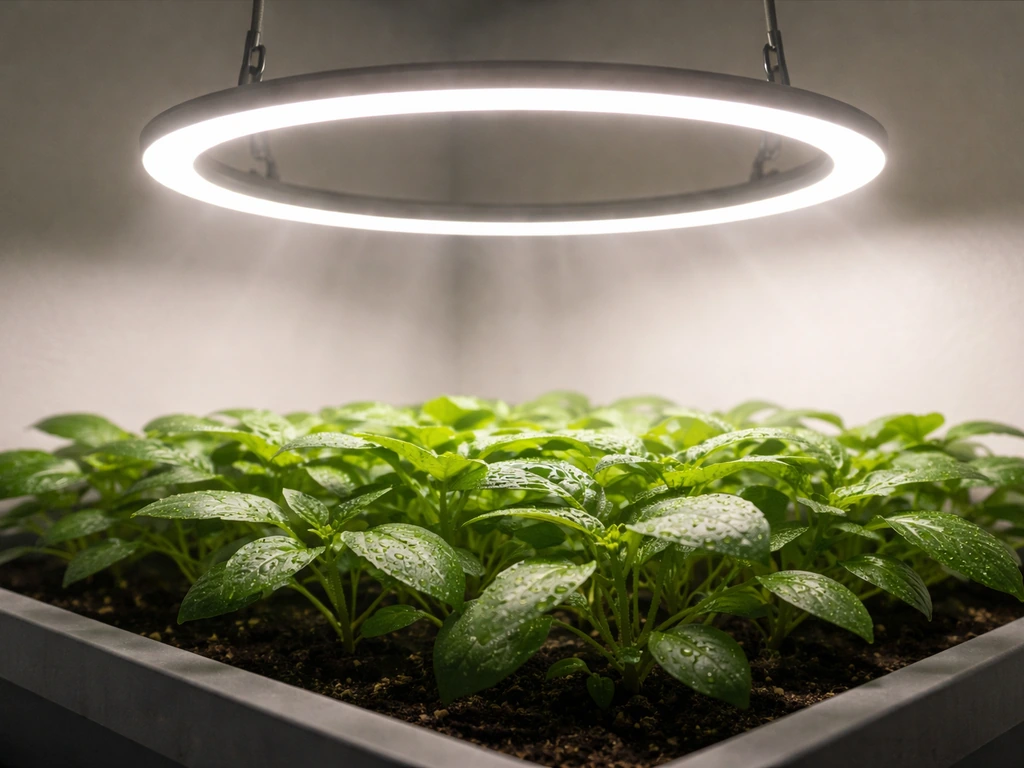
Starting with raw output: the 400i Pro is rated up to 1,289 µmol/s, the 600i Pro hits up to 1,936 µmol/s, and the 900i Pro tops out at 2,691 µmol/s. Those are total PPF figures, not PPFD at canopy, so your actual photon density depends heavily on hanging height. Esttech claims the lensed optics maintain high PPFD values up to 5 feet above the canopy across a 4x4 ft footprint, which is a more useful claim than just quoting PPF, because it tells you the fixture was engineered to spread light without the intensity drop-off you'd see from a bare-chip or standard reflector design.
In real use, the lens system does a noticeable job at coverage uniformity. The diodes are angled between 30 and 90 degrees within the polycarbonate lens housing, which flattens the intensity curve across the footprint instead of piling all the photons directly under the center of the fixture. For a 4x4 space, this matters a lot. Plants at the corners of the canopy aren't significantly dimmer than plants directly underneath, which is something you can't take for granted with many LED panels. The 600i Pro is built from eight 100W panels plus separate 20W UV and 20W FAR RED modules, so that modular construction also helps with even distribution across the fixture face.
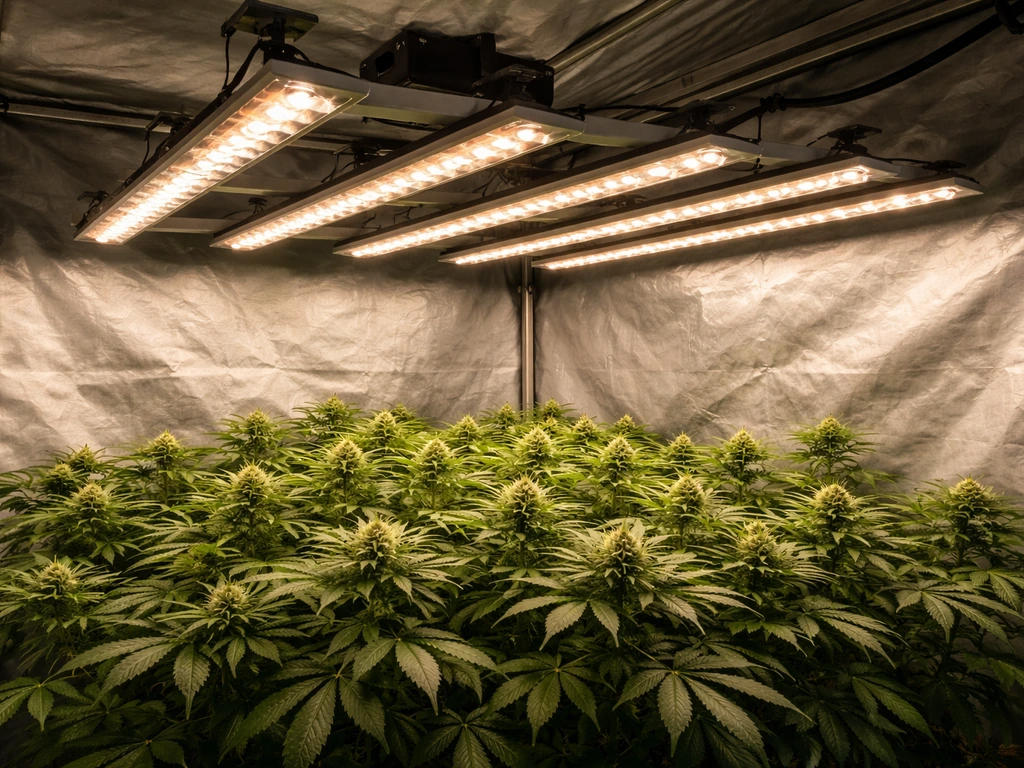
The Halo EOS 720W (the bar-style variant sold through some third-party retailers) reports a PPF of 1,944 µmol/s at 2.7 µmol/J efficacy, with coverage claims of 1.2 to 1.5 m² depending on the source. Its footprint of 110.5 x 106 cm is roughly equivalent to a 3.6 x 3.5 ft square, which places it slightly smaller than the i Pro's stated 4x4 ft target. Coverage uniformity on the EOS is harder to independently verify, but the bar design typically distributes light more evenly at lower hanging heights than a traditional panel.
Spectrum breakdown and what it means for each growth stage
All three i Pro models share the same spectrum description: full spectrum plus violet plus far red, with separate UV and far red (730 nm) channels that can be controlled independently. That last part is worth pausing on. Having a dedicated 730 nm far red channel isn't just a spec sheet feature. Far red at 730 nm drives the Emerson effect, accelerating flowering transitions and improving overall canopy penetration. When you can dial it in independently, you have real control over photoperiod signaling rather than just running a fixed spectrum at full blast the entire grow.
For seedlings and early veg, you'd typically run the fixture at a lower dimming level (the 0-10V / PWM dimming is standard across all i Pro models) with the far red channel off or minimal. The violet and blue components in the full-spectrum output support compact, sturdy vegetative growth. During late veg and the transition into flower, dialing up the far red channel helps signal the shift. Esttech specifically calls out root development enhancement and flowering transition support as use cases for the far red add-on. That's a reasonable claim backed by basic plant science.
The EOS 720W doesn't have the same independently controlled UV and far red channel documentation, at least not in the retail spec pages available. It lists full-spectrum LED bars but doesn't break out separate channel control. If spectrum programmability across stages is important to your workflow, the i Pro series has a clear edge. If you want a simpler plug-in and run setup, the EOS might suit you better. For growers who want to compare against a completely different spectrum technology, plasma grow lights offer a continuous broadband spectrum that some cultivators prefer for flowering, though they come with their own trade-offs in efficiency and heat.
Power draw, heat output, and what it costs to run
Here are the key power figures across the i Pro line:
| Model | Power Draw | PPF Output | Efficacy (PPF/W) | Coverage |
|---|
| Halo 400i Pro | 400 W | Up to 1,289 µmol/s | ~3.22 µmol/J | 4 x 4 ft |
| Halo 600i Pro | 600 W | Up to 1,936 µmol/s | ~3.23 µmol/J | 4 x 4 ft |
| Halo 900i Pro | 900 W | Up to 2,691 µmol/s | ~2.99 µmol/J | 4 x 4 ft |
| Halo EOS 720W | 290–720 W (4 settings) | 1,944 µmol/s | 2.7 µmol/J | ~1.2–1.5 m² |
The 400i Pro and 600i Pro both land around 3.2 µmol/J, which is genuinely competitive for full-spectrum LED fixtures in 2026. The 900i Pro sits just under 3.0 µmol/J, a small drop-off likely related to the higher current density at that wattage. The EOS 720W at 2.7 µmol/J is solid but trails the i Pro series. To put running costs in plain terms: a 600i Pro running 18 hours a day at $0.15/kWh costs roughly $0.59 per day, or about $17.70 per month. At 12 hours during flower, that drops to about $0.39 per day.
Heat is where LED fixtures generally win over HPS, and the Halo line is no exception. The i Pro fixtures blank" rel="noopener noreferrer">accept 110–277 VAC input, which means minimal electrical conversion losses. None of the three i Pro models generate the kind of radiant heat that forces you to massively oversize your exhaust system. The EOS 720W lists an operating temperature range of 25°C to 40°C (77°F to 104°F), which is relevant for hot summer grows or poorly ventilated spaces. If you're comparing the thermal management story of LEDs against traditional discharge lighting, it's hard not to reference the ongoing debate in the HPS grow light world, where heat management is a constant challenge that LED fixtures like the Halo largely sidestep.
Setup, mounting, and fitting these into your actual grow space
The i Pro fixtures share the same physical footprint: 4.0 x 3.6 x 0.26 ft. That's a large, flat panel, and it will feel substantial when you're hanging it. It fits snugly over a 4x4 tent but has almost no clearance on the sides, so if your tent has corner poles that intrude, factor that in. The slim 0.26 ft (about 3 inches) depth means it doesn't eat into your vertical grow space, which matters if you're working with limited ceiling height.
The lensed optics allow the 600i Pro to be placed as close as 8 inches from the plant canopy, according to Esttech's placement guidance. That's unusually close for a 600W fixture and it's made possible by the angled diode design that spreads heat and light laterally rather than concentrating it straight down. The 800F PRO (a related EU-market model) similarly maintains high PPFD up to 150 cm above canopy using the same polycarbonate lens approach. These aren't just marketing claims; the physics of angled lensing do genuinely reduce hotspot intensity at close range.
The EOS 720W setup is more straightforward for first-time installers. It ships with a rope ratchet mounting system, an RJ12 cable, and a power cable included, making it a plug-and-play experience. The i Pro series requires a bit more attention to dimming cable connections if you want to use the 0-10V control, but it's not complicated. Dimming is especially useful if you're building a multi-light grid, because you can run all fixtures off a single controller.
Speaking of multi-light grids: the Halo line is genuinely used in commercial settings alongside other high-output fixtures. Facility inventories have included Esttech Halo LEDs running alongside both high-pressure sodium and competing LED bar systems. If you're building out a room rather than a single tent, the 900i Pro tiling at 4x4 ft per fixture makes grid planning straightforward. You can size the room by multiples of 16 sq ft, which is a practical advantage over oddly shaped fixtures.
How the Halo line stacks up against the competition
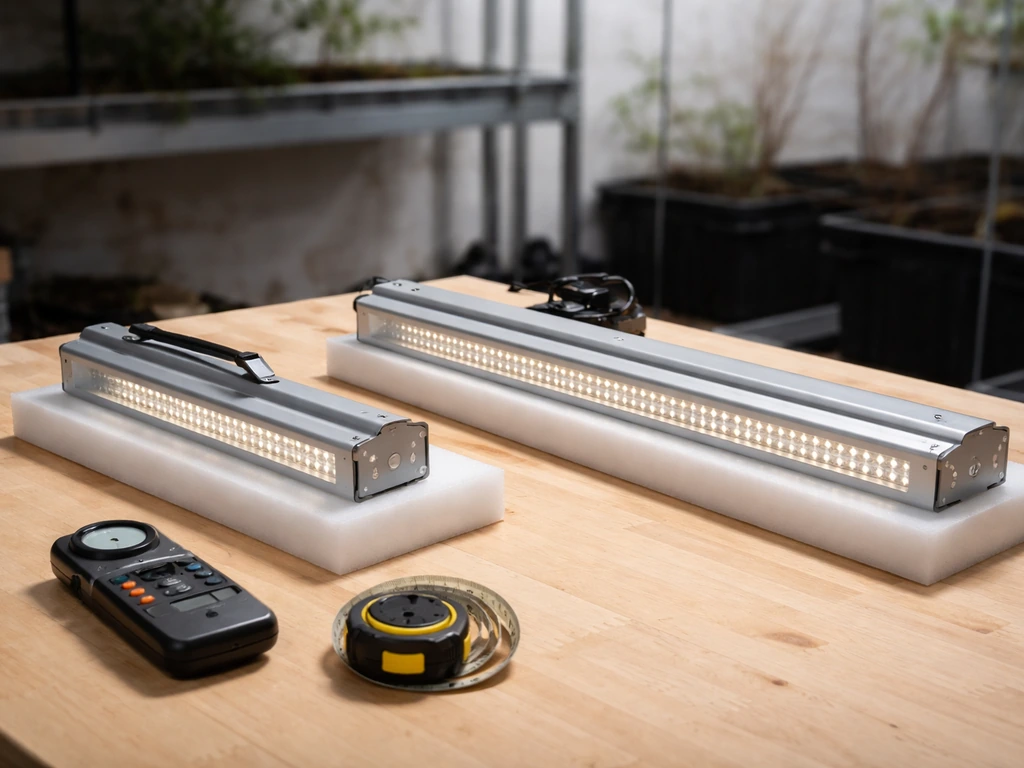
At ~3.2 µmol/J, the 400i Pro and 600i Pro are competitive with most premium LED fixtures on the market. Platinum LED grow lights have been a long-standing alternative in the hobbyist market, offering a different approach to spectrum engineering, but they generally don't match the Halo's efficacy numbers at comparable wattages. The Gavita family takes a different approach entirely: the Gavita plasma grow light is worth a look if you're prioritizing spectrum breadth and are willing to pay a premium, but for pure photon-per-watt efficiency, the Halo i Pro series is harder to beat at its price point.
The 5-year warranty across the entire i Pro line and a rated lifetime above 54,000 hours are both meaningful for total cost of ownership. Over a 5-year period running 16 hours per day, that's roughly 29,200 hours of operation, well within the rated lifetime. The EOS 720W doesn't have the same documented warranty terms in retail listings, which is something to check before buying from a third-party source.
Which Halo should you actually buy
Here's the practical breakdown by use case:
- Halo 400i Pro: Best for a 4x4 tent running seedlings through vegetative growth, or for a grower who wants lower operating costs and doesn't need maximum PPFD for flowering. At 400W and ~3.22 µmol/J, it's efficient and capable, but the lower total PPF output means it's not the choice for pushing dense, high-demand flower canopies.
- Halo 600i Pro: The sweet spot in the line. At 600W with 1,936 µmol/s and the same separate UV/far red channels, it covers a 4x4 ft flower canopy comfortably without the electrical overhead of the 900i Pro. If you're running one tent, this is the one to get.
- Halo 900i Pro: For growers who want to drive a 4x4 canopy hard through flower, or who are tiling multiple fixtures across a larger room. The 2,691 µmol/s output with full dimming means you can back it down for early stages and push it hard at peak flower. The slight efficacy dip to ~2.99 µmol/J is acceptable given the total output.
- Halo EOS 720W: A reasonable alternative if you prefer a bar-style fixture and want simpler setup, but the lower documented efficacy (2.7 µmol/J) and less detailed spectrum control specs put it behind the i Pro series for serious growers.
Sizing the light to your space
For vegetative growth, target around 400–600 µmol/m²/s PPFD at canopy. For flowering, most cannabis and high-demand crops want 800–1,200 µmol/m²/s. A 600i Pro at 24 inches above a 4x4 canopy will put you solidly in the 700–900 µmol/m²/s range depending on room reflectivity, which covers most flowering needs. If you want to push past 1,000 µmol/m²/s consistently, the 900i Pro at 24–36 inches is the right call. For seedlings and clones, keep any of the i Pro fixtures at 50% or lower on the dimmer and hang them at 36–48 inches to avoid light stress in the first two weeks.
What to expect in the first weeks: don't run these at full power from day one. Start at 50–60% dimming and watch for any leaf curling or bleaching, which would indicate too much intensity for your plant's current stage. The 0-10V dimming on all i Pro models makes gradual ramp-up easy. By week three of vegetative growth, most robust strains can handle 80–100% output at proper hanging height. By mid-flower, you should be running at 100% with CO2 supplementation if you want to fully exploit the 900i Pro's output. Without supplemental CO2, plants will likely saturate around 1,000–1,200 µmol/m²/s regardless of what the fixture can deliver.