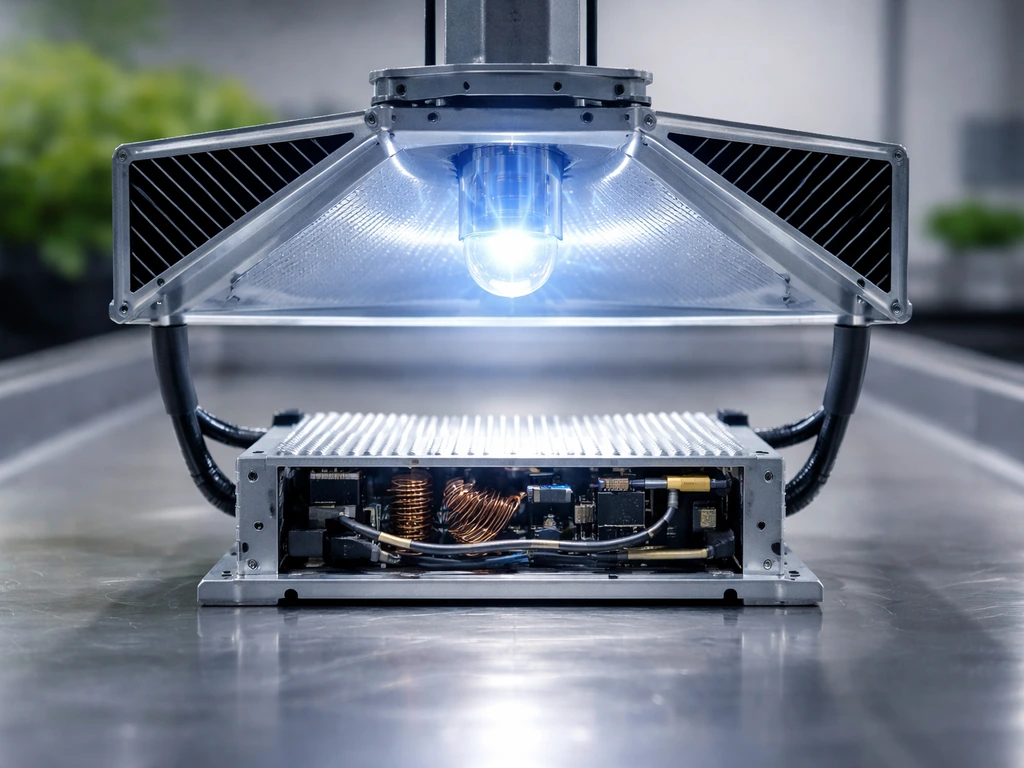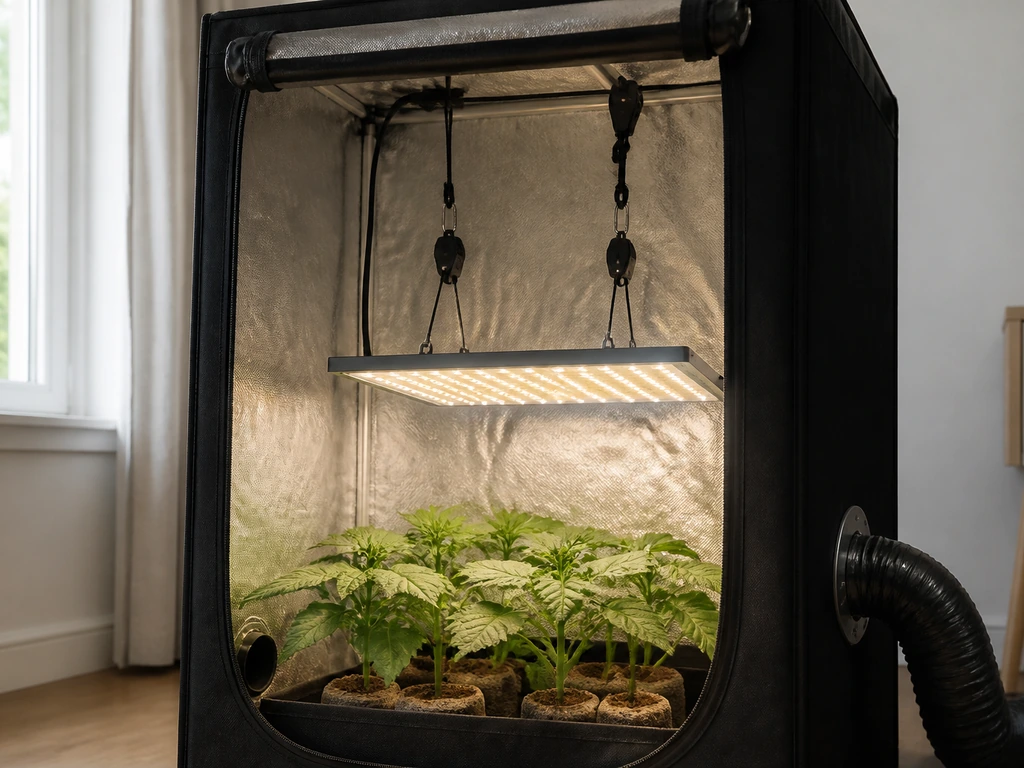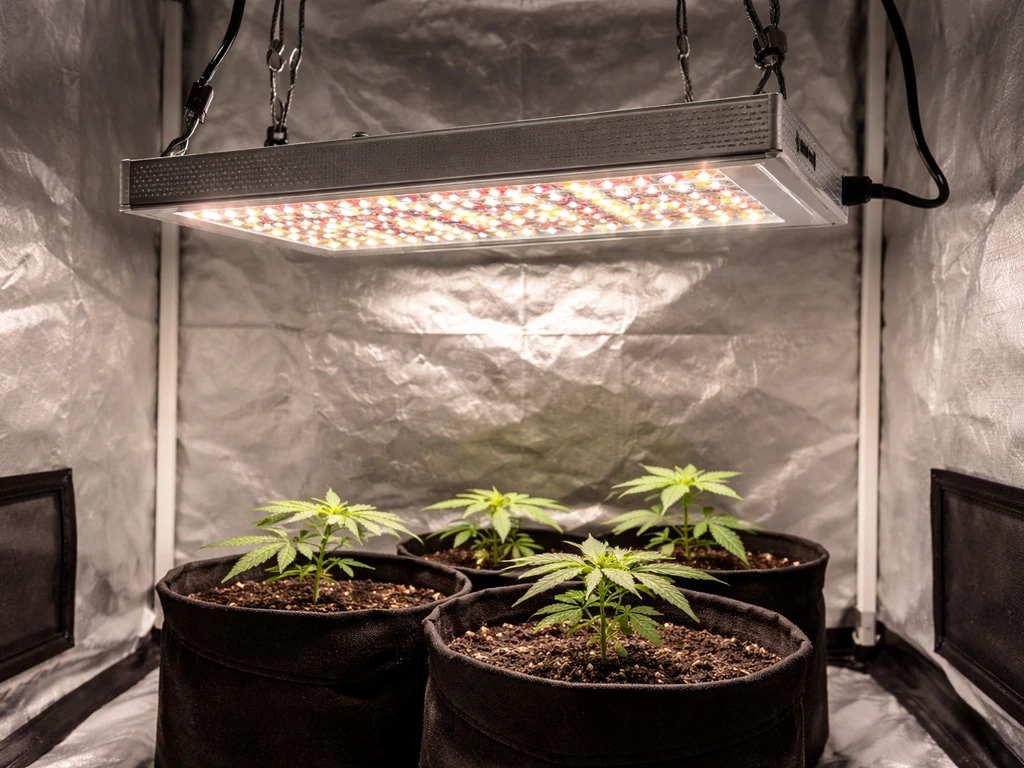
If you're looking at Platinum LED grow lights and trying to figure out which model is worth your money, here's the short answer: the Advanced Platinum Series P-line (P150 through P1200) are solid mid-to-high-range LED fixtures that deliver consistent spectrum coverage and reasonable efficiency, but they're not the cheapest option on the market, and the claimed wattages on the box are not the same as actual power draw. Led Plant Lights also frames the Advanced Platinum Series P150 as a replacement for a 250W HPS while consuming about 100W of actual power, supporting the idea behind this replacement/ROI claim claimed wattages on the box are not the same as actual power draw. Once you understand the real numbers, choosing the right model for your tent or room becomes a lot more straightforward.
Platinum LED Grow Lights Review: Best Models, Specs, and Fit

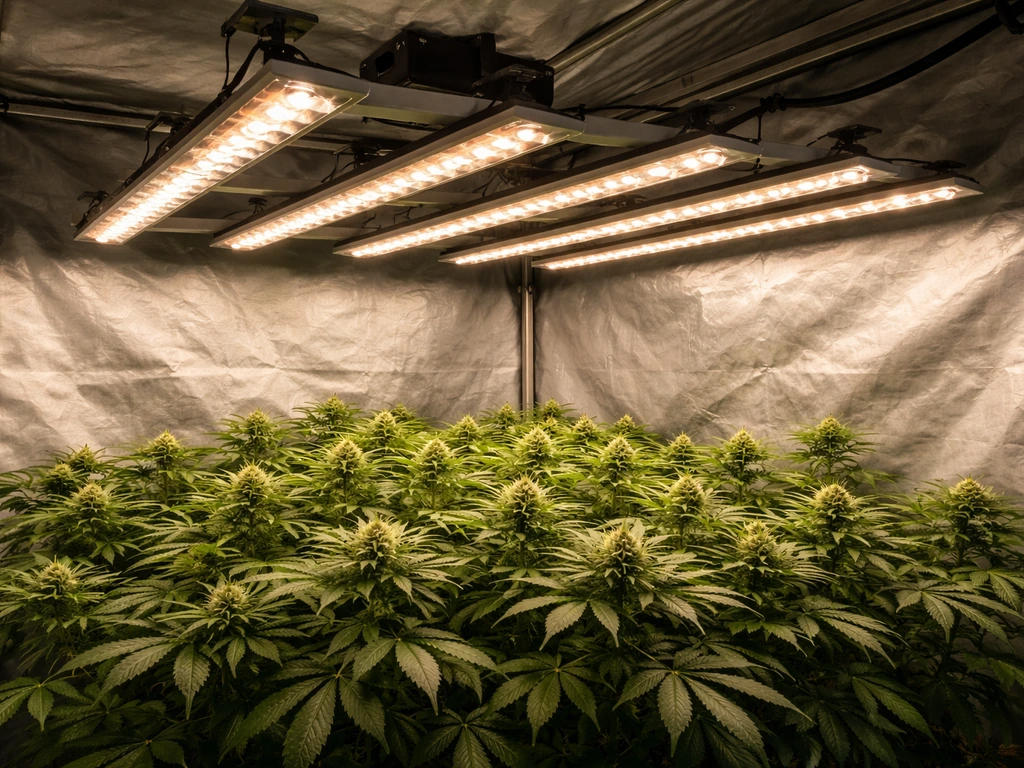
What to look for in a Platinum LED grow light
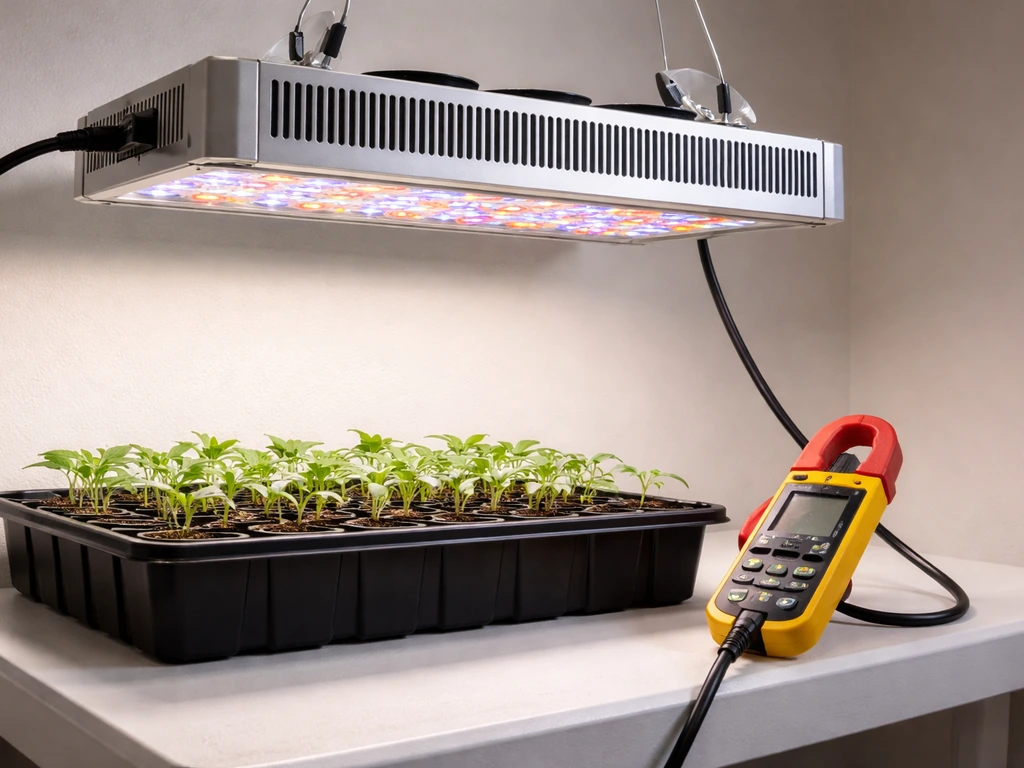
The first thing to get right is the difference between "model wattage" and actual draw. Platinum markets its fixtures as P300, P450, P600, P900, and P1200, but those numbers refer to the theoretical maximum output of all the LEDs if run at full intensity, not what the light actually pulls from your wall. The P450, for example, draws 137W in veg mode and 255W in full bloom. The P1200 draws 379W in veg and 690W in bloom. That gap matters for both your electricity bill and your thermal planning, so always work from the actual draw numbers, not the model name.
Beyond wattage honesty, here are the specific things worth checking before you buy any Platinum model:
- Actual power draw (watts) in both veg and bloom modes, not the model number
- PPFD values at your intended hang distance (30cm and 45cm data is available for the full Platinum range)
- Coverage area at 18 inches, which is Platinum's stated measurement height for max and core coverage specs
- Spectrum design: the 12-band UV-to-IR claim and whether the dual Veg/Bloom switching actually changes output meaningfully
- Thermal design: fan count scales with fixture size (2 fans on the P450, 8 fans on the P1200), and heatsink quality matters for longevity
- Warranty terms: Platinum's 5-year warranty plus 90-day money-back applies across the range, which is above average for this category
The 12-band full spectrum positioning Platinum uses across the P-series covers UV through far-red/IR. In practice, this means the light is designed to support the full plant life cycle from seedling to late flower without swapping fixtures. The dual Veg/Bloom switch lets you activate only the veg-optimized diodes during early stages (lower draw, less heat, more blue-weighted output) and then flip to full bloom mode when you need the complete spectrum and maximum intensity.
Quick take: best Platinum LED models by use case
The Platinum lineup currently spans six models: P150, P300, P450, P600, P900, and P1200, all built around 3W LEDs. Here's where each one makes sense and where it doesn't.
| Model | Actual Draw (Bloom) | Core Coverage @ 18" | Best Use Case | Not Ideal For |
|---|---|---|---|---|
| P150 | ~90W | ~2' × 1.5' | Seedlings, clones, small propagation trays | Flowering a full plant, any tent over 2×2 |
| P300 | ~180W | ~2.5' × 2' | 2×2 tent, single plant veg/flower | Fills a 3×3 in bloom — marginal at edges |
| P450 | 255W (bloom) | 3' × 2.5' core | 2×4 or 3×3 tent, 2–3 plants full cycle | Dense 4×4 canopy at flower |
| P600 | ~340W (est.) | ~4' × 3' core | 3×3 to 4×3 space, 3–4 plants | Replacing a 600W HPS in a 4×4 — undersized |
| P900 | 515W (bloom) | ~4.5' × 4' core | 4×4 tent, serious 4–6 plant grow | 5×5 or larger rooms at flower |
| P1200 | 690W (bloom) | 5' × 4' core | 4×4 to 5×5 room, high-yield full cycle | Budget-constrained setups — highest price point |
If you're running a 4×4 tent and want one fixture that handles veg and flower without compromise, the P900 at 515W actual bloom draw is the practical sweet spot in the range. For growers who want the maximum output and have a 5×5 space or are running a perpetual cycle with heavy feeders, the P1200 at 690W bloom draw (with an optional 379W veg mode to reduce heat and power during early stages) is the top of the line. The P450 hits the best balance of price, coverage, and efficiency for a 2×4 or tight 3×3 tent.
Performance testing metrics and what they mean
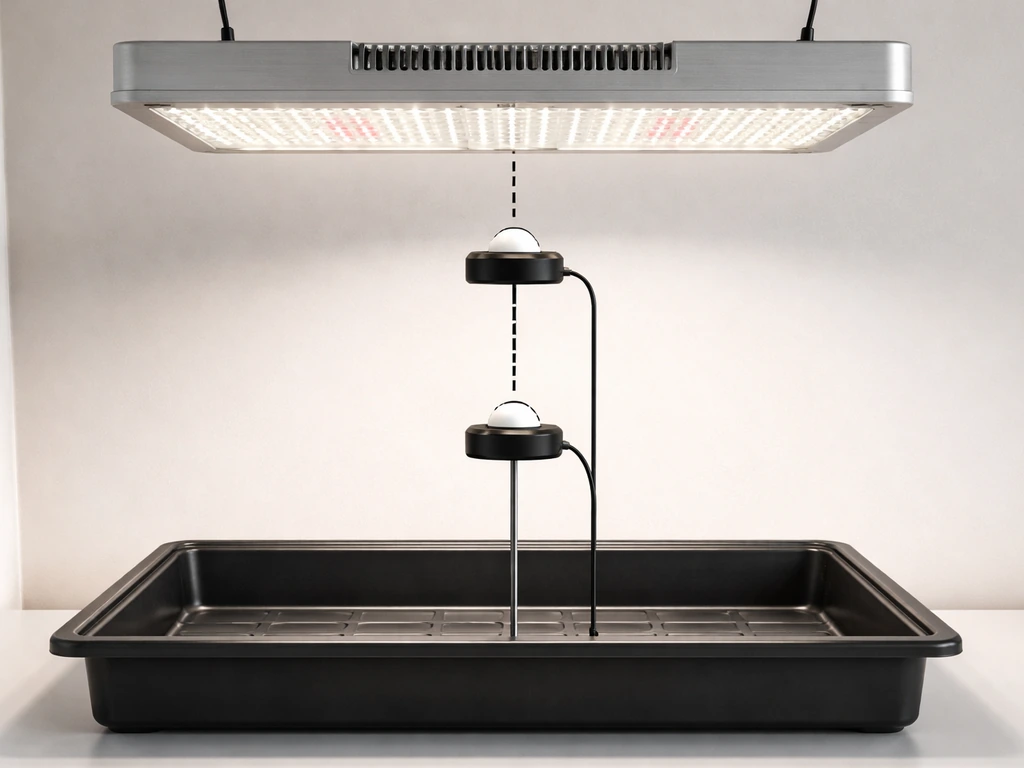
PPFD (photosynthetic photon flux density, measured in µmol/m²/s) is the number that actually tells you how much usable light your plants receive per unit of canopy. Platinum publishes PPFD readings at 30cm (about 12 inches) and 45cm (about 18 inches) for each model. These are center-point spot readings, not averaged canopy values, so expect the edges of your coverage area to run lower than the numbers below.
| Model | PPFD @ 30cm | PPFD @ 45cm | Efficacy (approx.) |
|---|---|---|---|
| P300 | 1575 µmol/m²/s | 1050 µmol/m²/s | ~1.73 µmol/W (estimated) |
| P450 | 2200 µmol/m²/s | 1385 µmol/m²/s | ~1.73 µmol/W |
| P600 | 1605 µmol/m²/s | 1160 µmol/m²/s | ~1.73 µmol/W (estimated) |
| P900 | 2180 µmol/m²/s | 1615 µmol/m²/s | 1.73 µmol/W |
| P1200 | 2800 µmol/m²/s | 1860 µmol/m²/s | ~1.73 µmol/W (estimated) |
The P900's stated efficacy of 1.73 µmol/W is competitive for a fixture in this price bracket, though newer quantum board designs from competing brands now regularly hit 2.5–2.9 µmol/W. For context, the P450's center PPFD of 2200 µmol/m²/s at 30cm is intense enough that running it too close to seedlings or young vegetative plants would cause light stress. At 18 inches, the P450 delivers intensity appropriate for mid-to-late veg and flowering, which is right where you want it.
The P150 shows how PPFD falls off with distance nicely: at 6 inches it measures around 1800 µmol/m²/s, dropping to roughly 910 at 12 inches, 535 at 18 inches, and about 340 at 24 inches. That decay pattern is typical for any LED panel and is a useful reminder that raising your light even 6 inches can cut intensity by 40 percent or more. Build your hang-height plan around the 18-inch data point as your starting position and adjust from there based on plant response.
Spectrum, coverage, and canopy-distance planning
Platinum's 12-band spectrum is designed to replicate a broad solar profile from UV through far-red. In veg mode, the fixture activates primarily the blue-heavy diodes, which promotes compact, bushy growth and keeps internode spacing tight. Bloom mode brings in the full 12-band output, adding red and deep red wavelengths that drive flowering response and bud development. The dual switching isn't just a marketing feature: the power draw difference between modes (for example, 137W veg versus 255W bloom on the P450) is real and measurable on your meter.
For coverage planning, Platinum distinguishes between "max coverage" (the area the light reaches at lower intensity) and "core coverage" (the area with sufficient intensity for flowering). The P450 covers a maximum area of 4.5×4 feet but has a core flowering footprint of 3×2.5 feet at 18 inches. The P1200 extends that to a maximum of 6×5.5 feet with a core of 5×4 feet. Always plan your canopy layout around the core coverage number if you're trying to flower, not the max number.
Practical canopy-distance guidelines for Platinum P-series fixtures:
- Seedlings and clones: start at 24–30 inches above the canopy and watch for any leaf cupping or bleaching in the first week
- Early veg (first 2–3 weeks): 20–24 inches in veg mode; lower gradually as plants establish
- Mid-to-late veg: 18–20 inches in veg mode; transition to bloom mode when switching photoperiod
- Early flower: 18 inches in bloom mode; monitor for heat stress at canopy level (aim to keep canopy temp under 82°F)
- Mid-to-late flower: you can drop to 14–16 inches if the canopy is responding well and no hotspots are forming
One thing worth noting: the high center PPFD readings on models like the P450 and P1200 mean there's a real intensity gradient from the center to the edges of the coverage zone. If you're growing multiple plants in a 3×3 or 4×4, rotating pots every few days during veg will help even out growth rates across the canopy. A light mover is an option if uniformity is critical for a larger space.
Build quality, heat management, and reliability
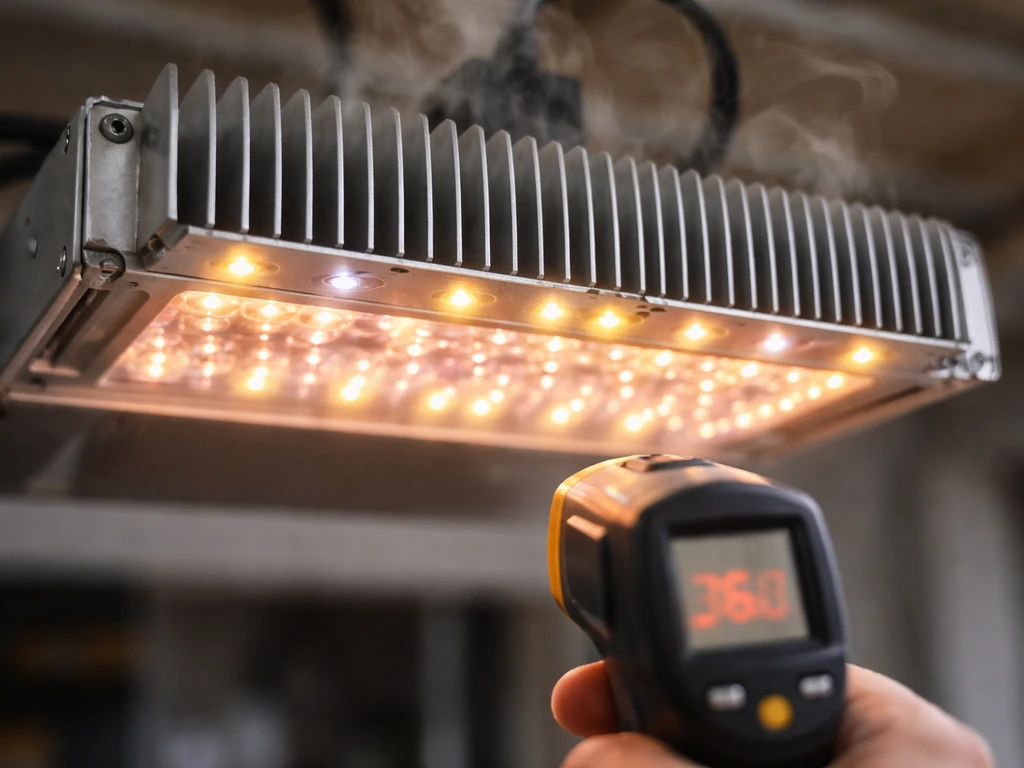
Platinum uses 3W Bridgelux and Epiled diodes across the P-series. These are proven chips with a solid track record in horticulture LEDs, though they've largely been superseded by modern Samsung LM301 series diodes in terms of raw efficacy. The fixture housings are aluminum, and the heat management relies on a combination of passive heatsink fins and active cooling fans: 2 fans on the P450, scaling up to 8 fans on the P1200. In testing, the P450 ran noticeably warm but not hot at the fixture level, and ambient temperature in a properly ventilated 3×3 tent stayed manageable. The P1200's 8-fan array is more aggressive and keeps the fixture itself cooler, though it's also louder in a quiet room.
Reliability over multi-year use is where Platinum's warranty terms matter most. The 5-year warranty covering defects and a 90-day money-back guarantee are both above average for the LED grow light space. That said, the warranty only matters if it's honored, and Platinum has a reasonably good reputation for US-based customer support. If you're running a light in a commercial or semi-commercial context, the warranty coverage period gives you meaningful protection on a high-cost fixture.
A few build-quality details that are worth knowing before you set up:
- The input voltage range of 85–260V means these lights will work internationally without a transformer, which is useful if you're buying from the US and using abroad
- The aluminum heatsink construction does a reasonable job of passive thermal management, but the fans are the primary heat path at higher wattages
- Fan noise is noticeable on the P1200 in a quiet room; the P450's 2-fan setup is quieter
- The daisy-chain capability (on some models) lets you connect multiple units to a single power source, which simplifies wiring in multi-light setups
Value vs alternatives: price, warranty, and ROI
The honest value comparison for Platinum LEDs comes down to this: they're priced at a premium over comparable quantum board fixtures, but they come with a better warranty and an established track record. At the P300 level, a cost analysis using an 18-hour daily cycle shows the P300 running at roughly $0.70 per day (about $21 per month) versus a 400W HPS at roughly $1.05 per day (about $32 per month). That $11/month savings adds up to about $132 per year, which starts to offset the higher upfront LED cost over a 2–3 grow cycle timeframe.
Where Platinum starts to look less competitive is against modern quantum board designs that hit 2.5+ µmol/W efficacy while Platinum's P-series sits around 1.73 µmol/W. If you're choosing purely on energy efficiency, there are newer options that will cost less to operate per unit of light delivered. However, if you've been considering older-technology alternatives like high-pressure sodium fixtures, Platinum LEDs make a clear efficiency argument: lower operating cost, less heat dumped into your grow space, and a longer usable lifespan without bulb replacements.
For growers curious about different LED approaches, it's also worth knowing how Platinum fits into the broader LED landscape. Circular emitter designs like those covered in a halo grow lights review take a completely different approach to light distribution, and that comparison can help clarify whether a panel-style fixture like Platinum or a ring-emitter design better suits your canopy geometry. Similarly, if you're considering discharge-lamp alternatives, a plasma grow lights review gives context for how plasma-based spectrum technology compares to LED in terms of light quality and running costs.
For growers who specifically want to evaluate plasma technology from a premium manufacturer, the Gavita plasma grow light offers a useful reference point for what high-end plasma outputs look like in a comparable commercial context. The Platinum P1200 competes on coverage and intensity with high-end fixtures, but at its price point, you should run the efficacy math against every major alternative before committing.
Buyer checklist and setup tips for your first grow
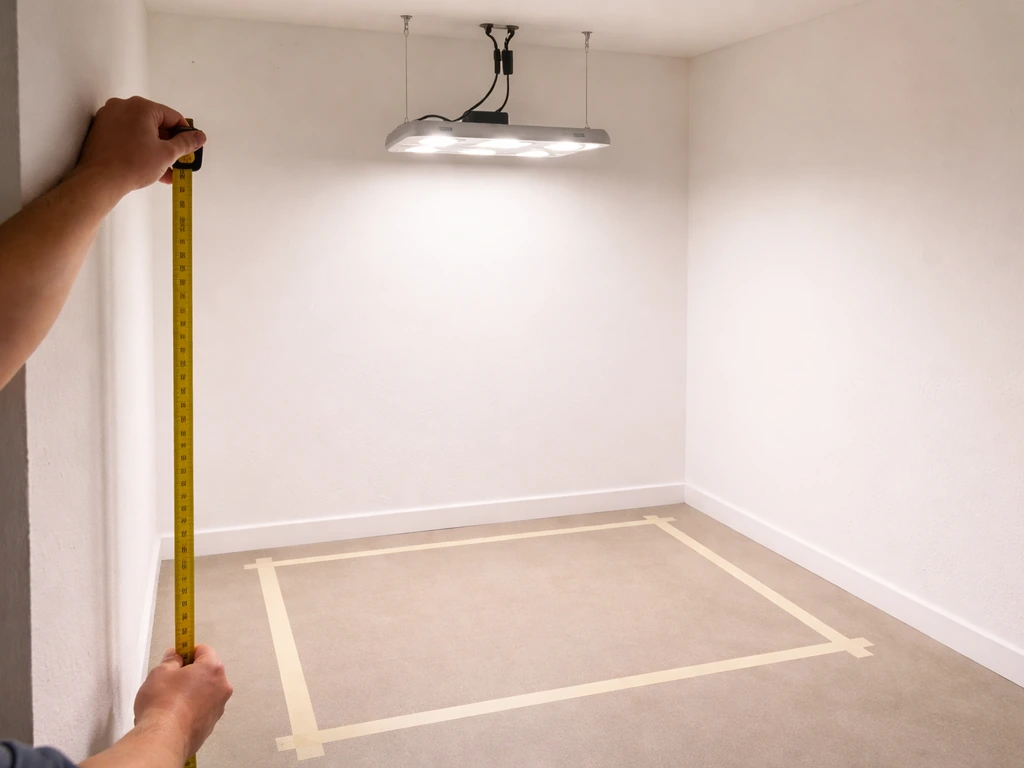
Before you place an order, run through this checklist to make sure you're buying the right model and setting it up correctly from day one.
- Measure your grow space and match the model to the core coverage area (not max coverage) for the flowering stage
- Calculate your actual operating cost using the bloom-mode wattage, not the model number wattage
- Verify your tent or room has adequate exhaust ventilation to handle the fixture's heat output at full bloom draw
- Start with the light at 24 inches above seedlings, then lower gradually over 1–2 weeks as plants establish
- Use veg mode for the first 4–6 weeks, then switch to bloom mode when you flip to 12/12 or when the plant enters its pre-flower stage
- Invest in a basic PAR/PPFD meter or borrow one for your first run to verify actual canopy readings match your planning expectations
- Register your warranty with Platinum within the first 30 days of purchase to ensure coverage
- Keep a grow log noting hang height, mode setting, ambient tent temperature, and plant response each week so you can dial in the setup over successive runs
A few practical setup mistakes that are easy to avoid: don't run bloom mode at 12 inches over seedlings just because you want maximum intensity, don't ignore tent temperature during the first week of operation (add an inline fan if the P900 or P1200 is pushing temps above 82°F at canopy level), and don't assume the "max coverage" spec means all of that area is usable for flowering. Stick to the core coverage footprint for your flowering plants and use the outer zone for propagation or a supplemental seedling tray if you want to use every inch of the space.
Bottom line: Platinum LED's Advanced P-series are dependable, well-warranted fixtures that suit growers who want a proven product with reliable US support and a dual-mode design that genuinely works across the full plant cycle. They're not the most efficient LEDs you can buy in 2026, and the price premium over newer quantum board options is real. But if build quality, warranty confidence, and 12-band spectrum breadth matter more to you than squeezing out every last µmol/W, the P450 for a 3×3 and the P900 for a 4×4 remain solid choices that will deliver consistent results across multiple grow cycles.
FAQ
Do I need to run Platinum grow lights in both veg and bloom modes, or can I keep them in bloom all the time?
You can, but it usually costs more and adds unnecessary heat. Bloom mode activates the full 12-band set and significantly increases draw (for example the P450’s veg versus bloom difference), so for seedlings and early veg it’s better to start in veg mode and only switch once plants are ready for heavier red output and higher intensity.
How do I choose the right hang height if my plants are in the early veg stage versus late flower?
Use the PPFD distance data as your baseline starting point, then adjust based on response. For many setups, plan around the 18-inch readings as a “safe middle” and then fine-tune, but in late flower you may increase intensity slightly only if canopy temps stay stable and plants are not showing bleaching or taco-leaf symptoms.
The specs list “max coverage” area, can I rely on it for flowering plants?
No. The outer zone can receive lower intensity, so it’s mainly useful for propagation, extra spacing, or supplemental trays. For flowering, build your canopy layout around the core coverage footprint, since that’s the region where intensity is adequate to support buds reliably.
Why does my light meter or app reading not match the PPFD numbers from the manufacturer?
PPFD figures are typically center-point spot readings at a specified distance and conditions, while consumer meters often have different sensor calibration and spectral response. Also, your canopy geometry and reflectivity change results, so expect edge areas and indirect reflections to differ from the published center numbers.
What’s the safest way to avoid light stress if I’m upgrading to a stronger Platinum model like the P450 or P1200?
Start higher than you think you need and run veg mode at first, then lower gradually while monitoring canopy temperature and plant signs. Because center PPFD is high, sudden changes, especially switching to bloom at short distance over seedlings, are a common trigger for bleaching and slowed recovery.
Are these lights loud, and will fan noise matter in a home setup?
The P-series uses active cooling, with the number of fans scaling up (for example more fans on higher models). The P1200’s fan array is more noticeable in quiet rooms, so if noise is a concern, plan your mounting location, ventilation path, and whether you need a sound-dampened environment.
What ventilation should I plan for, and how do I know if my temperatures are too high?
Treat canopy-level temperature as the decision point, not just room temperature. If the fixture is driving canopy temps above your target (the article notes adding an inline fan if canopy temps exceed 82°F), improve exhaust, increase air exchange, and consider raising the fixture slightly before you assume the only fix is more cooling.
Do I really save money versus HPS, or does that calculation change by electricity price and run schedule?
It changes a lot. The day-rate example assumes a specific daily runtime and electricity cost, so re-calculate using your local $/kWh and your actual hours per day. Also account for whether you run veg mode for part of the cycle, since the draw difference between modes affects the final operating cost.
How important is the warranty in practice, and what should I document before a claim?
Warranty matters mainly because LEDs can fail gradually or from heat stress. Before mounting, record purchase date, model/serial info, and keep photos of installation, including airflow and whether fans were unobstructed. If you ever have an issue, you’ll be in a better position to show that the light was used as intended.
Can I use a light mover instead of rotating pots, and which one helps more with uniformity?
Either approach can help, but they address different problems. Rotating pots is simple and targets plant-to-plant differences across the footprint, while a light mover changes the light distribution pattern over time. For a 3×3 or 4×4 with noticeable center-to-edge gradients, rotating pots every few days is often the quickest first step before investing in motion hardware.
Are these lights a good choice if I care most about efficiency per dollar, not spectrum breadth or warranty?
If pure efficiency is your top priority, you may find better options in the newer quantum board category, since Platinum’s efficacy is competitive but not the very highest. Platinum can still be the better choice if you value the dual-mode design, broader spectrum approach, and the stronger warranty confidence, but you should run your own µmol/W and total cost comparison.