HPS grow lights are still one of the most reliable, proven options for indoor flowering and fruiting, and for many growers they remain the right call in 2026. That said, they are not a universal best choice. This guide breaks down exactly what HPS lights do well, where they fall short, how to size and install one properly, and how to honestly compare them against newer alternatives, so you can make a confident buying decision today.
HPS Grow Light Review: How to Choose, Set Up, and Save

Marcus Caldwell
13 Apr 2026
What HPS grow lights are and how they actually perform
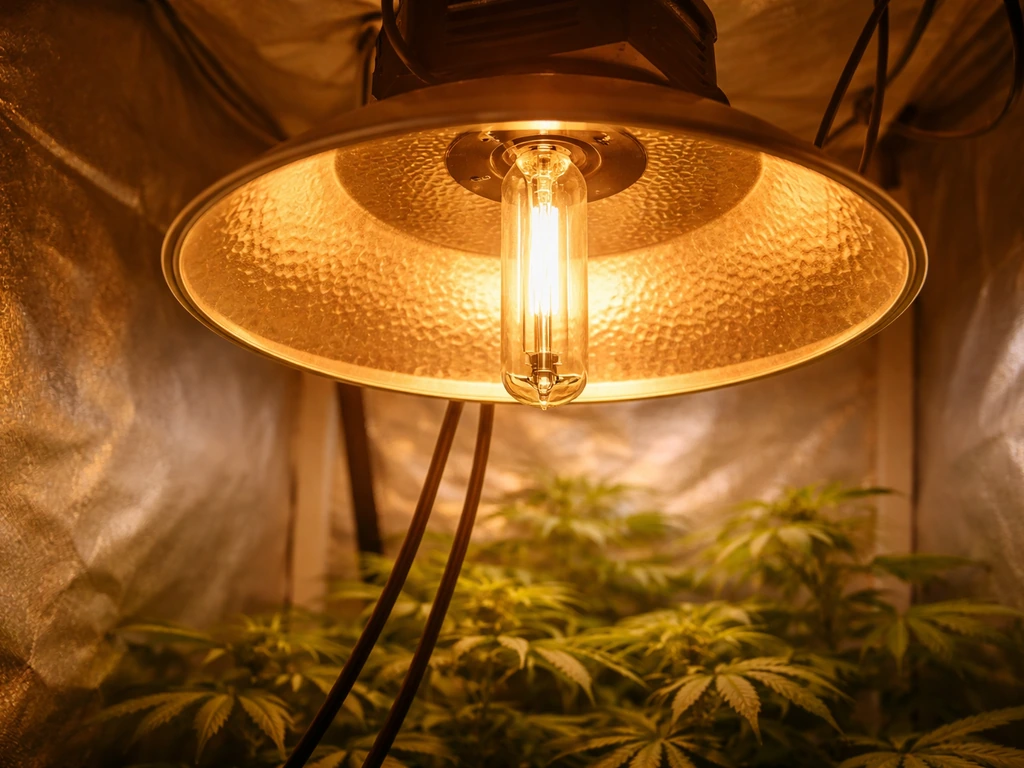
High-pressure sodium (HPS) lamps work by passing an electrical arc through a tube filled with sodium vapor and a small amount of other gases. As the sodium vapor pressure increases, the emission spectrum broadens around the characteristic peaks near 589 nm and 595 nm, producing that familiar warm orange-yellow glow with a strong emphasis on the red end of the visible spectrum. That red-dominant output is not a flaw. It is precisely why growers have used HPS for decades, since red and far-red wavelengths drive photosynthesis efficiently and directly promote flowering and fruiting responses in plants.
In practical terms, what this means is that HPS fixtures deliver very high photon flux in the wavelength range plants care about most during bloom. A well-specified fixture like the EYE HORTILUX SE 600 delivers an average PPFD of 185 µmol/s/m² across a 4 ft x 4 ft footprint, which is a solid canopy intensity for flowering. That number comes directly from manufacturer spec data and gives you a concrete starting point when planning your grow. Ballast choice matters here too: testing on 15 HPS lamps found that ballast type (electronic vs. magnetic) measurably affects PPF output, and some digital dimmable ballasts are marketed as offering up to 30% more efficiency than magnetic alternatives. Do not buy a lamp and ballast as separate afterthoughts. Treat them as a system.
Key buying factors: wattage, coverage footprint, and reflector quality
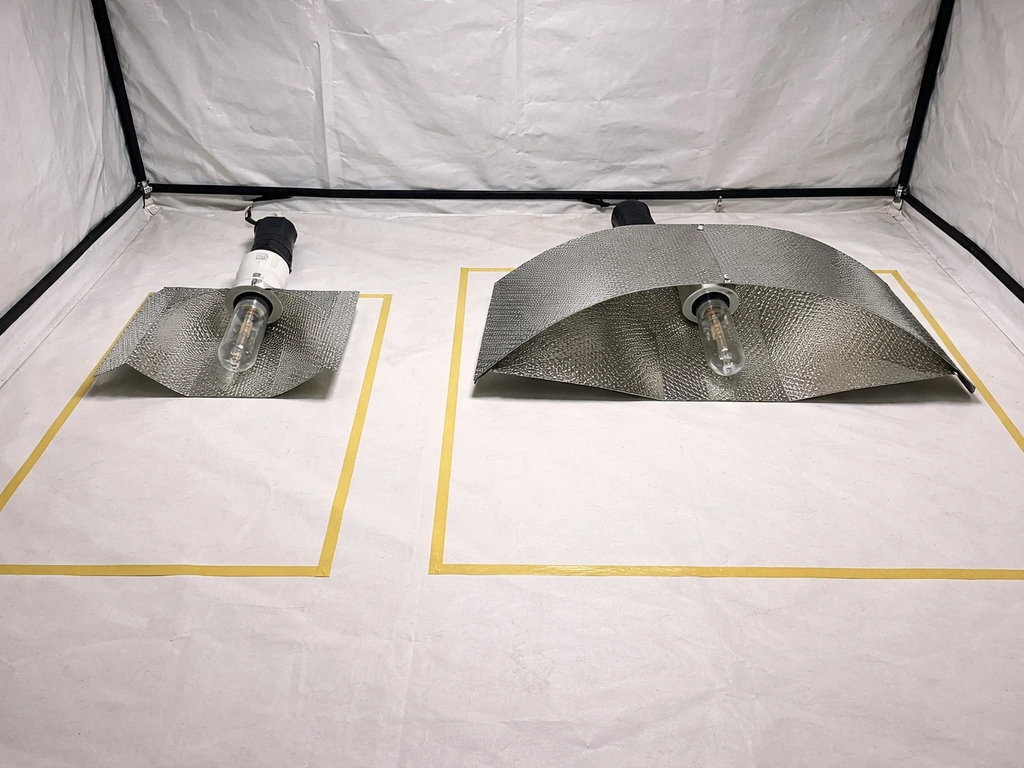
Wattage is the starting point for sizing, not the whole story. The most common configurations are 400W, 600W, and 1000W. A 600W setup is widely considered the sweet spot for small to mid-size grows: it produces enough photon flux to support serious bloom results without the aggressive heat output and electrical draw of a 1000W unit. A 400W fixture is manageable in smaller spaces like a 3 ft x 3 ft tent. A 1000W setup is for growers who know what they are doing with ventilation and have the room to manage it.
Coverage footprint should be evaluated from PPFD data, not just wattage. Manufacturer footprints (like the 4 ft x 4 ft claim for the SE 600) assume a specific mounting height and reflector geometry. Mount the same light higher and your footprint grows while intensity drops. Mount it lower and the center of the canopy gets intense coverage but edges suffer. Always verify coverage claims with a PAR meter at your actual canopy height before committing to a fixture count. Commercial HPS systems like the Gavita Pro 600W SE, which lists a PAR flux of 1092 in large-scale specifications, demonstrate that professional horticulture specifies fixtures by light output metrics rather than raw wattage. You should think the same way.
Reflector quality is underrated by first-time buyers. A good reflector redistributes light that would otherwise miss the canopy, improving uniformity across the footprint. Air-cooled hoods add the extra function of pulling heat away from the lamp assembly itself, which is a meaningful benefit in any space that gets warm. The tradeoff is that air-cooled hoods require proper ducting and airflow through the hood to work as intended, including an intake arrangement that ideally draws from cooler air outside the grow space. Check hood dimensions and ducting compatibility before you buy.
Vegetative vs. bloom: what to realistically expect at each stage
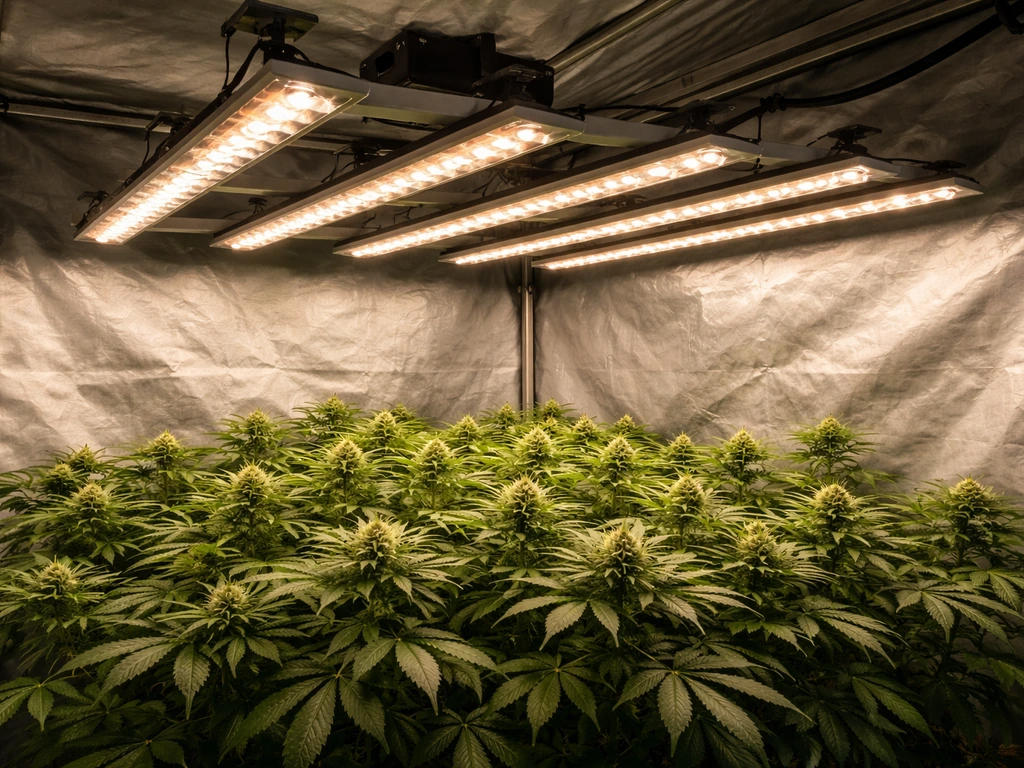
HPS performs best during the flowering and fruiting stage. The red-dominant spectrum aligns closely with what plants need to trigger and sustain blooming, which is why commercial flower and fruit producers have relied on HPS for so long. You will see dense, heavy flowers with good HPS coverage during a proper 12/12 light cycle, provided your other grow factors (nutrition, humidity, CO2) are dialed in.
Vegetative growth under HPS is functional but not optimal. Plants grow, and they grow reasonably well, but the red-heavy spectrum is less ideal than a blue-richer source for compact, vigorous vegetative development. Many growers use metal halide (MH) for veg and switch to HPS for bloom, running both bulbs in a switchable ballast setup. If you are running HPS for the full cycle, expect slightly stretchier plants during veg compared to MH or modern full-spectrum LED. It is not a deal-breaker for most grows, but set your expectations correctly.
One realistic caveat: HPS performance does not stay flat across a lamp's life. Lumen maintenance data shows that light output gradually declines over time, which means a lamp that delivered excellent canopy intensity in its first few months will be quietly underperforming by the end of its life. If your yields seem to slip after a year of use without any other explanation, the lamp is almost certainly the first thing to check.
Heat, ventilation, and what it actually costs to run HPS
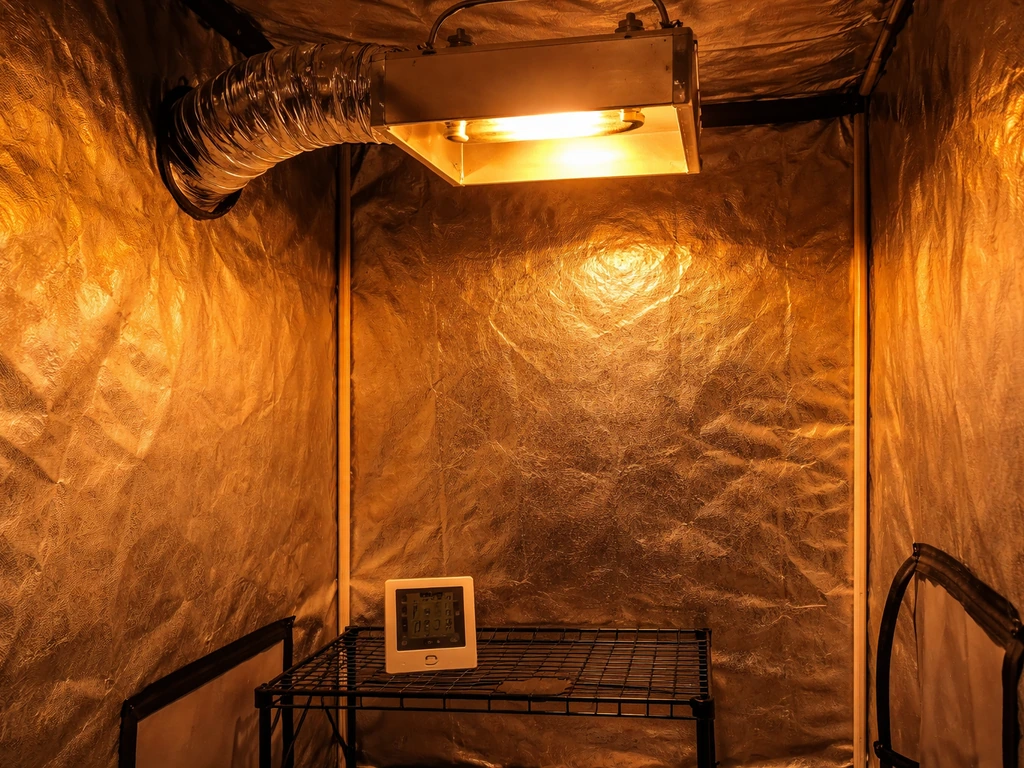
Heat is the defining operational challenge of HPS. A 600W fixture does not just draw 600W from the wall, it also dumps a significant portion of that energy into your grow space as radiant and convective heat. In a sealed or poorly ventilated room, temperatures can climb fast enough to stress plants within an hour. This is not a minor footnote. It is the main reason some growers switch away from HPS when their grow space is small or their ambient temperatures are already high in summer months.
For ventilation sizing, a common starting point for a 400W HPS system is an exhaust fan in the range of roughly 162 to 270 CFM, depending on room volume, insulation, and ambient conditions. If you are running air-cooled hoods, add roughly 5% of your calculated CFM requirement per air-cooled HID light in the space. These are starting estimates, not finished numbers. You should always measure actual temperatures after installation and adjust fan speed accordingly.
On electricity cost, a 600W HPS fixture running 12 hours a day at a typical US residential rate adds a meaningful line to your monthly bill. Hawthorne's Technical Information Guide includes a monthly power cost estimation table that makes this easy to calculate per fixture. Hawthorne’s Technical Information Guide includes a “Power Cost Estimation Guide per month (assumes 30 day month)” table and notes that a 600 watt lighting fixture uses 680 watts per hour. The bigger your setup, the more those costs compound. A 1000W system running bloom cycles will cost noticeably more per month than a 400W system, and that gap widens further when you factor in the larger exhaust fans and potentially air conditioning required to manage the added heat load. LEDs, by comparison, are commonly cited as consuming 40 to 70% less electricity than HID for equivalent output, which is a real operational difference worth modeling before you buy.
Bulb replacement, lamp life, and long-term cost of ownership
HPS lamps are rated for up to 24,000 hours of life, which sounds like a long time. In practice, most growers running 12-hour daily light cycles replace bulbs somewhere in the 6 to 12 month range because output degrades well before the lamp actually fails. Waiting until the lamp burns out means accepting reduced PAR delivery at the canopy for months, which quietly costs you in yield quality before anything visibly breaks.
Re-lamping on a proactive schedule, roughly every 10,000 to 12,000 hours of actual use or annually for year-round growers, is the standard commercial practice for maintaining PAR output and peak efficiency. Factor replacement bulb cost into your total cost of ownership calculation. A quality single-ended HPS bulb for a 600W fixture runs anywhere from $30 to $80+ depending on brand, and that recurring cost adds up over a multi-year grow. MSU Extension also notes that ballast replacement kits can add roughly $130 to $150 to maintenance costs as part of typical HPS upkeep a quality single-ended HPS bulb for a 600W fixture runs anywhere from $30 to $80+. It is one of the reasons the LED vs. HPS lifetime cost argument has shifted noticeably in LED's favor over the past few years, even though HPS still wins on upfront fixture cost.
HPS vs. other grow light types: when HPS is still the right pick
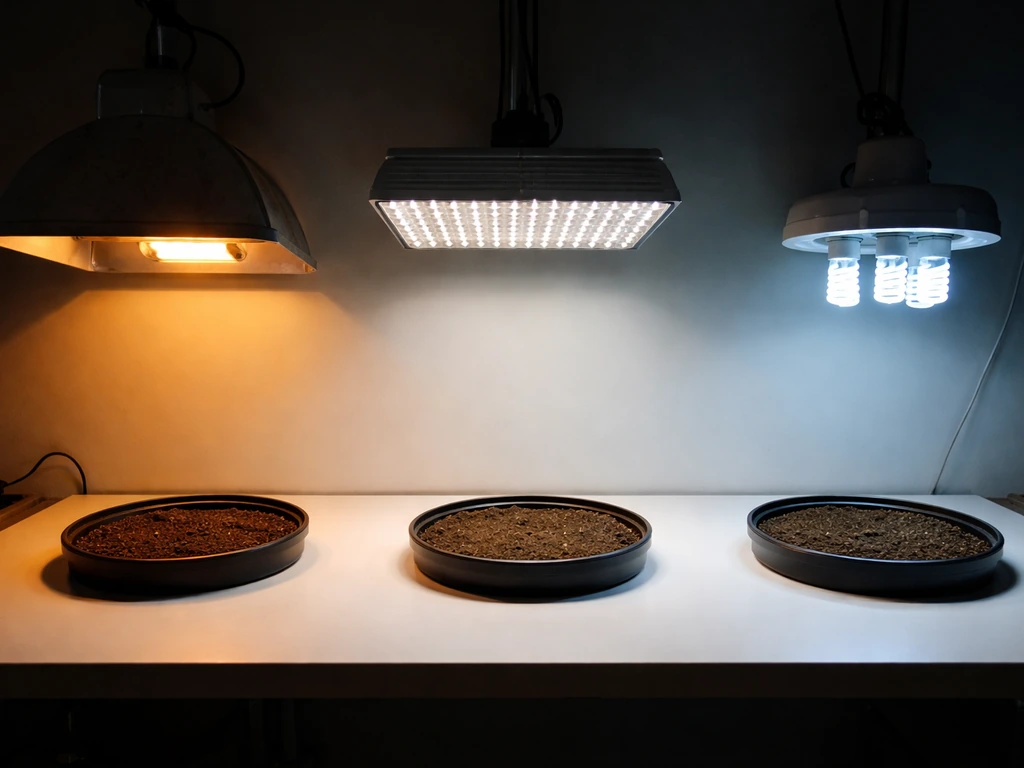
HPS competes mainly against LED and, in some niches, against plasma and other discharge-based technologies. The comparison is not one-dimensional. Each technology has conditions where it makes more sense.
| Feature | HPS | LED (quality full-spectrum) | Plasma |
|---|---|---|---|
| Upfront cost | Low to moderate | Moderate to high | High |
| Operating cost (electricity) | Higher | Lower (40-70% less for equivalent output) | Moderate to high |
| Heat output | High, requires active management | Significantly lower | Moderate |
| Bloom performance | Excellent (red-dominant spectrum) | Excellent with quality units | Good, broad spectrum |
| Veg performance | Functional, not optimal | Excellent with full-spectrum | Good |
| Bulb/component replacement | Yes, every 1-2 years | Driver/diode longevity varies | Bulb replacement required |
| Proven track record | Very long (decades) | Growing rapidly | Niche, limited |
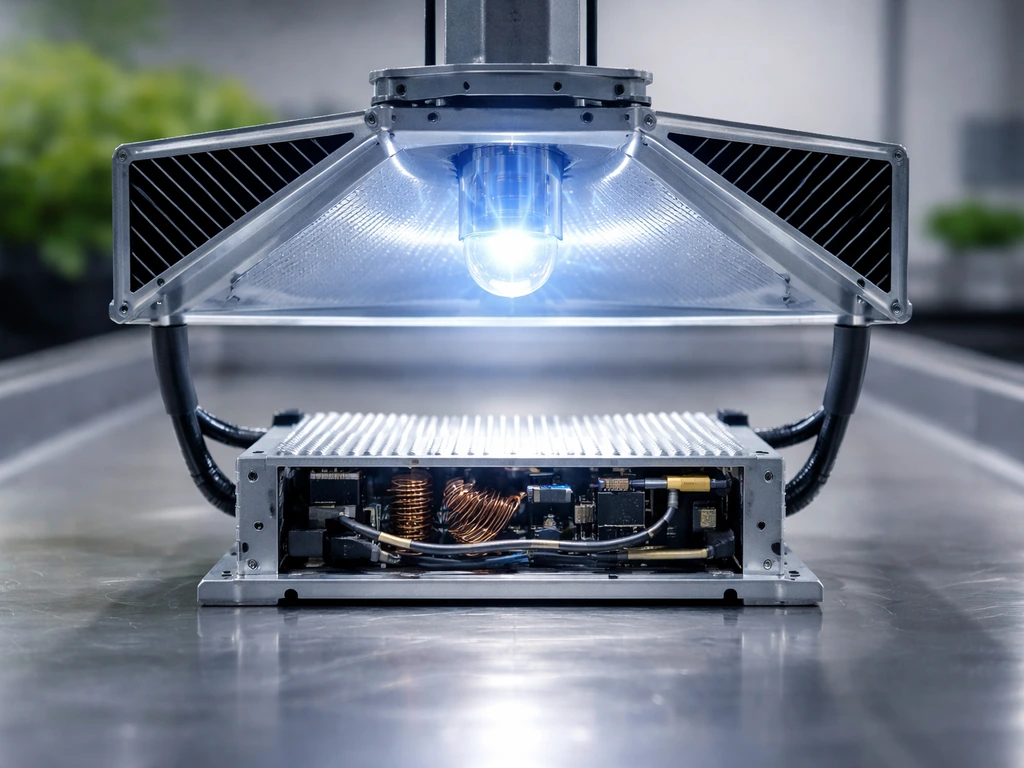
HPS makes the most sense when your upfront budget is limited, your grow space already has adequate ventilation (or you are in a cooler environment), and you are primarily growing through a bloom cycle. It is also a reasonable choice when you want a proven, well-understood technology with predictable performance. If you are curious how plasma-based alternatives fit into this comparison, a plasma grow lights review can help you understand where that technology sits relative to HPS in terms of spectrum and practical use.
HPS is a harder sell for anyone growing in a small tent where heat management is already tight, anyone paying high electricity rates, or anyone who wants to run the same fixture through both veg and bloom without compromises. In those cases, a quality full-spectrum LED is likely a better long-term investment. For a specific comparison in the LED space, the platinum LED grow lights review is a useful reference point for seeing how a premium LED option stacks up on performance and cost.
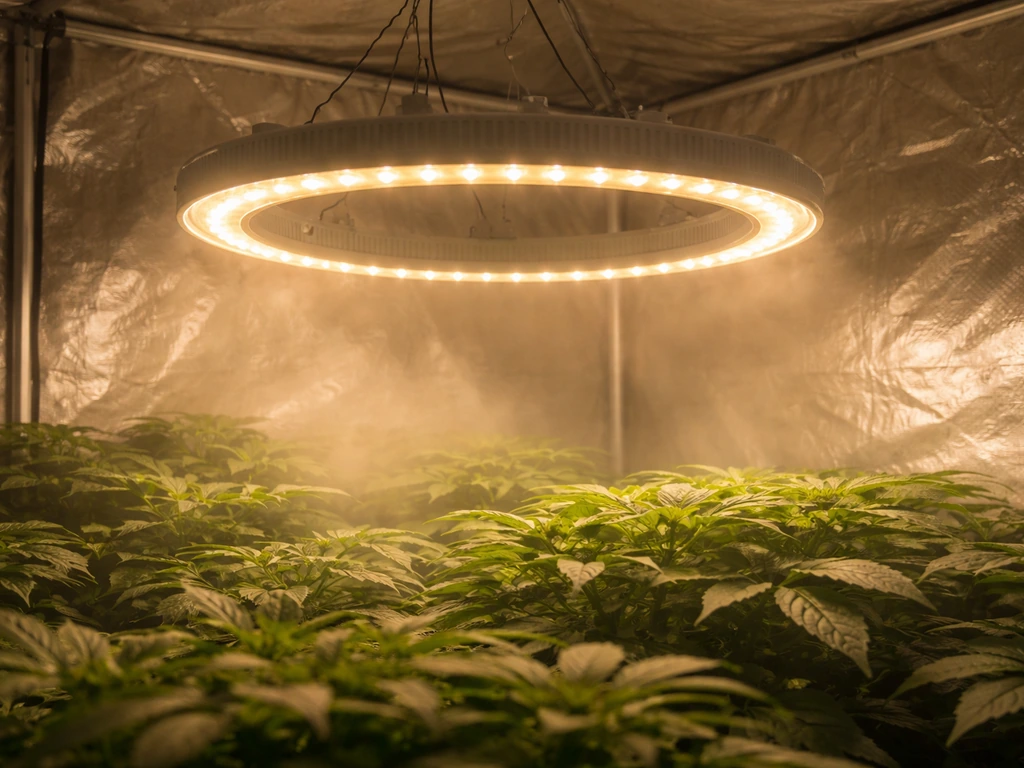
It is also worth knowing that some newer discharge-based technologies occupy an interesting middle ground. If you want a more specialized alternative to both HPS and conventional LED, reading about the Gavita plasma grow light shows how one established commercial brand approached plasma for high-end horticulture. And for a broader look at the circular-form-factor segment of the market, the halo grow lights review covers another category worth understanding before finalizing your setup.
How to size your HPS setup and what to check before you buy
Sizing an HPS setup comes down to matching wattage and fixture count to your canopy area and target PPFD. For flowering, most growers aim for 600 to 900 µmol/m²/s at the canopy. Use published PPFD data (not just wattage or lumens) from the manufacturer, and treat footprint claims as a starting estimate to be confirmed with a PAR meter after installation.
- Measure your canopy area in square feet. A 4 ft x 4 ft tent (16 sq ft) is a natural fit for a single 600W HPS. A 5 ft x 5 ft or 4 ft x 8 ft space typically warrants a 1000W fixture or two 600W units.
- Choose your mounting height based on PPFD targets. For a 600W HPS in a 4 ft x 4 ft space, a starting height of 18 to 24 inches above the canopy is common, then adjust based on measured intensity and plant response.
- Select an air-cooled hood if your space runs warm. Verify that the hood's ducting ports match your fan and ducting diameter before buying.
- Size your exhaust fan to at least the lower end of your calculated CFM range. For a 400W HPS, that starting estimate is around 162 CFM minimum. Scale up proportionally for 600W or 1000W setups, and add 5% per air-cooled hood in the room.
- Pair your lamp with a matched ballast, either a digital dimmable unit for flexibility or a quality magnetic ballast. Do not mix and match brands without checking compatibility. Ballast type measurably affects output.
- Budget for annual bulb replacement from day one. Build replacement bulb cost into your total cost model before comparing HPS against LED alternatives.
- Check your electrical circuit capacity. A 1000W HPS ballast, plus fans and other gear, can easily pull 12 to 15 amps. Make sure your circuit can handle the combined load safely.
The core recommendation for most growers considering HPS today: a 600W single-ended setup with a quality digital ballast, an air-cooled reflector hood, and a matched bulb from a reputable brand gives you the best balance of output, coverage, and manageability. It is proven technology with well-documented performance, and if you go in with clear expectations about heat management and replacement costs, it will reliably deliver strong bloom results in spaces up to roughly 4 ft x 4 ft. If your space is larger, add fixtures proportionally rather than jumping to a single 1000W unit unless your ventilation is already built to handle it.
FAQ
Is a 400W or 600W HPS better for beginners, given the same grow area?
If you can control temperature, a 600W usually gives more headroom for bloom intensity and makes it easier to hit target canopy PPFD with fewer compromises on mounting height. If your space runs hot or your ventilation is borderline, 400W is often the safer choice because you will struggle less with heat stress, especially without air-cooled hood ducting.
Can I run HPS in a sealed tent with no ducting, since some fixtures advertise “efficient” performance?
No. HPS adds substantial radiant and convective heat to the room, so without active exhaust you will quickly overshoot safe canopy temperatures. Even air-cooled hoods still require ducting and airflow through the hood path, otherwise they can trap heat around the lamp and reduce effectiveness.
How high should I mount an HPS light to avoid hotspots while keeping edge coverage strong?
Start by using the manufacturer’s mounting height, then verify with a PAR meter at your actual canopy height. If the center is too intense and edges are weak, raise slightly and retest, or improve uniformity with a better reflector and correct hood spacing. With HPS, small mounting changes can noticeably shift uniformity, not just intensity.
Do electronic or magnetic ballasts really change results, and how can I tell what I’m buying?
Yes, ballast type can measurably change delivered photon output. When comparing products, look for system-level PPF or PPFD data with the specific bulb plus ballast pairing, not just bulb specs. Also confirm whether the ballast is dimmable and whether dimming maintains expected performance or only reduces watt draw.
Should I use a hood versus an open reflector for an HPS setup?
Use an air-cooled hood if you need better temperature control or you have limited room airflow. Choose based on your ducting plan, because hood benefits depend on correct intake and exhaust routing. If you have strong general exhaust and you cannot duct effectively, a quality open reflector may provide better simplicity, but you must monitor canopy temperature closely.
What changes if I dim an HPS system on a dimmable ballast during flowering?
Dimming can help manage heat and electricity, but it typically reduces overall photon delivery, so your target PPFD may fall below what your plants need. The important step is to re-measure canopy PPFD at your dim setting, then adjust light schedule or fixture count accordingly. Also ensure your ballast and lamp are explicitly rated for the dimming range you plan to use.
How often should I replace an HPS bulb to avoid yield loss from output decline?
Don’t wait for failure. Many growers replace around the 10,000 to 12,000 hour range on a proactive schedule, or annually for year-round operations, because PAR output drops gradually. If you notice declining growth or weaker flowering after months of stable conditions, check lamp age before troubleshooting nutrients or watering.
If my HPS bulb still “works” but plants look worse, what should I inspect first?
Start with lamp age and mounting height consistency, then verify ballast connections and hood airflow. Also check for dust buildup on reflectors and lens components, because grime can reduce usable light. Finally, confirm your actual canopy temperature and RH, since HPS heat changes can indirectly affect transpiration and nutrient uptake.
What ventilation number should I use if I do not know my room volume exactly?
Measure room length, width, and height, then use that volume to start with the recommended CFM range, and adjust after installation by measuring temperature response. The bigger mistake is guessing without verification, so plan to run the system for at least an hour and fine-tune fan speed based on actual canopy readings rather than the initial calculation.
Can I use HPS for vegetative growth if I want one fixture for the whole cycle?
You can, but expect looser, stretchier veg compared with using a blue-richer source. If you must run one light for veg and bloom, compensate with stricter light intensity, better airflow, and careful training, because HPS won’t promote compact growth as effectively as MH or modern full-spectrum LED.
Do lumens matter when choosing an HPS grow light?
Not much for grow planning. HPS buying decisions should be based on photon output metrics like PPF and PPFD at the canopy, because lumens are weighted for human vision and do not directly translate to plant usable light. Use published PPFD maps or measure with a PAR meter at your planned mounting height.
Is it cheaper to run HPS long-term if I already own the fixtures?
Sometimes, but recapture often depends on electricity cost and how long you go between bulb replacements. HPS has lower upfront fixture cost, yet you may pay more over time due to higher power use, increased exhaust needs, and recurring lamp replacement. If you live in an area with high electricity rates or you run many hours per day, the long-term gap typically narrows in favor of LED.
Why do two “600W” HPS setups produce different results?
Because system output depends on the full chain, not just watt rating. Differences come from bulb brand and type, ballast efficiency and dimming behavior, reflector quality, mounting height, and even airflow around air-cooled hoods. Comparing only wattage can be misleading, so confirm expected PPF or canopy PPFD for the specific fixture configuration.
Should I assume HPS coverage claims are accurate for my setup?
No, treat footprint claims as a baseline. They usually assume a specific mounting height and reflector geometry, and your canopy height, plant spacing, and room airflow will change what the plants actually receive. The only reliable method is measuring canopy PPFD with a PAR meter at the height you will run in flower.