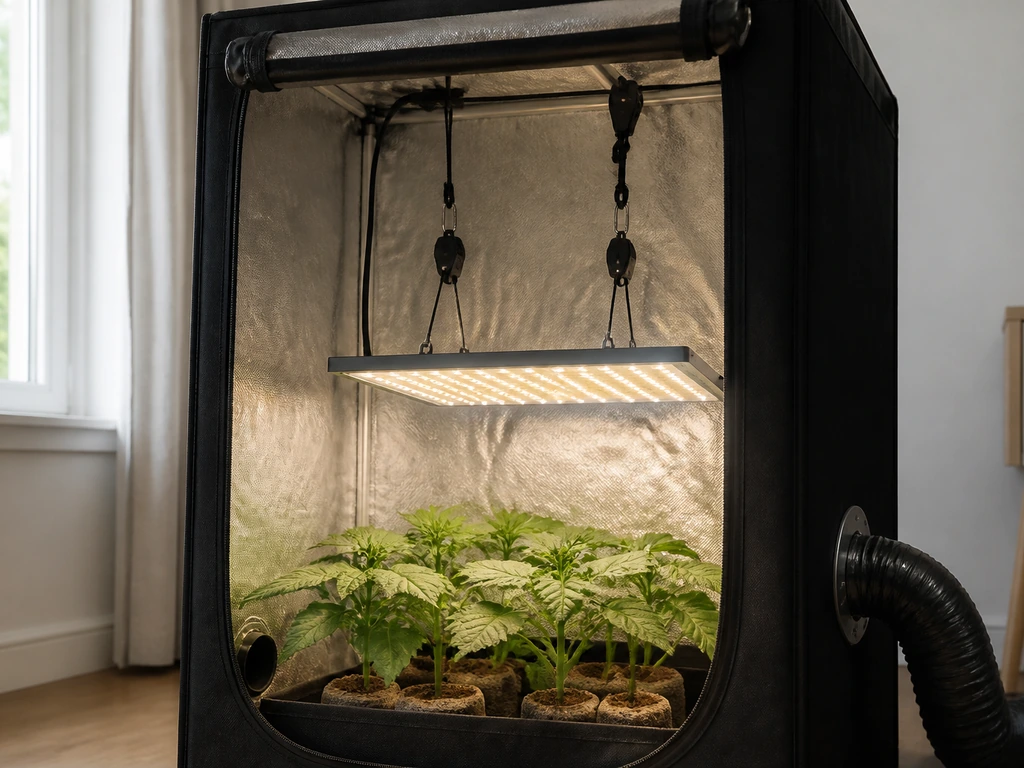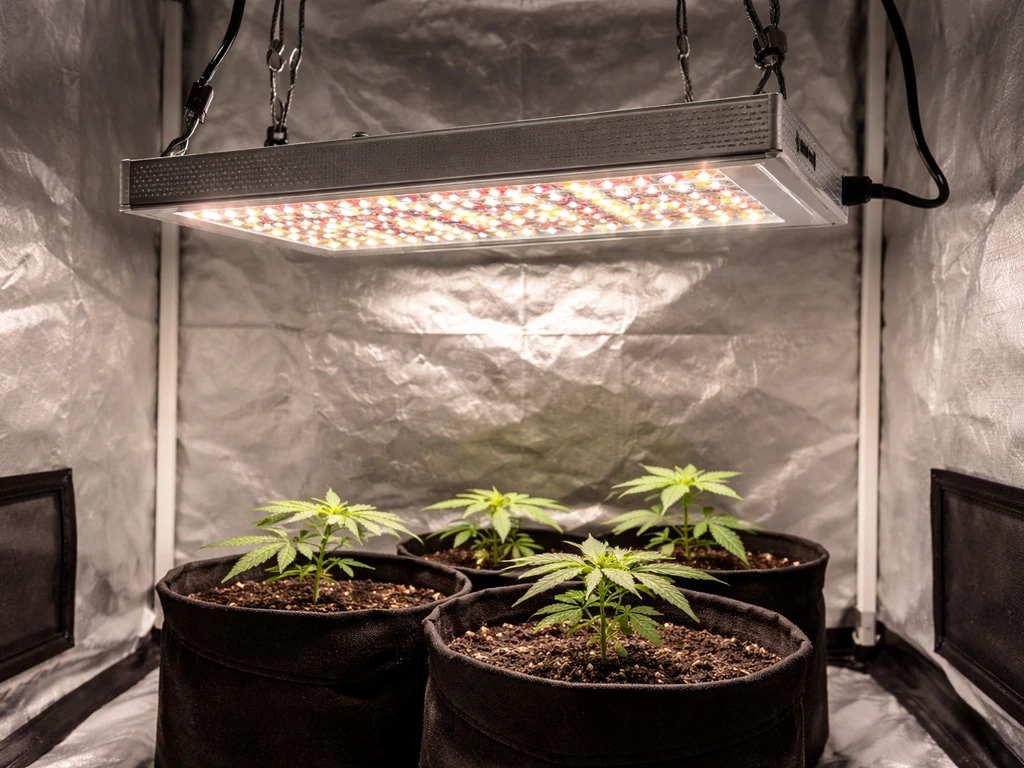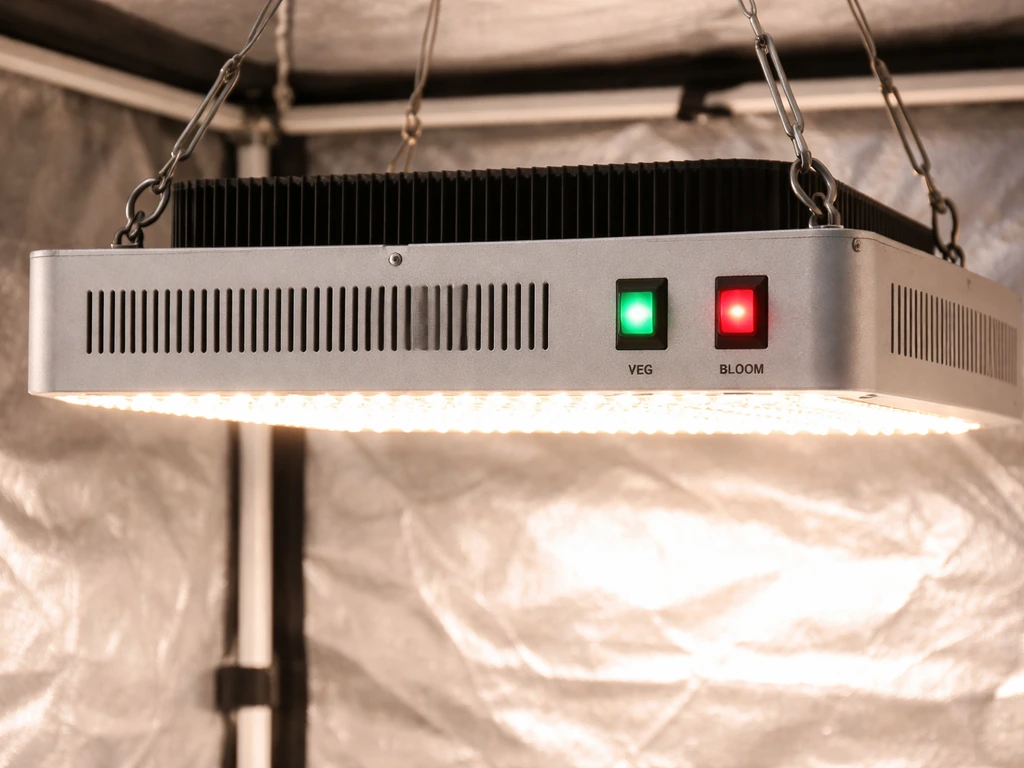
Plasma grow lights occupy a genuinely interesting middle ground in horticultural lighting, but they are not the right choice for everyone. The short answer: if you need a broad, sunlight-like spectrum and you are running a medium-to-large canopy where supplemental or single-source full-cycle lighting matters, plasma can deliver. If you are budget-conscious or running a tight tent, modern LED panels will almost certainly serve you better per dollar spent. This guide walks through what plasma lights actually are, how to read a real review of them, and whether any of the current models deserve a spot in your grow room.
Plasma Grow Light Review: Metrics, Heat, Coverage, Value

Marcus Caldwell
8 Apr 2026
What plasma grow lights actually are
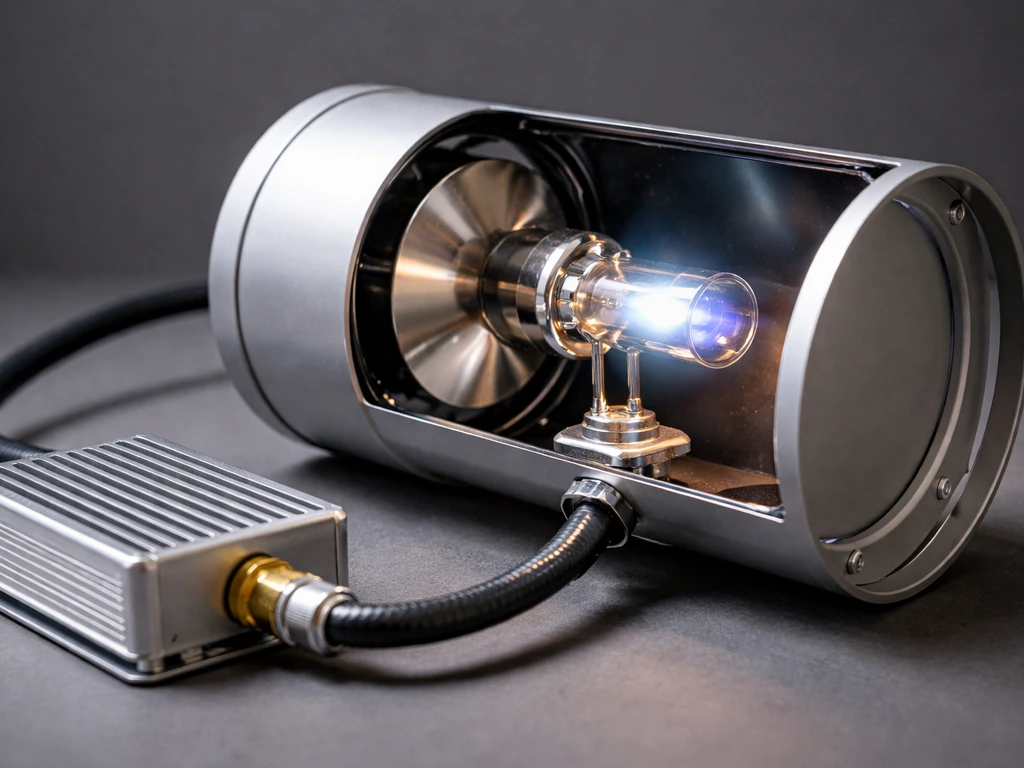
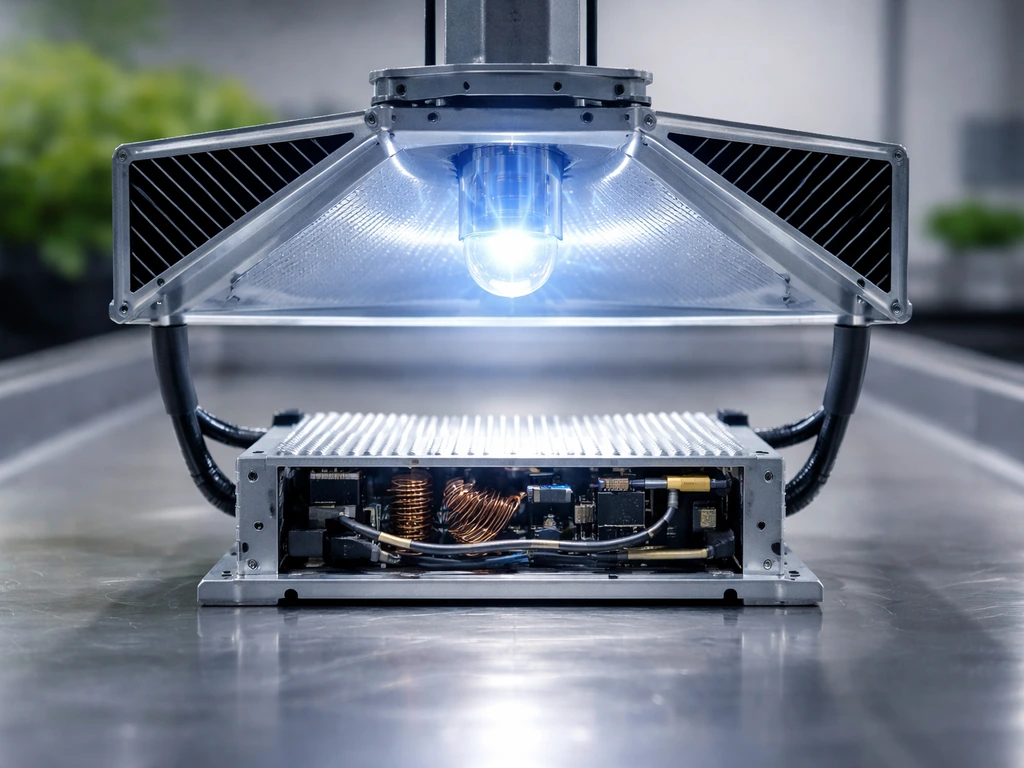
A plasma grow light, often called an LEP (Light Emitting Plasma), works by using a high-frequency RF (radio frequency) power supply to excite a sealed lamp containing an ionized gas mixture. That ionized gas heats and evaporates metal halide materials inside the lamp to form an intense plasma column, which is the light source itself. There is no electrode touching the arc, unlike a traditional HID bulb, which is a big part of why plasma lamps can claim such long rated lifespans. The RF power supply does the job a ballast does in an HPS or MH setup, but it operates at a fundamentally different frequency and does not wear down the lamp the same way a conventional arc-discharge ballast does.
Compared to HID (HPS and MH), plasma produces a much broader, smoother spectrum that manufacturers describe as the closest available to natural sunlight. Gavita, one of the few commercial horticultural plasma suppliers, positions their plasma lamps specifically on that spectrum claim. Compared to LEDs, plasma uses a single-point emitter rather than an array of diodes, which affects beam spread, heat distribution, and uniformity across a canopy. LEDs have dramatically improved in efficacy and spectrum quality over the past few years, so plasma's spectral advantage is smaller today than it was in 2015, but it is still measurable in the UV and far-red continuity that a plasma column naturally produces.
Key specs to look for in any plasma grow light review
When you are reading through a plasma grow light review, the spec sheet is your first filter. Here is what actually matters and what to do with each number.
| Spec | What it tells you | What to watch for |
|---|---|---|
| Wattage (input) | True power draw at the wall | Confirm against your circuit capacity; the Gavita Pro 270e draws 270W at full power |
| PPF (µmol/s) | Total photon output per second | Higher is not always better without knowing the coverage area |
| PPFD at distance (µmol/m²/s) | Photon density at canopy level | Look for measurements at multiple heights, not just one optimistic distance |
| Efficacy (µmol/J) | How efficiently electricity becomes usable light | Modern LEDs hit 2.5–3.0+ µmol/J; plasma typically lands lower |
| Spectrum profile | Wavelength distribution across PAR and beyond | Plasma shines at continuous broad-spectrum; check for UV and far-red presence |
| Coverage area (m² or ft²) | Claimed canopy footprint | Always verify against PPFD maps, not just the marketing number |
| Rated lamp lifespan (hours) | How long before output drops significantly | LEP sources are rated around 50,000 hours in some documentation |
| Electrical input requirements | Voltage, amperage, plug type | Critical for home growers on standard 15A or 20A circuits |
One spec that rarely makes it into marketing materials but matters a lot is uniformity, specifically U90 or U80 scores that describe how evenly PPFD is distributed across the claimed coverage footprint. A light that hits 800 µmol/m²/s at center but drops to 300 at the edges is covering a much smaller effective area than its footprint suggests. Iso-PPFD maps from manufacturers or independent labs are the most honest way to verify this. Uniformity metrics like these are formally defined in IES horticultural lighting standards and are worth understanding before you trust a coverage claim.
Real-world performance: what to expect from hands-on testing
PPFD and coverage
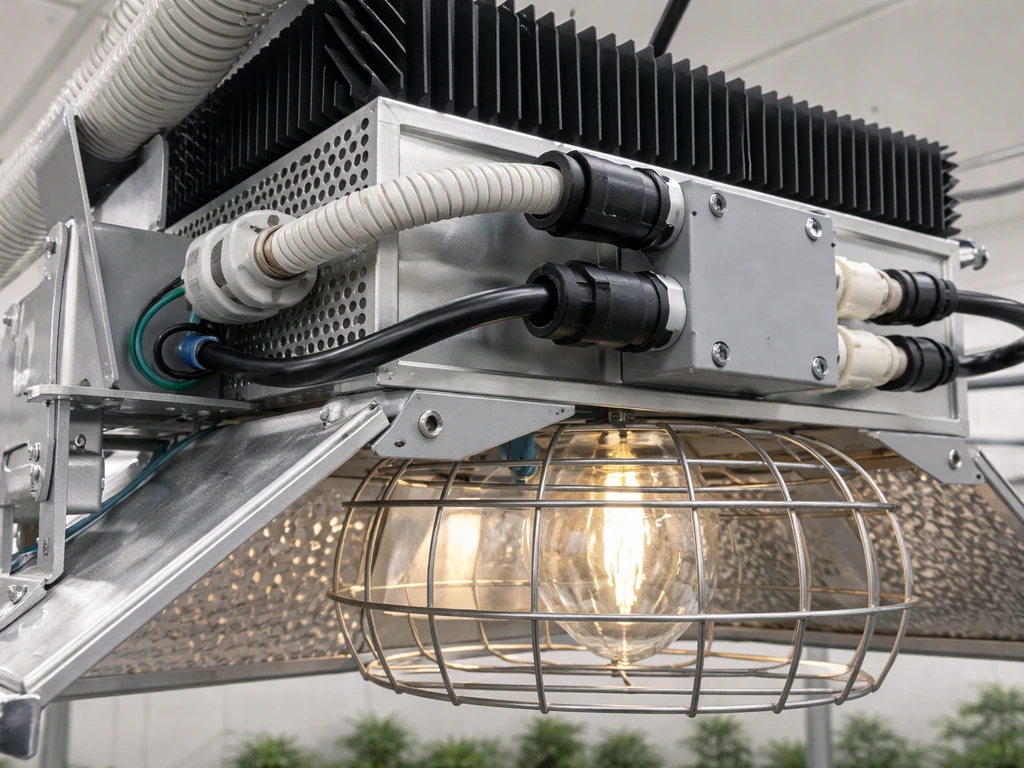
In practical use, plasma fixtures like the Gavita Pro 270e LEP produce roughly 200–300 µmol/m²/s of PPFD at the canopy in many real-world horticultural setups, though exact numbers depend heavily on hanging height and reflector quality. The Gavita brochure for this fixture actually includes a table comparing LEP to HPS at equivalent target intensities, which is a useful honesty check: plasma does not outperform an equivalent-wattage HPS in raw photon delivery to the canopy. Gavita’s Pro 270e LEP brochure includes a comparison table that provides “Recommended PPFD” values and an “LEP to HPS ratio” reference “Recommended PPFD” and an “LEP to HPS ratio” reference. Where it wins is in spectrum quality and the ratio of useful wavelengths across the full PAR range plus UV and far-red. If you are comparing to an HPS system, the LEP-to-HPS ratio guidance in that brochure is a practical starting point for deciding whether you need to supplement.
Efficiency
Plasma efficacy, measured in µmol per joule, typically falls behind current top-tier LED fixtures. This is the honest trade-off. You are paying for spectrum continuity, not raw efficiency. If your primary goal is maximizing photon output per electricity dollar, LED is the stronger argument today. If spectrum completeness across UV, PAR, and far-red matters for your crop, plasma makes a more compelling case. A platinum LED grow lights review will show you exactly how current LED technology compares on that efficiency metric, which puts the plasma trade-off in concrete terms.
Heat output
Plasma fixtures generate meaningful heat, primarily at the lamp housing and RF power supply. Unlike HPS where heat radiates broadly from the arc tube, plasma concentrates heat at a smaller point source, but the total thermal load on your grow space is still real. At 270W input, expect heat management to be a genuine part of your ventilation calculation. The lamp itself runs hot enough that handling or inspecting it when operating is not safe. Thermal protection cut-outs in well-designed fixtures automatically limit maximum case temperature to protect both the lamp and the surrounding structure, which is a design feature worth confirming before you buy any plasma unit.
Warm-up behavior
Plasma lamps, like other gas-discharge sources, do not reach full output the moment you flip the switch. They require a warm-up period before the plasma column stabilizes and output reaches rated levels. This is worth knowing for any automated lighting schedule: your timer-triggered "lights on" moment is not the same as "full intensity on." Factor a few minutes of ramp-up into your photoperiod if precision matters for your crop.
Which crops and grow stages actually benefit from plasma
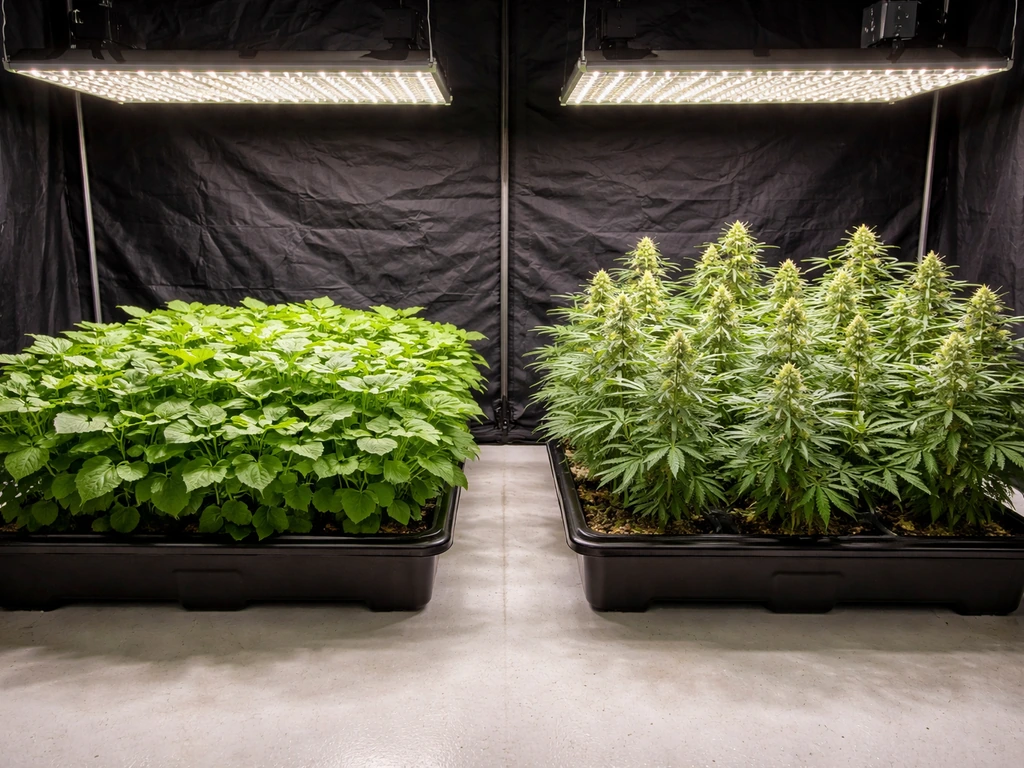
Plasma's broad, continuous spectrum makes it genuinely well-suited to vegetative growth, where plants benefit from a wide range of wavelengths for leaf expansion and overall photosynthetic health. The UV component present in many plasma spectra can also support secondary metabolite production in crops like herbs, leafy greens, and certain fruiting plants, which is relevant if you are growing for flavor intensity or medicinal quality rather than pure yield weight.
For flowering and fruiting stages, plasma can work as a primary light source, but you may need to supplement if your canopy is large and your plasma fixture's PPFD at canopy level falls short of the 600–900 µmol/m²/s range that many flowering crops prefer. Plasma has historically been used as a supplement alongside HPS in commercial greenhouse settings, taking advantage of its spectrum quality while relying on HPS for raw intensity. For home growers, this often means plasma works best in smaller footprints (think 2x2 to 3x3 ft canopies) where a single 270W fixture can maintain adequate PPFD without supplementation.
If you are running a vertical or shelf setup with limited canopy-to-fixture distance, plasma's single-point emitter can create hot spots directly below the lamp, so uniformity becomes a more pressing concern than in a horizontal spread setup. This is less of an issue with LED panels that distribute output across a larger emitter area. Plasma is also a reasonable choice for propagation and seedling stages where lower PPFD and broad spectrum are both appropriate.
Safety, wiring, and heat management
Plasma grow lights come with some safety considerations that are different from both LED and HID fixtures, and they deserve serious attention before you install one.
- Eye hazard: Do not look directly at the plasma emitter while it is operating unless you are wearing appropriate UV-blocking eye protection. The emitter produces UV radiation that can cause eye injury with direct or prolonged exposure.
- Electrical: The Gavita Pro 270e LEP US carries UL approval (UL E346452), which is the minimum safety certification you should require from any plasma fixture before purchase. Confirm certification before buying.
- Circuit requirements: At 270W input, a single plasma fixture fits on a standard 15A circuit alongside other loads, but verify your total draw. Check voltage compatibility (US 120V vs 240V) against the fixture's spec sheet before wiring.
- Cable handling: Follow manufacturer precautions for the RF interconnect cable between the power supply and lamp head. These are not standard lamp cables and improper handling can affect both safety and lamp performance.
- Ventilation: Factor the fixture's heat output into your exhaust/intake calculation. Inadequate ventilation shortens lamp life and raises grow room temperature, which affects plant transpiration and root zone health.
- Lamp maintenance: Plasma emitters do not need frequent replacement given their long rated lifespan, but keep the ballast/fixture exterior clean per manufacturer guidance. Dust accumulation on the housing reduces thermal dissipation.
For a deeper look at how one specific model handles these electrical and safety specifics in practice, the Gavita plasma grow light review on this site goes through the Pro 270e LEP in detail, including real installation notes and operating observations.
Is the cost actually worth it? A value reality check
Plasma grow lights are not cheap. A Gavita Pro 270e LEP runs significantly more at purchase than a comparable-wattage HPS or mid-range LED. The financial case for plasma rests on three factors: lifespan, electricity costs, and spectrum value.
On lifespan, plasma has a genuine advantage. Light-emitting plasma sources have documented rated lifespans in the range of 50,000 hours, which dwarfs the typical 10,000–20,000 hour lifespan of HPS bulbs and is competitive with or better than many LED arrays. If you are calculating total cost of ownership over five to ten years of operation, the reduced replacement cost is meaningful. An HPS grower replacing bulbs every 12–18 months accumulates lamp costs that a plasma grower largely avoids.
On electricity, plasma does not win against current LEDs. A fixture pulling 270W that delivers 200–300 µmol/m²/s to a modest canopy is less efficient per photon than a quality LED panel in the same wattage range. Over years of operation, that efficiency gap translates into real electricity cost differences. If your electricity rate is high, this matters more.
Spectrum value is harder to price but real for certain growers. If you are producing specialty herbs, medicinal plants, or crops where secondary metabolite quality drives your outcome, the continuous broad-spectrum output including UV is genuinely harder to replicate with white LED arrays. For standard vegetable production or cannabis flowering focused purely on yield weight, modern LEDs close that gap considerably.
It is also worth noting that some companies in the plasma space, like Chameleon Grow Systems with their Solar Genesis fixture, approached commercialization with notable caution, stating they would not recommend the product until third-party scientific research confirmed it was the right fit for a given application. That kind of measured positioning is actually a reasonable model for how buyers should think about plasma: it earns its place in specific use cases, not as a universal upgrade.
| Factor | Plasma (LEP) | HPS | Quality LED |
|---|---|---|---|
| Purchase price | High | Low-Medium | Medium-High |
| Efficacy (µmol/J) | Moderate | Moderate | High |
| Rated lamp lifespan | ~50,000 hours | 10,000–20,000 hours | 50,000+ hours (diodes) |
| Spectrum quality | Excellent (continuous, UV+far-red) | Good (red-biased) | Good to excellent (varies by design) |
| Replacement cost | Low (long-life emitter) | Regular bulb replacement | Low (no bulbs) |
| Heat output | Moderate | High | Low-Moderate |
| Dimming/controls | Limited on most models | Limited | Wide range available |
For a direct comparison against traditional discharge lighting, our HPS grow light review lays out exactly where HPS still holds its ground on cost-per-photon and where plasma's spectrum justifies the premium.
How to actually choose the right plasma grow light for your setup
Before you shortlist any plasma model, answer these four questions about your grow. Your answers will either confirm plasma as a fit or redirect you to a better option.
- What is your canopy footprint? Plasma fixtures work well covering 2x2 to roughly 3x3 ft at adequate PPFD. Larger canopies will need multiple fixtures or supplemental lighting, which changes the economics quickly.
- What are you growing and at what stage? Full-cycle vegetative and specialty crops benefit most from plasma's spectrum. High-intensity flowering for yield-focused crops may be better served by a high-efficacy LED or HPS.
- What is your electricity cost? If you are paying above $0.15/kWh, the plasma efficacy gap versus LED becomes a meaningful monthly line item over time.
- Do you have UL-certified options available? Only buy a plasma fixture with proper safety certification. Do not cut corners on this for a fixture running RF power in an enclosed grow space.
If your answers point toward plasma, the Gavita Pro 270e LEP is the most established and documented option in the hobby and small commercial market. Its LUXIM plasma emitter (e-series 41.01 or 41.02) has real reliability data behind it from field trials, and the fixture has UL compliance documentation you can verify. The Gavita Pro 270e LEP US Industrial manual also states the unit is UL E346452 approved, confirming its UL compliance. It is not perfect, and it is not the most efficient fixture on wattage-for-wattage basis, but it is the plasma option with the most credible paper trail for buyers doing serious research.
If plasma is not the right fit but you want the spectrum breadth from a different angle, it is worth looking at purpose-built LED designs that attempt to replicate broad-spectrum output. The halo grow lights review covers one such approach and is a useful comparison point for spectrum-focused buyers who are not locked into plasma specifically.
One last practical note: plasma is a niche that has not expanded the way LED has. New models are not appearing frequently, and the field is dominated by a small number of commercial suppliers. If you are hoping for a rapidly evolving product category with lots of competitive options, plasma is not that. What it is, for the right grower in the right setup, is a stable, long-lived, broad-spectrum fixture that does something LEDs and HPS lamps have historically not done as cleanly: produce a continuous, sunlight-like output from a single compact emitter. Whether that trades off well against everything else you need is the question this guide is designed to help you answer.
FAQ
Do plasma grow lights come to full brightness instantly when the timer turns them on?
No. Plasma emitters need a stabilization period after power-on before the plasma column reaches rated output. If you run tight photoperiod automation (for example, timer changes during lights-on), plan for a brief ramp so plants see the intended intensity, not just the “switch-on” moment.
Why do plasma lights sometimes perform worse in shelf or vertical setups than in reviews suggest?
Uniformity matters more as your hanging height decreases and as your canopy sits closer to the single-point emitter. In a vertical or shelf layout, edge plants can lag significantly, so check an actual iso-PPFD map (or U80/U90 figures) for your intended mounting distance, not the maximum advertised coverage.
How should I think about plasma lifespan when estimating total cost of ownership?
Lifespan is often stated as a rated hour number, but total cost depends on lamp replacement logistics and warranty terms. Verify what is covered (emitter only versus full fixture), what triggers warranty denial (for example, improper installation or overheating), and whether you can source the exact replacement part locally over time.
Can a plasma grow light run the whole grow cycle without supplemental lighting?
Usually, yes, but the reason is different from LEDs. Plasma spectrum continuity can support both veg and flowering, yet many growers still supplement during peak bloom because PPFD at canopy level often falls short on larger footprints. If your crop standard targets are in the 600–900 µmol/m²/s range, confirm your canopy PPFD before committing to single-source use.
Does the UV and far-red “spectrum advantage” always translate into better crop quality?
Yes, but not automatically. The claimed spectrum “with UV and far-red” does not guarantee the same biological effect at your canopy once distance, reflector choice, and uniformity are accounted for. If you are growing for flavor, medicinal compounds, or specialized metabolite goals, prioritize verified spectrum measurements at the plant level, not just the lamp’s theoretical spectrum.
What heat issues should I plan for that differ from HPS or LED?
Heat is still meaningful, even though plasma concentrates it near the housing. Ensure your ventilation design considers both case temperature and how hot the exhaust air is around the fixture area. Also confirm the fixture’s thermal protection behavior, so you know whether it throttles, cuts out, or derates under high ambient temperatures.
Is it better to size plasma lights for more area, or stick closely to their stated footprint?
It can, if you choose a footprint that matches the fixture’s true effective coverage. The single emitter can create a brighter center and dimmer edges, so “bigger footprint” claims may not hold for your crop if you need uniform PPFD. Match your grow area to the iso-PPFD footprint rather than the physical lamp coverage label.
When does plasma become a poor value compared with LEDs, even if it has better spectrum continuity?
Sometimes, but it’s not a simple watt-for-watt match. Plasma may deliver less photons per watt than today’s top LEDs, so if your electricity rate is high, the operating cost gap can dominate the decision. Use your local kWh price and the fixture’s measured PPFD performance at your actual mounting height, then compare to an LED alternative on cost-per-target-PPFD.
What should I check about service and replacement parts before buying a plasma fixture?
Because plasma fixtures are niche and supplier lists are limited, replacement parts and service turnaround can be the real risk. Before buying, confirm availability of the exact RF power supply components, emitter, and any required proprietary parts, and ask how long support typically takes if something fails.