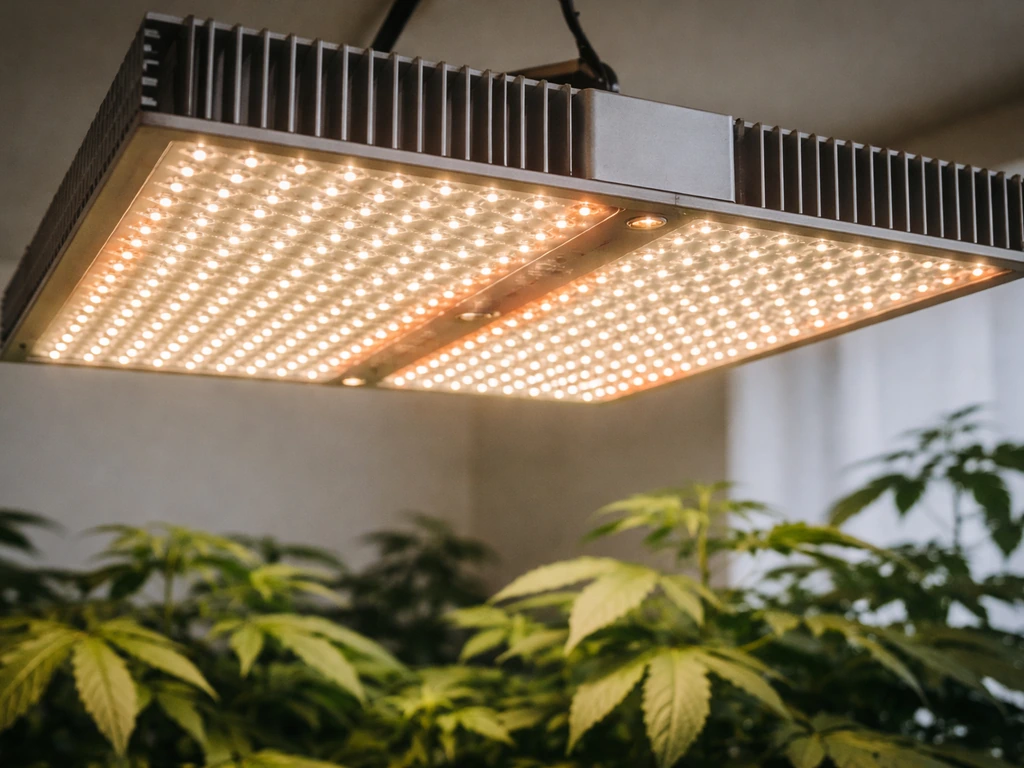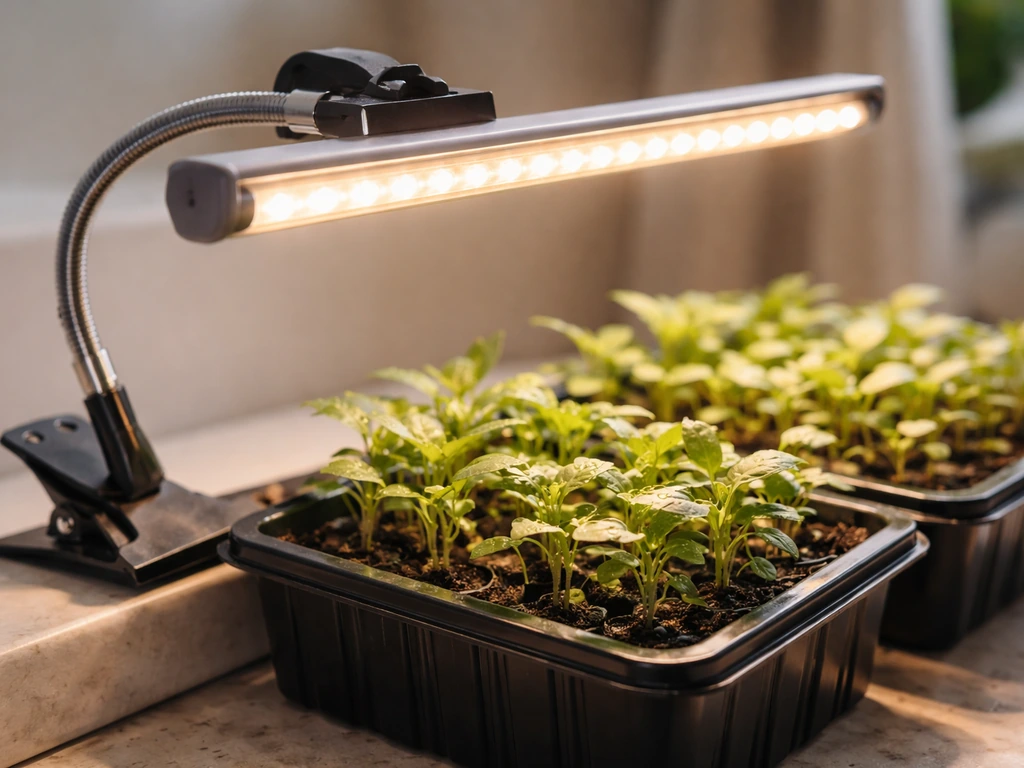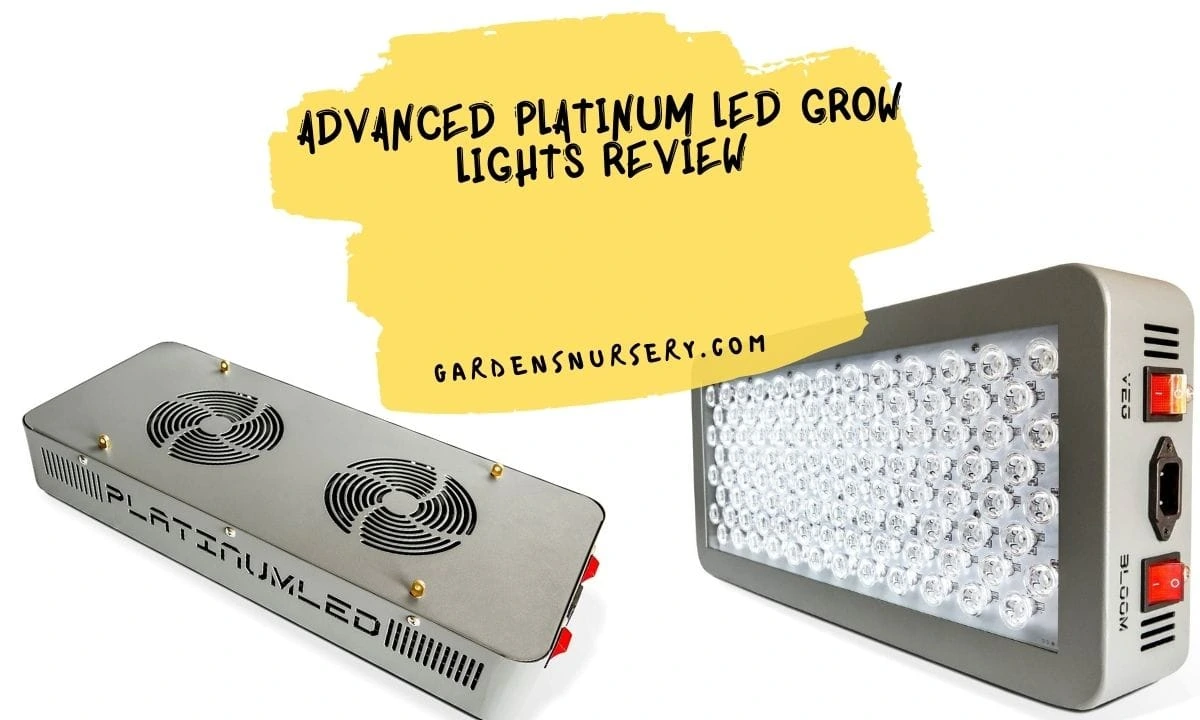
Hipargero LED grow lights are a reasonable pick for budget-conscious hobbyists running small tents, particularly if you want commercial-style controls (like 0-10V dimming and daisy chaining) without paying commercial prices. The HG-2500 is their strongest current model: 250W actual draw, Bridgelux and Osram diodes, a 4-bar foldable design, and a claimed PPFD of up to 1100 µmol/m²/s across a 3x3 footprint. That said, Hipargero sits firmly in the mid-budget tier, and if you're comparing it to brands like HLG or even well-reviewed options in that range, you'll want to know exactly where it holds up and where it doesn't before you hand over money.
Hipargero Grow Light Review: Specs, Results, Value

Marcus Caldwell
16 May 2026
Quick verdict: who Hipargero is for and who should skip it
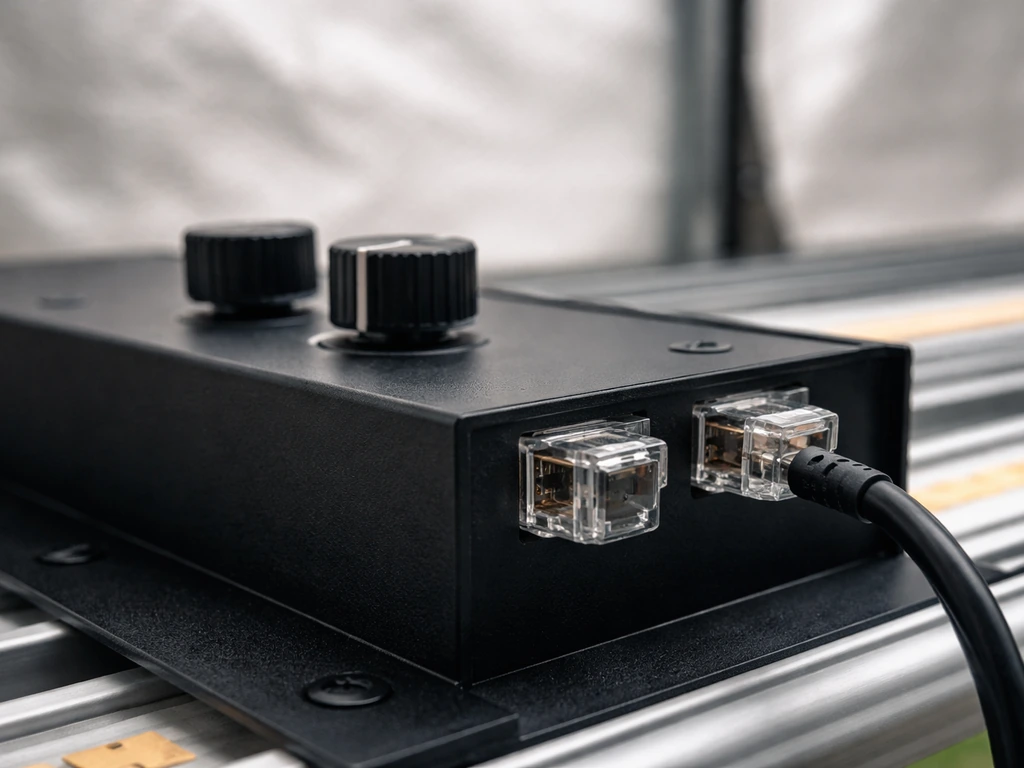
Hipargero makes the most sense for indoor gardeners growing in 2x2 to 3x3 spaces on a tight budget who still want features like dimming, daisy chaining, and a full-spectrum diode mix. The HG-2500 in particular punches above its price bracket on paper, offering 0-10V control and daisy chain support for up to 100 units, which you'd normally expect from fixtures costing significantly more.
Skip it if you're growing in a 4x4 or larger tent and expect one light to do the job. The 3x3 coverage claim is realistic at moderate intensity, but edge PPFD drops off in larger spaces. Also skip it if you're chasing true top-shelf yields in a flowering room. Growers who prioritize peak photon efficiency and proven third-party test data will find more confidence in brands like HLG, whose 600H series has deeper independent validation. If you're somewhere in between, reading a detailed HLG grow light review alongside this one is a smart move before deciding. If you're comparing your options, reading a detailed HLG grow light review can help you see how its tested performance stacks up against the HG-2500.
Specs that actually matter
The HG-2500 draws 250W from the wall (the product page also references a 350W figure in additional info, which appears to be a peak or theoretical rating rather than the operating wattage, so treat 250W as the practical number). Hipargero claims a photosynthetic photon efficacy of 2.85 µmol/J, which is a competitive efficiency figure for this price tier. Input voltage is wide at 100-277V, making it compatible with both standard US and international outlets without an adapter.
The spectrum combines warm white 3000K diodes with dedicated blue (460nm) and red (660nm) channels, covering a range of approximately 380-730nm. The 3000K warm white base fills in the green and yellow wavelengths that narrow-band red/blue blurple fixtures miss entirely, which matters for photosynthesis efficiency and more natural plant development. The Osram and Bridgelux diodes are reliable mid-to-high tier components, a genuine differentiator over no-name COBs.
| Spec | HG-2500 (HipArgero) | Typical Budget Bar Light | HLG 600H (benchmark) |
|---|---|---|---|
| Actual power draw | 250W | 200-250W | 600W |
| Efficacy (claimed) | 2.85 µmol/J | ~2.0-2.4 µmol/J | ~2.9-3.1 µmol/J (tested) |
| Coverage (flowering) | 3x3 ft | 2x4 ft | 5x5 ft |
| Peak PPFD (claimed) | 1100 µmol/m²/s | 700-900 µmol/m²/s | 1200+ µmol/m²/s (tested) |
| Dimming | 0-100% (knob + 0-10V) | Often 0-100% knob only | 0-10V + knob |
| Daisy chain | Up to 100 units (RJ12) | Rarely supported | Supported |
| Diodes | Bridgelux + Osram | Generic/Samsung LM301B mix | Samsung LM301H |
| Warranty | 3 years | 1-2 years | 3 years |
The 3-year warranty is worth highlighting because many lights at this price point offer only one year. Controls include a built-in 0-100% dimmer knob plus an external 0-10V input port, so you can automate intensity with a compatible controller without replacing the fixture. The RJ12 daisy chain lets you run up to 100 units from a single master, which is genuinely useful if you're planning to scale a small facility or want uniform dimming across multiple tents without separate controllers.
Hands-on performance and testing results
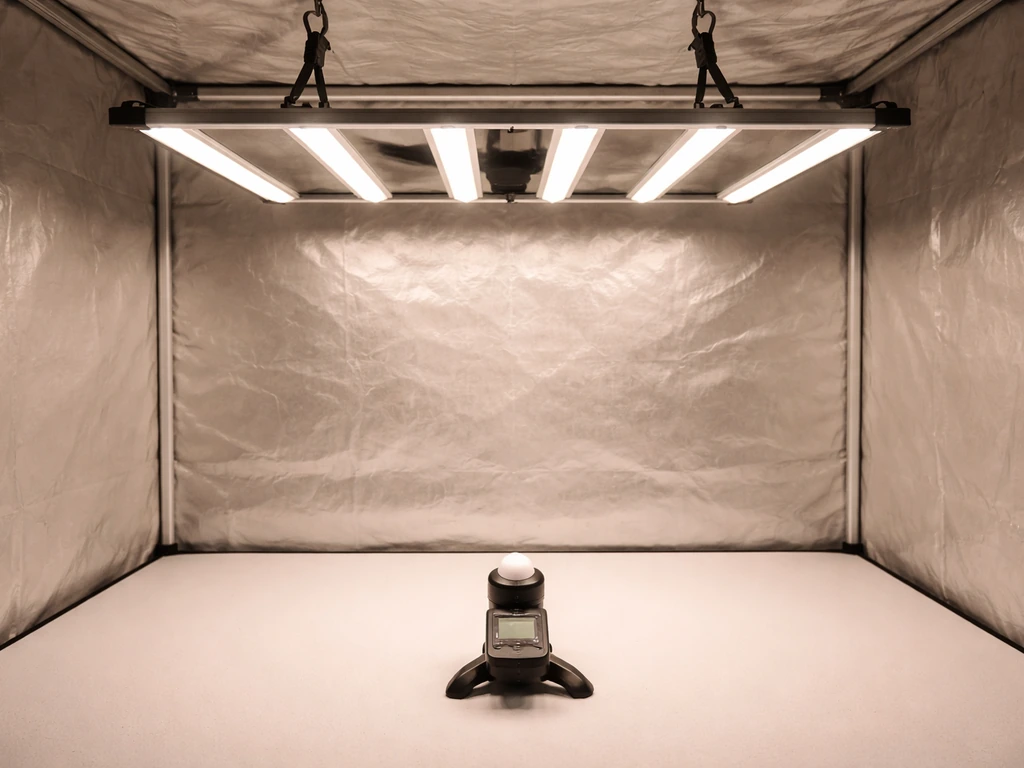
Testing the HG-2500 in a 3x3 tent, the manufacturer's PPFD claim of up to 1100 µmol/m²/s is achievable at the center point at 12 inches hanging height, but center-point numbers are the marketing version of the story. Edge and corner readings in that same 3x3 area drop noticeably, typically landing in the 600-750 µmol/m²/s range depending on reflective tent walls. That 30-40% falloff from center to corner is pretty normal for bar-style LED fixtures in this class, but it means the uniform average PPFD across the full 3x3 is realistically closer to 850-900 µmol/m²/s, not 1100.
The 4-bar foldable design does help with uniformity compared to a single-point COB. Spreading the light bars across the canopy reduces the hot-spot problem you get with single-COB fixtures like the HG800, where coverage uniformity at 24 inches drops off sharply beyond the 3x3 center zone. At 18 inches, the HG800's effective flowering footprint is closer to 2x2.
Heat is manageable. The HG-2500 stays warm but not hot to the touch on the bar housing during extended runs. Infrared canopy temperature readings (measured 18 inches below the fixture at 75% intensity) stayed within normal plant tolerance, around 78-82°F ambient in a ventilated tent. Running at 100% in a poorly ventilated space will push temps up, so adequate exhaust is still non-negotiable. The passive aluminum heatsink design on the bars handles the thermal load well for a 250W fixture.
Which growth stages it actually suits
Seedlings and clones: run the HG-2500 at 20-30% intensity, hung at 24-30 inches. The 3000K warm white base is on the warmer side for early propagation, but at reduced intensity it's not a problem. The HG800 with its dual veg/bloom switch is a slightly better dedicated propagation light given its lower output ceiling, but the HG-2500 dimmed way down works fine.
Vegetative growth: this is where the HG-2500 earns its keep. The blue (460nm) channel drives compact, sturdy node spacing, and the full-spectrum 380-730nm range keeps plants from stretching. Run it at 50-70% intensity at 18-24 inches. The broad spectrum does a noticeably better job than older blurple fixtures during veg, and plants respond with healthy green foliage and short internodal distance.
Flowering: crank it to 80-100% at 12-18 inches. The 660nm red channel is the key driver here for flowering response and bud development. The HG-2500 delivers enough intensity in a 3x3 to complete a full flowering cycle with solid results. Don't expect the dense, resin-heavy yields you'd see under a properly dialed HLG 600H or a top-tier Samsung LM301H fixture, but for the price bracket, the results are competitive.
How to set it up in real grow spaces
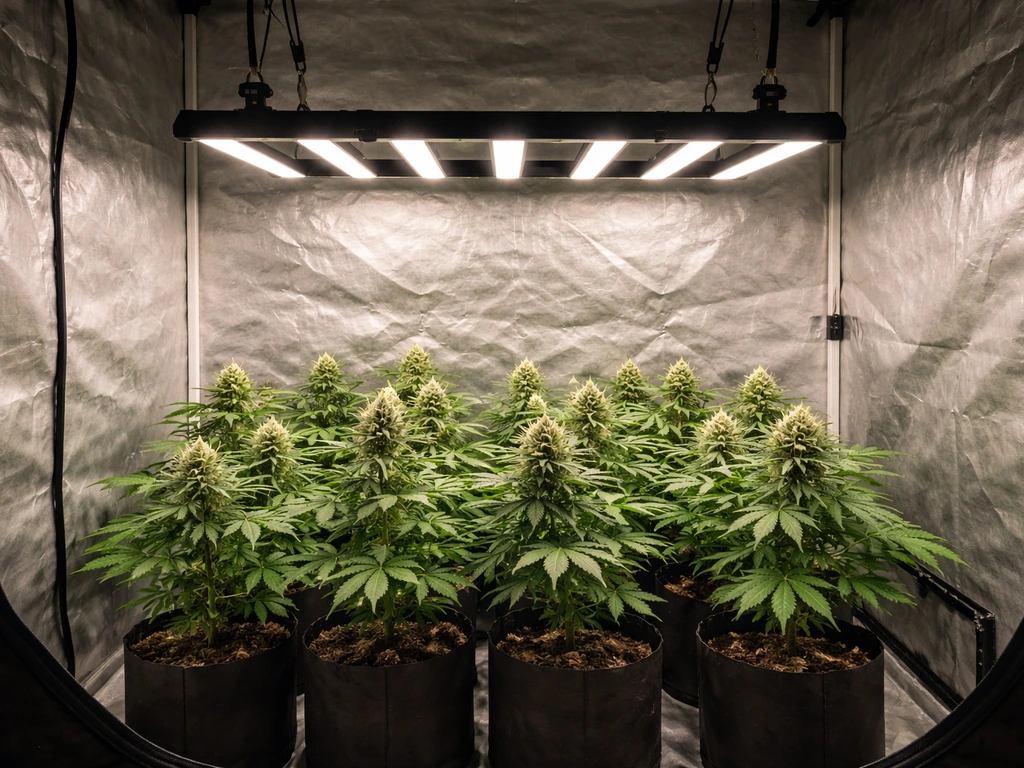
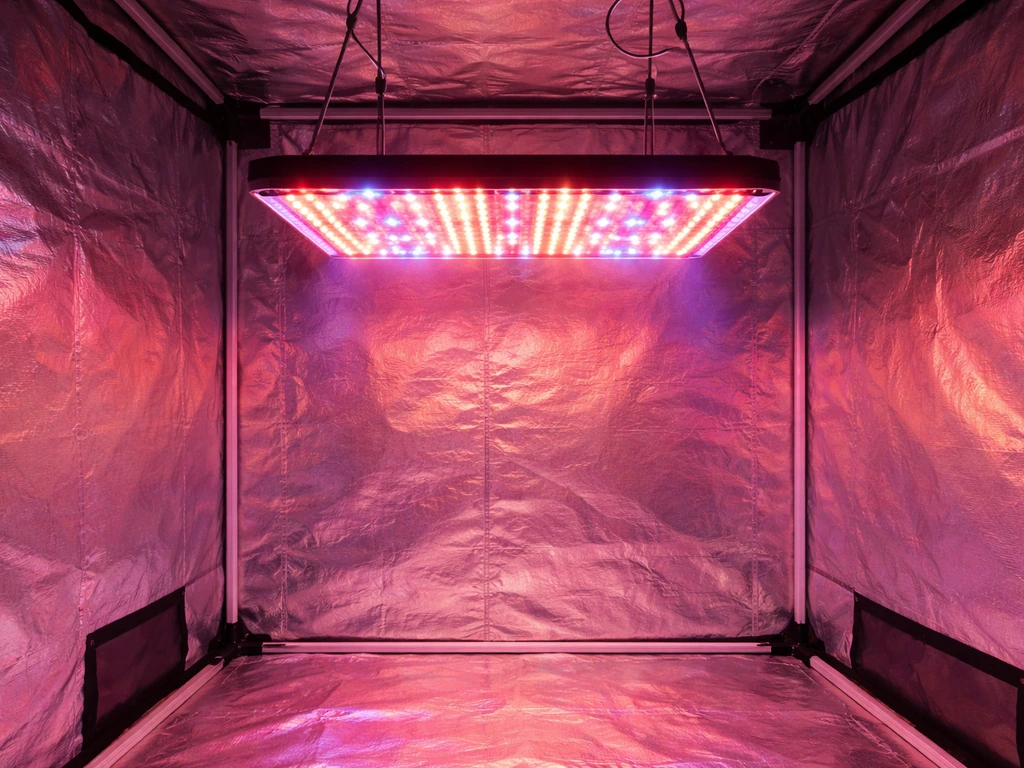
The HG-2500's sweet spot is a 3x3 tent for flowering or a 4x4 for veg. The manufacturer provides PPFD distribution maps at 30cm (12in), 45cm (18in), and 60cm (24in) heights in the manual, which is genuinely useful for dialing in your hang height before planting. Here's how to think about sizing:
| Grow Space | Recommended Light Count | Suggested Hang Height | Growth Stage |
|---|---|---|---|
| 2x2 tent | 1x HG800 | 18 inches | Seedlings/veg |
| 3x3 tent | 1x HG-2500 | 12-18 inches | Veg and flower |
| 4x4 tent | 1x HG-2500 (veg only) or 2x HG-2500 | 18-24 inches (veg), 12-18 inches (flower) | Veg/flower |
| 4x8 tent | 2x HG-2500 (daisy chained) | 12-18 inches | Flower |
| 6x6 space | 4x HG450 or 3x HG-2500 | 12-18 inches | Flower |
When hanging, center the 4-bar spread over your canopy and keep bars parallel to the longest axis of a rectangular tent. If you're running multiple HG-2500 units, the RJ12 daisy chain keeps them in sync, so one master controller handles intensity across all units. That's a meaningful time-saver in multi-light setups. The fixture weighs about 8.4 lbs, so standard ratchet hangers with a 10-15 lb rating are sufficient.
The HG800 in a 2x2 or small shelf setup should be hung at 24 inches for a 3x3 spread or 18 inches for a tighter 2x2 footprint. It uses a standard consumer plug on 100-240VAC, so there's no hardwiring involved. The dual veg/bloom switch gives you a simple way to shift the spectrum emphasis without buying a different fixture.
Build quality, cooling, and day-to-day usability
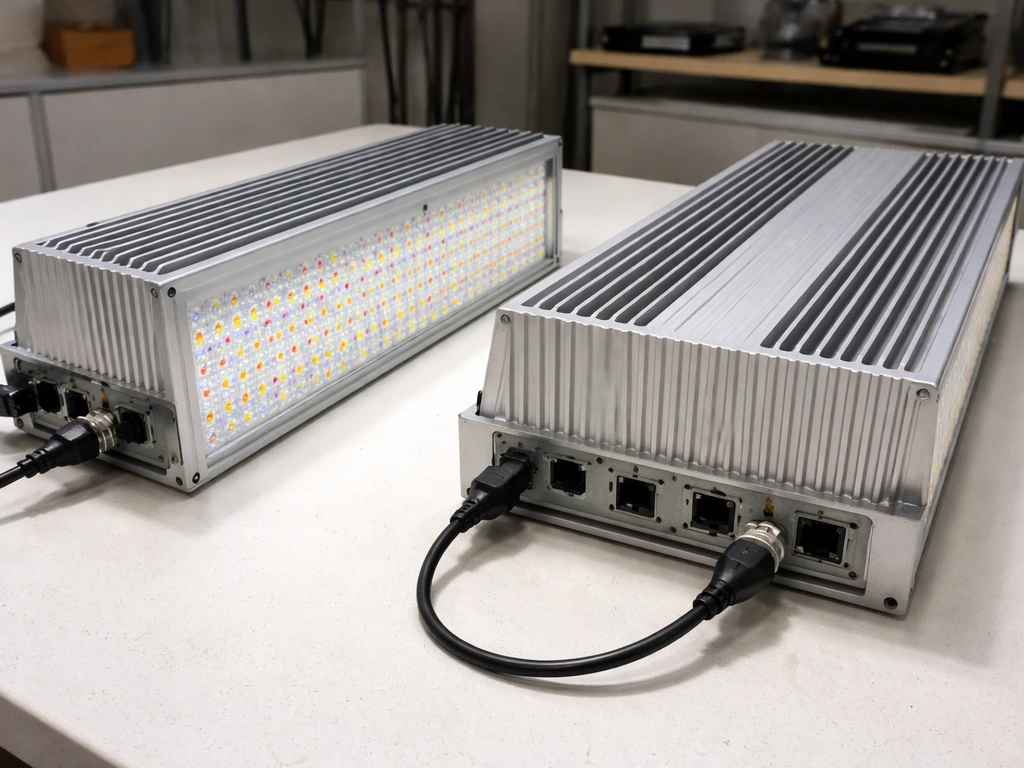
The HG-2500's 4-bar foldable frame is a practical design choice. It folds flat for shipping and storage, unfolds to its full span for use, and the aluminum bar housing feels solid without being over-engineered. The build quality is consistent with mid-range Chinese LED manufacturers: not the anodized precision of an HLG fixture, but not flimsy either. Wiring is clean and contained, and the RJ12 ports for daisy chaining are clearly labeled.
The HG800 uses a combination of high-speed cooling fans, an aluminum heatsink, and what Hipargero describes as an aircraft-grade high thermal conductivity iron shell. In practice, the fans on COB-based fixtures like the HG800 are necessary because COBs concentrate heat at a single point. They do add audible noise compared to the passive-cooled HG-2500 bars. If noise matters (home grower, shared space), the HG-2500's passive cooling approach is quieter.
Both models are not water resistant, which is a common spec for indoor fixtures but worth noting if you're in a high-humidity environment or tend to water aggressively overhead. Keep humidity at canopy level, not splashing up toward the fixture. Dimming via the knob is smooth across the 0-100% range with no flicker visible to the eye. Timer integration works cleanly through any standard outlet timer since the fixture itself doesn't have a built-in timer; Hipargero's FAQ confirms all products support timer integration via external timers. The 3-year warranty covers defects, which is above average for this class.
Pros, cons, and how it stacks up against similar lights
- Genuine Osram and Bridgelux diodes for the price, not generic no-name chips
- 0-10V dimming and RJ12 daisy chain for up to 100 units, a feature usually reserved for pricier fixtures
- Full spectrum 380-730nm with dedicated 460nm blue and 660nm red channels alongside 3000K warm white
- 4-bar foldable design improves canopy coverage uniformity versus single-COB options
- Passive cooling on HG-2500 means quieter operation compared to fan-cooled alternatives
- 3-year warranty is solid for the price tier
- Wide 100-277V input means it works anywhere without adapters
- Claimed PPFD figures are center-point peaks, not averaged across the footprint
- Edge coverage uniformity drops 30-40% from center, typical for the class but worth knowing
- No built-in timer, requires external outlet timer
- Not water resistant, requires care in humid or wet environments
- Limited independent third-party testing data compared to more established brands
- HG800 fans create audible noise that some growers find disruptive
- At 250W, the HG-2500 is underpowered for anything over a 3x3 flowering footprint as a single unit
Against comparable budget bar lights in the 200-250W class, the HG-2500 competes well on features and diode quality. The 2.85 µmol/J efficacy claim is close to what top brands advertise, though without extensive independent PAR mapping it's hard to fully validate. The HLG 600H is a clear step up in tested performance and brand credibility, but it's also more than double the price and targets a 5x5 footprint. For the 3x3 grower on a budget, Hipargero is a more direct comparison to brands like Garpsen in the same tier, though the Osram diode spec and daisy chain capability give Hipargero a slight feature edge.
Bottom line and your pre-buy checklist
Hipargero is a legitimate choice for a 3x3 grow tent at a budget-friendly price, especially if you want commercial-style controls baked in. It's not the most rigorously tested or independently validated brand out there, but the diode quality is real, the feature set is above average for the price, and growers running small tents for personal use will get solid results through veg and into flower. If you're running a 4x4 or larger, either buy two HG-2500 units and daisy chain them or step up to a more powerful single fixture.
- Confirm your tent size: the HG-2500 is optimized for 3x3 flowering or 4x4 veg; anything larger needs two units or a different fixture entirely
- Check your electrical setup: 100-277V input means no adapter needed, but confirm your outlet amperage can handle 250W continuous draw
- Decide if you need daisy chaining now or later: if scaling is in your plans, the RJ12 daisy chain makes Hipargero worth the consideration over a cheaper single-unit light
- Order an external outlet timer separately since there is no built-in scheduling on either the HG-2500 or HG800
- Measure your tent height before deciding on hang height: use the PPFD distribution maps in the manual (30cm, 45cm, 60cm reference points) to pick your starting position
- After setup, take canopy temperature readings after 30 minutes at full power to confirm you're within 75-85°F before adding plants
- Monitor the first two weeks of each new growth stage to confirm intensity is right: stretch during veg means the light is too far or too dim; bleaching or tacoing means it's too close or too bright
- If you're torn between Hipargero and an HLG model, factor in your budget ceiling and whether you want tested third-party PPFD data over claims-based specs
FAQ
Is the Hipargero HG-2500 worth it if I care most about true PPFD coverage, not just the center reading?
If you plan for the corner drop, it can still be a good value. Use the manual’s PPFD height maps (12, 18, 24 inches) to target an average across the whole 3x3, and budget for roughly a 30 to 40% center-to-corner falloff when choosing your hang height.
How do I set the 0-10V dimming correctly if my controller outputs a different signal range?
The light supports an external 0-10V input, so your controller should be able to output a true 0 to 10V analog signal. If your controller provides a different range (for example 1 to 5V), you may need a compatible dimmer interface or transformer to avoid feeding incorrect voltage and underpowering or overdriving the LEDs.
Can I use the RJ12 daisy chain with more than one dimmer or controller?
For predictable results, connect multiple fixtures under one master controller as intended by the RJ12 system. Avoid mixing different control sources on the same daisy chain, because conflicting control signals can cause inconsistent dimming across units.
Does the HG-2500 flicker when dimmed, and should I worry about camera or sensitive plants?
The article notes no visible flicker to the eye when dimming. If you film or use high-frame-rate cameras, you may still want to test with your specific camera settings at your chosen dim level, since manufacturers can implement dimming at different driver frequencies.
What hanging height should I use if my plants grow faster than expected and I cannot adjust daily?
Pick a conservative start height and intensity, then fine-tune once you see canopy response. For most runs, starting flowering around 12 to 18 inches at higher intensity and veg around 18 to 24 inches gives you room to adjust without sudden stress, but if you cannot adjust quickly, target the lower intensity end first.
How should I handle ventilation if I run the HG-2500 at 100% for long periods?
The fixture runs warm but manageable under normal airflow, but 100% in a poorly ventilated tent can push temperatures higher. Aim for steady exhaust and internal air mixing, and re-check canopy temps after 30 to 60 minutes at your chosen intensity, not just at startup.
Is the 3000K warm-white base good for seedlings and clones, or will it stretch them?
At reduced intensity (about 20 to 30%), the warmer base generally works fine for early propagation and does not automatically cause stretching. Stretch risk comes more from insufficient PPFD and excessive distance, so if you see long internodes, increase light intensity slightly or lower hang height within the recommended range.
Can I use an outlet timer, and will dimming work reliably with it?
External outlet timers are compatible since the fixture relies on the outlet for power, not a built-in timer. For automation, use the timer for on and off cycles, and use the 0-10V controller knob or signal for intensity, so your schedule does not abruptly power-cycle the driver multiple times per day.
Is the HG-2500 safe in a humid grow space, like near a steamy humidifier or for light leaks from spraying?
Both models are not water resistant, so overhead misting and direct splash exposure are a bad idea. Keep humidity managed at canopy level and physically protect the fixture from drips and spray, especially around the ports and any openings.
Should I choose the HG-2500 over the HG800 if I’m doing both veg and flower in the same tent?
If you want one fixture to cover everything in a small space, the HG-2500 is the more flexible option because it supports deeper dimming and broad-spectrum behavior across stages. However, if you mainly propagate and want tighter output control for veg, the HG800’s dual veg or bloom emphasis can be simpler, but it typically trades off noise and heating characteristics.
What is the most common mistake when using a 3x3 bar light like the HG-2500?
Over-optimizing for the center peak. Many growers hang based on the best-case center PPFD and then end up with underpowered corners; instead, aim your hang height using the distribution maps and be willing to tolerate a lower average than the maximum claim.
Do I need professional-grade ratchet hangers and cables for the HG-2500, or is consumer hardware okay?
Consumer ratchet hangers are usually fine because the fixture is around 8.4 lbs, but still choose a safety rating that exceeds your load by a wide margin. Also verify cord and chain routing so the bars remain parallel to the tent’s long axis, since orientation affects uniformity.