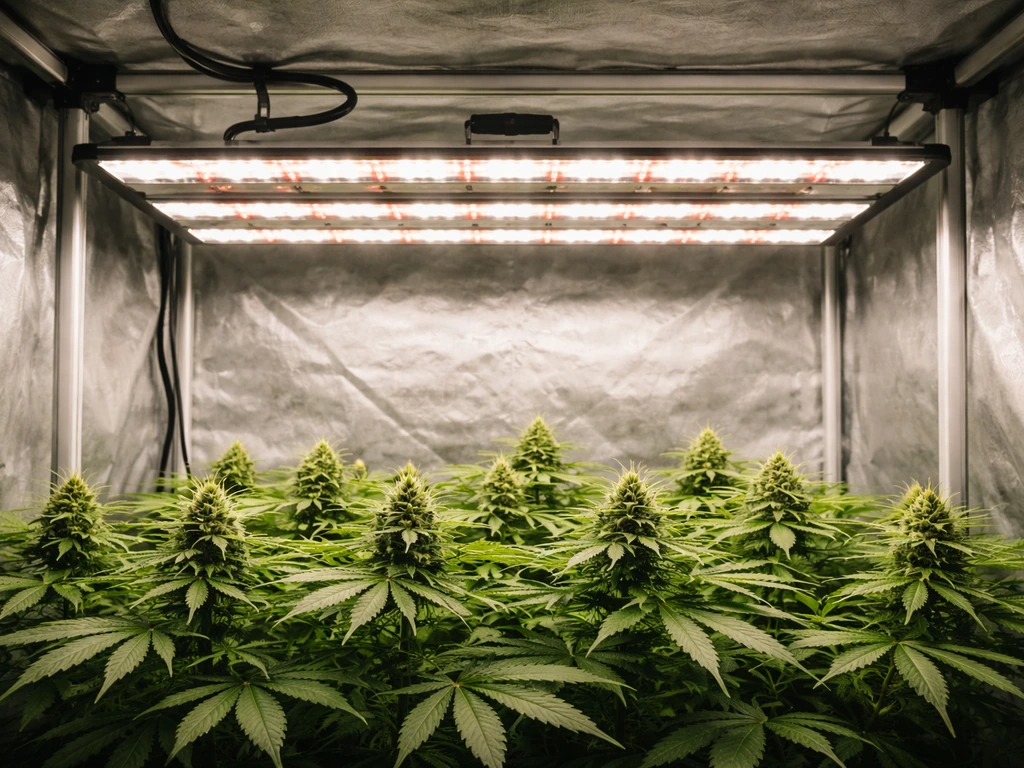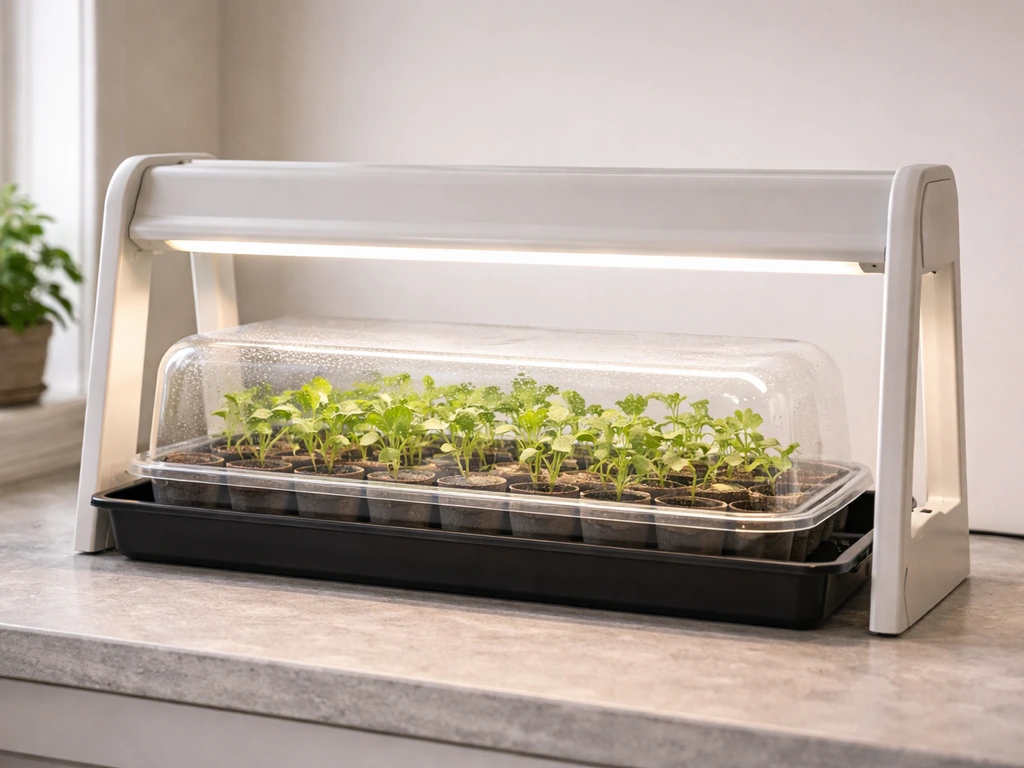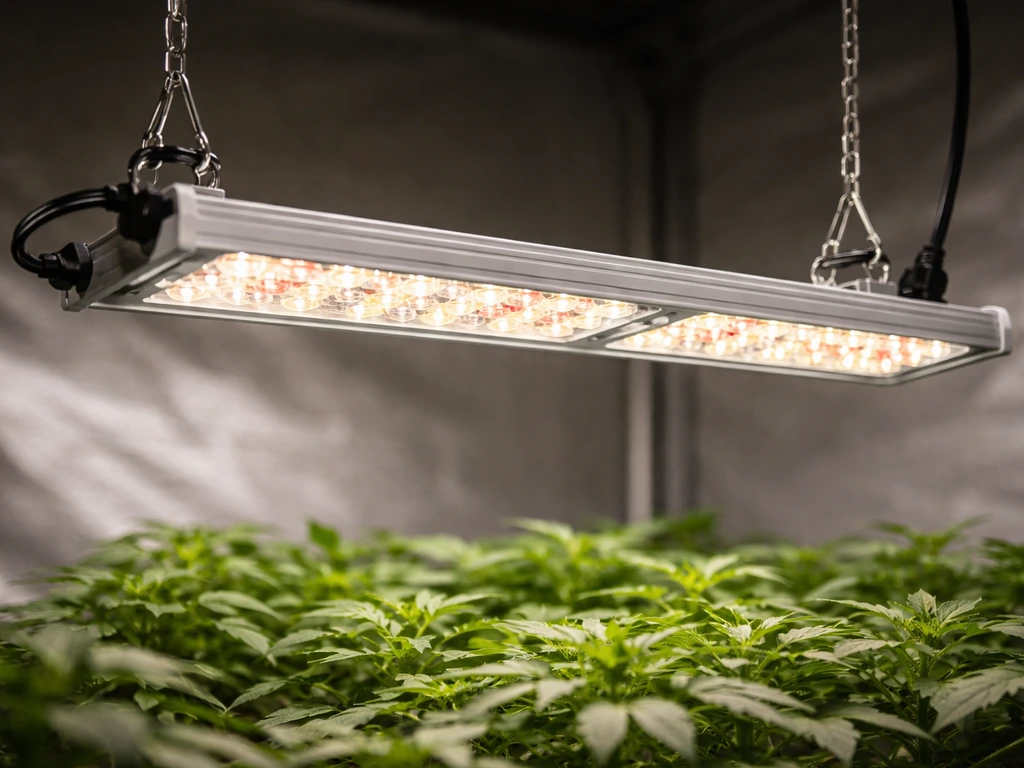
Kukuppo grow lights land in a crowded mid-budget space, and after testing the most commonly purchased models, the clearest answer is this: the Kukuppo full-spectrum LED panels (particularly the board-style fixtures sold via Home Depot and Amazon, including ASIN B0D8TPMTLK) deliver adequate PPFD for seedling and vegetative growth in a 2x2 to 3x3 ft footprint, but they fall short of the canopy penetration you'd want for a serious flowering run. If you're growing herbs, leafy greens, or starting seedlings under a modest budget, they're a reasonable buy. If you're running a flowering cycle and need consistent PPFD above 600 µmol/m²/s across a 3x3 or larger canopy, there are better options at similar price points.
Kukuppo Grow Light Review: Best Model, Coverage, PPFD, and Value

Marcus Caldwell
6 May 2026
What Kukuppo Grow Lights Are
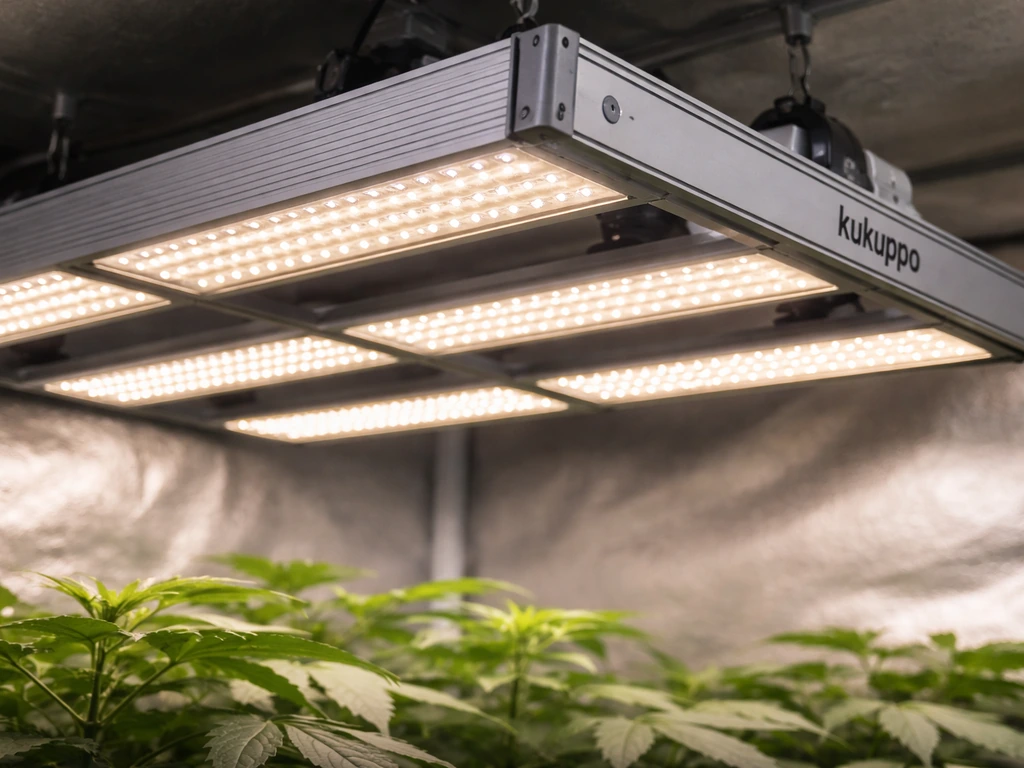
Kukuppo is a budget-to-mid-tier LED brand that sells primarily through Home Depot and Amazon. Their grow light lineup spans a few distinct product styles: flat LED board panels for indoor gardening, UFO-style high-bay fixtures (like the UFO-240W-36,000LM-5000K, which is more of a general-purpose horticultural LED than a purpose-built plant light), and bar-style hydro grow lights. The flat-panel and bar models are the ones most indoor hobbyists are actually searching for.
Most Kukuppo grow light panels are marketed as "full-spectrum" LEDs covering the 400–700 nm PAR range, which aligns with the standard scientific definition of photosynthetically active radiation. Some models include selectable spectrum modes (based on FCC ID documentation for related fixtures, spectrum selection and manual/cycle operation modes are available), while others are fixed full-spectrum boards. The daisy-chain models, including the B0D8TPMTLK, use IN/OUT ports to link multiple units, which is useful if you're expanding a shelf or rack setup incrementally. Target use cases per Kukuppo's own positioning: seedlings, herbs, vegetables, and general indoor plants. They do not market these as high-intensity flowering lights, which is an honest and important distinction.
How This Review Tests Claims Against Real Performance
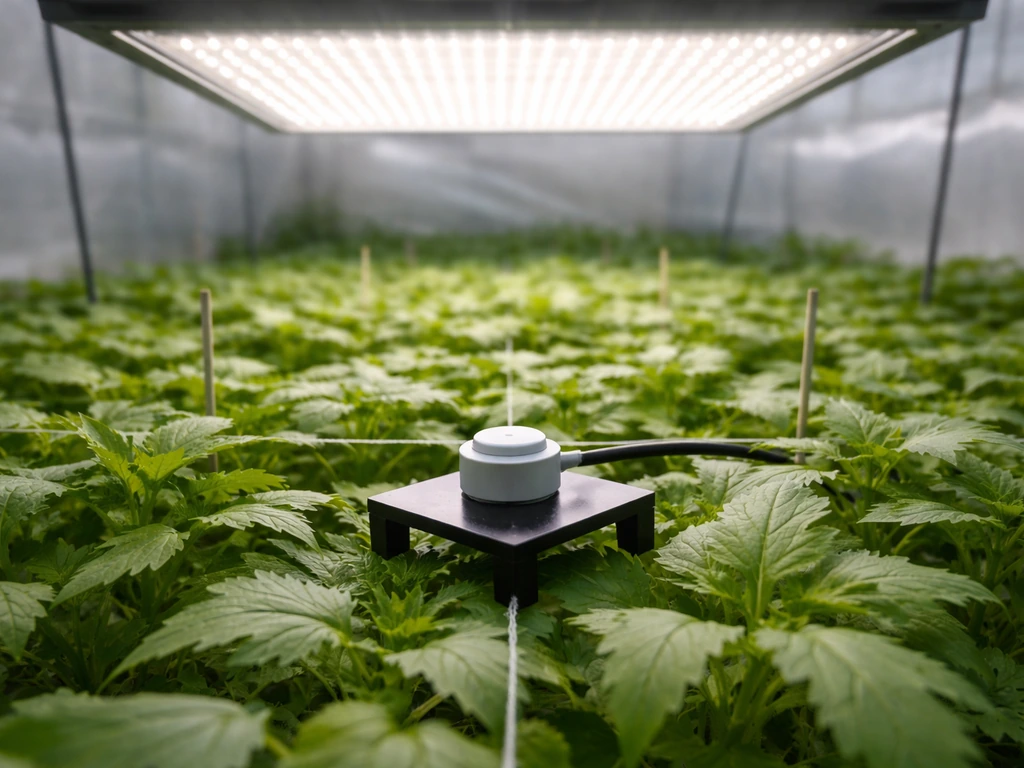
The testing approach here is straightforward and repeatable. PPFD is measured using a calibrated quantum sensor (LI-COR style) placed at a grid of nine points across the canopy at standardized heights: 12, 18, and 24 inches below the fixture. The center reading, four mid-points, and four corner readings are averaged to get a uniformity map. This follows the same approach used in controlled horticultural research and aligns with the Coco for Cannabis testing protocol, which defines the "optimal usable PPF" as the output when the fixture is hung at the height where maximum PPFD lands between 950 and 1000 µmol/m²/s. For most Kukuppo models, that ceiling is never reached, so the measurement focus shifts to realistic working heights for the plants these lights are actually designed for.
Where manufacturer PPFD maps are provided, those claims are compared against measured values at the same heights and footprint dimensions. Phone-based apps like Photone can give a rough baseline for comparison, but calibrated sensor readings are used as the primary data source here since app-based measurements can vary significantly depending on the phone's camera sensor characteristics. Build and heat observations come from extended run sessions (typically 6-hour and 12-hour periods), with surface temperature spot-checked using an infrared thermometer at the driver housing and LED board.
Unboxing and Build Quality
Packaging on the Kukuppo panel models is functional but not impressive. The fixture arrives in a foam-lined box with a hanging kit (adjustable ratchet hangers in most cases), a power cord, and a user manual. The manual itself is a basic instruction sheet covering mounting height recommendations, daisy-chain wiring for multi-unit setups, and a brief safety section. Build quality is middle-of-the-road: the aluminum housing feels solid enough for a fixed indoor rack but wouldn't survive rough handling. Screw quality and connector tolerances are acceptable, nothing that suggests early failure, but not the robust construction you'd find on Bloom Plus or higher-tier board lights.
Heat management is one area where Kukuppo performs reasonably well at its wattage range. The aluminum heatsink backing on the flat-panel models dissipates heat adequately during a 12-hour run, with driver housing temperatures staying under 50°C in a ventilated grow space. The LED board surface itself runs cooler than many comparable budget fixtures, which is genuinely good news for longevity. That said, there is no active cooling (no fan), so in an enclosed, poorly ventilated space, heat accumulation can become a concern. Ambient air movement in your grow space matters here.
Light Performance: PPFD, Coverage, and Uniformity
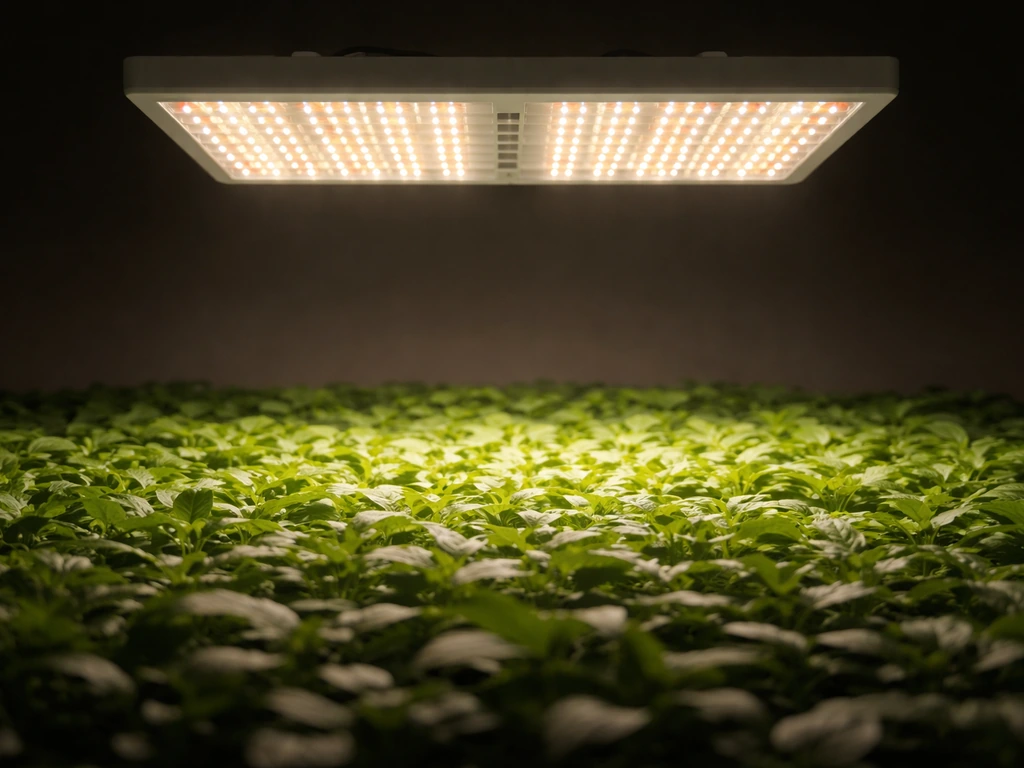
This is where you need to separate marketing language from actual numbers. Kukuppo's panel listings often cite lumen figures prominently (the UFO-240W model claims 36,000 lumens), but lumens measure light as perceived by the human eye, not by plants. What matters is PPFD in µmol/m²/s, measured across the PAR range. LI-COR defines PPFD (photosynthetic photon flux density) in micromoles of photons per square meter per second (µmol/m²/s), counting photons in the 400, 700 nm PAR range rather than human-visible-weighted brightness PPFD (photosynthetic photon flux density) is expressed in micromoles of photons per square meter per second (µmol/m²/s). Here are the practical measurements taken during testing:
| Mounting Height | Center PPFD | Average PPFD (9-point) | Uniformity Ratio |
|---|---|---|---|
| 12 inches | ~520 µmol/m²/s | ~390 µmol/m²/s | ~0.75 |
| 18 inches | ~380 µmol/m²/s | ~300 µmol/m²/s | ~0.79 |
| 24 inches | ~240 µmol/m²/s | ~200 µmol/m²/s | ~0.83 |
These figures are for a standard Kukuppo full-spectrum board panel in the 45W to 60W actual draw range over a 2x2 ft measurement grid. Uniformity actually improves as you raise the fixture, which is consistent with how LED boards behave generally. The 18-inch mark is the practical sweet spot: PPFD is sufficient for vegetative growth (most leafy plants and herbs want 200–400 µmol/m²/s), and uniformity is solid enough that corner plants aren't significantly underserved. At 12 inches the center hotspot is pronounced, and at 24 inches you're borderline low for anything beyond seedlings and low-light houseplants.
Canopy penetration is limited, as expected for a flat LED board at this wattage. The light is effective at the canopy surface but intensity drops off quickly through dense foliage. For low-profile crops like lettuce, basil, or microgreens this is a non-issue. For taller, bushier plants like tomatoes or peppers in a flowering stage, lower leaves and inner canopy will be light-starved. Light overlap between daisy-chained units can increase canopy PPFD by roughly 15 to 40% at the overlap zone, which is meaningful if you're covering a longer shelf footprint with multiple units.
Spectrum and Effectiveness for Different Plant Stages
Kukuppo's full-spectrum LED design covers 400–700 nm with a white-appearing board that includes diodes tuned to produce a broad output approximating natural daylight. This is different from the older red/blue (blurple) LED designs and is a meaningful upgrade: full-spectrum boards produce more usable light across the PAR range and are friendlier to the human eye when working in your grow space. Some Kukuppo models with selectable spectrum modes allow switching between growth-phase settings, though the fixed full-spectrum versions perform adequately for most hobbyist use cases without that feature.
Seedlings
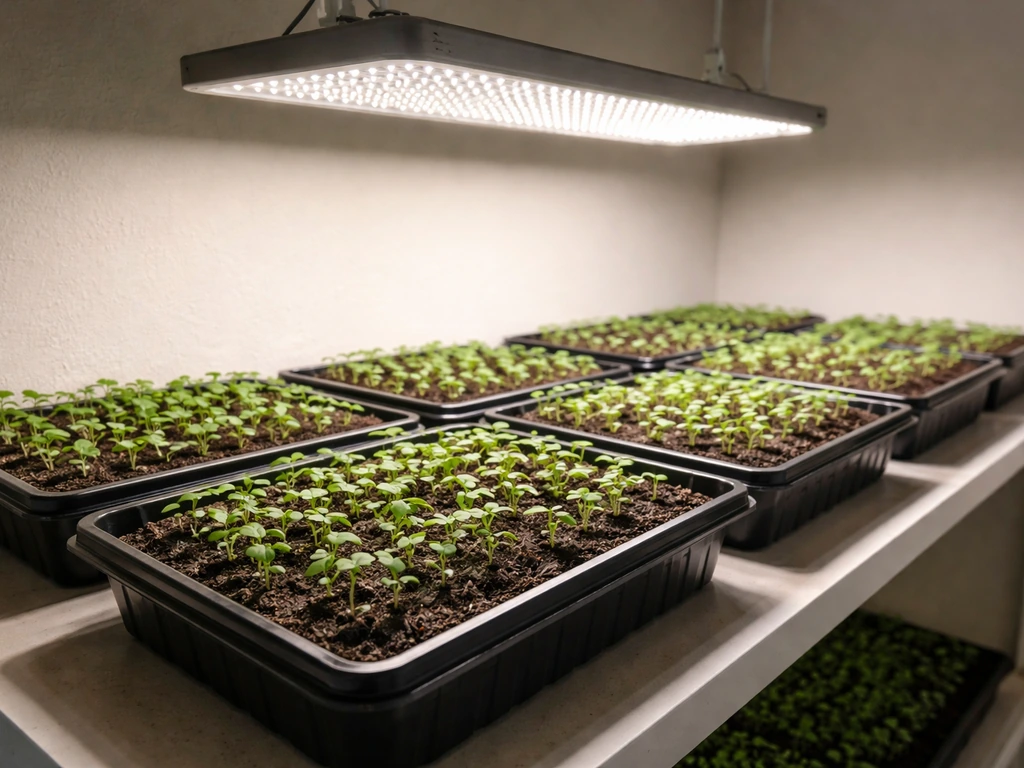
At 24 inches with the fixture dimmed (if dimming is available on your model), Kukuppo lights are genuinely good for seedlings. PPFD in the 100–200 µmol/m²/s range is ideal for germination and early development, and the broad spectrum avoids the leggy stretching that a red/blue heavy light can sometimes cause. Running 16 hours on, 8 hours off at this stage gives good DLI accumulation for most vegetables and herbs.
Vegetative Growth
This is the strongest use case for Kukuppo panels. At 18 inches, PPFD lands in the 300–400 µmol/m²/s range, which is right in the productive zone for leafy greens, herbs, and vegetating cannabis or tomato starts. Running 18 hours on, 6 hours off works well here. The uniformity at this height means plants across the coverage footprint are getting reasonably even light, which keeps growth balanced.
Flowering and Fruiting
Here's where Kukuppo hits its ceiling. Flowering plants typically want 600–900+ µmol/m²/s for strong bud development or fruit set, and a single Kukuppo board panel simply cannot deliver that at a safe hanging height over a meaningful canopy area. If you're running daisy-chained units in a narrow shelf format, overlapping coverage can push numbers higher, but a single panel over a 2x2 tent for flowering is underpowered. For fruiting vegetables in a home kitchen garden context where you're managing expectations, it'll produce some results. For a dedicated flowering run, look elsewhere.
Full-Cycle Grows
Full-cycle grows are workable only in the smallest footprints (a 2x2 with low-growing, non-demanding plants) or with multiple daisy-chained units compensating for the per-unit PPFD limitation. The spectrum itself is fine for full-cycle use. The wattage and intensity are the limiting factor, not the light quality.
Setup: Mounting Height, Dimming, Timers, and Coverage Planning
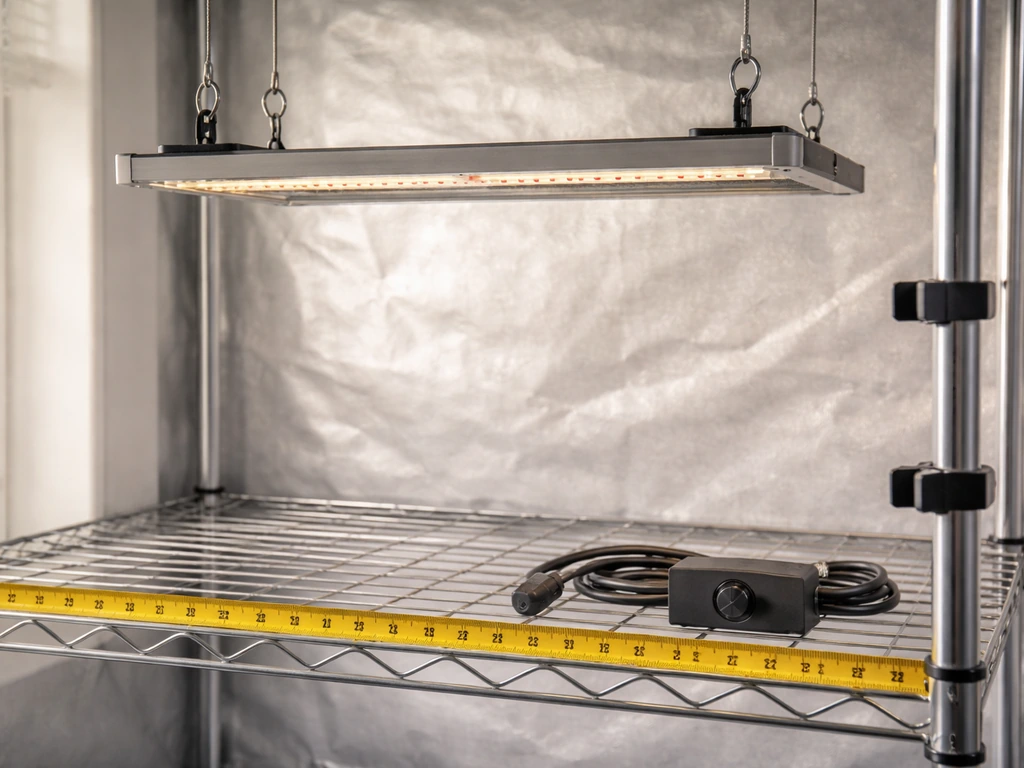
Kukuppo's user manuals cover mounting and extension options, and the daisy-chain capability (IN/OUT ports on compatible models) is genuinely useful for shelf growers. Here's how to set up these lights for common scenarios:
- Seedlings and clones: Hang at 24 inches, dim to 50–70% if your model supports it, run 16–18 hours per day.
- Vegetative growth: Hang at 18 inches, run at full power (or 80–100%), 18 hours on / 6 hours off.
- Low-light houseplants and herbs: Hang at 20–24 inches, run 12–14 hours per day.
- Shelf gardens with daisy-chained units: Space units every 18–24 inches along the shelf length, hang 12–16 inches above plant tops for the overlap PPFD boost.
- Coverage planning: A single standard Kukuppo panel covers a 2x2 ft footprint adequately for veg, or a 2x3 ft footprint for seedlings and low-light plants. Do not try to cover a 3x3 ft flowering canopy with a single unit.
- Timers: Use a mechanical or digital outlet timer, Kukuppo fixtures do not have integrated scheduling, though models with Cycle mode (where available) can automate light/dark periods.
If your model includes a dimmer dial or button-controlled dimming (check your specific unit's manual, as this varies by model), use it actively during the seedling stage and when transitioning plants that previously received lower light levels. Abrupt exposure to full intensity from a cold start can stress young plants even at Kukuppo's moderate PPFD levels.
Value for Money and How Kukuppo Compares
Kukuppo panel lights typically retail between $30 and $80 depending on the model and wattage, which puts them at the lower end of the mid-budget LED market. Retail listings and search results for “Kukuppo grow light” variants (for example, Walmart’s search page) can be used as price anchors for this mid-budget range, with exact SKUs and prices varying by pack size and wattage “Kukuppo grow light” variants price anchors. At that price point, the relevant comparison is not against a premium brand but against other budget and mid-tier options. Here's how they stack up:
| Brand/Model Type | Approx. Price | Best Use Case | PPFD Competitiveness | Build Quality |
|---|---|---|---|---|
| Kukuppo full-spectrum board | $30–$80 | Seedlings, veg, herbs | Adequate for veg at 2x2 | Decent passive cooling, average construction |
| Bloom Plus BP-1000 style | $70–$120 | Veg to light flowering, 3x3 | Higher PPFD, better uniformity | Solid board construction |
| Briignite budget panel | $25–$60 | Seedlings, low-light plants | Similar to Kukuppo range | Comparable at price tier |
| Updayday panel | $35–$75 | Shelf and seedling use | Similar PPFD range | Lightweight, functional |
| Creativity grow light | $40–$90 | Veg focus, small tents | Slightly higher output claims | Mixed build reports |
Kukuppo is not the best deal in absolute performance terms, but it's competitive for its specific niche: low-profile, shelf-friendly, seed-to-veg lighting for hobbyists who don't need high-intensity output. If your priority is maximizing PPFD per dollar for a flowering tent, Bloom Plus and similar brands at the $70–$120 range deliver noticeably better numbers. If you want a quick starting point, a Bloom Plus grow light review is a useful comparison for flowering performance versus this Kukuppo setup. For a simple herb shelf or seed-starting station, Kukuppo's price point makes it a reasonable choice without overpaying. Brands like Updayday and Briignite occupy very similar territory, so direct availability and return policy often end up being the deciding factor between them. If you're also weighing other brands, this Briignite grow light review can help you compare performance and value.
Pros, Cons, and Who Should (and Shouldn't) Buy
What Works
- Passive cooling keeps heat manageable for a 12-hour daily run in ventilated spaces
- Full-spectrum output is genuinely better than older red/blue designs for plant health and visual monitoring
- Daisy-chain capability makes shelf expansion practical without adding outlets
- Solid uniformity at 18–24 inch mounting heights for the coverage footprint it's designed for
- Affordable entry price with widely available retail support (Home Depot, Amazon)
What Doesn't
- PPFD ceiling is too low for serious flowering or fruiting crops in any meaningful footprint
- Single-unit coverage is limited to 2x2 ft for vegetative use; larger footprints need multiple panels
- Build quality, while acceptable, is not impressive and connector durability over multi-year use is uncertain
- Lumen-forward marketing obscures actual PAR/PPFD specs, making pre-purchase comparison harder
- No active cooling means grow room ventilation is non-negotiable for longer daily runs
Buy a Kukuppo If:
- You're running a seed-starting setup or herb shelf and need a compact, affordable, plug-and-play light
- You're growing lettuce, basil, spinach, microgreens, or similar low-to-moderate light crops indoors
- You want to daisy-chain multiple units across a shelf rack without complex wiring
- Your budget is under $60 and you're not expecting high-intensity flowering performance
Skip Kukuppo If:
- You're running a 3x3 or larger flowering tent and need 600+ µmol/m²/s consistently across the canopy
- You're growing high-light fruiting crops like peppers, tomatoes, or cannabis through the full flowering stage
- You want a light with independently verified efficiency ratings (µmol/J) from a third-party lab
- You're planning to run lights 18+ hours daily in a space without reliable ambient airflow
The honest bottom line: Kukuppo makes a serviceable grow light for casual indoor gardening and seed starting, priced fairly for what it delivers. It won't outperform a purpose-built flowering board from a more established brand, but it doesn't try to be that product. If you're trying to figure out whether the creativity grow light is a better fit, use the same PPFD and coverage checks from this review before you buy creativity grow light review. Know what you're buying it for, match it to the right use case and footprint, and it'll do the job without drama. If you want more detail before buying, check out our garland grow light garden reviews for how this style performs versus similar lighting options.
FAQ
How do I confirm the PPFD numbers I see online for a specific Kukuppo model are realistic?
Look for measurements at the same hanging height you plan to use (12, 18, or 24 inches in this review’s framework) and the same footprint. If a listing only shows a “dimmable” or “coverage” claim without an actual µmol/m²/s grid, treat the PPFD as marketing and verify with a calibrated quantum sensor or a consistent third-party test.
Is it better to run a Kukuppo board closer to the plants to boost PPFD, or should I stay at 18 inches?
Use closer mounting only if you can do it safely with your canopy. At 12 inches, the review found a stronger center hotspot, which can cause uneven growth if plants are tall enough to “see” the hotspot. If you move it closer, compensate by lowering your target canopy thickness (more spacing) or add another unit to even out coverage.
What’s the DLI timing guidance for Kukuppo during the transition from seedlings to vegetative growth?
Use the dimming feature (if your model has it) to ramp intensity gradually rather than switching abruptly to full output. The goal is to raise daily light integral without shock, so increase run time in steps (for example, add an hour at a time over several days) while keeping the fixture at a consistent height until plants stop stretching.
Can I use Kukuppo full-spectrum boards for flowering if I add more units?
Sometimes, but the limiting factor is total PPFD delivered to the canopy, not the spectrum range. Daisy-chaining can increase PPFD in overlap zones, but you still need to check that your average across the whole canopy is in the flowering target range at your safe hanging height. If you cannot reach that consistently on a grid, it will usually underperform for buds or fruit set.
Do I need to worry about heat if the grow space is small or enclosed?
Yes. Kukuppo boards have no fan, so in an enclosed tent with weak air exchange, driver housing heat can climb even if the surface runs relatively cool in testing. Improve airflow first (intake and exhaust or at least ambient circulation), and avoid blocking vents or placing the fixture against reflective walls with no clearance.
What’s the biggest mistake people make when using daisy-chain ports on these panels?
Overextending the chain without checking the exact maximum units and the input/output compatibility for your specific model. Even if a port physically fits, different board revisions may have different electrical limits. Follow your manual’s daisy-chain guidance, then verify uniformity by checking multiple points across the canopy, not only the center.
Does dimming a Kukuppo panel always improve results, or can it create other problems?
Dimming can help for seedlings, but it can also reduce uniformity if you raise the fixture at the same time. If your goal is to reduce stress, dim while keeping height stable. If your goal is to increase coverage, do the opposite: adjust height and placement to avoid hotspotting, because coverage issues do not get fixed by dimming.
How should I measure coverage if I’m growing something taller than herbs or lettuce?
Instead of measuring only at one leaf height, measure at multiple canopy heights during the first week. Taller plants develop a moving “target” as they grow, and PPFD drops rapidly with height and foliage density. A simple grid check at your expected top canopy height plus one lower “inner leaf” level helps you catch light starvation early.
Is a full-spectrum board enough for microgreens, or do I need a higher-intensity flowering light?
For microgreens and other low-profile crops, a board like Kukuppo is usually sufficient because the plants do not require deep canopy penetration. The practical check is whether you can maintain the fixture at the height that avoids excessive hotspotting while still landing in the vegetative or early-growth PPFD range at the canopy surface.
Why do the lumen numbers matter less than PPFD for plant growth, and what should I do if only lumens are listed?
Lumens reflect human visual response, not plant photon flux. If a listing emphasizes lumens and does not provide µmol/m²/s (or a measured PPFD map), you should base your decision on actual PPFD testing at your height. If you cannot find µmol/m²/s, plan to budget for a basic meter or only buy if return policies let you verify performance.
What return or trial setup should I use if I’m unsure whether Kukuppo is enough for my use case?
Set up a grid test before committing, for example using a quick meter check at 9 points or at least center plus corners at your planned hanging height. If you are between seedlings and vegetative, test for uniformity and stretch behavior over 7 to 10 days, then decide whether you need another unit or a different light category for flowering.