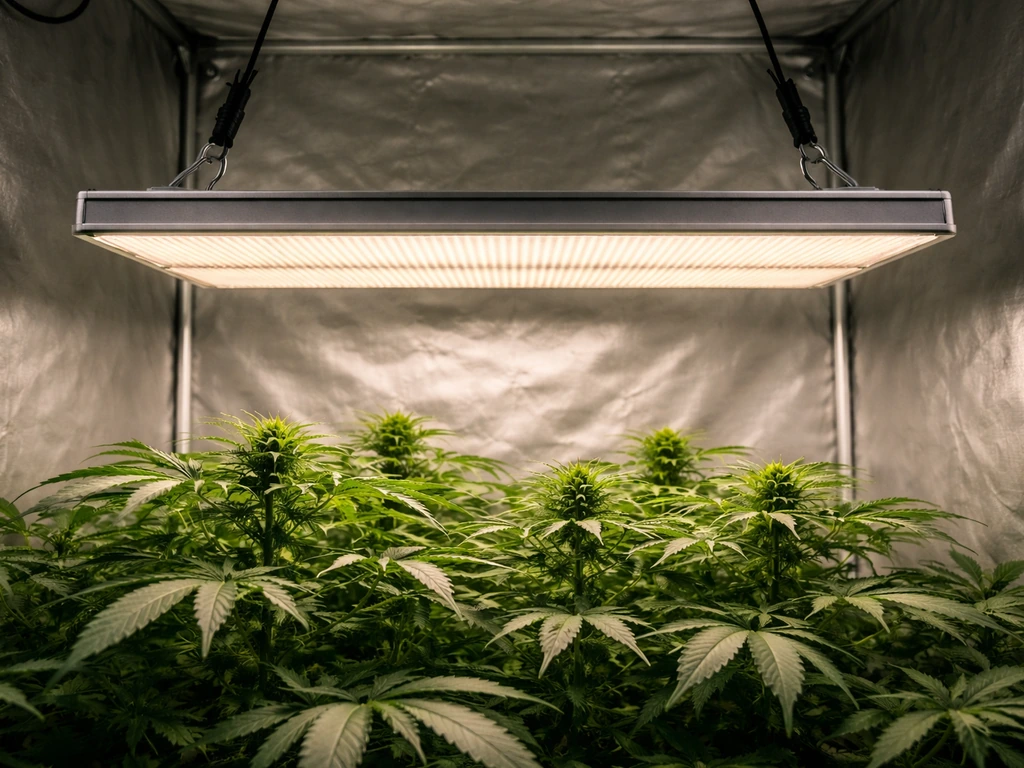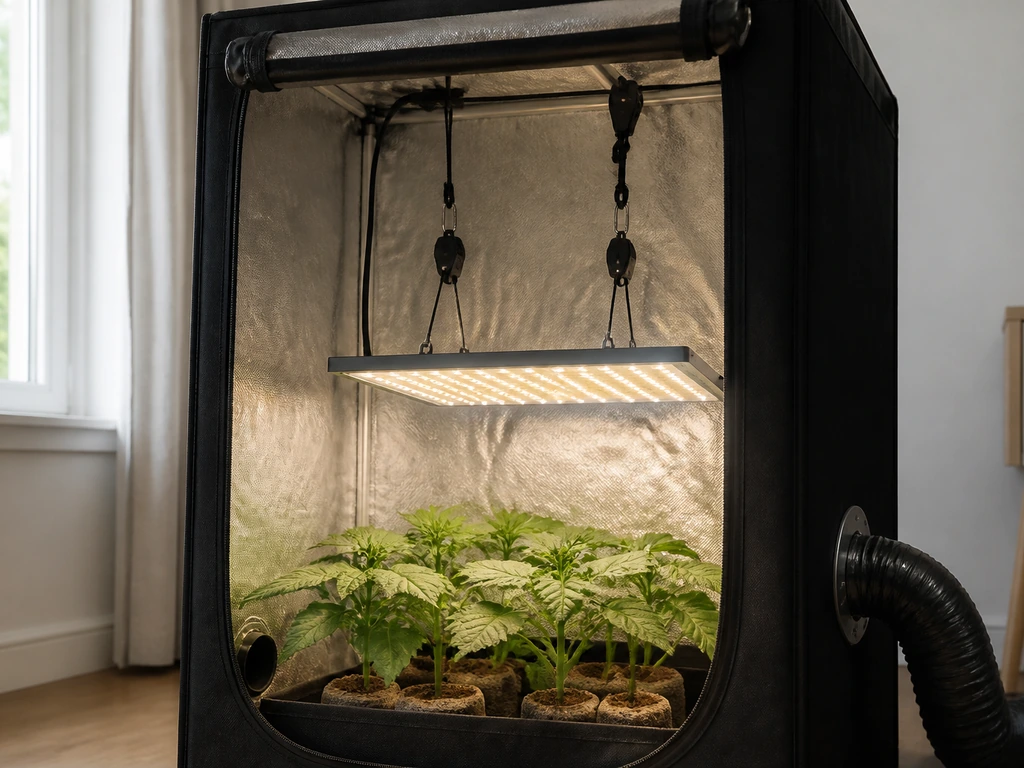
The Hyper Tough 24-inch grow light is a $12.98 linkable LED bar sold at Walmart, running 12 watts, and built around blue and red LEDs. It is not a powerhouse grow light. But depending on what you are growing and how many units you chain together, it can be a genuinely useful tool. This review breaks down exactly what you get, what it can and cannot do, and whether it makes sense for your grow space.
Hyper Tough 24 Inch Grow Light Review: Setup, Coverage, Value

Marcus Caldwell
9 Apr 2026
What exactly is the Hyper Tough 24-inch grow light
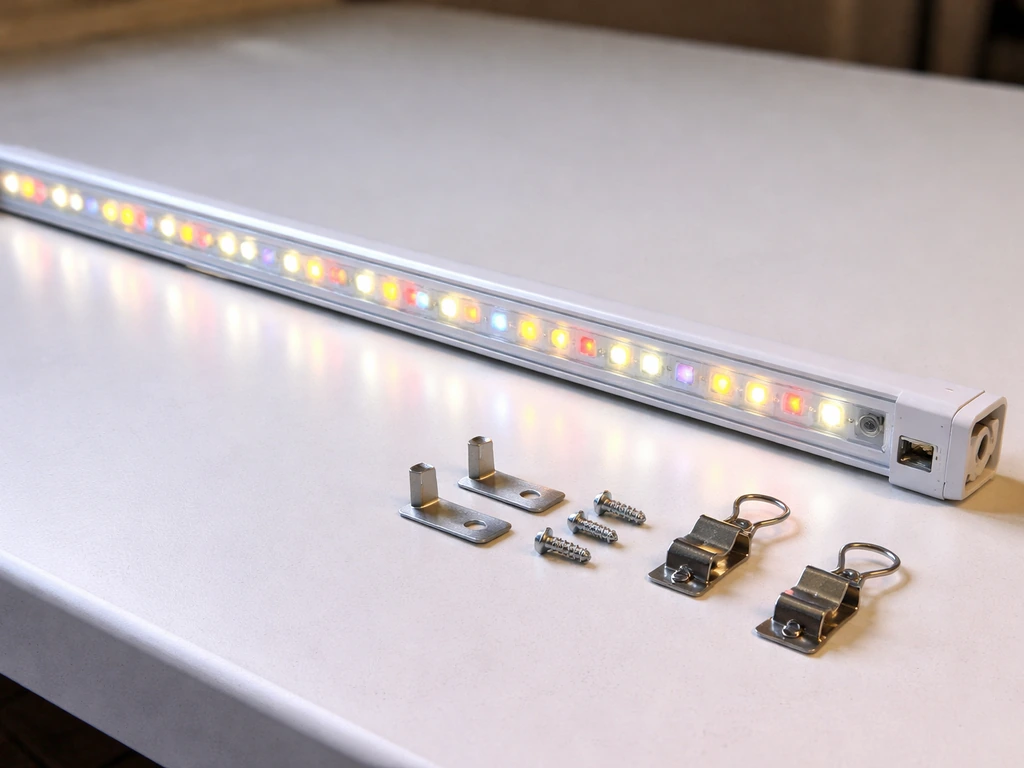
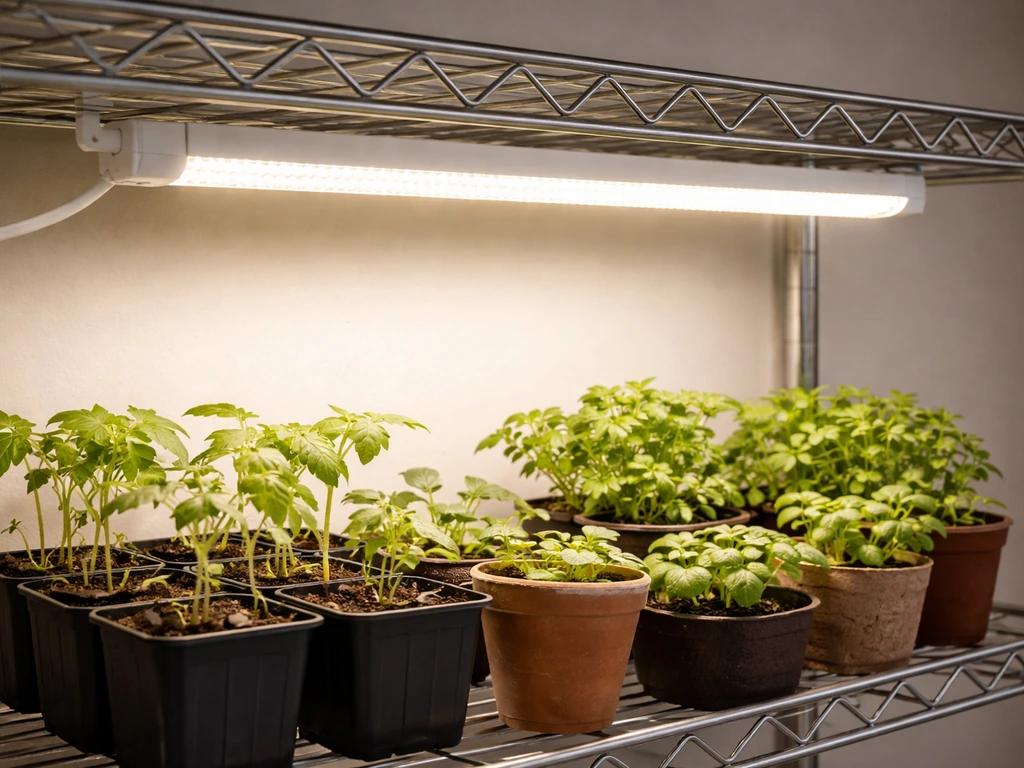
There is only one main 24-inch model in the Hyper Tough lineup worth talking about: the Hyper Tough 24" LED 12W Full Spectrum Grow Light, Linkable, Mounting Hardware Included (Walmart item 713072660, UPC 815109028332). The fixture measures 24.0 in x 1.0 in x 1.2 in, weighs 0.6 lb, and draws 12 watts at the wall. It uses an aluminum frame with a plastic lens, integrated blue and red LEDs, and comes with a 5-foot power cord with a basic on/off switch. There is no dimming. You cannot adjust intensity at all.
The linkable feature is one of the more practical aspects of this fixture. Each unit includes a 10-inch link cable, and you can daisy-chain up to 10 units off a single power cord. That means one outlet can theoretically run 120 watts of linked bars covering a long shelf or a multi-plant rack. Walmart markets it for "flowers, herbs, vegetables and other plants" from "vegetative to flowering stages," which is ambitious language for a 12-watt bar, but we will get into that honestly in the performance section.
If you are looking at the broader Hyper Tough grow light lineup, the 24-inch bar sits at the entry-level end of the range. It is designed for seed starting, low-light herb maintenance, and under-shelf supplemental lighting, not heavy veg or flowering production.
Setting it up: installation and common grow space configurations
Installation is genuinely straightforward. The package includes mounting hardware, so you can hang or surface-mount the bar without any extra hardware run. For most indoor gardeners, the typical setup is one of three configurations: mounted under a wire shelf rack above a seedling tray, hung from a closet rod or tension bar above a small plant table, or screwed directly to the underside of a cabinet shelf for herb growing in a kitchen or laundry room.
- Unbox the fixture and locate the mounting screws and hanging hardware included in the package.
- Decide on surface-mount (screws into wood or shelf) or hang configuration (wire or cord through the mounting slots).
- Position the bar so it runs lengthwise over your plant row, centered on the canopy.
- Connect the 5-foot power cord to a nearby outlet, or if linking multiple units, attach the 10-inch link cable to the next bar before plugging in.
- Start with the light approximately 4 to 6 inches above seedlings or low-light plants, adjusting down to around 2 inches if you notice slow growth.
- Set a timer (sold separately) for your photoperiod. A common starting point for seedlings is 14 to 16 hours on, 8 to 10 hours off.
One practical note: the on/off switch on the 5-foot cord is convenient for a single bar, but once you link multiple units, all of them run off that one switch, which is actually ideal for consistent scheduling. Just pair the cord switch with a plug-in outlet timer to automate your photoperiod without thinking about it.
Real-world light output, coverage footprint, and plant suitability
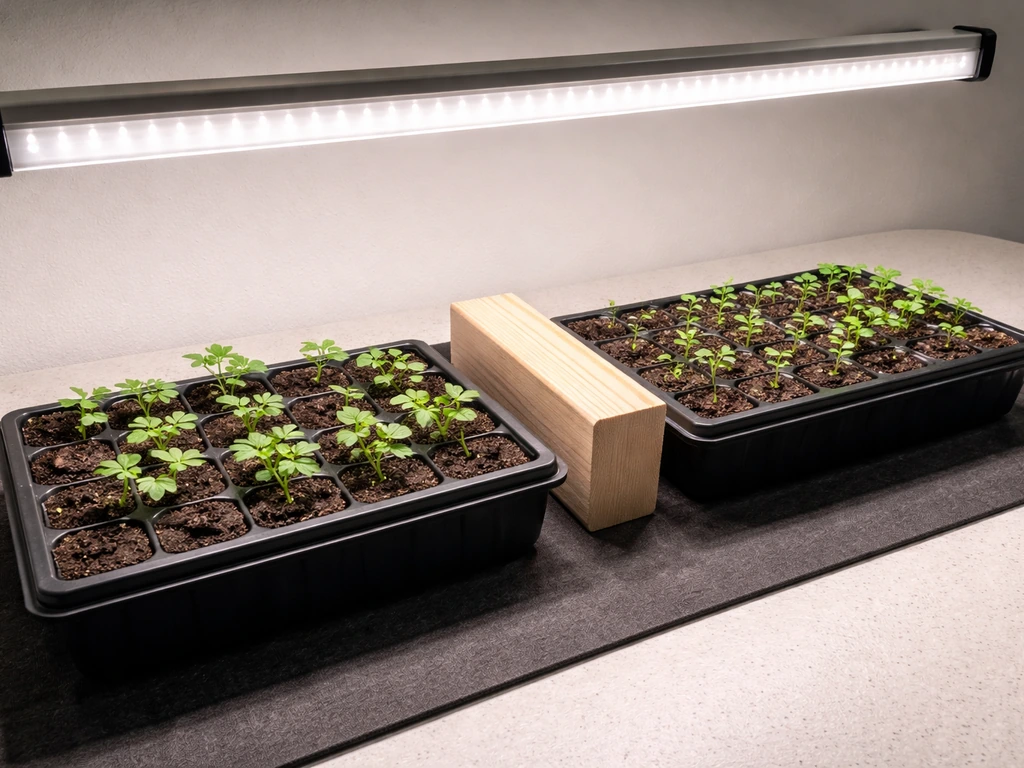
Here is where honest expectations matter most. At 12 watts, this bar is delivering a modest amount of usable photosynthetic light. The 24-inch bar length roughly corresponds to a coverage footprint of about 24 inches long by 6 to 8 inches wide at the distances users typically run it (2 to 6 inches from the canopy).
Hydrobuilder’s PAR measurement guidance recommends taking readings at the plant canopy level, or where the plants will be, and adjusting height to find the best results measure PAR at the plant canopy level. At 12 inches of hanging height, that coverage gets wider but the intensity drops considerably, likely falling into the range that only supports very low-light species or acts as a supplement to natural light.
Users in forums note that keeping this light just 2 inches above the plant is where it actually produces results for anything requiring moderate light. One real-world observation from a bonsai grower was telling: they used the Hyper Tough bar for tropical plant survival over winter but did not notice noticeable growth and ended up supplementing with a full-spectrum white flood light to get actual results. That lines up with what the numbers suggest. PPFD is the metric that matters most for plant light at the canopy, not wattage alone or marketing terms like full spectrum. At 12W, you are providing survival-level or supplemental light, not productive growth light for most species.
What it does work well for: lettuce, herbs (basil, parsley, chives), seedling trays in the first 2 to 3 weeks, and low-light houseplants that just need a boost in a dim room. What it struggles with: tomatoes, peppers, cannabis, or any plant that needs high PPFD values to thrive. One forum commenter summed it up well, asking whether you would need "like 5 of these to veg properly," and the honest answer is yes, roughly. Chaining 4 to 5 units over a 2x4 ft footprint starts to approach usable veg-stage light levels.
Spectrum performance: what to expect for veg and bloom
The Hyper Tough 24-inch bar uses a blue and red LED configuration. Despite the "full spectrum" marketing label on the packaging, this is not a white-light or broad-spectrum fixture. It delivers targeted wavelengths (blue for vegetative growth and chlorophyll absorption, red for flowering and elongation responses) without the green, yellow, and far-red wavelengths a true full-spectrum or wideband white light would include.
For vegetative growth, the blue component is functional. Plants will respond to it for basic photosynthesis and compact growth habits. The red component theoretically supports the transition to flowering, but at 12 watts total the intensity is not high enough to drive flowering in most fruiting or flowering plants. If you are hoping this single bar will take your tomato seedlings all the way through flowering and fruit set, you will be disappointed. If you are using it to maintain vegetative growth in herbs or to start seeds, the spectrum is adequate.
One thing worth noting is that blue/red bars produce that characteristic purple-pink glow that many indoor gardeners find visually harsh. It makes it harder to assess plant health visually (leaves look discolored under purple light). If you plan to use these in a living space, a white-spectrum bar of similar wattage may be more tolerable to live around. Brands like Soltech take a deliberately white-spectrum approach at a higher price point specifically for this reason.
Hanging distance guidance for this spectrum: keep the bar 2 to 4 inches above seedlings, 4 to 6 inches above low-light herbs, and no more than 6 to 8 inches above any plant you want active growth from. Beyond 8 to 10 inches, the light intensity from a 12-watt bar drops to maintenance-only levels.
How the price stacks up against comparable bars
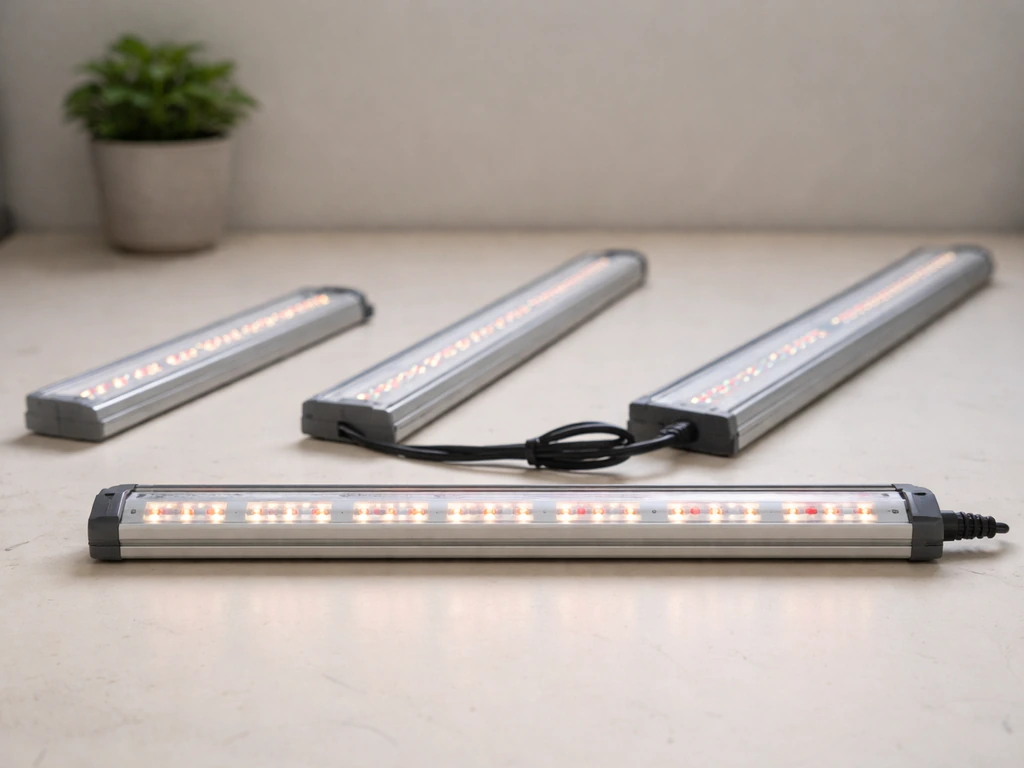
At $12.98 per unit, the Hyper Tough 24-inch bar is one of the cheapest linkable grow light bars on the market. To put that in context, here is how it compares to some other common options in the 24 to 30-inch bar category:
| Light | Length | Wattage | Spectrum Type | Linkable | Approx. Price | Best Use |
|---|---|---|---|---|---|---|
| Hyper Tough 24" LED | 24 in | 12W | Blue + Red | Yes, up to 10 | $12.98 | Seedlings, low-light herbs |
| Barrina T5 Grow Light | 24 in | 20W | Blue + Red or Full White | Yes | $25-30 (4-pack) | Seedlings, veg shelf |
| Utilitech LED Grow Bar | 24 in | ~14-20W | Blue + Red | Varies by model | $15-25 | Under-shelf herbs |
| AC Infinity IONBAR 2 | ~24 in | 40W | Full Spectrum White | No (standalone) | $80-100 | Serious veg, small canopy |
| Generic T8 LED (warm white) | 24 in | 12-15W | Broad white | Often yes | $8-15 | Low-light supplement |
The value math changes depending on your goal. For seedling starting, the Hyper Tough at $12.98 is competitive, especially when you link 3 to 4 units together for a small tray. But if you are aiming for productive vegetative growth on a single bar, the Barrina T5 pack gives you more wattage per dollar. For anything serious, the AC Infinity grow light tier is a completely different performance class, though at 6 to 8 times the price.
Where the Hyper Tough wins clearly is the under-$15 single-bar category. If you need a functional, low-cost grow light for a windowsill herb shelf or a seed tray under a wire rack, $12.98 is hard to argue with. Just do not go in expecting it to perform like a $80 bar.
Pros, cons, and who should actually buy this
- Pros: Very affordable at $12.98, linkable up to 10 units for scalable setups, lightweight and easy to mount, low heat output so close placement is safe, includes all mounting hardware and a link cable in the box.
- Cons: Only 12W, no dimming, no spectrum adjustment, blue/red-only spectrum produces harsh purple glow, no published PPFD or PAR data from Hyper Tough, warranty terms unclear from listing, occasional early unit failures reported.
- Best for: Seed starting, herb maintenance, low-light tropical houseplants, supplemental light under shelving, tight-budget growers buying 4 to 6 units to cover a small shelf.
- Not a good fit for: High-light fruiting plants (tomatoes, peppers), cannabis at any stage, anyone wanting a single-bar solution for real vegetative coverage, growers who need spectrum flexibility or dimming control.
If you already grow herbs on a kitchen shelf and want something cheap to extend their season through winter, this bar is a reasonable buy. If you are comparing it to Utilitech grow light options in a similar price tier, both are budget-tier bars and the comparison often comes down to availability (Utilitech tends to appear at Lowe's, Hyper Tough at Walmart). Neither is a performance powerhouse.
Common issues, heat, durability, and buying tips
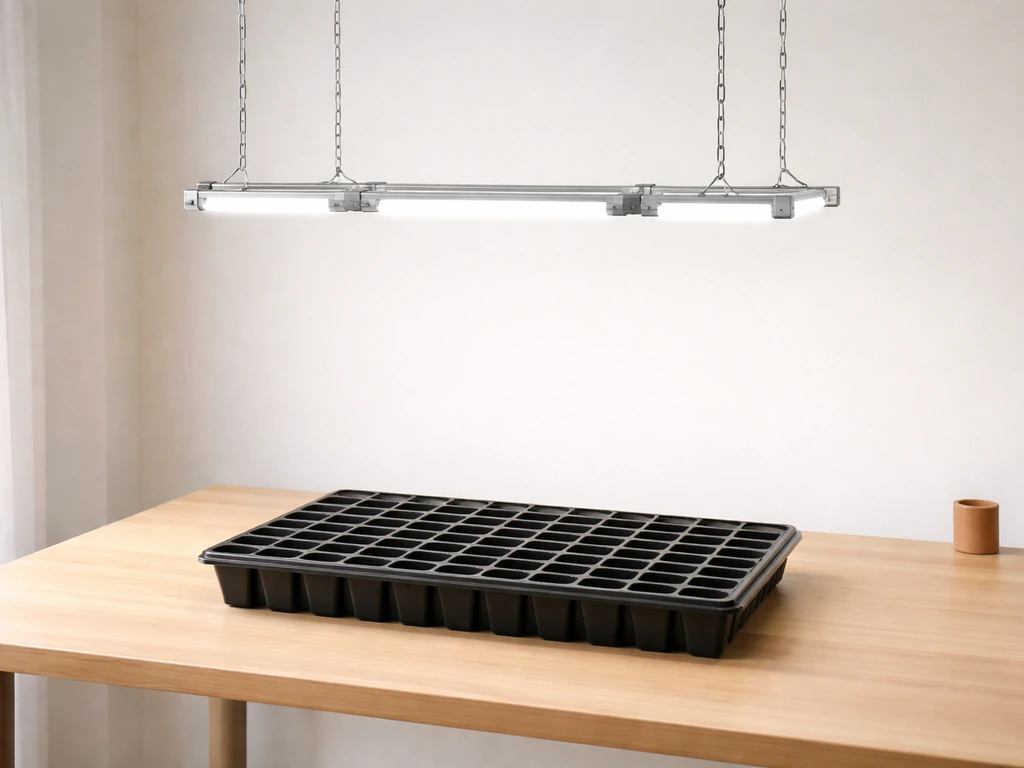
Heat is genuinely not a concern with this fixture. At 12W, the aluminum housing stays barely warm to the touch, and multiple users confirm you can place it as close as 1 to 2 inches from plants without any heat stress risk. That is actually one of its practical advantages over older fluorescent bars, which ran noticeably warmer.
Durability is a bigger question mark. At least one user reported the unit stopping completely after just 4 days of use at around 6 hours per day. That is a concerning data point, and it is consistent with what you see in budget LED products generally: most units will last, but early failures happen at a higher rate than with quality brands. If you buy two or three and one dies in the first week, that is a known risk at this price point. The fix is simple: buy from Walmart in-store so you can return easily, or buy one extra unit as a spare.
Flicker is not something Hyper Tough publishes specs on, and at this price you should assume it is a basic driver without flicker management. For plant growth this does not matter. If you are filming plants under this light for timelapse or video, you may see banding depending on your camera's shutter speed.
One installation quirk to watch for: when linking multiple units, keep the total linked chain to 6 to 8 bars rather than pushing the full 10-unit maximum. Staying below the maximum linkage rating reduces stress on the first unit's driver, which carries the load for all linked bars. If you notice dimming on the far end of a long chain, that is usually a sign the driver is straining.
For those evaluating this against more specialized products like the Illumitex LED grow light, the comparison is almost apples to oranges. Illumitex targets professional horticulture with engineered spectrum outputs, while the Hyper Tough is a consumer shelf product with basic functionality. Both can serve their respective audiences well.
How many units you need and where to put them
Here is a practical sizing guide to help you figure out what you actually need before you buy:
| Grow Space / Use Case | Recommended Units | Chain or Separate? | Hanging Height |
|---|---|---|---|
| 10-tray seedling flat (10x20 in) | 2 bars linked | Link with 10-inch cable | 2-4 inches above tray |
| Small herb shelf (24x12 in) | 1-2 bars | Single or linked | 4-6 inches above plants |
| 2-ft wire rack shelf (24x18 in) | 2-3 bars linked | Linked chain | 3-5 inches above canopy |
| Closet veg space (2x4 ft) | 5-6 bars linked | Linked chain on 2 rows | 4-6 inches above canopy |
| Under-cabinet kitchen herbs | 1 bar | Single unit | 4-8 inches, mount to cabinet base |
The bottom line: buy one bar if you have a single herb pot or small seedling tray. Buy three to six if you want to cover a real shelf or small grow rack. If your needs have grown beyond that point, you are probably better off stepping up to a dedicated 40 to 60-watt full-spectrum bar rather than chaining more budget units. At that threshold, the economics start favoring a single better fixture over a linked chain of entry-level ones, both in performance and in reducing the risk of one weak link taking down the whole chain.
FAQ
Will this Hyper Tough bar work if I do not have any natural light at all?
Yes, but you should treat it as supplemental light, not your only grow source. Blue/red bars deliver weaker usable intensity than you might expect from the “full spectrum” wording, so if you run it for 12-16 hours in winter you may keep herbs alive and compact, but you will usually not get strong, rapid growth unless you keep it very close (about 4-6 inches for low-light herbs, 2-4 inches for seedlings) and use decent ventilation.
How do I set a consistent light schedule when I link multiple bars?
Because linked units share one power cord switch, turning the switch off stops the entire chain immediately. If you are using an outlet timer, plug the power cord into the timer and leave the bar’s switch set to ON, so the timer controls the full photoperiod reliably.
Can this help prevent leggy seedlings or plant stretching?
Use it as a supplemental tool for disease control by improving uniformity, not by expecting it to prevent problems. The bigger benefit is you can reduce leggy stretching by raising light intensity and keeping distance tight, but if light is too close you can cause heat and stress even at 12W, and if it is too far you will get weak growth and more humidity issues.
Will it cause flicker or banding if I livestream or make timelapse videos?
Test your camera settings if you plan to film. These budget LEDs may show flicker or banding depending on shutter speed, even though plants are usually fine. A practical fix is to use a slower shutter (or match shutter speed to your room lighting frequency) and check a short recording before committing.
Is the “full spectrum” label accurate for flowering plants?
Do not aim it at leaves for long periods and assume the “full spectrum” claim covers everything. This bar is blue/red, so it is best for vegetative and early seedling needs. For flowering or fruiting, you generally need either much more wattage, more distance reduction, or a different lighting design.
Why do my leaves look oddly colored under this light, and how do I tell if they are healthy?
Blue/red light makes it harder to judge leaf color and nutrient problems by eye. If you are diagnosing yellowing or spots, switch to indirect checks like comparing against a known healthy plant, using a simple photo in neutral room lighting, or relying more on growth rate and leaf texture than pure color.
What is the safest number of bars to chain together for consistent brightness?
Linking more bars can work, but quality control matters because one weak unit or driver can limit the chain. Practical approach, use 2-4 bars for a small tray first, then expand, and if you see dimming at the far end stop there, because that often indicates driver strain.
Can I mount it right under my shelves, like 1-2 inches from plants?
Yes, you can mount it very close because heat is minimal, but closeness depends on plant type and goal. For seedlings keep it around 2-4 inches, for herbs 4-6 inches, and for active growth target around 2-8 inches, but if growth stalls and leaves look pale, raise the light closer before assuming you need a different spectrum.
If I want stronger light without changing the fixture, what can I adjust?
It draws about 12 watts per bar and has no dimming control, so you cannot “fine tune” intensity. Your main adjustment is physical distance, adding more bars for more coverage, or upgrading to a higher watt full-spectrum bar for consistent intensity without stacking many units.
What happens if the power blinks or my timer resets?
Unplugging and replugging a chain will reset everything, but there is no built-in memory or ramping. If you rely on an outlet timer, avoid leaving the cord switch toggling, and ensure it is set to ON so the timer truly controls power, especially after power outages.
How many hours per day should I run it for herbs in winter?
Run it long enough to extend your season, but be mindful of total light hours because too much blue/red intensity at close range can stress tender seedlings. A practical starting point is 14-16 hours/day for seedlings and shorter days for herbs in winter, then adjust based on growth response.
If one bar dies quickly, is there a workaround for a multi-bar linked setup?
Budget LEDs can fail early. To reduce regret, buy through Walmart where returns are easy, and consider purchasing one extra as a spare if you are building a multi-bar chain, because one dead unit can darken a whole section.
At what point should I stop buying more Hyper Tough bars and upgrade to a stronger light?
If you need a wide, even footprint over a 2x4 area with meaningful growth, stacking 12W bars can become inefficient and risky. A practical decision rule is if you are already thinking “4 to 5 bars” for veg-stage performance, you will usually be better off with one dedicated 40-60W-class fixture instead of pushing a long linked chain.