Which Hyper Tough models are we actually talking about
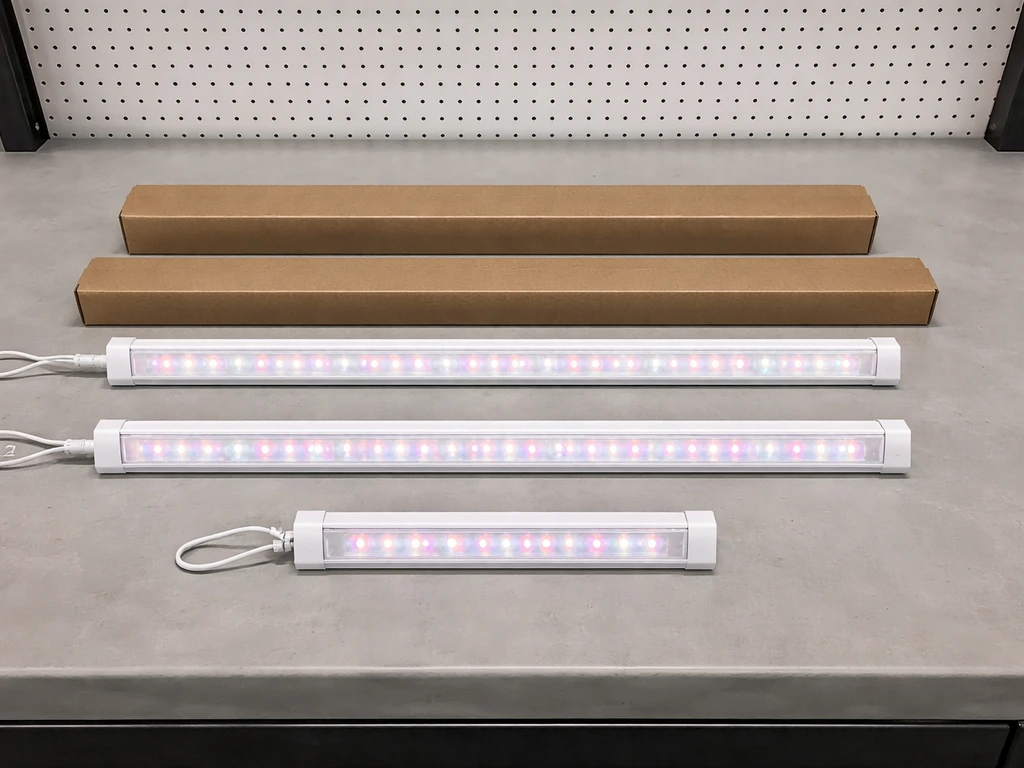
Hyper Tough is Walmart's house brand for tools and utility products, and their grow-light lineup is small but slightly confusing because a few different bar formats share nearly identical product names. Here are the three products you are most likely to encounter and what makes each one distinct.
Hyper Tough 24-inch 12W Full Spectrum Linkable Grow Light
This is the most commonly reviewed model. It measures 24.0 inches long by 1.0 inch wide by 1.2 inches tall, weighs 0.6 lb, and draws 12 watts from the wall. The fixture ships with a 10-inch link cable, mounting brackets, and wood screws. It is non-dimmable and controlled by a simple on/off switch. The stated spectrum uses integrated blue and red wavelengths intended to cover vegetative and flowering stages. It is linkable up to 10 units from a single outlet. At Walmart's current online price of $12.98, it is one of the cheapest grow-light bars available anywhere.
Hyper Tough 2 ft 14W Full Spectrum Linkable Grow Light
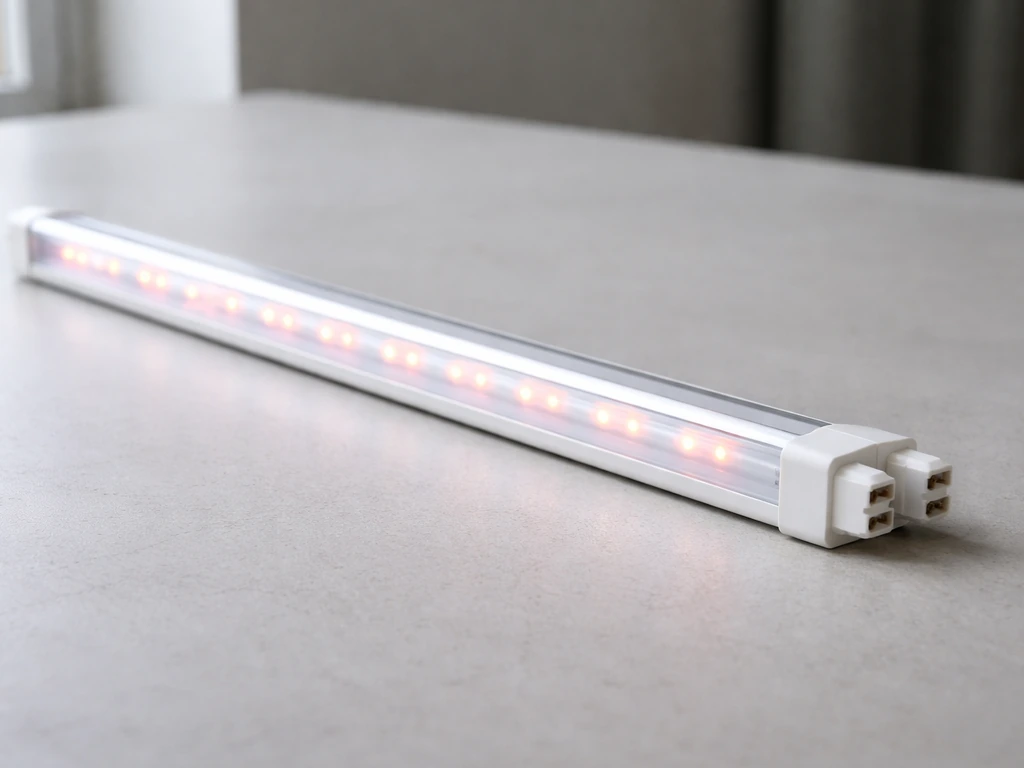
A separate SKU from the 12W version, this 14W model is also a 2-foot full spectrum linkable bar. The two-watt difference suggests slightly denser or higher-efficiency LEDs on the same form factor. It is listed primarily through Walmart Business. For practical purposes it belongs in the same category as the 12W bar: a low-wattage supplement light rather than a standalone flowering fixture. If you are choosing between the two, the 14W version offers marginally more output per bar for likely a dollar or two more.
Hyper Tough 4 ft 5500-Lumen Linkable LED Shop Light (repurposed as grow light)
This is not marketed as a grow light, but a segment of the indoor gardening community uses it as one. Walmart lists Hyper Tough linkable shop lights in this category page, which is where the Hyper Tough 4 ft 5500-lumen listing can be verified in Walmart’s inventory 5500-lumen linkable shop light.
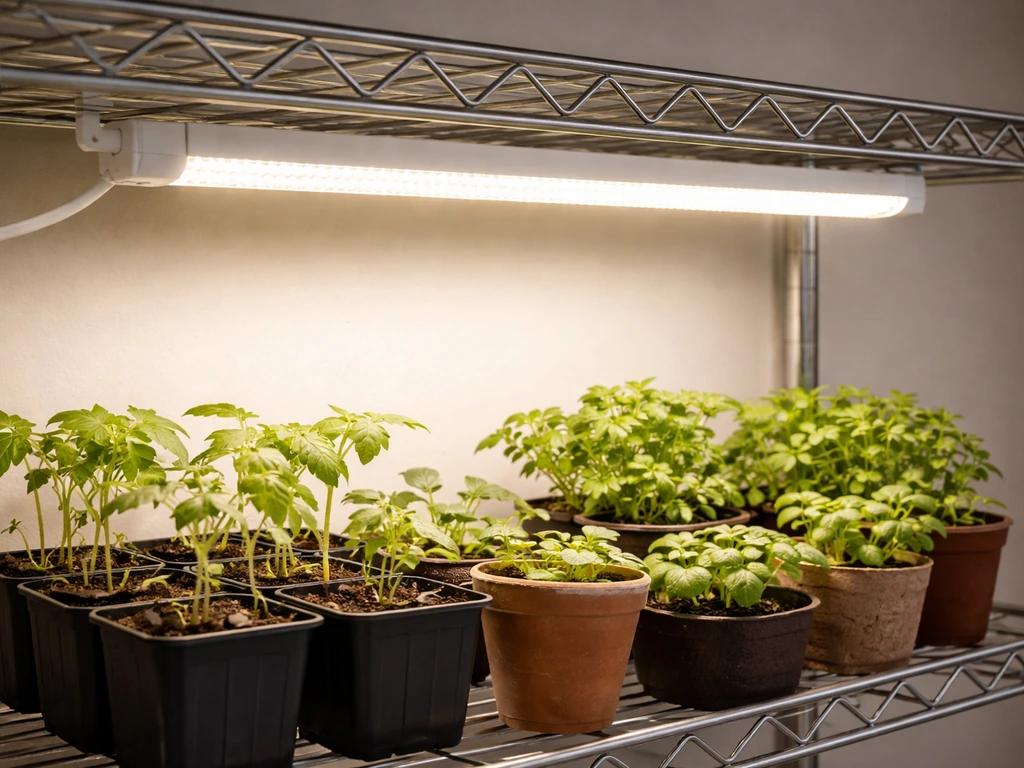
The fixture outputs 5500 lumens at a 5000K color temperature, which puts it in daylight-white territory with a heavy blue emphasis. Growers of dwarf tomatoes and compact herbs have reported usable results with it, and the 5000K color point does align reasonably with vegetative-stage plant needs.
It is a broader, brighter fixture than the 12W or 14W bars, but because it is tuned for human visual output rather than PAR, you get less photosynthetically useful light per watt than you would from a proper grow-light LED. Think of it as a capable seedling and vegetative supplement rather than a full-spectrum flowering light.
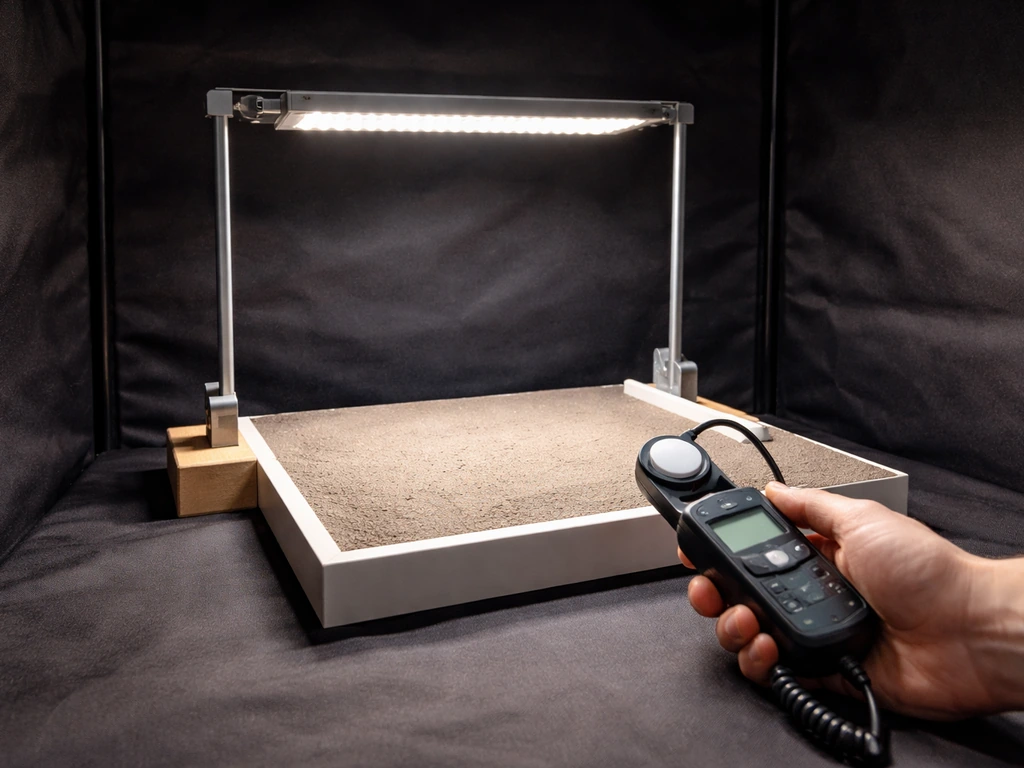
The most specific data point available for the 24-inch 12W bar comes from orchid growers who measured approximately 43 PPFD at 12 inches of mounting distance. That is a meaningful number. For context, seedlings typically need 100 to 200 PPFD, vegetative growth benefits from 200 to 400 PPFD, and flowering plants generally want 400 to 600 PPFD or more. At 43 PPFD from a single bar, you are well below even seedling minimums for most species.
That reading does not make the light useless, but it reframes how you need to use it. Mounting closer than 12 inches raises PPFD meaningfully, and linking multiple bars together compounds coverage and intensity. Three linked bars running simultaneously over a 2-foot shelf section would put you closer to 120 to 130 PPFD at the canopy, which is adequate for seedlings and low-light herbs like mint or basil. Six bars linked over a small 2x2 footprint starts to approach real vegetative-stage light levels. The math works, but so does the cost: at $13 per bar, six units is still under $80, which is competitive with entry-level horticultural panels.
The 4-foot 5500-lumen shop light performs differently. Lumens measure light as human eyes perceive it, not as plants absorb it, but 5500 lumens at 5000K converts to a rough PPFD estimate in the 150 to 250 range at 12 to 18 inches, depending on reflector design and beam spread. That is a more useful number for vegetative herb and seedling work, which aligns with how the community actually uses it.
Observable plant response from users growing compact varieties (dwarf tomatoes, herbs, and orchids) is cautiously positive for the shop light and the linked bar configurations. Plants grown under a single 12W bar alone show stretching and etiolation (elongated stems reaching for more light), which is a clear sign of insufficient intensity. That same stretching disappears when users stack multiple bars or supplement with a window.
Spectrum breakdown: what stages these lights actually suit
The 12W and 14W grow bars use a red and blue LED combination. Hyper Tough does not publish the exact wavelength peaks, but the typical configuration for this price tier is 450 to 460nm blue and 630 to 660nm red. This covers the two primary photosynthetic absorption peaks, which is why these fixtures are marketed as full-spectrum even though they skip most of the green and far-red wavelengths that more expensive lights include.
For seedlings, the blue-dominant end of that spectrum is actually well matched. Blue light (around 450nm) suppresses stretching and encourages compact, dense germination. Early vegetative growth also responds well to blue-heavy light. Where the red-blue only spectrum starts to fall short is in late vegetative and flowering stages, where plants benefit from green (500 to 560nm) and far-red (700 to 730nm) wavelengths that influence canopy penetration, stem elongation, and flower trigger response. A pure red-blue bar will produce flowering plants, but they tend to be less robust and produce lower yields than plants under a true broad-spectrum or white-chip LED.
The 5000K shop light takes the opposite approach: it outputs a white-light spectrum that covers green and some yellow wavelengths well, but its PAR output at the red end (660nm) is lower than a purpose-built grow light. It is better for vegetative work than the narrow-band bars, but not optimized for flowering.
| Model | Spectrum Type | Best Stage Fit | Weakest Stage |
|---|
| 12W 24" Grow Bar | Red + Blue narrow-band | Seedlings, early veg | Flowering, late veg |
| 14W 2 ft Grow Bar | Red + Blue narrow-band | Seedlings, early veg | Flowering, late veg |
| 4 ft 5500-Lumen Shop Light | 5000K white (blue-heavy) | Seedlings, herbs, veg | Flowering, fruiting |
Setup, mounting, and getting the most from these fixtures
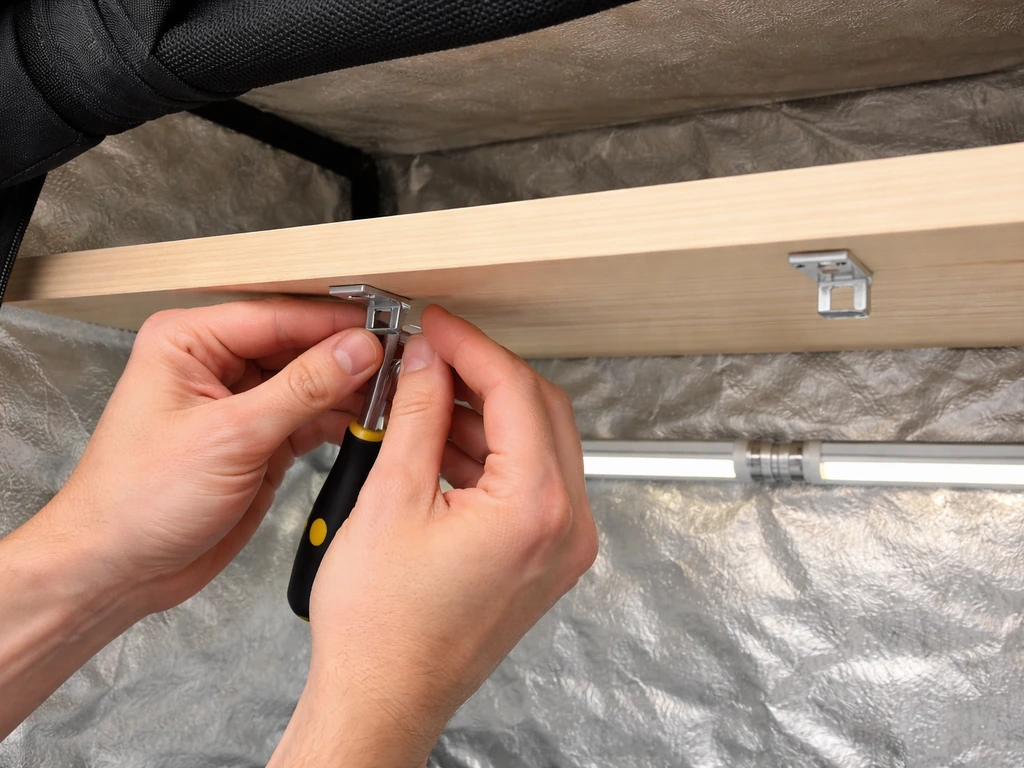
Installation is straightforward. Each 24-inch bar ships with mounting brackets and wood screws, so you can attach them directly to the underside of a shelf, cabinet, or grow tent crossbar. The 10-inch link cable included with each bar is short enough to keep daisy-chained units close together, which is what you want when trying to build up coverage intensity. For mounting height, start at 6 to 8 inches above the canopy for seedlings and low-light plants. That closer distance compensates for the low PPFD output. If you see leaf bleaching or upward cupping, raise the bars by 2-inch increments.
For a shelf-based herb or seedling setup, position linked bars to cover the full length of your growing area without large gaps. The 24-inch bars are designed to run end-to-end, so three bars linked in sequence cover roughly 6 feet of shelf length. If you are growing in a more compact footprint, two bars side by side (parallel rather than in-line) increases intensity over a smaller area rather than extending coverage.
Because these bars have no dimmer, your only intensity control options are mounting distance and the number of linked units. Adding a mechanical outlet timer is strongly recommended since these lights have no built-in schedule control. Most herbs and seedlings do well on 14 to 16 hours of light per day. Flowering plants need a consistent 12-hours-on, 12-hours-off cycle to initiate blooms, and a timer is the only way to enforce that reliably.
If results are underwhelming (plants stretching, yellowing, or failing to set fruit), the first fix is always to add more bars or move them closer. A single 12W bar over a 2-foot shelf section is rarely enough on its own. The second fix is to add reflective material (white foam board or Mylar) behind and around your plants to capture light that would otherwise scatter sideways.
Power draw, heat output, and what these cost to run
The 12W bar is genuinely low-draw. Running it 16 hours a day for a full 30-day month consumes 5.76 kWh. At a U.S. average electricity rate of about $0.16 per kWh, that is roughly $0.92 per month per bar. Six bars linked together would cost around $5.50 per month to run, which is negligible. The 4-foot shop light draws more (typically 40 to 50 watts for that lumen output), putting monthly operating cost closer to $3 to $4 per fixture at the same daily schedule.
Heat is not a meaningful concern with the 12W and 14W bars. At those wattage levels, the fixture surface gets warm to the touch but nothing close to the heat output of HPS or even mid-range LED panels. Ventilation is not a practical issue for single-shelf setups. The 4-foot shop light runs warmer but still well within a range that most indoor spaces handle without added airflow.
One thing worth noting: because these fixtures are non-dimmable and have no smart features, they are always drawing full rated wattage when switched on. There is no efficiency mode or scheduling built into the fixture itself. That simplicity is fine for most hobbyist uses, but it means any power management or light scheduling depends entirely on external timers and how many units you have linked.
How Hyper Tough stacks up against other brands
Comparing Hyper Tough directly against purpose-built horticultural brands reveals exactly what you are trading away at this price point. The core tradeoff is PPFD per dollar and spectrum quality. A mid-range LED grow panel from a brand like AC Infinity or similar in the $80 to $150 range will deliver 3 to 5 times the PPFD per dollar over a comparable footprint, with full-spectrum white chips that include green and far-red output that Hyper Tough bars skip entirely.
If you are considering AC Infinity, a grow light review can help you compare real-world PPFD and spectrum quality against these budget bars brand like AC Infinity. You are not paying for efficiency with Hyper Tough: you are paying for low upfront cost.
Compared to other bar-format shop lights at big-box stores (including Utilitech, which occupies a similar niche), Hyper Tough is competitively priced and the linkable design is genuinely practical for shelf growers. The bar form factor itself is not the problem; it is the per-bar wattage and narrow spectrum. Brands like SolTech position their bar-style fixtures higher in the market with better efficiency ratings and refined spectrums, though at prices that are several multiples of the Hyper Tough entry point. If you want a higher-efficiency alternative, check a soltech grow light review to see how their spectrum and PPFD compare to bargain bars Brands like SolTech.
| Brand / Type | Approx. Price per Unit | Wattage | Spectrum | Best Use Case |
|---|
| Hyper Tough 24" Grow Bar | $13 | 12W | Red + Blue narrow-band | Seedlings, herbs, supplement |
| Hyper Tough 4 ft Shop Light | ~$20–25 | ~40–50W | 5000K white | Seedlings, veg, supplement |
| Utilitech Bar-Style Grow Light | ~$15–20 | 14–20W | Red + Blue or white | Seedlings, herbs |
| AC Infinity LED Panel (entry) | ~$80–120 | 100–200W | Full spectrum white | Veg through flowering |
| SolTech Bar / Panel | $60–150+ | Varies | Tuned broad spectrum | Veg, flowering, indoor plants |
The honest takeaway from this comparison is that Hyper Tough wins on price and loses on output per watt and spectrum completeness. If budget is the primary constraint, linking 6 to 8 Hyper Tough bars together for under $80 gives you more coverage than a single entry-level panel while remaining beginner-friendly to install. If yield and efficiency matter more than upfront cost, a single mid-range horticultural LED is a better investment over a full growing season.
Which Hyper Tough to buy based on your setup
Here is a direct breakdown based on grow space and what you actually care about:
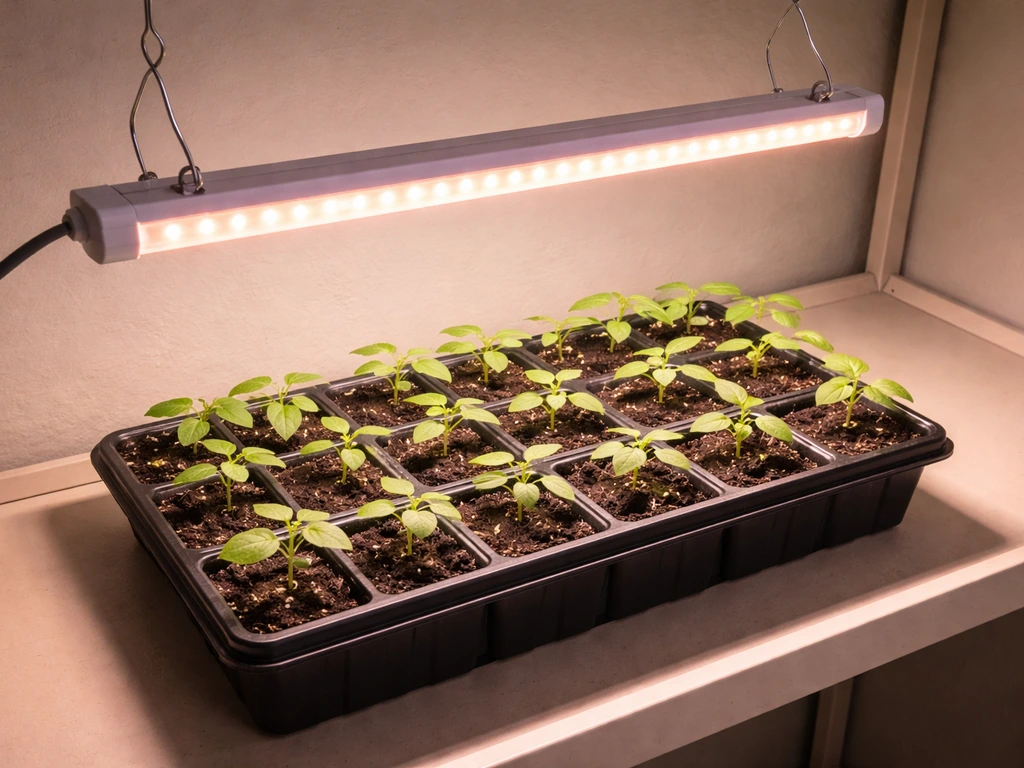
- Seed starting on a single shelf (2 ft wide): Two linked 24-inch 12W bars, mounted 6 to 8 inches above your seed trays, running 16 hours a day. Total cost under $30. Adequate PPFD for germination and early seedling growth.
- Herb garden on a kitchen shelf (3 to 4 ft): Three to four linked 24-inch bars covering the length of the shelf. Good for basil, mint, parsley, and other low-to-medium light herbs. Mount at 8 to 12 inches above the canopy.
- Low-light houseplants or orchids in winter: One or two 12W bars at 12 inches is borderline adequate for low-light orchid species and most foliage houseplants. This matches community usage reports closely.
- Dwarf or compact tomatoes, small vegetables: The 4-foot 5500-lumen shop light outperforms the grow bars for this task. Use it at 12 to 16 inches above the canopy and supplement with side lighting from linked grow bars if plants are stretching.
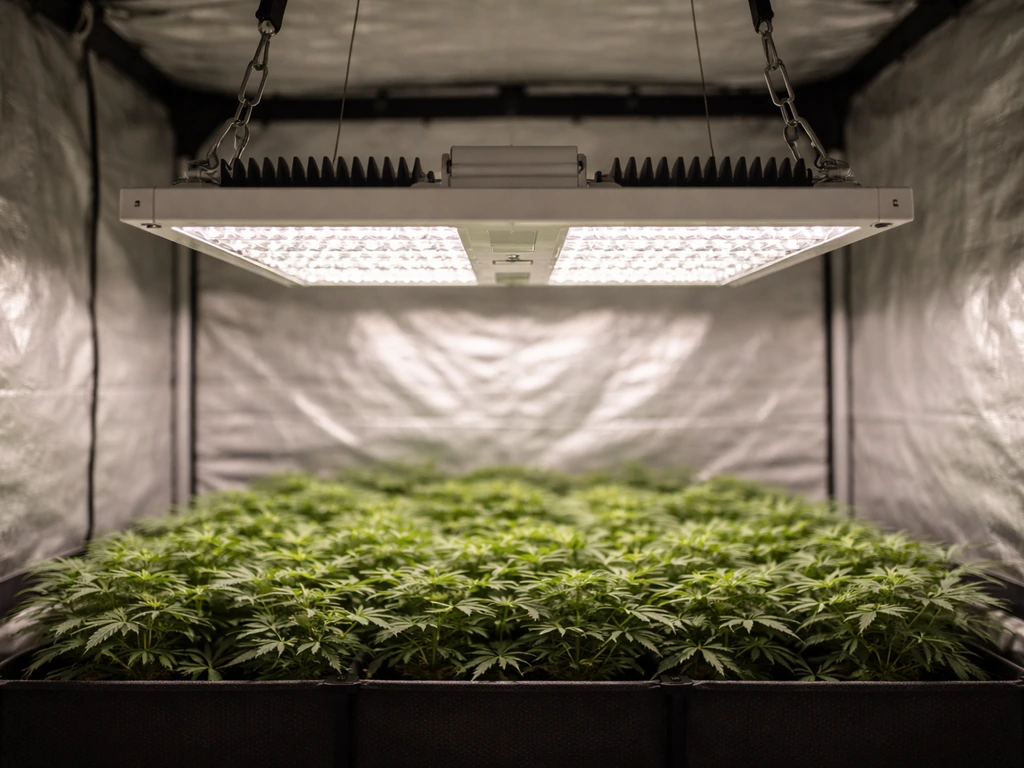
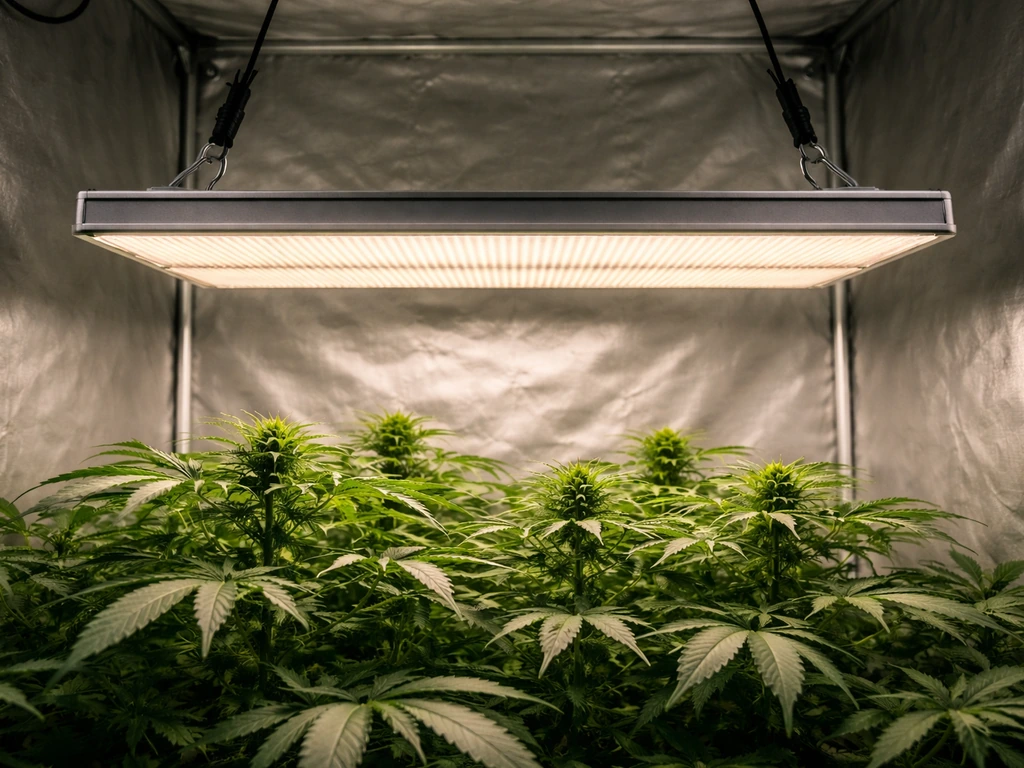
- Full-cycle veg and flowering (herbs to harvest, cannabis, fruiting peppers): Hyper Tough alone is not the right tool unless you are willing to link 8 to 10 bars and accept lower yields. At that quantity, stepping up to a purpose-built LED panel (consider AC Infinity or similar mid-tier brands) is a better call for equivalent or better results at comparable cost.
- Tightest possible budget, any use case: The 24-inch 12W bar at $12.98 is about as cheap as grow lighting gets. Buy two to start, see how your plants respond, and add bars as needed. The linkable design means you are not locked into a fixed setup.
One specific callout for anyone researching the 24-inch model in particular: the Hyper Tough 24-inch grow light has a dedicated review that goes deeper on that single model's testing and use-case fit, which is worth reading before you decide how many bars to buy for your setup. If you want the deep-dive on the Hyper Tough 24-inch model specifically, use the Hyper Tough 24 inch grow light review as your guide Hyper Tough 24-inch grow light review. If you want the detailed testing, setup guidance, and plant response specifics, see this illumitex LED grow light review.
Bottom line: Hyper Tough grow lights are real, functional products that do what they say within a narrow range of applications. Know what you are buying: low-cost, low-output, linkable bar lights that are best as seedling and herb supplements rather than standalone high-yield grow systems. Match the number of bars to your actual light needs rather than assuming a single unit will do the job, and you will get reasonable value from them.