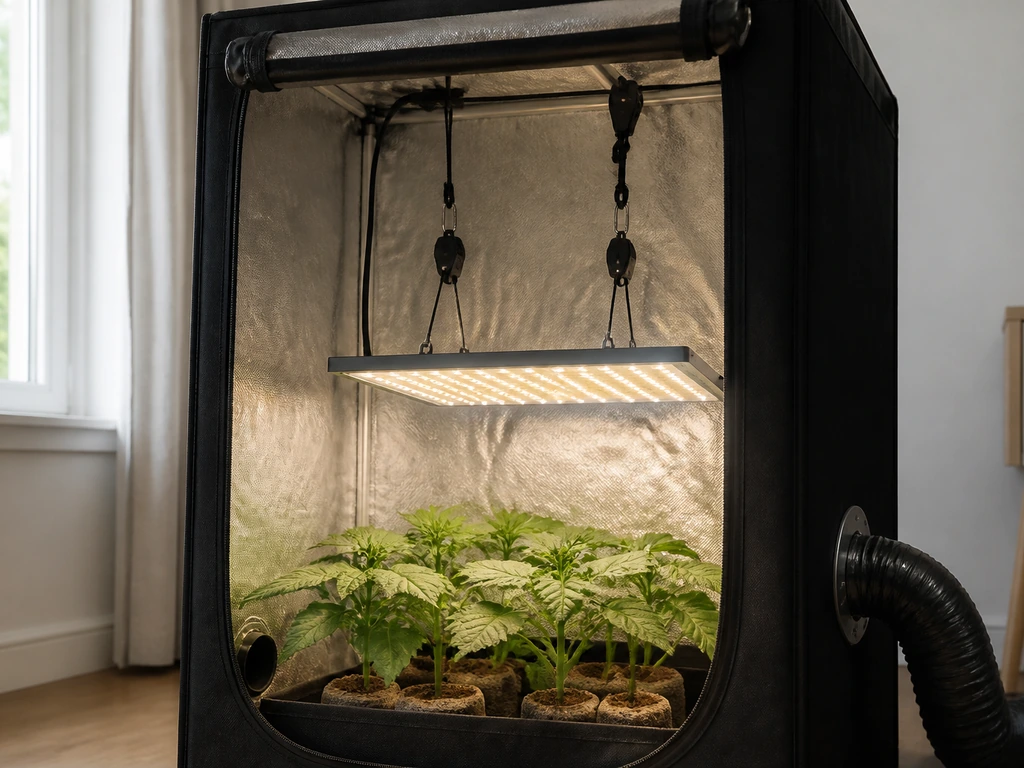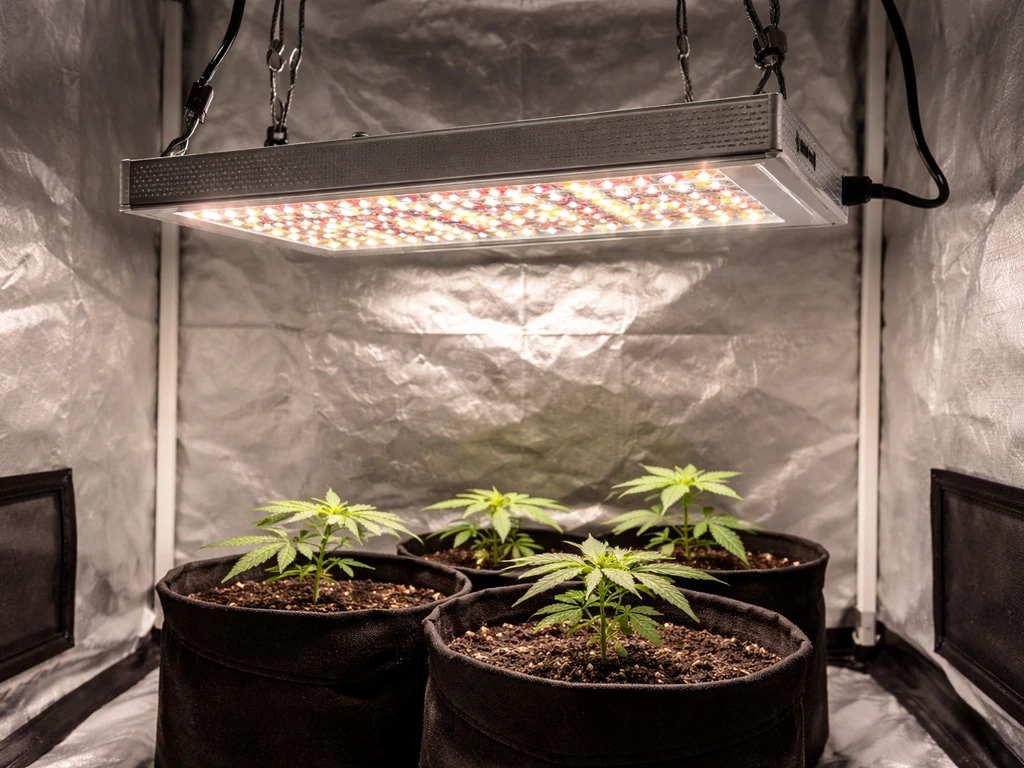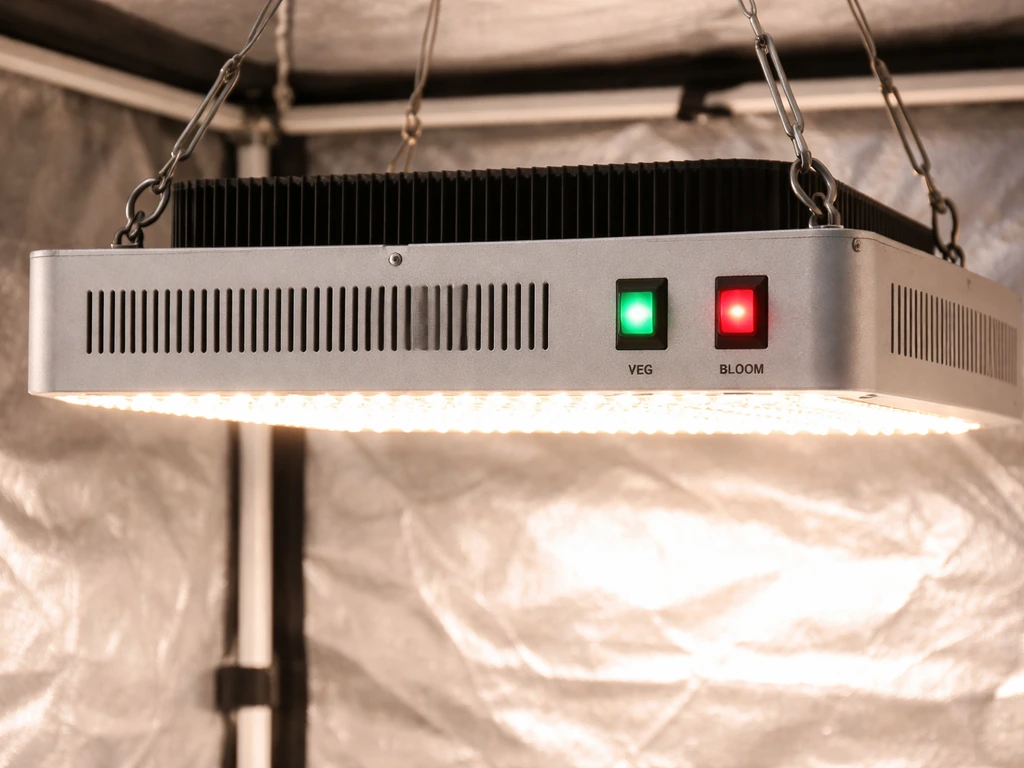
Soltech makes some of the most aesthetically polished grow lights on the market, and they perform well enough that they deserve a serious look from indoor gardeners who care about both results and how the light looks in their space. But they are not the right light for every situation, and the PPFD numbers you need to know before buying are lower than what serious flower or vegetable growers typically want. Here is the honest breakdown of what Soltech offers, how it actually performs, and who should buy it.
Soltech Grow Light Review: Performance, Coverage, and Fit

Marcus Caldwell
5 Apr 2026
What Soltech makes and which models actually matter
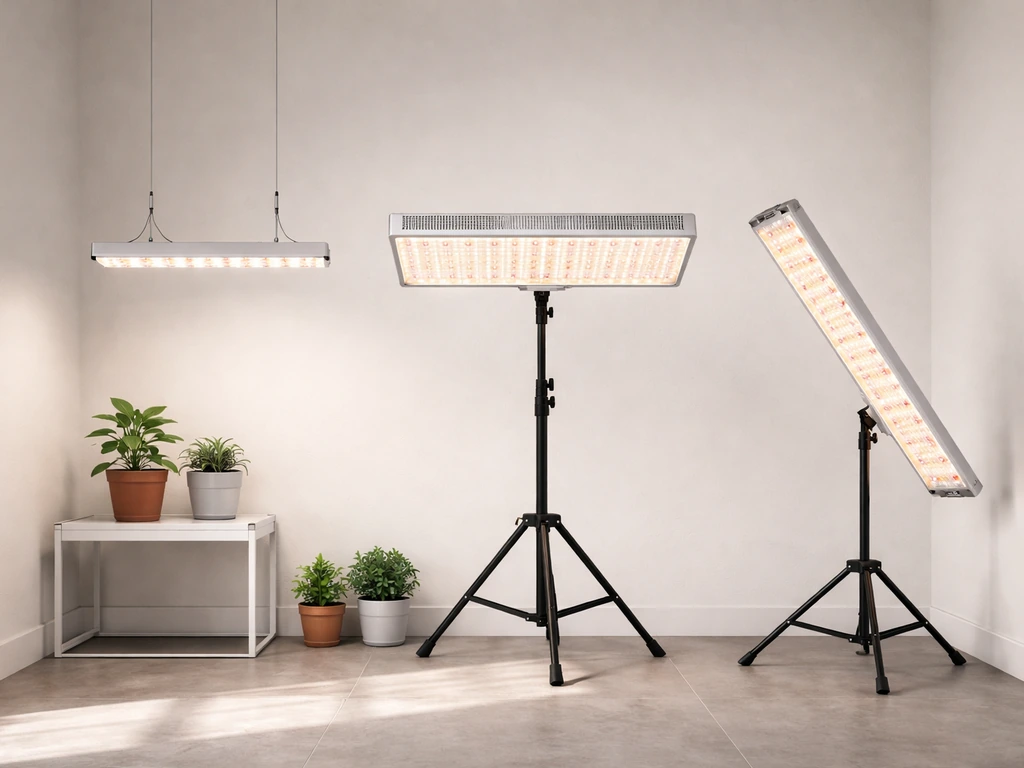
Soltech sells four main product lines, and they are genuinely different tools for different situations. Knowing which one you are looking at changes the whole buying decision.
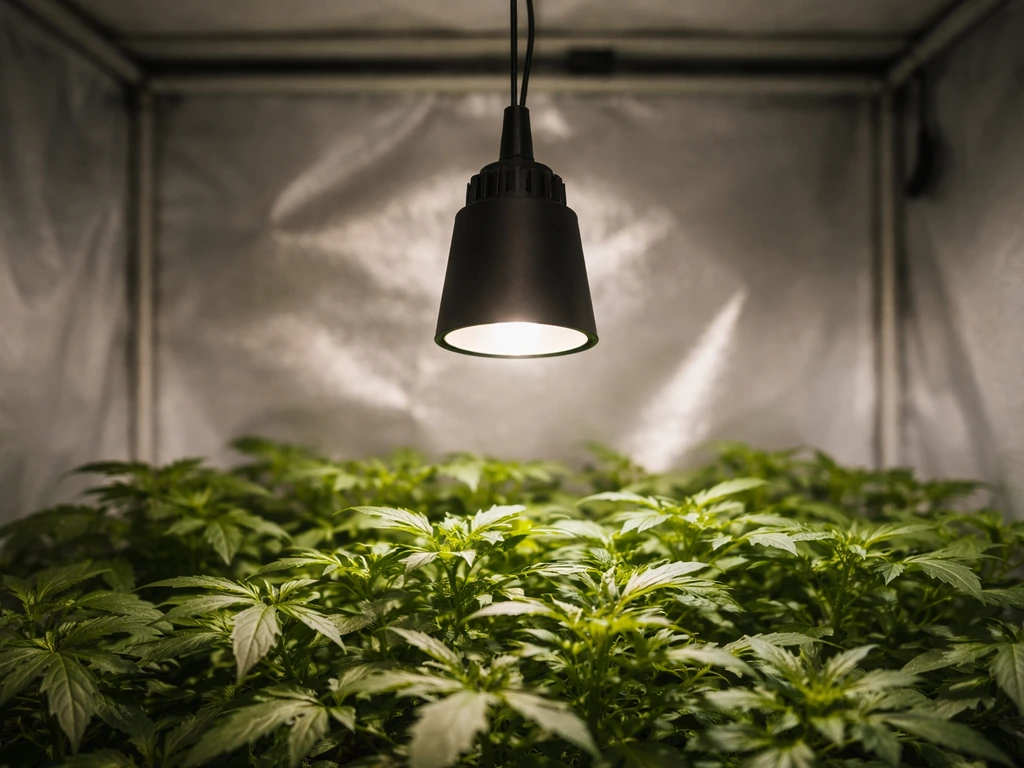
- Aspect Gen 2: The flagship pendant-style LED grow light. Hangs above a plant or group of plants, includes an integrated dimmer dial, and ships with an analog outlet timer. This is the most popular model and the one most people are searching for when they look up a Soltech review.
- Grove: A bar-style fixture designed for under-cabinet or wall-mount placement. Linear light distribution makes it better suited for shelving setups and narrow grow areas than a pendant point-source would be.
- Vita: A screw-in LED grow light bulb that fits a standard socket. Dimmable, compact, and the most accessible entry point price-wise. Three-year warranty versus five years on the other models.
- Highland: A track light system aimed at plant walls and larger display installations. It uses a track-and-head configuration, and the outlet version ships with a timer.
The Aspect Gen 2 is where Soltech has invested the most development effort and where most of the performance data exists, so this review focuses primarily on that model with comparisons across the lineup where relevant. The Aspect accepts 120V to 277V input, which means it works on standard US household circuits and also on higher-voltage commercial wiring without an adapter.
Measured PPFD, coverage, and uniformity
Soltech publishes a PPFD range of 556 to 139 µmol/m²/s for the Aspect Gen 2, with the high end reflecting close mounting at full power and the low end reflecting a greater distance or reduced dimmer setting. Independent review data from House Plant Journal puts the practical working PPFD at roughly 180 µmol/m²/s under typical use conditions, which is a more honest benchmark for how most people will actually hang and run this light. That number is solidly in the range for low-light houseplants, tropical foliage, herbs, and seedlings, but it is below the 300 to 600 µmol/m²/s sweet spot most vegetable crops and flowering plants need at peak growth stages.
Coverage uniformity from a pendant point-source drops off toward the edges, which is a physical reality of the Aspect's design rather than a defect. A single Aspect works best over a footprint of roughly two to three feet in diameter when hung at the recommended height. If you need even coverage across a wider shelf or a multi-plant tray, the Grove bar light distributes light more uniformly across a linear footprint, and stacking multiple bars addresses wider coverage more effectively than clustering pendants. Soltech’s support article can help you determine the Grove’s mounting distance and coverage for your specific setup mounting distance and coverage for the Grove.
Soltech's own blog notes a study reference suggesting plants grow best at medium PPFD around 300 µmol/m²/s. That is a useful benchmark to keep in mind: the Aspect can approach that level at closer mounting distances on full power, but it is operating near its ceiling to do so, and your coverage area shrinks considerably at that intensity.
Spectrum and which grow stages this light handles
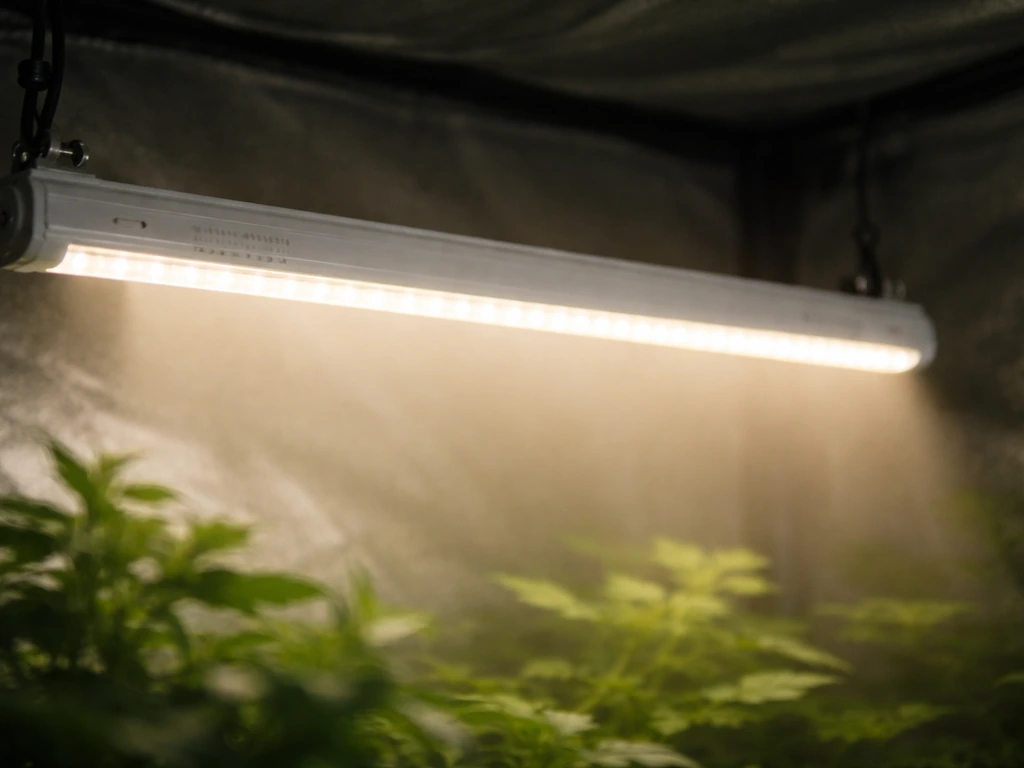
Soltech uses a full-spectrum white LED output across its lineup. There are no separate red/blue channels or adjustable spectrum modes. What you get is a continuous white light output that covers the photosynthetically active radiation band without the purple tint of older blurple fixtures. This is a good thing for most home growers because the light looks natural in a living space, causes less eye strain, and still delivers a usable spectrum across all wavelengths plants need.
In practice, full-spectrum white LEDs work well for the entire lifecycle of low-to-medium light plants: germination, vegetative growth, and fruiting or flowering for species that do not demand high DLI (daily light integral). Herbs like basil, mint, and thyme, tropical houseplants, succulents, and starter seedlings are all realistic targets. High-demand fruiting crops like tomatoes, peppers, or cannabis in flower will run up against the intensity ceiling of the Aspect before they reach their full potential, and you would need to hang the light very close and accept a reduced coverage footprint to push into the PPFD ranges those crops need.
The integrated dimmer on the Aspect Gen 2 is genuinely useful here. Dialing down intensity for seedlings and young cuttings that need lower light to avoid stress, then ramping up as plants mature, is exactly the workflow Soltech designed around. Soltech states the Aspect is designed to handle both low-light and full-sun plants through those adjustments, which is accurate for the low-light end of that claim but optimistic for high-demand full-sun crops.
Real-world efficiency, build quality, heat, and noise
Soltech's build quality is a genuine strength. The Aspect Gen 2 has a premium look and feel that separates it from budget grow lights, and the materials hold up well over time. The housing runs warm to the touch at full power but does not generate the kind of heat that forces you to raise the light significantly or worry about burning canopies. There is no fan, which means zero noise. If you are growing in a bedroom, office, or living room, the silence matters more than most growers initially expect.
Efficiency in terms of PPFD per watt is respectable but not class-leading compared to purpose-built horticultural bar lights. The Aspect is optimized for the aesthetics and use-case of a home grow light that blends into interior spaces, and some of that efficiency is traded for design. For hobbyist use, this trade-off is entirely reasonable. For a commercial or high-yield grow where you are counting every µmol per joule, there are more efficient choices.
One thing worth knowing about dimming: LED drivers can sometimes flicker at low dimmer settings if the driver is operating outside its optimal load range. Soltech's integrated dimmer is designed for the Aspect's own driver, so mismatch issues are unlikely, but if you notice any visual flicker when running the light below 30 percent, try raising the dimmer to a higher setting and moving the light up instead. That approach avoids the edge of the dimming range where driver behavior can be inconsistent.
Rated lifespan is 50,000 hours, which Soltech translates to roughly 11 years of typical use. Soltech states the Aspect Gen 2 is rated to last 50,000 hours (about 11 years), and it will be replaced free of charge if it stops working before the five-year mark. That is a credible number for quality LED components and aligns with what the industry generally delivers at this build level.
Choosing the right Soltech light for your space
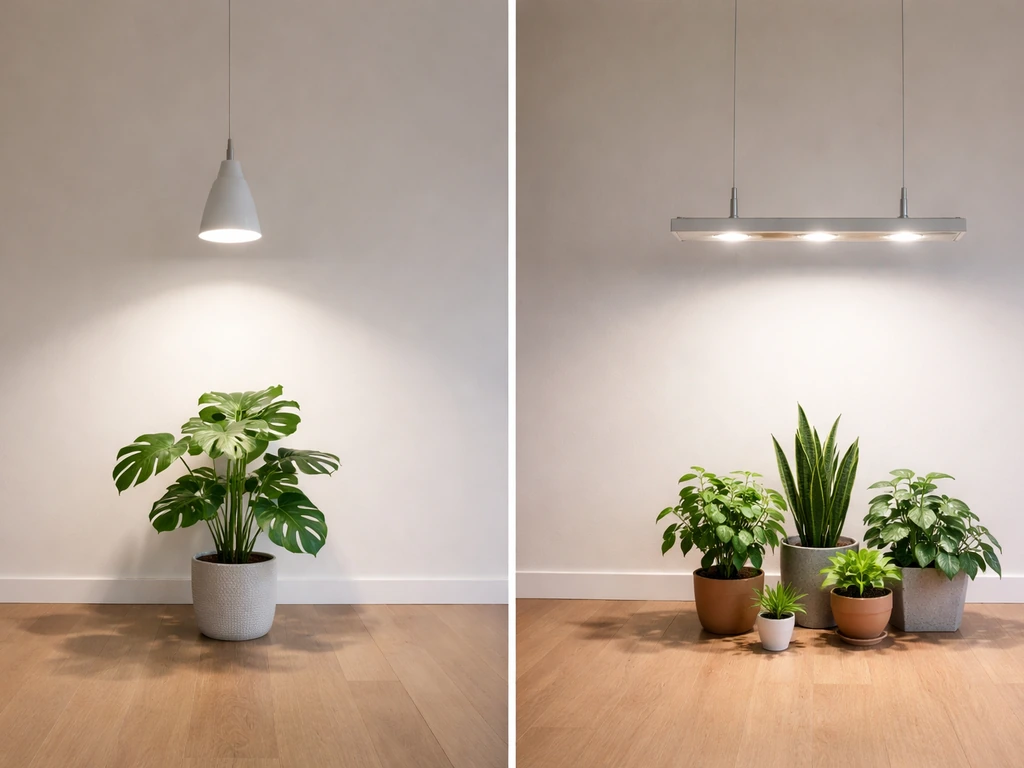
The decision between Soltech models comes down to your grow setup more than anything else. Here is a straightforward way to think about it:
- Single plant or small cluster in an open room: Aspect Gen 2 pendant. It hangs cleanly, looks good, and delivers enough intensity for most houseplants and herbs without requiring a grow tent.
- Shelving unit or bookcase with multiple tiers: Grove bar lights mounted under each shelf. The linear distribution is a better match for rectangular shelf footprints than a pendant point source.
- Standard lamp socket or desk fixture: Vita bulb. Best for supplementing natural light or illuminating a single small plant.
- Plant wall or large display installation: Highland track system. More complex to set up but the most flexible for covering a large vertical growing surface.
If you are growing in a tent and need serious PPFD for fruiting crops, Soltech is probably not the right brand for that application. A purpose-built horticultural LED bar panel from a brand focused on high-output horticulture will deliver more intensity per dollar. But if your grow is a living-space setup where aesthetics and livability matter alongside plant performance, Soltech competes with almost nothing else at its price point in terms of design.
Setup guide: mounting height, spacing, and settings
Getting the Aspect Gen 2 dialed in is straightforward. Soltech's own guidance is to mount the light directly above the plant in an unobstructed position, ideally centered over the canopy. Here are the practical parameters that matter:
- Start with a mounting height of 12 to 18 inches above the canopy for most houseplants and herbs. This puts you in the 150 to 250 µmol/m²/s range at moderate dimmer settings, which covers the majority of low-to-medium light plants.
- For seedlings and young cuttings, raise the light to 24 inches or dim down to 30 to 50 percent to keep PPFD below 150 µmol/m²/s and avoid light stress.
- For plants that want higher light (some herbs, succulents in active growth), lower to 8 to 12 inches at full power to push toward the 300 µmol/m²/s range, but expect your coverage footprint to shrink to roughly 18 to 24 inches in diameter.
- Set the analog outlet timer (included with the Aspect) to 12 to 16 hours for most plants. A 14-hour photoperiod works well as a general starting point for non-photoperiod-sensitive plants. Soltech also provides a programming guide for its digital wall timer if you choose that option instead.
- Check plants after one to two weeks. Yellowing or bleaching near the center of the canopy means the light is too close or too bright. Stretching, pale color, and slow growth mean more intensity is needed.
The included analog outlet timer simplifies the setup considerably, and the fact that it ships with every Aspect means you do not need to budget separately for a timer. Plug the timer into the wall, plug the Aspect into the timer, set your on/off windows, and you are running a consistent photoperiod from day one.
How Soltech stacks up against the competition
Soltech occupies a specific niche: premium-looking grow lights for home growers who want something that does not look industrial. That positioning means the competitive comparisons are a bit nuanced depending on what you prioritize.
| Brand / Model Type | Form Factor | Typical PPFD (working distance) | Warranty | Best For | Relative Price |
|---|---|---|---|---|---|
| Soltech Aspect Gen 2 | Pendant / point source | ~180 µmol/m²/s typical | 5 years | Houseplants, herbs, aesthetics-first grows | Mid-high |
| Soltech Grove | Bar / under-cabinet | Moderate, linear distribution | 5 years | Shelf grows, linear footprints | Mid |
| AC Infinity board/bar lights | Bar / panel | 200–800+ µmol/m²/s depending on model | Varies | Tents, higher-output crops | Mid |
| Illumitex LED panels | Panel / horticultural | High output, horticultural spec | Varies | Commercial and high-demand crops | High |
| Budget bar lights (e.g., Hyper Tough) | Bar / strip | Low to moderate | Limited | Supplemental light, very low budget | Low |
For context on how other brands approach this category, AC Infinity grow lights are worth looking at if you want higher PPFD output for tent grows at a similar price tier. They prioritize horticultural performance over aesthetics, which is the right call for enclosed growing environments. On the other end of the spectrum, Hyper Tough grow lights and similar budget options cost significantly less but deliver the kind of light output you would expect for the price: adequate for very low-light plants and seedling supplementation, not much more. If you are specifically comparing bar-style fixtures in the budget tier, the Hyper Tough 24-inch grow light gives you a concrete data point for what that category looks like in practice.
If your grow is more demanding and you are looking at panel-style horticultural LEDs with engineered spectral output, Illumitex LED grow lights represent the kind of purpose-built horticultural technology that trades living-room aesthetics for maximum photosynthetic efficiency. And if you are evaluating utility-oriented options in a similar price window to Soltech, checking out Utilitech grow light options can help calibrate your expectations for what different price tiers actually deliver in terms of measured output.
The honest summary: Soltech wins on design, livability, and build quality. It loses on raw PPFD output per dollar compared to purpose-built horticultural lights. If your priority is a grow light that fits seamlessly into your home and handles foliage, herbs, and houseplants with reliable, quiet performance, Soltech is a genuinely good buy. If you’re specifically hunting for a Hyper Tough 24 inch grow light review, compare real PPFD and coverage area before choosing this setup. If you need maximum intensity for fruiting crops or want the best PPFD per watt at a given price, there are better options.
Warranty, lifespan, and what to check before you order
Soltech's warranty terms are clearly stated and better than most of the competition at this price point. The Aspect, Grove, and Highland all carry a five-year warranty against defects in materials and workmanship. The Vita bulb is covered for three years. Soltech's policy is to replace the light free of charge if it fails before the five-year mark, which is a meaningful commitment for a product rated to last 50,000 hours.
The quick-start manual (archived on ManualsLib) notes that shipping responsibility shifts after 90 days, which is standard for most warranty programs. The practical implication: if your light arrives damaged or fails within the first 90 days, the return process is more straightforward than if you are making a claim at year three or four. Document any issues with photos immediately and contact Soltech support promptly.
Before ordering, confirm the following: the Aspect Gen 2 accepts 120V to 277V input, so it works on standard US outlets with no adapters required. If you are purchasing from outside the US, verify local voltage compatibility. The light ships with an analog outlet timer, so you do not need to add one to your cart. If you prefer a programmable digital schedule, Soltech sells a digital wall timer separately.
One practical note on buying confidence: Soltech is a real company with documented customer support channels, published warranty terms, and a product line that has been on the market long enough to have genuine user feedback. The Reddit discussions around Soltech PAR measurements are user-generated and variable in methodology, but they generally confirm that the light performs in the range Soltech publishes, which is more than can be said for many brands that inflate their spec sheets. Buy from Soltech's official site or a verified retailer to make sure your warranty registration and any replacement claim goes smoothly.
FAQ
How do I know whether the Aspect Gen 2’s intensity is enough for my specific plants?
If you see higher-than-expected growth, it often comes from running higher PPFD close to the plants, or using plants that tolerate lower DLI well. If you see stalled flowering, the issue is usually not the spectrum, it is intensity and coverage. A good next step is to measure canopy PPFD at your actual mounting height and then adjust either the dimmer or distance, rather than relying on the published max range.
What is the best way to dial in placement and dimming if my plants look uneven across the tray?
Use the dimmer and mounting height together, because the light footprint shrinks faster than the PPFD rises when you chase intensity. For example, if you move the light closer to reach a higher PPFD target, expect edge plants to receive less. If your goal is even results across multiple pots, switch to a bar-style layout or add a second light rather than only dimming up.
Does the lack of a fan increase heat or require different airflow planning?
Soltech’s no-fan design is great for noise, but you still need ventilation around the fixture. In small enclosed spaces, heat can build up near the lamp housing even if it is warm to the touch. Keep clearance around the light body, avoid covering it with fabric or insulation, and ensure room airflow for stable canopy temperature.
Can the Aspect dimming cause flicker, and how can I test or fix it?
Yes. At low dimmer settings, some LED drivers can flicker, and the most reliable workaround is the one Soltech’s guidance points toward, run the light above very low dimmer levels and compensate with placement. If you are using it in a bedroom or for seedlings where you spend time nearby, also check for visible flicker by looking at the light through your phone camera.
Why does the stated coverage not match my grow area after I change the dimmer?
The most common mistake is assuming the same coverage diameter will work at all dimmer settings. Since intensity changes with dimmer and distance, your effective “useful footprint” becomes smaller at higher settings. Treat the coverage number as a starting point for a target intensity, then re-evaluate edge PPFD when you adjust the dimmer.
Do I have to mount the Aspect directly centered, or can I offset it for real shelving layouts?
For home gardeners, center mounting is the simplest. If your plants are off-center or in staggered rows, you will likely get a PPFD gradient that can alter growth rate and leaf thickness. A practical fix is to place the pendants so the canopy you care about stays near the centerline, or use multiple lights spaced to overlap the dimmer’s usable area.
If there are no spectrum modes, how do I optimize growth for flowering or fruiting crops?
Because the light is full-spectrum white with no separate channel controls, you cannot “tune” spectrum for flowering. That means timing and intensity management matter more than spectrum choices. If you are growing plants that require higher DLI, your lever is increasing PPFD (within what the light can deliver) and extending photoperiod, not changing color ratios.
Can I use Soltech for a tent grow by just extending the photoperiod?
The easiest way to reduce crop failure risk is to match the expected DLI you need to what the light can realistically deliver at your canopy height. If your calculation lands far above what the Aspect can supply, you can still use it for seedlings, herbs, greens, or supplementary lighting. If it is for fruiting in a tent, the article’s conclusion holds, you will typically need a higher-output horticultural bar or panel.
What should I watch for when scheduling light with the included analog timer?
Yes, if you keep the on/off schedule consistent and avoid frequent rapid cycling. Many growers use the included timer for a stable daily photoperiod, but ensure your schedule fits the plant stage and that total daily hours are appropriate for indoor conditions. If you are using supplemental heat mats or other timers, stagger start times if power draw makes your circuit behave oddly.
What documentation should I save for warranty issues, and does timing matter?
The 90-day responsibility shift affects returns and claims timing, so documenting matters most early. Take close-up photos of the shipping box, the fixture, and any packing damage the day it arrives. If there is a problem, contact support immediately so you stay within the simpler process window rather than waiting.
Is it safe to use the Aspect outside the US with a voltage converter?
Yes, especially in non-US regions. Confirm both the voltage and the exact model’s compatibility, because some lights look similar but may not accept the same input range. If your outlet voltage is outside the stated range, do not use an improvised transformer without verifying the driver rating.
What is a simple step-by-step method to adjust my routine if results are slow after a week?
Start with the photoperiod the plant expects for indoor growth, then verify outcomes after 1 to 2 weeks. When adjustments are needed, change one variable at a time, first the distance or dimmer, then the schedule. This reduces confusion between a spectrum-free adjustment and a time-based DLI change.