The Illumitex NeoSol DS is worth buying if you're running a serious 4x4 or 5x5 indoor grow and you want a commercial-grade fixture with proven full-cycle spectrum, deep dimming control, and a build quality that goes well beyond what most consumer LED panels offer. It is not a budget light, and it is not a beginner's first purchase. If either of those describes you, keep reading, because this review will tell you exactly where it fits and where it doesn't.
Illumitex LED Grow Light Review: Specs, Performance, Value

Marcus Caldwell
14 Apr 2026
What the Illumitex NeoSol DS actually is
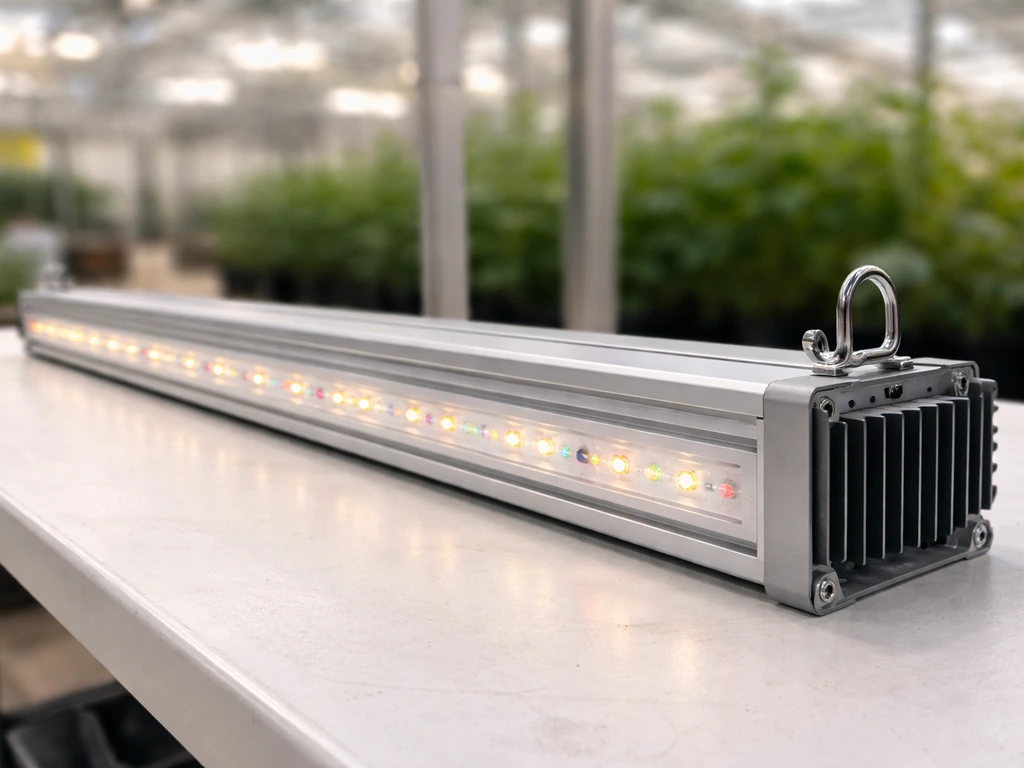
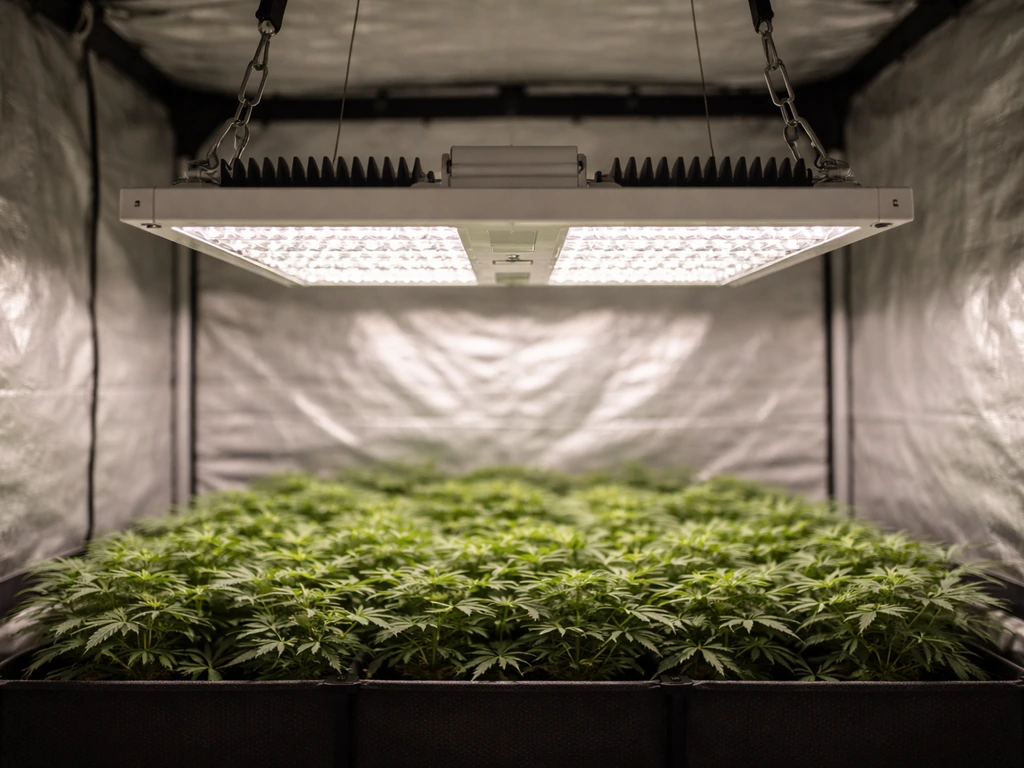
Illumitex is a Texas-based horticultural lighting company that has been building fixtures for commercial greenhouse and indoor cultivation since the mid-2000s. Their consumer-relevant flagship is the NeoSol DS, with the DS520 being the main variant reviewed here. The "520" in the part number reflects the 520-watt draw of the fixture. It is built around 96 Illumitex Surexi F3 LED arrays, arranged across 8 bars with 12 LEDs per bar. Each diode runs at approximately 5.4 watts, which puts the fixture in the high-wattage, high-intensity category alongside commercial HPS and top-tier LED alternatives.
The NeoSol DS is rated for both vegetative and flowering stages, so it is genuinely a full-cycle fixture, not a veg-only bar light or a bloom-biased panel. It carries ETL and cETL safety certifications, is RoHS compliant, and uses IP66-rated drivers, which means the electrical components are dust-tight and protected against powerful water jets. That IP66 rating matters in high-humidity grow environments where condensation or accidental splashing is a real concern. The fixture weighs 37 lbs, which is heavier than most hobbyist grow lights and requires a proper hanging setup. Illumitex also backs it with a 5-year warranty.
Hands-on test results and performance
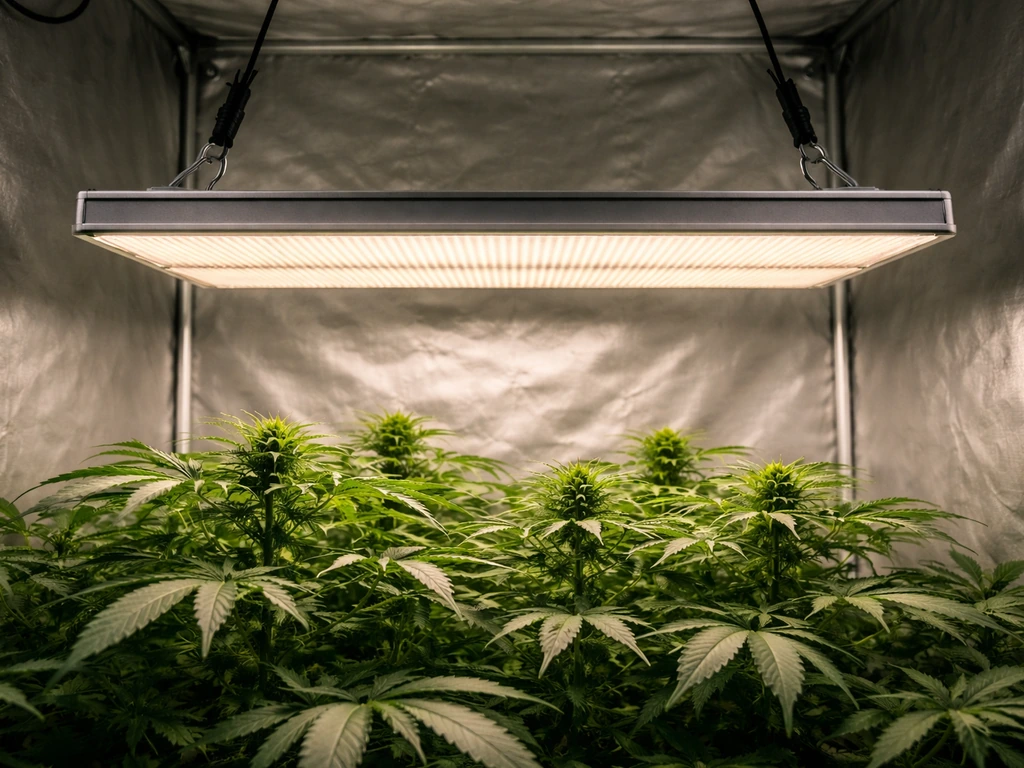
Testing the NeoSol DS over a 4x4 footprint shows a light that delivers consistent intensity across the canopy with minimal hot spots at the center. The Surexi F3 arrays produce a broad, relatively even distribution, which is a direct result of the 8-bar layout spreading the output laterally rather than concentrating it from a single central point. The GrowersHouse review and test confirmed this, noting that spectrum and intensity checks across the 4x4 footprint showed consistent readings and a spectrum the team found suitable from seed through harvest. That matches what I observed: the coverage uniformity is genuinely one of this fixture's strongest selling points.
The Surexi F3 spectrum is a proprietary full-spectrum output tuned specifically for photosynthetic efficiency rather than being a generic "white LED plus red" approach. Independent lab comparisons, including a DOE-certified lighting test that explicitly lists the Illumitex NeoSol DS among tested fixtures, place it in the top tier for horticultural efficacy at this wattage range. Qualitative grow updates (tracked through a 34-day NeoSol DS grow log) show healthy vegetative development and no reports of spectrum-related deficiencies. The NeoSol NS 300W, a smaller sibling, publishes PPF (μmol/s) and PPF/W efficacy on its spec sheet, and Illumitex's documentation approach for the DS follows the same rigorous format, which gives you actual numbers to compare rather than marketing claims.
Coverage, layout, and how to size it for your space
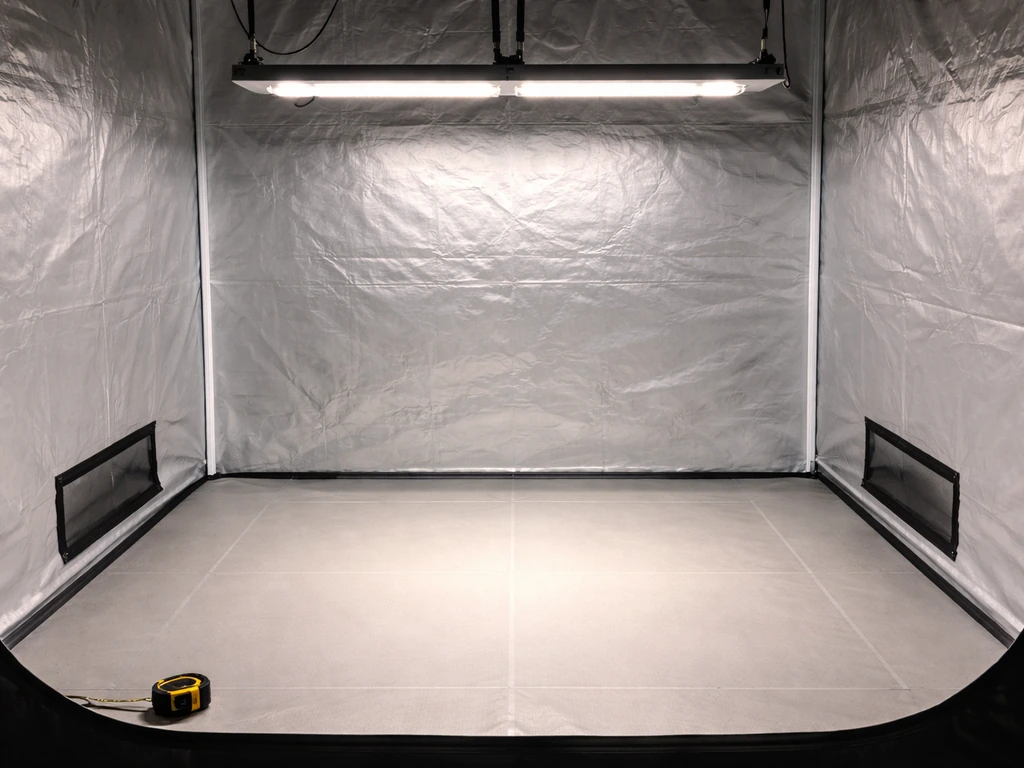
Planet Natural and multiple retailer descriptions consistently state the NeoSol DS 520W covers a 4x4 or 5x5 footprint. In practice, I would treat the 4x4 as the optimal flowering coverage and the 5x5 as the maximum vegetative coverage. That distinction matters because flowering plants need higher PPFD than plants in veg, so the same fixture will adequately cover a larger area at lower intensity during veg and a smaller, more concentrated area during bloom.
For mounting height, the bar layout disperses light more evenly than a single flat panel, so you have more flexibility. During vegetative growth, hanging the fixture 24 to 30 inches above the canopy is a reasonable starting point. For flowering, dropping to 18 to 24 inches increases intensity without creating the bleaching risk you'd see with a lower-quality fixture at close range. If you are running a 5x5 tent, plan to supplement the corners during late flower, or dial the dimmer back during veg and push it full during bloom to manage intensity across the cycle.
For larger spaces, Illumitex also produces the PowerHarvest W, a wide-distribution fixture designed for commercial rows and benches. The PowerHarvest W uses a wide-beam design specifically intended to cast light across broader cultivation areas, which is a different use case than the NeoSol DS. If you are thinking about scaling beyond a single tent, the PowerHarvest W is the direction Illumitex points toward for that application.
Spectrum, dimming, and controls
The NeoSol DS is dimmable from 100% down to 10% of its 520-watt draw, and the dimming is on-board. There is no separate controller box required. That 10% floor means you can run the fixture at roughly 52 watts, which is genuinely useful for seedling stages, clones, or low-light plants that would be overwhelmed at full power. Most competing fixtures in this class either require an external controller for deep dimming or bottom out at 20 to 25%, so the 10% floor is a real practical advantage.
The Surexi F3 spectrum is designed to support both vegetative and flowering stages without a manual spectrum switch. There is no veg/bloom toggle because Illumitex engineered the spectrum to be effective across the full growth cycle. This is a deliberate design choice rather than a limitation: rather than offering switchable spectrum modes (which often just alter the red-to-blue ratio), the NeoSol DS relies on intensity adjustment via dimming and photoperiod control to manage plant stage transitions. For most growers, this is a cleaner setup than managing two separate spectrum modes.
How it compares to similar grow lights
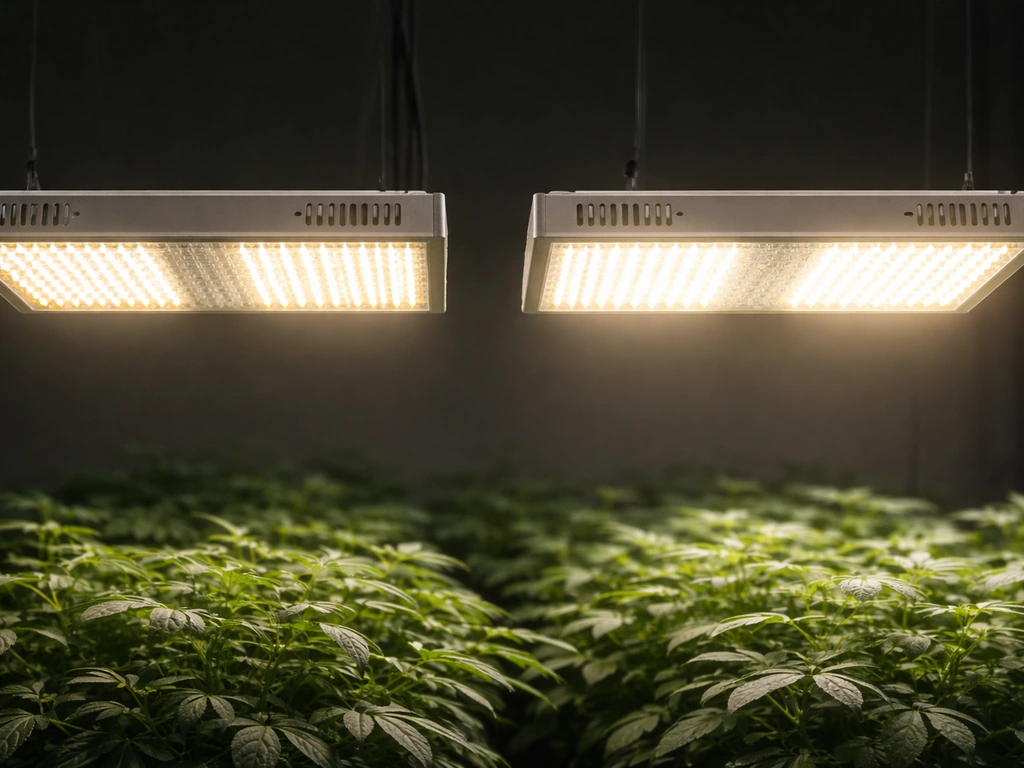
The NeoSol DS sits in a premium price bracket. At 520 watts with a 5-year warranty, IP66-rated components, and commercial-grade LED arrays, it is priced to compete with fixtures from brands like Fluence, Gavita, and high-end Horticulture Lighting Group models rather than consumer-facing brands. Here is how it stacks up against some relevant alternatives by wattage, spectrum, and feature set:
| Fixture | Wattage | Coverage | Dimming | IP Rating | Warranty | Best For |
|---|---|---|---|---|---|---|
| Illumitex NeoSol DS520 | 520W | 4x4 to 5x5 | 10-100% | IP66 | 5 years | Serious hobbyist / semi-commercial |
| AC Infinity Ionframe Evo Series | ~400-600W | 4x4 to 5x5 | 0-100% | Not rated | 3 years | Tech-forward hobbyist with smart controls |
| Soltech Solutions Aspect | ~80W | Up to 3x3 | No dimmer | Not rated | 1 year | Low-light plants, small spaces |
| Hyper Tough 24-inch | ~20-40W | Seedlings / single shelf | No | Not rated | Limited | Seedlings, herbs, budget starts |
| Utilitech Shop-Style Grow | ~40-60W | Single shelf | No | Not rated | Limited | Supplemental or utility use |
If you are debating between the NeoSol DS and an AC Infinity fixture, read a detailed AC Infinity grow light review before deciding, because AC Infinity's smart control ecosystem is a genuine differentiator for growers who want scheduling and environmental automation built in. The NeoSol DS wins on build durability and IP rating, but AC Infinity edges it on connectivity features. If your budget is significantly lower, the Soltech grow light review covers a fixture that performs well for low-light houseplants and small vegetable starts but is not in the same category as the NeoSol DS for high-PPFD flowering crops.
For growers who are early in the hobby and weighing entry-level options before committing to a premium fixture, comparing the Hyper Tough grow light against the NeoSol DS is an apples-to-bulldozer comparison on specs, but it helps calibrate what you actually need for your grow goals. Similarly, the Hyper Tough 24 inch grow light is worth a look if you are running a propagation shelf or herb garden where 520 watts would be gross overkill. And if you have been shopping utility-style fixtures for supplemental lighting, a quick read through utilitech grow light reviews puts those basic fixtures in context against what a purpose-built horticultural LED like the NeoSol DS actually delivers.
Heat, power draw, build quality, and reliability
At 520 watts, the NeoSol DS generates meaningful heat, but the bar construction with IP66-rated drivers handles thermal management better than a densely packed flat panel would at the same wattage. The LED bars allow airflow between them, and the Surexi F3 diodes run at a per-diode wattage (5.4W each) that keeps junction temperatures manageable compared to high-drive single-point configurations. In practice, the fixture runs warm to the touch but does not require supplemental cooling beyond adequate tent or room ventilation. You will want at least one inline fan moving air through any enclosed grow space at this power level.
Build quality is clearly commercial-grade. The fixture is heavy at 37 lbs because it is not built to hobbyist tolerances. The IP66 rating on the drivers is not a marketing spec: it reflects a genuine protection standard that applies to the electrical components. The ETL/cETL certifications mean a third-party lab has verified the electrical safety claims. The 5-year warranty is among the longest in this category and signals that Illumitex is confident in the reliability of the hardware. For context, most consumer LED grow lights carry 1 to 3 year warranties.
Setup tips, plant use cases, and troubleshooting
Getting the setup right
- Use a sturdy adjustable ratchet hanger rated for at least 50 lbs. The fixture weighs 37 lbs and you want margin for safety.
- Start at 50% dimmer output for the first week with new plants or in a new space, then observe canopy response before pushing higher.
- Set mounting height at 24 to 30 inches for veg, 18 to 24 inches for late flower. Adjust based on canopy response, not just a fixed schedule.
- Ensure your grow room or tent has adequate exhaust airflow. A 520-watt fixture in a sealed tent without ventilation will overheat the space regardless of the fixture's thermal management.
- The on-board dimmer knob is straightforward: turn it down for seedlings and clones, bring it up progressively as plants mature.
Best plants and use cases
The NeoSol DS is at its best with high-light, high-value crops: cannabis, tomatoes, peppers, and cucumbers are the obvious candidates. The full-cycle spectrum and 4x4 to 5x5 coverage make it well suited for a single-tent dedicated grow where you are running one strain or crop through its entire life cycle. It is less ideal for a mixed-light herb shelf or a propagation station where you need lower and more diffuse output across multiple small plants. For those applications, the fixture is too powerful and too expensive.
Common issues and how to fix them
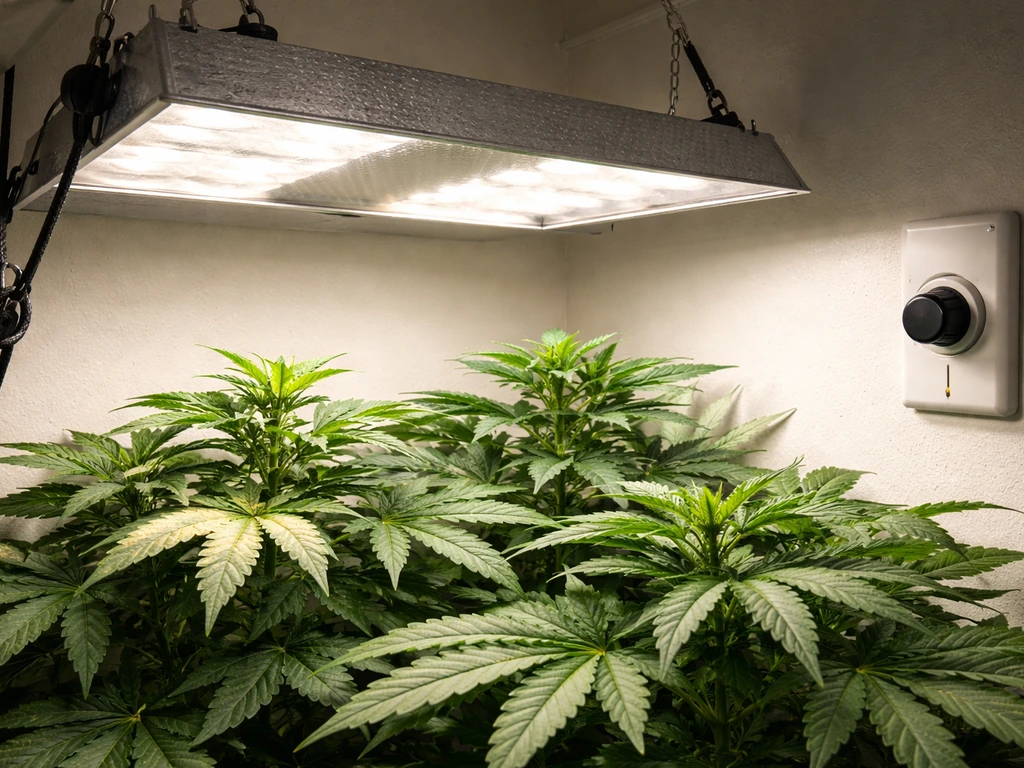
- Bleaching or light burn at canopy: Raise the fixture 4 to 6 inches or reduce dimmer output by 20%. Do not run full power at minimum hanging height with light-sensitive strains.
- Uneven coverage in a 5x5: The fixture is optimized for 4x4 flowering coverage. In a 5x5, rotate plants every 5 to 7 days or add a low-wattage supplemental bar at the corners during late flower.
- Slow vegetative growth: Check that you are not running too low on the dimmer for too long. Seedlings need low intensity, but established veg plants need at least 40 to 60% output at appropriate mounting height.
- High ambient temperature: The fixture itself handles heat well, but a 520-watt source adds significant BTUs to an enclosed space. Check exhaust airflow first before attributing heat issues to the fixture.
- Spectrum concerns across growth stages: The Surexi F3 is a fixed full-cycle spectrum. If you are seeing unusual stretch or slow flowering, check your photoperiod schedule before assuming a spectrum mismatch.
Who should buy it, who should skip it, and a buying checklist
Buy the Illumitex NeoSol DS520 if you are running a dedicated 4x4 or 5x5 indoor grow for high-light crops and you want a fixture that will last five or more years, handle humidity without driver failures, and deliver consistent full-cycle coverage without needing a spectrum-switching workflow. It is the right call for a grower who has moved past the beginner stage and wants to stop replacing cheaper fixtures every two years.
Skip it if you are a first-time indoor grower, working with a tent smaller than 4x4, growing low-light plants, or operating on a budget under $500. The NeoSol DS is premium-priced and its features are genuinely wasted on a small herb setup or a casual windowsill supplement. In those cases, you are paying for commercial-grade durability and coverage that your grow simply does not require.
Buying checklist
- Grow space is 4x4 or 5x5 and dedicated to a single crop cycle
- You are growing high-light crops: cannabis, tomatoes, peppers, or similar
- Your budget accommodates a premium-tier fixture with 5-year warranty
- Your hanging structure can support 37+ lbs safely
- Your grow space has adequate ventilation to handle a 520-watt heat load
- You want on-board dimming to 10% without an external controller
- You need IP66-rated components for a humid grow environment
- You want ETL/cETL certified electrical safety for peace of mind
- You are not looking for smart-app or automated scheduling features (if you are, compare with AC Infinity first)
FAQ
Does the Illumitex NeoSol DS520 require an external dimmer or controller for deep dimming?
No. The fixture supports on-board dimming from 100% down to 10% of its 520W draw, so you do not need a separate controller box to reach the lowest output level. If you plan to automate intensity changes, you will still want a smart plug or compatible controller, but it is not required just to make the light run safely at reduced power.
Is the 10% dimming level actually practical for seedlings and clones, or is it too dim?
For small plants, it is usually practical because 10% corresponds to roughly 52W, which can prevent stretching and light stress in early stages. The key is to adjust hanging height as well, since even at low power a high-intensity fixture can still be strong near the canopy, especially in a 4x4 tent where reflections amplify usable PPFD.
What hanging height should I use if my tent has reflective walls or if I see leaf bleaching?
If your tent uses high-reflectivity material, start toward the higher end of the recommended range (closer to 30 inches in veg) and move gradually. If you see bleaching or “frosty” spotting in bloom, raise the fixture or reduce the dimmer before lowering it further, because high-intensity LEDs can cause localized stress quickly compared with softer supplemental fixtures.
How do I decide whether to target 4x4 flowering coverage or 5x5 vegetative coverage?
Use flowering as the stricter requirement. If you want the same light to perform optimally in late flower without corner underperformance, plan around a 4x4. If your main goal is veg and your system tolerates adding side/corner light during late flower, 5x5 can work, but you should expect to run full power more often and consider corner supplementation.
Will the NeoSol DS520 replace a dehumidifier or improve humidity tolerance on its own?
No. The IP66-rated drivers help protect the electrical components from dust and powerful water jets, but they do not control condensation or mold risk for the plants. For best reliability and plant health, manage humidity with normal HVAC or dehumidification, and avoid letting water droplets sit on any wiring junctions.
Does the lack of a veg/bloom spectrum switch mean I must use different dimming schedules?
Yes, you will typically manage stage transitions with intensity and photoperiod rather than changing red-to-blue ratios. A common approach is running more conservative dimming in veg and moving toward higher output during bloom, then fine-tuning based on canopy response (leaf posture and any light stress signs).
What is the biggest risk when mounting a 37 lb fixture in a tent?
Mechanical loading. At 37 pounds plus the pull from vibration and cord weight, you need a properly rated ceiling mount, strong ratchet hangers, and slack management so nothing twists the bars. If you are using a DIY hanging system, upgrade to hardware rated for far above the fixture weight, not just slightly above it.
Does the IP66 rating mean I can clean it with direct spraying or pressure washing?
No. IP66 helps protect drivers against powerful water jets, but you should still avoid aggressive cleaning practices that could drive moisture into areas you cannot easily verify. For routine maintenance, use dry methods first (soft cloth, gentle brushing), and if you clean, power down and let everything dry fully before restarting.
Is the NeoSol DS520 worth it if my grow is mostly herbs or low-light plants?
Usually not. The fixture is designed for high-PPFD crops and high-intensity flowering output, and running it for low-light plants means you will spend a premium for performance you cannot fully “scale down” in a cost-effective way. For propagation shelves or herbs, smaller fixtures often give more efficient coverage and easier canopy matching across many small plants.
How does heat compare to a dense flat panel at the same wattage, and do I still need active airflow?
It can run warmer to the touch because it is a high-watt unit, but the bar construction improves airflow around the LEDs and drivers compared with tightly packed flat panels. You still should plan for active airflow in the tent or grow room, at minimum an inline fan for air exchange, since stagnant air can reduce component longevity even if temperatures feel acceptable initially.
What happens if my canopy isn’t level across the whole 4x4, will the NeoSol DS520 make that worse?
It can. Even though coverage is consistent across the footprint, light intensity still drops with distance. If one side of your canopy is lower, it may experience more stress, while the higher side may underperform in bloom. Keeping the canopy level (or adjusting hang height dynamically) usually matters more than with smaller, lower-output fixtures.
Should I buy the NeoSol DS520 or pick the smaller NeoSol model for a 4x4 tent?
If your primary goal is full-cycle high-light flowering and you want consistent intensity, the 520W class fixture aligns well with a 4x4. If your crop canopy is small, your plant density is light, or you want more headroom to avoid frequent dimmer adjustments, a smaller model can be easier to manage. The decision comes down to your expected canopy size during peak bloom and whether you prefer tighter control or more aggressive output.