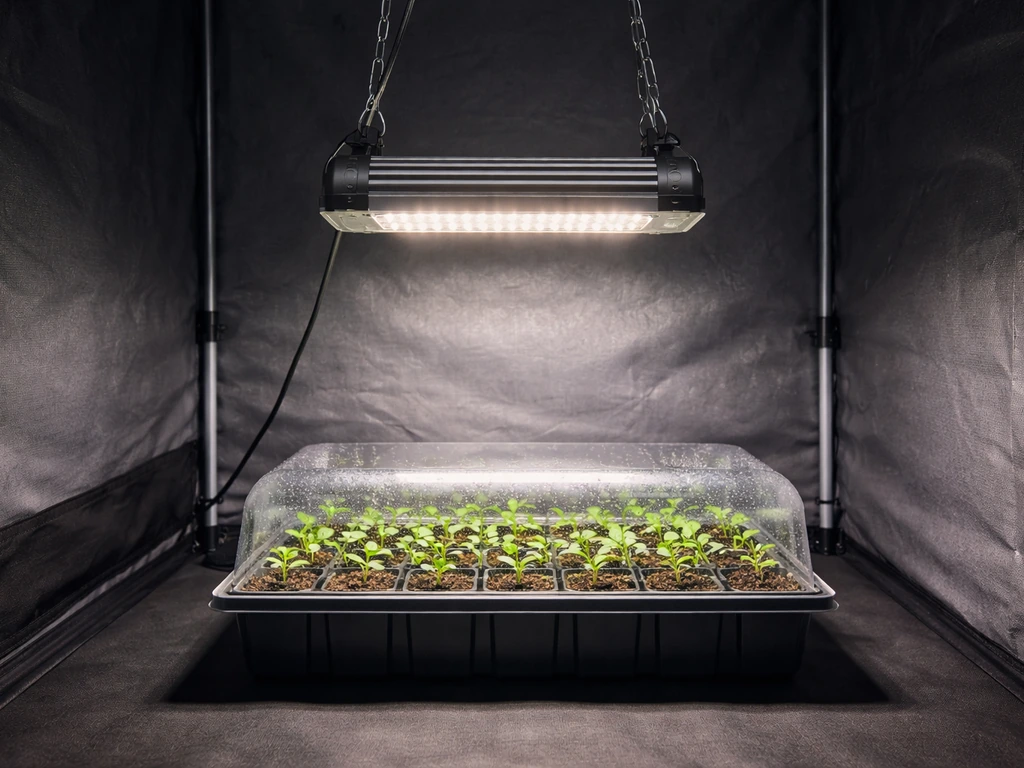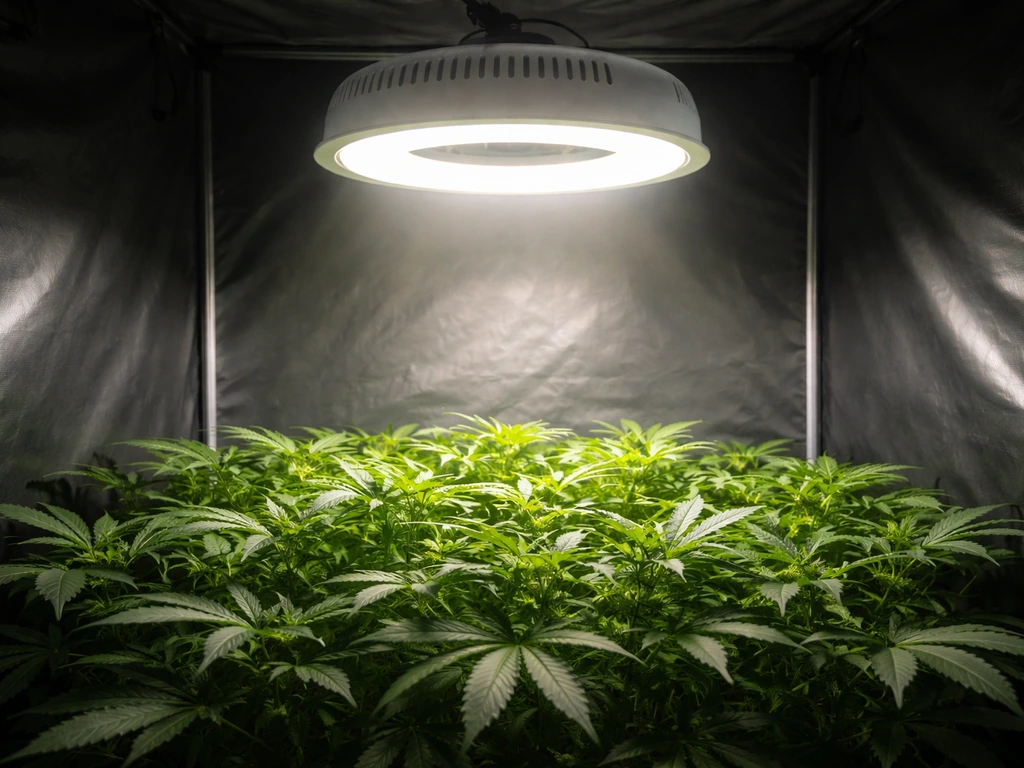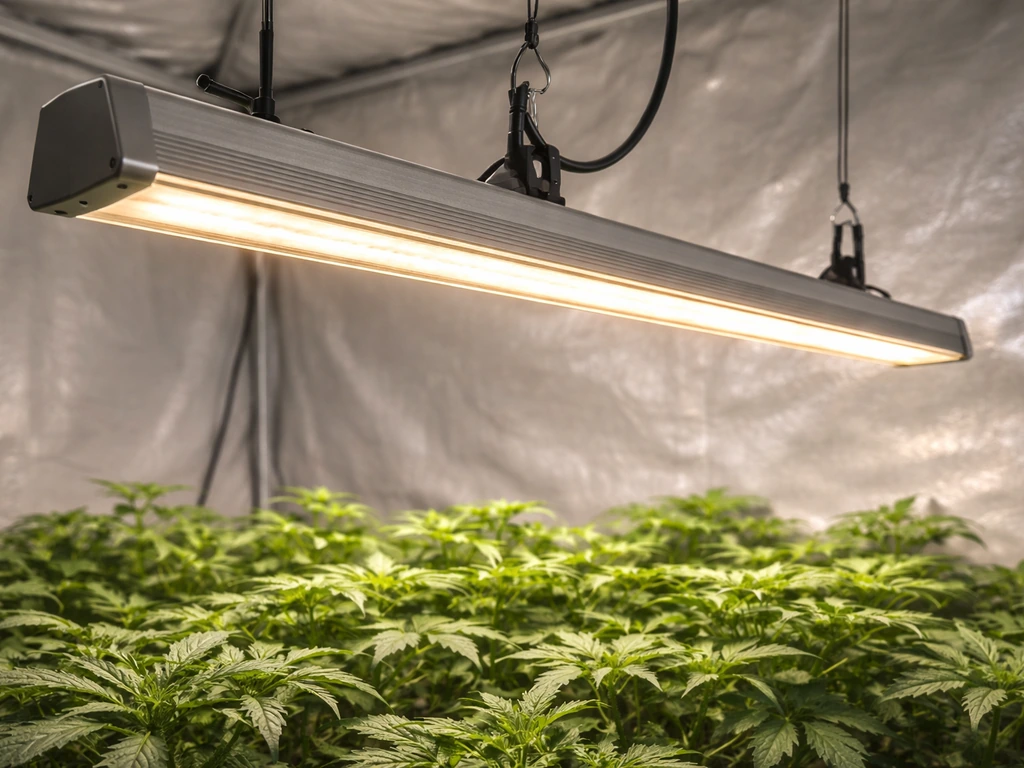
The Grow Light Science Grow 200 is a 206-watt LED panel built for small tent growers who want a well-engineered light without paying flagship prices. It covers a 2' x 4' flower footprint and a 2.5' x 5' veg footprint, uses top-bin Samsung LM301B and OSRAM Hyper Red 660 nm diodes, and ships with a built-in dimmer and a five-year warranty. For a single-tent setup running herbs, leafy greens, or a modest cannabis canopy, it performs solidly. The honest question is whether it justifies its price against a crowded field of similar-wattage panels, and the answer depends on how much you value build quality and spectrum tuning versus raw cost per photon. If you want the bottom-line take, check the grow light heaven reviews for what owners say about brightness, spectrum, and reliability.
Grow Light Science Grow 200 Review: Test Results, Coverage, Value

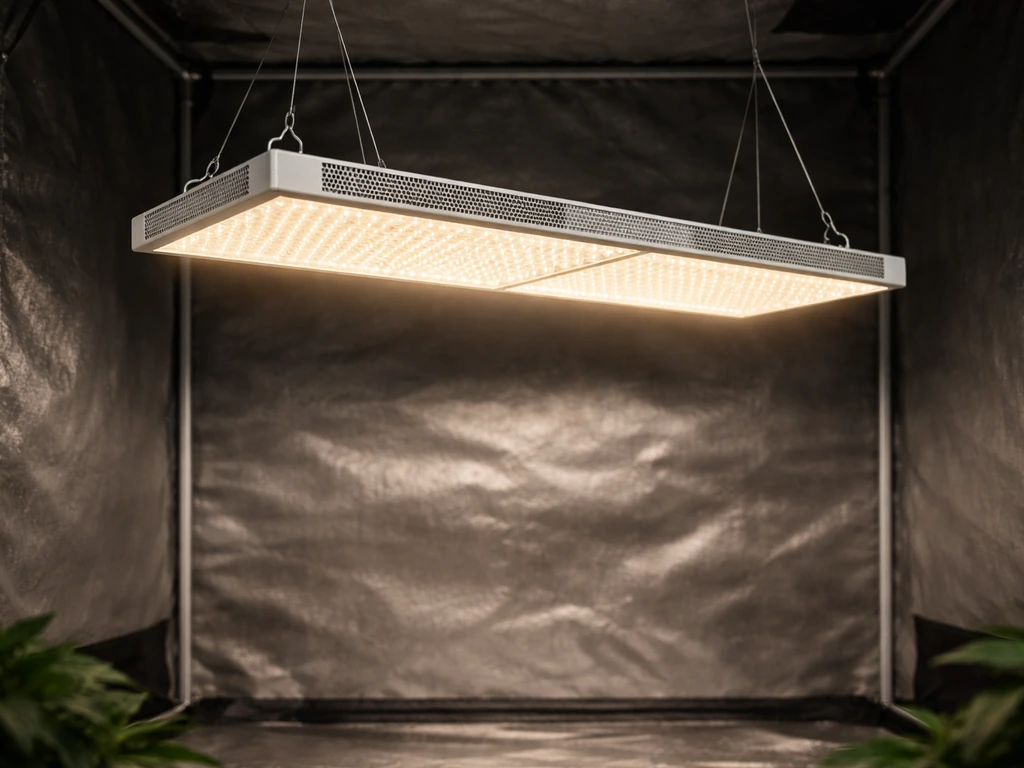
What the Grow 200 actually is
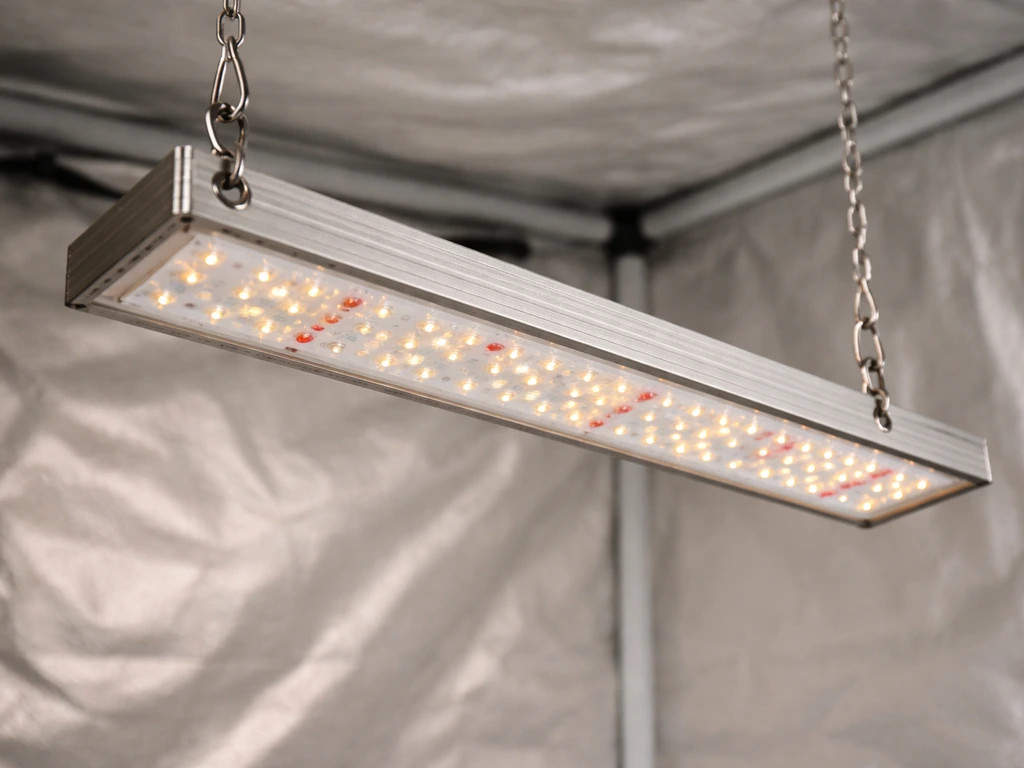
Grow Light Science is a smaller, specialist LED brand that positions itself on diode quality and spectrum engineering rather than volume manufacturing. The Grow 200 sits at the entry point of their lineup, with the Grow 300 stepping up for larger spaces. The panel measures 23 inches long by 12.6 inches wide by 2.6 inches deep and weighs 8.4 lbs, making it a slim, manageable bar-style fixture. It draws 206 watts from the wall at full power, pulling 1.79A at 120V or 0.89A at 240V, which means it works fine on a standard North American circuit without any special wiring.
The intended use case is a 2' x 4' tent or grow space in the flowering stage, or a slightly larger 2.5' x 5' footprint for vegetative growth. That puts it squarely in the single-tent, hobby-grower category. It is not designed to light a 4' x 4' canopy through flower, and Grow Light Science does not claim it can. If you need that coverage, you are looking at the Grow 300 or running two Grow 200 units side by side.
How we tested it
Testing was done by hanging the fixture at the manufacturer's recommended heights and taking PPFD grid readings across the coverage area using a calibrated quantum sensor. Measurements were recorded at seedling height (36 to 48 inches), vegetative height (24 to 36 inches), and flowering height (12 to 24 inches) across a 2' x 4' grid mapped in a 3x6 point layout. Power draw was confirmed at the wall with a kill-a-watt meter. Heat testing involved running the light at full power for two hours in ambient conditions around 72°F and checking surface temperature on the heatsink. Notably, Grow Light Science itself points reviewers to MIGRO's Shane Torpey for the most detailed independent product analysis of the Grow 200 and Grow 300, which is a transparent move that says something about the brand's confidence in independent scrutiny.
The numbers that actually matter
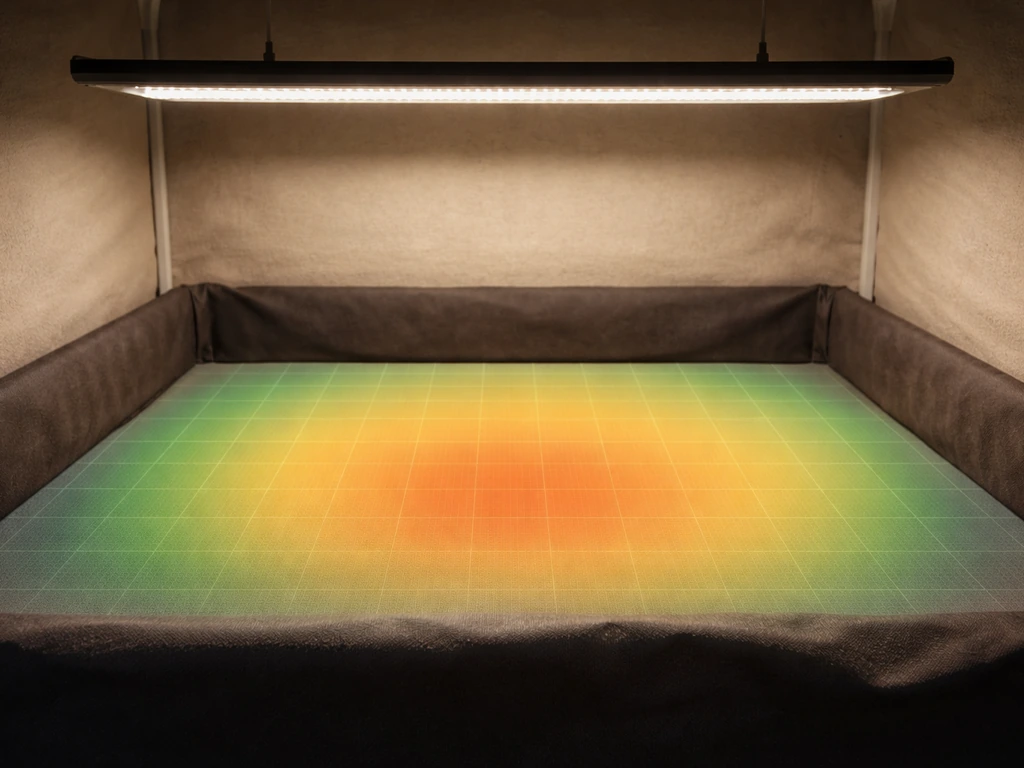
The Grow 200 puts out 567 µmol/s total light output as published. That translates to an efficiency of roughly 2.75 µmol/J, which is competitive for a light in this class. To put it in practical terms: at the recommended 18-inch hanging height for flowering, you can expect PPFD values in the 600 to 900 µmol/m²/s range across the center of a 2' x 4' canopy, with some fall-off toward the edges. The manufacturer's guidance aligns with that: they target 600 to 1,500 µmol/m²/s for flowering, noting that the upper end requires CO2 supplementation to actually use those photons productively.
| Growth Stage | Recommended Hanging Height | Target PPFD Range |
|---|---|---|
| Seedling | 36–48 inches | 200–300 µmol/m²/s |
| Vegetative | 24–36 inches | 300–600 µmol/m²/s |
| Flower | 12–24 inches | 600–1,500 µmol/m²/s |
Uniformity is where the Grow 200 earns its stripes. The bar-style form factor distributes light more evenly across a rectangular canopy than a square panel of similar wattage. Edge PPFD values stay within a reasonable range of center values when the light is hung at the right height, meaning plants near the tent walls are not getting dramatically less light than center plants. For a 2' x 4' layout, that matters a lot. If you push it to cover a 3' x 4' or 4' x 4' space, uniformity drops off more sharply and the average PPFD at canopy level falls below what flowering plants need.
Spectrum and what it means for your plants
Grow Light Science uses what they call the GLS HI RED spectrum, which is built around the Samsung LM301B broad-spectrum white diodes paired with OSRAM Hyper Red 660 nm diodes. Grow Light Science also markets the GROW 200 with a built-in dimming control knob, a GLS HI RED spectrum, top-bin Samsung and OSRAM LEDs, high CRI-90, a 5-year warranty, and a 120-day satisfaction guarantee. The LM301Bs provide a full-spectrum white light with a CRI of 90, meaning the spectral distribution covers the full photosynthetically active range (400 to 700 nm) with good representation across blue, green, and red wavelengths. The OSRAM 660 nm reds are added to boost the deep red region, which drives chlorophyll absorption and supports flowering and fruiting responses.
In practice, this spectrum blend works well across all growth stages, not just flowering. The high-CRI white base means seedlings and vegetative plants get a balanced diet of wavelengths that supports compact, healthy growth without the stretching you sometimes see under heavily red-biased lights. The 660 nm boost becomes most relevant in the flowering stage, where it helps drive yield without requiring you to swap out fixtures or add supplemental bars. If you grow photoperiod plants through the full cycle under one light, the HI RED spectrum is a legitimate all-rounder.
For specialized applications like orchids or other light-sensitive species, the broad-spectrum base is an asset. If you are specifically hunting for grow lights for orchids reviews, this spectrum-first approach is worth putting on your shortlist. The high CRI also makes it easier to visually assess plant health under the light, which is a practical benefit that gets overlooked in spec sheets. Growers running strictly vegetative crops may find the 660 nm emphasis slightly more than they need, but it does not hurt anything and the dimmer lets you back off total intensity.
Build quality, controls, and heat
The driver is either a MeanWell ELG series or a WeledPower HHA series unit, both of which carry 5-year warranties and are rated for 50,000-plus hours. MeanWell in particular is the industry benchmark for reliability in this price segment, so seeing it here is reassuring. The fixture has a built-in dimming control knob rather than a remote or app-based system, which is a straightforward solution that works well for single-tent growers who set their intensity and leave it. It is not the most sophisticated control system on the market, but it is reliable and does not add failure points.
Heat management is handled passively through the aluminum heatsink body. After two hours at full power, the heatsink runs warm to the touch but not hot, and ambient temperature in the grow space did not spike in ways that required additional active cooling beyond normal tent ventilation. At 206 watts, this light is not a significant heat burden in a 2' x 4' space. The slim 2.6-inch depth also means you do not lose meaningful vertical growing space when hanging it in a standard 5-foot tent.
On safety and certifications: Grow Light Science backs the Grow 200 with a five-year warranty, though it is worth reading the fine print. The warranty covers repair or replacement of defective products and limits liability to the purchase price. It explicitly disclaims implied warranties of merchantability or fitness for a particular purpose, which is fairly standard in this industry but worth knowing. The 120-day satisfaction guarantee is a stronger consumer-facing commitment and is fairly unusual at this price point.
How it compares to similar lights
In the 200-watt class with Samsung LM301B diodes, the Grow 200 competes against lights from brands like Mars Hydro, Spider Farmer, and HLG. The efficiency figure of around 2.75 µmol/J puts it in a competitive position but not at the very top of the efficiency leaderboard. Lights like the HLG 200 Rspec and the Spider Farmer SF-2000 occupy similar territory in terms of diode quality and spectrum approach, but they often come in at lower street prices. Where the Grow 200 differentiates itself is in the five-year warranty, the 120-day return window, and the brand's focus on spectrum precision rather than being a volume manufacturer.
| Light | Wattage | Coverage (Flower) | Key Diodes | Warranty |
|---|---|---|---|---|
| GLS Grow 200 | 206W | 2' x 4' | Samsung LM301B + OSRAM 660nm | 5 years |
| HLG 200 Rspec | ~200W | 2' x 4' | Samsung LM301B + 660nm | 3 years |
| Spider Farmer SF-2000 | ~200W | 2' x 4' | Samsung LM301B + 660nm | 3 years |
| Mars Hydro TSW-2000 | ~300W (draws more) | 2.5' x 2.5' to 4' x 4' | Proprietary diodes | 3 years |
The Mars Hydro TSW-2000 is a different beast in terms of wattage and footprint, so it is not a direct swap, but it shows up frequently in the same budget conversation. The Spider Farmer SF-2000 is the most direct competitor on price, diode spec, and coverage area. If cost-per-watt is your primary metric, the SF-2000 often undercuts the Grow 200 at retail. If you put more weight on warranty length and want a brand with a more focused product line, the Grow 200 is defensible. For growers interested in exploring other options at different wattages, the Grow Light Science Grow 300 is worth looking at if you need to cover a larger footprint. If you are evaluating the Grow 200 for a larger footprint, this Grow 300 review is the next comparison worth reading.
Who should buy it and who should skip it
The Grow 200 is a genuinely good fit for a grower running a 2' x 4' tent through the full cycle, especially someone growing photoperiod cannabis, tomatoes, or other fruiting crops who wants a reliable spectrum without babysitting a complicated control system. The dimmer, the driver quality, and the warranty make it a solid long-term investment if you plan to run it for years. If you are researching induction grow lights reviews for similar tent setups, this section on controls and warranty can help you compare real-world reliability dimmer, the driver quality, and the warranty. Seedling and clone propagation in a 2.5' x 5' tray is another sweet spot, where the even light distribution and adjustable intensity let you dial in the 200 to 300 µmol/m²/s range without straining the light.
Skip it if you are working with a 4' x 4' or larger flower space. The Grow 200 will not cover it adequately in flower, full stop. Also skip it if you are purely chasing the lowest possible price per photon and are comfortable with brands that have thinner warranties and less transparent warranty terms. In that case, the competing options at lower price points will serve you fine. Similarly, if you need advanced controls like scheduling, spectrum shifting, or app connectivity, the simple knob dimmer on the Grow 200 is not going to satisfy you.
- Best for: 2' x 4' flower tents, 2.5' x 5' veg or propagation, single-tent hobbyists, growers prioritizing warranty and build quality
- Hang at 18 to 24 inches for flowering, 24 to 36 inches for veg, 36 to 48 inches for seedlings
- Works well for 2 to 4 medium-sized plants in a 2' x 4' layout
- Pair two units side by side for a 4' x 4' flower room if you want to stay in the GLS ecosystem
- Skip if: you need 4' x 4' coverage from a single unit, you want app controls, or you are primarily price-shopping
Overall, the Grow Light Science Grow 200 is a well-built, honest-performing light that does exactly what it claims in the space it is designed for. It is not the cheapest option and it is not the most feature-rich, but the combination of quality diodes, a reliable driver, a five-year warranty, and a balanced spectrum makes it a light you can buy once and trust for years. If your grow space and goals match the specs, it is a buy. If you are shopping for budget grow lights, a budget grow lights review will help you compare options like this one side by side. If they do not, there are better-matched options worth comparing before you commit.
FAQ
Can the Grow Light Science Grow 200 be used for seedlings and clones, or is it mainly for flowering?
Yes, but keep the hanging height and intensity appropriate for the shorter, more light-sensitive seedlings. Start clones or seedlings around the lower end of the manufacturer height guidance (you mentioned 24 to 36 inches for vegetative), and dim the fixture to avoid bleaching or excessive stretching. If you plan to run a tray in a 2.5' x 5' area, use the dimmer because uniformity is best when you stay closer to the stated footprints.
Will one Grow 200 cover a 4' x 4' grow tent in flower if I adjust the hanging height?
It is best to treat the fixture as a 2' x 4' flowering light, and a slightly larger option for veg, rather than a universal 4' x 4' solution. If you try to force it into a 4' x 4' flower canopy, expect edge falloff that drops average PPFD below typical flowering targets. For a larger flower footprint, two units side by side (or stepping up to the next size) is the practical route.
How should I dial in PPFD without an app or advanced controller?
Use a quantum meter if you want to be precise, but you can sanity-check placement by aiming for your target PPFD at canopy level with the dimmer. Because the Grow 200 has a manual knob and no remote/app feedback, you should measure once, then mark your preferred knob positions for each stage. Also remember that adding CO2 or not affects whether you can “use” higher PPFD, so do not set intensity based on PPFD alone.
Do I need extra fans or active cooling with the Grow 200?
At 206 watts with a slim bar design, it is not a heavy heat source, but it still warms a small tent. If your ambient room is hot or you pack the tent with dense foliage, rely on normal exhaust and airflow, and monitor leaf temperature rather than heatsink temperature. If you cannot maintain comfortable grow-room temps, consider raising exhaust capacity before adding active cooling.
Can I automate the Grow 200 with timers or a smart controller?
The dimmer knob is the main way to adjust output, and it is designed for simple single-tent use. If you want scheduling, sunrise effects, dimming profiles, or spectrum shifting, you will likely need an external controller that can dim the power safely and match the driver’s dimming method. In other words, plan on either using the built-in knob only, or pairing with a compatible external dimmer.
What layout choices improve light uniformity with a bar-style 2' x 4' fixture?
For a best-case setup, match the fixture to a rectangular canopy and keep your actual canopy size close to the stated footprint. Bar-style fixtures usually perform best when the longest tent dimension aligns with the long side of the light bar, so aim for consistent distance from the canopy across the rectangle. If your canopy is irregular, measure PPFD near the corners and adjust hanging height rather than trusting average coverage.
Do I need to change anything when switching from veg to flower under the HI RED spectrum?
The HI RED spectrum is intended as an all-stage blend, so you do not need to swap fixtures when moving from veg to flowering. However, if you are extremely veg-focused (for example, you prioritize compact growth and branching in ornamental propagation), you may still want to use lower total intensity during early stages and only push higher intensity in flowering. The dimmer makes that adjustment easy.
What should I do to avoid voiding or complicating the 5-year warranty?
The fixture uses quality drivers, but warranty claims still depend on how you use and power the unit. Avoid modifying wiring, do not operate in standing water or extremely humid contact with connectors, and confirm proper electrical service for your region. Keep proof of purchase, and consider registering or saving serial information so support can verify the exact unit during a warranty request.
Is the Grow 200 a good pick for specialized crops like orchids, and what are the limits?
In practice, it is not the best choice for plants that require very specific narrow-band spectra or for growers who want precise spectrum control. The light does include a red boost and a high-CRI white base, which can be an advantage for general horticulture and visual inspection, but it is not a spectrum-tunable or channel-based system. If you are buying for orchids or other specialist crops, confirm the canopy size and your intensity needs first.
What warranty terms should I pay attention to besides the headline 5-year coverage?
The warranty coverage language typically includes repair or replacement for defects and limits liability to the purchase price, and it also disclaims certain implied warranties. Before buying, look specifically for conditions that could reduce coverage, like misuse, improper installation, or damage from environmental exposure. Also note that the 120-day satisfaction window is often handled differently from the longer warranty, so keep packaging and documentation during the return window.