A 315W CMH grow light delivers real, usable output for a 3x3 to 4x4 foot canopy, with average PPFD readings typically landing between 200 and 800 µmol/m²/s depending on mounting height and fixture design. For most small-to-mid size indoor grows, that's genuinely enough light to push plants through both vegetative and flowering stages. Whether it's the right purchase for you depends on your space, your electricity costs, and whether you're comparing it against LED or HPS alternatives. This guide breaks all of that down with real numbers so you can decide quickly.
315W CMH Grow Light Review: Performance, Coverage, Cost

Marcus Caldwell
10 Apr 2026
What exactly is a 315W CMH grow light
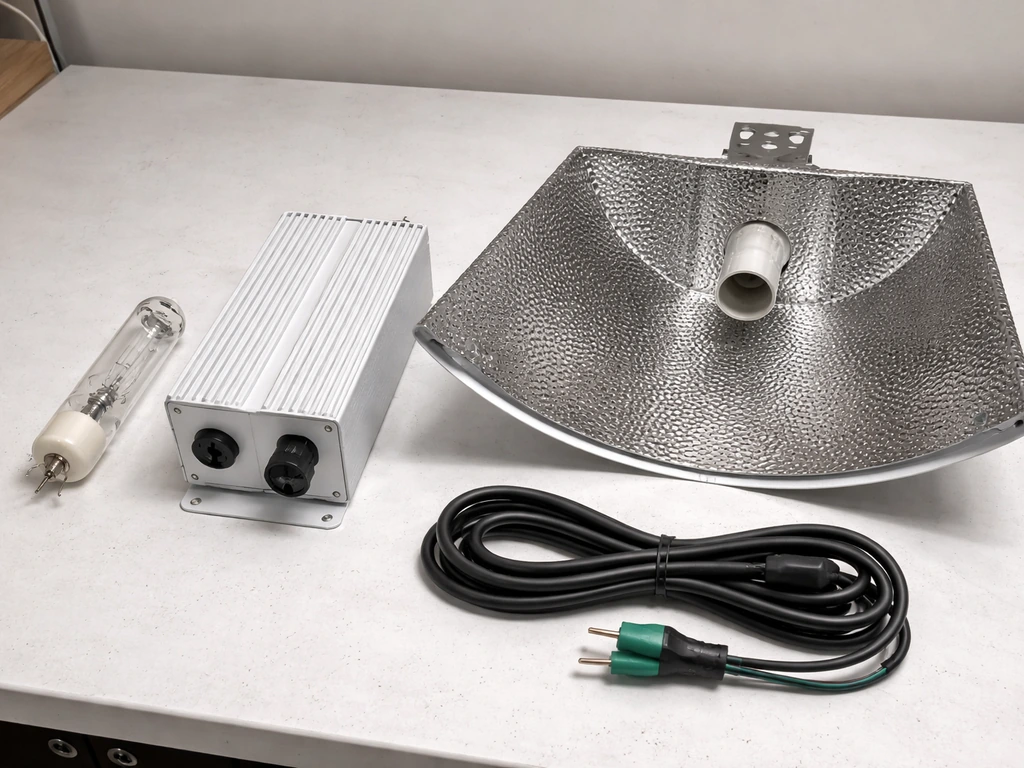
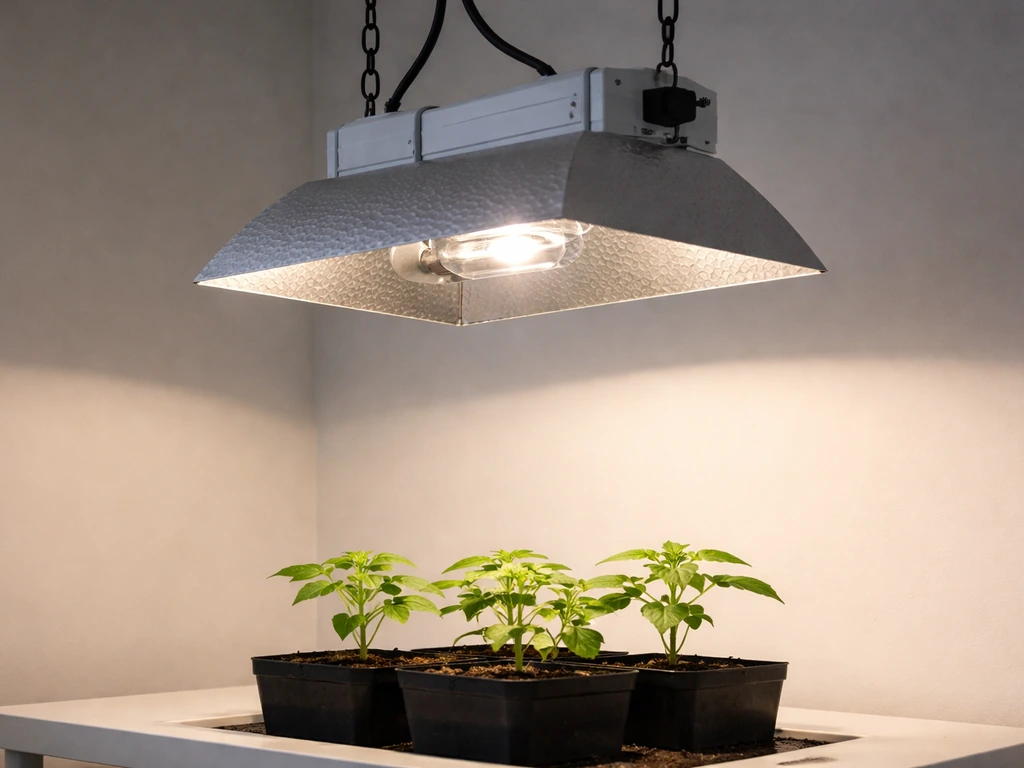
CMH stands for ceramic metal halide, and it's sometimes labeled CDM (ceramic discharge metal halide) or LEC (light emitting ceramic) depending on the brand. The "ceramic" part refers to the arc tube material, which is aluminum oxide ceramic rather than the quartz used in traditional metal halide lamps. That ceramic tube runs hotter and more stably, which is a big part of why CMH produces a fuller, more natural-looking spectrum than older HID types.
A "315W CMH system" is the combination of three components: the lamp itself, an electronic ballast rated for 315W CMH operation, and a reflector or fixture hood. These don't just pull 315 watts from the wall, though. More on that in the electrical section. The lamp base standard for 315W CMH lamps is PGZ18, which is not interchangeable with standard MH or HPS sockets, so you can't just screw one of these into an existing HID reflector without a compatible fixture.
Lamps come in two main configurations: single-ended (SE) and double-ended (DE). SE lamps are the more common format for home growers, while DE fixtures like the Dutch Lighting DLI CRI-Series 315W (which uses a "315W DE Wide reflector" configuration) are found more in commercial settings. Both formats have compatible ballasts, but you can't mix and match freely. Some fixture kits explicitly note compatibility with both SE and DE grow reflectors, so check the documentation before buying a replacement lamp or adding a second unit.
People buy 315W CMH systems for a few specific reasons. The spectrum is the main one. Compared to a straight HPS or older MH, CMH produces more UV-A and UV-B alongside a wide continuous spectrum that plants respond to throughout their entire lifecycle. It's also a compact format: one 315W unit fits a tent or small room without the bulk of a 600W or 1000W HID setup. Growers Choice, Ushio, Philips, and Lumatek are the lamp and ballast names you'll see repeatedly in this category, and they all occupy roughly the same performance tier.
Real PPFD numbers, coverage shape, and heat
Let's start with the PPFD numbers that actually matter. The LUXx CM315 technical spec sheet lists an average PPFD of 243. 6 µmol/m²/s over a 4x4 foot footprint. The Hortilux CMH 315 system comes in at a measured average of 202 µmol/m²/s.
Those are honest, spread-out averages over a standard footprint. If you hang the light closer, the center readings climb sharply: Hi-Par's 315W CMH fixture reports 829. 79 µmol/m²/s at just 60 cm (about 24 inches) from the canopy. One independent field test on an Omega CMH 315W recorded a max PPFD of 660 µmol/m²/s at the test setup's center point.
A stakeholder research paper on horticultural lighting puts 315W CMH output in a range of approximately 700 to 800 µmol/m²/s under typical operating conditions.
What this tells you is that coverage shape matters as much as raw wattage. At 24 inches, you get high center intensity but steep falloff at the edges. At 36 to 48 inches, the average evens out across a wider footprint but drops at the center. For a tight 3x3 space, hanging at around 24 to 30 inches from canopy is a workable target.
For a full 4x4, you'll want to push the fixture higher and accept lower average PPFD. In a related r/microgrowery discussion about 4x4 tent 315W CMH use, people commonly point out that 315W in a 4x4 is pretty low if you’re trying to fill the tent full full 4x4.
One important note from the DLI CRI-Series 315W instruction manual: the fixture requires a minimum distance of 3 feet (90 cm) between the lamp and the canopy to avoid heat stress and intensity overload on the nearest leaves.
So "hang it close for high PPFD" has a hard floor.
On heat: 315W CMH runs noticeably cooler than a 600W HPS in absolute terms, but it's still a gas-discharge lamp and generates real radiant heat. The lamp envelope itself gets very hot, and the ceramic arc tube runs at higher temperatures than quartz MH. A quality enclosed reflector helps redirect heat upward. In a sealed tent with inline extraction, a 315W CMH is manageable in most climates. In a poorly ventilated space or a hot climate, you'll still need active cooling.
Spectrum and what plants actually do with it
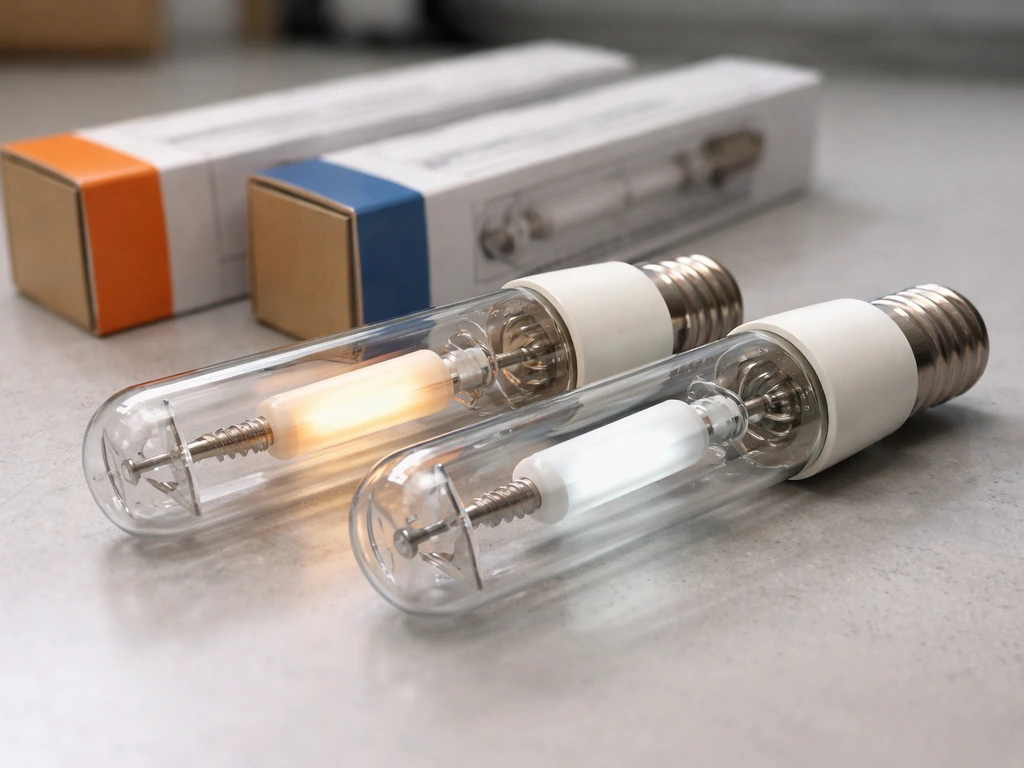
CMH lamps are sold in two main color temperatures: around 3000K to 3100K and around 4200K. The 3100K lamp (such as the Growers Choice 3K single-ended CMH lamp or the Philips AGRO 3100K) is weighted toward red and warm wavelengths, making it the standard recommendation for flowering. The 4200K lamp (like the Philips 942) has a cooler, bluer profile suited to vegetative growth. Both emit a continuous spectrum rather than the spiked output of traditional HPS or MH, and both include meaningful UV-A and UV-B output that older HID tech mostly lacks.
In practice, many growers use a 3100K lamp for the entire grow cycle and get solid results in both veg and flower. The UV component is particularly valued in certain cannabis grow light reviews, where UV exposure during late flower is linked to increased resin production. The 4200K variant is a better choice if you're running a dedicated veg room or working primarily with leafy greens and herbs. If you're doing a single-light full-cycle grow, pick the 3100K and you won't be second-guessing yourself.
Compared to a standard dual-spectrum CFL approach, the CMH spectrum is broader and more intense per watt. If you've ever used a 300W dual spectrum CFL grow light, you'll notice the CMH's better canopy penetration and higher PPFD ceiling immediately. It's not a subtle upgrade.
How much space a 315W CMH actually covers
The manufacturer-specified footprint for most 315W CMH systems is 4x4 feet (16 sq ft). That's the number you'll see on most spec sheets and is the LUXx CM315's documented coverage area. For a 4x4, you're working with average PPFD in the low 200s, which is enough for vegetative growth and light-to-moderate flowering demands but below the 400 to 600 µmol/m²/s target for high-demand flowering crops.
For flower production on high-demand crops, the more realistic target footprint is 3x3 feet (9 sq ft). At that size, your average PPFD climbs into the 400 to 600+ range at appropriate hanging heights, and you can push plants harder through flower. Dimlux's 315W CMH marketing documentation actually references a lighting surface of approximately 12.9 square feet in their system context, which lines up with roughly a 3.5x3.5 foot practical footprint for a higher-intensity result.
One grower's real-world framing sums it up well: a 315W CMH is the right size for a 3x2 foot space with comparable yields to a 600W HPS but at nearly half the power draw. That's a useful way to think about it. You're not competing with a 1000W HPS on raw output, but you're running far more efficiently at the scale where most hobby growers actually operate. For a 2x4 tent or a small dedicated veg room, one 315W CMH is a clean, well-matched solution.
One caveat on planning: distance has a huge effect on your real coverage. Using a PPFD meter to map your canopy at the actual hanging height you intend to run is not optional if you want accurate results. Relying solely on the manufacturer's footprint number without confirming with measurements will leave you guessing. A cheap quantum flux meter pays for itself in one grow.
Electrical costs and real watt draw
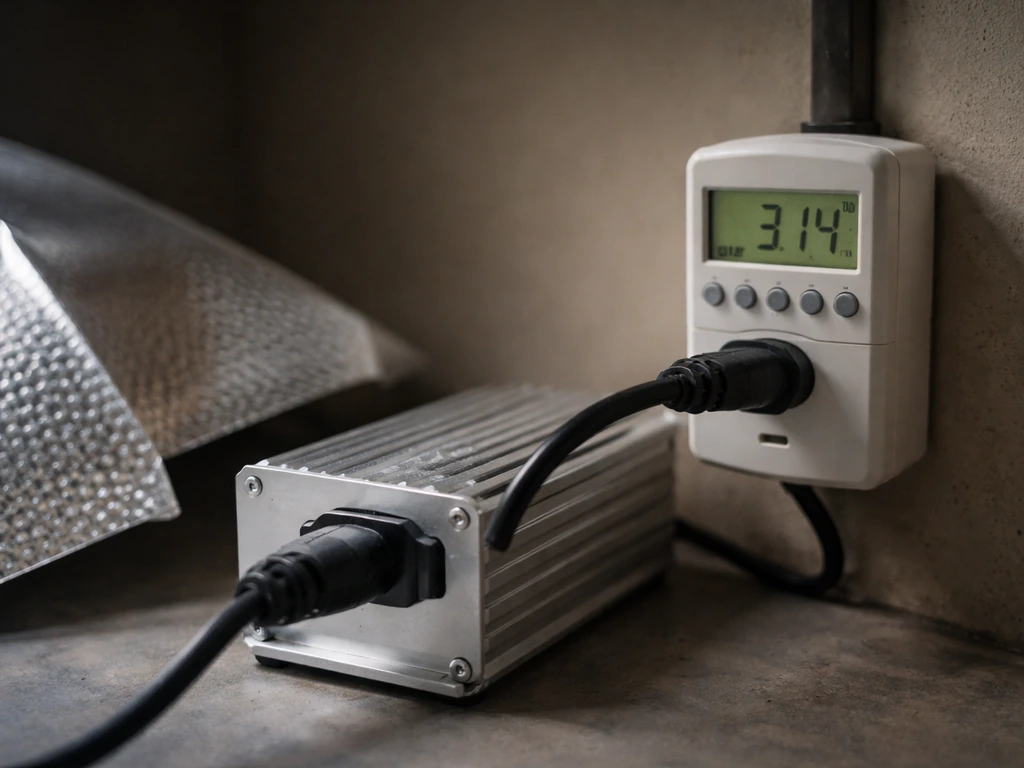
"315W" is the lamp's rated wattage, not what you'll see at the wall. Every electronic HID ballast draws additional power to drive the lamp. The HTG 315W ceramic metal halide all-in-one fixture lists an actual power draw of 355 watts at 120V max (3.07 amps). The Lumatek 315W CMH controllable ballast specifies an input power of 334 watts. So depending on the fixture, you're pulling roughly 334 to 360 watts from the wall, not 315.
At an average U.S. electricity rate of $0.13 per kWh, running a 350W-draw system for 18 hours daily in veg costs about $0.82 per day, or around $24.50 per month. On a 12/12 flower schedule, that drops to roughly $0.55 per day or $16.50 per month. Those are real numbers you can budget with. Compare that to a 600W HPS system drawing around 660 watts: the CMH is meaningfully cheaper to run, especially over a full year of growing.
Ballast type matters here. Digital/electronic ballasts are more efficient and generate less waste heat than magnetic ballasts. All modern 315W CMH systems use electronic ballasts, which is good. Some offer dimming or wattage control (the Lumatek controllable ballast being one example), which lets you reduce input power during early veg or seedling stages and drop heat production when the room is warm. That flexibility adds value beyond the wattage savings.
Build quality, safety, and what to inspect before buying
The ballast is the component most likely to fail or cause problems. A quality 315W CMH ballast should include a full protection stack. Lumatek's Aurora 315W CMH ballast lists open circuit, short circuit, over-temperature, over/low voltage, end-of-lamp-life, rectification protection, and EMI suppression as standard. The Growlite 315W CMH electronic ballast covers short circuit, open circuit, end-of-lamp-life (EOL), hot-start, ignition failure, overheat, and over/under voltage. If a ballast you're looking at doesn't list at least most of these protections in its documentation, skip it.
The reflector or fixture hood is the second quality checkpoint. Look for a specular or hammertone aluminum interior with clean seams and a sealed lamp socket area. The lamp itself gets extremely hot during operation, and poor heat management around the socket can shorten lamp life or degrade the ballast prematurely. Enclosed hoods with tempered glass diffusers protect both the lamp and the operator.
On lamp longevity: several 315W CMH lamp listings cite a rated service life of 20,000 hours, which translates to roughly 3.5 years of continuous operation or well over 5 years on a 12/12 cycle. That's genuinely good for an HID source. However, CMH lamps degrade in spectral quality before they fail outright. Most experienced growers replace their lamp after 10,000 to 12,000 hours to maintain peak PPFD and spectrum performance, not because the lamp burned out.
Wiring quality in budget fixtures is worth scrutinizing. Check that the power cable gauge matches the ballast's amperage rating (3+ amps at 120V is typical) and that the lamp socket has a ceramic or high-temp rated holder, not a plastic one. The Lumatek Aurora also uses a pulse-start ignition design, which reduces electrode stress at startup and extends lamp life compared to probe-start systems. It's a small but meaningful detail.
For comparison with similar HID-adjacent lamp-based systems, the CDM grow light review covers overlapping territory since CDM is another common name for the same lamp technology. If you're cross-shopping the 315W CMH against other dedicated lamp products, a look at the Sylvania grow light bulb review is also worth a few minutes, particularly for lamp-only replacement comparisons.
How the 315W CMH stacks up against alternatives
Here's a direct comparison across the light types a typical 315W CMH buyer is likely considering:
| Feature | 315W CMH | 300W LED (quality) | 600W HPS | 300W CFL |
|---|---|---|---|---|
| Wall draw (approx.) | 334–360W | 280–320W | 660W | 300W |
| Average PPFD (3x3 ft) | 400–600 µmol/m²/s | 500–700 µmol/m²/s | 600–800 µmol/m²/s | 150–250 µmol/m²/s |
| Spectrum quality | Full, continuous, UV-A/B | Configurable, varies by model | Narrow red-heavy | Broad but low intensity |
| Heat output | Moderate | Low–moderate | High | Moderate |
| Lamp/bulb replacements | ~$50–100 every 10–12k hrs | None for years | ~$30–60 per cycle typical | Frequent |
| Best coverage footprint | 3x3 to 4x4 ft | 3x3 to 4x4 ft | 4x4 to 5x5 ft | 2x2 to 3x3 ft |
| Initial cost | Medium ($200–400) | Medium–High ($250–600) | Low–Medium ($150–300) | Low ($50–150) |
The main competition for a 315W CMH today is quality LED. A well-built 300W LED in the same footprint will produce similar or higher PPFD with lower heat and lower electricity draw, and it eliminates lamp replacement costs entirely. The CMH has the edge in spectral richness out of the box (particularly the UV output) and is still the better choice for growers who distrust cheaper LED builds or have had inconsistent results with LED products in the past.
If you're looking at budget LED options, be cautious. A lot of what's sold in the 300W LED category underperforms the CMH significantly. For a broader look at how CFL-type lights compare to both, the CFL grow light reviews section provides useful context on where that format fits.
The 600W HPS is still a higher-output option for growers who need to cover a 5x5 or want maximum flower intensity and don't mind the extra heat and power draw. At a 3x3 to 4x4 scale, it's overkill and expensive to run. For a dual-head or multi-fixture arrangement in a larger space, the Casalux dual head plant grow light review gives a sense of how multi-lamp configurations can be structured for broader coverage.
Who should buy a 315W CMH (and who should skip it)
The 315W CMH is a strong choice for: growers running a 3x3 to 4x4 tent who want a proven HID spectrum without managing a 600W+ system; anyone who values the UV spectrum component and wants it without retrofitting a separate UV source; growers switching from CFL or fluorescent who need a genuine step up in canopy penetration and flower performance; and people who prefer a single reliable lamp over configuring multiple LED bars.
It's not the best fit for: growers who want to minimize heat above everything else; anyone covering more than 4x4 feet with a single fixture (you'll need two, or switch to a larger platform); growers who want dimming flexibility at multiple wattage points (most 315W ballasts don't have many steps); or anyone who's already invested in good-quality broad-spectrum LED and is getting solid results.
The practical buying checklist for a 315W CMH system comes down to four things: confirm the ballast has a full protection stack (short circuit, EOL, over-temp at minimum); confirm lamp base is PGZ18 and the fixture type (SE or DE) matches; check the real wall draw figure in the spec sheet, not just the "315W" nameplate; and budget for a replacement lamp at the 10,000 to 12,000 hour mark. Stick with established brands like Lumatek, Growers Choice, Hortilux, or Luxx and you're unlikely to have reliability problems. Buy a no-name system to save $30 and the ballast protection stack is usually the first casualty.
Overall, the 315W CMH earns its reputation as one of the most balanced single-fixture options in the small-to-mid grow space. It's not cutting-edge in 2026, but it's proven, the lamps are widely available, and the spectrum performance is hard to argue with at this scale. If you're sizing for a 3x3 to 4x4 grow, this format still makes a lot of sense.
FAQ
Can I replace a 315W CMH bulb with a standard MH or HPS lamp I already have?
Yes, but do it with a plan. Since the ballast is designed for 315W CMH lamp operation and the lamp uses a PGZ18 base, you generally cannot swap in a random HID lamp or use a standard MH/HPS bulb. Also confirm the fixture is built for the lamp format you have (SE vs DE), because the reflector and lamp leads are not interchangeable.
Do all 315W CMH fixtures let you dim or run at lower wattage during early growth?
Most dimming claims only apply to specific controllable ballasts, not all 315W CMH systems. If you want staged dimming for seedlings and early veg, look for documented ballast wattage control steps (for example, a controllable ballast model) and verify the supported dimming range is compatible with your lamp type.
What hanging height target should I use for a 3x3 versus a 4x4 with a 315W CMH?
The PPFD drop-off with height is real, so for a 3x3 you usually aim for higher intensity, shorter mounting height, and accept less edge uniformity. For a 4x4, you typically mount higher to improve overall spread, which lowers the center peak. A practical approach is to set your planned hanging height first, then measure PPFD at the center and corners to decide if you need a second light or a different height.
Is it worth buying separate 3100K and 4200K lamps, or can I pick one for the whole grow?
Expect a noticeable improvement if you use the right lamp spectral choice, but you can also get plenty of results with one lamp for the whole cycle. If you want a single-light full-cycle setup, 3100K is usually the safest “all-rounder” choice. If your grow is veg-heavy or you want cooler spectrum emphasis, 4200K is better, but it will generally not replace the flowering bias you get from 3100K when running late flower.
How much do reflector and hood differences change the results of a 315W CMH?
Yes, but do not assume your reflector will do what you saw online. Reflector style affects uniformity and hotspot behavior, especially at higher mounts. If your fixture has an enclosed hood, a specular interior, and a properly sealed lamp socket area, you will usually get more predictable canopy performance. If it is open or has poor heat shielding around the socket, you may see both uneven PPFD and shorter component life.
If my 315W CMH plants look healthy but yields are disappointing, could PPFD be the real cause?
Bud development is influenced by more than PPFD, but the light still matters for dialing flower. If your average PPFD is below what your crop prefers, you will often see less density, slower progression, or airy tops even if plants look “healthy.” The quickest way to confirm is to map your PPFD at corners and center at your chosen height, then adjust plant height and fixture height before changing nutrients or genetics.
Should I replace the 315W CMH lamp at the rated hours or earlier?
Most CMH lamps degrade in spectrum output before they fail, so timing matters. A common mistake is replacing only at end-of-life hours. If you care about maintaining peak PPFD and spectrum, plan on replacing around the 10,000 to 12,000 hour window rather than waiting for the lamp to fully burn out, especially for consistency across cycles.
Why is my 315W CMH costing more than I expected on my electric bill?
It can be. “315W” is lamp rating, but wall draw depends on the ballast and wiring, and cheap fixtures can run higher-than-expected input power. If you budget based on 315W lamp rating instead of the documented input wattage, you will likely underestimate monthly cost. Use the ballast’s stated input power (often listed in watts at your voltage) when calculating kWh.
What electrical mistakes usually shorten the life of a 315W CMH fixture?
Be careful with power safety and component ratings. Verify the power cable gauge is appropriate for the fixture’s current draw, confirm the lamp socket and internal wiring use high-temperature rated components, and avoid operating damaged or loose connections. Budget fixtures sometimes use weaker internal parts first, which can cause unreliable ignition or early ballast issues.
How should I measure PPFD so I can compare two different 315W CMH fixtures fairly?
Use a quantum flux meter if you want real confirmation, but also be consistent with measurement method. Measure at multiple points (center and corners) at the exact canopy height you plan to run, then compare fixtures using the same height and measurement spacing. Manufacturer footprint numbers can be misleading because they do not always reflect your room conditions or your actual mounting height.