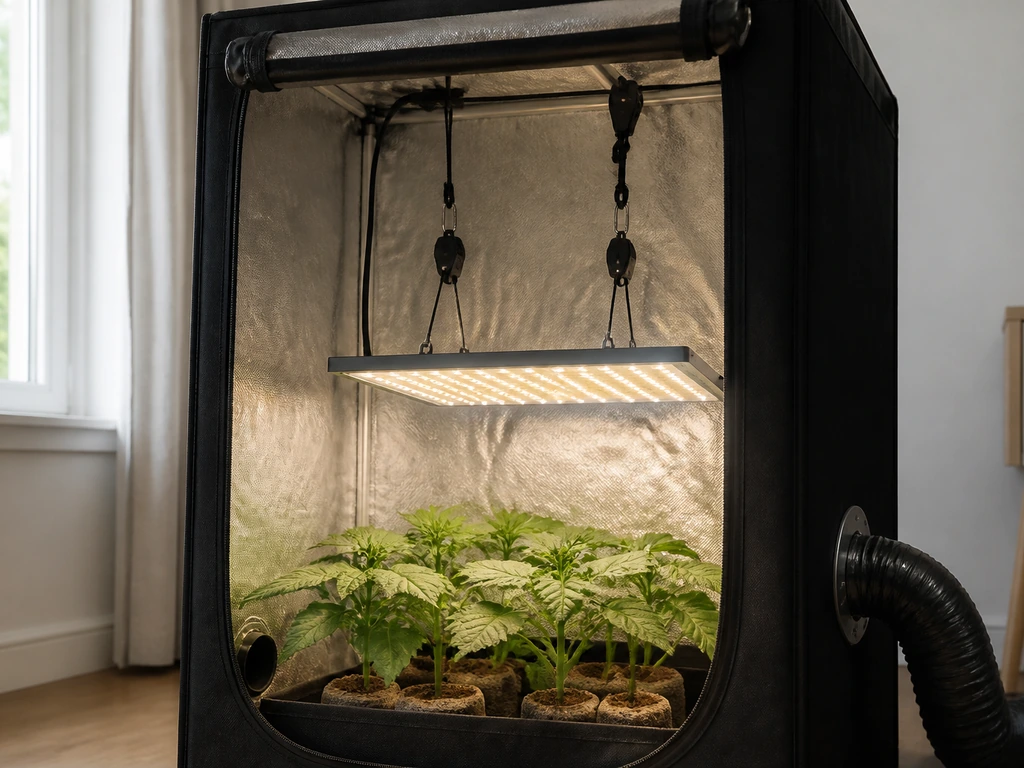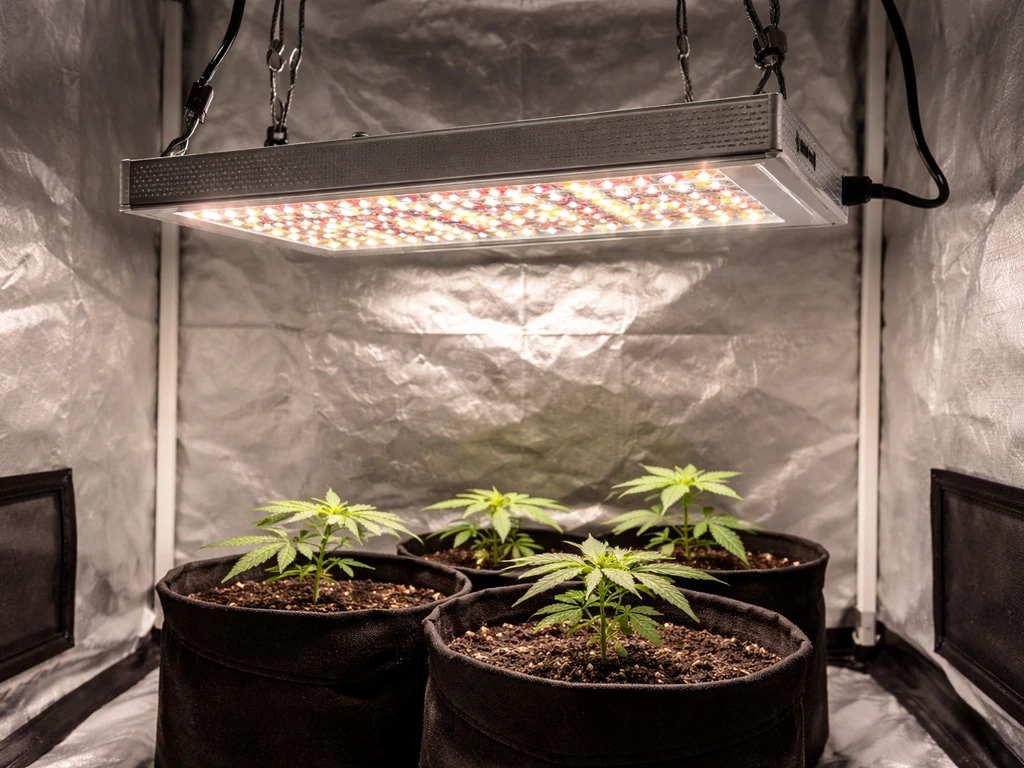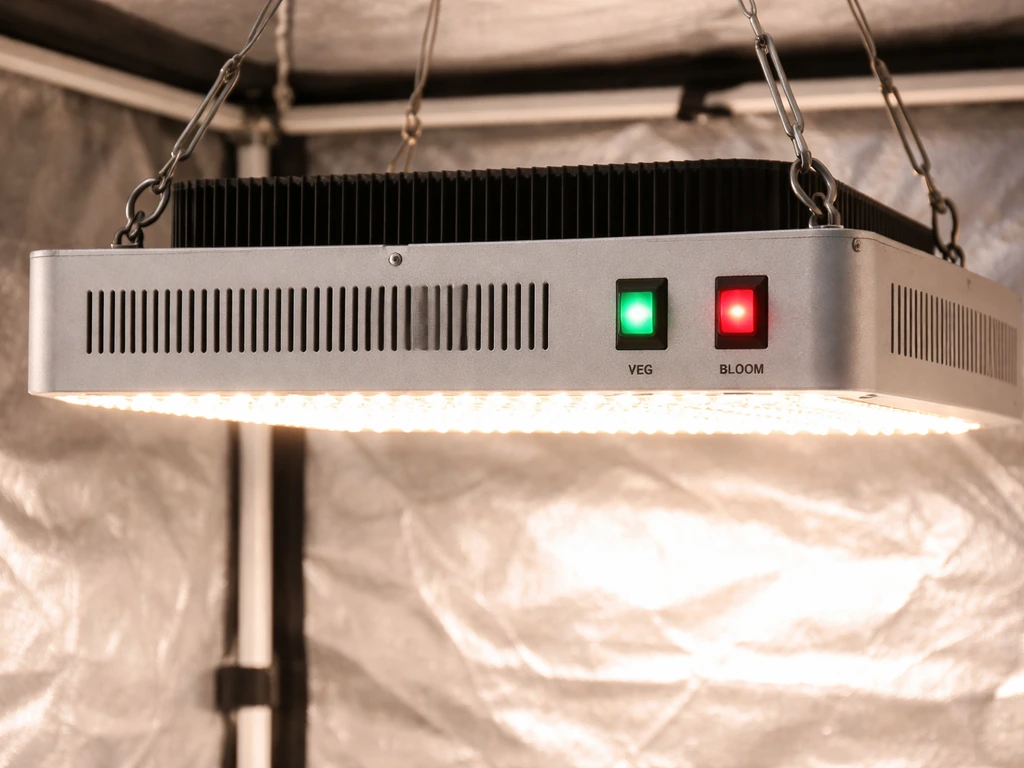
Sylvania's Gro-Lux LED E27 bulbs are worth a serious look if you want a purpose-built, screw-in grow bulb from a reputable lighting manufacturer rather than a generic white-label option. They are not high-wattage powerhouses for large tents, but for small-space growing, supplemental lighting, or dedicated photoperiod work, they perform reliably and their specs hold up to scrutiny. Here is exactly what you get, what you do not get, and which model fits which situation. The GRO-LUX LED E27 Far Red NB (0020970) has an official datasheet from the manufacturer that includes photosynthetic metrics as well as electrical and operating specifications GRO-LUX LED E27 Far Red NB (0020970) datasheet includes photosynthetic metrics and operating specs.
Sylvania Grow Light Bulb Review and Buying Guide

Marcus Caldwell
5 Apr 2026
What makes Sylvania Gro-Lux bulbs different
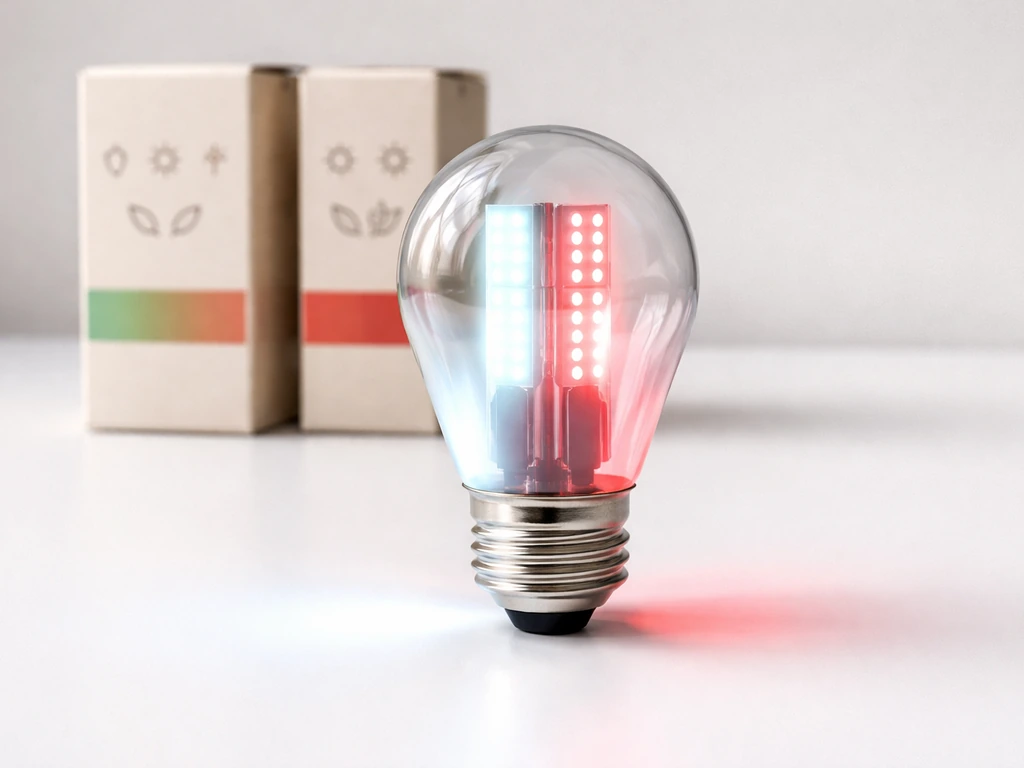
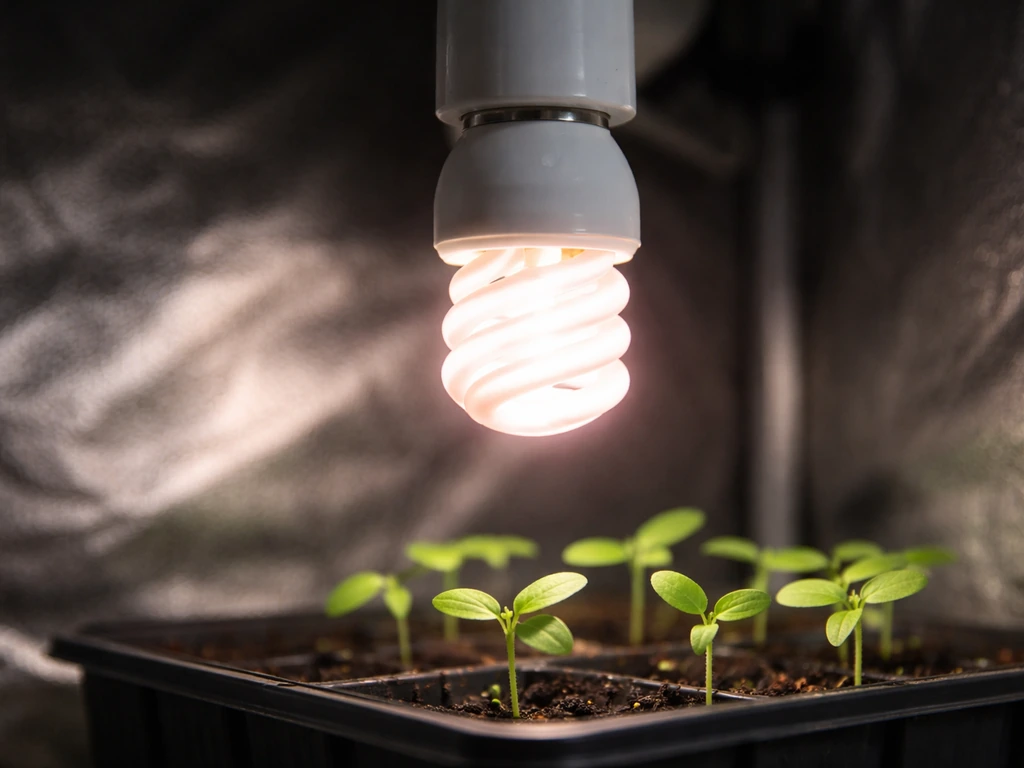
Sylvania positions the Gro-Lux E27 line specifically for photoperiodic horticulture, meaning these are not repurposed household LEDs with a green sticker on them. The line has three distinct variants: the Vegetative (item 0020965), the Flowering (item 0020966), and the Far Red NB (item 0020970). Each one is designed with a different spectral recipe for a different growth stage, and that stage-specific approach is the core selling point.
The Vegetative model uses a White plus Deep Red two-spectrum blend. That combination drives efficient chlorophyll A and B absorption during leafy growth without packing in heavy red that would push plants toward flowering prematurely. The Flowering model shifts the recipe to include White, Blue, Deep Red, and Far Red, giving you the red-heavy spectrum that triggers flowering responses and supports bud or fruit development. The Far Red NB variant is a supplemental bulb meant to work alongside the other two, not as a standalone solution.
Both the Vegetative and Flowering models share a blank" rel="noopener noreferrer">17W draw, an E27 (standard Edison screw) base, and a 115-degree beam angle. They run on 120 to 240V, so they work in North American and European fixtures without an adapter. IP44 ingress protection means they handle the humidity of a grow tent or greenhouse without issue, which is a practical detail that cheaper alternatives often skip.
Where these bulbs actually work well
The honest answer on use cases comes down to space and scale. At 17W and a PPFD of 13 µmol/s/m² at one meter (for the Vegetative model), a single Sylvania Gro-Lux bulb is not going to fill a 4x4 tent on its own. What it does well is cover a small footprint, typically a single plant or a modest seedling tray, at the right intensity without burning tender growth.
Seedlings and clones
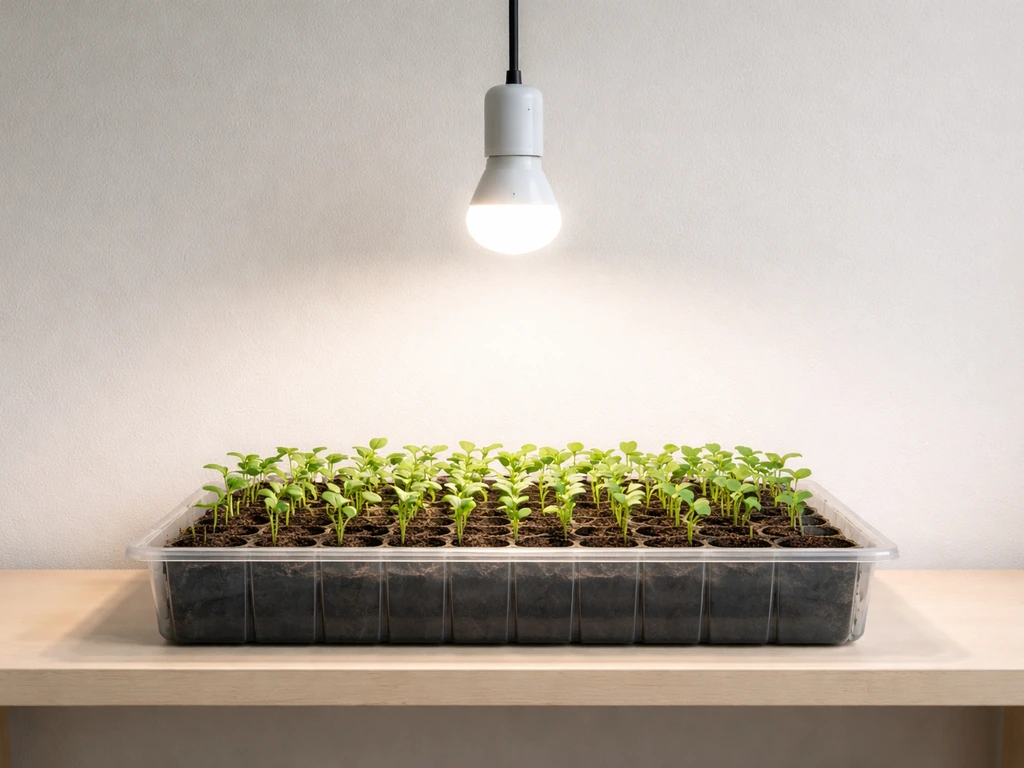
At the seedling stage, you want gentle, full-coverage light rather than brute intensity. A single Vegetative Gro-Lux E27 mounted 30 to 50 cm above a seedling tray delivers a soft, spectrally appropriate blue-white-red mix without the heat stress that higher-wattage HID or high-power LED panels can cause at close range. This is one of the better use cases for this bulb.
Vegetative growth
For the vegetative stage on one or two plants, the Vegetative model does its job. Its PAR output is rated at 39 µmol/s, and the 2.3 µmol/J efficacy is genuinely competitive for a screw-in LED in 2026. You would typically need two to four of these bulbs in a multi-socket fixture or a cluster mount to adequately cover a 60x60 cm canopy. Used as supplemental side lighting alongside a primary panel, a single bulb is useful for filling in shadow zones on bushy plants.
Flowering and bloom
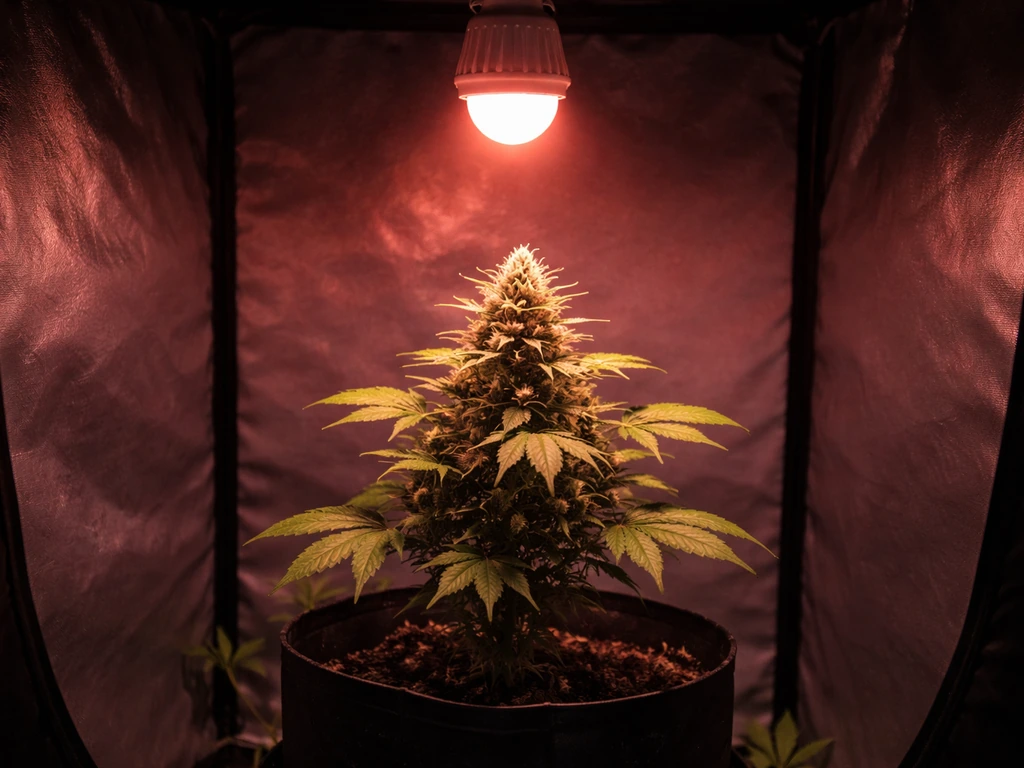
The Flowering model (0020966) has a lower PAR output at 31 µmol/s and a PPFD at one meter of 10 µmol/s/m², which is noticeably below the Vegetative model. The brochure also lists its efficacy at 1.8 µmol/J rather than 2.3 µmol/J. That difference matters if you are trying to maximize yields, but it is not unusual for flowering-spectrum LEDs to trade raw efficiency for spectral quality. For small hobby grows, one or two Flowering bulbs used as supplemental or side lighting during bloom is a reasonable approach, particularly when paired with a higher-output primary light.
If you are growing cannabis specifically, the spectrum design of the Flowering model aligns with what you want during that stage. For a deeper comparison across dedicated cannabis lighting options, the cannabis grow light reviews on this site cover higher-output alternatives worth considering alongside these bulbs.
Real-world performance: brightness, coverage, and heat
The datasheet PPFD numbers for the Gro-Lux E27 series are measured at one meter in open air, not inside a reflective tent. Inside a mylar-lined grow tent, you will typically see a meaningful bump in usable light due to reflection. Even so, the baseline PPFD values (13 µmol/s/m² for Vegetative, 10 µmol/s/m² for Flowering at one meter) are modest. Most plants want 200 to 400 µmol/s/m² at minimum during veg, and 400 to 800+ during bloom. A single bulb gets you nowhere near that, but a cluster of four to six bulbs in a compact array can reach workable veg-level intensities in a small space.
Heat output is a genuine strength here. At 17W, these bulbs run noticeably cooler than any HID option and cooler than most COB LEDs at comparable intensities. Touching the body of the bulb after an hour of operation, it is warm but not hot, and in a small tent with basic passive airflow, they do not meaningfully raise ambient temperature. That matters a lot for growers running tight spaces without dedicated cooling.
The 115-degree beam angle provides a wide spread for a single-point source, which means you get more even coverage across a canopy rather than a hot-spot center. At 30 cm mounting height, the beam illuminates roughly a 30 to 40 cm diameter circle at useful intensity. At 60 cm, coverage expands but intensity drops off, so there is a real trade-off to manage depending on your canopy size.
Build quality, lifespan, and compatibility
Sylvania rates the Gro-Lux E27 at 25,000 hours L70B50, meaning you can expect the bulb to maintain at least 70% of its initial lumen output for 25,000 hours before half of a production batch would be expected to fall below that threshold. For a grower running an 18/6 photoperiod during veg, that translates to roughly 4.6 years of continuous use before light output degrades significantly. Even at 12/12, you are looking at well over six years. That is a legitimate long-life claim, not marketing hype.
The E27 base is universally compatible with standard lamp sockets, pendant fixtures, spider adapters, and multi-socket grow light fixtures. There is no proprietary driver or ballast required, which is a meaningful advantage over HID-based alternatives. The 120-240V range means these work globally without voltage conversion. There is no dimming functionality built in, so if you need intensity control, you either need a dimmable driver in-line or you manage it through mounting height.
The IP44 rating handles splashing water from all directions, so normal grow-room humidity, misting, and spray-down cleaning are not a concern. Build materials feel solid for a screw-in LED, not flimsy, and the form factor is compact enough to fit in tight fixture arrangements without bulbs touching each other.
How Sylvania stacks up against the alternatives
Before spending money on any single bulb type, it is worth knowing where Sylvania sits in the broader market. The table below compares the Gro-Lux E27 Vegetative model against other common grow light approaches at similar or relevant scales.
| Light type | Wattage | PPFD at 1m (approx.) | Efficacy | Lifespan | Heat output | Best for |
|---|---|---|---|---|---|---|
| Sylvania Gro-Lux E27 Veg (0020965) | 17W | 13 µmol/s/m² | 2.3 µmol/J | 25,000 hrs | Very low | Single plant, seedlings, supplemental |
| Sylvania Gro-Lux E27 Flower (0020966) | 17W | 10 µmol/s/m² | 1.8 µmol/J | 25,000 hrs | Very low | Bloom stage, supplemental side lighting |
| 300W Dual Spectrum CFL | 300W | High (fixture-dependent) | Lower µmol/J | 6,000–10,000 hrs | Moderate-high | Medium tents, full-cycle growing |
| 315W CMH / CDM | 315W | High (fixture-dependent) | 1.9–2.0 µmol/J | 20,000 hrs | High | Full-cycle, 2x2 to 3x3 tents |
| Generic E27 LED grow bulb | 10–20W | Variable, often overstated | Often <1.5 µmol/J | 10,000–20,000 hrs | Low | Small spaces, supplemental |
The Sylvania Gro-Lux Vegetative model's 2.3 µmol/J efficacy is competitive with professional-grade options. It beats most generic E27 grow bulbs handily on efficiency. Where it falls short is raw output. A 300W dual spectrum CFL grow light delivers far more total photons into a medium-sized space, even if the per-watt efficiency is lower. If you are growing more than two plants, the CFL or a dedicated panel is probably the right primary fixture, with the Sylvania bulbs acting as supplemental sources.
The 315W CMH grow light is the most direct comparison for serious hobbyists who want full-cycle performance. CMH technology delivers a broad, natural-looking spectrum and solid PPFD coverage across a 2x2 to 3x3 footprint. The Sylvania Gro-Lux bulbs cannot match that for a full tent, but they are a fraction of the cost and heat burden. For someone growing a single photoperiod plant in a small cabinet or supplementing a larger setup, the Gro-Lux E27 wins on simplicity and running cost.
It is also worth briefly noting the CDM category. A CDM grow light shares some spectral qualities with CMH and delivers strong all-stage performance, but again requires a dedicated fixture and runs at higher wattage. The Sylvania Gro-Lux is a fundamentally different product category: low-wattage, plug-and-play, stage-specific.
If you want a multi-head adjustable LED option in the small-space category, the Casalux dual head plant grow light is a direct competitor worth comparing. It offers physical positioning flexibility that the Gro-Lux E27 lacks as a fixed-socket bulb.
For a broader look at CFL-based alternatives, the CFL grow light reviews here compare multiple compact fluorescent options that occupy a similar small-space niche, often at a lower purchase price though with shorter lifespans and higher heat.
Picking the right Gro-Lux bulb for your setup
The decision tree here is straightforward once you know your space and your plant stage.
- Single plant in a small cabinet or grow box (under 40x40 cm): one Vegetative bulb for the grow phase, then swap to the Flowering model when you flip photoperiod. Mount at 30 to 40 cm above the canopy.
- Two plants in a 60x60 cm tent: you need at least two to three bulbs per stage to get meaningful canopy coverage. Four bulbs in a cluster mount is more effective. Consider a multi-socket E27 spider adapter.
- Supplemental lighting for a larger tent: one Vegetative or Flowering bulb on the side of a plant or in an undercanopy position supplements a primary panel without adding significant heat or draw.
- Seedling tray coverage: one Vegetative bulb mounted 40 to 50 cm above a standard seedling tray works well for germination and early growth without bleaching tender seedlings.
- Photoperiod triggering (far red end-of-day): the Far Red NB (0020970) is intended for this function, used briefly at the end of the light cycle to accelerate flowering transition, not as a primary light source.
Mounting height matters more than most growers expect with these bulbs. The PPFD drops sharply with distance, so the difference between 30 cm and 60 cm mounting is significant. For vegetative plants where you want moderate intensity, 40 to 50 cm is a good starting point. For flowering, bring the Flowering model to 25 to 35 cm above the canopy to compensate for its lower output (10 µmol/s/m² at one meter). If you notice leaf curling or bleaching, raise the fixture. If plants are stretching toward the light, lower it or add more bulbs.
Setup tips and mistakes to avoid
The most common mistake with E27 grow bulbs in general is using a single bulb and expecting it to cover a full grow area. Sylvania's official PPFD numbers confirm what experienced growers already know: one 17W bulb covers a very small footprint at useful intensity. If your space is larger than roughly 30x30 cm, plan on multiple bulbs from the start.
A second common error is running the Flowering bulb during the vegetative stage because it is the only one on hand. The spectral shift toward red and far red in the Flowering model can push plants into early flowering responses, especially in light-sensitive strains or short-day species. Keep the Vegetative model for the veg stage and swap out deliberately when you are ready to flip.
- Use a reflective grow tent or line your cabinet with mylar. The 115-degree beam angle scatters light broadly, and without reflective walls, a significant portion of that output goes to waste on dark surfaces.
- Set your photoperiod using a timer, not manual switching. The Gro-Lux line is marketed explicitly for photoperiodic horticulture, meaning consistent on/off cycles matter. For veg, run 18 hours on and 6 off. For bloom, switch to 12/12.
- Do not use a standard dimmer switch with these bulbs. They are not designed for phase-cut dimming and can flicker or fail early. If you need intensity control, adjust mounting height instead.
- Check your fixture's watt rating before clustering multiple bulbs. Four 17W bulbs draw 68W total, which is well within most lamp sockets and adapters rated for 250W or more, but confirm before assuming.
- For the Far Red NB supplemental bulb, run it for 15 to 30 minutes at the end of the light cycle only. It is not a standalone grow light and should never replace the Vegetative or Flowering bulb as the primary source.
Finally, if you are comparing the Gro-Lux line to broader LED panel options and want a fuller picture of what is available in the dedicated grow light category, the CFL grow light reviews and other guides on this site can help you benchmark whether a screw-in LED approach or a full panel makes more sense for your specific space and plant count. The Sylvania Gro-Lux E27 bulbs earn their place as a well-engineered, stage-specific option for small growers. They are not the answer for a 4x4 tent, but for a compact grow or a smart supplemental role, they are among the more credible options in the screw-in LED category.
FAQ
Can I dim Sylvania Gro-Lux E27 bulbs to fine-tune intensity?
Yes, but only with external control. The bulbs themselves are not dimmable, so you need a dimmable E27 socket or an inline dimmable LED driver that is compatible with the bulb’s power draw and mains voltage. If your dimmer causes flicker, it can also disrupt tight photoperiod timing, so test with the exact dimmer and fixture you plan to use.
Do the PPFD numbers change inside a mylar grow tent, and how should I adjust?
For reflective tents, start with mounting height and target spacing rather than assuming the published one-meter PPFD translates directly. As a quick rule, if you had planned around 40 to 50 cm for veg in open air, reduce height by only a small amount (about 5 to 10 cm) and re-check plant response, because extra reflection plus lower height can lead to bleaching.
What’s the best way to position multiple bulbs to avoid uneven coverage?
Because these are low-watt screw-in bulbs, lensing and side-shadows matter. If you are using them as supplemental light, angle the bulbs or place multiple sockets around the canopy so each plant gets “head-on” coverage for at least half the day. A single central bulb usually creates a bright center and darker corners, which shows up as uneven leaf size.
Is it ever acceptable to overlap Vegetative and Flowering spectra during a transition?
The Vegetative and Flowering variants are intended for stage-specific photobiology, but you can also treat them as “spectrum knobs” if you are running a staged or mixed protocol. A practical approach for sensitive plants is to start veg with Vegetative only, then introduce Flowering for 3 to 7 days during the transition period before full use, instead of swapping overnight.
What timer setup works best for these stage-specific bulbs?
For general hobby use, use a light schedule that matches your photoperiod plan, but avoid stacking timers and controllers in a way that creates accidental on-off glitches at flip time. With long runtime bulbs, it is usually better to run a stable controller setting (for example, a single timer controlling the entire socket group) rather than multiple timers per bulb.
When should I replace the bulbs if my plants start underperforming?
These bulbs are designed as horticultural LEDs, but they do have a finite lifetime. If you are doing an 18/6 or 12/12 regimen, plan replacement based on performance drop, not just hours. A good real-world trigger is when you notice slower growth or persistent leaf curling that does not improve with height and spacing.
Can these bulbs be my main lights for a bigger tent?
No, not reliably. Since these are fixed-spectrum bulbs optimized for photoperiod stages, they are not a substitute for a full-spectrum, high-output LED panel when you need high PPFD across a larger canopy. They can work well as a small-area primary only if your target canopy is tiny, or as side lighting to balance shadows.
Are there any fixture or spacing considerations when I run multiple E27 grow bulbs close together?
Yes, especially if you are targeting fewer plants in a tight space. But check your fixture’s socket spacing and thermal clearance so bulbs do not touch or overheat under the same housing. Even though they run cool, tight clusters can still trap warmth around the base and reduce long-term reliability.
My plants look stressed, how do I troubleshoot without guessing?
The most common “problem looks” are mounting height errors or spectrum mismatch, not a defective bulb. If leaves bleach, raise the bulbs slightly or add bulbs to spread intensity. If plants stretch, lower the bulbs or increase the number of bulbs rather than switching to the Flowering model prematurely.