Quick verdict: who should buy this and who should skip it
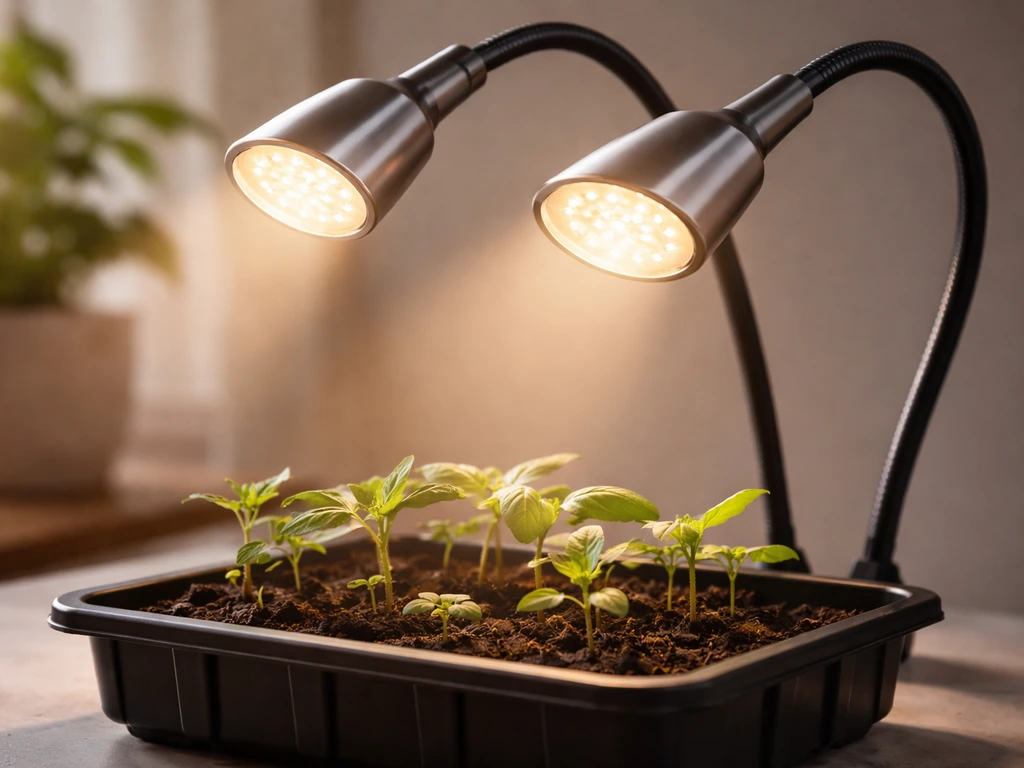
The Casalux Dual Head Plant Grow Light is a $9.99 Aldi impulse buy that makes sense for a very narrow use case: small desktop herb gardens, propagation trays, or seedling supplementation in a bright room. At 10 watts total across two flexible gooseneck heads and 40 LEDs, it is not a serious grow light for flowering plants, cannabis, or anything requiring high photosynthetic intensity. If you already know your plants need real PAR output and measured PPFD levels above 200 µmol/m²/s, stop here and look elsewhere. But if you want a tidy, timer-equipped accent light that keeps herbs alive on a windowsill through winter for under ten dollars, this is a perfectly decent option.
Which exact unit is being reviewed here
There are two distinct Aldi versions of this light, and the branding overlap causes real confusion when people search for reviews. The original unit was sold under the Gardenline house brand in February 2022 at $34.99 (product code 706124) and offered timer options of 3, 6, or 9 hours. The current version is sold under the Casalux house brand (product code 830252) at $9.99, with updated timer presets of 3, 9, or 12 hours and dimensions of 4.2 inches long by 3 inches wide by 27.5 inches tall. Both units share the same three-color-mode structure (blue, red, or blue and red combined), the same gooseneck dual-head design, and similar overall specs. This review focuses on the current Casalux-branded unit at $9.99, but nearly all observations apply to the older Gardenline version as well. The main practical differences are the price drop and the slightly different timer increments.
Build quality, design, and getting it set up
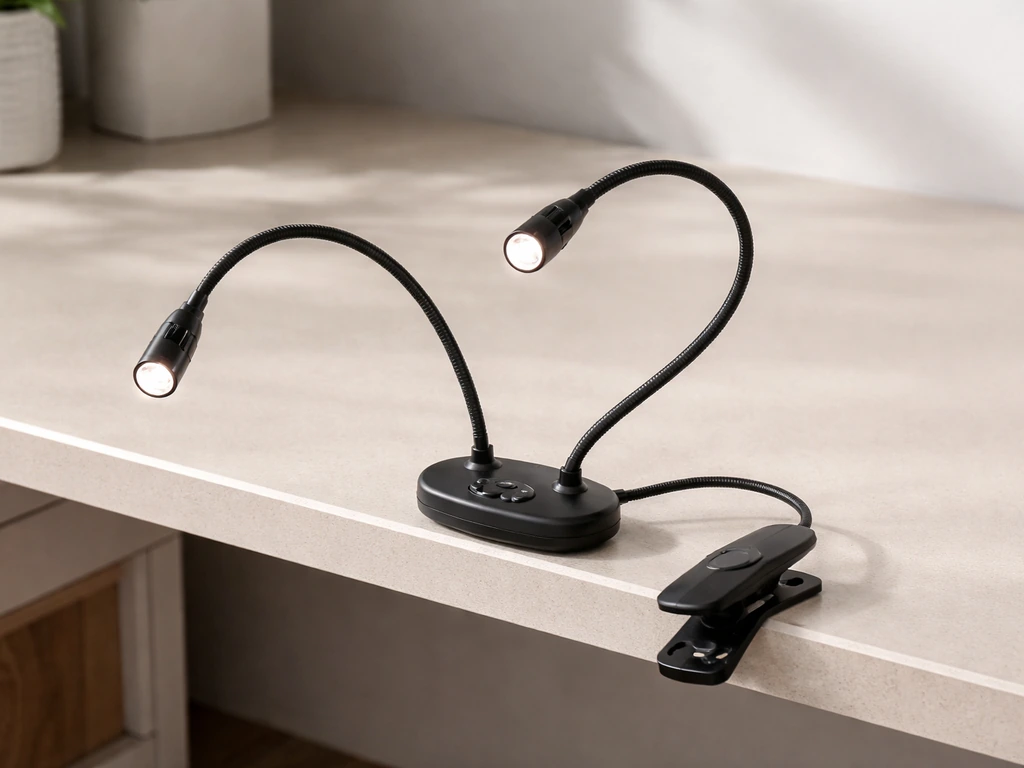
The unit is made in Taiwan and arrives as a single controller body with two flexible gooseneck arms, each ending in a small LED head. You can mount it using a clip or a freestanding base depending on what the retailer includes. The goosenecks are stiff enough to hold position once bent into place but flexible enough to redirect without much effort, which is genuinely useful for angling light toward plants at different heights or positions. The whole thing is lightweight and feels like the budget product it is: plastic construction throughout, no thermal management to speak of, and a controller that handles brightness, color mode, and timer in a fairly intuitive button layout.
Setup takes about two minutes. Clip or stand the base, bend the goosenecks to your preferred angles, plug in, and use the controller to set your mode and timer. The nine dimming levels give you more granular control than you might expect at this price point, and the auto ON/OFF timer is the single most useful feature here, since forgetting to manually cycle grow lights is extremely common for casual hobbyists.
Aldi's product listing promises "sufficient light" and describes the output as full-spectrum light supporting photosynthesis, strong leaves, and sturdy stems. That is vague by design. There are no published PPFD maps, no irradiance specs, no coverage area listed in square feet, and no color temperature or wattage breakdown on the product page itself. What the reviewer data confirms is 10 watts total and 40 LEDs across both heads, which works out to 0.25 watts per LED. That is a low-power density even by budget LED standards.
In practical terms, a 10-watt LED fixture at a typical mounting distance of 6 to 12 inches will deliver estimated PPFD values somewhere in the range of 50 to 150 µmol/m²/s over a very small footprint. That's enough to support basic photosynthesis and slow vegetative growth in low-light-tolerant plants, but it falls well short of the 200 to 400 µmol/m²/s range that most edible herbs prefer for active growth, and far below the 400 to 800+ µmol/m²/s range needed for flowering and fruiting. The manufacturer's claims are not technically false, but they are deliberately unspecific enough to avoid direct accountability on performance.
Spectrum breakdown and what it means for your plants
The three modes explained
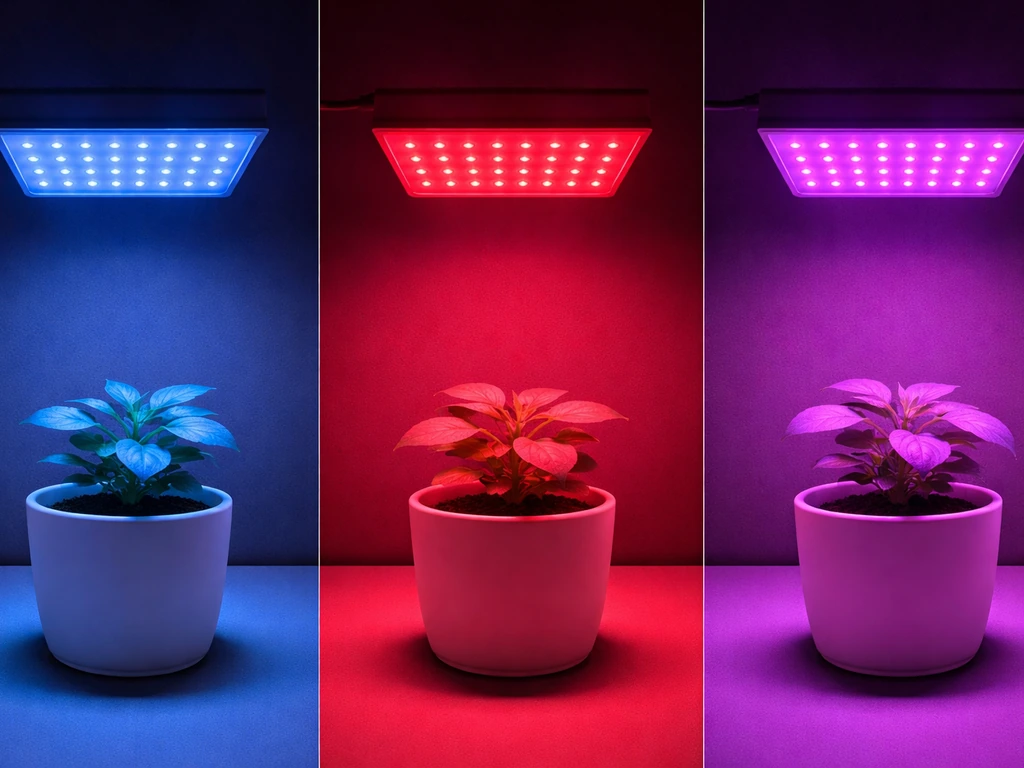
The light offers blue-only, red-only, and combined red-plus-blue modes. Blue light (roughly 400 to 500 nm) drives vegetative growth, compact leaf development, and root establishment. Red light (roughly 620 to 700 nm) is more associated with flowering, stem elongation, and fruiting responses. The combined red-and-blue mode is marketed as the all-purpose setting, and for general use, it is. Calling this "full spectrum" is a stretch: there is no green channel, no far-red, and no white or broad-spectrum component. Real full-spectrum grow lights include the full visible range plus sometimes UV and far-red. This is a two-channel LED array, not a true broad-spectrum unit.
For seedlings and early vegetative growth in low-light plants like pothos, snake plants, herbs such as mint or basil in early stages, and propagation cuttings, the blue or combined mode at close range (4 to 6 inches) provides adequate supplemental light. Plants should show normal leaf development without stretching, assuming they are also getting some ambient light from nearby windows. Do not expect accelerated vegetative growth comparable to a purpose-built horticultural LED.
Flowering and fruiting: realistic expectations
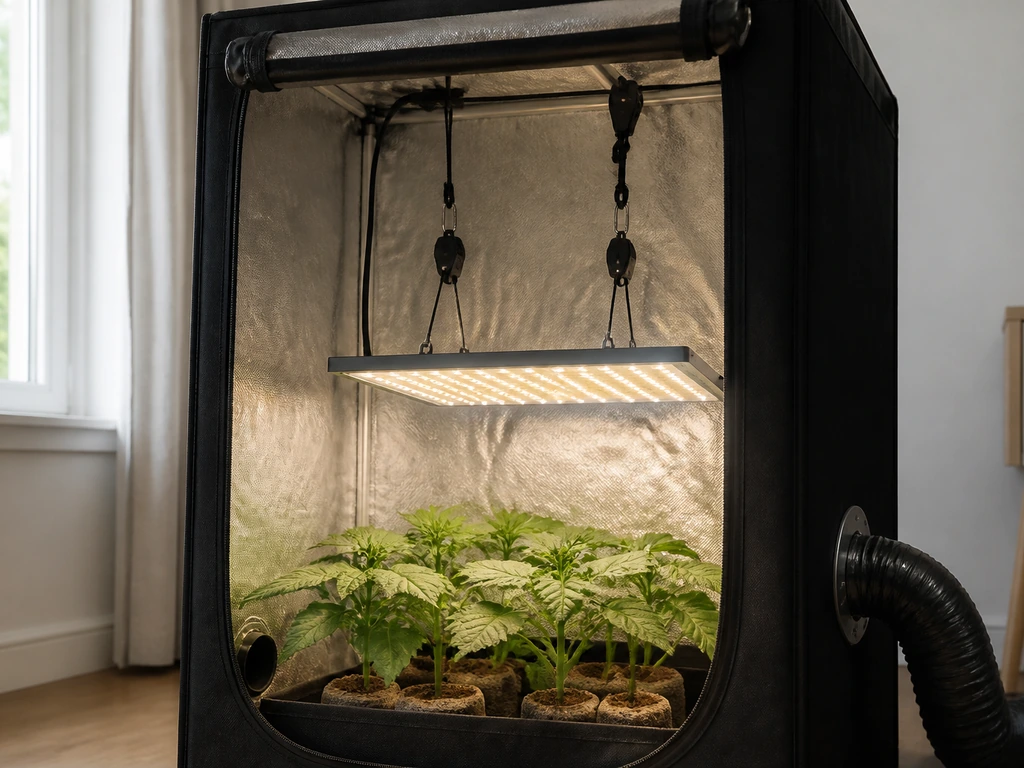
This light is not appropriate as a primary source for flowering plants. Tomatoes, peppers, cannabis, and fruiting herbs need sustained high PPFD and often specific photoperiod management that a 10-watt fixture cannot support on its own. If you're evaluating serious flowering options, the cannabis grow light reviews on this site cover units built for that intensity range. The Casalux can be used as supplemental side lighting for lower portions of a canopy, but it should not be the primary light source for any plant that flowers or fruits.
Plant types, grow space size, and the dual-head layout
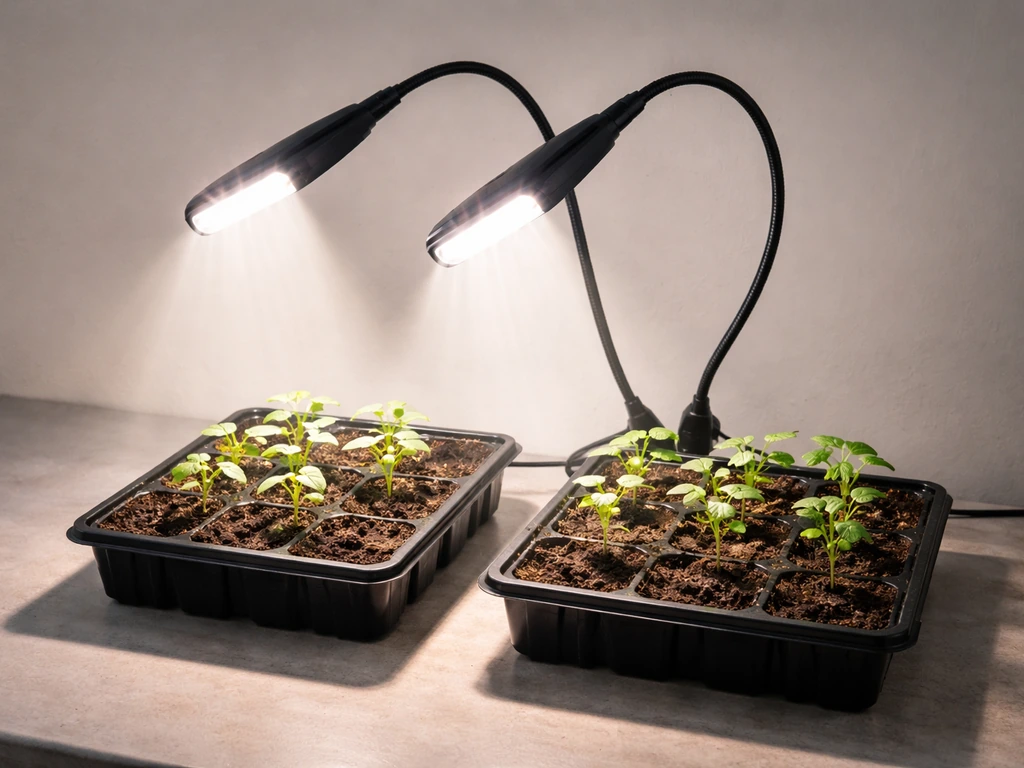
The dual-head design is the most practically useful feature of this fixture. Two independently positionable gooseneck arms mean you can direct light at two separate plant clusters, cover both sides of a single tall plant, or angle one head downward onto a tray while the other illuminates cuttings at a different height. This makes it more flexible than a single-head clip lamp for uneven canopies or mixed plant setups.
That said, effective coverage per head is small. Each LED array is compact, and at 6 inches, each head likely covers a usable footprint of roughly 4 to 6 inches in diameter. Total usable coverage for both heads combined is probably under one square foot at close range. For context, a well-planted 4-inch pot or a small seedling tray fits reasonably within that zone, but a 2x2 foot grow tent absolutely does not.
| Use Case | Suitable? | Recommended Mode | Ideal Mounting Height |
|---|
| Seedling tray (small, 6-10 plants) | Yes, as primary | Blue or combined | 4–6 inches |
| Herb pot (single, low-light herbs) | Yes, as primary | Combined (red+blue) | 6–10 inches |
| Propagation cuttings | Yes, supplemental or primary | Blue | 4–6 inches |
| Flowering houseplants (supplemental) | Marginal, supplemental only | Combined (red+blue) | 6–8 inches |
| Vegetable garden (primary) | No | N/A | N/A |
| 2x2 ft or larger grow tent | No | N/A | N/A |
Power draw, heat output, and efficiency
At 10 watts, the Casalux pulls negligible electricity. Running it 12 hours a day costs roughly $0.50 to $0.70 per month depending on your local rate, which is a genuine advantage for casual users watching their power bill. Heat output is correspondingly minimal: the fixture does not get meaningfully warm to the touch, which also means there is no risk of heat stress even when mounted very close to delicate seedlings.
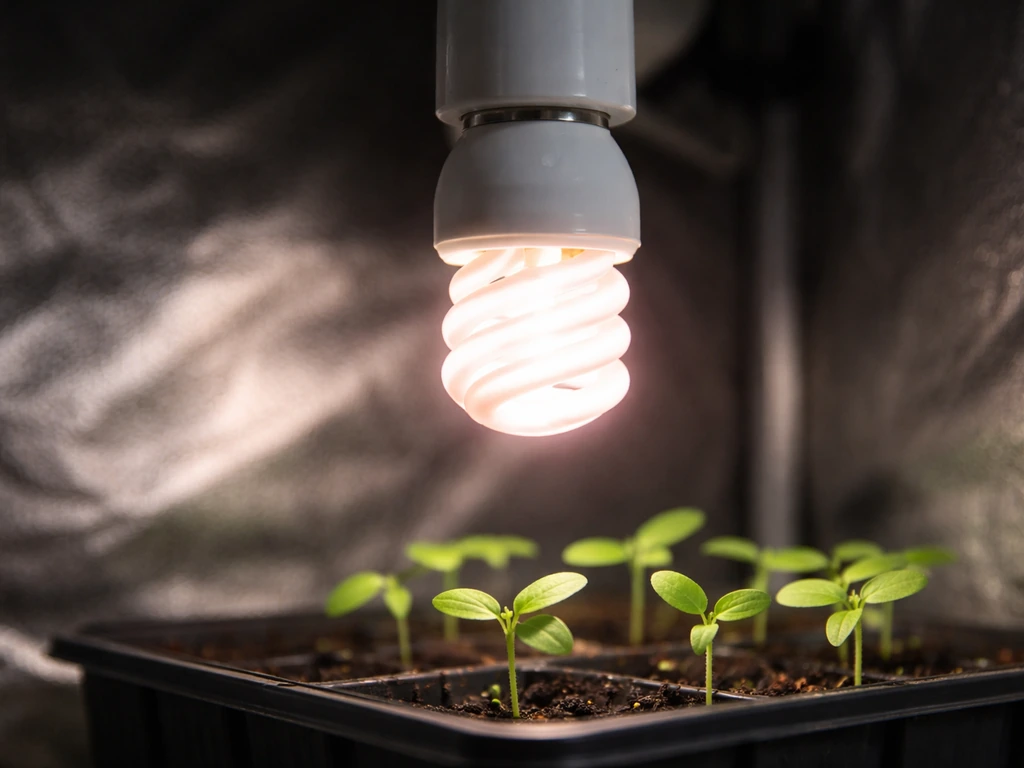
Efficiency in terms of photons delivered per watt is harder to assess without manufacturer-published efficacy data (lumens per watt or µmol/J), and Aldi provides none. Budget two-channel LED arrays at this price point typically land in the 0.5 to 1.0 µmol/J range, well below the 1.5 to 2.5 µmol/J range of quality horticultural LEDs. For comparison, purpose-built CFL grow lights in the same price class sometimes outperform cheap LED arrays on raw PAR output per watt, a point covered in detail in the CFL grow light reviews on this site. The Casalux wins on convenience and timer integration, not on raw photon efficiency.
How it compares to other options at this price and beyond
At $9.99, the Casalux is competing against basic clip-on LED desk lamps repurposed as grow lights, simple single-bulb fixtures, and the occasional markdown fluorescent option. Within that category, the built-in timer, nine dimming levels, and dual-head flexibility make it stand out. Most $10 clip lights offer none of those features.
Moving up the price ladder, the comparisons get less flattering. A purpose-built 300w dual spectrum CFL grow light delivers dramatically more usable intensity and real spectral breadth, making it a completely different class of product despite superficial overlap in the "dual spectrum" marketing language. Even stepping up to a quality replacement bulb in an existing fixture, like options reviewed in the Sylvania grow light bulb review, will outperform this unit on raw output for plants that need serious light intensity.
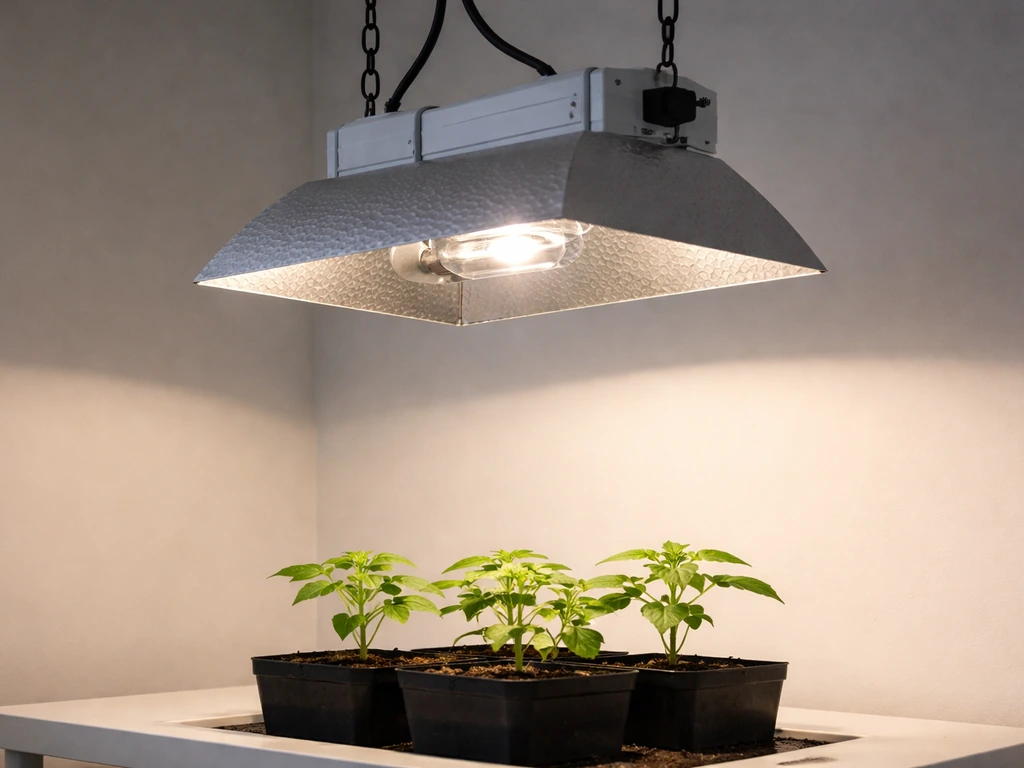
For growers who want the best photon output per dollar in a compact discharge format, ceramic metal halide options are worth considering. The CDM grow light review and the 315w CMH grow light review both cover fixtures that cost significantly more upfront but deliver spectrum quality and intensity that make the Casalux look like a toy by comparison. Those are the right tools for anyone growing edibles seriously.
| Light | Wattage | Approx. Price | Best Use | Timer Included |
|---|
| Casalux Dual Head (Aldi) | 10W | $9.99 | Seedlings, herbs, propagation | Yes |
| Sylvania Grow Bulb (in fixture) | ~15–23W | $10–$20 | Small herb/veg supplemental | No |
| 300W Dual Spectrum CFL | ~300W | $50–$120 | Full-cycle veg and flower | No |
| 315W CMH | 315W | $150–$300+ | Full-cycle high-output | No |
Common issues, practical tips, and what to do next
Issues people run into
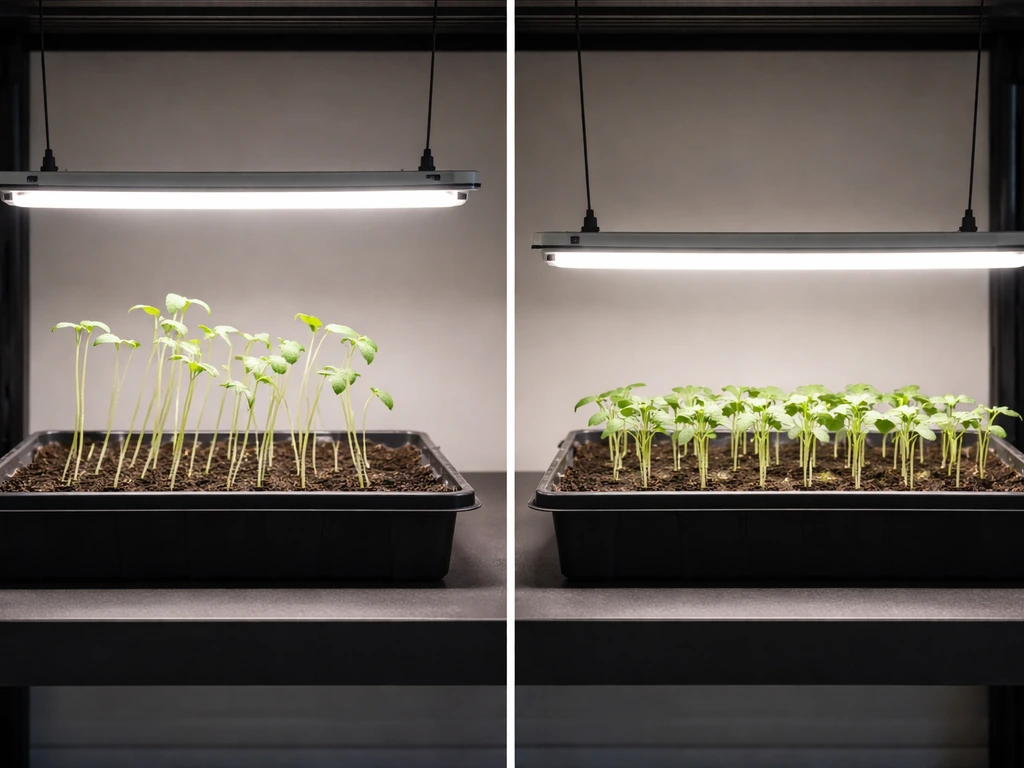
- Plants stretching or leaning: mounting height is too far. Move the heads to within 4 to 6 inches for seedlings, 6 to 10 inches for established small plants.
- No visible growth improvement: the fixture may simply not be producing enough PPFD for the plant species. Light-hungry plants like basil, tomatoes, or chili peppers need significantly more intensity.
- Timer not holding settings after unplugging: this is common in budget timer circuits. Re-enter your settings after any power interruption.
- One gooseneck not holding position: gooseneck fatigue happens with repeated bending. Set the angle once and leave it rather than adjusting frequently.
- Purple/pink light looks odd: this is normal for red-plus-blue LED arrays. The color rendering is poor for visual inspection but the wavelengths are targeting plant photoreceptors, not human eyes.
Best settings for common situations
- Seedlings and cuttings: blue mode or combined mode, maximum brightness, 4 to 6 inches above the canopy, 16-hour timer.
- Established herbs in low-light rooms: combined mode, 70 to 100% brightness, 12 to 14-hour timer, 6 to 10 inches above the plant tops.
- Flowering houseplants (supplemental only): combined mode at full brightness, 8 to 10 inches, 12-hour timer to mimic natural day length.
- Propagation tray: blue mode, full brightness, 4 to 6 inches, 18-hour timer for maximum rooting stimulus.
Who should buy it, and who should not
Buy the Casalux Dual Head if you grow herbs or low-light houseplants in a small space, want timer automation without spending much, or need a compact supplemental light for seedling trays. At $9.99, the risk is low and the timer feature alone is worth the price for forgetful gardeners. Skip it if you're growing any plant that actively flowers or fruits, if your grow space is larger than about one square foot, or if you need measurable PAR output data to plan a serious indoor grow. For anything beyond the most casual use case, spending $40 to $80 on a purpose-built horticultural LED panel will serve you far better. And if you're evaluating options specifically for more intensive plant categories, the cannabis grow light reviews section covers tested, PPFD-mapped units that are worth the investment.