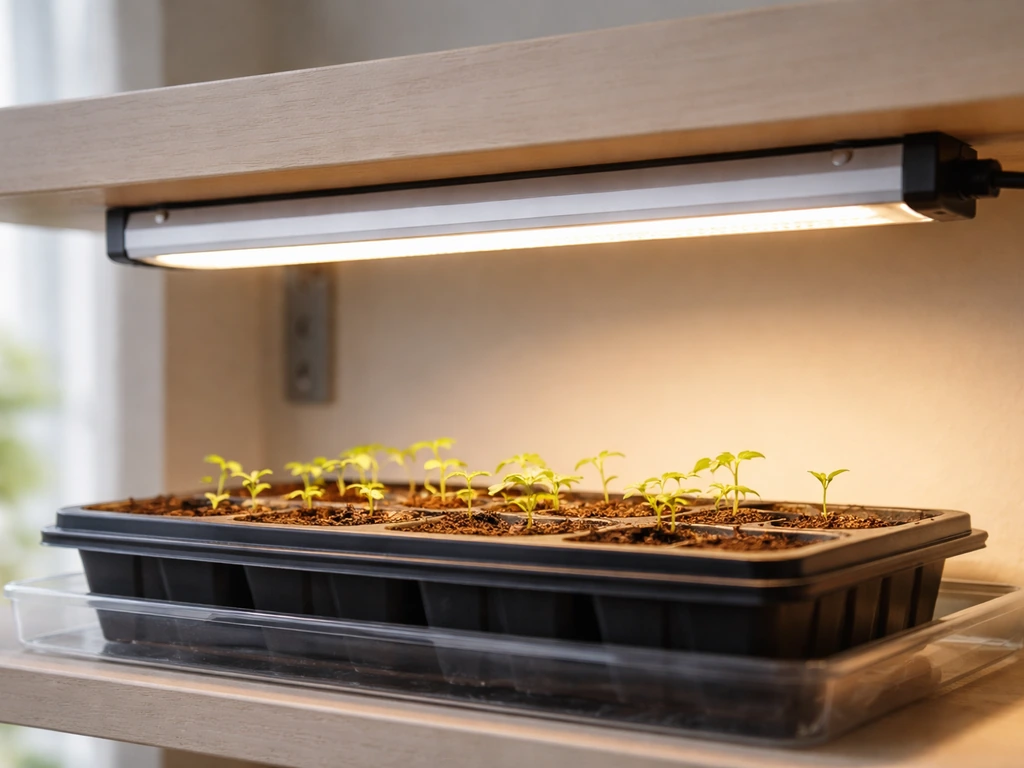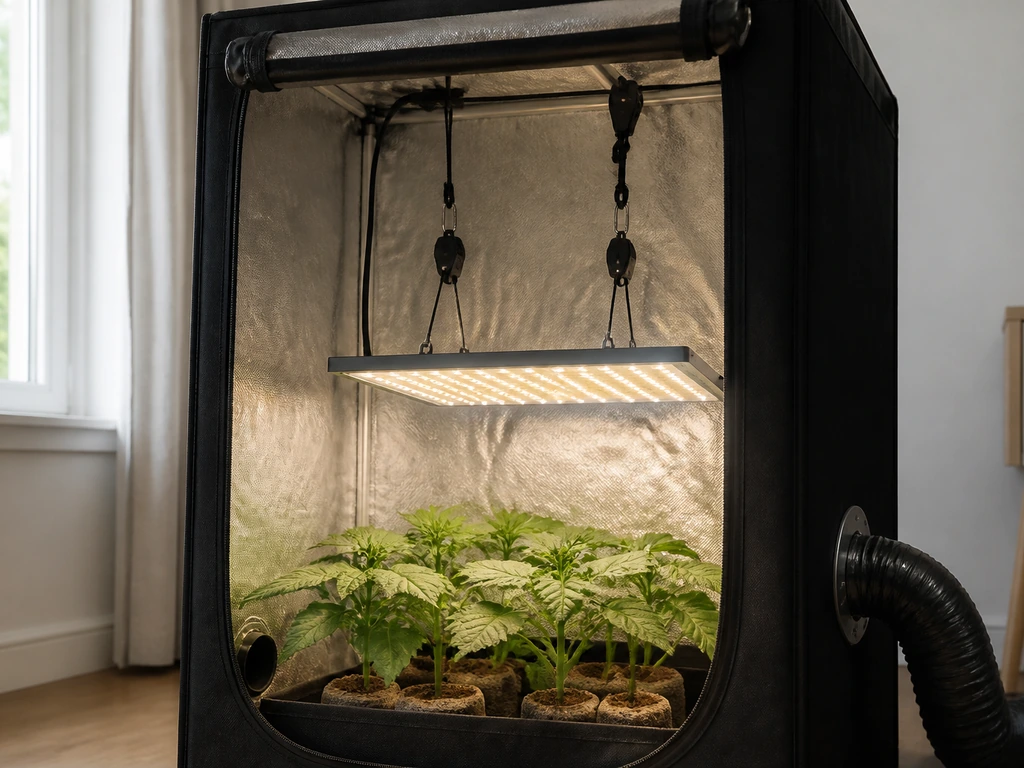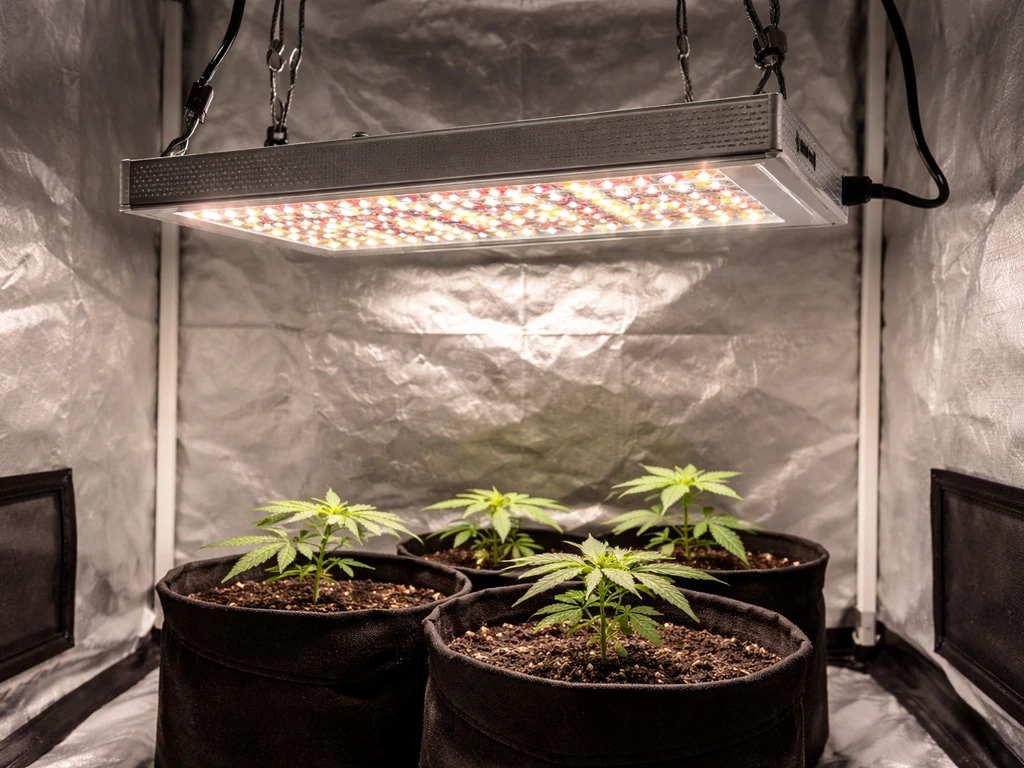
Ferry-Morse makes two grow lights worth knowing about: a T5 fluorescent fixture aimed squarely at seed starting, and a small 20W LED panel (SKU KLED-6W) designed for hanging or undershelf use. Neither is a powerhouse, and that's not really the point. If you're wondering whether one of these is worth your money today, the short answer depends heavily on what you're trying to grow and how much space you're working with. Let me walk you through both, with real numbers where they exist, so you can make a clear call.
Ferry Morse Grow Light Review: Models, PPFD, Coverage

Marcus Caldwell
4 Apr 2026
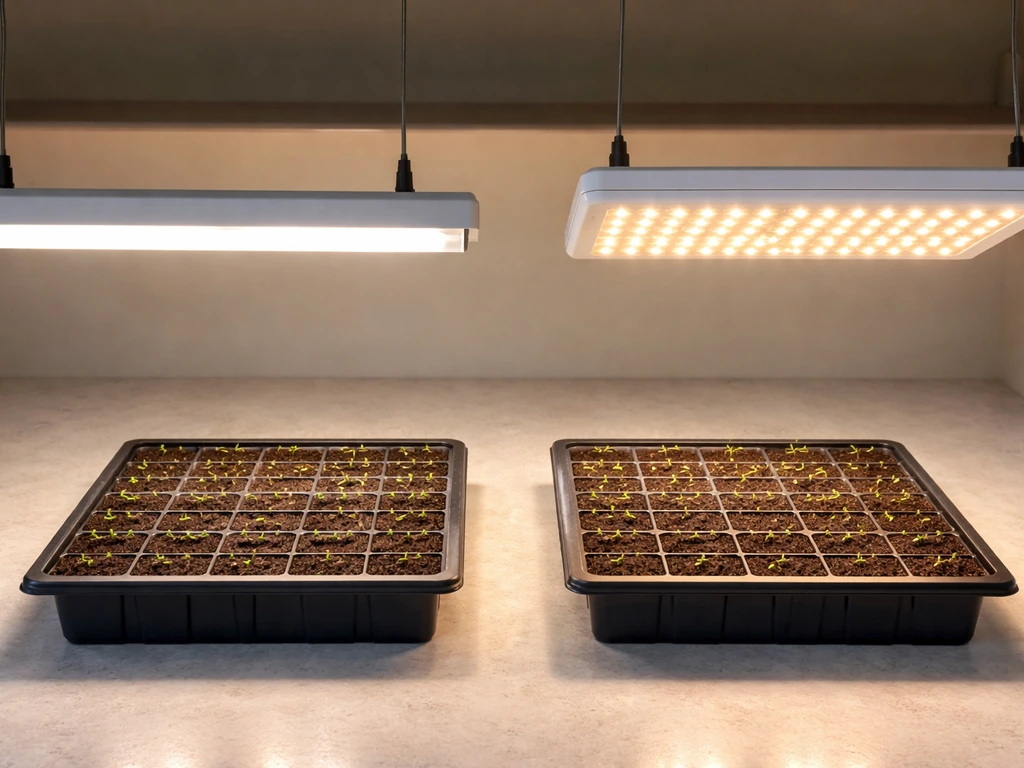
The Ferry-Morse grow light lineup: what you're actually looking at
Ferry-Morse is better known as a seed company than a lighting brand, which tells you something about where these fixtures sit in the market. They sell two distinct products under the grow light banner, and it's easy to confuse them if you're shopping quickly.
The T5 fluorescent fixture
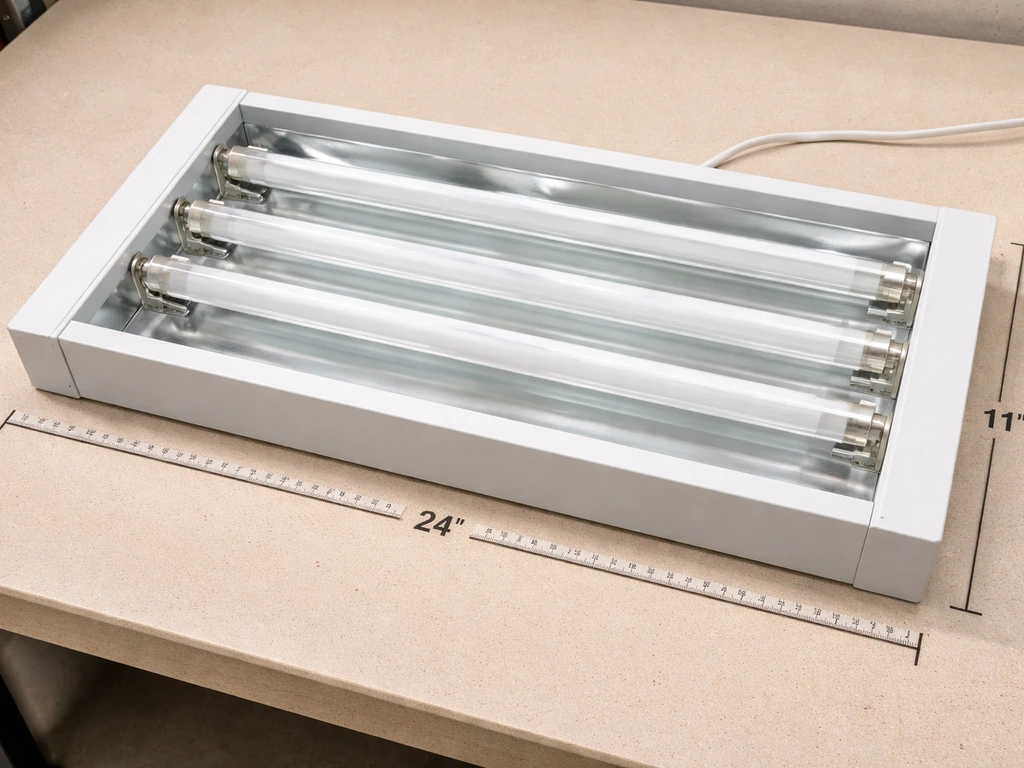
The flagship option for most Ferry-Morse shoppers is the Indoor Grow Light Fixture with T5 Bulb. It measures 24 x 11 inches, retails for $45.00 directly from Ferry-Morse, and comes with a 6400K full-daylight-spectrum T5 bulb rated at 1,100 initial lumens and 10,000 hours of lamp life. The 24-watt bulb is marketed as delivering 20% more light intensity than comparable fluorescent lights, though Ferry-Morse doesn't publish a PAR or PPFD figure to back that claim. What 6400K means in plain terms: it's a cool, blue-leaning white that mimics midday daylight and is genuinely well-suited to vegetative growth and seed germination. It's not a spectrum optimized for flowering.
The KLED-6W LED panel
The second option is the Hanging or Undershelf Indoor LED Grow Light, model KLED-6W. Rural King lists the KLED under-shelf grow light dimensions as 15 3/4" L x 6" W x 3/4" H model KLED-6W.
Despite the SKU suggesting 6 watts, the fixture is actually a 20-watt unit. It packs a mixed LED array: 55 white LEDs (6000-6500K), 57 warm LEDs (3000-3200K), 5 red LEDs (620-640 nm), and 6 blue LEDs (400-470 nm). That's a broader spectrum than the T5 alone, covering both the blue/vegetative and red/flowering wavelength ranges. The KLED-6W was priced at $41.
50 at the time of this review but was listed as sold out on the Ferry-Morse site, which is worth noting if you're trying to buy one today. It carries FCC and ETL certifications, has a built-in timer (2, 4, or 8-hour settings), and supports four brightness levels: 25%, 50%, 75%, and 100%.
| Feature | T5 Fluorescent Fixture | KLED-6W LED Panel |
|---|---|---|
| Price | $45.00 | $41.50 (sold out) |
| Wattage | 24W | 20W |
| Spectrum | 6400K full daylight | Mixed: 6000-6500K white, 3000-3200K warm, 620-640nm red, 400-470nm blue |
| Dimensions | 24 x 11 in | Not specified |
| Lumen output | 1,100 initial lumens | Not published |
| Lamp life | 10,000 hours | Not specified |
| Timer built-in | No | Yes (2/4/8 hr) |
| Dimming | No | Yes (25/50/75/100%) |
| Certifications | Not specified | FCC, ETL |
| Best use case | Seed starting, seedlings | Seedlings, herbs, small houseplants |
Coverage and intensity: what the numbers actually tell you
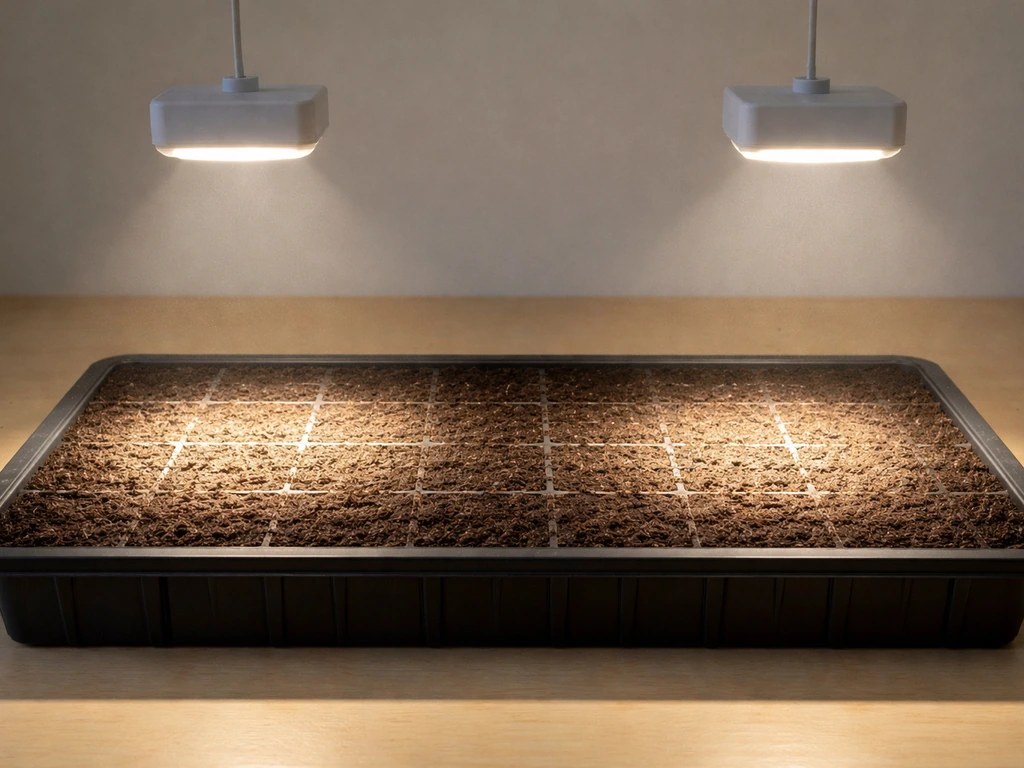
Ferry-Morse does not publish PPFD maps for either product, which is one of the more honest criticisms you can level at the brand. Without manufacturer PPFD data, you have to work backward from what's known. The T5 fixture puts out 1,100 lumens from a 24W bulb over a 24 x 11-inch footprint. For context, seed starting typically needs around 200-400 µmol/m²/s (PPFD), and a standard T5 HO bulb at 2-4 inches above a flat tray can usually hit that range. The Ferry-Morse fixture is close in spec to those standard T5 HO units, so it's reasonable to expect adequate seedling-stage light intensity when positioned correctly (2-4 inches from the canopy).
The 20W KLED-6W is a lower-output fixture by any metric. At 20 watts with no published lumen or PPFD figure, it's best understood as a supplemental or close-range light rather than a primary grow light for anything beyond small herb trays or a single pot of basil. Push it to 100% brightness and hang it 6-8 inches above a small tray, and you'll get usable light for seedlings. Ask it to cover a 2x2-foot area at 18 inches, and you'll be disappointed. Light intensity drops with the square of distance (the blank" rel="noopener noreferrer">inverse square law), and a 20W LED simply doesn't have the photon budget to compensate.
For comparison: purpose-built LED grow lights from brands like Mars Hydro are engineered specifically around PPFD output and coverage footprints at measured hanging heights. When you look at something like the Mars Hydro grow light review, you'll see how dramatically the metrics differ for products designed from the ground up as grow lights rather than as seed-starting accessories. That context matters when you're sizing up whether the Ferry-Morse products meet your actual needs.
Build quality, design, and daily usability
The T5 fixture has the build quality you'd expect from a $45 seed-starting accessory: plastic housing, lightweight, and functional without being impressive. It's designed to sit on a shelf or hang above a flat tray, and it does that job without complaint. The fixture doesn't have a fan (T5 fluorescents don't generate enough heat to need one), which keeps things quiet. Heat output is low enough that you can run it close to seedling trays without scorching leaves, which is actually one of the T5's practical advantages over some LED panels.
The KLED-6W is similarly light in construction, but it earns credit for the built-in timer and dimming controls, which you genuinely don't expect at this price point. Having a 2/4/8-hour timer on the fixture itself means you don't need a separate outlet timer for basic photoperiod management. The ETL certification is a meaningful signal that it passed minimum electrical safety testing, which not every budget fixture can claim. That said, the LED driver and overall construction feel like consumer-grade rather than horticulture-grade components.
Neither fixture is going to last a decade of hard use in a humid grow tent. These are products designed for kitchen-counter herb gardens and seed-starting trays in a spare room, and they look and feel like it. If you want something with more robust construction at a similar or slightly higher price, the Holland Star grow light review covers a unit with comparable approachability but a more dedicated horticultural design.
What actually grows well under these lights
Seedlings and germination
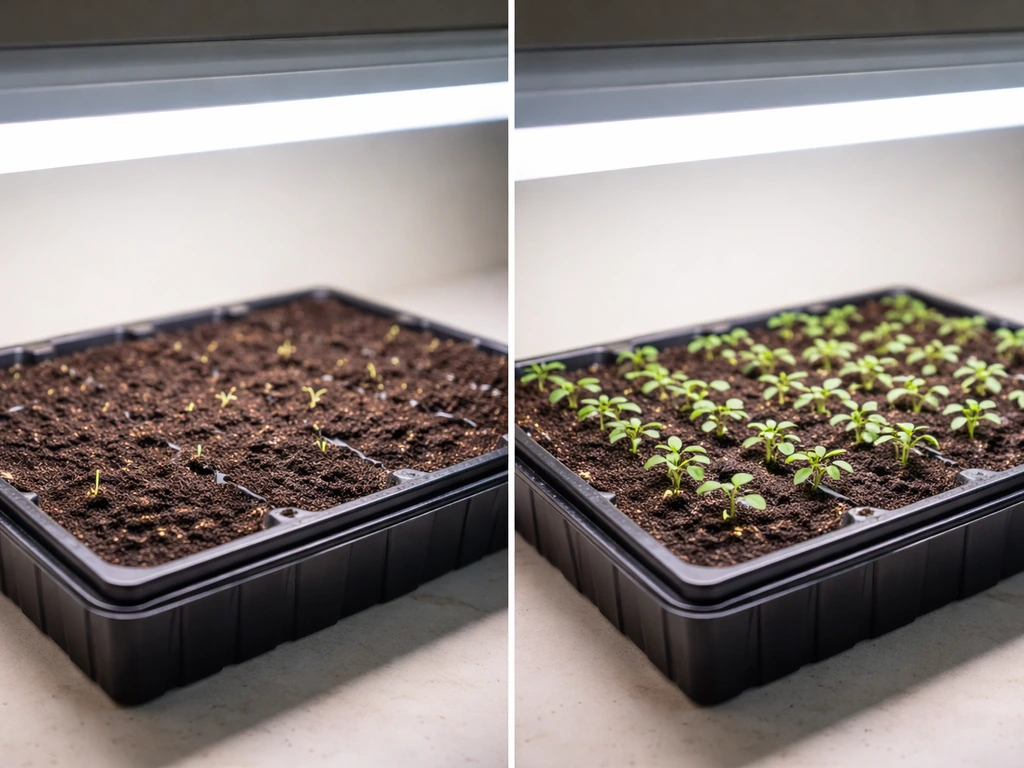
This is where the T5 fixture genuinely earns its keep. The 6400K spectrum is appropriate for germination and early vegetative growth, and the 24 x 11-inch footprint fits a standard 1020 seed tray almost perfectly. Run it 2-4 inches above the tray for 14-16 hours per day and you'll get compact, healthy seedlings with minimal stretching (etiolation). Tomatoes, peppers, herbs, and annual flowers all do well at this stage. The T5 is a legitimate tool for this specific job.
Vegetative growth
The T5 can support early vegetative growth for small plants, but it loses steam quickly as plants get larger and develop more leaf area to feed. Once transplants reach 4-6 inches tall and start competing for light, the 1,100-lumen output starts showing its limits. You'll see slower growth rates and some stretching if you try to push plants through a full vegetative cycle under this fixture alone. It's a transitional light, not a full-cycle one.
Flowering and fruiting
Don't count on either Ferry-Morse fixture for flowering or fruiting. The T5's 6400K spectrum lacks the red wavelengths that trigger and support bloom. The KLED-6W does include red LEDs (620-640 nm), which is the right wavelength range for flowering, but the sheer output is too low to drive meaningful bud development or fruit set on most crops. These lights are not designed for that purpose, and using them for it will result in weak, light-starved plants. If flowering crops are your goal, look at purpose-built LED panels with verified PPFD outputs. The Mars Hydro TS 1000W LED grow light review is a good benchmark for what flowering-capable light intensity actually looks like in a beginner-accessible package.
Herbs and compact houseplants
Low-light herbs like mint, parsley, and chives can do reasonably well under the KLED-6W at close range (6-10 inches) on full brightness. Basil needs more light than people expect and will show it by producing smaller leaves and slower growth under these fixtures. Succulents and low-light tropicals are fine candidates for the KLED-6W as a supplemental light source.
Value for money: what you're paying for
At $45 for the T5 fixture, the value proposition is straightforward for seed starting: you get a correctly specced, appropriately sized fluorescent fixture that will reliably start seeds for multiple seasons. The bulb is rated for 10,000 hours, so at 16 hours per day you're looking at roughly 625 days of runtime before replacement, and Ferry-Morse sells replacement bulbs separately. Operating cost on 24 watts is trivial: at a U.S. average electricity rate of around $0.16/kWh, running it 16 hours a day costs about $0.06 per day, or roughly $1.75 per month.
The KLED-6W at $41.50 is similarly low-cost to operate: 20 watts at 16 hours per day runs about $0.05 per day. The value concern isn't electricity, it's capability per dollar. At $41.50, you're in a price range where purpose-built LED grow lights with actual PPFD specs start to appear. A budget LED panel from a horticulture-focused brand at $50-70 will typically outperform the KLED-6W in raw output and coverage by a meaningful margin. The KLED-6W's value comes from its convenience features (timer, dimming, ETL-certified) and its seed-company branding, not from lighting performance.
For perspective on how budget grow lights from non-specialist brands compare, the Harbor Freight grow light review covers similar territory: consumer-grade fixtures sold by brands not primarily known for horticulture lighting, and the trade-offs are comparable. Neither Ferry-Morse nor Harbor Freight is where you go for maximum photon output per dollar.
Setting these up to get the best results
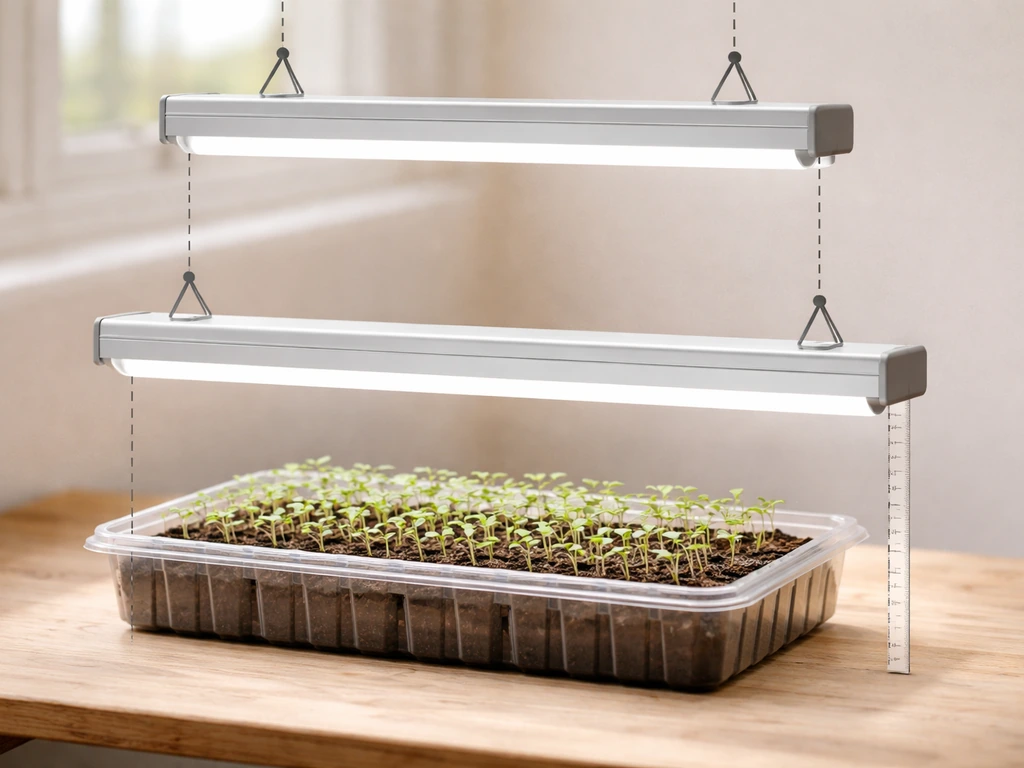
Both fixtures are straightforward to set up, but a few practical details matter for getting useful results.
- Hanging height for the T5: keep it 2-4 inches above seedling trays for maximum intensity. Moving it to 6 inches drops effective intensity significantly. Adjust upward only as plants grow taller.
- Hanging height for the KLED-6W: 6-10 inches for seedlings, 4-6 inches for low-light herbs. Don't expect this fixture to perform at 12+ inches.
- Reflective surfaces: both lights benefit substantially from reflective walls or a simple reflective mylar panel behind the setup. A white or silver reflective surface can recover 20-30% of light that would otherwise scatter and be lost.
- Timer use: the KLED-6W's built-in timer is convenient, but if you're using the T5 fixture you'll want a standard outlet timer. Seedlings do well on 14-16 hours of light per day.
- Spacing: the T5 footprint (24 x 11 in) is designed for a single standard 1020 tray. Don't try to stretch it to cover multiple trays side by side without adding a second fixture.
- Controller compatibility: the KLED-6W's dimming is built into the unit and is not compatible with external dimmers or smart controllers. What you see is what you get.
One setup note specific to the T5: because it's a fluorescent fixture and not an LED panel, it produces a relatively even, diffuse light distribution across its 24-inch length. This is actually an advantage for flat seed trays, where hot spots from directional LED chips can cause uneven germination. The diffuse output of the T5 is a feature, not a limitation, for this specific use case.
Common problems and who should (and shouldn't) buy these
Known limitations to watch for
- No published PPFD data from Ferry-Morse for either product, making it hard to dial in precise light intensity for specific crops.
- The KLED-6W is currently sold out on Ferry-Morse's site, which means availability may be an issue depending on when you're reading this.
- The T5 fixture does not include a timer or dimming controls; you'll need to add those separately.
- Neither fixture scales well. Adding more plants means adding more fixtures, and the math on cost-per-coverage-area gets unfavorable quickly compared to a larger, single LED panel.
- The T5 bulb produces heat at close range, which can be a minor concern in warm environments or during summer seed starting indoors.
- Replacement parts (bulbs, power cords) are specific to Ferry-Morse's ecosystem, which could be a supply issue if the company discontinues a product line.
Who should buy the Ferry-Morse T5 fixture
Buy this if you're a home gardener starting seeds annually, you already use or trust the Ferry-Morse seed brand, and you want a simple, correctly sized fixture for a single 1020 tray without overthinking it. It's also a reasonable first grow light for someone who has never used one before and wants a low-risk, approachable entry point. At $45, the downside risk is low.
Who should buy the KLED-6W LED
Buy this (if it comes back in stock) if you want a compact supplemental light for a small herb pot on a kitchen shelf or undercabinet setup, and you value the built-in timer and dimming over raw output. The ETL certification and convenience features make it a reasonable pick for casual indoor plant use.
Who should skip both
Skip the Ferry-Morse lineup if you're growing anything through a full vegetative or flowering cycle, running more than one seed tray at a time, working in a grow tent, or trying to maximize yield in any meaningful way. For those applications, purpose-built LED grow panels with published PPFD data and broader coverage footprints are a much better fit. The Marswell LED grow light review and similar comparisons on this site cover options that start to make sense once you've outgrown the seed-starting tier.
The bottom line on Ferry-Morse grow lights
Ferry-Morse makes decent, honest seed-starting equipment. The T5 fixture at $45 is appropriately specced for its stated purpose and will serve a home seed-starter well for multiple seasons. The KLED-6W is a more versatile product on paper (broader spectrum, built-in controls), but its 20W output limits its real-world usefulness to small, close-range applications, and its current sold-out status is a practical problem.
The honest framing is this: if your goal is to start vegetable or flower seeds indoors each spring, the T5 fixture is worth the $45. If your goal is anything more ambitious, you're better served by a purpose-built horticultural LED panel from a brand that publishes actual PPFD data and has been designed with plant light requirements as the primary engineering target, not as a secondary feature on a seed-company's product page.
FAQ
Can I use the Ferry-Morse T5 fixture to harden off seedlings before moving them outdoors?
Usually yes, but treat it as a light for growth, not a full hardening tool. Hardening off also needs cooler temperatures and longer exposure to outdoor conditions, so plan to reduce time under the light while you gradually move plants outside over 7 to 10 days.
What height should I use for the T5 if I see stretching or pale leaves?
If seedlings stretch upward or look light green, lower the fixture within the recommended 2 to 4 inch range. If you see canoeing or crisp tips, raise it slightly. Make one change at a time and watch for improvement over 2 to 3 days, not hours.
Do I need a reflector with these lights to get better coverage?
A simple white surface or a basic reflective sheet behind and around the tray can reduce wasted light, especially with the LED panel. With the T5, the light is already fairly diffuse, so reflectors help less than they do for tightly directional LEDs.
How do I choose between the T5 and the KLED-6W for herbs like basil?
For basil, the T5 generally has an easier time meeting seedling-stage needs because it provides more practical output across a tray at close range. Use the KLED-6W mainly as a supplemental light for smaller plants, and expect you may need to keep it closer (around 6 to 10 inches) to avoid slow, stunted growth.
Does the KLED-6W timer help or can it accidentally cause under-lighting?
It can help if you run a consistent schedule (for many seedlings, 14 to 16 hours). But verify your plants actually match that photoperiod, because dimming plus a short timer can lead to under-lighting, which looks like slow growth and leggy stems.
Are the brightness levels on the KLED-6W predictable, like doubling brightness equals double growth?
Not reliably. Dimming changes output, but without published PPFD you cannot assume linear results. In practice, if you reduce brightness, raise the fixture less than you think you should, and adjust based on plant response after a couple of days.
Will either light work for starting seeds in a cold basement or garage?
They provide light but not reliable warmth. If your room is cold, use a heat mat or another plant-warming method for germination, because even perfect light cannot correct slow germination caused by low soil temperatures.
Is it safe to run the T5 fixture close to the canopy in a humid setup?
T5 fixtures run cooler than many LEDs, but you should still keep the fixture itself away from heavy condensation and splashes. If you use it in a more humid area, allow airflow around the housing and avoid direct contact with wet surfaces.
What happens if I try to use the KLED-6W for a larger area like a whole 2x2 grow footprint?
You will almost certainly get uneven results. The article’s coverage guidance implies rapid falloff with distance, so a 2x2 space will likely be under-lit at the edges unless you use multiple fixtures or bring the light very close, which can create a heat-and-stretch tradeoff.
Can I replace the T5 bulb later, and will a different color temperature change performance?
Replacement bulbs are key for long-term reliability, and changing color temperature can affect plant morphology. If you swap to a warmer bulb, germination and early vegetative growth may slow or look different, so if you do replace, choose a similar daylight spectrum intended for plant growth.
How many trays can I run under the T5 at once?
The T5 is sized for a single tray-like footprint (the 24 x 11 inch form factor matches a 1020 tray). Running multiple trays at once usually means parts of one tray will be farther from the light distribution you are targeting, which can create uneven height and uneven growth.
Do these fixtures need any special electrical setup?
No special wiring is implied for either unit, but the safest approach is to use a grounded outlet and keep cords away from watering splashes. For the KLED-6W, the built-in timer reduces external timer needs, but still plug it into a reliable outlet that can handle continuous daily use.