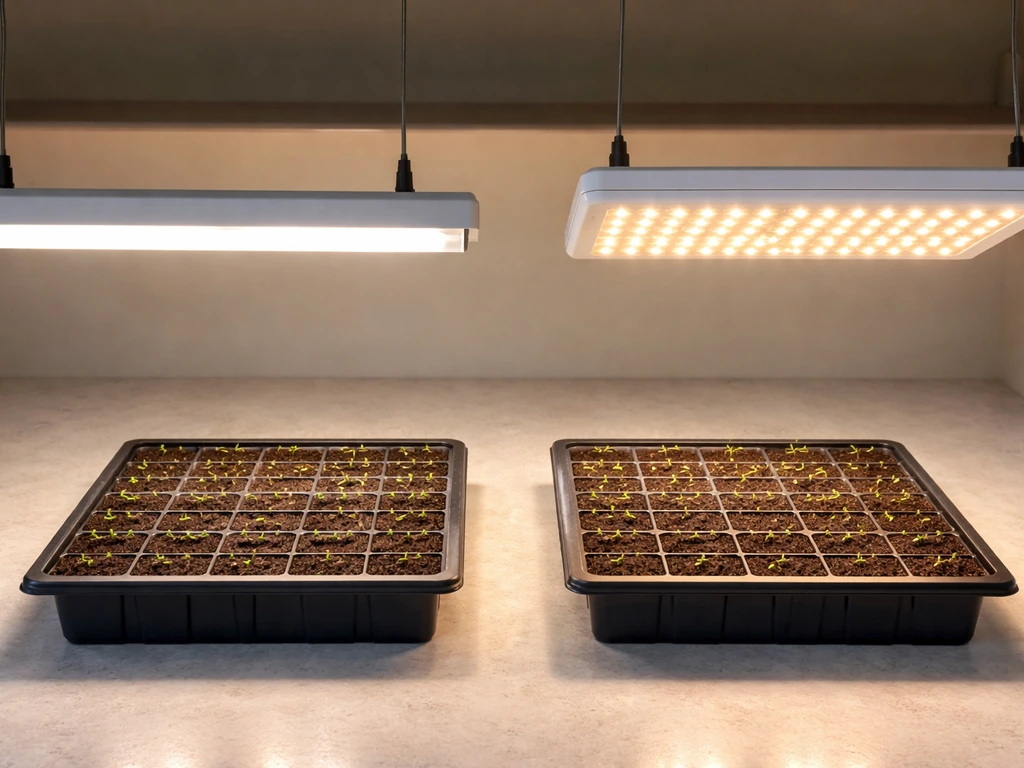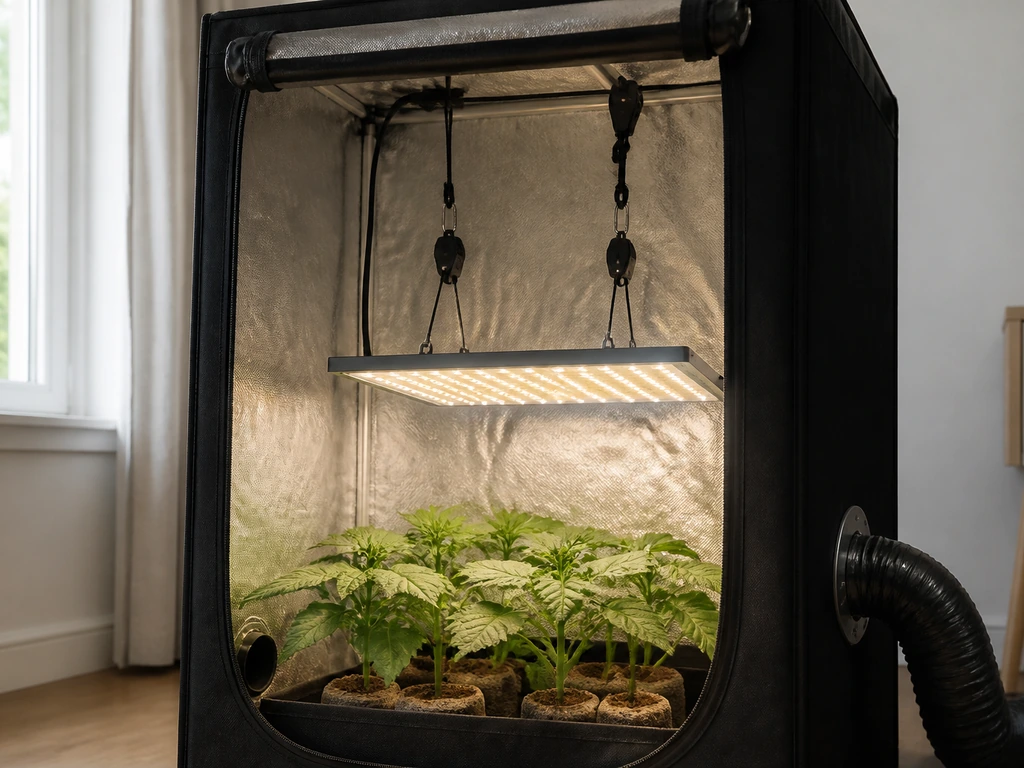
Mars Hydro is one of the most commonly searched LED grow light brands for a reason: they offer a wide range of models at price points that make sense for hobbyists and small-scale growers, and their build quality has improved noticeably over the last few years. But "Mars Hydro" covers a lot of ground. The TS series, FC series, SP series, and FC-E series all behave differently, and choosing the wrong one for your tent size or grow stage is an easy mistake to make. This guide cuts through the lineup and gives you a straight answer on which models are worth your money, what their actual numbers look like, and where each one falls short.
Mars Hydro Grow Light Review: Best Models, Specs, PPFD

Marcus Caldwell
4 Apr 2026
What to expect from a Mars Hydro LED grow light review
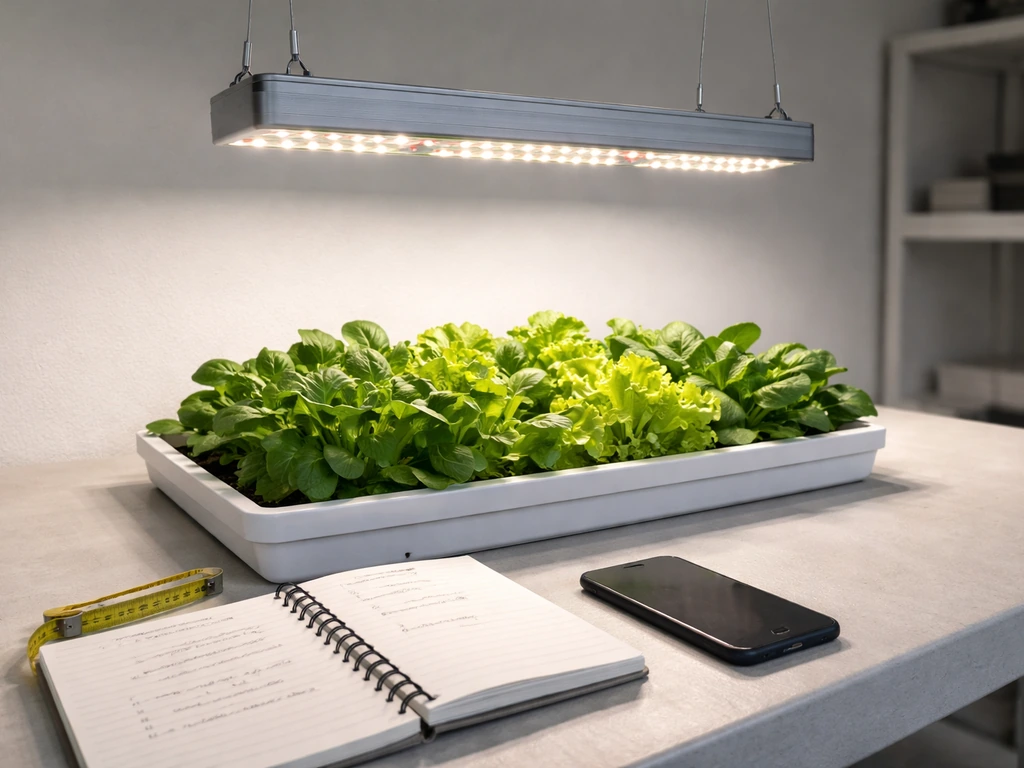
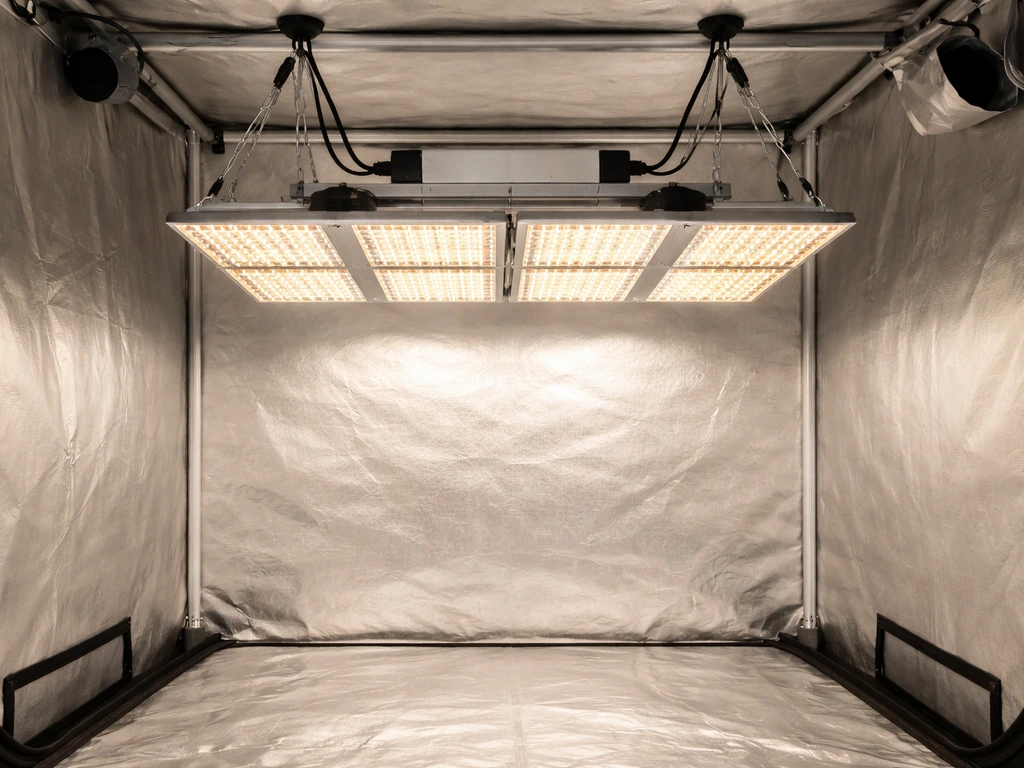
When you're reading any Mars Hydro review, including this one, you should expect more than a spec sheet reprint. The most useful thing a review can do is translate rated wattage and claimed PPFD into real grow-space decisions. Mars Hydro publishes PPFD maps for most of their lights, and those numbers are worth taking seriously, but they're always measured at a specific hanging height and often represent the center-point peak, not the average across your canopy. A light that hits 1,000 µmol/m²/s at center but drops to 400 at the edges is a very different tool than one with a more even spread.
You should also expect honest conversation about what you're not getting. Mars Hydro lights are not commercial-tier. They compete on value, not on raw efficiency compared to a Fluence or a Gavita. If you're running a 4x4 tent for personal use or a 2x4 for herbs and vegetables, that's exactly the context where Mars Hydro makes sense. If you're scaling up to a room-sized operation, you'll want to look harder at efficiency figures measured in µmol/J before committing.
Model-by-model comparisons
Mars Hydro's current lineup spans from the entry-level TS 600 all the way up to the FC-E 6500 and the bar-style FC series. Below is a practical comparison of their most popular models, organized by actual power draw (not marketing wattage), coverage area for flowering (which demands the most light), and output efficiency. Coverage figures for flowering assume you want at least 600–800 µmol/m²/s average PPFD at canopy level.
| Model | True Power Draw | Veg Coverage | Flower Coverage | Efficiency (µmol/J) | Approx. Street Price |
|---|---|---|---|---|---|
| TS 600 | ~100W | 3x3 ft | 2x2 ft | ~2.0 | $60–$80 |
| TS 1000 | ~150W | 3x3 ft | 2x3 ft | ~2.35 | $100–$130 |
| TS 2000 | ~300W | 4x4 ft | 3x4 ft | ~2.35 | $190–$230 |
| TS 3000 | ~450W | 5x5 ft | 4x4 ft | ~2.4 | $300–$360 |
| FC 3000 | ~300W | 4x4 ft | 3x3 ft | ~2.75 | $350–$400 |
| FC 4800 | ~480W | 5x5 ft | 4x4 ft | ~2.85 | $500–$560 |
| FC-E 3000 | ~300W | 4x4 ft | 3x3 ft | ~2.6 | $250–$300 |
| FC-E 4800 | ~480W | 5x5 ft | 4x4 ft | ~2.7 | $360–$420 |
| SP 6500 | ~650W | 4x8 ft | 4x6 ft | ~2.75 | $600–$700 |
The TS series uses a single-board panel design with Samsung LM301B or LM301H diodes depending on the generation. The FC and FC-E series use a bar/quantum board hybrid design, which tends to produce more even light distribution across the canopy. That difference matters more than the efficiency numbers alone suggest: a TS 3000 and an FC-E 3000 both draw around 300W, but the FC-E's bar layout will give you noticeably more uniform PPFD from edge to edge in a 3x3. If canopy evenness matters to you, the FC and FC-E series are worth the price jump.
For a deep dive on one of the most popular entry points in the lineup, the Mars Hydro TS 1000 LED grow light is covered in its own dedicated review with full PPFD maps and side-by-side hanging height tests. The short version: it's a solid 150W light for a 2x3 flowering space, genuinely one of the better value picks in its wattage class.
Spectrum and performance across grow stages
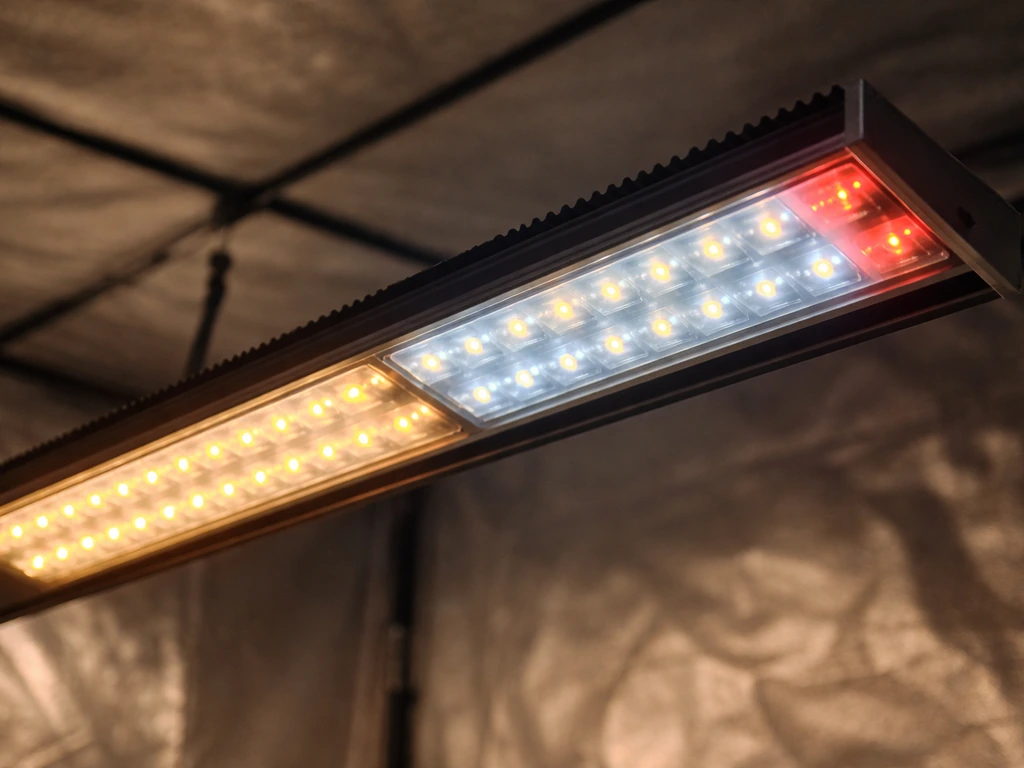
All current Mars Hydro LED models use a full-spectrum white LED approach, typically a blend of warm white (3000K) and cool white (5000K or 6500K) diodes, sometimes with added red 660nm and infrared 730nm chips depending on the model. This is a practical, proven approach. It doesn't need switching between veg and bloom modes because the spectrum is reasonably suitable across all stages, which is one of the main practical advantages over older blurple (red/blue only) panels.
Seedling stage
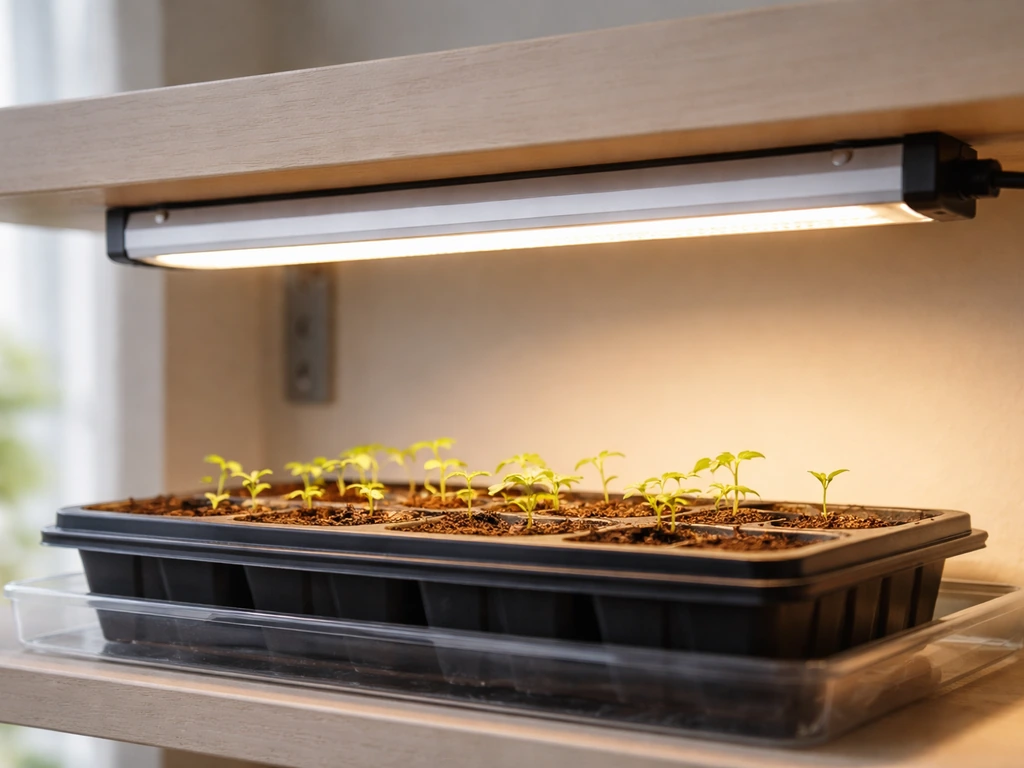
For seedlings, you want low intensity, around 100–200 µmol/m²/s. All Mars Hydro models with a dimmer handle this well. Hang the light at 24–30 inches and dial it down to 30–40% output.
For example, the TS 1000 page recommends hanging at specific heights and using dimming levels by stage: 12 in (30 cm) and 50% for seedlings, and 12 in (30 cm) and 75% for vegetative growth TS 1000 hanging height and dimming recommendations (12 in at 50% for seedlings, 12 in at 75% for vegetative). The warm-white heavy spectrum is gentle enough that you won't burn young plants.
If your model doesn't have a dimmer (earlier TS 600 units, for example), raise the hanging height instead. Seedlings are forgiving of less-than-perfect spectrum; intensity control matters more at this stage.
Vegetative growth
During veg, you're targeting roughly 400–600 µmol/m²/s for most plants, a bit higher for light-hungry crops like tomatoes or cannabis. The cooler white diodes in Mars Hydro's spectrum support healthy vegetative growth well. The 5000K or 6500K component encourages compact, bushy structure. At 18–24 inches hanging height and 70–80% dimmer output, most mid-range Mars Hydro lights (TS 2000, FC-E 3000) hit this range comfortably across a 3x3 to 4x4 area. Running them at full power during veg is usually unnecessary and wastes energy.
Flowering and fruiting
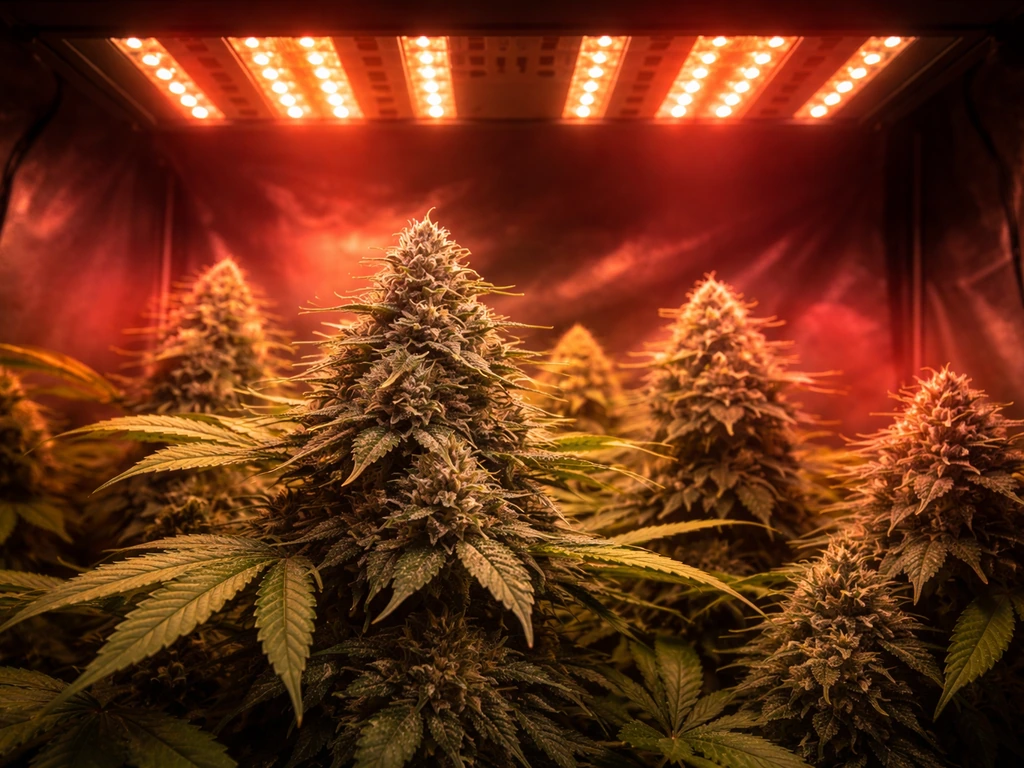
Flowering is where spectrum composition matters more. You want higher red ratios, ideally more energy in the 620–680nm range, to support bud and fruit development. Mars Hydro's full-spectrum blends do include red, but the ratio isn't as red-heavy as dedicated bloom lights. The FC and FC-E series add 660nm diodes that improve this, and the results in flower are noticeably better than the basic TS 600 or TS 1000. For heavy-flowering crops, targeting 800–1,000 µmol/m²/s average at canopy and running lights at full power during the 12/12 cycle is standard practice. The TS 3000, FC-E 4800, and FC 4800 all deliver this in their rated coverage areas.
Build quality, cooling, and what actually determines lifespan
Mars Hydro's build quality sits in the honest middle of the market. Housings are aluminum alloy, which handles heat passively well enough that fans are only included on certain models (some TS series units have a small fan; the FC bar-style lights rely entirely on passive heatsinking through the bars). The diodes themselves, Samsung LM301B and LM301H in most current models, are rated for 50,000+ hours at rated current, which translates to 10+ years of normal use if you're running 12–18 hour cycles. In practice, Mars Hydro drives their diodes conservatively, which is the right call for longevity. Driving LEDs at lower current means less heat and longer diode life, even if it costs a little efficiency.
Driver quality is worth paying attention to. Mars Hydro uses Mean Well drivers in their FC and FC-E series and some higher TS models, which is a meaningful quality signal. Mean Well is a well-regarded Taiwanese driver manufacturer; their HLG and ELG series drivers are common in the best independently built quantum board lights. The budget TS 600 and some regional-market versions of the TS 1000 use generic drivers, which are fine but carry more uncertainty around long-term reliability. If you're planning to run lights for years, the Mean Well driver models are the better investment.
Heat output is manageable across the lineup. None of these lights run cool, but none of them are particularly problematic either. In a well-ventilated 4x4 tent with proper exhaust, a 300W Mars Hydro unit adds 5–8°F to ambient air temperature. That's typical for any LED of this power class. The passive bar design of the FC and FC-E series actually runs cooler to the touch than the single-board TS panels, because the heat is spread across more aluminum surface area.
Controls and usability
Mars Hydro has improved its control options considerably. Here's how the current lineup breaks down:
- TS 600: On/off only on older units; newer versions include a dimmer knob. No daisy-chaining.
- TS 1000 / TS 2000 / TS 3000: Rotary dimmer knob standard. Daisy-chain ports available on most units, letting you link 2–4 lights to one controller.
- FC-E 3000 / FC-E 4800: Dimmer knob standard, daisy-chain ready, no app control.
- FC 3000 / FC 4800 / SP 6500: Compatible with the Mars Hydro Smart Controller (sold separately), which adds scheduling, sunrise/sunset simulation, and multi-light synchronization. No proprietary app required for basic function.
- Smart Controller: Optional add-on, connects via cable (not Bluetooth or Wi-Fi), works with FC and SP series. Simple to set up, no account login required.
The daisy-chain feature on the TS series is useful if you're running multiple lights in a larger space. You can dim all linked lights from a single knob without buying a separate controller. It's a practical solution that avoids the complexity of smart-home integration that many hobbyists don't want or need. The Mars Hydro Smart Controller is worth adding if you're running FC or SP series lights and want automated schedules, but it's genuinely optional, not essential to the light's function.
Value for money: what you actually get per dollar
Mars Hydro's value proposition is clearest in the $100–$400 range. The TS 1000 at around $110–130 delivers roughly 2.35 µmol/J efficiency, which is competitive at that price. The FC-E series adds bar-style distribution and Mean Well drivers for around $250–420 depending on the model, and the efficiency bump to 2.6–2.7 µmol/J is real. The FC series proper (not FC-E) pushes to 2.75–2.85 µmol/J, but you're paying a premium for it, usually $350–560.
Cost per watt at purchase runs roughly $0.80–1.10/W for the TS series, $0.85–1.00/W for the FC-E series, and $1.15–1.25/W for the FC series. For context, premium lights from brands like Fluence or Gavita run $2.00–3.00+/W. Mars Hydro is not in that tier of efficiency, but for personal-scale growing, the efficiency difference between 2.35 and 2.85 µmol/J only becomes meaningfully expensive at scale. On a single 300W light running 18 hours a day, the electricity cost difference between those efficiency levels is a few dollars a month at most.
On warranty: Mars Hydro offers a standard limited warranty across most of their lineup, with some exceptions. Certain models, including the ADlite, VG, TS 600, and SP 150, are covered under a 2-year limited warranty rather than the longer warranty that applies to most other LED products. Mars Hydro maintains warranty service centers in the US, UK, Germany, Australia, and Canada, which is genuinely useful. Warranty service routing and any applicable shipping or VAT costs do differ by country, so it's worth confirming your region's terms before purchase. Parts and accessories requested within the warranty period are handled through the same warranty center network.
It's also worth comparing against brands that operate in a similar value tier. If you're considering alternatives, a look at the Marswell LED grow light lineup is useful context, since Marswell and Mars Hydro are often confused as the same brand but are separate manufacturers with different product philosophies.
Which Mars Hydro model fits your grow space and goals
Here are direct recommendations based on tent size and what you're growing. These assume you want to hit at least 600 µmol/m²/s average at canopy for flowering plants, and 400 µmol/m²/s for vegetative or leafy crops.
| Grow Space | Best Mars Hydro Pick | Why |
|---|---|---|
| 2x2 ft tent | TS 1000 | Right-sized at 150W, good efficiency for the price, fits the budget for a small personal grow |
| 2x4 ft tent | TS 2000 or FC-E 3000 | TS 2000 covers well at lower cost; FC-E 3000 adds evenness worth paying for if you're growing flowers |
| 3x3 ft tent | FC-E 3000 | Bar layout gives better edge coverage than a single-board at this size; Mean Well driver adds reliability |
| 4x4 ft tent | FC-E 4800 or FC 4800 | FC-E 4800 is the value pick; FC 4800 if efficiency and uniformity are top priorities |
| 4x8 ft tent | SP 6500 or two FC-E 4800s | SP 6500 is purpose-built for long rectangular spaces; dual FC-E 4800 gives better control flexibility |
| Seedlings/clones only | TS 600 with dimmer | Low wattage is ideal; cheap enough to dedicate to a propagation area |
| Herbs, greens, low-light veggies | TS 1000 or TS 2000 | Full-spectrum works well; no need for the flowering-optimized FC series |
If you're working with a non-standard or budget setup and considering what else is in the market at low price points, it's worth knowing how Mars Hydro compares to bargain-tier alternatives. A look at the Harbor Freight grow light review illustrates how much build quality and output differ at the true low end of the market, and why Mars Hydro's entry-level TS series represents a meaningful step up.
Similarly, if you're comparing Mars Hydro against brands that target the same hobbyist audience with different feature sets, the Ferry Morse grow light and Holland Star grow light reviews are worth skimming before you finalize a decision. Both serve a different use case (Ferry Morse skews toward seed-starting and indoor herb gardens; Holland Star sits in a similar value tier to Mars Hydro's TS series), so the comparison helps you understand what you're actually choosing between.
Common issues and honest buyer questions
Noise
The FC and FC-E series are passive (no fan), so they're completely silent. Some TS series models include a small cooling fan. Early-generation fans were occasionally noisy enough to notice in a quiet room; current production units are quieter, but if silent operation matters to you, the fanless FC-E series is the cleaner choice.
Heat in the tent
LEDs produce less heat than HPS at equivalent output, but they're not heat-free. Plan for your exhaust to handle an additional 5–10°F above ambient, depending on wattage. If your tent is getting too hot, the issue is almost always inadequate exhaust capacity, not the light itself. Adding a larger inline fan or improving ducting solves this in most cases. Running the dimmer at 80–90% instead of 100% during the hottest months is a practical short-term fix. eBay documentation for the Mars Hydro smart controller describes controller behaviors and settings such as timed on/off (“On at” / “Off at”) and dimming modes like “Auto Dim” and “Auto Off” dimmer output.
"This light doesn't look that bright" vs. actual PPFD
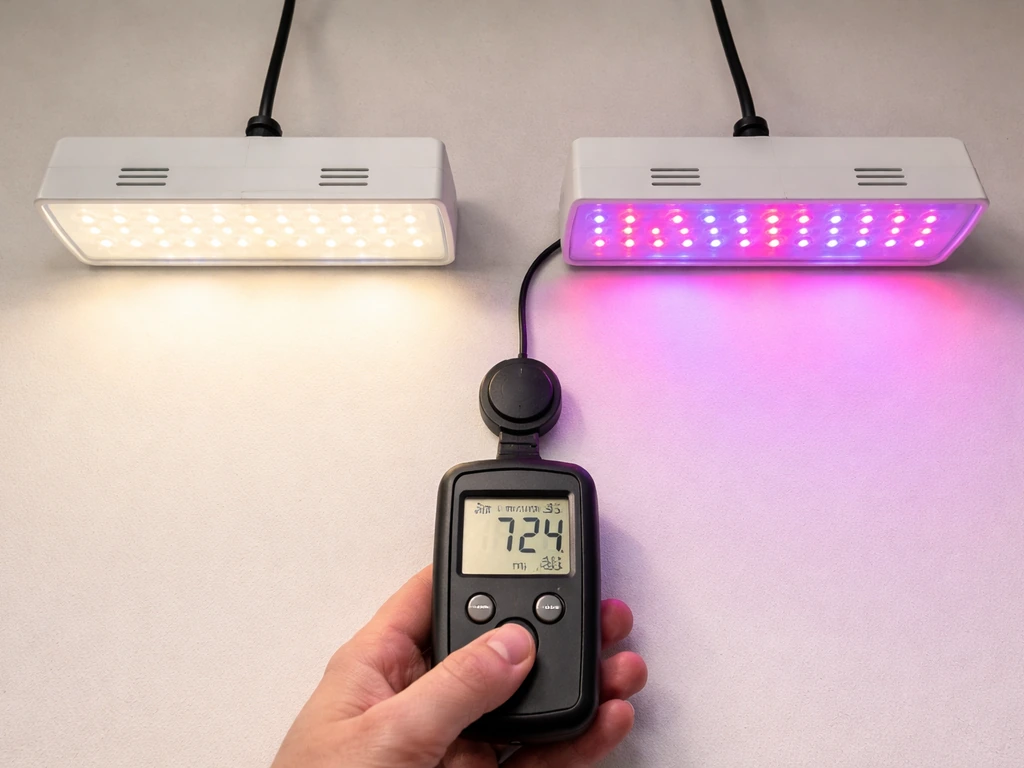
This is one of the most common points of confusion. Full-spectrum white LEDs look dimmer to the human eye than blurple (red/blue) lights at the same PPFD, because our eyes are most sensitive to green light, and full-spectrum panels emit more of it. The plants don't care how bright a light looks to you; they respond to photon delivery in the 400–700nm range, which is what PPFD measures. A Mars Hydro TS 2000 that looks underwhelming next to an old blurple 300W panel is probably delivering more usable light to your plants. Use a PAR meter if you have access to one; if not, trust the published PPFD maps at the hanging heights Mars Hydro specifies.
How to interpret PPFD maps
Published PPFD maps show a grid of readings across the coverage area at a specific hanging height, usually 18 or 24 inches. Look at the average across the grid, not the peak center number. A well-distributed light will have an average that's 75–85% of its center peak. If the map only shows one number or only the center peak, be skeptical and hang the light a bit higher than recommended to improve edge uniformity. Mars Hydro's published maps for the FC and FC-E series are reasonably accurate in testing; the TS series maps tend to be optimistic at the edges, so add 2–4 inches to the recommended hanging height for more even coverage.
Warranty reality check
Mars Hydro's warranty support is functional but not exceptional. Regional warranty centers in the US, UK, Germany, Australia, and Canada mean you're not shipping a busted light to China, which is a real advantage over some budget competitors. The actual resolution experience varies: straightforward failures (dead unit out of box, failed driver) tend to get handled without much friction. Partial failures, like one bar dying on an FC unit, can take more back-and-forth. Keep your proof of purchase and document any issues with photos from the start.
FAQ
Which Mars Hydro series is best when I care most about even canopy coverage (not just peak PPFD)?
If your goal is an even, uniform flowering canopy, prioritize the FC or FC-E series over the TS series. The TS single-board layout often has a higher center peak relative to the edges, so even if the total area coverage looks similar on paper, you may need to raise the TS light a couple inches and run slightly higher dimmer output to hit the same average PPFD across the whole tent.
Should I rely on dimmers, or adjust hanging height first, to hit my PPFD targets?
Use the dimmer in “plant terms,” not in “ad terms.” During veg, target your PPFD range by dimming to roughly 70 to 80% and keep the hanging height in Mars Hydro’s spec window. During flowering, dimming down can work, but only if you still maintain your target average PPFD across the whole canopy, not just at the center.
What should I do if I don’t have a PAR meter but want to avoid overestimating PPFD from marketing numbers?
If you do not have a PAR meter, still double-check the published PPFD maps by reading the average across the grid, not the center peak. For TS models especially, consider hanging 2 to 4 inches higher than the recommended height to improve edge uniformity, then compensate with dimmer if your plants appear underlit.
Do I need to switch spectrum for Mars Hydro lights between veg and bloom?
Yes, but only if you plan it intentionally. With Mars Hydro’s full-spectrum approach, you usually do not need a separate veg and bloom switch, however you may still want to change intensity by stage (lower for seedlings, higher for flowering). Also, avoid “max power all the time,” because dimmer control lets you run cooler temps and preserve LED lifespan.
What’s the safest way to start seedlings under a Mars Hydro light without burning them?
For seedlings, start lower and watch your plants for 3 to 7 days rather than trying to nail the perfect number on day one. Even with a dimmer, it’s easy to overshoot if you also start with a low hanging height, so keep the light at the upper end of the suggested range and adjust down gradually.
My plants are stretching or looking pale, how do I troubleshoot lighting first?
If you see excessive stretch, the fix is usually either too much distance or too little intensity, but lighting layout matters. Move the light closer only if you have confirmed adequate dimmer settings, and make small changes (an inch or two) over several days. Also confirm you are not under-ventilating, since heat stress and poor air exchange can mask lighting improvements.
Do fanless FC/FC-E lights require a different ventilation setup than the fan-included TS models?
For fanless FC and FC-E models, ventilation becomes more important because the heat is spread through the aluminum but still ends up in your tent air. Make sure your exhaust capacity is sized for the added heat load and keep ducting straight and short where possible, because throttled airflow can raise canopy temperature and affect growth.
Can I daisy-chain multiple Mars Hydro lights, and what’s the safe way to scale up?
Daisy chaining can work well for larger spaces, but you still need to confirm the total electrical load and verify that your controller or daisy-chain method supports the number and specific model you plan to link. Practically, start with one light, confirm consistent dimming, then add additional fixtures one at a time.
Are Mean Well drivers actually worth paying for in real-world long-term reliability?
Mean Well drivers are a strong reliability signal, but driver quality is not the only factor. If you expect long duty cycles (for example, 18 hours daily), also prioritize models with conservative LED drive behavior and plan good airflow around the driver housing so heat does not accumulate inside the unit.
How do I know whether the Mars Hydro warranty is the standard length for the specific model I’m buying?
Warranty coverage can differ by model, so do not assume the same term across the lineup. If you are considering a TS 600 or certain short-warranty models, verify the exact warranty duration before purchase, since some units are covered for 2 years while most others have longer coverage.
What happens to your PPFD at the canopy if your plants grow taller than the test hanging height?
Yes, it can matter because “coverage area” is typically based on achieving a target average PPFD, not maximum intensity at one point. If your plant canopy is taller than typical, you may end up under the average PPFD even if the center looks fine, so use the hanging height that matches your growth stage and reassess as the canopy rises.
How should I choose a Mars Hydro model when my tent size matches multiple options on paper?
It depends, but a common mistake is choosing a light based on tent size only. If your crop needs higher intensity in flowering (for example, heavy fruiting plants), prioritize a model that can realistically reach the 800 to 1,000 µmol/m²/s average range you’re aiming for, then ensure your tent airflow can handle the heat.
What should I document if only part of an FC light fails during warranty?
If a partial failure happens, such as one bar or section going dead on an FC-type light, resolution can be slower than for a straightforward dead-on-arrival unit. Keep proof of purchase, photograph the failure pattern immediately, and note the dimmer and outlet conditions at the time it occurred to speed up troubleshooting.