If you searched for a "Marswell LED grow light review" hoping to find spec sheets, PPFD maps, and a clear verdict, here is the honest answer upfront: Marswell does not appear to be an established grow light brand with a documented product line. Multiple searches turn up no manufacturer website, no official model catalog, and no verifiable spec sheets. What does come up is a Reddit thread where a user describes being handed a small, generic-looking fixture with "no identifying marks" that someone called a "Marswell." That is almost certainly a white-label or unbranded budget light, not a named product line you can research or buy with confidence. If you are 99% sure you meant Mars Hydro, you are not alone, and the rest of this article will help you figure out whether any Marswell-adjacent or Mars Hydro light is worth buying for your setup.
Marswell LED Grow Light Review: Test Results and Buying Guide

What "Marswell" probably is (and what people actually mean)
The most common scenario here is a simple name mix-up. Mars Hydro is one of the most widely searched grow light brands in the world, and "Marswell" is close enough that autocomplete and memory errors send a lot of shoppers in the wrong direction. There is also a smaller chance that you have an actual light labeled Marswell, which almost certainly means it is a generic import sold under a temporary brand name, common practice on Amazon and AliExpress where resellers slap a sticker on a Shenzhen-manufactured panel and list it under dozens of different names.
If you physically have a light labeled Marswell and it has no model number, no manufacturer address, and no UL or CE certification label, that tells you nearly everything you need to know about its quality and safety tier. For the rest of this article, I will cover what you need to evaluate any light in this category, including the Mars Hydro lineup that most people are actually researching, so you can make a real decision. If you want a full breakdown of the broader Mars Hydro range before diving into specific models, the Mars Hydro grow light review covers the brand's full lineup in detail.
Build quality, cooling, and electrical safety
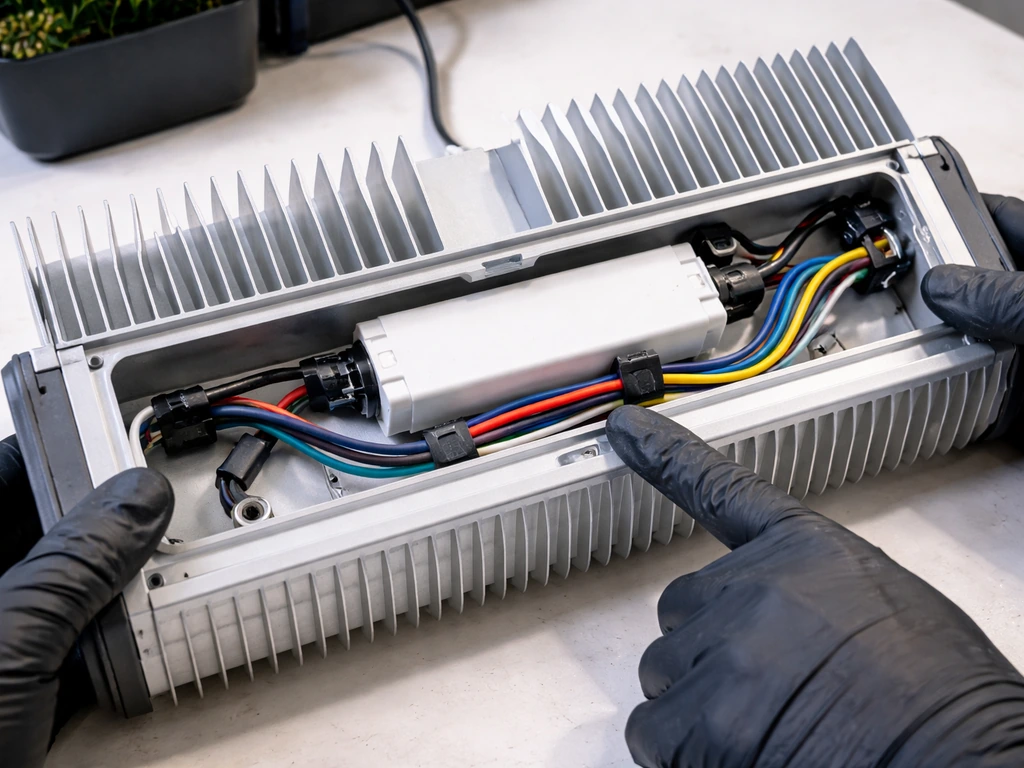
Whether you are holding a suspected white-label Marswell or a Mars Hydro unit, the first thing to evaluate is build quality and electrical safety. Legitimate grow light brands use aluminum heat sinks with passive or active cooling, and their drivers are sourced from known manufacturers like Mean Well or Inventronics. If a light has a thin plastic housing, no visible heat sink fins, and a driver with no brand markings, it is a red flag. Heat management is not optional in grow lights: LEDs degrade faster and produce less light when they run hot. Most quality panels keep junction temperatures under 60°C at full power.
Electrical safety is where budget no-name lights often fail most dangerously. Look for UL listing, ETL certification, or CE/RoHS marks on the fixture itself, not just the packaging. UL also publishes an information brief describing blank" rel="noopener noreferrer">UL 8800’s focus on horticultural lighting equipment and systems requirements, which supports expectations around safety-related testing for these products. A missing certification means the unit has not been independently tested for fire or shock risk. Wiring gauge inside the driver compartment should match the load; underpowered wiring in cheap fixtures is a real fire hazard in a humid grow tent environment. If your light has none of these marks and no documentation, I would not run it unattended.
Installation basics apply regardless of brand: hang the fixture with the manufacturer's included hardware or rated steel cable, keep the driver away from direct water splash, and make sure your circuit can handle the actual draw. A 200W light pulling from a standard 15A household circuit is fine on its own, but stack two or three and you are approaching the safe limit, especially with fans and other equipment on the same circuit.
PPFD, PAR coverage, and canopy penetration: what the numbers actually mean
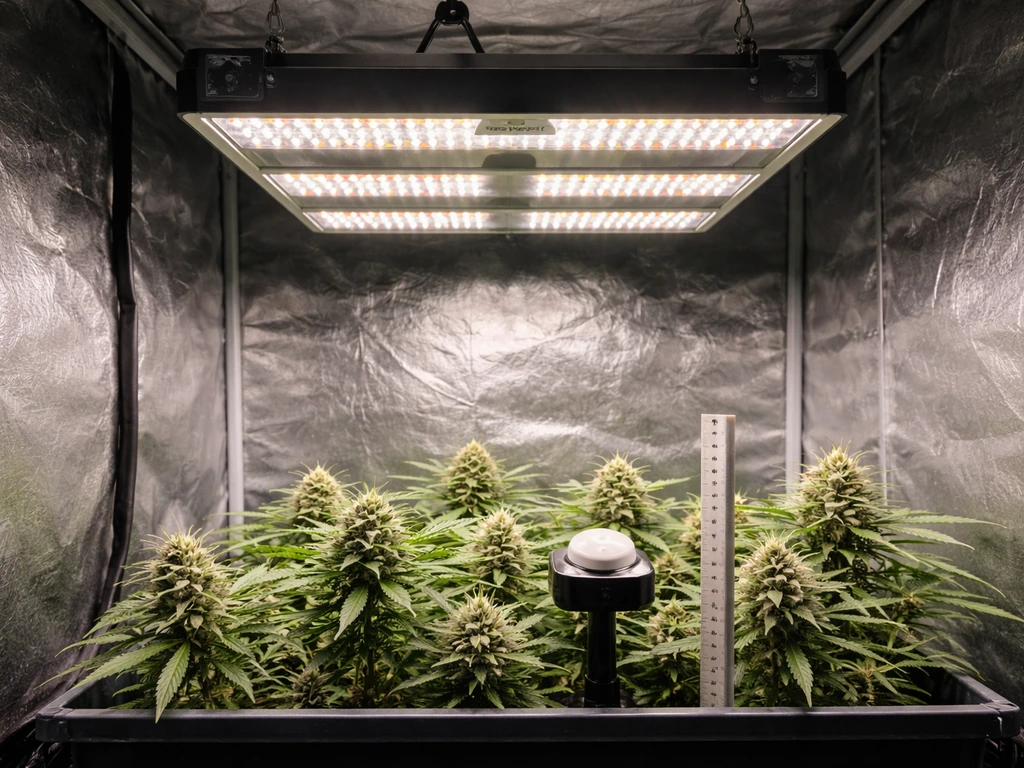
PPFD (photosynthetic photon flux density) is measured in micromoles per square meter per second (µmol/m²/s) and tells you how much usable light your plants are actually receiving at canopy level. A third-party field test and review of the Mars Hydro TS 1000 reports PPFD mapping content, including a “Max PPFD” figure of about 740 µmol/m²/s Max PPFD (~740 µmol/m²/s). For reference, most vegetables and herbs do well in the 200 to 400 µmol/m²/s range under artificial light, while flowering plants and fruiting crops want 600 to 900+ µmol/m²/s at peak flower. A legitimate grow light manufacturer publishes PPFD maps at multiple hanging heights so you can match the light to your space.
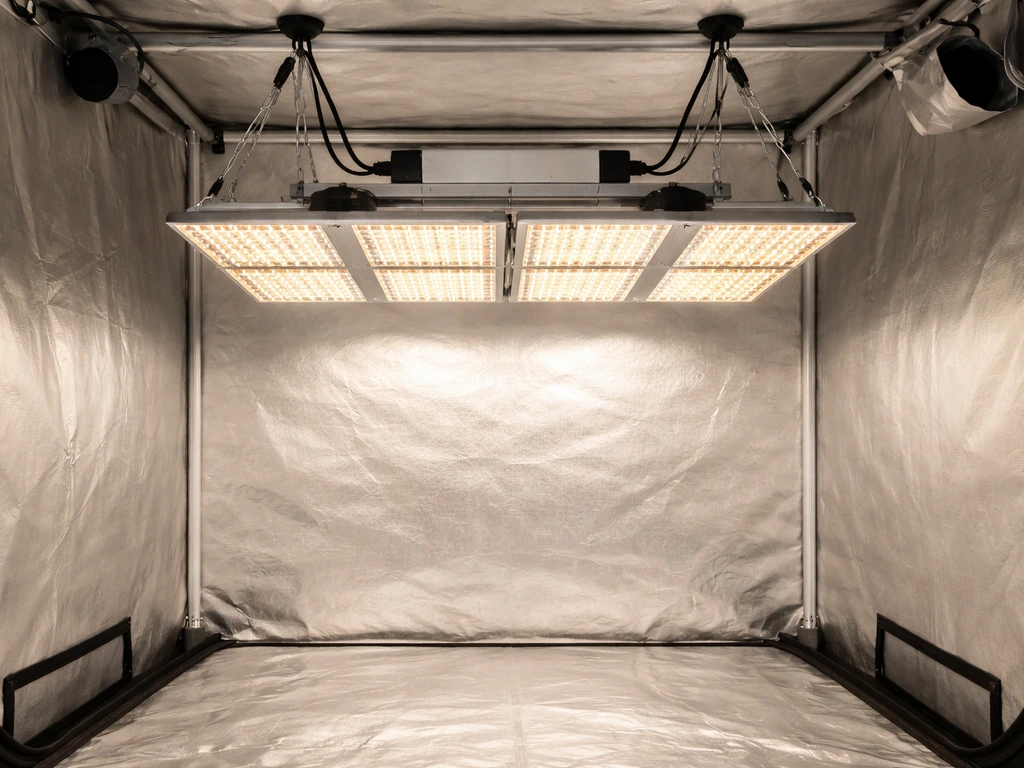
For a verified example, the Mars Hydro TSW2000 has published PPFD maps at 12", 18", and 24" hanging heights. At 18" over a 2x4 ft footprint, it hits roughly 1000 µmol/m²/s at center with drop-off to the 400 to 600 range at the edges, which is a realistic uniformity profile for a single-board quantum-style panel. That center-heavy distribution is typical of non-bar-style designs and matters when you are trying to fill a tent evenly.
An unbranded light claiming "1000W equivalent" with no PPFD map is not hiding that data to be modest. It is hiding it because the actual numbers would not be competitive. True wattage draw matters more than the "equivalent" marketing claim. A light drawing 100W at the wall can only produce so many photons regardless of what the listing says.
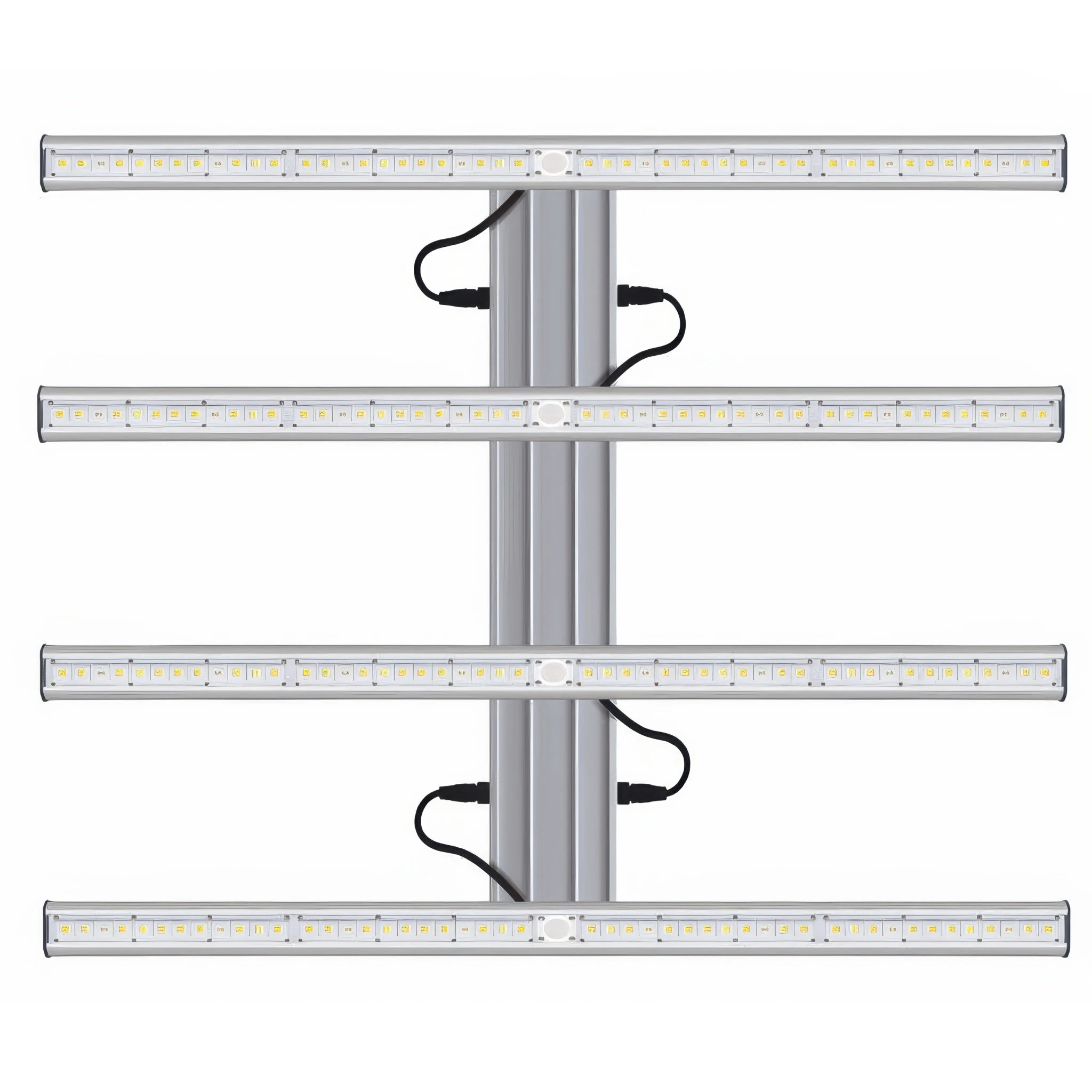
Canopy penetration is determined by both intensity and spectrum. Red wavelengths (660 nm) penetrate dense foliage better than blue (450 nm), which is why full-spectrum lights with a strong red component tend to outperform blue-heavy panels for flowering crops. Bar-style lights with multiple strips spread across the canopy improve penetration and uniformity compared to a single center-mounted panel, at the cost of higher price per watt.
Spectrum claims vs. what your plants will actually experience
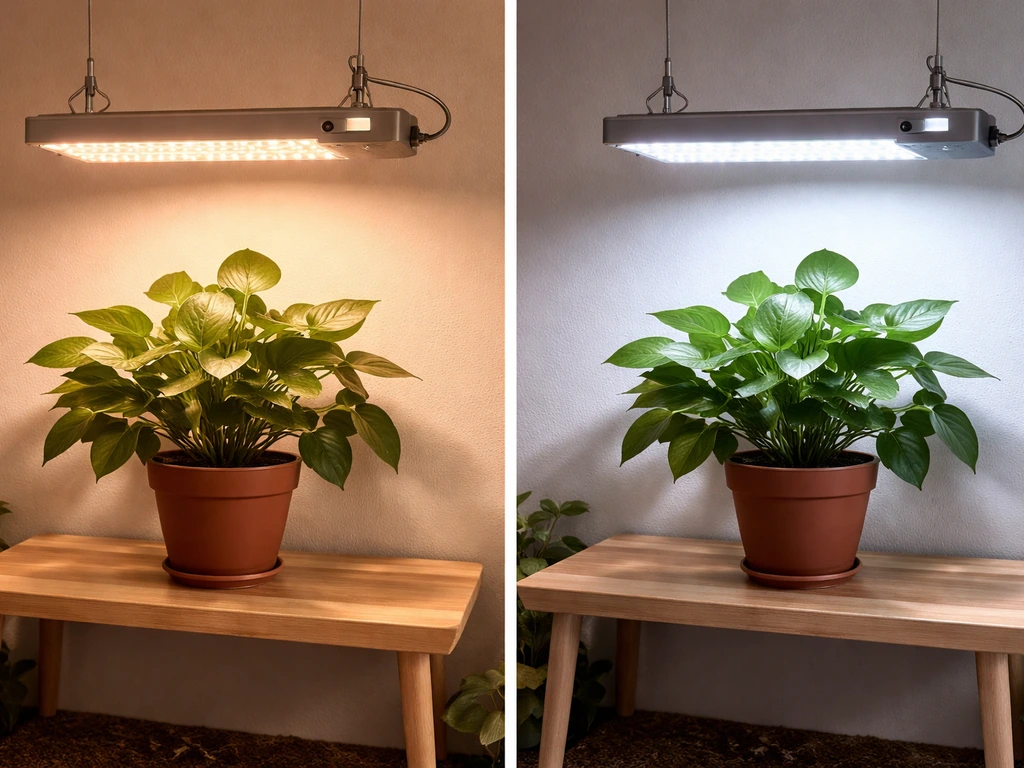
Most lights in the budget and mid-range category are marketed as "full spectrum" with "veg and bloom" modes or a dial dimmer. Full spectrum in practice means the LED chips produce a broad white output with peaks in the blue (around 450 nm) and red (around 660 nm) range, plus some coverage across green and far-red. This is genuinely useful and plants respond well to it. The veg/bloom marketing is more complicated.
A single-switch "veg mode" that cuts red output while leaving blue on will slow flowering and keep internodes compact during early growth, but the real driver of flowering is photoperiod (light schedule), not spectrum mode. Toggling a blue-only mode does not replace the 12/12 light cycle flip for photoperiod-sensitive plants. Where spectrum tuning does matter is adding far-red (730 nm) during the last two weeks of flower, which accelerates ripening, and keeping blue light present throughout veg to prevent stretching.
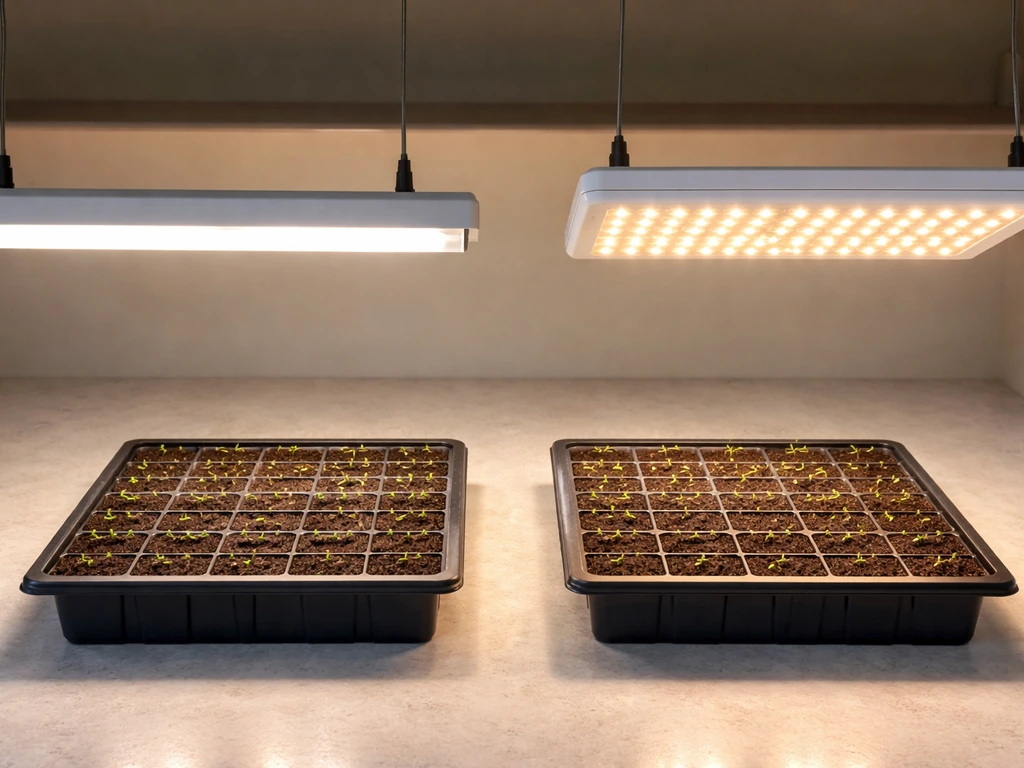
For common plant types: leafy greens and herbs are relatively forgiving and will grow under almost any reasonable full-spectrum LED. Tomatoes, peppers, and cannabis are more light-hungry and will reward higher PPFD and a strong red component during fruiting and flowering. Seedlings need low intensity (100 to 200 µmol/m²/s) regardless of spectrum, so a dimmable driver is genuinely useful, not just a marketing checkbox.
Coverage planning: matching your light to your space
The single most practical question is: what footprint does this light actually cover at a usable PPFD? Marketing claims often cite maximum coverage, which is usually measured at a PPFD threshold too low for anything but seedlings. Here is a practical guide for sizing:
| Grow Space | Target PPFD (flowering) | Approximate True Wattage Needed | Recommended Hanging Height |
|---|---|---|---|
| 2x2 ft tent | 600–900 µmol/m²/s | 100–150W | 16–20" |
| 2x4 ft tent | 600–900 µmol/m²/s | 200–300W | 18–24" |
| 3x3 ft tent | 600–900 µmol/m²/s | 250–350W | 18–24" |
| 4x4 ft tent | 600–900 µmol/m²/s | 400–600W | 20–28" |
| Shelf / propagation | 100–300 µmol/m²/s | 30–75W | 12–18" |
For a white-label budget light with no published specs, assume the usable flowering coverage is roughly half the marketed area. A light sold for "4x4 coverage" with no PPFD map should be treated as a 2x2 to 2x4 performer until proven otherwise. Mounting height affects both intensity and uniformity: lower hangs increase center PPFD but worsen edge uniformity; higher hangs even out coverage but drop total intensity. Most single-panel lights need to be hung 18 to 24 inches above canopy for reasonable uniformity.
If your grow is on open shelving rather than inside a tent, you lose all reflected light from tent walls, which can cut effective PPFD by 20 to 30 percent. Plan for a more powerful light or tighter hanging height in that scenario. For small shelving setups specifically, strip-style lights designed for propagation trays tend to provide better uniform coverage than panel-style units. The Ferry Morse grow light review is worth a look if you are setting up a small seed-starting or herb shelf, as that brand targets exactly that use case.
Value, efficiency, lifespan, and what it actually costs to run
Efficiency is measured in micromoles per joule (µmol/J). A budget light from an unknown brand typically delivers 1.5 to 2.0 µmol/J. Mid-range quality lights like the Mars Hydro FC series or Spider Farmer SE series land in the 2.5 to 2.9 µmol/J range. Top-tier commercial fixtures reach 3.0+ µmol/J. That gap in efficiency directly translates to electricity cost: running a 2.0 µmol/J light versus a 2.7 µmol/J light for 12 hours a day over a 6-month grow cycle adds up to a meaningful difference on your electricity bill, often enough to offset a price difference at purchase.
LED lifespan ratings of 50,000 hours are commonly cited, but that is for the diodes at rated current and temperature. Running LEDs hot or overdriving them (common in budget fixtures with poor thermal management) cuts that number significantly. A light that costs $30 but burns out in 18 months at full power is not a bargain. A reputable brand with a 3 to 5 year warranty and documented customer support is worth real money, because grow light failures mid-cycle are genuinely costly in lost plants and time.
On the topic of budget alternatives that at least have some documentation behind them, some discount retailers do sell basic grow lights with enough information to make a purchasing decision. The Harbor Freight grow light review gives a candid look at what the lowest end of the market actually delivers, which is useful context if you are genuinely price-constrained.
For a direct brand comparison, the Mars Hydro TS 1000W LED grow light review is one of the clearest apples-to-apples tests in the mid-range category, covering verified PPFD maps, efficiency ratings, and real-world grow results that you simply will not get from an unbranded fixture.
How Marswell-category lights compare to named brands
| Factor | Generic/White-Label (e.g., "Marswell") | Mars Hydro TS/TSW Series | Mars Hydro FC/Bar Series |
|---|---|---|---|
| Published PPFD maps | None | Yes, multi-height | Yes, multi-height |
| Efficiency (µmol/J) | ~1.5–2.0 (estimated) | ~2.3–2.6 | ~2.7–3.0 |
| Driver brand | Unknown/unbranded | Mean Well or proprietary | Mean Well |
| Safety certification | Rare/absent | CE, RoHS | CE, ETL, RoHS |
| Warranty | None or 30 days | 3 years | 3–5 years |
| Price range (200W class) | $20–$50 | $80–$130 | $150–$250 |
| Customer support | None reliable | Email/chat | Email/chat |
Who should buy and who should skip
Skip an unverified Marswell light if: you are running anything beyond seedlings or low-light herbs, you care about electrical safety and certified components, you want to know what PPFD your plants are actually getting, or you expect the light to last more than one grow cycle. An anonymous fixture with no documentation is a genuine gamble in all of those scenarios.
Consider a budget generic light only if: you are a complete beginner starting with very forgiving plants like lettuce or basil on a shelf, you have a strict $30 to $50 budget, and you understand you are buying a temporary solution rather than a long-term tool. In that very limited scenario, the risk is low and the cost of "getting it wrong" is small.
For everyone else, the Mars Hydro TS and TSW series represent the best entry point into documented, tested grow lights at a price that is not dramatically higher than what generic brands charge. If your budget stretches a bit further and you have a 3x3 or 4x4 tent for flowering crops, the FC or bar-style series offers meaningfully better uniformity and efficiency. An interesting comparison point is the Holland Star grow light review, which covers a brand that also sits in the mid-range and often gets compared to Mars Hydro on price-per-watt terms.
The bottom line
There is no Marswell grow light with documented specs worth reviewing in the traditional sense. What exists is either a name confusion with Mars Hydro, or a white-label budget fixture that falls into the "buy only if you have no other option and understand the risks" tier. A Reddit thread about Mars Hydro discusses a fixture where the only model or name shown is electrical specifications, with “zero other identification anywhere on the light,” which matches the broader pattern of minimal labeling on budget units. If you came here trying to figure out whether the light you were given or found cheaply is worth using, the answer is: use it for seedlings or low-light greens while you save up for something with real specs behind it. If you are actively shopping and typed Marswell by accident, go look at Mars Hydro directly. The documentation, verified PPFD data, and warranty structure make it a far easier decision to stand behind.
FAQ
I have a light labeled “Marswell.” How can I tell quickly if it is just a resold generic unit?
Start by checking for a manufacturer name, a model number, and any certification printed on the fixture body (not just the box). If none of those exist, treat it as a white-label unit and do not rely on marketing “wattage equivalent” claims, especially when planning flowering intensity.
Can I safely use a Marswell-type light for seedlings if it has a veg/bloom switch or a dimmer?
Yes, but only if the dimmer is real and rated for the same driver, not a simple on-off mode. For seedlings, aim roughly 100 to 200 µmol/m²/s at canopy, so you want a light that can safely hold power low without overheating the driver or removing all red content.
What safety details should I check beyond the label certifications?
A missing UL/ETL/CE mark is a red flag, but it is not the only one. You should also look for proper strain relief and cable routing inside the driver compartment, and make sure the plug and cord are intact and not undersized for the wattage drawn.
If there is no PPFD map, what is the best way to estimate whether the light can support flowering?
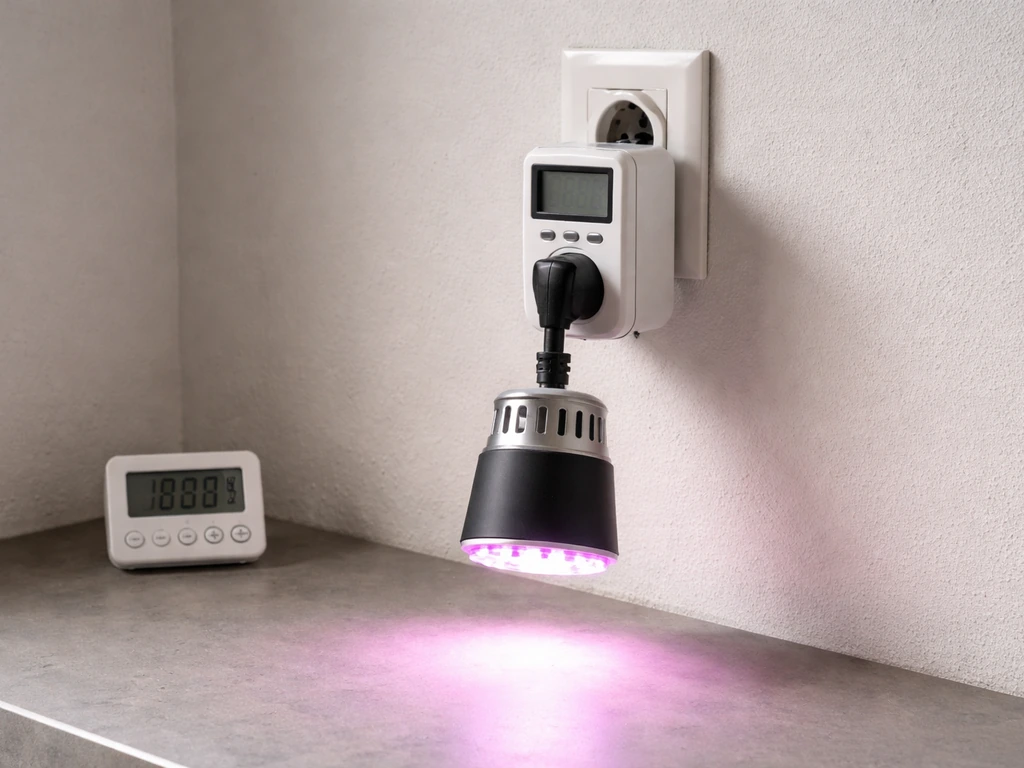
If you cannot find PPFD maps, you can still sanity-check by measuring actual power draw at the wall with a watt meter and comparing that to claimed “1000W” numbers. Then set a conservative hanging height (often 18 to 24 inches as a starting point) and watch plant response rather than assuming coverage.
How does using the light on open shelves versus inside a tent change my plan?
Yes. If the light is on open shelving, reflected light from tent walls is reduced, and effective usable PPFD can drop noticeably. Compensate by using a tighter hang, reducing the distance to canopy, or choosing a wider/stronger fixture than you would for an enclosed tent.
If the light is known to be center-heavy, how should I manage canopy uniformity?
Even with correct setup, center-heavy intensity can be an issue for plants that need even spread across the canopy. For non-bar single panels, you may need careful plant spacing or rotating trays, and you should expect edges to run lower than center.
How should I interpret µmol/J (efficiency) when dealing with unverified brand claims?
Use efficiency to guide expectations only if you have believable driver power and you compare lights at similar power draw. A big mismatch between listed “equivalent” power and wall wattage usually indicates lower real output, regardless of what efficiency number is advertised.
What circuit planning mistakes are common when adding a second or third grow light?
It is possible, and it changes your risk level. Multiple fixtures on the same circuit can push you beyond what you think if other devices are running, so verify the total wall draw for every light and fan before you run a full schedule.
Why do lifespan claims often not match real-world results for budget grow lights?
A 50,000 hour diode rating is based on controlled conditions. In practice, if the driver compartment runs hot or the housing has poor airflow, lifespan can drop significantly, so you should treat cheap lights as potentially shorter-term tools unless you see evidence of stable thermal design.
How do I factor warranty and support into the “Marswell vs Mars Hydro” decision?
Warranty and support matter more than price when the fixture fails mid-grow. If you cannot confirm warranty length, parts availability, or contact options, factor that into your decision, because replacing a light during flowering can mean lost harvest time.