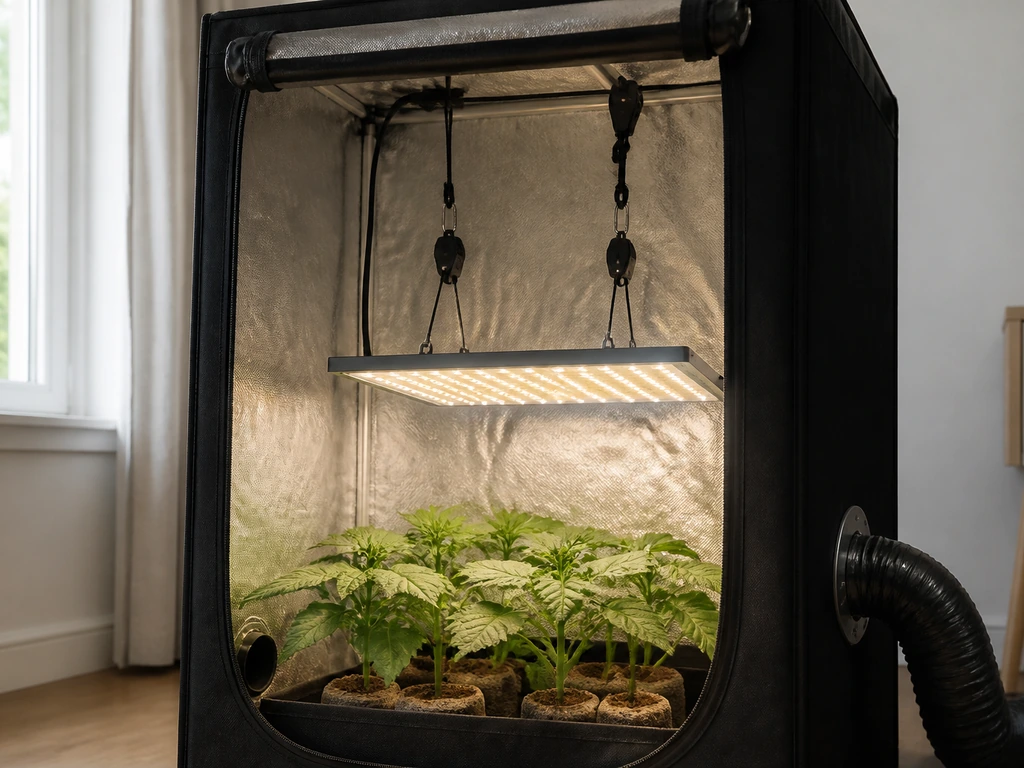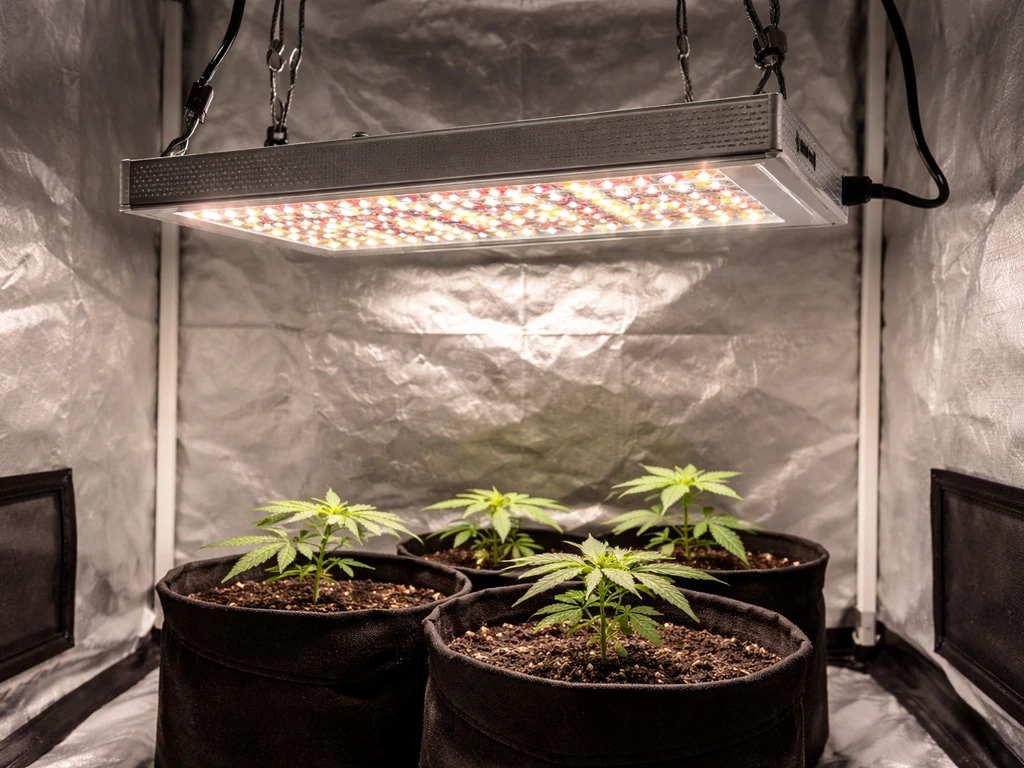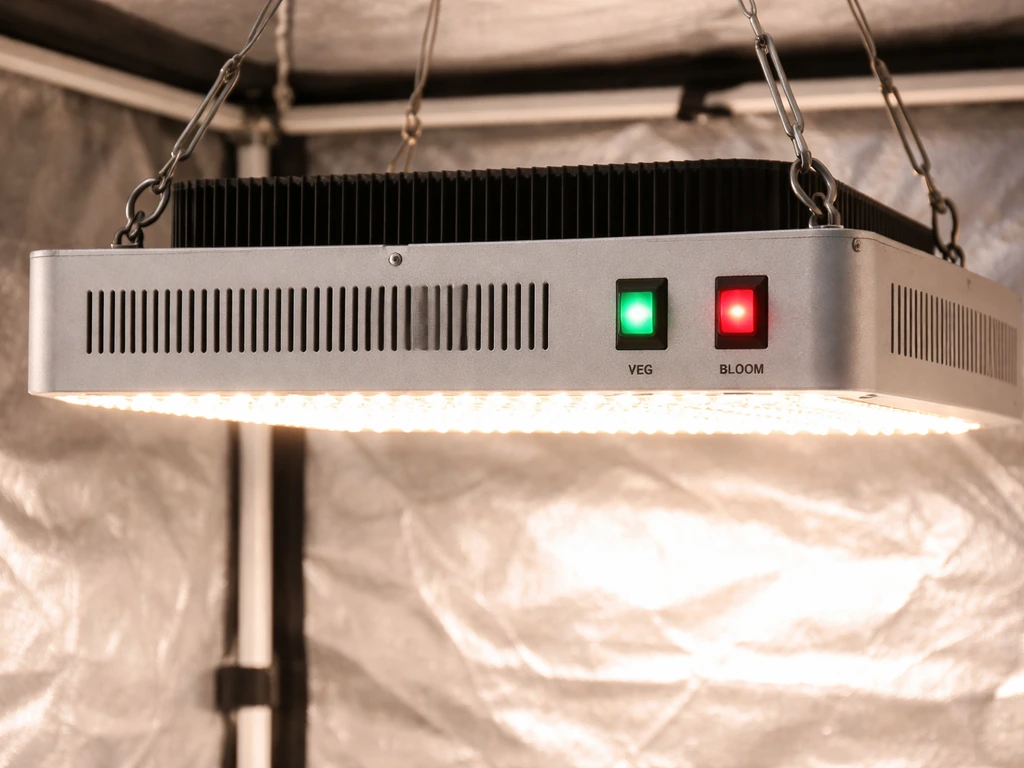
The Harbor Freight grow light most shoppers are searching for is the LUMINAR EVERYDAY 19 Watt, 2 ft. Linkable 2-Light Full-Spectrum LED Plant Grow Light (SKU 59250). It costs $22.99 at Harbor Freight stores and online, links up to eight fixtures together, and claims to cover a 2x2 ft. area per unit. Whether it's worth buying depends almost entirely on what you're growing and what you expect from a $23 light.
Harbor Freight Grow Light Review: Worth It for Indoor Plants?

Marcus Caldwell
3 Apr 2026
What the Harbor Freight grow light actually is
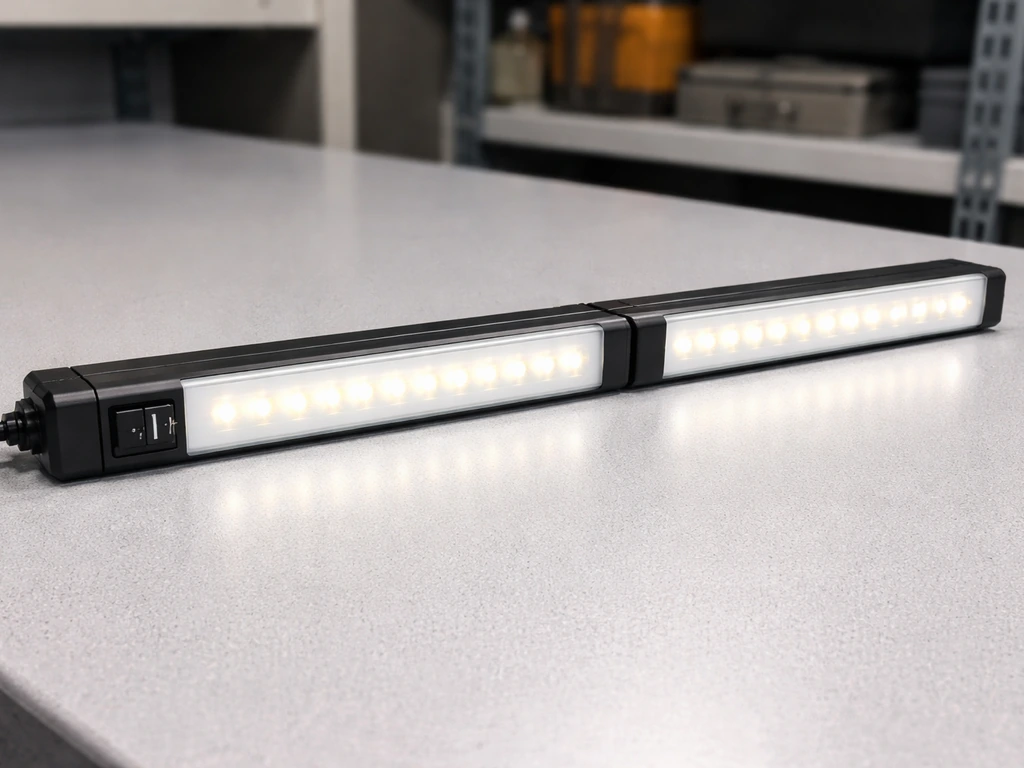
Model 59250 is a 2-foot bar-style LED fixture. It runs on 120VAC/60Hz and draws 19 true watts at 0.172A. The light is categorized by Harbor Freight as "full-spectrum cool white," which in practice means it's a white LED array rather than a blurple (red-blue) fixture. It outputs 2600 lumens, has a 5-foot power cord, and the mounting hardware positions suspension points either 23.6 inches apart (hanging) or 22.6 inches apart (surface mount). The ETL and FCC safety certifications are real, the fixture is rated for damp locations, and the manual specifically calls out GFCI-protected circuits as required. That's all the official data you get from Harbor Freight's spec sheet.
What you won't find on the product page is any PPF (micromoles per second), PPFD map, photon efficacy (μmol/J), or spectral distribution graph. Harbor Freight doesn't publish that data. That matters because lumens measure light as the human eye perceives it, not as plants absorb it. A quantum sensor reading in PPFD (μmol/m²/s) is what actually tells you how much photosynthetically active radiation your canopy is receiving. Without it, you're flying a little blind.
Specs that actually affect your plants
| Spec | SKU 59250 (Harbor Freight) |
|---|---|
| True wattage | 19W |
| Coverage per unit | 2 ft. x 2 ft. |
| Light type | Full-spectrum cool white LED (bar style) |
| Lumen output | 2600 lm |
| PPF / PPFD | Not published |
| Dimming | None (rocker switch on/off only) |
| Linkable units (max) | 8 |
| Power cord length | 5 ft. |
| Safety certs | ETL, FCC |
| Location rating | Damp locations OK, GFCI required |
| Warranty | 90 days |
| Price (as of April 2026) | $22.99 |
The on/off rocker switch is the only control. There is no dimming, no spectrum adjustment, no timer integration built into the fixture. Mars Hydro’s TS 1000 product page includes an “independent dimming button” with 0, 100% brightness settings, along with core performance metrics such as PPF and PPE [independent dimming button with 0–100% brightness settings](https://www. mars-hydro.
com/ts-1000-led-grow-light? gQT=0). If you need output control for seedling stages or want to dial back intensity as plants mature, you'll need a separate outlet timer or smart plug. The linkable design is genuinely useful for shelf setups: you can run multiple bars off a single cord, up to eight units.
Just make sure you're on a GFCI circuit and not mounting directly above a heat source, both of which the manual explicitly flags.
How it performs in real setups
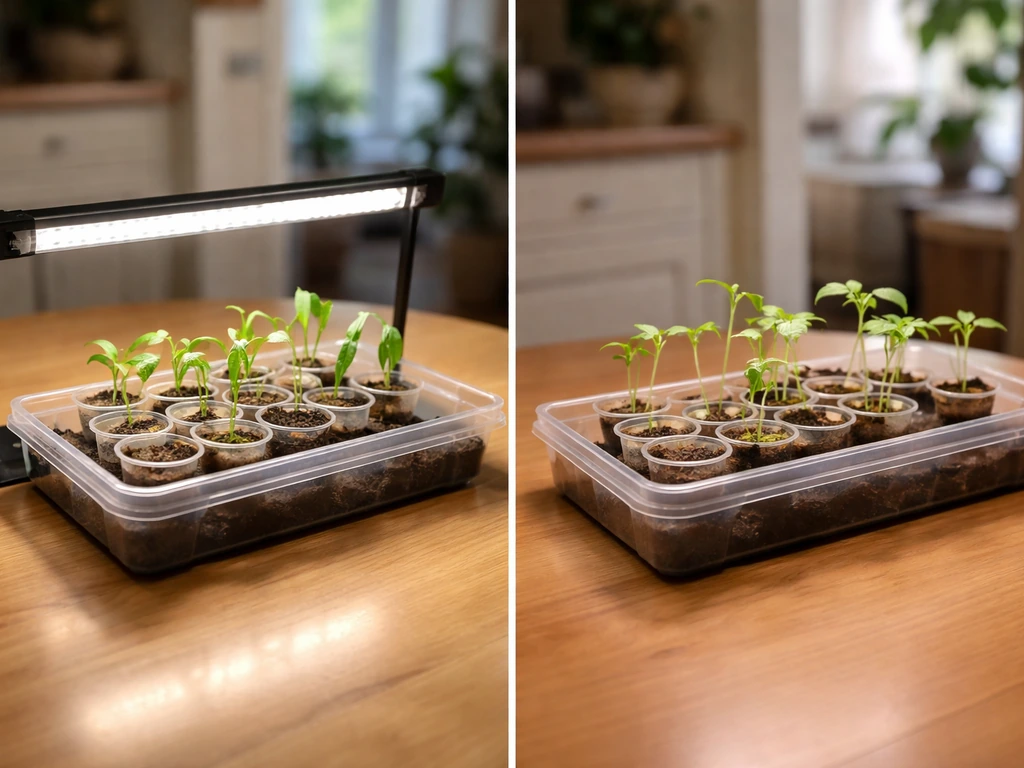
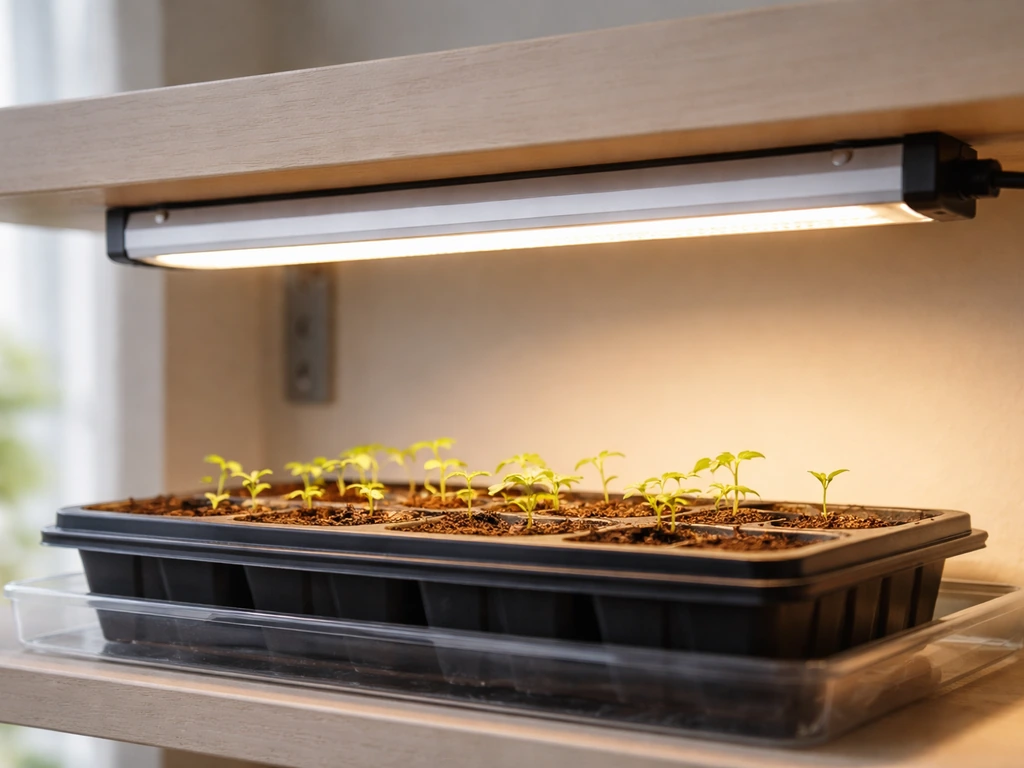
For seedlings and cuttings, community growers report reasonable results with the Harbor Freight bar light at close range (2 to 4 inches above trays). Germination and early-stage seedling development don't demand high PPFD, so a 19W cool-white LED can get the job done if you keep it close enough. The 2x2 ft. coverage claim is plausible for that low-demand stage but should be taken as a maximum, not an optimum.
Where things get shakier is vegetative growth and anything flowering or fruiting. Plants in veg generally want 200 to 400 μmol/m²/s at the canopy. Flowering crops push for 400 to 600+ μmol/m²/s. A 19W bar light almost certainly can't sustain those levels across a full 2x2 footprint, especially once you account for the inverse-square drop-off as you raise the fixture to accommodate taller plants. Without published PPFD data, you'd want to verify with a quantum sensor before committing this light to anything beyond the seedling tray.
For herbs and microgreens on a kitchen counter or basement shelf, this light makes a lot more sense. Both crops are short, light-tolerant, and don't need the canopy saturation that fruiting plants demand. Run it 4 to 6 inches above a tray of microgreens or a row of basil starts, and you'll get usable results. Heat is minimal given the 19W draw, so it won't cook plants or turn your grow shelf into a sauna.
Placement and spacing guidance
- Seedlings and germination trays: 2 to 4 inches above the tray surface, 18+ hours of light per day
- Herbs and microgreens: 4 to 8 inches above canopy, 14 to 16 hours per day
- Vegetative growth (small plants): as close as possible (6 to 12 inches) and confirm output with a PPFD meter before relying on it
- Flowering/fruiting: not recommended as a primary light source at this wattage
- Multi-bar setups: link 2 to 4 units for a 2x4 ft. shelf run, keeping fixture spacing consistent at roughly 12 to 14 inches apart
Pros, cons, and where it tends to fail
The real strengths here are price, safety certification, and the linkable design. At $22.99 with ETL and FCC marks, it's not a sketchy import sold without any oversight. The damp-location rating and GFCI requirement show Harbor Freight took at least baseline electrical safety seriously. For a seed-starting shelf or a short-term propagation setup, this thing is hard to beat on cost.
The weaknesses are harder to ignore. There's no dimming, which limits versatility across growth stages. The 90-day warranty is short compared to branded grow lights that routinely offer 1 to 3 years. Harbor Freight compares SKU 59250 to the Feit Electric GLP24FS/19W/LED at roughly $47, which suggests the SKU 59250 competes in the budget tier where component longevity is always a question. You won't find published driver efficiency data, LED chip quality ratings, or heat sink specifications. If a unit fails after 90 days, you're out of warranty coverage.
Community reports flag one recurring issue: leggy seedlings when the fixture is mounted too high or used for too few hours. This isn't a defect so much as a limitation of using a low-wattage light at the wrong distance. The fix is straightforward (move it closer, run it longer), but it's worth knowing in advance. Nobody has published documented hardware failure rates for SKU 59250 specifically, so reliability beyond the anecdotal is genuinely unknown.
Harbor Freight vs. the competition: is $23 actually good value?
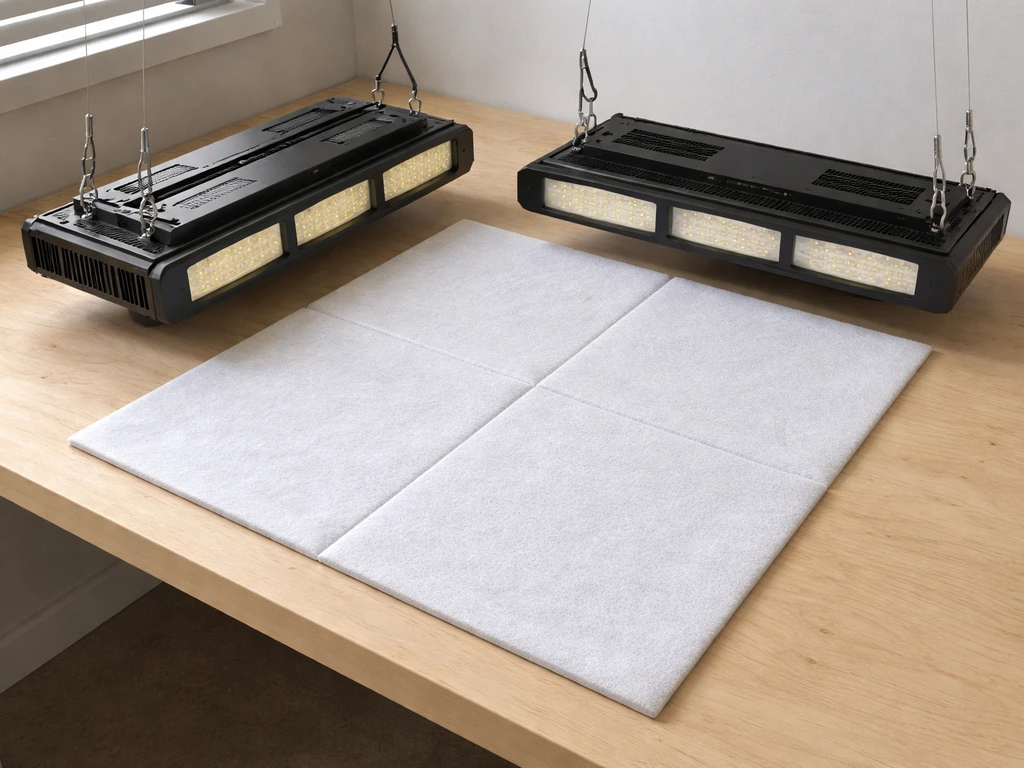
For a direct value comparison, the honest framing is performance per watt and coverage per dollar, with the caveat that Harbor Freight's missing PPFD data forces some estimation. Here's how the SKU 59250 stacks up against a few key reference points:
| Light | True Watts | Coverage | PPFD Published? | Dimming | Warranty | Approx. Price |
|---|---|---|---|---|---|---|
| Harbor Freight SKU 59250 | 19W | 2x2 ft. (claimed) | No | None | 90 days | $22.99 |
| Feit Electric GLP24FS/19W/LED | 19W | 2x2 ft. | No | None | 1 year | ~$47 |
| Mars Hydro TS 1000W LED | 150W actual | 3x3 ft. (veg) / 2.5x2.5 ft. (flower) | Yes | Yes | 3 years | ~$110–130 |
| Ferry Morse grow light (bar style) | ~20–24W | 1x2 ft. to 2x2 ft. | Partial | Limited | 1 year | ~$30–50 |
| Marswell LED (full-spectrum bar) | ~45W | 2x4 ft. | Partial | Yes (some models) | 1 year | ~$40–60 |
If you're comparing SKU 59250 directly to the Feit Electric reference model, Harbor Freight wins on price by roughly 50% for effectively the same wattage and coverage claims. That's a legitimate value if the build quality holds up. Where Harbor Freight loses the comparison is when you look at purpose-built grow lights with real photon output data and longer warranties. A Mars Hydro TS 1000W LED grow light costs more upfront but delivers published PPFD maps, actual dimming controls, and a 3-year warranty that drastically changes the risk calculation for serious growers.
For a broader look at the full Mars Hydro lineup rather than just that one model, the Mars Hydro grow light review covers how their lights scale across different grow space sizes, which is relevant if you're considering upgrading from a bar-style fixture to something more capable. Similarly, if you're weighing a bar-style fixture at a similar price point, the Ferry Morse grow light review walks through a comparable product that's also sold in garden retail channels alongside seed-starting equipment.
If your budget is tight and you're looking at lesser-known brands, there are a few worth knowing about. The Holland Star grow light review covers another budget-tier option that competes directly in the under-$50 bar-light category. And if you're considering a slightly higher wattage bar at a modest price increase, the Marswell LED grow light review gives you a sense of what a step up in output and controls actually looks like in practice.
Who should buy it, and who should skip it
Buy the Harbor Freight SKU 59250 if you're starting seeds, propagating cuttings, or growing herbs and microgreens on a shelf. It's ETL-listed, inexpensive, and the linkable design makes it genuinely practical for a 2x4 or 4x4 ft. seed-starting rack when you chain multiple units. If your grow operation is a tray of tomato seedlings in March, this light will do the job without a complicated setup or a meaningful financial commitment.
Skip it if you're growing through full vegetative and flowering stages, working with light-hungry fruiting plants (tomatoes, peppers, cannabis), or need a light that will last reliably for more than one season. The 90-day warranty, missing photon output data, and lack of dimming make it a poor fit for anything beyond the most light-tolerant applications. For those use cases, $100 to $150 in a dedicated grow light with documented PPFD and a multi-year warranty is money better spent.
Quick "if you have X, choose Y" guide
- Seed-starting shelf (2x4 ft.), budget under $50: Buy 2 linked Harbor Freight SKU 59250 units. Total 38W, ETL-listed, handles germination and early seedlings well.
- Herb garden on a kitchen counter (1x2 ft.): One SKU 59250 at $22.99 is appropriate and well-matched to the light demands.
- Microgreens rack (multiple trays): Link 3 to 4 units per shelf run. Keep fixtures 4 to 6 inches above trays. This is a strong use case for this light.
- Veg-through-flower in a 2x2 tent: Skip Harbor Freight. Look at bar-style dedicated grow lights in the 100 to 200W actual range with published PPFD data.
- Veg-through-flower in a 3x3 tent: A purpose-built LED like the Mars Hydro TS 1000 (actual ~150W) is the minimum appropriate tool for this space.
- Mixed propagation and veg (small space, limited budget): Consider one Harbor Freight unit for the propagation corner and a dedicated grow light for anything past the seedling stage.
What to confirm before you buy
Before picking up SKU 59250, check three things. First, make sure your installation location has a GFCI outlet or you're adding one, because the manual requires it and skipping that step is a genuine safety issue. Second, measure your shelf or mounting surface and confirm you have clearance for the 23.6-inch mounting span plus the 5-foot cord routing. Third, if you're growing anything other than seedlings or herbs, take the $23 and apply it toward a light that actually publishes PPFD data, because you'll want to verify canopy output with a quantum sensor before you commit to a full grow cycle. For the seedling tray use case, though, this light is a reasonable buy at its price point.
FAQ
Can I plug the Harbor Freight grow light into any outlet, or do I need a GFCI specifically?
Not safely, unless you use the right power setup. The fixture expects a GFCI-protected circuit (the manual calls this out), so plug it into a GFCI outlet or add a GFCI receptacle. Also, the “linkable” feature only applies to connecting the fixtures as designed, do not use random extension cords or power strips to reach other outlet locations near water.
How close should I hang the Harbor Freight bar light to avoid leggy seedlings?
It is more accurate to use height and plant distance as your primary dial, not the “2x2 ft coverage” marketing. For seedlings and microgreens, many growers succeed with very close mounting (roughly 2 to 6 inches depending on how intense you want it), then increase spacing only gradually as plants get taller to prevent stretching and keep leaves from becoming leggy.
What’s the easiest way to add a timer or control to the Harbor Freight grow light?
Yes, but only with external controls. Since there is no built-in dimming or timer, you’ll need a separate outlet timer (for daily photoperiod control) or a smart plug (for scheduling). If you want intensity changes by growth stage, dimming needs to come from an external dimmer compatible with the fixture and wiring (which is not guaranteed), otherwise plan to adjust distance instead.
Will this light work for tomatoes, peppers, or cannabis flowering?
Usually, no, you should not rely on it for full flowering and fruiting. The article explains that fruiting crops often need much higher canopy PPFD than a 19W cool-white bar can likely deliver across a full 2x2 area, especially as you raise the fixture for taller plants. If you try it anyway, expect to shrink the effective coverage area (focus on fewer plants) and keep the fixture very low.
If Harbor Freight doesn’t publish PPFD, how can I tell whether the light is strong enough?
You can estimate light for plants without PPFD data, but you cannot verify true performance. The practical workaround is using a quantum sensor to measure PPFD at canopy level once you choose your mounting height and hours. That measurement is the only reliable way to know whether you are meeting typical seedling versus vegetative versus flowering targets.
Can I use the listed lumens (2600) to calculate whether it’s enough for my plants?
For the 59250 bar, lumens are a poor planning tool for plants. Lumens describe visibility to humans, not photosynthetic photon delivery. Use lumens only as a vague signal that the fixture is on, then choose distance, photoperiod, and a measurement check (PPFD) if you want confidence for anything beyond seedlings.
Why do people complain about uneven growth or leggy plants with bar-style budget lights?
Watch for two common problems: light stretching (mounting too high or running too few hours) and uneven lighting across the tray. With a low-watt bar, edge plants can receive less intensity, so either center the fixture over the main canopy, use more than one unit to widen coverage, or rotate the tray periodically for uniform growth.
What installation mistakes should I avoid when chaining multiple fixtures or mounting on a shelf?
You can use it on shelves, but treat clearance and cord routing like part of the design. Confirm you have space for the mounting span and the 5-foot cord path, and avoid mounting where the bar sits directly over heat sources. For multi-unit link setups, also check that each fixture remains within safe reach of the GFCI outlet and that the linked arrangement does not overload any single power outlet.
Is the 90-day warranty enough reason to avoid buying this light?
The 90-day warranty is short, so reliability decisions should be based on risk tolerance. If you need dependable light through an entire grow cycle, consider that you may be paying again if a unit fails after the warranty window. A practical step is to buy with a clear backup plan (spare unit, alternative lamp, or a return strategy) if timing matters.
How should I set lighting hours for seedlings compared with herbs or microgreens?
Yes, but you still need to think about photoperiod. Seedlings and microgreens usually benefit from consistent daily light exposure, and the lack of a built-in timer means your schedule matters. Set a timer externally, then adjust distance over time rather than expecting the fixture to ramp intensity as plants mature.