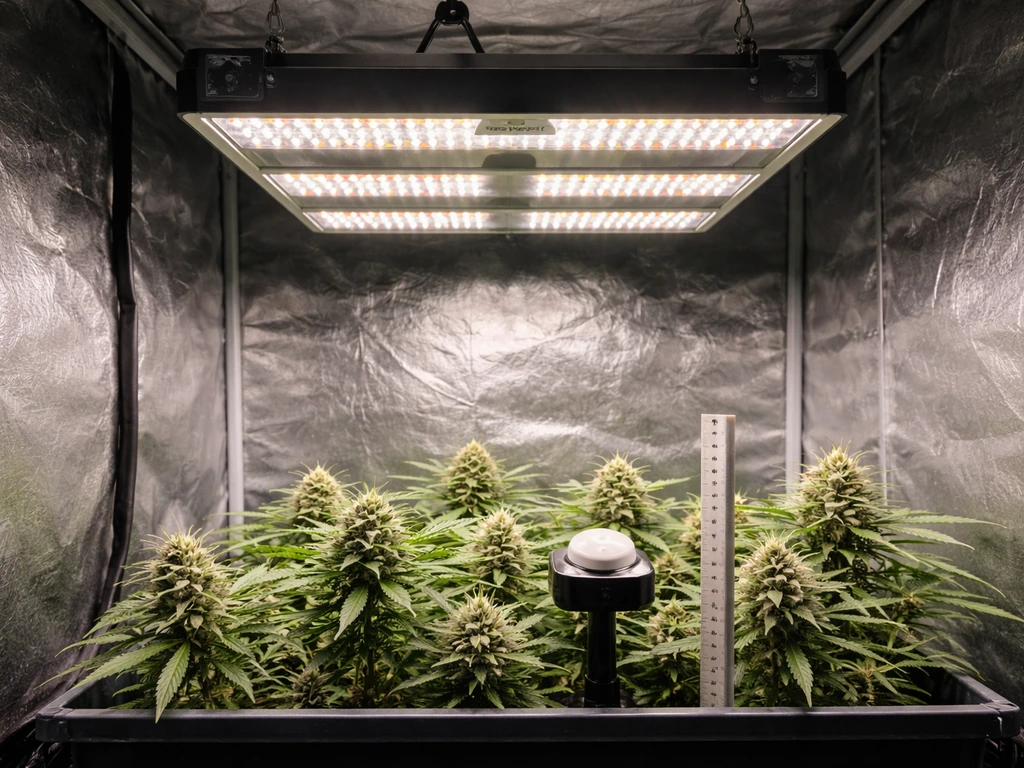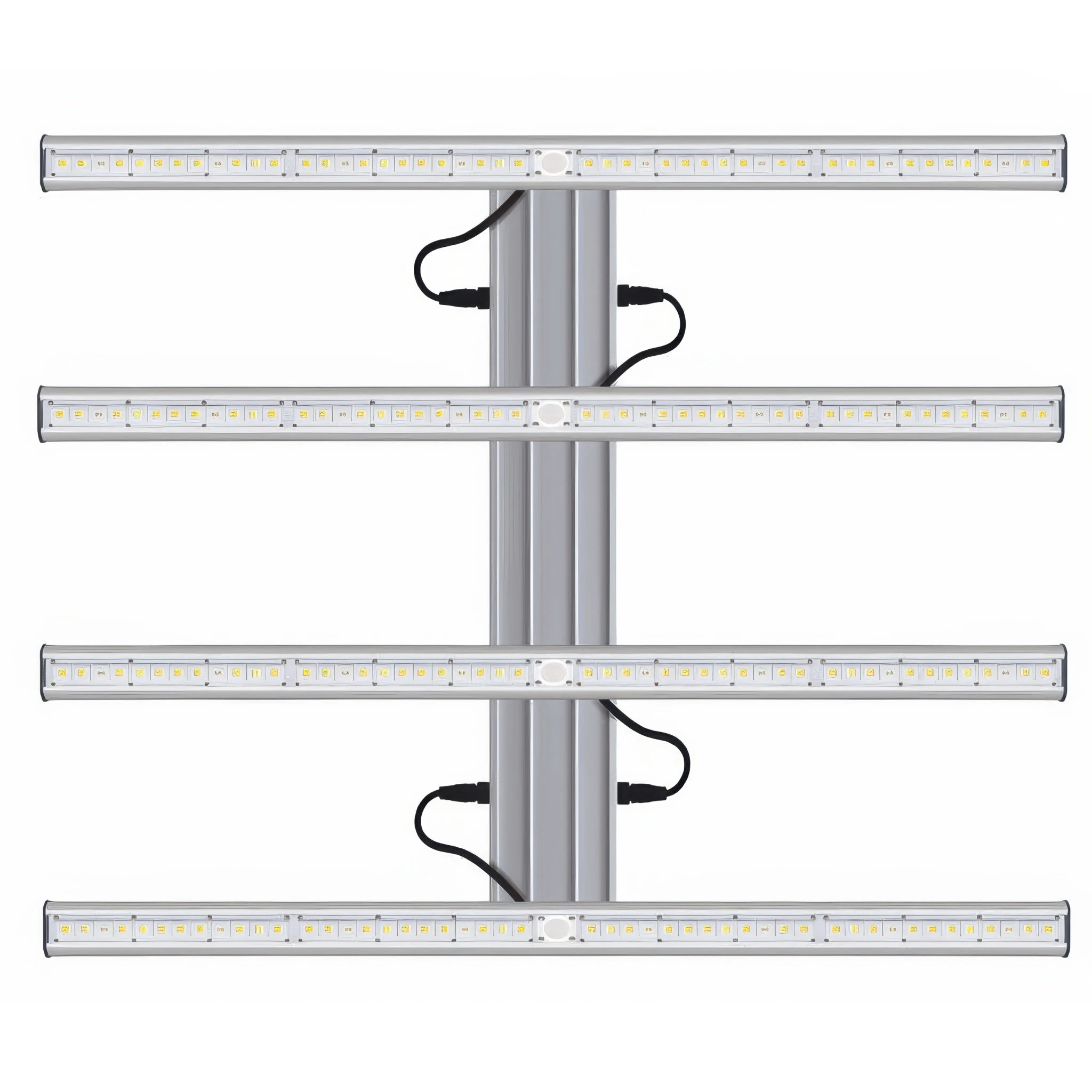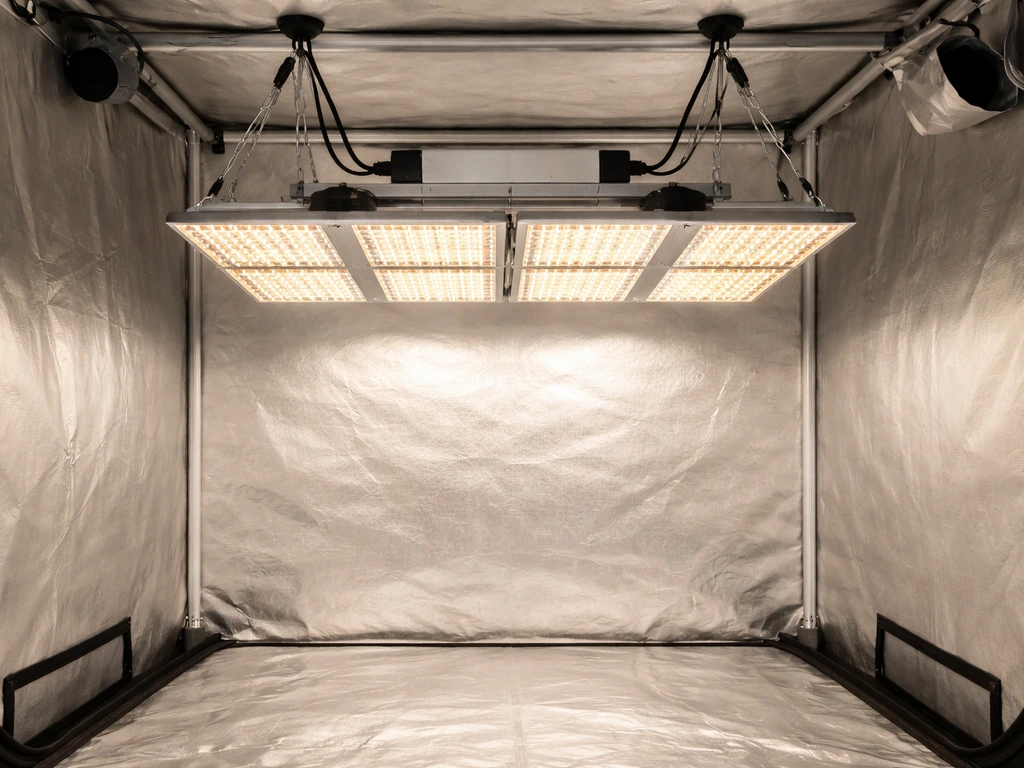
The Mars Hydro TS 1000W is a solid small-tent LED grow light that actually draws around 150 watts, covers a 2x2 to 2.5x2.5 foot footprint, and works well from seedling through flower. If you have a 2x2 or 2x4 tent and a budget in the $80–$120 range, it's a genuinely competitive option. But there are a few things worth understanding before you buy, especially around what '1000W' actually means, how to set the mounting height correctly, and where it sits against alternatives like the Spider Farmer SF1000.
Mars Hydro TS 1000W LED Grow Light Review for Indoor Growers

Marcus Caldwell
17 Apr 2026
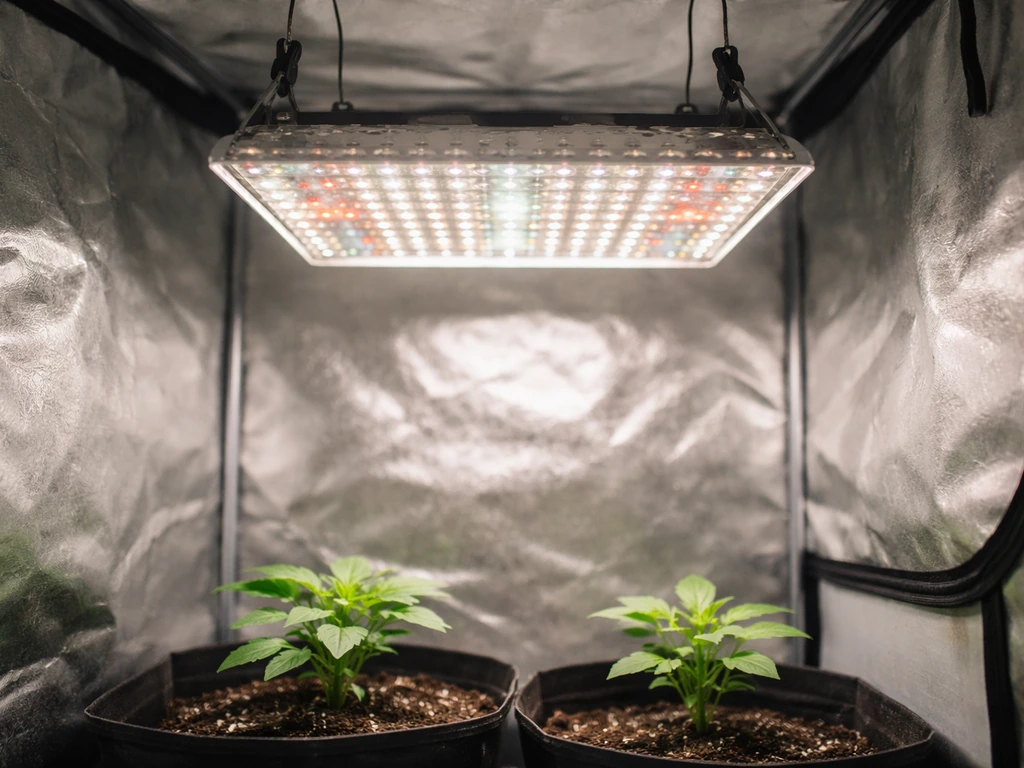
What the TS 1000W actually is (and what '1000W' doesn't mean)
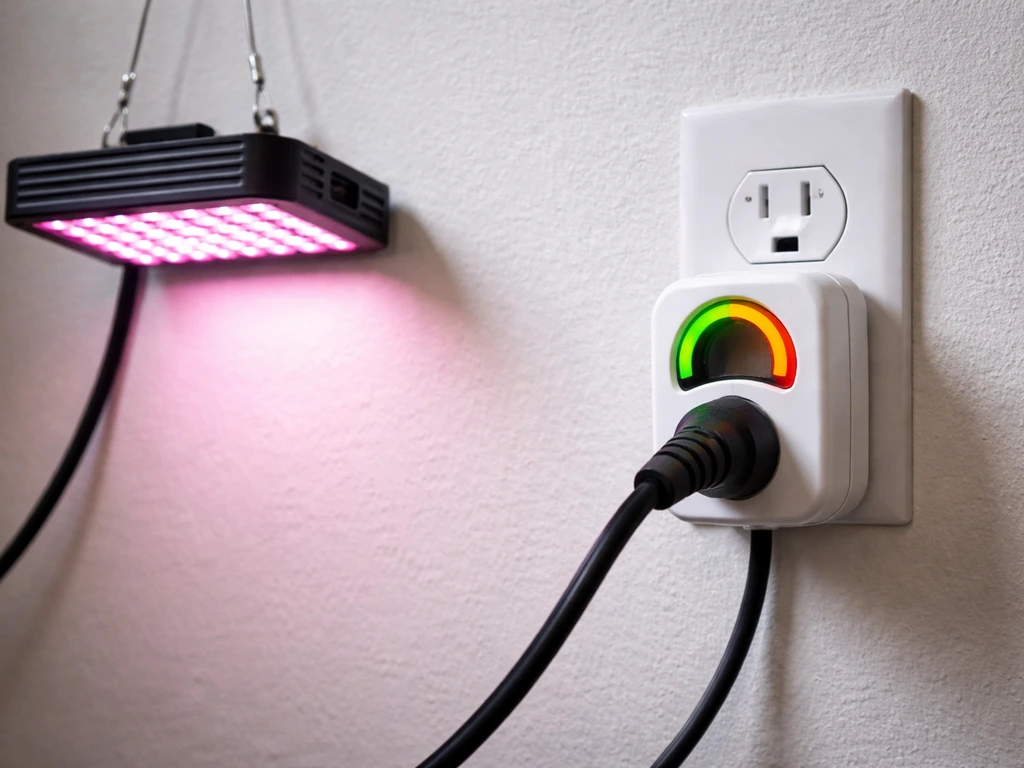
Mars Hydro calls this the TS 1000W, but it draws 150 watts (plus or minus 5%) from the wall at AC100–277V. The '1000W' label is a legacy marketing convention that refers loosely to the HPS or incandescent equivalent it replaces in light output terms, not the actual power consumption. So if you're budgeting for electricity or trying to understand heat output, the number that matters is 150 watts, not 1000.
That 150W delivers a PPF of 343 micromoles per second (μmol/s) and a PPE (efficacy) of 2.3 μmol/J, according to Mars Hydro's published specs. Those are the numbers that tell you how much usable light the plant actually sees. The diodes are BridgeLux chips, which is a credible mid-tier chip brand, and the spectrum covers 660–665nm deep red, 730–740nm IR, plus broad white ranges of 3000–3200K (warm white) and 6000–6500K (cool white). That's not a pure-white quantum board setup; there's targeted red and infrared supplementation built in. For practical purposes, it means the spectrum is tuned to support both vegetative growth (where blue-heavy white light helps) and flowering (where red and IR push bud development). Mars Hydro markets it as a full-cycle light, and the spectrum backs that up.
Tent size, coverage, and mounting height
Mars Hydro rates the TS 1000 for a 2x2 foot core flowering coverage area and up to 2.5x2.5 feet for vegetative growth. That's a pretty honest spec. At 150W, you're not going to push a 3x3 tent through flower with this light alone. For a 2x2 tent, it's appropriately sized. For a 2x4, it's underpowered for flowering but can work for veg or seedlings.
Mounting height makes a significant difference with this light. For seedlings and clones, start at 24–30 inches above the canopy and dim it to around 30–50% to avoid light stress on tender plants. Mars Hydro’s grow tent kit manual also includes hanging guidance using the YOYO system, with the instruction “Hang the light with YOYO.” blank" rel="noopener noreferrer">Mars Hydro’s YOYO hanging guidance uses a “Hang the light with YOYO” instruction. During veg, blank" rel="noopener noreferrer">20–24 inches at 50–75% power is a reasonable starting point. For flower, drop to 16–20 inches and run it at full power. Mars Hydro's own guidance aligns with these ranges, and field testing confirms that center PPFD can spike quite high at close distances, so if you're seeing bleaching or light stress, raise the fixture a few inches before adjusting the dimmer.
Spectrum performance across grow stages
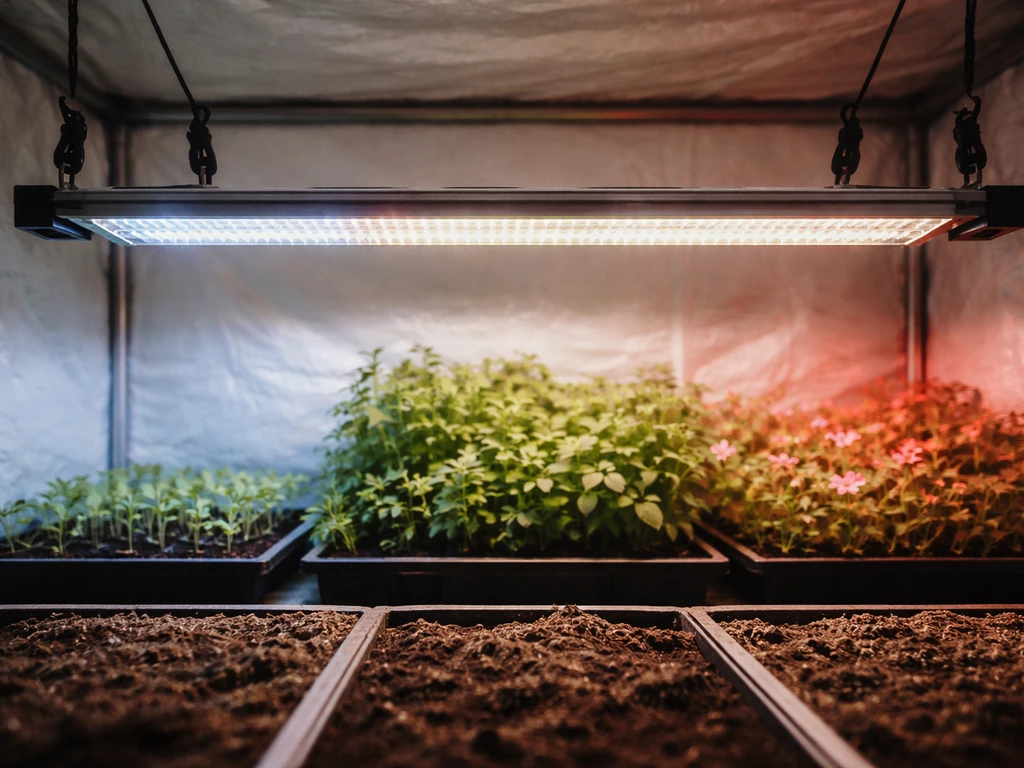
The TS 1000's full-spectrum design genuinely supports all three growth stages, which is one of its practical advantages over cheaper single-spectrum panels. During seedling and early veg, the cool white component (6000–6500K) supplies enough blue-range light to keep internodal spacing tight and growth compact. As plants move into late veg and pre-flower, the warm white (3000–3200K) and the 660–665nm deep red channel become more influential, and you'll typically see good plant response without changing the light at all.
The 730–740nm IR channel is a notable inclusion for a light at this price point. Infrared light isn't visible to the human eye, but plants use it in the Emerson enhancement effect, which can improve photosynthetic efficiency and can trigger flowering responses. It's not something you'll find on the cheapest LED strips or panels, and it gives the TS 1000 a measurable edge in flowering performance over lights that skip IR entirely. If you've looked at a Holland Star grow light review and found the spectrum lacking detail, the TS 1000's published wavelength breakdown will feel more reassuring by comparison.
Real-world performance: what the numbers look like in practice
Third-party PAR mapping confirms what the specs suggest: the TS 1000 delivers strong center PPFD at close mounting heights, but the intensity drops off toward the edges of even a 2x2 footprint. That's normal for a single-point light source, but it means canopy uniformity isn't this light's strongest attribute. For a single large plant trained flat (like a scrog), the hot center can work in your favor. For a 2x2 with four smaller plants, you may see the corner plants lag behind unless you rotate periodically or position side walls with reflective Mylar.
The 2.3 μmol/J efficacy rating is competitive for this price tier in 2026, though not class-leading. Top-end lights in the $200–$300 range regularly hit 2.7–3.0 μmol/J. For a grower spending around $100, 2.3 μmol/J is genuinely decent and puts it ahead of many similarly priced alternatives. It's worth understanding how to read these numbers: μmol/J (micromoles per joule) tells you how efficiently a light converts watts into photosynthetically active photons. Higher is better, and 2.3 is a real-world number that holds up to scrutiny better than marketing lumen figures, which aren't especially meaningful for plant growth.
Build quality, cooling, and noise
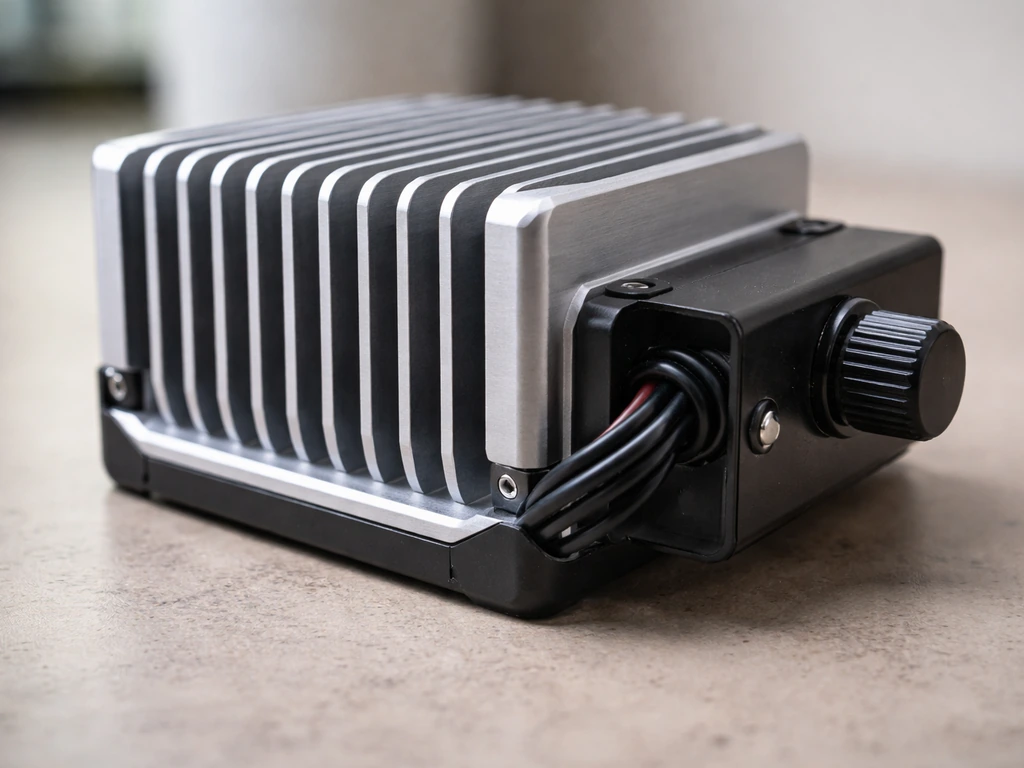
The TS 1000 uses a fanless passive cooling design. There's no active fan, so there's no noise from the fixture itself, which is a real practical benefit in a bedroom or living-space tent. The aluminum heat sink handles thermal dissipation, and at 150 watts of actual draw, it does the job without running uncomfortably hot. Under typical conditions the fixture runs warm to the touch but not alarmingly hot, and the rated 50,000-hour LED lifespan reflects a light that isn't being thermally stressed.
The build feels appropriate for the price. The frame is aluminum, connections are clean, and the external driver (which sits outside the fixture and connects via a short cable) keeps heat-generating electronics away from the diodes. The external driver also houses the dimmer knob, which runs from 0 to 100% and is straightforward to use. Some growers find the external driver slightly awkward to mount neatly inside a tent, but it's a minor inconvenience rather than a real problem. The 2026 updated version includes Bluetooth light control capability when paired with a compatible controller, though the base unit's dimmer knob works independently without any app connection.
Mars Hydro covers the TS 1000 with a 5-year warranty, which is notably generous for this price tier. Their warranty process requires contacting support and providing documentation, which is standard practice. Compared to budget fixtures with 1-year coverage (or none at all), the 5-year term is a meaningful reliability signal.
Value for money and how it compares
The TS 1000 consistently lands in the $80–$120 range. At that price, the two most natural competitors are the Spider Farmer SF1000 and various budget white-panel lights. The SF1000 targets the same 2x2 footprint and sits at a very similar price point, also using Samsung-brand diodes rather than BridgeLux. The SF1000 tends to score slightly higher on efficacy in third-party testing, but the gap isn't dramatic at typical hobbyist scale. If you're already invested in the Mars Hydro ecosystem (tent, fans, controllers), staying within the brand for daisy-chaining and app compatibility makes practical sense.
| Feature | Mars Hydro TS 1000 | Spider Farmer SF1000 |
|---|---|---|
| Actual power draw | 150W | ~100W |
| PPF | 343 μmol/s | ~212 μmol/s |
| PPE (efficacy) | 2.3 μmol/J | ~2.3 μmol/J |
| Core coverage (flower) | 2x2 ft | 2x2 ft |
| Spectrum | White + 660nm + 730nm IR | White + 660nm (no IR) |
| Cooling | Passive (fanless) | Passive (fanless) |
| Dimming | Manual knob (0–100%) | Manual knob (0–100%) |
| Daisy-chain support | Yes | Yes |
| Warranty | 5 years | 3 years |
| Approx. price (2026) | $80–$120 | $80–$110 |
The TS 1000 outputs more total photons than the SF1000 simply because it draws more power. If raw output in a 2x2 matters to you, the TS 1000 has the edge. If efficacy-per-watt is your priority and you're running a very tight electricity budget, they're essentially tied. Both are meaningfully better choices than the kind of low-cost panels you'd find in a harbor freight grow light review, which typically lack both spectrum quality and reliable thermal management.
If you want a broader picture of where this light sits in the Mars Hydro lineup overall, a Mars Hydro grow light review covering multiple models is worth reading alongside this one. The TS 2000 and TS 3000 step up to larger coverage areas (3x3 and 4x4 respectively) for growers who outgrow the TS 1000's footprint. Similarly, if you've been comparing the TS 1000 with white-panel alternatives like the Marswell LED grow light, the key differences come down to spectrum supplementation: Marswell's panels tend to be pure-white designs without the red/IR channels.
For growers who've previously used simple strip lights or entry-level fixtures, reading a Ferry Morse grow light review is a useful reminder of how much performance separates true horticultural LEDs from consumer grow kits. The TS 1000 operates in a completely different category from those products.
How to set it up: installation, settings, and what to do when things go wrong
What's in the box
- TS 1000 LED grow light fixture
- External driver with dimmer knob
- Dimming cable (for daisy-chaining multiple lights)
- Power cord
- YoYo hangers (adjustable ratchet hangers)
- Hanging hardware/kit
Installation steps
- Thread the YoYo hangers through the tent's top bars and attach them to the fixture's hanging points.
- Connect the driver to the fixture using the included cable. Route the driver to a convenient location inside or outside the tent.
- Plug the power cord into the driver (not directly into the fixture).
- Set the dimmer knob to the appropriate level for your current grow stage before powering on.
- If running multiple TS-series lights together, connect the dimming cable between the driver ports to enable simultaneous dimming and switching. Designate one light as the main and the others as sub-lights per the user manual.
- For Bluetooth/app control, pair the light with the Mars Pro app through the controller accessory (if your bundle includes it). The base dimmer knob works without the app.
- Power on and verify the fixture is illuminating evenly across the whole panel.
Recommended settings by stage
| Growth Stage | Mounting Height | Dimmer Setting | Photoperiod |
|---|---|---|---|
| Seedlings / clones | 24–30 inches | 30–50% | 18/6 |
| Early veg | 22–26 inches | 50–70% | 18/6 |
| Late veg | 20–24 inches | 70–85% | 18/6 |
| Flower | 16–20 inches | 100% | 12/12 |
Troubleshooting common issues
- Light stress / bleaching on leaves: raise the fixture 2–4 inches or reduce dimmer by 15–20% and reassess after 48 hours.
- Stretchy, pale seedlings: lower the fixture or increase dimmer setting. Seedlings that stretch are usually light-starved, not over-lit.
- Uneven canopy growth: rotate plant positions every 3–5 days and check that tent walls are reflective.
- Daisy-chain lights not responding together: verify the dimming cable is seated fully in both driver ports and that you've correctly designated the main light.
- App / Bluetooth not connecting: the base dimmer works without the app. Bluetooth control requires a separate Mars Hydro controller accessory, not just the light itself.
- Fixture runs very hot: at 150W passive cooling is adequate, but ensure the tent has adequate ventilation. If the driver feels extremely hot, check that airflow isn't blocked around it.
- Under warranty (within 5 years): contact Mars Hydro support with proof of purchase and photos or video of the issue. They typically request documentation before issuing a replacement or repair.
Who should buy it, and who should look elsewhere
Buy the TS 1000 if you're growing in a 2x2 tent, want a proven full-cycle light with a real spectrum (not just white LEDs), and value the 5-year warranty and fanless operation. It's particularly well suited to first-time indoor growers who want something that works out of the box without calibration, and to anyone already using Mars Hydro tents and fans who wants to keep daisy-chaining and controller options open.
Skip it, or at least look harder at alternatives, if your space is larger than 2x4 feet, you're flowering a full 3x3 and want dense yields across the whole canopy, or you're comparing it to newer 2.7+ μmol/J lights in the same price bracket. At 2.3 μmol/J the TS 1000 is good, not exceptional. If you want to run on the tightest possible electricity budget and maximize grams per kilowatt-hour, there are slightly more efficient options. But for the combination of output, spectrum quality, reliability indicators, and value, the TS 1000 holds up as one of the better choices in the sub-$120 small-tent category in 2026.
FAQ
Will the TS 1000W cover a 2x4 tent effectively for flowering?
Yes, but only if you control canopy height and light distribution. In a 2x2 tent, the center PPFD is strong, while the corners drop more than you might expect for a “full coverage” look. For a single plant or a tightly trained scrog, it can work very well. If you run four separate plants, rotate the pots every few days and consider reflective side walls (not just a reflective floor) to recover some corner losses.
Can I use the TS 1000 at different power levels instead of changing mounting height?
Mostly, because the TS 1000 is dimmable from 0 to 100% using the external driver. What matters is matching your target intensity at the canopy, not the number on the dimmer. If your plants show pale leaves or delayed growth, raise intensity gradually (or lower mounting height within safe limits) rather than jumping from seedling settings straight to full power.
What are the most common signs I have the TS 1000W too low or too strong?
You should avoid assuming “more is better” when dialing it in. Even with the right mounting range, center hotspots can appear quickly at close distances. If you see bleaching, taco leaf tips, or very dark leaves with slow growth, lift the fixture a few inches first, then reduce power by 10 to 20% increments over several days.
Do I need a PAR or PPFD meter to use this light well?
If you already have reflective material and a stable hang height, you can get close without a meter, but a cheap PAR app or a basic PPFD meter is the best way to remove guesswork. The TS 1000’s intensity drops toward the edges, so a meter helps you confirm whether the corners are receiving enough light for your plant count and training style.
How should I manage canopy height and training with the TS 1000W?
Expect better results with correct canopy management. For best uniformity, keep the canopy as level as possible, because any height differences get amplified by the single-point intensity pattern. With multiple plants, uneven training (one taller plant, others flatter) will create uneven light stress.
How do I estimate electricity cost correctly with the TS 1000W?
Be careful about using the 1000W label for anything involving your electric bill or heat planning. The fixture draws about 150W from the wall, so your real cost is based on that draw. For example, at typical hobby rates, you can estimate weekly cost by multiplying 150W by your hours of use, then converting to kWh.
Where should I position the TS 1000 so it stays cool with passive cooling?
The TS 1000 is fanless, so it should generally be placed in a way that allows natural airflow around the heat sink. Don’t fully enclose it in a sealed reflector box, and keep the driver area from being trapped where it can overheat. If the fixture feels unusually hot to the touch after a long run, improve airflow around the outside surfaces.
Do I need the Bluetooth controller to dim or schedule the TS 1000?
The updated version adds Bluetooth control when paired with a compatible controller, but the dimmer knob works without any app. If you buy it expecting phone control right away, confirm you have the matching controller option. Otherwise, plan to use the manual dimmer and your existing grow setup.
If my tent is bigger than 2x2, can I just add dimming and make the TS 1000 work?
The dimmer can reduce intensity, but it cannot fix coverage limitations. If you want dense yields across a wider footprint, a single TS 1000 is usually the limiting factor in a 3x3 or larger flowering area. In a larger tent, the practical workaround is adding a second fixture and treating them as separate light sources rather than relying on dimming.
What should I do to avoid problems when using the TS 1000’s 5-year warranty?
For warranty, keep your purchase proof and document the setup (photos of mounting height and any dimmer settings) in case support asks about use conditions. The 5-year term is generous for the price, but the process still depends on contacting support and providing documentation, so don’t discard receipts or serial-number information.