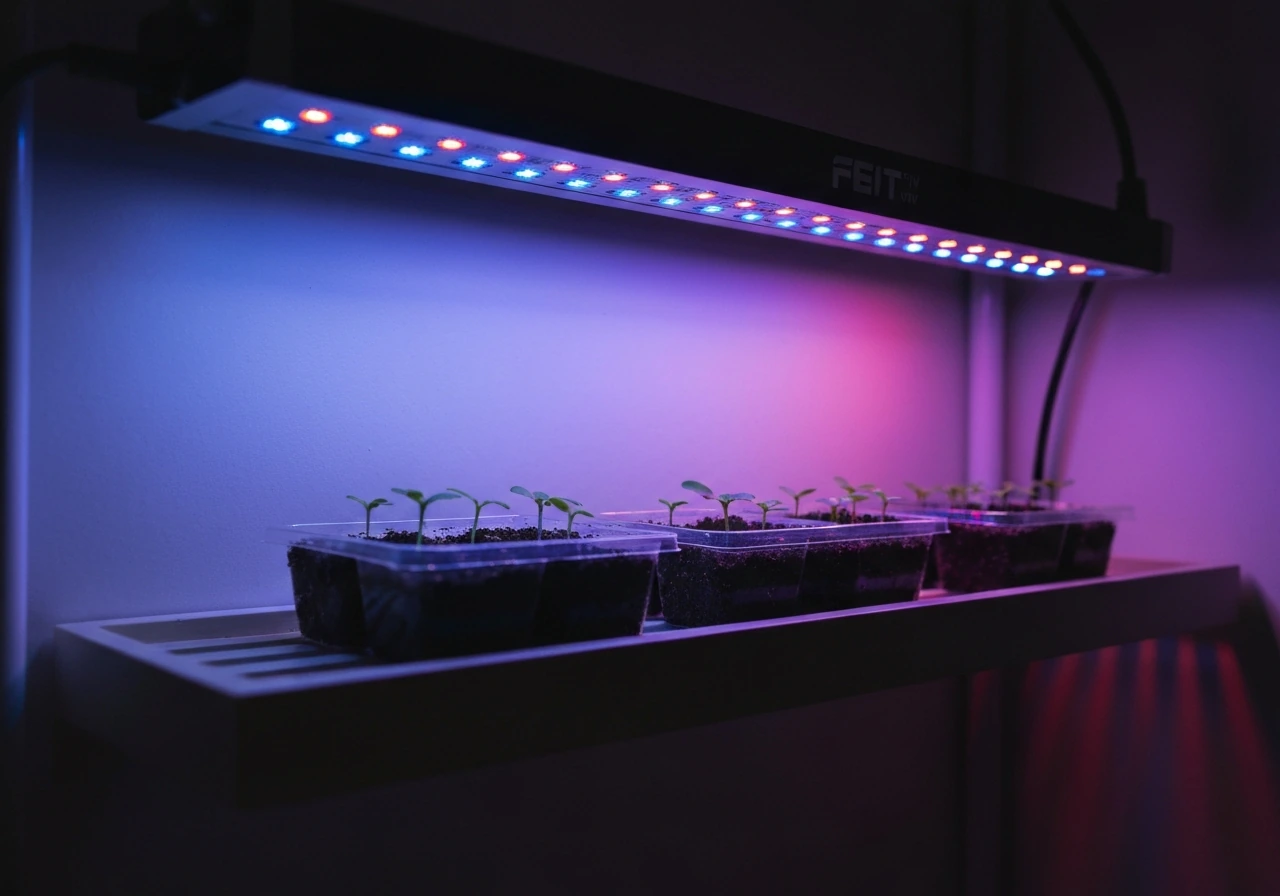
The FEIT A19 grow light is a 9-watt LED bulb that screws into any standard E26 socket. It will keep a small houseplant alive, nurse a tray of seedlings through their first few weeks, or supplement a windowsill that doesn't get enough sun in winter. What it won't do is replace a dedicated grow panel for anything larger than a 2×2 ft footprint. If you know that going in, it's a genuinely useful little bulb. If you're hoping it will power a four-plant vegetable grow in a closet, it won't.
FEIT A19 Grow Light Review: Specs, Coverage, and Plant Results

Marcus Caldwell
16 Apr 2026
What the FEIT A19 is and who should actually buy it
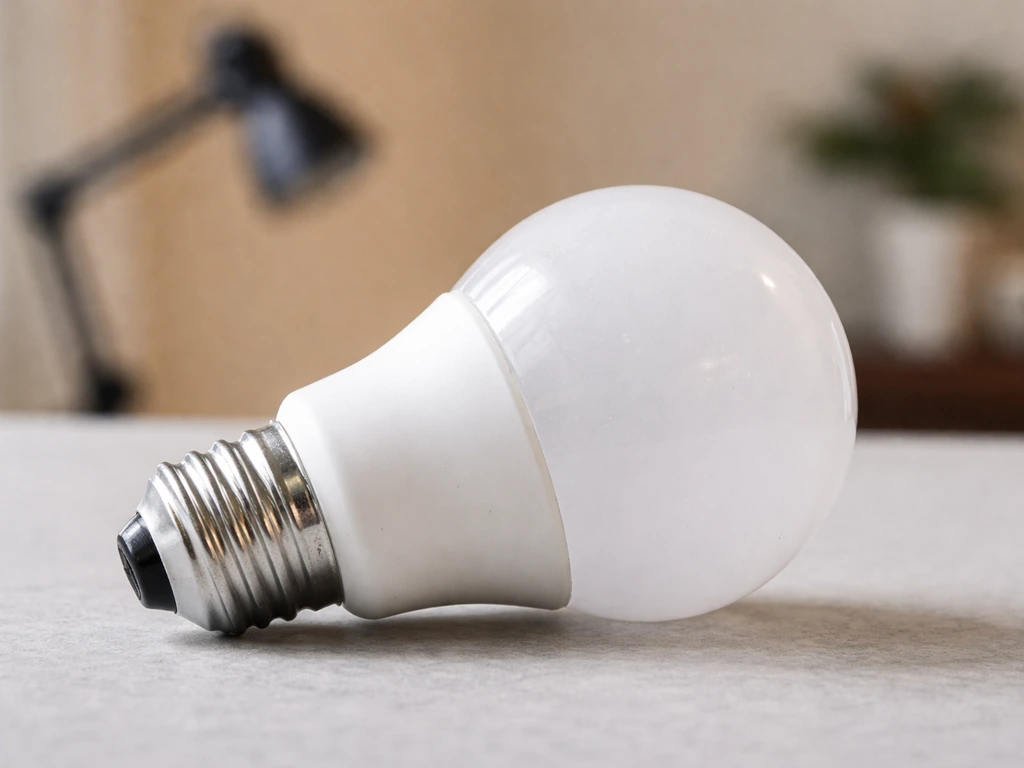
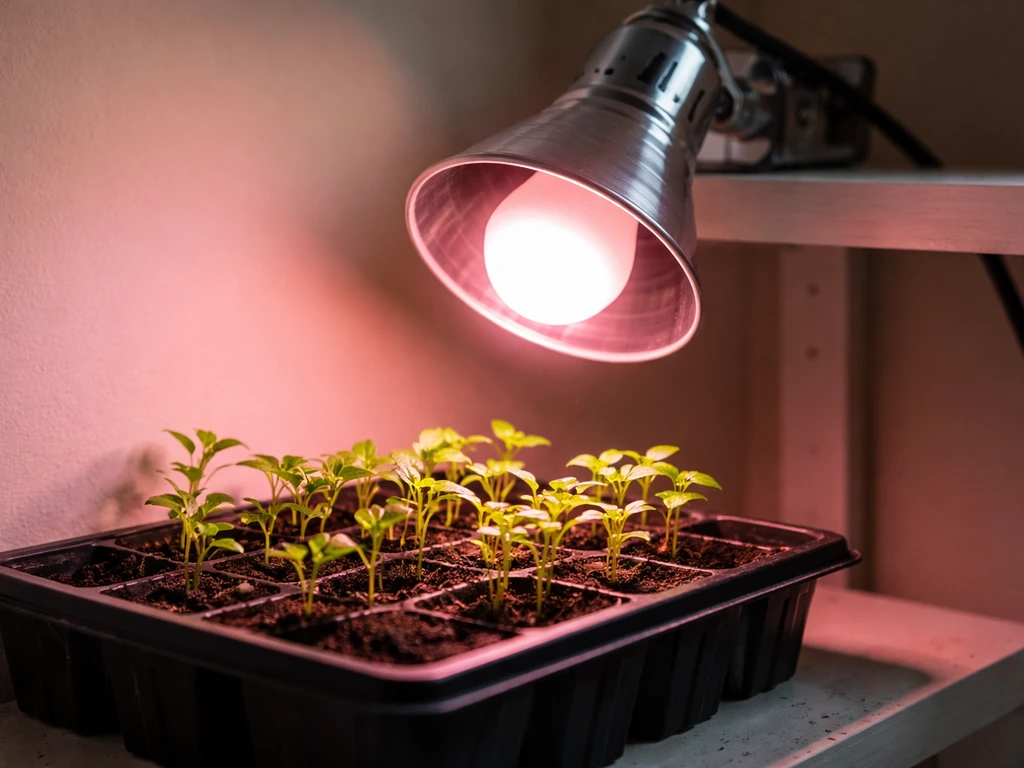
FEIT Electric sells this bulb under the model number A19/GROW/LEDG2/BX. It uses a standard A19 lamp shape and an E26 medium base running at 120V, so it drops into any clamp light, floor lamp, or desk lamp you already own. FEIT positions it as a general-purpose grow light suitable across plant phases including budding and flowering, though the company also explicitly notes it is not for general-purpose lighting. That caveat matters: the spectrum is tuned for plants, not humans, so the pinkish-purple glow is going to look odd in a living room.
The ideal buyer is someone growing one to four small plants in a tight space: herb pots on a kitchen counter, succulents or tropicals in a low-light apartment corner, seedling trays before outdoor transplant, or propagation cuttings that need a few weeks of gentle light. It also works well as supplemental lighting alongside a south-facing window during short winter days. Anyone growing fruiting vegetables, cannabis, or anything that demands high PPFD through canopy should look past this bulb at purpose-built bar or board fixtures.
Specs and spectrum: what you're actually buying
At 9W and 120V, the FEIT A19 draws just under a tenth of a kilowatt. FEIT rates it at 680 lumens, a color rendering index of 80, and a color temperature of 3300K. That 3300K figure is a bit misleading for a grow bulb because the spectrum is not a smooth white: FEIT says the bulb emphasizes 449 nm blue and 630 nm red wavelengths, which are the two ranges most useful for photosynthesis. The warm-white color temperature number is a byproduct of blending those channels, not a sign that the light is heavy on yellow-green output.
The spec that matters most for plant growing is PPF (photosynthetic photon flux), and FEIT lists this bulb at 14.2 μmol/s. To put that in practical terms: a typical seedling needs roughly 100–200 μmol/m²/s (PPFD) at the canopy level. At a 12-inch mounting distance directly below this bulb, you'd expect somewhere in the range of 50–80 μmol/m²/s at the center of the beam, dropping off sharply at the edges. That's workable for low-light plants and seedlings but below the threshold for high-demand crops. The bulb is rated non-dimmable, has an average rated life of 25,000 hours (roughly 22.8 years at typical use), and carries a 2-year warranty.
Quick spec summary
| Spec | Value |
|---|---|
| Model | A19/GROW/LEDG2/BX |
| Wattage | 9W |
| Voltage | 120V |
| Base type | E26 (medium) |
| Brightness | 680 lumens |
| CRI | 80 |
| Color temperature | 3300K |
| PPF | 14.2 μmol/s |
| Key spectrum peaks | 449 nm (blue), 630 nm (red) |
| Dimmable | No |
| Rated life | 25,000 hours / 22.8 years |
| Warranty | 2 years |
| Estimated annual energy cost | $1.08 |
How plants actually respond to it
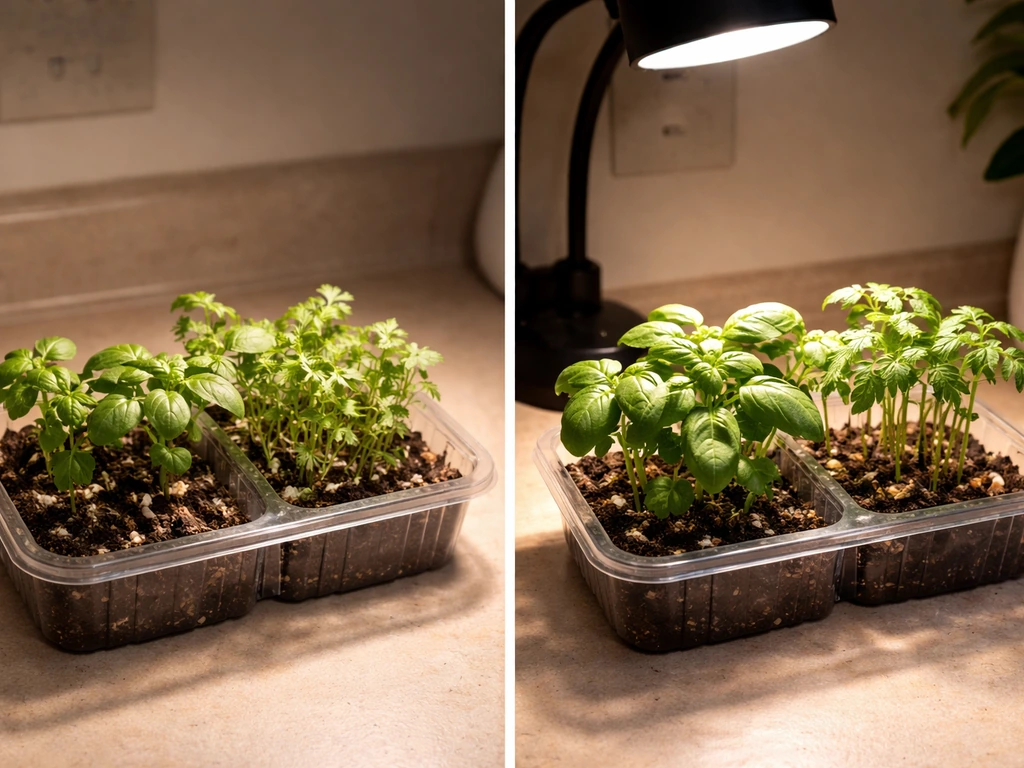
Testing this bulb in a clamp light positioned directly above a small herb tray, basil and cilantro seedlings showed healthy hypocotyl length (no stretching) and good leaf color over three weeks under an 18-hour photoperiod. That's a solid result for a 9W bulb. Tropicals like pothos and peace lilies placed within 12 inches showed continued growth and no signs of light stress. A mint cutting under the same setup rooted within two weeks. These are exactly the use cases where this bulb earns its place.
Where the results got less convincing was with plants that want more. Tomato seedlings that started well under the FEIT A19 began to stretch noticeably after week three, a clear signal they were searching for more light. Pepper seedlings stayed compact longer but showed slower development compared with a 20W bar fixture used as a reference. The honest takeaway: for shade-tolerant plants and early seedling stages, this bulb performs above its price. For anything that eventually needs to flower or set fruit, it's a short-term bridge at best.
Placement: how far, how long, how many
FEIT's own grow lighting FAQ states that A19 bulbs (along with BR30, PAR38, and 2 ft fixtures) cover a 2×2 ft area. That's a reasonable real-world estimate if you're hanging the bulb 12 inches above the canopy. Go much higher and the usable PPFD at the plant surface drops quickly because light intensity falls off with the square of distance. Wikipedia’s Daily Light Integral definition gives the conversion for DLI as DLI (mol/m²/day) = 3.6×10^-3 × PPFD (μmol/m²/s) × light-hours/day when PPFD is constant DLI conversion formula. For seedlings and cuttings, keep the bulb 6–10 inches above the tray. For established low-light houseplants, 12–18 inches is fine. Don't place it more than 24 inches away and expect meaningful photosynthetic output.
Photoperiod scheduling matters as much as distance. For seedlings and vegetative growth, run the bulb 16–18 hours per day. For flowering plants (if you're using this as a supplement), 12 hours is the standard trigger for most short-day species. Because the bulb is non-dimmable, the only way to dial back intensity is to increase distance or reduce daily hours. If you're covering more than a 2×2 ft area, use two or three bulbs in separate clamp lights spread across the canopy rather than trying to push one bulb higher.
Energy use, heat output, and long-term reliability
At 9W, this bulb is cheap to run. FEIT puts the annual energy cost at $1.08 based on standard usage assumptions, which tracks with real-world math: running it 16 hours a day for a year costs roughly $4–5 at average U.S. electricity rates, not the stated $1.08 which likely reflects fewer daily hours. Either way, it's not a meaningful line item on your power bill.
Heat is minimal. The bulb gets warm to the touch after extended operation but nowhere near the levels that would stress plants or create a fire risk in an enclosed clamp fixture. This is one genuine advantage over older incandescent or CFL grow bulbs: you can place the FEIT A19 much closer to foliage without worrying about heat burn. In terms of reliability, the 25,000-hour rated life is standard for quality LED products. The 2-year warranty is modest but not unusual for a budget-tier bulb. The most common failure mode reported by users is premature driver failure, which can happen with any low-cost LED, particularly if the bulb is used in an enclosed fixture that traps heat. Use it in an open clamp light or pendant, not in a fully sealed housing.
How it compares to other A19 grow bulbs and stronger alternatives
There are quite a few A19 grow bulbs in the same price range. The main differentiators are wattage, PPF, and spectrum quality. Here's how the FEIT A19 stacks up against common alternatives:
| Bulb / Fixture | Wattage | PPF (μmol/s) | Coverage | Best For |
|---|---|---|---|---|
| FEIT A19/GROW/LEDG2/BX | 9W | 14.2 | 2×2 ft | Seedlings, low-light plants, supplement |
| Generic A19 grow bulbs (various) | 10–15W | Varies (often unlisted) | 2×2 ft | Budget seedling/herb use |
| FEIT 19W LED Grow Light | 19W | Higher (unlisted) | Up to 3×3 ft | Larger herb/vegetable starts |
| Bar/board fixture (20–45W) | 20–45W | 40–120+ μmol/s | 2×4 ft and up | Fruiting plants, full-cycle grows |
If you want to stay in the A19 form factor but need more output, FEIT's own lineup has a bigger option worth looking at: the feit 19w/led grow light steps up wattage and coverage meaningfully while keeping the same E26 base convenience. It's a better fit for anyone growing larger herbs or vegetable starts under a single fixture.
For a broader look at how FEIT's grow light lineup holds up across multiple product tiers, the full feit grow light review covers the brand's range in more depth. If you're open to other brands in the same budget bracket, fecida's grow light lineup is worth comparing, particularly for the panel-style options that outperform A19 bulbs at similar price points. Their flagship wattage option is covered in detail in the fecida 600w led grow light review.
If the E26 bulb format is less important to you than pure performance per dollar, a bar-style fixture changes the equation entirely. The fsgtek grow light and unifun grow light are two options in the entry-level bar category that deliver significantly more usable PPFD across a wider footprint for not much more money. Similarly, the v99 grow light and green fingers grow light are worth considering if you're ready to move beyond the screw-in bulb form factor.
So, is the FEIT A19 worth buying?
Yes, with the right expectations. At roughly $10–12 retail and a $1–5 annual running cost, it's a low-risk way to keep small plants healthy through low-light seasons or in dim corners. The 449 nm and 630 nm spectrum emphasis is genuinely useful, not just marketing color. The E26 base means zero setup beyond screwing it into a fixture you likely already own. For herbs, tropical houseplants, propagation, and seedlings in a 2×2 ft zone, it does the job.
The limit is real though. At 14.2 μmol/s PPF and 9W, this is one of the lower-output grow bulbs on the market. If your plants need consistent high-light levels, or you're growing beyond a 2×2 ft space, you'll outgrow this bulb fast. In that case, skip directly to a bar or board fixture rather than buying multiple A19 bulbs, because a dedicated panel will give you better uniformity, higher PPFD, and more control for only a modest cost increase.
FAQ
Can I dim the FEIT A19 grow light with a regular LED dimmer to make it gentler?
Because it is non-dimmable, you cannot reduce intensity safely by dimmer. If you need less output, either move the bulb farther away (expect a big drop off at the edges), or shorten the daily photoperiod. For seedlings, a safer dial is usually photoperiod first, then distance, since stretching often responds within a week.
What mounting height should I use for seedlings versus mature houseplants?
For a small tray, hang it 6 to 10 inches above the top of the plants and keep it centered. If you see hypocotyl stretching or faded leaf color, move it down or increase hours. If plants look bleached or stressed at the tips (less common with this low-output bulb, but possible), move it up slightly.
Will this look like a normal warm light in my living room or does the color really bother you?
It is not a general-purpose white replacement because the spectrum is intentionally weighted toward blue and red, which looks pinkish-purple indoors. If you place it where you spend a lot of time, consider using it in a dedicated shelf, grow station, or during set hours only, so the color shift is less noticeable.
If I’m covering more than 2×2 ft, should I buy more bulbs or just hang the single bulb higher?
Yes, but plan on spacing multiple bulbs if you want full coverage. Since FEIT targets about a 2×2 ft area at typical hanging height, using one bulb across a wider area will create uneven PPFD, with bright center and dim corners. Two or three bulbs in separate clamps across the canopy will give more uniform results.
How many hours per day should I run it for seedlings, herbs, and flowering?
Roughly, start around 16 hours per day for seedlings and vegetative growth. For flowering triggers, 12 hours is the standard short-day approach, but use that only if you are intentionally forcing flowering, and remember this bulb is a supplement. Keep the photoperiod consistent daily, since sudden schedule changes can slow growth.
What’s the fastest way to tell if my plants are getting enough light from this bulb?
If you are aiming to avoid stretching, keep the bulb close and avoid “set and forget.” Tomato seedlings in the article stretched after week three, which suggests they outgrew the PPFD. A practical check is to compare growth rate over 7 to 10 days, then adjust distance or add a second bulb rather than waiting a month.
Is it safe to use in a fully enclosed lamp shade or should I use an open clamp fixture?
The biggest risk is using it in a fully enclosed fixture that traps heat around the driver. Even though the bulb itself stays relatively cool, the driver can fail early if ventilation is poor. Use it in an open clamp, pendant, or well-ventilated socket setup, not inside airtight or tightly enclosed shades.
Can I use this to replace winter sun for tomatoes or would I still need a stronger light later?
It will help, but do not treat it like a substitute for strong sun. As an edge case, a south window in winter may already be marginal, and this bulb can stabilize growth for low-light plants. For fruiting crops that later demand high light, it is better as a short-term bridge until you can switch to a bar or board fixture.
Can I point the FEIT A19 sideways like a regular lamp and still get good results?
No, since it is tuned for photosynthesis and the beam is not optimized for even room illumination. For best plant results, use it as a targeted overhead or near-overhead light. If you want to integrate it into a normal room lamp, expect uneven coverage and a noticeable color glow.
Why does the stated annual cost not match what I calculate, and how should I estimate my real electricity cost?
On energy cost, the article notes a likely mismatch between FEIT’s stated annual figure and typical usage assumptions. As a practical method, use your local rate and your own schedule: 9W times hours per day, then convert to kWh. This makes budgeting accurate, especially if you run it 18 hours daily for seedlings.
Is this good for plant cuttings and propagation, or is it only for sprouting seedlings?
Yes, but keep expectations aligned with output. The article’s results were strong for herbs, mint cuttings, and common tropicals within about a 12-inch distance. If you are propagating, monitor rooting and leaf color over 2 to 3 weeks, then adjust distance or add a second bulb if growth stalls.
My seedlings are stretching, should I reduce hours or move the light closer?
If seedlings are stretching, the solution is usually PPFD, which means either lowering the bulb closer to the canopy or adding more bulbs to increase total light at the surface. Because the bulb cannot dim, avoid “burning it in” by reducing power. Adjust placement and photoperiod first, then reassess within a week.
What should I verify before buying, like base type or fixture compatibility?
This model is labeled A19 with an E26 medium base, so it should fit standard E26 sockets in the U.S. The practical check is to confirm your fixture truly uses E26, and that the bulb is not exposed to water or placed where moisture could contact the socket.