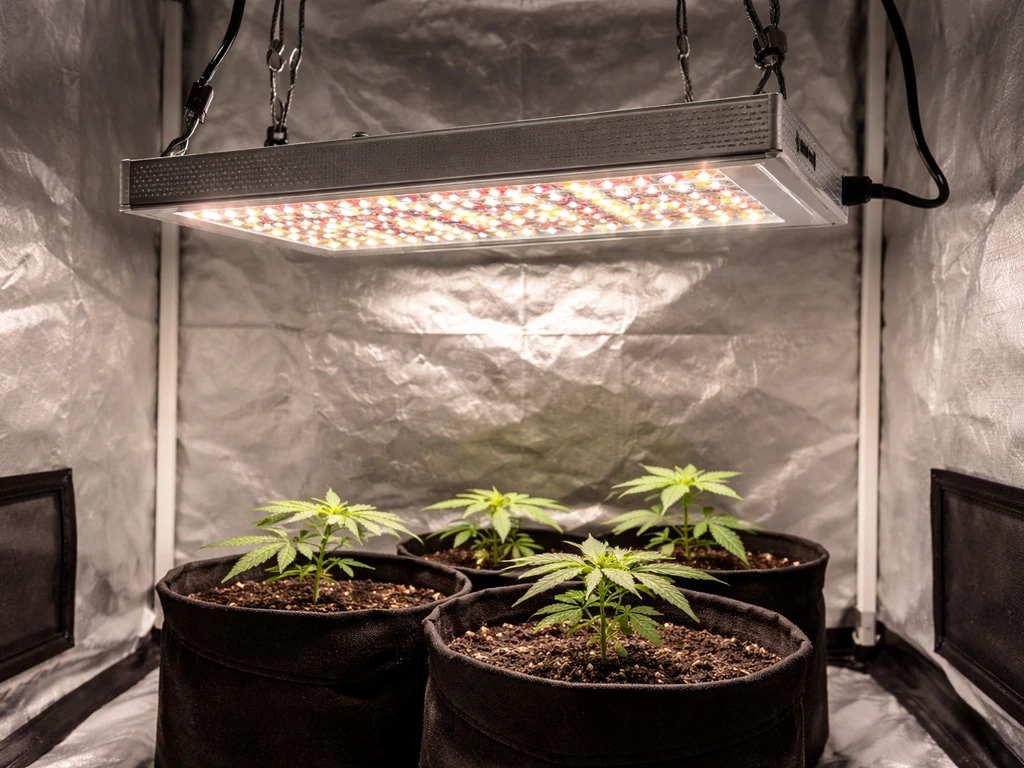
The short answer: Fecida's Cruiser Series has three distinct models, and picking the right one matters more than the brand name. The GL-CR600 (65W actual, 2×2 ft), GL-CR1200 (260W actual, 3×3 ft), and GL-CR4000 (1000W actual, 5×5 ft) are meaningfully different lights, not just size variants of the same panel. This review covers all three but focuses heaviest on the CR1200, which is the one most hobbyists are actually considering. If you're also looking at the smaller bulb-style option from Feit, see this feit 19w/led grow light review for a related comparison point. Here's what the specs, real-world PPFD reports, and build quality tell you before you spend the money.
Fecida Grow Light Review: Performance, Coverage, Setup Guide

Marcus Caldwell
6 Apr 2026
Which Fecida Models Are Being Reviewed Here
FECiDA markets their current lineup under the 'Cruiser Series' branding, and each SKU has a real model number that's worth knowing because listings sometimes use inflated watt equivalencies that can be misleading. The three current models are the GL-CR600, GL-CR1200, and GL-CR4000.
FECiDA lists Cruiser Series model specs with labeled coverage and rated power, including CR600 (65W; 2×2 ft at 16"), CR1200 (260W; 3×3 ft at 16"), and CR4000 (1040W; 5×5 ft at 16") Cruiser Series model specs with labeled coverage and rated power (CR600, CR1200, and CR4000). The GL-CR600 is labeled '600W Equivalent' but draws only 65W at full brightness.
The GL-CR1200 is labeled '2000W Equivalent' but draws 260W. The GL-CR4000 is labeled '8000W Equivalent' and draws closer to 1000–1040W actual. When you see the word 'equivalent' in the name, ignore it for any technical comparison and work only with the actual wattage draw.
If you're specifically researching the 600W variant, there's a dedicated fecida 600w led grow light review that digs into that panel in isolation. This article covers the full brand picture so you can choose the right tier.
Specs and Spectrum: What These Lights Are Actually Doing
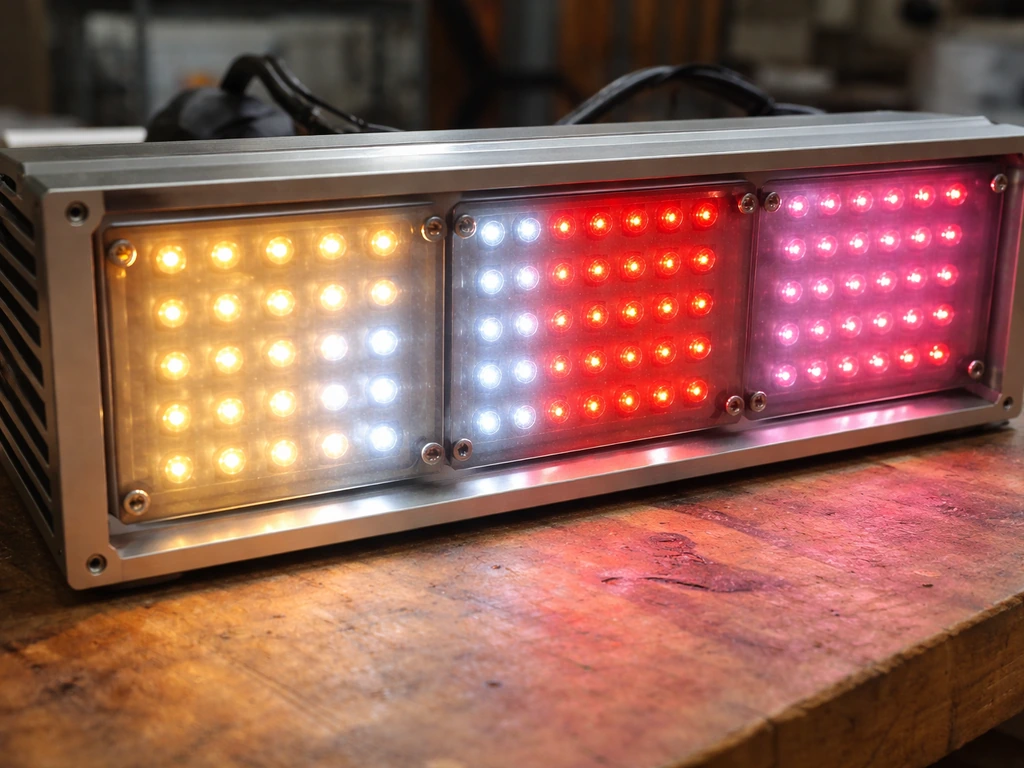
All three Cruiser Series models share the same spectral design. FECiDA describes them as full-spectrum lights combining 3000K warm white LEDs, 5000K cool white LEDs, 660nm red, 760nm far-red/IR, and 395nm UV. That's a solid spread for both vegetative growth and flowering. The 3000K/5000K white blend covers your broad PAR range efficiently, the 660nm red hits the chlorophyll absorption peak that drives photosynthesis hard during flowering, the 760nm IR activates the Emerson effect for improved energy conversion, and the 395nm UV provides a mild stress signal that can improve resin production and compact structure in appropriate plants.
FECiDA claims an energy efficiency of 2.2 μmol/J for the Cruiser series. That's a decent number for a mid-range panel. High-end commercial lights are hitting 2.7–3.0 μmol/J, but budget-tier lights often sit below 2.0, so 2.2 puts Fecida in a reasonable position for the price bracket. The GL-CR600 uses 588 individual LEDs across the board, and the GL-CR1200 scales that to 1,188 LEDs. The larger LED count helps with coverage uniformity compared to lights that use fewer, higher-powered diodes.
| Model | Actual Draw | Marketed Equivalent | LED Count | Target Coverage | Efficiency Claim |
|---|---|---|---|---|---|
| GL-CR600 | 65W | 600W Equivalent | 588 pcs | 2×2 ft | 2.2 μmol/J |
| GL-CR1200 | 260W | 2000W Equivalent | 1,188 pcs | 3×3 ft | 2.2 μmol/J |
| GL-CR4000 | ~1,000–1,040W | 8000W Equivalent | Not listed | 5×5 ft | 2.7 μmol/J (claimed) |
Real-World PPFD, Coverage, and Uniformity
FECiDA provides PPFD intensity maps in their manuals for both the GL-CR600 and GL-CR1200, which is a good sign. A brand that publishes distribution maps is at least held accountable to something. The actual numbers from those maps aren't always straightforward to extract from text, so I'm supplementing manufacturer data with user-reported measurements.
For the GL-CR1200, real-world reports from users indicate the light produces over 1,300 μmol/m²/s PPFD dead center at full blast, which is genuinely strong for a 260W panel. However, coverage uniformity is where the CR1200 shows its limits: the same users report that the PPFD drops off significantly toward the edges of the marketed 3×3 ft footprint, with much of the area outside the center failing to maintain even 400 μmol/m²/s. That's a real-world distinction from the marketing footprint claim.
What this means practically: if you're running a 3×3 canopy and want consistent flowering coverage across the full area, the CR1200 at full power may leave your edges underpowered. For a 2×2 to 2. 5×2. 5 ft effective canopy, however, center PPFD is strong enough for most flowering crops.
The GL-CR4000 claims a PPFD figure of 2.7 μmol/m²/s, which reads oddly as written on the product page and is likely a marketing formatting issue rather than a literal measurement. At 1,000W+ actual draw, a well-designed panel in that wattage range should be capable of 800–1,200+ μmol/m²/s across a 4×4 to 5×5 area, but I'd want independent PAR meter readings before relying on the CR4000 for a large commercial-scale grow.
Build Quality, Heat, and Reliability Signals
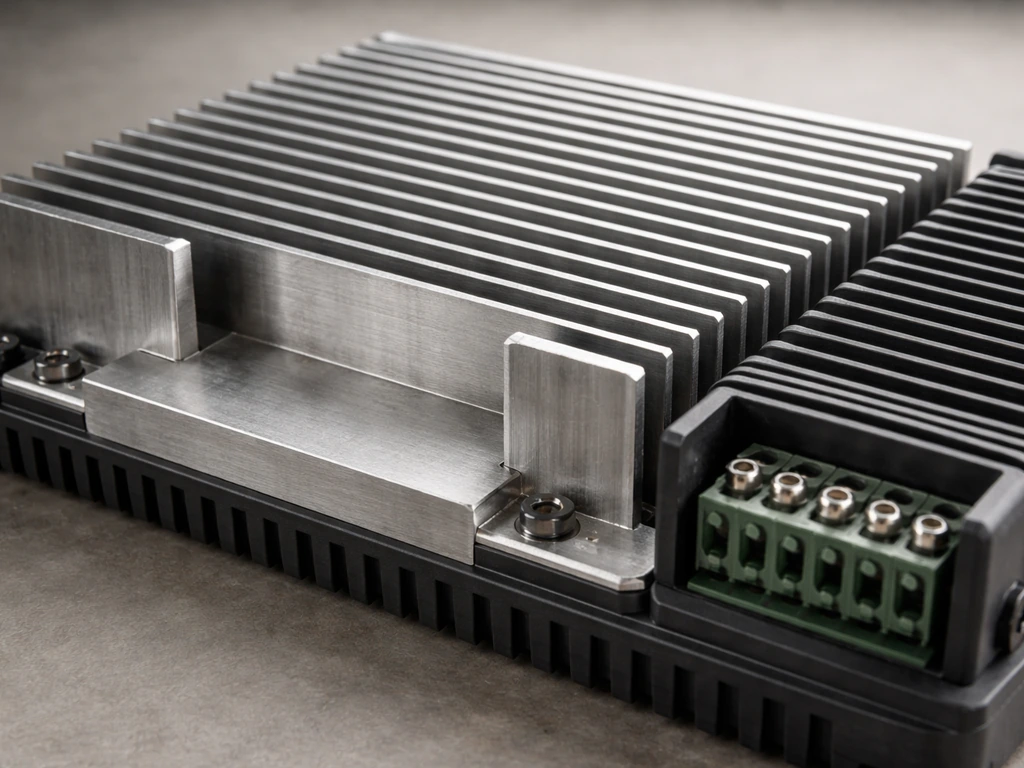
The GL-CR600 and GL-CR1200 use passive cooling (no fan), which FECiDA markets as quiet and efficient. At 65W and 260W respectively, passive heatsink cooling is plausible if the thermal design is solid, and most user reports don't flag heat as a serious problem at normal hanging heights. The GL-CR4000 at 1,000W is a different story. At that power draw, heat management becomes a critical spec, and the product listing is less detailed on thermal design than I'd like to see.
There's one reliability flag worth knowing about. A UK product safety report exists for the Fecida Cruiser Series sold via Amazon, which includes the GL-CR1200.
The UK product safety report (PDF) for the Fecida Cruiser Series attributes a serious risk to inadequate earthing, describing batch number 2023-5-6 for the GL-CR1200 and explaining how daisy-chaining up to four luminaires via a socket outlet can create fault conditions where accessible metal parts may become live [GL-CR1200 batch number 2023-5-6 and inadequate earthing risk](https://assets. publishing. service. gov.
uk/media/64d93e289607100013b27e99/2307-0164-product-safety-report-led-grow-light. pdf). The specific issues in that report aren't something to dismiss outright, though it's also worth noting that many LED grow lights sold through Amazon's third-party marketplace have seen similar scrutiny. Separately, some Reddit users have flagged visible flicker on Fecida-branded panels visible through a camera, and there are unverified claims about driver quality on certain units.
These are user reports, not lab-confirmed findings, but they're worth knowing so you can inspect your unit carefully when it arrives.
Build materials are typical for this price segment: aluminum housing with a passive heatsink bar design, hanging hardware included, and a power cable with an in-line dimming knob. The knob controls brightness from 0 to 100% steplessly, which works well in practice. Up to four units can be connected in a daisy-chain, which is useful for scaling a multi-light setup without running separate cords to each fixture.
Setup, Hanging Height, and Coverage for Common Plants
FECiDA's own manuals give practical hanging height guidance that aligns with what most growers would expect. For the GL-CR1200, the manual recommends hanging at approximately 35–45 cm (14–18 inches) above plants during seed starting and early seedling stages. The GL-CR600 follows similar logic at 35–40 cm for seedlings. For vegetative and flowering stages, you'd typically lower intensity by adjusting the dimming knob rather than dramatically changing height, though moving the light up a few inches can also help spread light more evenly if your plants are showing light stress.
FECiDA's coverage-sizing guidance references PPFD maps and diameter calculations, which is the right approach. Their published example for the CR1200 uses a 45 cm hang height as the reference point for the stated 3×3 ft coverage. In practice, pushing the light further from the canopy (say, 60–75 cm) will spread light more evenly but reduce peak PPFD. For the GL-CR600 in a 2×2 tent, a 40–50 cm hang height at 80–100% brightness works well for veg. For flowering, most growers report better results keeping it closer to 30–40 cm at 100%.
Stage-by-Stage Quick Reference (GL-CR1200)
| Growth Stage | Recommended Height | Brightness Setting | Daily Run Time |
|---|---|---|---|
| Seed Starting | 35–45 cm (14–18 in) | 40–60% | 16–18 hrs |
| Seedling / Early Veg | 35–45 cm (14–18 in) | 60–75% | 16–18 hrs |
| Vegetative | 30–40 cm (12–16 in) | 75–90% | 18 hrs |
| Flowering | 25–35 cm (10–14 in) | 100% | 12 hrs |
Best Use Cases and Who Should Skip It
The GL-CR600 is a solid choice for small 2×2 ft tents, supplemental lighting for shelving units, or growers propagating cuttings and running seedlings. At 65W actual, it won't flower a full canopy aggressively, but for herbs, leafy greens, and early-stage veg it's appropriately powered and easy to manage. If you’re specifically comparing the green fingers grow light review results to similar panels, it’s worth checking the actual watt draw and any measured PPFD or uniformity notes before buying. The price point makes it a low-risk entry for someone new to LED grow lights.
The GL-CR1200 is where most buyers land, and it's the most interesting value proposition in the lineup. It works well for 2×2 to 2.5×2.5 ft flowering canopies, 3×3 ft veg, and for growers running light-hungry plants like tomatoes, peppers, or cannabis in a small tent. If you need to cover a true 3×3 ft flowering canopy with uniform intensity, you'll want to supplement the edges or accept that the perimeter plants will get less intensity than those in the center.
The GL-CR4000 is a high-power option for 5×5 ft spaces, but at 1,000W+ actual draw, you're in a tier where purpose-built commercial LEDs from brands with more rigorous third-party testing data start to compete seriously. I'd be more comfortable recommending the CR4000 if there were more independent PAR measurements available. If you're considering it, compare it carefully against alternatives before committing.
Who should skip Fecida entirely: growers who need a light with robust third-party efficiency verification, anyone running a large-scale or commercial operation where light uniformity data is critical, and buyers who are uncomfortable with some unresolved reliability questions. If you want a brand with deeper community testing history, consider looking at other reviewed options in this space.
How Fecida Compares to Other Brands
Fecida sits in a crowded mid-budget LED panel market. To understand where it stands, it helps to look at a few comparison points across spectrum type, efficiency, and build.
| Brand / Model | Actual Wattage | Coverage | Efficiency | Dimming | Reliability Notes |
|---|---|---|---|---|---|
| Fecida GL-CR600 | 65W | 2×2 ft | 2.2 μmol/J (claimed) | Stepless knob | Some flicker reports |
| Fecida GL-CR1200 | 260W | 3×3 ft (effective ~2.5×2.5 ft) | 2.2 μmol/J (claimed) | Stepless knob | UK safety report flag |
| Feit LED Grow (comparable) | Varies | Varies | Manufacturer-claimed | Limited | Widely available, limited spectrum data |
| FSGTEK comparable tier | Varies | Varies | Varies | Varies | Budget tier, limited third-party data |
| Mid-tier quantum board (generic) | 200–240W | 3×3 ft | 2.5–2.8 μmol/J | Often 0–10V | Better uniformity data available |
Looking at budget-tier alternatives, the fsgtek grow light review covers a panel in a similar price and wattage bracket if you want a direct side-by-side comparison from this site. For Feit specifically, there are two relevant comparisons worth reading: the feit grow light review covers Feit's broader lineup, while the feit a19 grow light review looks at their smaller bulb-style option, which is a completely different form factor but useful if you're considering supplemental lighting over individual plants. If you want a panel from a brand with a longer community testing track record, the green fingers grow light review is worth a look as well.
For other brands closer to Fecida's form factor and price point, the unifun grow light review and the v99 grow light review cover two other mid-budget panels worth comparing before you decide. The feit 19w/led grow light review rounds out the comparison set if your space is small enough that a lower-wattage option makes sense.
The honest comparison: Fecida's CR1200 at 260W actual gives you strong center PPFD for the price. If you're comparing on paper efficiency, a well-built quantum board panel from a brand with published third-party test data will often outperform the CR1200 on uniformity. But at Fecida's price point, the trade-off can still be acceptable for hobbyists who aren't running a tightly optimized operation.
Common Issues, Troubleshooting, and a Buying Checklist
Problems You Might Run Into
- Uneven canopy growth: This is usually a coverage uniformity issue. If your edge plants are stretching while center plants look compact, your light isn't covering the full footprint evenly. Raise the light 10–15 cm and reduce brightness to 80–90% to spread the beam more evenly, or reduce your canopy footprint to match the light's effective coverage area.
- Flicker visible through camera: Some Fecida units have user-reported flicker artifacts visible on camera. If this is happening, check that your unit is plugged into a stable power source. Persistent flicker may indicate a driver issue, and you should contact the seller for a replacement before the return window closes.
- Too much light (bleaching, leaf curl): Drop the brightness to 60–70% and raise the hang height by 5–10 cm. The CR1200 dead-center PPFD at full power can exceed 1,300 μmol/m²/s, which is above the saturation point for many leafy greens and herbs.
- Too little light (stretching, pale color): Make sure you're at 100% brightness and at the recommended hanging height for the growth stage. Also confirm the dimming knob is fully turned up; it's easy to leave it partially dialed from a previous seedling stage.
- Daisy-chain wiring confusion: Up to four units can be chained, but each unit still draws its full wattage. Make sure your circuit can handle the combined load before chaining multiple CR1200 or CR4000 units.
- Heat concerns: The CR600 and CR1200 are passively cooled and should run warm but not hot to the touch. If the housing feels dangerously hot, check that the heatsink fins aren't blocked and that your grow tent has adequate airflow.
Before You Buy: Quick Checklist
- Confirm the model number (GL-CR600, GL-CR1200, or GL-CR4000) on the actual Amazon or retailer listing, not just the watt-equivalent in the title.
- Match the actual wattage to your grow space: 65W for 2×2 ft, 260W for a practical 2.5×2.5 ft flowering footprint or 3×3 ft veg, 1,000W+ for 5×5 ft.
- Download the relevant instruction manual from the manufacturer before setup and review the PPFD map for your model.
- Check the current return window and seller rating before purchasing, especially given the reliability questions flagged above.
- Verify your electrical circuit can handle the load, especially if daisy-chaining multiple units.
- Use a PAR meter or app-based lux meter (converted to PPFD estimate) to verify your actual canopy intensity within the first week of use.
Bottom line on Fecida: the GL-CR1200 is the most compelling model in the lineup for the price, delivering genuine center PPFD that competes with lights costing more, with the trade-off being edge coverage and some unresolved reliability questions. The GL-CR600 is a reasonable small-space or supplemental option. The GL-CR4000 needs more independent data before I'd recommend it confidently for a large-scale setup. If the CR1200 fits your footprint and you go in with clear-eyed expectations about uniformity, it's a workable choice. If uniformity across a full 3×3 canopy is your priority, budget for something with better third-party verification.
FAQ
What canopy size should I actually plan for with the CR1200 if I want even flowering?
Start by deciding your target effective canopy, then map the hanging height to the uniformity issue discussed in this review. For the CR1200, plan for best results around a 2×2 to 2.5×2.5 ft flowering footprint (center-heavy coverage), and only use a true 3×3 ft area if you will accept weaker perimeter output or you will supplement with a second light or edge-reflective strategy.
How should I use the watt “equivalent” numbers when budgeting power and heat?
Don’t chase the “equivalent” watt wording. Use measured draw (65W for GL-CR600, 260W for GL-CR1200, about 1000 to 1040W for GL-CR4000) when sizing your electrical circuit and when estimating heat. Also remember that dimming changes real delivered intensity, so your PPFD expectation should track the dimmer setting rather than the label.
If the edges are underpowered, what’s the best first adjustment: raise height or dim differently?
If your goal is tighter coverage, the simplest lever is to raise the light slightly and reduce intensity, then reassess plant response. Moving up (for example, from about 30 to 40 cm toward 45 to 55 cm) can spread output and reduce the center-perimeter swing, but peak PPFD will drop. This is often preferable to running at 100% and hoping edge plants keep pace.
How do I prevent light stress when starting at full power with a new Fecida unit?
Your fastest way to avoid light-stress is to use incremental dimming rather than large height changes. For flowering on the CR1200, many growers in the article’s reported ranges do well around 100% power at roughly 30 to 40 cm, then back off if leaves show bleaching, tacoing, or internode shortening beyond what your cultivar expects. Treat camera “looks bright” as unreliable, use plant stress signals and consistency.
Can I daisy-chain multiple Cruiser lights, and what mistakes should I avoid?
A daisy-chain can help with wiring, but it does not guarantee identical output across units. Confirm each light’s dimmer knob position after chaining, and ensure total connected load stays within what the manufacturer’s instructions allow. Also keep the controller plug orientation and cable routing tidy to prevent heat buildup near connectors.
How should I think about heat and ventilation if the lights are fanless?
The review notes passive cooling on the 600W and 260W models, so airflow still matters even without fans. Make sure the driver and heatsink bars are not blocked by tent walls or ducting, leave clearance around the housing, and avoid placing lights inside enclosed hoods that trap hot air. If your tent is already hot, use a stronger exhaust fan first rather than pushing intensity.
How can I check for flicker or inconsistent output when my light arrives?
Flicker can matter for some cameras and for photoperiod consistency, even if plants grow normally. When your unit arrives, test it with your phone camera while it’s running at multiple dimmer settings (especially near high power), and if you see persistent visible flicker or unusual behavior, document it and contact the seller promptly while you still can return or exchange.
Are the hanging height guidelines enough, or do I need to adjust for canopy and training?
The manual’s hanging recommendations are a starting point, but each grow setup changes the optimum. Use your dimmer knob to fine-tune intensity, and consider plant canopy density (leaf thickness, spacing, and whether plants are trained). If your plants are taller or have uneven canopies, you may need to adjust height per shelf or use pruning and trellising to make the canopy more level.
If I’m considering the CR4000 for a 5×5, how should I validate it before committing?
For the CR4000, the review flags uncertainty around the published PPFD figure and says independent PAR measurements are limited. If you proceed, use a PAR meter if at all possible, verify uniformity across your real growing area, and do not rely on marketing footprint alone. If you cannot measure, it’s safer to treat it as a center-focused light and plan for more than one fixture or perimeter support.
What quick reliability checks can I do in the first week after unboxing?
The reliability concerns mentioned are not a reason to panic, but they are a reason to be methodical. Do a short functional test for temperature stability, check that dimmer control is smooth across the full range, and confirm no buzzing or intermittent behavior under load. Keep the packaging and proof of purchase in case you need a quick return.