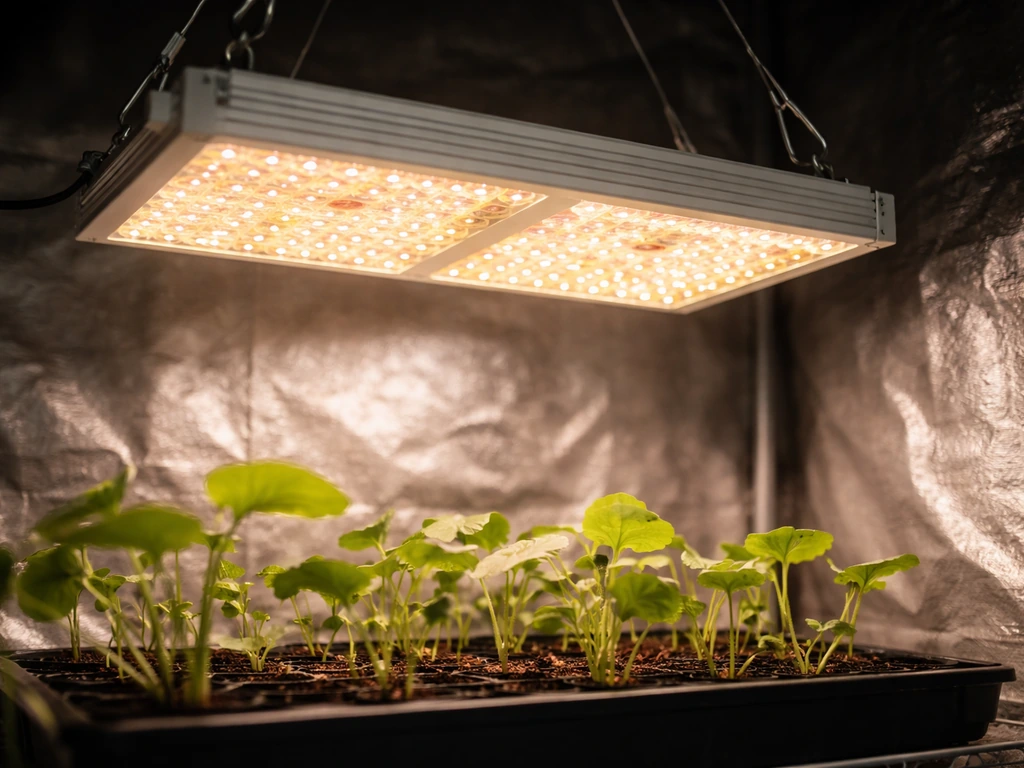
The Fecida 600W LED grow light is a 65-watt fixture, not a 600-watt one. The "600W" in the name is an equivalency claim, meaning Fecida (also styled FECiDA) markets the GL-CR600-65W as producing light comparable to a 600W HPS or incandescent source. Actual wall draw is 65W. If you're shopping expecting a true 600W power draw, this isn't it, but that doesn't automatically make it a bad light. For a 2x2 ft tent or a small dedicated grow space, the GL-CR600-65W can genuinely work, provided your expectations are calibrated to what 65 actual watts can do.
Fecida 600W LED Grow Light Review: Real Performance Guide

Marcus Caldwell
6 May 2026
What the Fecida 600W actually is: specs and the claim check
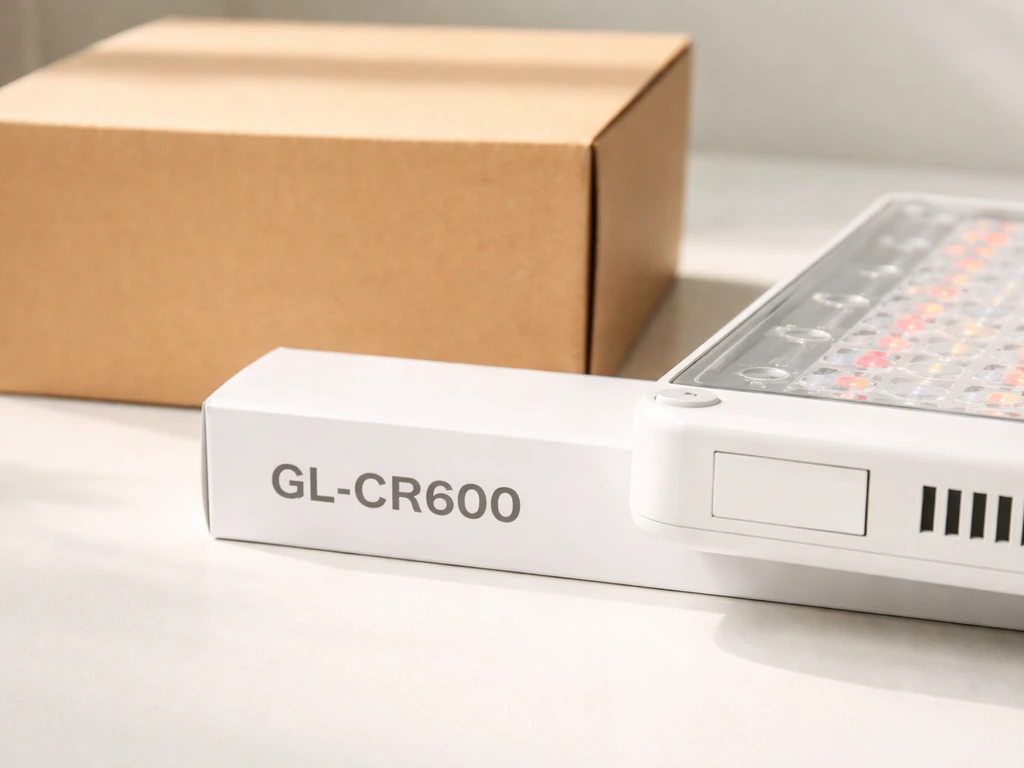
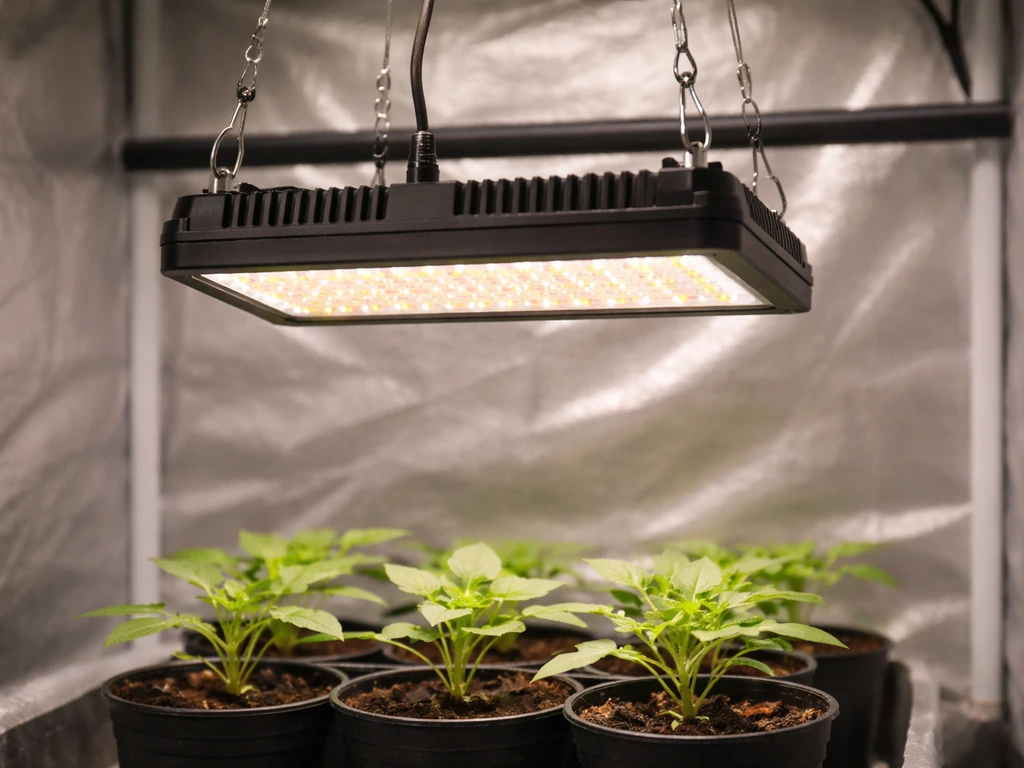
The model is the GL-CR600, part of Fecida's Cruiser (CR) series. The listing on Fecida's own catalog page is transparent about the numbers if you read past the marketing headline: Actual Power is 65W, the "600W" figure is listed separately as an equivalent. The fixture draws from AC100V to AC240V, so it works on both US and international outlets without an adapter. It measures 310 x 210 x 46 mm, which is a compact, flat panel form factor. The housing is aluminum, available in black or white, and the light uses 584 LEDs packed into that footprint.
The wattage equivalency marketing is common across budget LED grow lights, and Fecida isn't alone in using it. You'll see similar labeling if you browse the Feit or other budget-tier brands. What matters for plant growth isn't the label wattage at all; it's actual photon output per second (measured in micromoles per joule, or μmol/J) and total PPFD at your canopy. Fecida claims approximately 2.2 μmol/J efficiency for the CR600-65W, which is a reasonable but not exceptional figure for 2026 standards. High-quality commercial fixtures now hit 3.0 μmol/J and above. At 2.2 μmol/J and 65W input, you're getting roughly 143 μmol/s total photon output, which is realistic for a 2x2 ft canopy but leaves no headroom for larger spaces.
| Spec | Marketed Value | Actual Value |
|---|---|---|
| Model | CR600 / GL-CR600-65W | GL-CR600-65W |
| Marketed Wattage | 600W equivalent | — |
| Actual Power Draw | — | 65W |
| Input Voltage | AC100–240V | AC100–240V |
| LED Count | 584–588 LEDs | 584 LEDs |
| Efficiency Claim | — | ~2.2 μmol/J |
| Dimensions | 310 x 210 x 46 mm | 310 x 210 x 46 mm |
| Target Coverage | 2x2 ft | 2x2 ft |
Real-world coverage and intensity: what to expect at canopy level
Fecida rates this light for a 2x2 ft (roughly 0.37 m²) footprint, which is honest given the actual wattage. At that target area and a standard mounting height of 18 to 24 inches above the canopy, you should see center-point PPFD values in the range of 400 to 600 μmol/m²/s, which is sufficient for vegetative growth and light-to-moderate fruiting and flowering. The edges of the 2x2 area will be noticeably dimmer than the center, so uniformity isn't this fixture's strength. If you're growing a single plant or a few seedlings/clones, that hot center can work in your favor by giving the primary growth site better intensity.
Pushing the fixture to cover a 3x3 ft area drops your canopy PPFD significantly, likely into the 200 to 350 μmol/m²/s range at the edges, which is borderline for vegetative growth and inadequate for fruiting crops like tomatoes or peppers that need 500+ μmol/m²/s. Don't stretch this light beyond its rated footprint and expect strong results. If you're comparing against other small-panel lights, the Fsgtek and Unifun models in a similar wattage class face the same constraint: actual watt input is the ceiling, and 65W simply can't light a 3x3 space well. If you are also shopping Fsgtek small-panel options, you may want to compare their specs and PPFD results side by side with the Fecida CR600-65W.
The dimmer knob (stepless knob dimming) is a genuinely useful feature at this price point. FECiDA’s CR600-65W product listing describes a “Knob Stepless Dimming” control concept, supporting stepless dimming dimmed knob (stepless knob dimming). Being able to run the light at 50 to 70% during seedling stages and ramp up to full output during flowering gives you real control over light stress without buying a separate controller. Not every budget panel includes this.
Spectrum breakdown and how it maps to veg and bloom
The GL-CR600-65W uses a mixed-diode full-spectrum approach: 3000K warm white, 5000K cool/daylight white, 660nm red, 395nm UV, and 760nm IR. This is a fairly standard modern full-spectrum recipe. The two white channels (3000K and 5000K) provide a broad base that covers most of the photosynthetically active radiation (PAR) range from 400 to 700nm. The 660nm deep red diodes specifically target chlorophyll B absorption, which supports flowering and fruiting. The 760nm IR falls just outside the PAR window but activates the Emerson enhancement effect, which can modestly improve photosynthetic efficiency when combined with the 660nm diodes. The 395nm UV is a near-UV wavelength that can support secondary metabolite production (terpenes, flavonoids) with extended exposure.
For vegetative growth, the 5000K cool white channel carries most of the useful blue wavelengths (around 450nm) that drive compact, leafy development. This makes the CR600 a reasonable seedling-to-veg light. For flowering, the 3000K and 660nm diodes shift the balance toward the red end, supporting bloom. The spectrum is designed to work across both stages without swapping fixtures, which is appropriate for a small tent where you're growing a single crop from seed to harvest. What it doesn't have is a hard switch between veg and bloom modes; the dimmer knob controls intensity only, not spectrum shift. If you want spectrum-switching capability, you'd need to look at higher-end panels.
Build quality, heat management, and long-term reliability
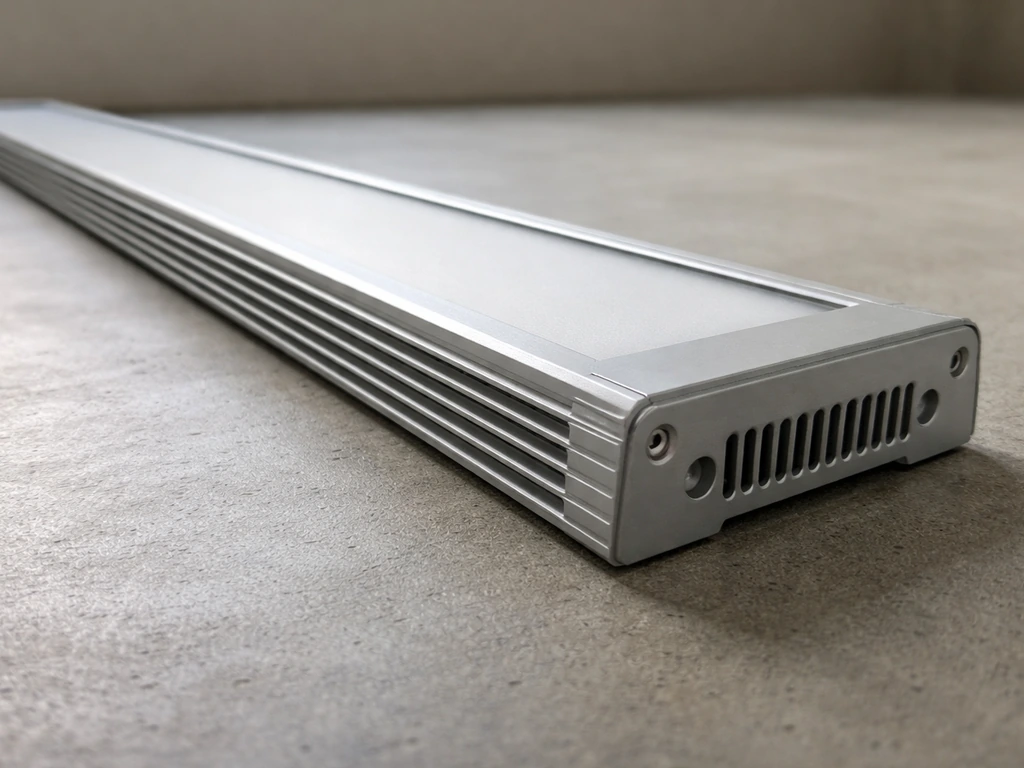
The aluminum housing is the right call for a panel this size. Aluminum dissipates heat passively across its surface area, and at 65W draw, this fixture doesn't generate the kind of thermal load that demands active fan cooling. The 310 x 210 x 46 mm form factor means there's meaningful fin or surface area relative to the heat being generated. I've seen no credible reports of the CR600-65W running dangerously hot in normal use, which makes sense for the wattage class. The LED driver (the internal electronics converting AC to DC for the LEDs) is the more likely long-term failure point, as is typical of budget LED grow lights.
Because this is a budget-tier product, you should go in with realistic reliability expectations. The driver and LED quality are not at the level of higher-end horticultural fixtures. For casual hobby use, a 2 to 3 year service life is a reasonable expectation. I'd suggest checking your unit for any hot-spot smell or flickering in the first few weeks of use, which typically signals a driver quality issue that's better caught early while a return window may still be open. Fecida's warranty and return policy at purchase should be confirmed directly with the retailer, as this varies by platform.
The aluminum panel construction also means it's relatively lightweight, which matters for hanging hardware. The included hanging kit should handle the fixture's weight without issue, but if you're mounting it from a grow tent's crossbar over a long period, periodically check the ratchet straps or hooks for wear, a small habit that saves a lot of grief.
Energy use, efficiency, and how the value stacks up
Running the CR600-65W for 18 hours a day (a common seedling/veg photoperiod) costs roughly 1.17 kWh per day. At a US average electricity rate around $0.16/kWh in 2026, that's about $0.19 per day or under $6 per month. That's genuinely cheap to operate. For a hobbyist growing herbs, leafy greens, or a single plant, the operating cost is negligible compared to the sticker price of the fixture itself.
Efficiency at 2. 2 μmol/J is decent for the budget tier but trails mid-range and premium brands by a meaningful margin. A higher-efficiency fixture at, say, 2. 7 to 3.
0 μmol/J would deliver 20 to 35% more photons for the same electricity, which compounds over a full growing cycle. For a small 2x2 grow, the absolute difference in PPFD might not be the deciding factor, but it's worth knowing when comparing the Fecida against the Green Fingers or V99 panels in a similar size class, where efficiency specs vary more than the marketing wattage labels suggest.
If you want to compare performance head-to-head with the Green Fingers grow light lineup, it helps to look at efficiency specs, not just the wattage equivalency on the box.
| Factor | Fecida CR600-65W | Budget Tier Average | Mid-Range 65–100W Panel |
|---|---|---|---|
| Actual Wattage | 65W | 50–75W | 65–100W |
| Efficiency | ~2.2 μmol/J | 1.8–2.3 μmol/J | 2.5–3.0 μmol/J |
| Coverage | 2x2 ft | 2x2 ft | 2x2 to 3x3 ft |
| Dimming | Knob dimming | Sometimes included | Usually included |
| Passive/Active Cooling | Passive (aluminum) | Mostly passive | Mix of passive and active |
| Monthly Running Cost | ~$6 | ~$5–7 | ~$6–10 |
How to install and use the Fecida 600W without running into problems
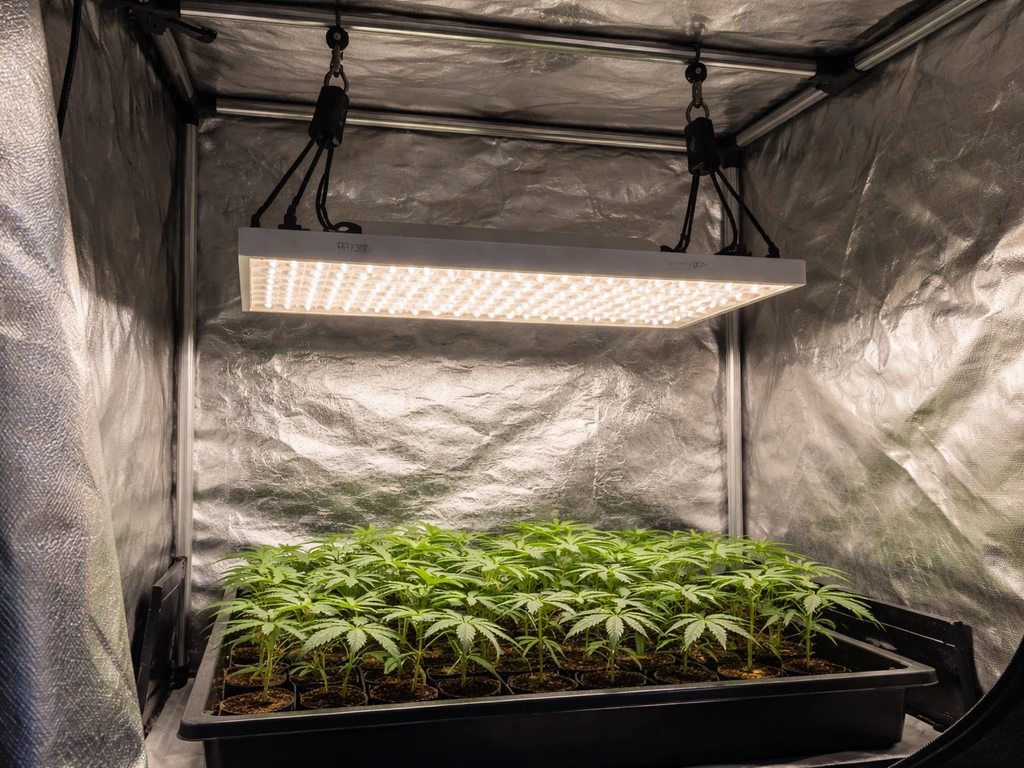
Setup is straightforward. The fixture hangs via the included ratchet straps or hanging hardware from your tent's top bars. Getting the hanging height right is the most important step for avoiding light stress while maximizing output.
- Seedlings and clones (first 1 to 2 weeks): Hang 24 to 30 inches above the canopy and set the dimmer to 50 to 60% output. Young seedlings are sensitive to photoinhibition from high PPFD.
- Vegetative stage: Move the fixture to 18 to 24 inches above the canopy at 70 to 80% power. Monitor for upward leaf curl or bleaching near the top of the plant, which signals the light is too close or too intense.
- Flowering and fruiting: Keep at 16 to 20 inches above the canopy at full power (100%) for crops that need higher PPFD like tomatoes, peppers, or cannabis. Leafy greens and herbs can stay at the lower intensity settings.
- Timer setup: Use a mechanical or digital outlet timer. For veg, an 18-hours-on/6-hours-off schedule works well. For flowering crops, switch to 12/12. The dimmer knob on the fixture controls intensity, not time, so a separate timer is needed.
- Ventilation: Even without fans on the fixture itself, keep your grow space ventilated. Good airflow prevents heat buildup in the canopy and reduces humidity that can lead to mold.
One thing to watch for: if you notice yellowing on the upper leaves closest to the light despite a reasonable mounting height, try raising the fixture by 4 to 6 inches before adjusting watering or nutrients. Light stress and nutrient issues can look similar, and light stress is faster to diagnose and fix.
Electrical safety basics
The AC100–240V input range means the CR600-65W is compatible with standard US and international outlets without a voltage converter. Use a grounded outlet or a grounded power strip with surge protection, keep the power cord away from standing water, and don't run it on an extension cord rated below the fixture's current draw. These are basic steps that apply to any grow light, but budget fixtures warrant the reminder since driver quality can be more variable.
Honest pros, cons, and who this light is actually for
Pros
- Honest actual power draw of 65W makes it cheap to run and easy to size for a 2x2 ft space
- Full-spectrum diode mix (3000K, 5000K, 660nm, 395nm UV, 760nm IR) covers both veg and bloom stages without swapping fixtures
- Stepless knob dimming is a useful feature at this price tier
- Passive aluminum cooling is quiet and maintenance-free compared to fan-cooled budget panels
- Wide voltage input (100–240V) means it works globally without adapters
- Compact, lightweight panel is easy to hang and reposition
Cons
- The "600W" marketing label is misleading, actual draw is 65W and expectations need to be set accordingly
- Efficiency at ~2.2 μmol/J trails better-value competitors at the same wattage tier
- No spectrum switching between veg and bloom modes
- Coverage drops off significantly outside the 2x2 ft sweet spot, making it unsuitable for 3x3 ft or larger tents
- Budget driver and LED quality means reliability over 3+ years is uncertain
- Warranty and return policy details vary by retailer and need to be confirmed at purchase
Who should buy it
The Fecida CR600-65W is a good fit for beginners growing in a 2x2 ft tent or a small dedicated corner who want a simple, low-cost full-spectrum panel without the complexity of spectrum controllers or active cooling maintenance. It's also solid for herb gardens, seedling trays, or keeping houseplants alive through winter indoors. If you're germinating seeds or propagating clones, this is an appropriately gentle and affordable light for that purpose.
Who should look elsewhere
If you're growing in a 3x3 ft or larger tent, or you're trying to push high-PPFD fruiting crops like tomatoes, peppers, or cannabis through a full flowering cycle with maximum yield, a 65W panel is simply underpowered for the job. You'd want to look at actual 150W to 300W grow lights, not "600W equivalent" labels.
Similarly, if long-term reliability is a priority for a commercial or semi-professional setup, investing in a mid-range or premium brand with better driver quality and a verified warranty makes more sense than a budget panel. The Fecida brand's broader grow light line (reviewed separately) also has other models worth comparing depending on your space size. If you are specifically looking for a full Feit 19W/LED grow light review, check the linked article for performance, coverage, and real power draw details.
If you want to dig deeper into how Fecida’s lineup compares, you can look at the specific Unifun Grow Light review for an apples-to-apples comparison.
What to do next if the Fecida 600W isn't quite right for you
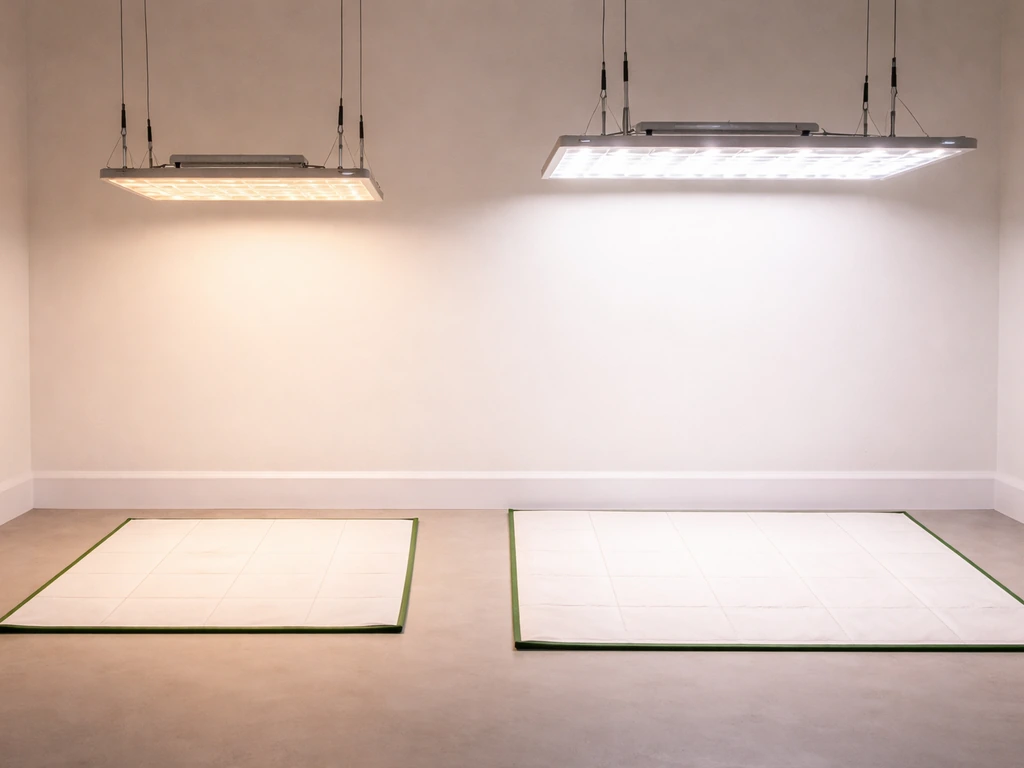
If you need more coverage than a 2x2 ft footprint, start by looking at panels in the 150W to 240W actual power range from brands with better-documented efficiency specs. When comparing, focus on the actual wattage draw and μmol/J efficiency rating, not the marketing wattage. A light listed as "1000W equivalent" drawing 100W at 2.5 μmol/J will outperform one drawing the same 100W at 2.0 μmol/J by 25% in photon delivery, which adds up across a growing season.
If the Fecida 600W is sized right for your space but you're not fully sold on the efficiency, look at comparable small-panel options from the brands covered elsewhere on this site, including the Green Fingers, Fsgtek, and V99 lines in the same 50 to 100W actual power class. If you want to compare directly, the V99 grow light review covers how its efficiency and footprint stacking measure up against smaller 50 to 100W class panels V99 lines.
If you want a deeper look before buying, you can also check the fecida grow light review for more hands-on takeaways and results. If you want to go deeper on the features, spectrum, and real canopy results, check the Feit grow light review for a broader comparison of similar wattage-class options. Comparing PPFD maps, actual draw, and dimming features side by side will give you a clearer picture than model names or equivalency claims ever will.
If you want more background on how this “600W equivalent” compares to other budget fixtures, see our full Feit A19 grow light review. If you want a deeper look at the Feit light instead, this guide aligns well with the Feit grow light review details on performance and real-world output. If you are also weighing the Feit angle, check the Feit 19W/LED grow light review for performance, build, and whether its wattage claims match real output.
If you're going ahead with the Fecida CR600-65W, buy it from a platform with a clear 30-day return window, run it for the first week at reduced power to check for any driver or LED issues, and hang it at the correct height for your current growth stage. It's a functional, low-cost entry point into LED grow lighting, as long as you know what "600W" actually means on the label. If you want more context on how to interpret LED grow light labeling and wattage equivalencies, this Feit a19 grow light review is a helpful comparison.
FAQ
Does the Fecida “600W” panel actually use 600 watts?
The label “600W” is an equivalency marketing term. The fixture’s real draw is 65W, so you should budget power and expect output like a 65W panel. If you want the same light intensity as a true 600W-class setup, you typically need a much higher actual-watt fixture, not another “equivalent” model.
What mounting height should I use in a 2x2 tent for best results?
A 2x2 ft target assumes an 18 to 24 inch mounting range and a reasonably centered canopy. Even within that area, expect a brighter middle and dimmer edges, so multi-plant layouts usually perform better when you place the main growth sites under the brightest center zone.
Can I use the dimmer to get flowering-level results in a 3x3 space?
A dimmer helps, but it does not solve spectrum limitations. If your goal is high-PPFD flowering (for example tomatoes, peppers, or heavy fruiting), this light can become the bottleneck even at full power. In practice, you may need either a bigger actual-watt fixture or a smaller canopy focus area for flower.
What early signs should I look for that indicate a bad driver or LED problem?
Not necessarily. If the driver is unstable, you might see flicker or inconsistent performance that affects plants, but the user experience can vary. The safest approach is to check for visible flicker (if you notice it in your peripheral vision or on video), and smell or heat hotspots in the first couple of weeks.
My top leaves are yellowing, is it always light stress with this fixture?
If the upper leaves near the lamp yellow even when the light is mounted correctly, re-check distance first, but also rule out nutrient and watering stress. A practical method is to raise the fixture 4 to 6 inches, then wait several days before making additional nutrient changes so you can isolate the cause.
Is it safe to run the 65W panel on an extension cord or smart plug?
Because it draws only 65W, using an undersized extension cord is more about safety and voltage drop risk than power needs. Still, avoid flimsy cords and keep the run short. Use a grounded outlet or grounded power strip with surge protection, especially if you run timers for long photoperiods.
Does the 760nm IR channel noticeably increase yield?
Yes, but manage expectations. The IR wavelength is outside the PAR window, so it is not a substitute for adding real photosynthetic intensity. You can use it as a modest enhancement, but yield and growth rate are still primarily driven by actual PPFD delivered to the canopy.
Can I switch between veg and bloom modes without swapping fixtures?
The fixture is suitable for seedling and veg because the spectrum includes meaningful blue from the 5000K channel, plus red support for later stages. However, it is not a spectrum-switching system, so you cannot sharply change the ratio between veg and bloom beyond dimming intensity.
Will one CR600-65W be enough for multiple plants in a 2x2 tent?
For a 2x2 tent, a single fixture can work well if you can center it and keep good canopy management. If you plan to run multiple plants in a wider canopy than the brightest zone, consider plant spacing and pruning so the highest leaves stay within the most intense area.
What’s the biggest mistake people make when buying a budget “equivalent wattage” LED?
The most common “wrong” setup is assuming the marketing wattage equals real output, then placing it too far from the canopy or covering too large an area. If you want a quick decision rule, stay within the rated footprint and verify that you can maintain appropriate height for your growth stage.