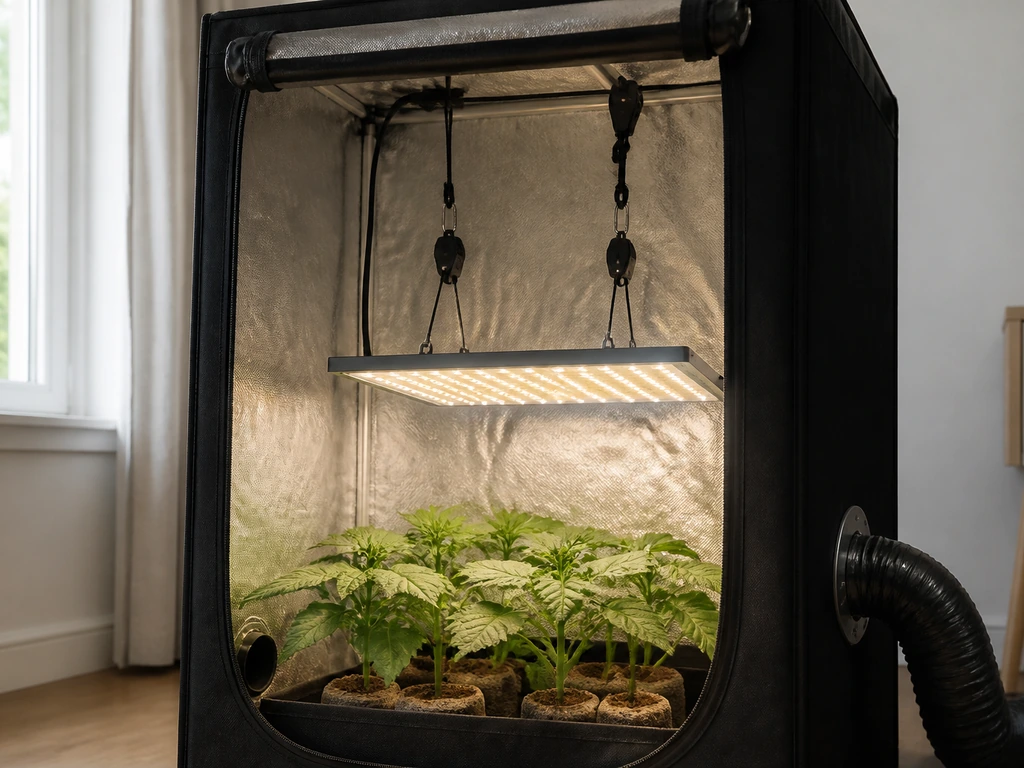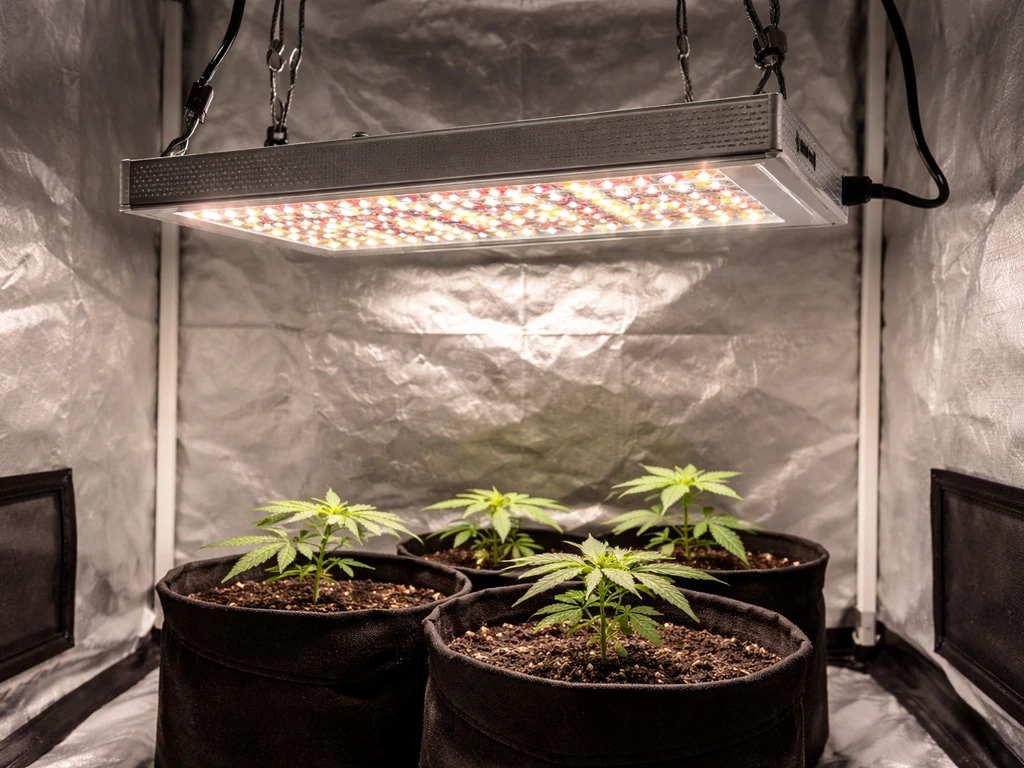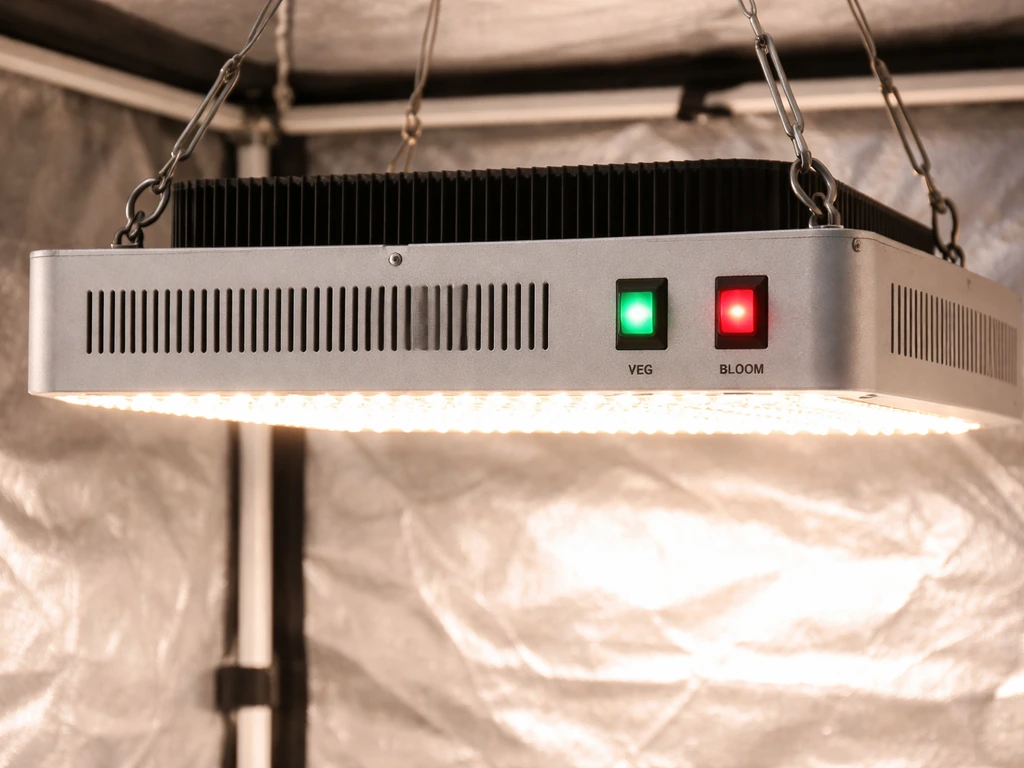
FEIT grow lights are worth buying for small, casual indoor setups, especially if you want a plug-and-go bulb or bar light from a brand you can find at Costco or Home Depot. They are not, however, the right call for serious veg/flower tents or anyone chasing real PPFD numbers at canopy level. Here is everything you need to know to figure out whether a FEIT product belongs in your grow space, and what to buy instead if it does not.
Feit Grow Light Review: Best Models, Value vs COB HID

Marcus Caldwell
2 Apr 2026
What FEIT grow lights actually are
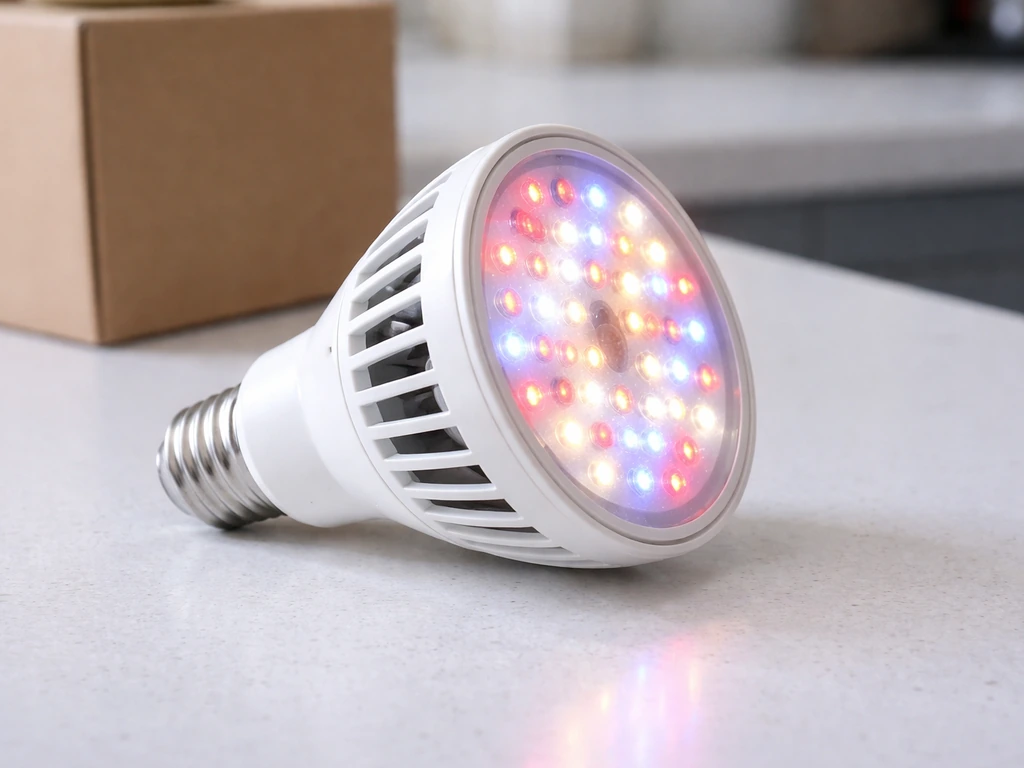
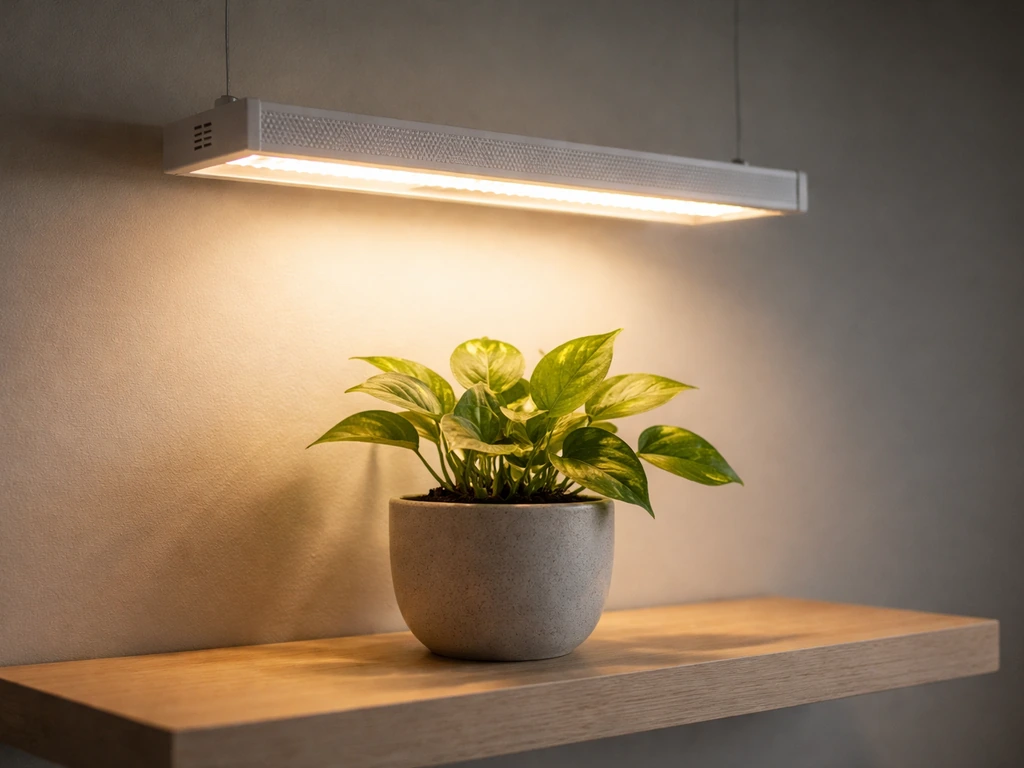
FEIT Electric is a consumer lighting company, not a dedicated horticulture brand. Their grow light lineup sits inside a broader LED product portfolio that includes smart bulbs, shop lights, and strip lights. That context matters a lot when you are reading their specs. The grow light products fall into three practical categories: A19/A21 screw-base bulbs, PAR38 reflector bulbs, and fixture-style bar lights.
The A19/GROW/LEDG2/BX is FEIT's basic full-spectrum grow bulb: 9W, E26 base, 660 lumens, 120-degree beam angle, and a published PAR/PPF of 14.2. It emphasizes 449nm blue and 630nm red output over a standard white bulb, and FEIT claims a 25,000-hour average life (roughly 22.8 years at typical use). If you have read the Feit A19 grow light review on this site, you already know that the real-world photon output at canopy distance is modest, which is fine for a small herb pot on a windowsill but limiting for anything more demanding.
The A19/ADJ/GRW/LED/HDRP is the adjustable multi-spectrum version of the same form factor. It is still 9W with 660 lumens and an E26 base, but it lets you switch spectrum to suit germination, vegetative growth, or budding/flowering stages. CRI is 80, and the annual energy cost listed on the spec sheet is just $1.08, which tells you everything about the scale of light you are getting. It is not dimmable.
The A21/ADJ/GRW/LED/HDRP steps up to 17W and 1600 lumens, with a published PAR/PPF of 24.1 to 27.9 depending on spectrum mode, a 3300K color temperature, and 15,000-hour rated life. This is the biggest screw-base bulb FEIT makes for plant growing and the one worth considering for a single plant under a reflective hood.
The PAR38ADJGRW/LED/HDRP is FEIT's highest-output bulb: 30W, E26 base, 40-degree beam angle, and PAR/PPF values of 39 to 43 depending on spectrum setting, with blank" rel="noopener noreferrer">15,000-hour rated life and CRI 80. The narrow 40-degree beam makes it more directional than the A19, which is actually useful for concentrating light on a small canopy rather than wasting it sideways.
On the fixture side, the 24-inch GLP24ADJS/19W/LED bar light outputs 1200 lumens at 63 lumens per watt, with spectrum-selectable modes and a 25,000-hour rated life. It can flush-mount to a ceiling or hang on included wire to adjust canopy distance. The 27W vertical-mount version (GLP24ADJS/VM/27W/LED) claims PAR/PPF up to 47 and supports daisy-chaining up to 8 units together for wider coverage. The largest fixture, the 40W flexible-head GLP29-B/ADJS/40W/LED, puts out 3200 lumens at 80 lumens per watt. None of these fixtures are dimmable or smart-app controlled.
How FEIT performs on the things that actually matter
Brightness and PAR output
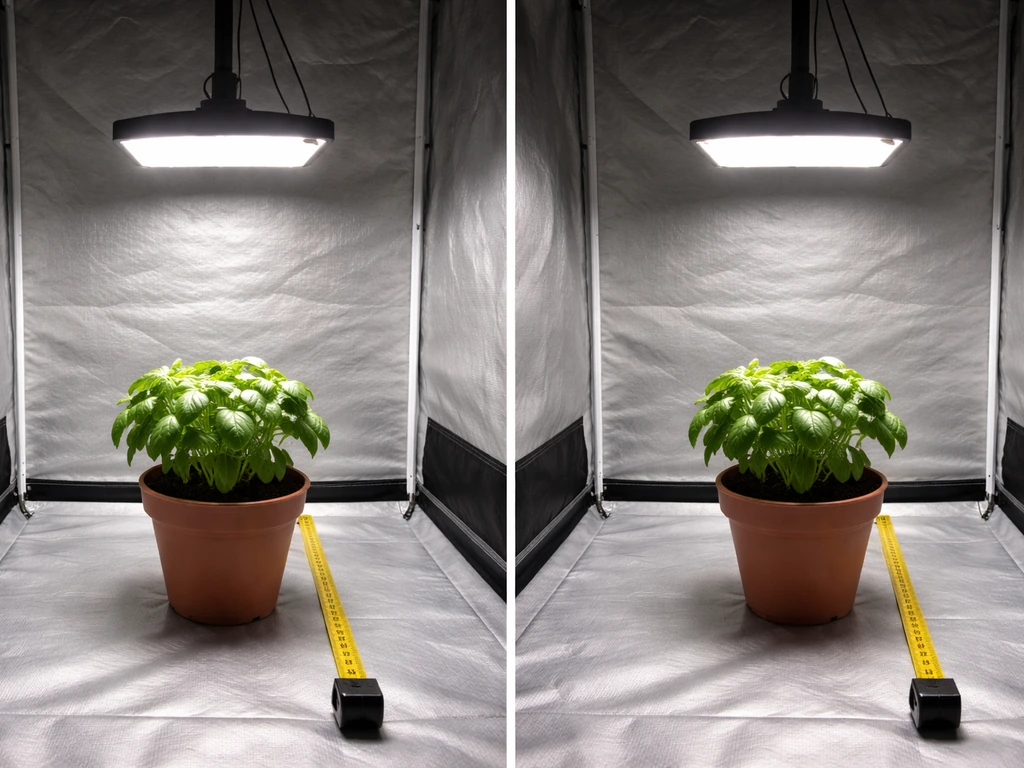
FEIT publishes PAR/PPF values rather than full PPFD maps with canopy-level measurements at a defined distance over a defined area. That is a significant gap. Premium horticulture brands, like Fluence with their SPYDR2 line, provide detailed PPFD distributions so you know exactly what the canopy sees at 12, 18, and 24 inches. FEIT does not do that. Their stated PAR/PPF figures (14.2 for the basic A19 up to 47 for the 27W bar) are whole-fixture outputs, not the photon flux density a plant actually receives. For seedlings and low-light houseplants, the A19 bulbs are adequate. For vegetative growth or flowering, the bar fixtures at minimum, ideally multiple linked units, are required.
Spectrum
The adjustable-spectrum products cover the biologically relevant peaks: 449nm blue for vegetative growth and 630nm red for flowering. The selectable-spectrum bar lights also include a white/mixed mode for general growth phases. A Reddit user running two of the 24-inch spectrum-selectable bars notes that newer versions include dedicated blue-only and red-only mode switches, with some variants offering a remote control. This matches FEIT's marketed positioning, though the CCT of 6500K on the bar fixtures leans toward the blue end even in white mode, which is better for veg than for late-stage flowering.
Coverage footprint
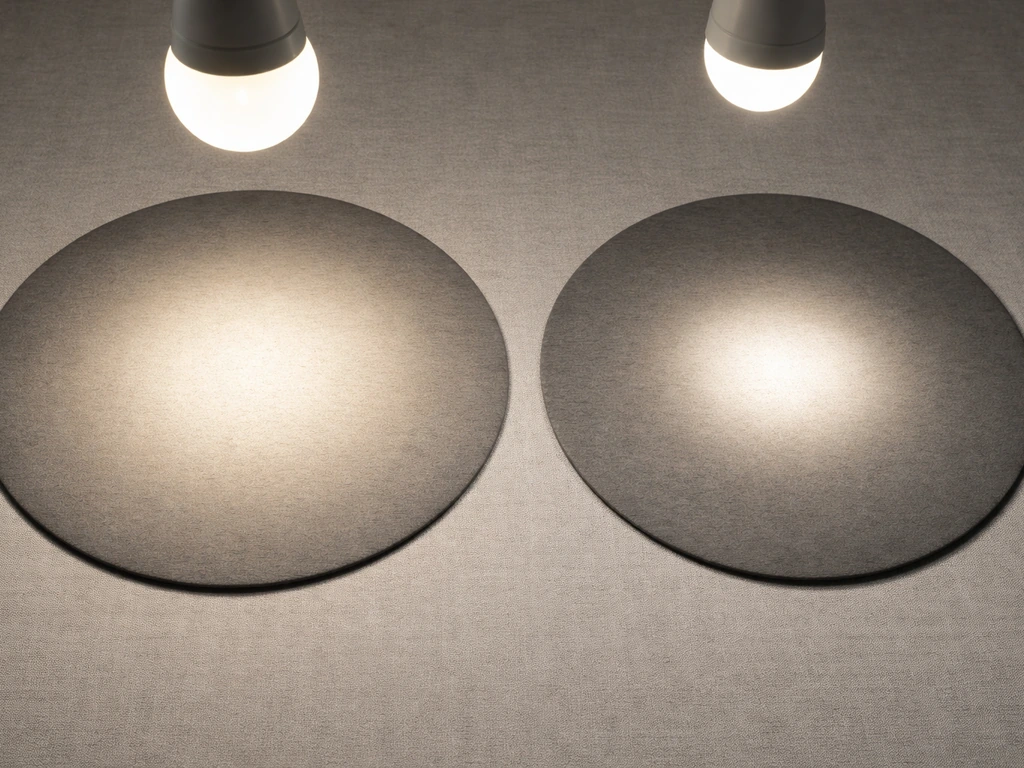
The A19 bulbs at 9W with a 120-degree beam are realistically covering about a 6-inch to 8-inch circle at useful intensity. The PAR38 at 40 degrees is more focused, covering maybe 4 to 6 inches but with meaningfully higher photon concentration. The 24-inch bar is the most practical coverage tool in the lineup, and linking multiple units addresses the fundamental limitation of any single low-wattage fixture. One bar over a 2x2 area is thin coverage; two to three linked units becomes workable for herbs and greens.
Heat
This is genuinely one of FEIT's stronger points. The bulbs and bar fixtures run cool, consistent with their low wattage. FEIT explicitly states that the 27W bar operates cooler than HPS to reduce leaf burn risk, which is true, though that is an easy bar to clear. Passive cooling is fine at these wattage levels. If you are in a small enclosed space, heat from FEIT products is not a concern.
Build quality
FEIT products feel like consumer-grade hardware, because they are. The plastic construction is adequate, not impressive. Community feedback includes some warranty friction and reports of defective units, though this is not uncommon across consumer LED brands. The official warranty terms depend on the specific product and begin from the date of purchase from an authorized reseller. Some bulb products carry a Replacement Guarantee badge, which FEIT says provides specific coverage details. Read the fine print before buying. One practical note from community discussions: FEIT's smart lighting ecosystem has received criticism for app reliability, but the grow light line is not smart-app dependent, so that concern does not apply here.
FEIT versus the competition: value and results
The honest comparison starts with what FEIT is selling: convenience and retail availability, not horticulture performance per dollar. A 9W A19 bulb at roughly $8 to $12 makes sense if you want to drop it into an existing lamp socket over a propagation tray. But once you are spending $30 to $60 on the bar fixtures, you are in territory where purpose-built grow light brands start winning on PAR output and coverage.
At the $30 to $80 range, brands like Fecida deliver higher PAR values per dollar for small tent use. If you are comparing bar-style fixtures for seedlings and herbs, the Fecida grow light review covers a competing product that offers more measurable photon output for a similar price. The 40W FEIT bar at 3200 lumens and 80 lpw is a reasonable mid-range performer, but it lacks dimming and app control that dedicated grow light brands increasingly include.
At the lower end of the market, FEIT competes with generic brands sold on Amazon and through discount retailers. Some of those products offer higher claimed wattages at lower prices, though wattage accuracy and driver quality are legitimately variable. A $15 generic 45W "blurple" panel will claim more output than a FEIT 19W bar, but the actual photon delivery may not be proportionally higher, and the driver lifespan is often shorter. FEIT's rated 25,000-hour life on the bar fixtures is a meaningful advantage over cheap no-name alternatives.
Quick comparison: other brands that show up in the same searches
A lot of shoppers searching for FEIT grow light reviews are also cross-shopping with other small or mid-range brands. Here is a fast orientation on where those alternatives fit.
| Brand / Product type | Best use case | Relative PAR output | Key trade-off |
|---|---|---|---|
| FEIT A19/A21 bulbs | Single plant, herb pot, low-light houseplant | Low (14.2–27.9 PPF) | Easy to use, low PAR ceiling |
| FEIT bar fixtures (19W–40W) | Seedlings, small herb shelf, propagation | Moderate (up to 47 PPF per unit) | No dimming, no PPFD map |
| Fecida panel/bar lights | Small grow tent, seedlings to veg | Moderate-high for price | Less retail availability |
| Fsgtek fixtures | Budget shelf/seedling setups | Low-moderate | Driver longevity unknown |
| Unifun clamp lights | Single plant, desk herb garden | Low | Convenience over performance |
| BoostGro bars (2FT–4FT) | Veg/propagation shelving | Moderate (footprint-mapped) | Less widely reviewed |
| Fluence SPYDR2 | Commercial/pro horticulture | Very high (full PPFD maps) | High cost, overkill for home use |
| Generic USB LED panels | Supplemental only | Very low | Not suitable as primary light |
If you want a bar light for a basic seedling shelf and FEIT is what your local store carries, it is a reasonable buy. If you are ordering online anyway, the Fsgtek grow light and similar small-brand fixtures are worth a look for slightly better PAR-per-dollar ratios. For anyone running a 2x2 or larger tent through the vegetative stage, step up to a purpose-built panel.
COB vs fluorescent vs HID vs USB-style: which tech fits your grow
FEIT uses LED-SMD (surface-mount device) technology across its grow light line. That is different from COB (chip-on-board), fluorescent, HID (high-intensity discharge), and USB-powered LEDs, all of which show up in grow light searches. Here is how the technologies compare practically.
COB LEDs pack many LED chips into a single dense array, producing a high-intensity point source with better canopy penetration. They run hot and require active cooling. Purpose-built COB grow panels (not what FEIT sells) are a strong choice for flowering-stage tents because the intensity and spectrum depth are higher. SMD LEDs like those in FEIT products spread light more evenly at lower intensity, which suits seedlings and vegetative stages but falls short for flowering.
Fluorescent fixtures, especially T5 HO (high output) tubes, were the standard for seedling and clone rooms for years. They produce broad-spectrum light with low heat at canopy level, good uniformity, and low cost per fixture. Their limitation is that output does not scale well for larger canopies without adding many tubes. T5 is still a competitive option for propagation and is genuinely comparable to FEIT bars in that application.
HID lighting (metal halide for veg, high-pressure sodium for flower) produces very high PPFD and has a long track record in indoor growing. The trade-offs are heat, electricity consumption, and the need for ballasts and reflectors. HPS in particular produces a spectrum that leans orange-red, which suits late-stage flowering. Modern LED panels have largely replaced HID for home growers because of heat and efficiency, but HID remains in use in commercial operations where replacement cost and setup complexity are manageable.
USB-style LED grow lights (small panels or gooseneck fixtures that run off a USB port) are supplemental tools at best. They draw 5W or less and produce photon output far below what most plants need as a primary light source. They are fine for keeping a succulent alive on a dark desk, not for growing anything. If you are comparing a USB grow light to any FEIT product, the FEIT wins on output every time.
One category that generates its own search traffic is the LEC (light-emitting ceramic), also called CMH (ceramic metal halide). These are HID-family lights with a more complete spectrum, including UV, that many growers credit with better terpene and resin production in flowering plants. They run cooler than HPS but hotter than LED. LEC is a legitimate option for serious small-tent flowering grows and is not something FEIT competes with at all.
Who should buy FEIT, and who should skip it
FEIT is a good fit if you are:
- Growing herbs, lettuces, or low-light houseplants in a small space (a shelf, a windowsill supplement, or a single pot)
- Running a seedling propagation tray and want an affordable bar light you can find locally
- Looking for a screw-base bulb you can put in an existing desk lamp or clip light over a seed starting tray
- New to indoor growing and want to test whether it works for you before investing more
- Keeping electricity cost and heat to an absolute minimum (the $1.08 annual cost figure on the 9W A19 is essentially nothing)
Skip FEIT if you are:
- Running a 2x2 or larger tent through a full vegetative or flowering cycle
- Growing fruiting plants, cannabis, or anything with high light demand
- Trying to maximize yield per watt or per dollar at serious intensity levels
- Needing dimming control or a 0-10V driver to manage canopy distance
- Comparing against dedicated panel brands and expecting similar PPFD per dollar
A community post from a grower using a 30W FEIT fixture mounted over a seedling shelf reports good germination and early growth results, which aligns with what the specs suggest: these fixtures are in their element at the propagation and early seedling stage. Once plants move into serious vegetative growth and need sustained PPFD above 300 to 400 µmol/m²/s, FEIT's lineup runs out of headroom.
For growers who want to see what a step up in a small, purpose-built fixture looks like, the Green Fingers grow light review covers a compact panel that targets a similar audience but with more attention to PAR output in a small footprint. Similarly, if you are deciding between a bar-style light and a clamp-style fixture, the Unifun grow light review covers another option in that same small-space category.
Before you buy: the checklist
Whether you are buying FEIT or comparing it to something else, run through these points before committing.
- Check PAR/PPF vs PPFD: PAR is not a measurement of total grow light effectiveness, it refers to the wavelength range plants use. PPF is the total photon output of the fixture. PPFD is what your plant actually receives at a given distance. FEIT publishes PPF; always convert to expected PPFD at canopy distance before comparing fixtures. A higher PPF bulb placed farther away may deliver less PPFD than a lower PPF bulb closer to the canopy.
- Verify actual wattage: The spec sheet input wattage (9W, 19W, 27W, 40W) is what matters for energy use and actual output. Marketing wattage claims from some brands are based on theoretical LED capacity, not real draw. FEIT's published specs are consistent with real draw numbers.
- Confirm spectrum for your stage: Blue-dominant light (5000K–6500K) suits germination and vegetative growth. Red-dominant light (2700K–3000K) is better for flowering. The adjustable FEIT products let you switch, which adds value if you are taking plants through multiple stages.
- Check dimming availability: None of the FEIT grow products reviewed here are dimmable. If you want to dial back intensity for seedlings under a stronger light, you will need to adjust mounting height rather than wattage. This limits flexibility.
- Count your coverage area: For a single 4-inch pot, one A19 bulb is fine. For a standard 1020 flat of seedlings, you need at least two to three of the 24-inch bars or one 40W fixture mounted close. Linked bars are the most practical FEIT solution for any tray-size coverage.
- Check the warranty before you buy: FEIT's warranty terms vary by product and require purchase from an authorized reseller. Look for the Replacement Guarantee badge on bulb products for the clearest coverage terms. Keep your receipt.
- Consider mounting before you buy: The A19 and A21 bulbs need a lamp socket. The PAR38 needs an appropriate fixture. The bar lights hang or flush-mount. Make sure you have the right setup before the product arrives.
- Compare total cost of ownership: At 9W, a FEIT bulb costs almost nothing to run. At 40W for 16 hours a day, you are looking at about $23 per year at $0.12/kWh. Factor in fixture cost divided by rated life hours (25,000 hours for the bars) to get a real cost-per-hour comparison with alternatives.
Setup tips that will help regardless of which FEIT product you choose
Mount height is the single biggest variable you control. The inverse square law means doubling the distance from light to canopy roughly quarters the PPFD. With FEIT's lower-output products, keeping the fixture as close as possible to the canopy (without heat stress, which is not a real concern here) is the most important thing you can do. For the bar fixtures, start at 6 to 12 inches above seedlings and raise as plants grow.
Reflective surroundings help a lot at low wattage. A simple white-painted shelf interior or Mylar backing can recover 10 to 20 percent of sideways-lost photons. This matters more with FEIT's wide-beam A19 bulbs than with the 40-degree PAR38.
Run times matter as much as intensity. Seedlings typically need 14 to 16 hours of light per day. Vegetative plants do well at 16 to 18 hours. Use a simple plug-in timer, since none of the FEIT grow products have built-in scheduling. This is basic but easy to forget.
If you are building out a longer-term shelf grow, the 19W FEIT bar linked with additional units is the most scalable option in the lineup. You can start with one unit and add bars without buying a completely new fixture. The 8-unit linking limit is far beyond what most home setups need.
One more thing worth checking: if you are comparing FEIT bars to the Feit 19W LED grow light specifically, that product gets its own more detailed treatment on this site. The spec overlap between product codes is real and the naming conventions are confusing, so it pays to confirm the exact model number before purchasing.
For growers who want a mid-range panel that bridges the gap between FEIT's consumer products and full horticulture fixtures, a look at the V99 grow light review covers a panel option in that intermediate range. And if you are curious about how dedicated LED panel brands at the 600W class compare on pure output, the Fecida 600W LED grow light review gives you a concrete sense of where the performance ceiling sits when you spend more.
FEIT grow lights are not trying to be the best-performing products in the category. They are trying to be the easiest ones to buy, install, and not think about for a 4-inch pot of basil or a tray of tomato starts. On those terms, they largely succeed. Know what you are buying and they will not disappoint you. Expect more than that and you will need a different light.
FAQ
Why can’t I just use FEIT’s PAR/PPF numbers to decide if it is enough for flowering?
Because FEIT publishes PAR or PPF for the whole fixture rather than a canopy-level PPFD map, you cannot reliably compare it to another brand using only the headline numbers. The practical workaround is to choose your target stage (seedling, vegetative, flowering) and then validate using distance and coverage area (for example, how many inches of plant width each bulb or bar meaningfully brightens), instead of trying to match “PPFD at 18 inches” from a spec sheet.
Can I dim FEIT grow lights if my plants are getting too much light?
Yes, but only in a limited way. FEIT bars and bulbs described here are not dimmable, so you cannot dial down intensity to correct for overshooting distance or to run a lower photoperiod without changing the total runtime. If your goal is gentler light, the controllable levers are fixture height (lower is higher intensity), number of units, and daily hours with a timer.
What mounting height should I use for FEIT lights, and how should I adjust as plants grow?
For any bulb or bar setup, mounting height is the biggest lever, and it changes how much of the light actually hits the canopy. A good rule of thumb with FEIT’s lower-output products is to start closer than you think for seedlings and then raise gradually as plants expand, because wide-beam bulbs waste more light sideways when you raise them.
Is one FEIT bar enough for a 2x2 grow area?
If you are using FEIT mainly for propagation and low-light greens, you can often get by with a single bar over a small shelf, but coverage gaps show up fast as your plants spread. To improve uniformity on a 2x2 area, the usual fix is adding a second or third linked bar so the center and edges both receive usable intensity, rather than relying on one unit’s beam spread.
Do FEIT grow lights include timers or smart scheduling?
You should plan your purchase around whether you need scheduling, not just the light output. None of the FEIT grow products in the article have built-in scheduling, so you must use a separate plug-in timer for consistent daily photoperiods, like 14 to 16 hours for seedlings and 16 to 18 for vegetative.
What are common mistakes people make when using FEIT bars for seedlings or herbs?
No, and that detail affects safety and plant stress more than people expect. With no built-in dimming or intensity control, the biggest mistake is mounting too high because it “feels safer,” then compensating by leaving the lights on too long. If you need more reach, increase coverage with another fixture or lower the height appropriately, while still keeping an eye on leaf posture and bleaching.
How should I use the spectrum settings on FEIT adjustable bulbs if I cannot dim them?
The adjustable-spectrum bulbs do not offer dimming, and switching spectra is for stage control, not intensity control. In practice, use the spectrum modes to match your growth goal (blue-forward for earlier growth, red-forward when you want more flowering emphasis), then rely on height and runtime to manage total light exposure.
How do I make sure I’m buying the correct FEIT model, since product codes look similar?
Look for two things before buying: whether you are getting the exact product code (FEIT’s naming overlaps across similar wattages), and whether the listing is for a version that truly matches your intended mounting method. The article notes confusing naming conventions and that some variants may include additional controls like remote or dedicated mode switches, so confirming the exact model number can prevent mismatched expectations.
Should I worry about heat stress with FEIT grow lights in a small tent?
In a small enclosed shelf or tent, heat from these FEIT units is generally not a major risk, but airflow still matters for overall plant health. If you notice wilting, curling, or rapid drying, treat it as a ventilation and humidity issue rather than “the light is too hot,” since these fixtures operate relatively cool at their wattage.
When is it smarter to stop buying FEIT and switch to a purpose-built horticulture panel?
Start by defining your goal, because FEIT can be the right buy for propagation and small greens, but it is usually not the right buy for sustained high PPFD flowering. A practical decision trigger is whether you need canopy-level intensity comparable to purpose-built fixtures, if yes then you likely need to step up to a horticulture-focused panel rather than adding more FEIT units at random.