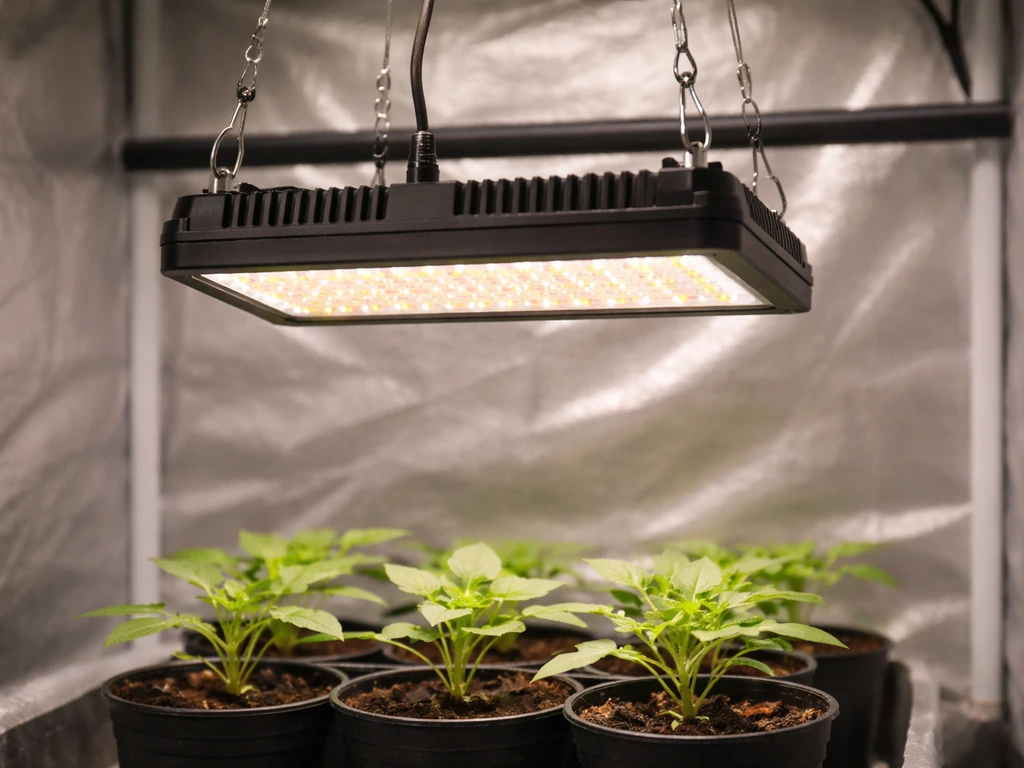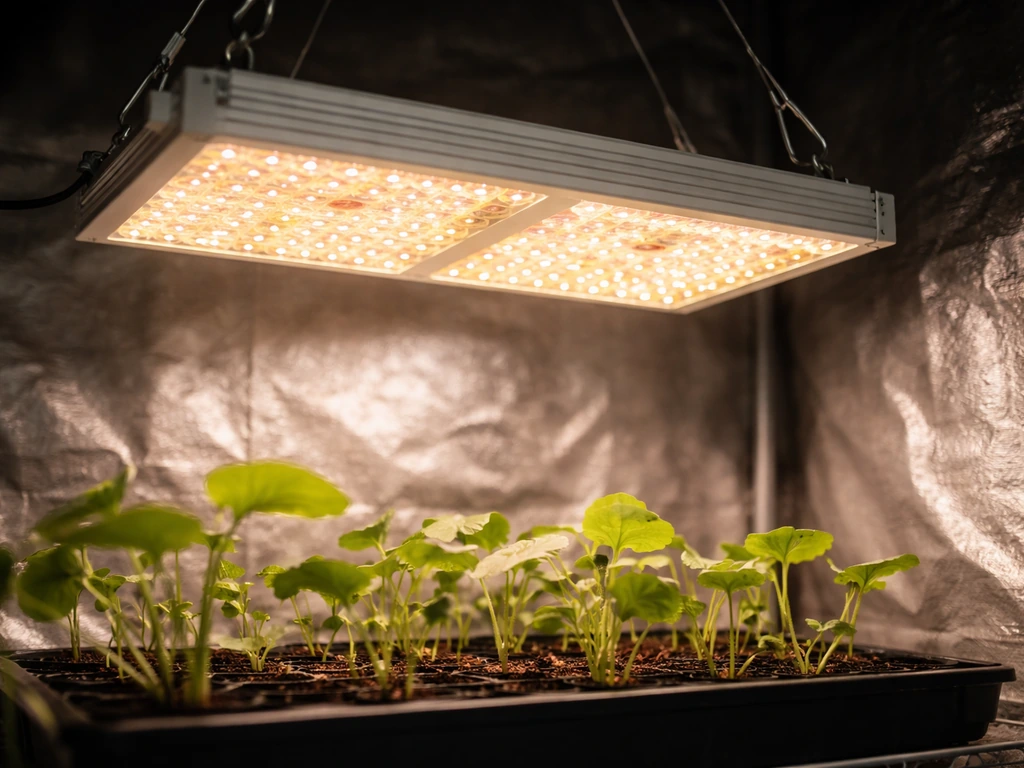
Green Fingers grow lights are worth considering if you want Samsung LM281B quantum board performance at a mid-range price, but they're not a slam dunk for every grower. The lineup runs from a 150W single board (GL-BOARD-150-DIM) up to a 480W bar-style fixture (GL-BOARD-480-DIM-BAR), all rated at 2. 6 µmol/J efficiency and built around a Sosen driver.
Green Fingers Grow Light Review and Buyer Guide

Marcus Caldwell
17 May 2026
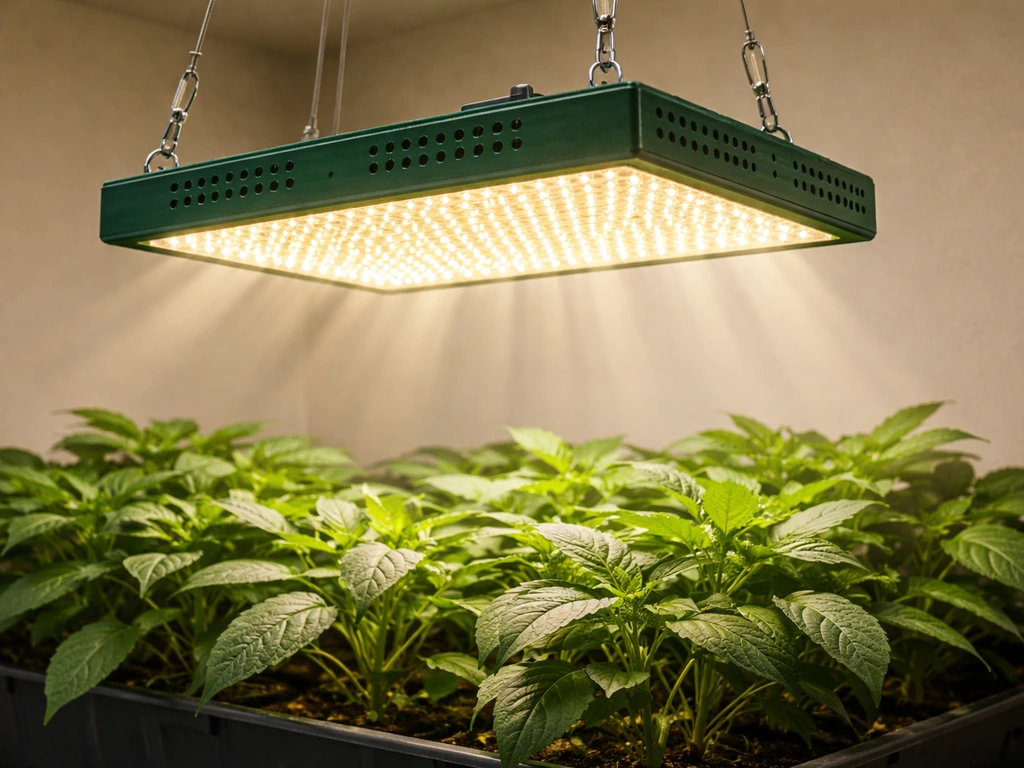
That efficiency figure is respectable but not class-leading, and without published PPFD maps from the brand, you have to do a bit of homework before committing to a fixture size for your space. This review breaks down what the specs actually mean, what the lights do well, where they fall short, and who should buy one versus who should look elsewhere.
If you’re specifically looking for a unifun grow light review, you’ll want to compare these performance details to how UNIFUN boards measure up in the same kind of setup This review breaks down what the specs actually mean. If you are also considering FSGTEK lights, this FSGTEK grow light review covers how their models perform for spectrum, coverage, and real-world yield.
What the Green Fingers lineup actually is
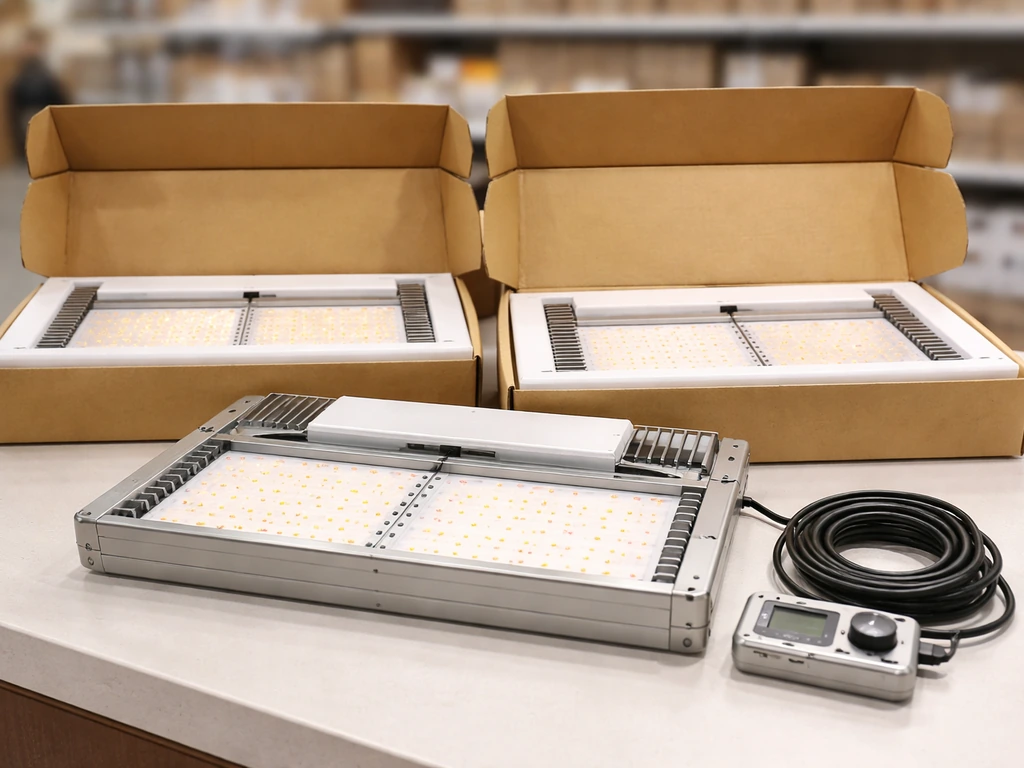
Green Fingers is an Australian brand sold primarily through Harvey Norman, MYER, and third-party retailers like Grays and Auzzi. The product range uses quantum board-style PCB panels with Samsung LM281B diodes and a full-spectrum mix of 3000K warm white, 5000K cool white, 660–665nm red, 730–740nm far-red, and 380–410nm UV. That combination covers seedling, vegetative, and flowering stages in a single fixture without needing to swap lights.
The core model numbers you'll encounter are GL-BOARD-150-DIM (150W actual draw), GL-BOARD-220-DIM (220W actual draw), GL-BOARD-320-DIM-BAR (320W, bar-style), and GL-BOARD-480-DIM-BAR (480W, bar-style). The brand markets them with inflated equivalent wattages (1500W, 2200W, 3200W, 4800W), which refer loosely to older HID equivalency rather than real power draw. Pay attention to the actual wattage in parentheses, not the headline number.
| Model | Actual Draw | PPF | PPE | Max Coverage | Driver | IP Rating |
|---|---|---|---|---|---|---|
| GL-BOARD-150-DIM | 150W (±5%) | Not published | Not published | 3ft × 3ft | Sosen | IP65 |
| GL-BOARD-220-DIM | 220W | 572 µmol/s | 2.6 µmol/J | Not published | Sosen | Not listed |
| GL-BOARD-320-DIM-BAR | 320W | 780 µmol/s | 2.6 µmol/J | Not published | Sosen | Not listed |
| GL-BOARD-480-DIM-BAR | 480W | 1200 µmol/s | 2.6 µmol/J | Not published | Sosen | IP65 |
All models support 0–100% dimming, accept AC100–277V input (making them suitable for Australian 240V and US 120V mains), and are rated for a 50,000-hour LED lifespan. The bar-style models (320W and 480W) include a detachable driver, which helps reduce radiant heat over the canopy. The 150W board confirms IP65 water resistance, which is useful in humid grow tent environments.
Spectrum and coverage: what it can do and what it can't
The spectrum on every Green Fingers model is built around the same recipe: warm 3000K and neutral 5000K white LEDs for broad-band photosynthetically active radiation, supplemented by 660–665nm deep red to push flowering efficiency, 730–740nm far-red to trigger the Emerson effect and accelerate flowering transitions, and 380–410nm UV for secondary metabolite production (terpenes, flavonoids, anthocyanins). This is a genuinely solid full-cycle spectrum. The 3000K/5000K combination gives you a wide PAR curve that supports chlorophyll A and B absorption without the purple-only approach of cheaper blurple lights. You won't need a separate veg light or a supplemental bloom booster.
Coverage is where things get less clear. The 150W GL-BOARD-150-DIM is rated for a 3ft × 3ft maximum footprint, which is 9 sq ft. That's a reasonable claim for vegetative growth at moderate PPFD targets (400–600 µmol/m²/s), but for flowering you'd want to tighten that to a 2. 5ft × 2.
5ft area and dial the dimmer toward 100%. Green Fingers doesn't publish PPFD distribution maps for any of its models, which is a legitimate frustration. Without a map you can't verify how uniform the light is edge-to-edge, or where the hot spot sits. Based on the PPF figures and typical quantum board geometry, expect reasonable center-weighted output with a drop-off toward the edges of the rated footprint, which is standard for single-board designs.
Some older or lower-end Green Fingers models (particularly the 600W and 1200W equivalents sold through MYER and Wonder Shop) use a two-switch or three-switch system with separate VEG ON and BLOOM ON controls. These toggle different diode clusters rather than providing a fully integrated spectrum at all times. If you have one of those older-style fixtures, run both switches simultaneously for flowering to get the complete spectrum. The newer board-style models with continuous dimming don't have this limitation.
Real-world performance: output, uniformity, and thermals
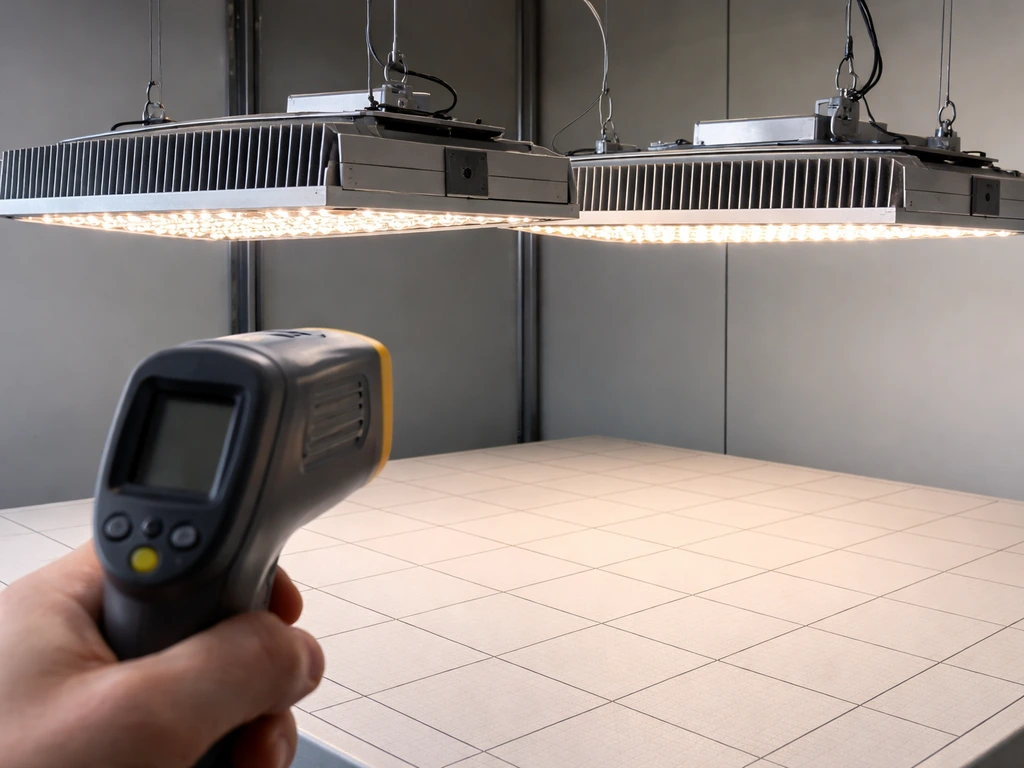
Light output and efficiency
The published PPE of 2. 6 µmol/J is confirmed across the 220W, 320W, and 480W models. To put that in context: entry-level budget lights from less-known brands typically land at 1. 8–2.
2 µmol/J, mid-tier brands like Feit and Fecida sit around 2. This Feit 19W/LED grow light review is a helpful companion if you are comparing small-budget fixtures for propagation and low-intensity grows. If you are comparing brands in this efficiency bracket, you may also want to read a Fecida grow light review to see how it stacks up on spectrum and real-world output.
If you want an example of how Feit-style fixtures stack up in a full review, see the Feit Grow Light review for comparable performance and value. 2–2. 5 µmol/J, and premium options like Spider Farmer SF and Mars Hydro TSW series reach 2. 7–3.
0 µmol/J. Green Fingers at 2. 6 µmol/J is competitive without being market-leading. For the 480W model delivering 1200 µmol/s PPF, you're getting genuine photon output capable of supporting a flowering canopy in a 4ft × 4ft tent, provided you hang it at the right height and push it close to full power.
The absence of published PPFD maps is the single biggest data gap in this review. I cross-referenced the PPF values against typical quantum board attenuation curves and estimated that the 480W model should deliver roughly 800–1000 µmol/m²/s at 18 inches above the canopy over a 4ft × 4ft area at full power, but that's a calculation, not a measurement. If you have a PAR meter, take readings at your actual hanging height in a 3-by-3 grid pattern across your canopy to confirm you're hitting your targets. For flowering cannabis or tomatoes, you want 600–900 µmol/m²/s; for leafy greens and herbs, 200–400 µmol/m²/s is adequate.
Heat management
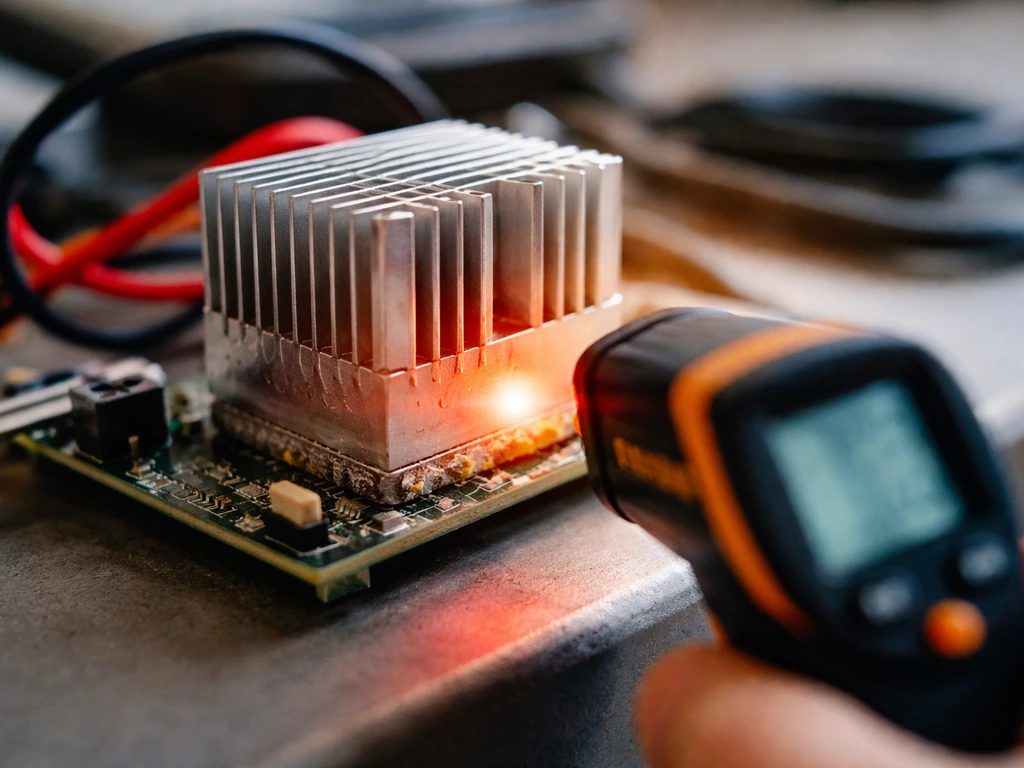
The Samsung LM281B diodes run relatively cool compared to older bridgelux or epistar chips, and the Sosen driver is an efficient unit that doesn't generate excessive waste heat. The bar-style models (320W and 480W) move the driver off the board entirely, which keeps the fixture itself cooler over the canopy. In a well-ventilated 4ft × 4ft tent with a 4-inch inline fan, you should be able to maintain canopy temperatures in the 22–26°C range without the light being the primary heat source. The IP65 rating on the 150W and 480W models confirms the fixture is sealed against water ingress, which also reduces dust accumulation inside the unit.
Build quality, controls, and reliability
Samsung LM281B diodes are a genuine quality component, widely used by reputable brands in the mid-to-upper tier of the grow light market. Pairing them with a Sosen driver is also a reasonable choice. Sosen is a Taiwanese driver manufacturer with a track record in commercial and horticultural lighting, though it doesn't carry the same premium reputation as Meanwell. In practice, the Sosen drivers in Green Fingers fixtures appear reliable based on user feedback on ProductReview.com.au for the 4800W-class model, though that sample is limited and skewed toward early adopters.
The 0–100% continuous dimming on the board-style models works via a rotary knob (on the fixture or driver unit depending on model). The 320W bar model also supports 0–10V external dimming, which means it can be integrated with compatible environmental controllers if you're running an automated grow room. Assembly on the bar-style lights involves mounting a crossbar frame and attaching the driver separately, which is straightforward but takes about 20–30 minutes the first time. The physical dimensions on the 480W bar are 79.5cm wide by 69cm deep, so confirm your tent has adequate horizontal clearance before ordering.
The main reliability concern flagged in user reviews involves assembly quality consistency rather than electronic failure. A small number of users reported loose connections or misaligned bar mounts out of the box. Green Fingers is sold through major Australian retailers with standard consumer warranty protections, which makes returns and replacements easier than with grey-market imports. Harvey Norman specifically lists the fixture with a manufacturer warranty period, so register your purchase and keep the receipt.
Best use cases and how to set the light up
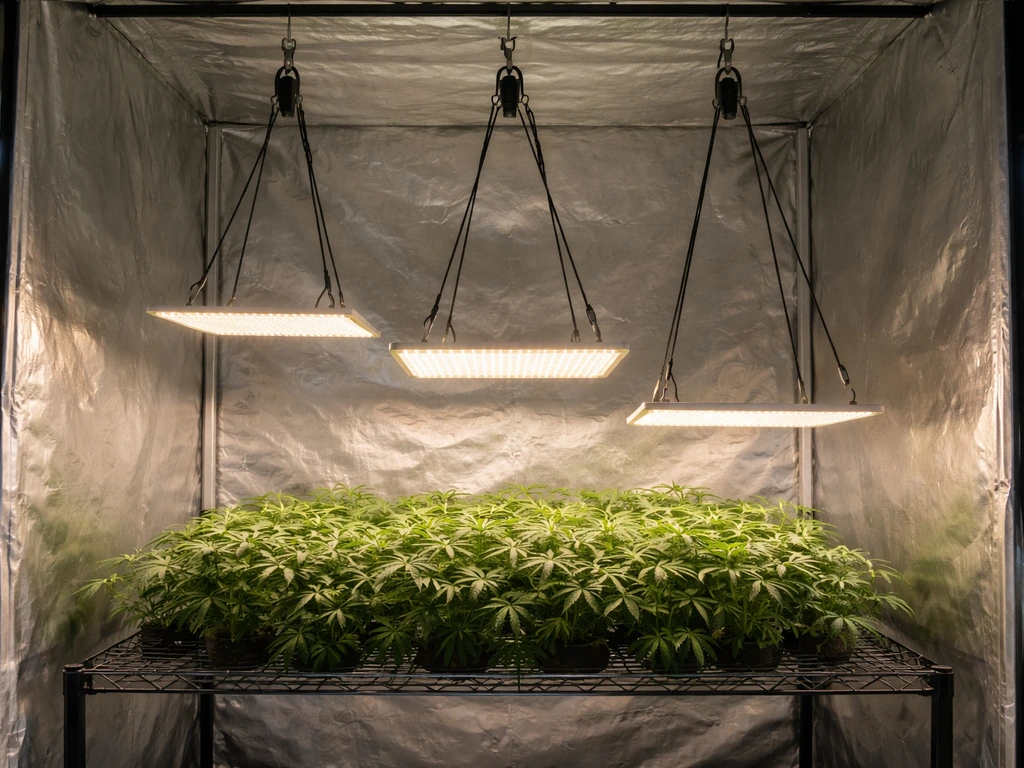
Green Fingers fixtures make most sense for hobbyist indoor growers running small-to-medium grow spaces who want a full-spectrum quantum board without paying premium brand prices. Here's how to match the model to your space and stage:
| Grow Stage | Target PPFD (µmol/m²/s) | Recommended Dimmer Setting | Hanging Height | Best Model for 3×3ft |
|---|---|---|---|---|
| Seedlings / Clones | 100–200 | 20–40% | 24–30 inches | GL-BOARD-150-DIM |
| Vegetative | 400–600 | 50–70% | 18–24 inches | GL-BOARD-150-DIM |
| Flowering | 600–900 | 80–100% | 12–18 inches | GL-BOARD-150-DIM or 220-DIM |
| Mixed crops (herbs, greens) | 200–400 | 30–50% | 18–24 inches | GL-BOARD-150-DIM |
For a 4ft × 4ft tent running a full flowering cycle, the 480W GL-BOARD-480-DIM-BAR is the appropriate choice. For a 3ft × 3ft tent, the 220W GL-BOARD-220-DIM is a better fit than the 150W if you're pushing into flowering, as the 150W will be near its limits at full power across that footprint. The 320W bar is a good option if you have a 3ft × 4ft or 4ft × 4ft tent and want some headroom for high-PPFD flowering.
Photoperiod guidance: for photoperiod-sensitive flowering plants, run 18 hours on / 6 hours off during veg, and switch to 12 / 12 to trigger flowering. For autoflowering strains, 20 / 4 or 18 / 6 throughout the grow cycle works well. Leafy greens and herbs can handle 16–18 hours of light per day without issue. Use a mechanical or digital timer rather than relying on manual switching, especially if you're using a 0–10V controller.
How it stacks up against the competition
Green Fingers positions itself in the same tier as mid-range quantum boards from brands like Mars Hydro, Spider Farmer, and Viparspectra. Below is a direct comparison of comparable real-wattage options to help you decide whether Green Fingers is the right pick or whether you'd be better served by an alternative. Feit, Fecida, and similar brands also compete in this space at lower price points, though they typically use different diode grades. If you also want to know how this compares to other options, check the full Feit A19 grow light review for additional performance and value details.
| Brand / Model | Actual Wattage | PPE (µmol/J) | Diodes | Driver | Coverage | Notes |
|---|---|---|---|---|---|---|
| Green Fingers GL-BOARD-480-DIM-BAR | 480W | 2.6 | Samsung LM281B | Sosen | ~4×4ft | Good Aus retail availability; no PPFD maps published |
| Spider Farmer SF-4000 | 450W | 2.72 | Samsung LM301B | Meanwell | 4×4ft | Slightly better diodes and driver; higher price |
| Mars Hydro TSW 2000 | 300W | 2.75 | Samsung LM301H | Meanwell | 3×3ft to 4×4ft | Better efficiency; premium pricing |
| Viparspectra KS5000 | 500W | 2.75 | Samsung LM301H | Meanwell | 5×5ft | Higher output; higher cost |
| Feit / Fecida (budget tier) | 45–100W | 1.8–2.3 | Varies | Varies | 2×2ft | Lower upfront cost; lower efficiency and build quality |
The honest comparison: Green Fingers at 2.6 µmol/J with Samsung LM281B diodes and a Sosen driver is a genuine step above budget options but trails the Spider Farmer and Mars Hydro flagships that use LM301B or LM301H diodes with Meanwell drivers and efficiency ratings of 2.7–2.75 µmol/J. The gap isn't enormous in terms of plant results, but if you're comparing equivalent wattages, the Spider Farmer SF series or Mars Hydro TSW series will give you slightly more photons per dollar of electricity over the life of the fixture. Green Fingers tends to be priced competitively through Australian retailers, and the accessibility of buying through Harvey Norman or MYER with local warranty support is a real advantage over importing alternatives.
Common problems and how to fix them
Plants stretching toward the light
If seedlings or veg-stage plants are stretching (etiolation), the light is either too far away or the dimmer is set too low. Lower the fixture by 2–4 inches or increase dimmer output by 10–15% and monitor over 48 hours. For seedlings, keep the light at 24–30 inches and 20–30% output to avoid burning delicate tissue while still providing enough intensity to prevent stretch.
Uneven canopy growth or edge plants lagging
This is the most common issue with single-board designs: edge plants receive less light than center plants. Solutions include lowering the fixture to reduce the falloff angle, training plants to keep the canopy level, or using reflective walls (Mylar or white-painted surfaces) to bounce edge light back onto outer plants. For the bar-style models with wider physical spread, uniformity is better across the footprint.
Light too intense causing bleaching or tip burn
If you see white or yellow patches on the tops of leaves closest to the light, either raise the fixture or dial the dimmer down. At 12 inches and 100% output, the 480W model can cause light stress in sensitive cultivars. Raise to 16–18 inches first, then fine-tune with the dimmer.
Timer and dimmer compatibility
Standard mechanical plug-in timers work fine with all Green Fingers models for on/off control. If you're using a smart dimmer or 0–10V controller, confirm compatibility with the specific model. The GL-BOARD-320-DIM-BAR explicitly supports 0–10V dimming; the other models use the onboard rotary dimmer and should be set to the desired level before the timer cuts power, since the dimmer position is retained between power cycles.
Driver noise or flicker
The Sosen drivers in these fixtures operate at high frequency, so visible flicker is not typically an issue. A small number of users have reported a faint electrical hum from the driver at full power, which is normal for switching-mode drivers. If the hum is loud or variable, check that the driver is securely mounted and not vibrating against the frame. Persistent buzzing accompanied by heat from the driver casing warrants a warranty claim.
Who should buy a Green Fingers light (and who shouldn't)
Green Fingers grow lights are a solid choice for Australian hobbyist growers who want a proper quantum board with Samsung diodes and full-spectrum output without ordering from overseas. The local retail availability, IP65 protection, 0–100% dimming, and genuine Samsung/Sosen component pairing make them a legitimate mid-tier option. The 480W bar is particularly well-suited to growers running a 4ft × 4ft tent through a full veg-to-flower cycle.
You should skip Green Fingers if maximum efficiency is your priority. At 2.6 µmol/J, you're leaving around 5–7% photon efficiency on the table compared to LM301B/LM301H-based alternatives with Meanwell drivers. Over a full year of running a 480W light 12–18 hours a day, that difference adds up in electricity costs. If you're running a serious commercial or semi-commercial operation, look at Spider Farmer, Mars Hydro TSW, or Gavita for that extra performance margin.
Budget-conscious growers who only need to cover a 2ft × 2ft shelf or propagation area might also find the Green Fingers pricing less competitive when compared to compact plug-in options from Feit or Fecida. Those smaller brands cover modest spaces at lower upfront cost, though they don't offer the same spectral quality or build grade.
If you decide Green Fingers is the right fit, start with the GL-BOARD-220-DIM for a 3ft × 3ft space or the GL-BOARD-480-DIM-BAR for a 4ft × 4ft tent. After installation, take PAR readings with a meter (or a PAR meter app as a rough guide) at canopy height and across the four corners of your growing area. Adjust hanging height and dimmer output until your corner readings are within 20–25% of your center reading. Check canopy response after the first week: nodes should be compact, color should be deep green, and growth rate should be clearly faster than under ambient light. Those three signals tell you the light is working correctly for your space.
FAQ
Which Green Fingers model should I pick for a flowering tent if I’m unsure whether to go 3x3 or 4x4?
If your canopy footprint is truly 3ft by 3ft, start with GL-BOARD-220-DIM, because the 150W model is more likely to run near its upper limits once you push flowering PPFD. If you have a 4ft by 4ft tent or expect to run the fixture higher for uniformity, the 480W bar model is the safer choice, since you can stay below 100% output and still hit targets at most hang heights.
How should I use the dimmer if my plants are at different heights in the same tent?
Use a top-to-bottom approach: set the fixture so the tallest plants are not bleaching, then gradually reduce canopy height differences by training (or by raising pots/containers). Avoid turning the dimmer down to “save” the tallest plants, because that usually underfeeds the shorter plants and increases stretch and internode gaps.
Do I need a separate veg light because Green Fingers includes far-red and UV?
No, the intention is full-cycle use with a built-in full-spectrum recipe. However, seedlings and very young clones can still benefit from running at lower intensity early on (for example 20 to 40% output) to prevent tip burn or stress before their canopy thickens.
What if I want to run an environmental controller, can I integrate Green Fingers easily?
It depends on the model. The 320W bar supports 0–10V dimming, so you can tie brightness to temperature or VPD strategies in compatible controllers. For the other models, rely on the onboard rotary dimmer and use the controller only for on/off timing, unless you confirm the specific unit supports external analog dimming.
Is it safe to use a smart plug with a Green Fingers light that has a dimmer knob?
You can use a mechanical or digital timer for on/off, but with the models that keep dimmer position, the light will resume at whatever dimmer level was last set after power returns. If you use a smart plug, confirm the dimmer will not change between outages, and test the restart behavior once before relying on it for a full photoperiod schedule.
How close can I hang the 480W bar without bleaching?
The article suggests keeping sensitive cultivars higher before fine-tuning. As a practical method, start at roughly 16 to 18 inches above the canopy for the first week, then lower in small increments only if you see no whitening or clawing and your PAR readings indicate you are still under target PPFD. If you see white or yellow patches near the top, stop lowering and back off.
What PPFD targets should I use for tomatoes or leafy greens under this kind of quantum board?
Use different goals by crop type. Leafy greens and herbs typically land in the 200 to 400 µmol/m²/s range, while flowering crops like tomatoes are commonly managed around 600 to 900 µmol/m²/s. The key practical step is measuring at canopy height and in multiple points, because single-board designs can be center-weighted.
How do I confirm uniformity if Green Fingers does not publish PPFD maps?
Do a grid check with a PAR meter: take readings at canopy height at the corners and center, and aim for corner values within about 20 to 25% of the center reading. If corners are consistently low, try lowering the fixture slightly, training the canopy to an even plane, or adding reflective wall material to bounce edge photons back.
Can I rely on a phone PAR app instead of a real PAR meter?
Use it only as a rough starting point. Phone apps are usually too inconsistent for fine adjustments, because they do not measure true PAR reliably across spectra. If you plan to dial dimmer and hanging height for flowering targets, a real PAR meter or a trusted measurement setup is the better decision.
What is the difference between the headline wattage and the “actual draw” on these lights?
Green Fingers marketing uses inflated equivalency numbers that loosely reference older HID comparisons, so the number in parentheses is what you should use for electricity planning and heat expectations. Treat those headline numbers as marketing, and size your tent, wiring, and airflow based on actual draw.
Will IP65 mean the driver is fully water-proof in a humid tent?
The 150W model is listed as IP65, which is helpful for dust and water exposure at the fixture level. Still, do not assume the entire system is equally protected, especially for detachable drivers in bar-style versions, and avoid direct splash or condensation dripping onto driver connections.
What warranty or reliability checks should I do right after unboxing?
Inspect the physical mounting and connections before running at full power, especially for bar-style units where the driver is attached separately. If anything feels loose or misaligned, address it immediately through the retailer, because some reports focus on assembly consistency rather than long-term electronics failure.
If my plants stretch during veg, what’s the fastest adjustment that usually fixes it?
First check hanging height, then dimmer setting. Stretch is commonly caused by insufficient intensity, so lower the fixture by a few inches (or increase dimmer output by roughly 10 to 15%), then reassess over about 48 hours. If seedlings are very young, increase intensity more slowly to avoid burning delicate tissue.
Should I be concerned about driver hum or flicker?
Visible flicker is typically not an issue with high-frequency switching drivers. A faint electrical hum can be normal, but loud, persistent buzzing, especially if paired with heat from the driver casing, is a reason to stop and pursue a warranty claim or retailer replacement.