Here is the short answer: FSGTEK is not a horticultural grow light brand. When you search "FSGTEK grow light review," you are almost certainly mixing up the brand with another manufacturer, or you have come across a marketplace listing that mislabels or misuses the term "grow light." The only clearly documented FSGTEK product is the S360PRO, which is a red/near-infrared light therapy panel designed for human wellness use, not for growing plants. That distinction matters a lot before you spend any money, so let me walk through exactly what FSGTEK makes, how the S360PRO actually performs if someone tries to use it for plants, and what you should buy instead if indoor growing is your actual goal.
FSGTEK Grow Light Review: Tested Performance, Coverage and Fit

Marcus Caldwell
11 Apr 2026
What FSGTEK actually makes (and what the S360PRO is)
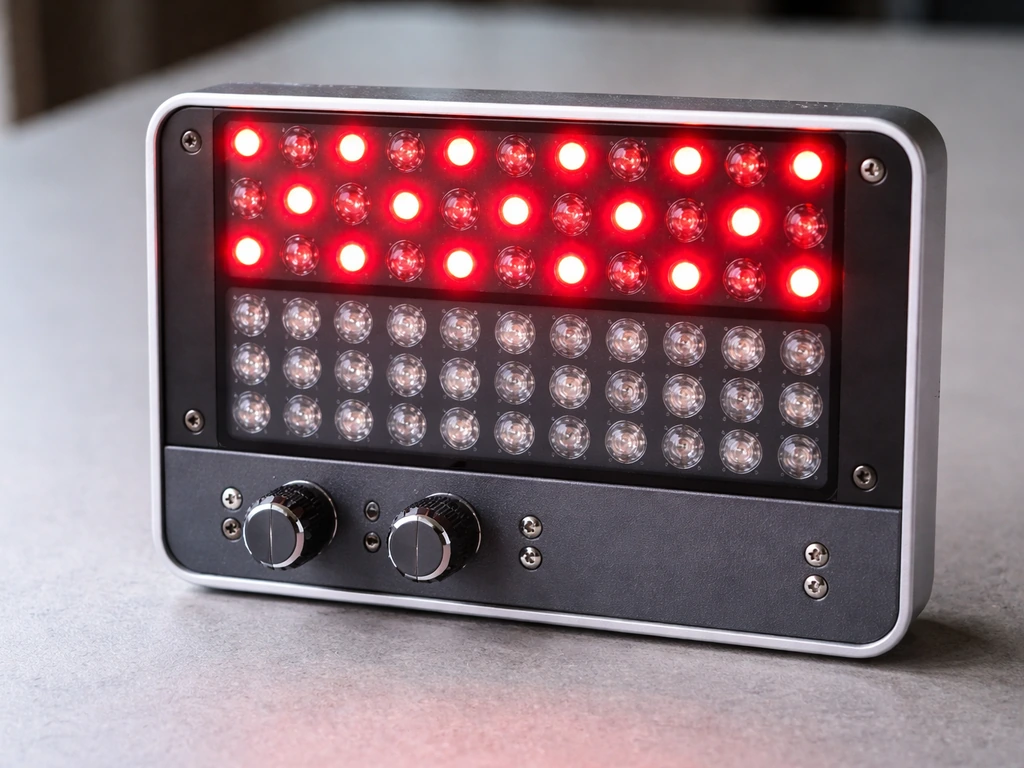
FSGTEK's official site (fsgtek.com) lists the S360PRO as their flagship panel. It runs dual wavelengths: 660 nm red and 850 nm near-infrared (NIR), at a claimed 1:1 ratio. The 3-year warranty, integrated timer, dimming control, and pulse mode are real features. But this is a personal photobiomodulation (red light therapy) device, not a grow light. The fact that it emits 660 nm red light, which does overlap with the photosynthetically active spectrum plants use, is where the confusion starts. Plants can absorb 660 nm. They cannot, however, do much with 850 nm NIR alone, and a panel with no blue spectrum, no green, and no UV is deeply incomplete for any serious vegetative or flowering crop.
As for wattage: FSGTEK does not publish a full electrical spec sheet for the S360PRO under a "grow light" category, so I cannot give you a verified true wattage draw. Red light therapy panels in this form factor typically pull between 20 W and 60 W at the wall. If you have seen a "FSGTEK grow light" listed on Amazon or another marketplace at a specific wattage, it is likely either a different brand using a similar name, a generic private-label panel being sold under the FSGTEK branding, or simply a mislabeled listing. None of those situations fill me with confidence about the product.
Real-world PPFD: what the S360PRO can and cannot deliver for plants
blank" rel="noopener noreferrer">PPFD (photosynthetic photon flux density) is measured in micromoles per square meter per second (µmol/m²/s) and tells you how much usable light your plants actually receive. For vegetative growth, most crops want 200 to 400 µmol/m²/s at canopy level. Flowering plants want 400 to 800 µmol/m²/s or higher depending on the species. A red/NIR therapy panel like the S360PRO is not rated or tested for PPFD because it is not designed for plants. blank" rel="noopener noreferrer">Standard PAR meters measure 400 to 700 nm. The 850 nm NIR from the S360PRO falls completely outside that range and will read as zero on a PAR meter. So even if the 660 nm diodes deliver some measurable PAR, a large portion of the panel's energy output is invisible to your meter and useless to your plants.
In practical terms: if you hung the S360PRO over a seedling tray hoping for a legitimate grow light result, you would see some initial response from the 660 nm red (plants do use red for photosynthesis), but growth would stall quickly. Without blue light (roughly 400 to 500 nm), plants cannot regulate their stomata, stem elongation, or chlorophyll synthesis properly. You would get etiolation, meaning stretched, weak, pale stems reaching for blue light that never comes. Uniformity across the coverage footprint is also a non-issue here because the fundamental spectrum problem makes uniformity a secondary concern.
Spectrum breakdown: why red-only panels fall short for growing
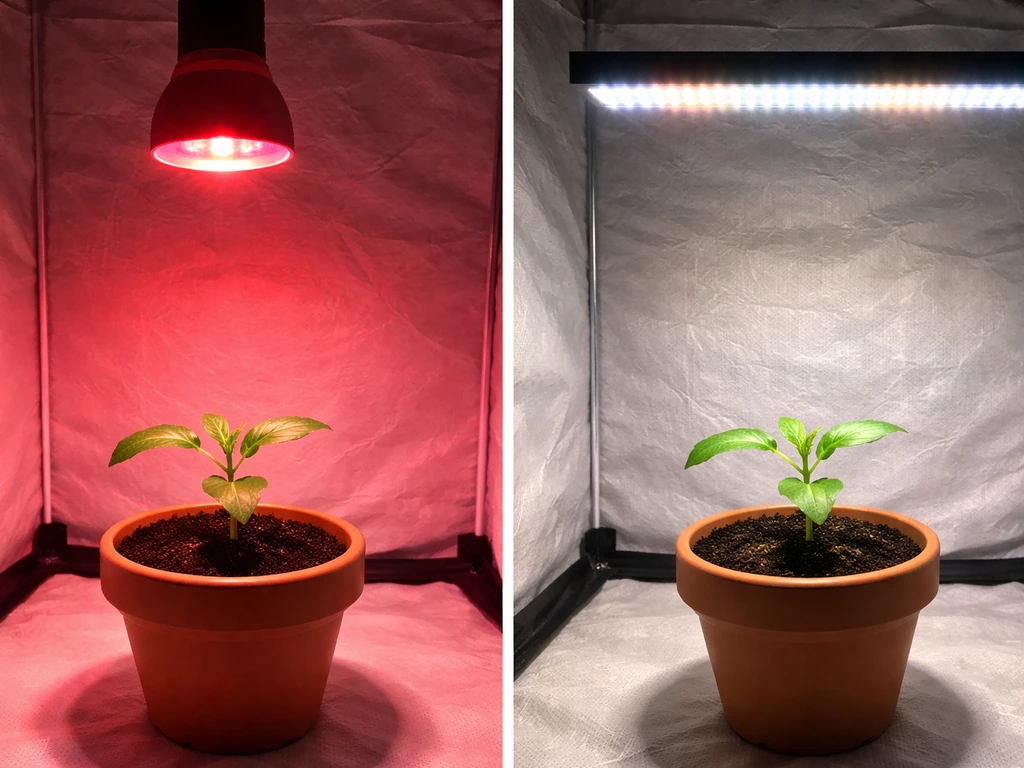
A proper full-spectrum grow light covers the full PAR range from roughly 380 to 700 nm, with a balanced output across blue (400 to 500 nm), green (500 to 600 nm), and red (600 to 700 nm), sometimes with supplemental UV (below 400 nm) and far-red (700 to 750 nm) for triggering the Emerson effect during flowering. The S360PRO has none of this balance. Its 660 nm peak supports the red absorption of chlorophyll A and B, and 850 nm NIR has been studied for some secondary plant physiological effects, but neither replaces the blue signal plants need for compact, healthy vegetative growth.
For flowering specifically: flowering photoperiod crops need far-red around 730 nm to trigger hormonal responses (phytochrome conversion). Some red light therapy panels do emit wavelengths close to this, but the S360PRO's 850 nm NIR is too far into the infrared range to replicate this effect reliably. Bottom line: do not use this panel to try to force a crop into flower. It will not work as intended.
If you are comparing red-heavy spectrum choices and want to understand what a proper supplemental red/far-red panel looks like alongside a full-spectrum primary light, that is a legitimate setup. Some growers add targeted red panels during the last weeks of flowering. But that requires a proper primary full-spectrum light doing the heavy lifting, something the S360PRO cannot serve as.
Build quality, heat, and the features the S360PRO does have
Let me give credit where it is due. The S360PRO does appear to be a well-built red light therapy device. The integrated dimming control, timer function, and pulse mode are genuine features that work in the therapy context. The 3-year warranty is notably longer than most budget grow lights offer, and it signals at least some manufacturer confidence in the hardware. Heat management on low-wattage LED panels in this category is generally not an issue since red and NIR diodes at this power level do not generate the thermal load that high-output grow lights do.
Electrical safety is harder to verify without a third-party certification mark (look for UL, ETL, CE, or RoHS). If you are buying any light panel for overhead use in a humid environment like a grow tent, certification matters for your safety. A therapy device not rated for humid environments introduces risk if repurposed for a grow tent. Fan noise is likely a non-issue since therapy panels at this power level are typically passive (no fan required), but that also means it was not engineered for the airflow demands of a tent environment.
Setup guidance (if you have already bought one and want to make the best of it)
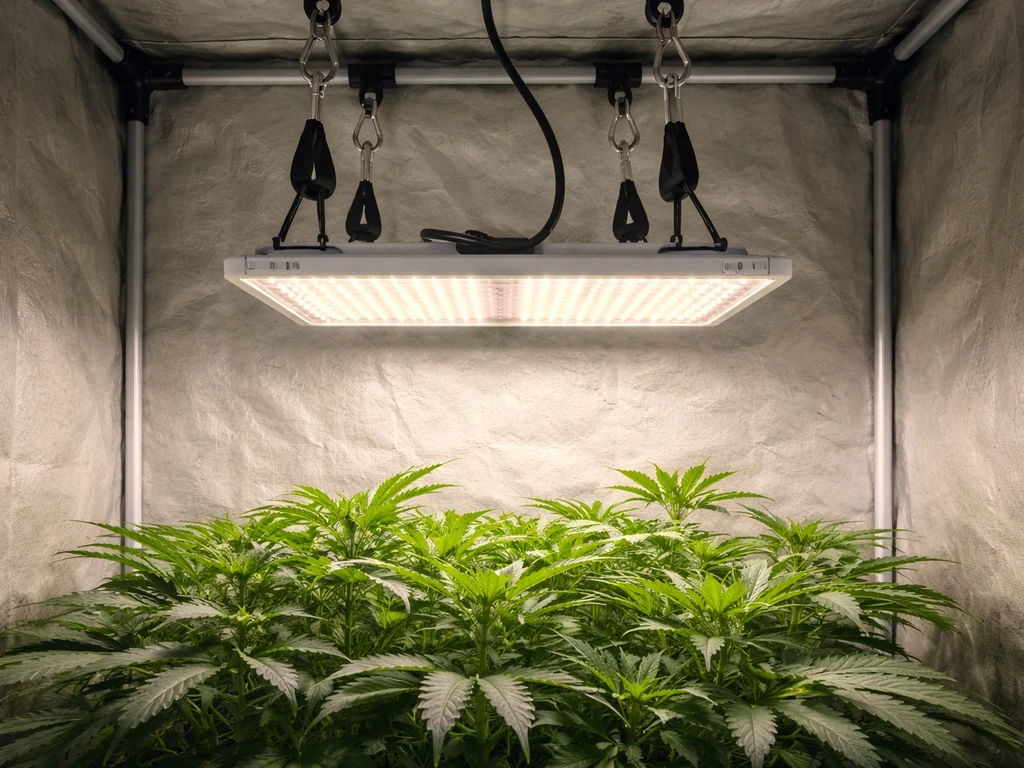
If you have a S360PRO and want to use it in a plant context as a supplemental light alongside a proper full-spectrum grow light, here is how to approach it. Mount it 12 to 18 inches above canopy level during the final 2 to 4 weeks of a flowering cycle. Use it to supplement, not replace, your primary light. Keep sessions to 12 to 16 hours on with your primary light rather than running it as a standalone source. Coverage area: therapy panels like this are designed for roughly 1 to 2 square feet of targeted exposure. Do not expect it to cover a 2x2 foot tent adequately as a sole source.
For a typical 2x2 foot grow tent needing around 200 to 400 µmol/m²/s for veg or 400 to 600 µmol/m²/s for flower, you need a real grow light rated for that footprint. A 2x4 tent needs roughly 200 to 300 true watts from a quality LED bar or quantum board setup. The S360PRO covers neither scenario as a primary light.
How the S360PRO stacks up against actual grow lights at a similar price
Since a lot of people searching "FSGTEK grow light review" are trying to decide between this and a real grow light, let me put the comparison in plain terms.
| Feature | FSGTEK S360PRO | Typical Full-Spectrum Budget LED (Same Price Range) |
|---|---|---|
| Intended use | Red light therapy (human) | Indoor plant cultivation |
| Spectrum | 660 nm + 850 nm only | 380–700 nm full spectrum, often with IR/UV |
| PAR/PPFD output for plants | Minimal (no blue, no green) | 200–600+ µmol/m²/s depending on model |
| Coverage area (plants) | Not rated; ~1–2 sq ft supplemental at best | 2x2 to 4x4 ft depending on wattage |
| Veg growth suitability | Poor (no blue light) | Good to excellent |
| Flowering suitability | Poor (wrong far-red wavelength) | Good to excellent |
| Timer/dimmer | Yes (built-in) | Varies by model; many include both |
| Warranty | 3 years | 1–3 years typical |
| Fan noise | Silent (passive) | Low to moderate (active cooling common) |
| Safety certifications | Not confirmed for grow use | Look for ETL/UL rated models |
For real grow light alternatives at budget price points, brands like Feit, Fecida, and others are purpose-built for plant cultivation. For example, if you are considering a compact plug-in option for a shelf or small window garden, the Feit 19W LED grow light is a straightforward full-spectrum pick at a similar price that actually delivers usable PAR across the blue and red bands plants need. For a broader look at the Feit lineup and how their models scale up for larger spaces, the Feit grow light review covers the full range including hanging panels and clip-ons.
If you want something with a bit more horticultural engineering behind it, Fecida's grow light lineup is worth looking at, especially if you are running a 2x2 or 3x3 tent and want a balanced full-spectrum output without spending a lot. Their higher-output option, the Fecida 600W LED grow light, covers a 4x4 footprint and is a common recommendation at the mid-budget tier. Another option worth considering for smaller setups is the Unifun grow light, which is compact and designed for herbs and seedlings on shelves. For growers who want something with a more premium feel, the Green Fingers grow light is a brand that has been gaining traction in the hobbyist community and is worth comparing side by side. And if you are on the hunt for a higher-output option for a full-cycle tent grow, the V99 grow light has been tested for flower-stage performance and is a solid mid-range contender. Finally, if you want a simple screw-in solution for a smaller space before committing to a panel, the Feit A19 grow light bulb is a low-commitment entry point.
Who should buy the S360PRO (and who definitely should not)
It makes sense if...
- You actually want a red light therapy panel for personal wellness use and came across FSGTEK through that search
- You want a supplemental red panel to add alongside an existing full-spectrum grow light during late-stage flowering (with realistic expectations about the minor contribution it makes)
- You want a therapy device with a decent warranty and built-in timer/dimming controls
Do not buy it if...
- You are looking for a primary grow light for seedlings, vegetables, herbs, or flowering plants
- You need a light that will deliver measurable PAR across a full grow footprint
- You are setting up a grow tent and need a light that can carry plants from seed to harvest
- You are comparing it against full-spectrum LED panels at similar price points for plant cultivation (there is no comparison; any purpose-built grow light wins outright)
The bottom line: what to do next
If your search for "FSGTEK grow light review" was really a search for a good budget grow light, the answer is simple: FSGTEK is not the brand you want. The S360PRO is a legitimate red light therapy device with solid build features, but it is not a grow light and it will not grow plants effectively as a standalone source. Save yourself the frustration and redirect your search toward purpose-built full-spectrum LED panels from brands that engineer and test specifically for horticulture. Start with the comparison articles linked above to find something matched to your tent size and grow goals, and look for any panel that publishes PPFD maps, covers at least 380 to 700 nm, and has an ETL or UL safety listing. Those three criteria will filter out 90% of the misleading listings you will encounter in the budget grow light market.
FAQ
Can I use the FSGTEK S360PRO to boost flowering if I already have a proper full-spectrum grow light?
Yes, but only as a limited supplement, not a replacement. If you use the S360PRO with a real full-spectrum primary light, place it near the end of the flowering stage as described in the article, and expect the biggest benefit to be red/NIR emphasis rather than full-spectrum correction.
If I measure PPFD or PAR from the S360PRO, will the numbers tell me it will work for plants?
You will likely see low or misleading readings depending on the meter. A PAR meter typically reports only 400 to 700 nm, so the 850 nm output shows up as zero, and the 660 nm contribution alone may not match what plant growth needs for a target PPFD.
What grow tent size will the S360PRO realistically cover if I try to use it as the main light?
Treat it like a therapy panel for human lighting, so plan for much smaller effective coverage than a horticulture LED. The practical footprint for targeted exposure is closer to about 1 to 2 square feet, so a single unit will not deliver adequate intensity across a 2x2 tent canopy.
Will the S360PRO reliably force plants into flowering due to its red and NIR wavelengths?
Not reliably, because flowering cues depend on multiple spectral components, including far-red region behavior around 700 to 750 nm. The S360PRO’s NIR sits at 850 nm, which is outside that intended range for the typical phytochrome-driven triggers.
What safety checks should I do before mounting the S360PRO in a humid grow tent?
Only if the product listing actually matches the S360PRO and includes safety certification. For overhead use in humid grow tents, confirm an ETL or UL (or equivalent recognized) safety mark for wet or damp locations, plus electrical compliance indicators like RoHS where applicable.
How can I spot misleading “FSGTEK grow light” listings on marketplaces?
Watch for two red flags. First, listings that claim “grow light” performance without PPFD maps or a 380 to 700 nm spectrum statement. Second, any specific wattage claim that seems inconsistent with a therapy-style panel form factor, since that usually indicates a different product or an inaccurate spec.
If the S360PRO has dimming and a timer, does that make it more suitable for full-cycle plant growth?
Dimming and timers can help you control your schedule, but they do not fix the underlying spectral imbalance. If you dim the S360PRO, you may reduce any partial red benefit, while the lack of blue remains, which commonly leads to stretched growth in vegetative stages.
Can I compensate for the S360PRO’s limitations by adjusting height for better uniformity?
Use canopy height to reduce uneven stress, but do not expect uniform results to overcome missing blue. Because it is spectrally incomplete, uniformity is secondary, and you should prioritize correct full-spectrum coverage from the primary fixture instead.
Is it okay to use the S360PRO for seedlings or early vegetative growth?
Expect minimal benefit for seedlings and early veg compared with a proper horticultural light. During vegetative growth, blue is important for compact morphology, and a red/NIR-only approach commonly increases etiolation risk even if plants survive.
What specs should I look for in a replacement “budget grow light” so I do not end up with another therapy-style panel?
If you want red-only or red-heavy, look for horticulture products that explicitly publish PPFD maps and spectrum ranges within 380 to 700 nm, plus clear electrical specs. Those details let you calculate whether you meet 200 to 400 µmol/m²/s for veg or 400 to 800 for flowering, instead of guessing from wavelength alone.