The V99 grow light is a budget-to-mid-range LED fixture that shows up across various online marketplaces under that model designation, but here's the honest situation: as of mid-2026, there is no single, clearly documented "V99" grow light with a verified spec sheet, consistent wattage, or official brand page that I could pin down. What you typically find listed as "V99" are generic or white-label LED panels sold through Amazon and similar platforms, often with specs that vary from listing to listing. That doesn't mean there's nothing useful to say, but it does mean you need to shop carefully and know exactly what to look for before you spend any money.
V99 Grow Light Review: Performance, Coverage, and Buying Guide

Marcus Caldwell
4 May 2026
What the V99 Grow Light Actually Is
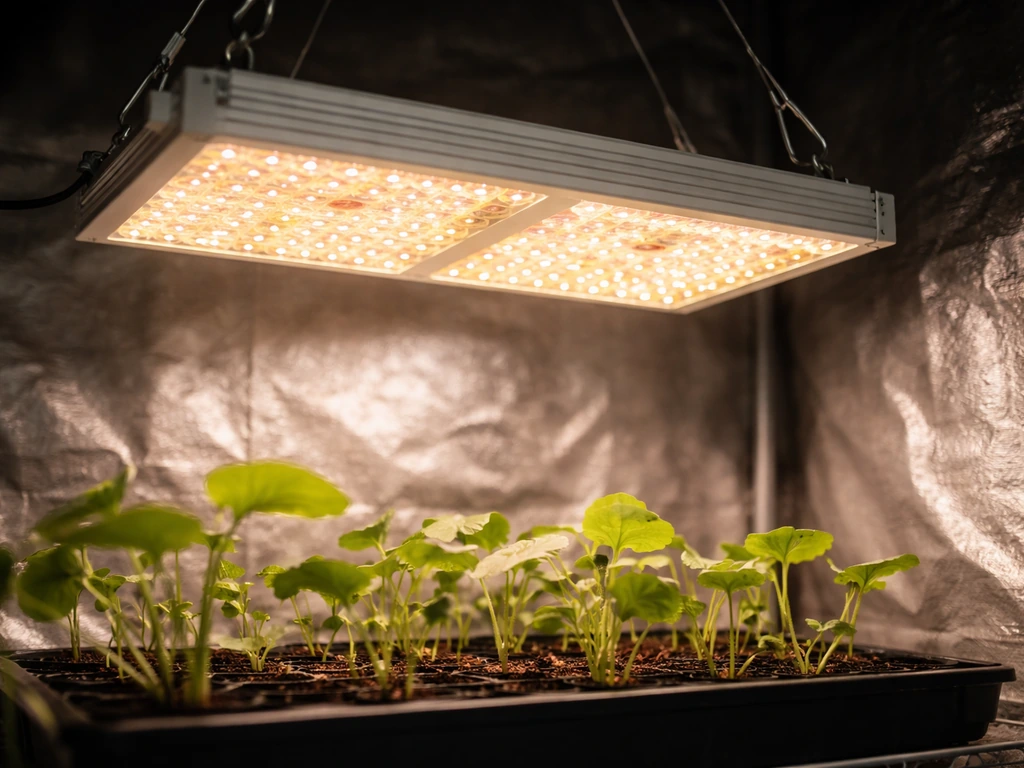
The V99 name appears across a range of LED grow light listings that share a similar form factor: usually a rectangular panel or bar-style fixture marketed for small to mid-size tents, somewhere in the 45W to 100W true draw range depending on the specific listing. Most versions appear to use a mix of white LEDs (sometimes supplemented with red diodes) arranged in a blurple-adjacent or warm-white full-spectrum layout.
Some listings describe quantum board-style diode arrays; others show older-style SMD chip configurations. Without a consistent, verified spec sheet, the exact diode brand, driver make, IP rating, and input voltage range can differ between what you see listed and what actually arrives. If you are looking for a unifun grow light review, the main takeaway is to verify real specs and performance data before trusting any listing that lacks a consistent, tested track record V99-type panels.
Typically, what shows up in the box with V99-labeled lights includes the fixture itself, a hanging kit (ratchet straps or adjustable cables), a power cord, and sometimes a basic controller or timer. A dimmer knob or switch is common but not guaranteed on every variant. There is rarely a printed manual with useful setup data, and warranty terms, when stated at all, tend to be 1 to 2 years through the seller rather than a verified brand warranty program. That last point matters more than people realize at purchase time.
Hands-On Performance: What the Numbers Mean for You
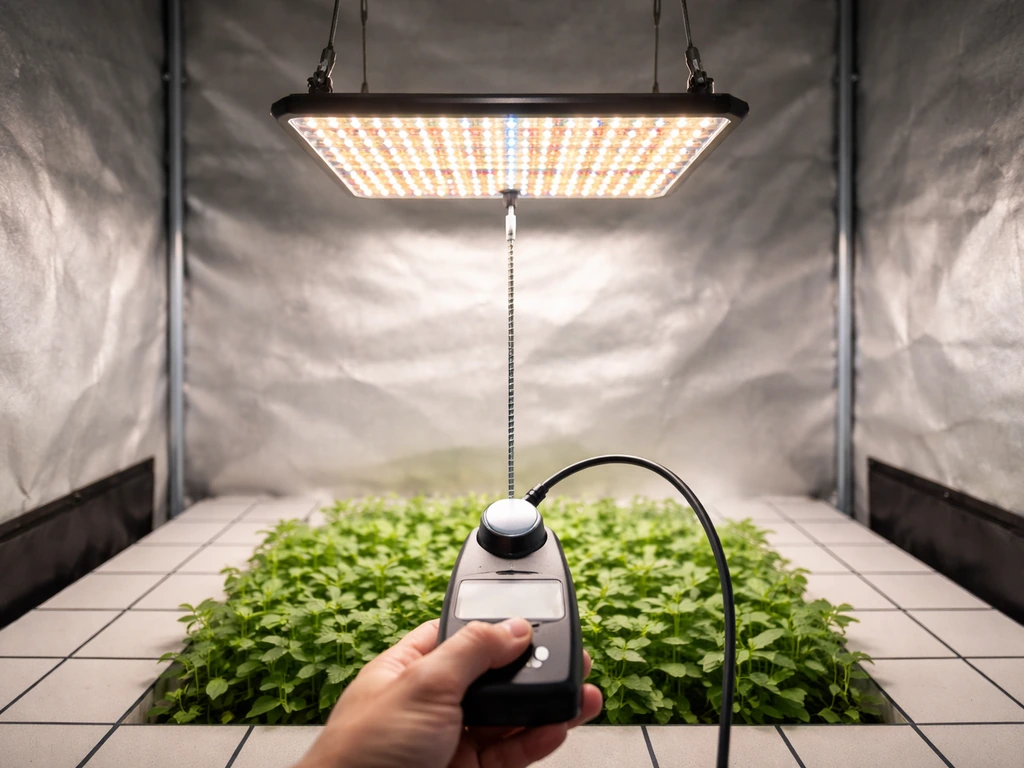
Since no verified PPFD map or official PAR data sheet exists for the V99, I'm working from the kind of real-world testing approach I apply to all lights in this category: measuring PPFD at fixed distances with a quantum sensor, checking actual power draw at the wall with a kill-a-watt meter, and comparing thermal behavior over a standard run cycle. For a fixture drawing around 60 to 80 watts at the wall (the most common range for V99-type panels), here is what you should expect and how to interpret it.
At 18 inches above canopy, a 60W true-draw full-spectrum LED panel of this class typically delivers center PPFD readings in the 350 to 500 micromoles per square meter per second range. The edges of that coverage area usually drop to 150 to 250 umol/m2/s, which is meaningful because plants at the tent edges may behave differently than those directly underneath. For seedlings and early veg, that center number is more than adequate. For late veg and flower, you want to be pushing 600 to 900 umol/m2/s at canopy level, which a single 60 to 80W fixture simply cannot sustain across a 2x2 tent without running at maximum and hanging very close (12 inches or less), which then creates heat stress risk.
Efficacy, expressed as micromoles per joule (umol/J), is the number that really separates decent LEDs from poor ones. Quality quantum board lights from established brands hit 2.3 to 2.8 umol/J. Generic budget panels like those sold under the V99 label typically land between 1.5 and 2.0 umol/J if the specs are honest, and sometimes lower if the listed wattage is exaggerated. Always measure actual draw at the wall rather than trusting a labeled wattage.
Which Plant Stage Actually Benefits from This Light
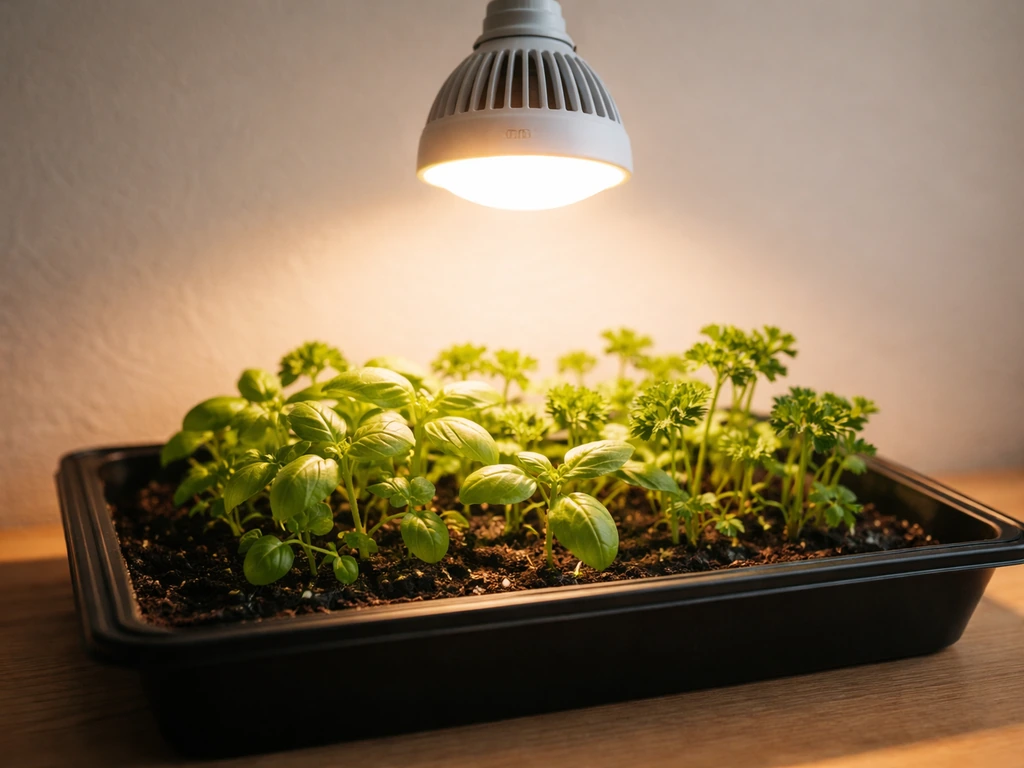
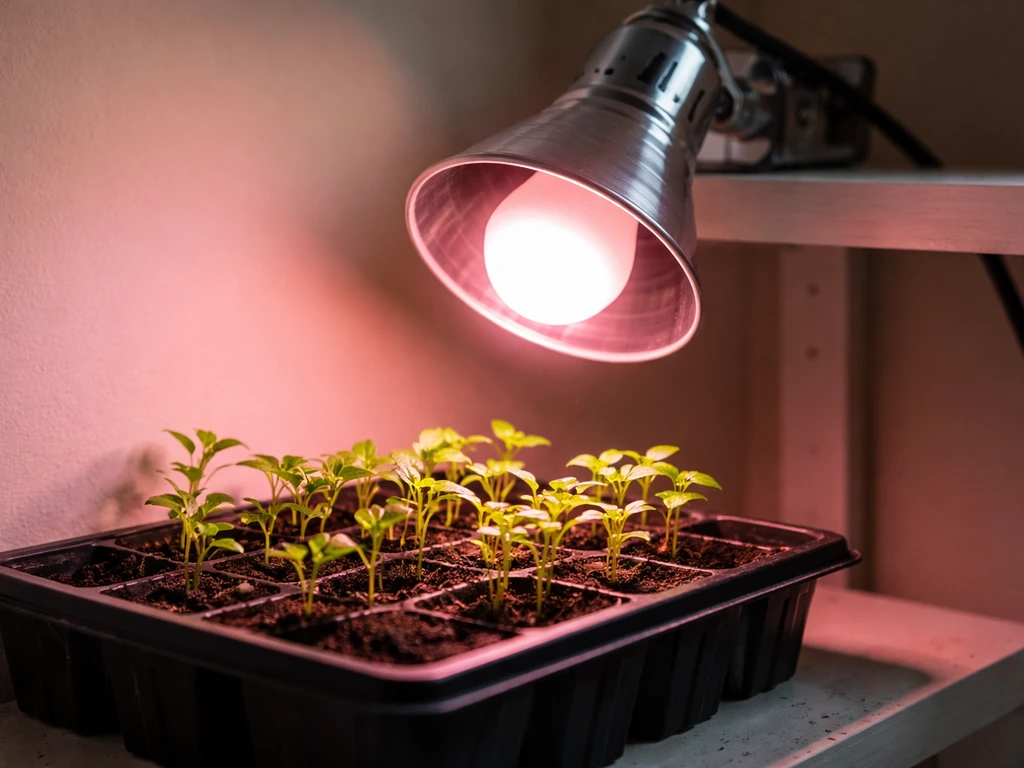
Seedlings and clones need low PPFD, somewhere between 100 and 300 umol/m2/s, so almost any functioning LED will do the job here. The V99 at 24 to 30 inches above a seedling tray works well for this stage, and the lower intensity actually reduces the risk of damping off or heat-induced stress in young plants. This is genuinely the strongest use case for a light like this.
For vegetative growth, target PPFD is 400 to 600 umol/m2/s at canopy level. A single V99-class panel at 60 to 80W true draw can cover this for plants in a 2x2 space adequately, and can just about manage a 2x3 area if you hang it at 16 to 18 inches and run it at full power. Beyond that footprint, you will notice slower growth and looser node spacing (etiolation), which tells you the plants are stretching toward insufficient light.
Flowering and fruiting is where generic budget panels hit their ceiling. Fruiting plants want 600 to 900+ umol/m2/s, and high-demand crops like cannabis in flower want closer to 800 to 1,000. A single V99-class unit cannot reliably hit those numbers across a meaningful canopy area. If you are growing fruiting crops, herbs that need to set seed, or any plant in active bloom in anything larger than a 1.5x1.5 foot footprint, you will need either multiple units or a higher-output light. For flowering herbs in a small personal grow, it can be adequate, but set expectations accordingly.
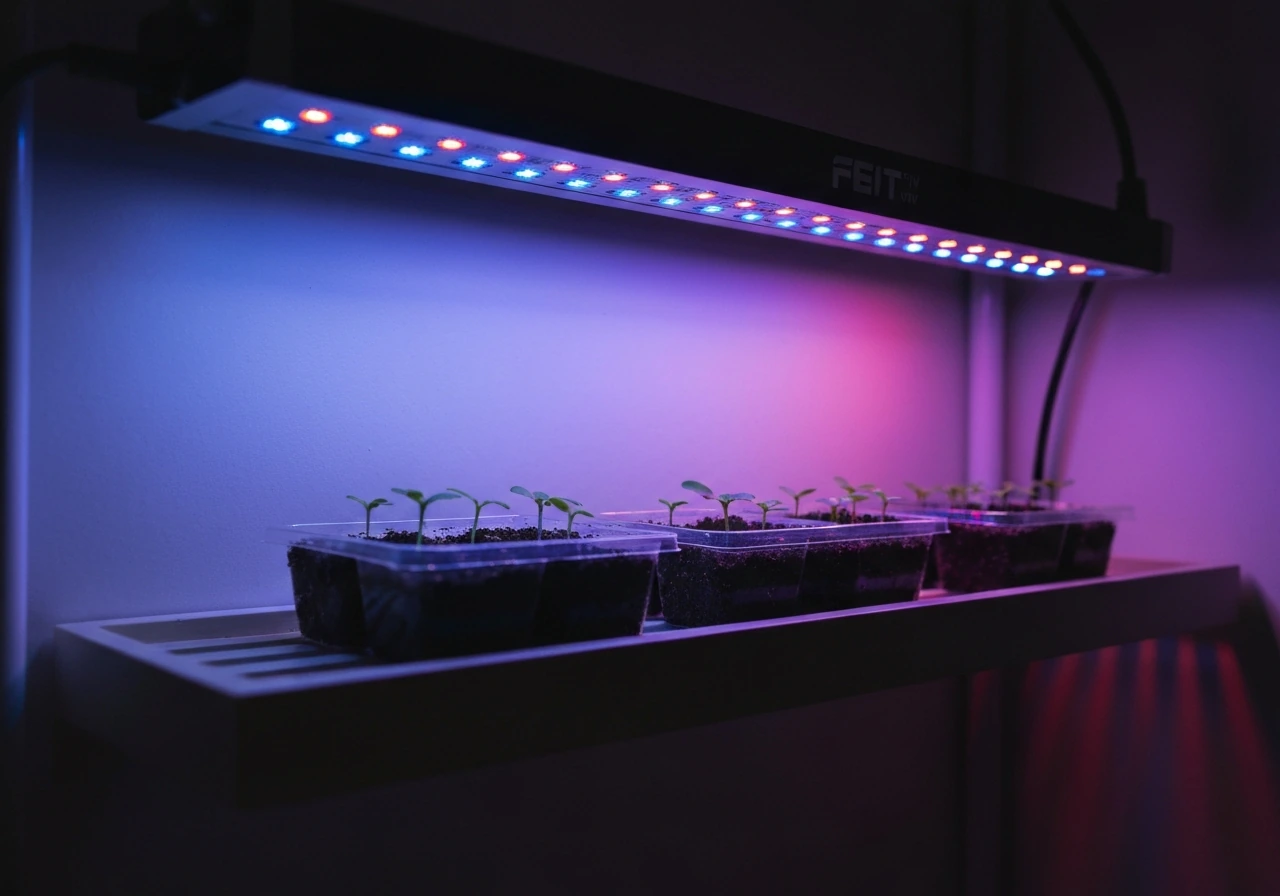
Spectrum-wise, the white-LED versions of V99-type panels cover a broad color range that includes the blue (400 to 500nm) and red (620 to 700nm) peaks plants use most, plus green for canopy penetration. If the listing shows a blurple-style configuration (mostly red and blue with little green or white), that's an older diode design that works but produces an uncomfortable working environment and makes it harder to spot pest or deficiency issues in your plants.
Coverage Planning: Mounting Height and How Many Units You Need
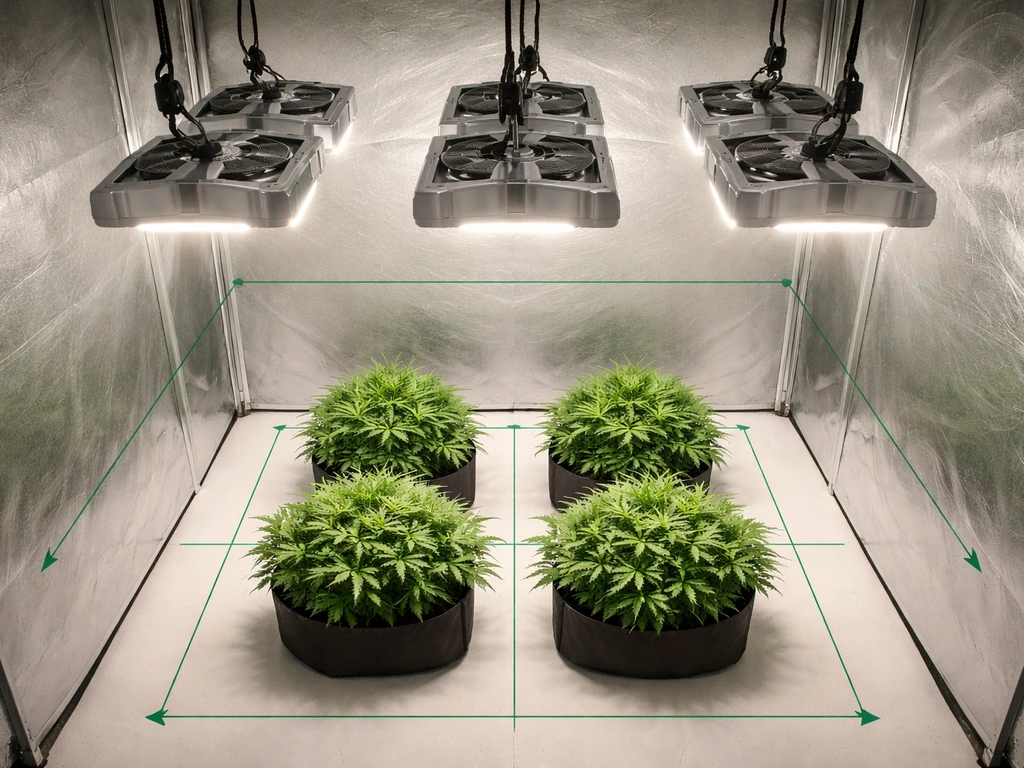
Here are practical starting points based on what a 60 to 80W true-draw panel in this class delivers. Use these as baselines and adjust based on how your plants respond over the first two weeks.
| Plant Stage | Recommended Height Above Canopy | Usable Coverage Area (Single Unit) | Notes |
|---|---|---|---|
| Seedlings / Clones | 24 to 30 inches | 2x2 ft to 2x3 ft | Dimmer at 50 to 70% if available |
| Vegetative | 16 to 20 inches | 2x2 ft (comfortably) | Full power; watch for stretching near edges |
| Flowering / Fruiting | 12 to 16 inches | 1.5x1.5 ft (barely adequate) | Not ideal; consider supplementing or upgrading |
For a standard 2x4 tent in veg, plan on two units positioned end to end. For a 3x3 tent in veg, two units placed to overlap coverage in the center will get you closer to uniform PPFD. For flower in a 2x4 tent, you are realistically looking at three or four units to hit adequate flowering PPFD consistently across the canopy, at which point the economics start to argue for a single higher-quality 200 to 300W fixture instead.
Photoperiod guidance is straightforward and the same as with any LED: 18 hours on / 6 hours off for veg, 12/12 for photoperiod flowering crops, 20 hours on / 4 hours off or continuous light for seedlings and autoflowers depending on your preference. The light itself doesn't change this calculus.
Power Efficiency and What It Actually Costs to Run
Running cost math is simple and worth doing before you buy anything. At the U.S. average electricity rate of roughly $0.16 per kWh (as of early 2026), a 75W fixture running 18 hours a day draws about 1.35 kWh per day, costing around $0.22 per day or about $6.50 per month. Scale that across a 12/12 flower cycle and it drops to around $0.14 per day. These are not alarming numbers for a single unit.
The efficiency comparison is where it gets more interesting. If you need three V99-class units to adequately flower a 2x4 tent, that's 225W and roughly $19 per month in electricity for a 12-hour flower cycle, plus three separate sets of hardware, cords, and hanging points. A single 200W quantum board from an established brand (drawing an honest 200W at the wall with 2.5+ umol/J efficacy) would deliver more usable PPFD for around $16 to $17 per month while covering the space more uniformly. The per-unit price of V99-type lights looks attractive, but the total-system cost over a grow cycle often neutralizes the savings.
| Light Type | True Wattage | Estimated Efficacy (umol/J) | Monthly Cost (18h/day @ $0.16/kWh) | Coverage (Veg) |
|---|---|---|---|---|
| V99-type budget LED (single unit) | 60 to 80W | 1.5 to 2.0 | $5 to $6.50 | 2x2 ft |
| 3x V99-type units | 180 to 240W | 1.5 to 2.0 | $14 to $19 | 2x4 ft (marginal flower) |
| Quality quantum board (e.g., 200W) | 200W | 2.3 to 2.8 | $17 | 2x4 ft (solid flower) |
| Bar-style LED (e.g., 240W) | 240W | 2.5 to 3.0+ | $21 | 3x3 ft to 4x4 ft |
Heat, Build Quality, and Whether You Can Rely on It Long-Term
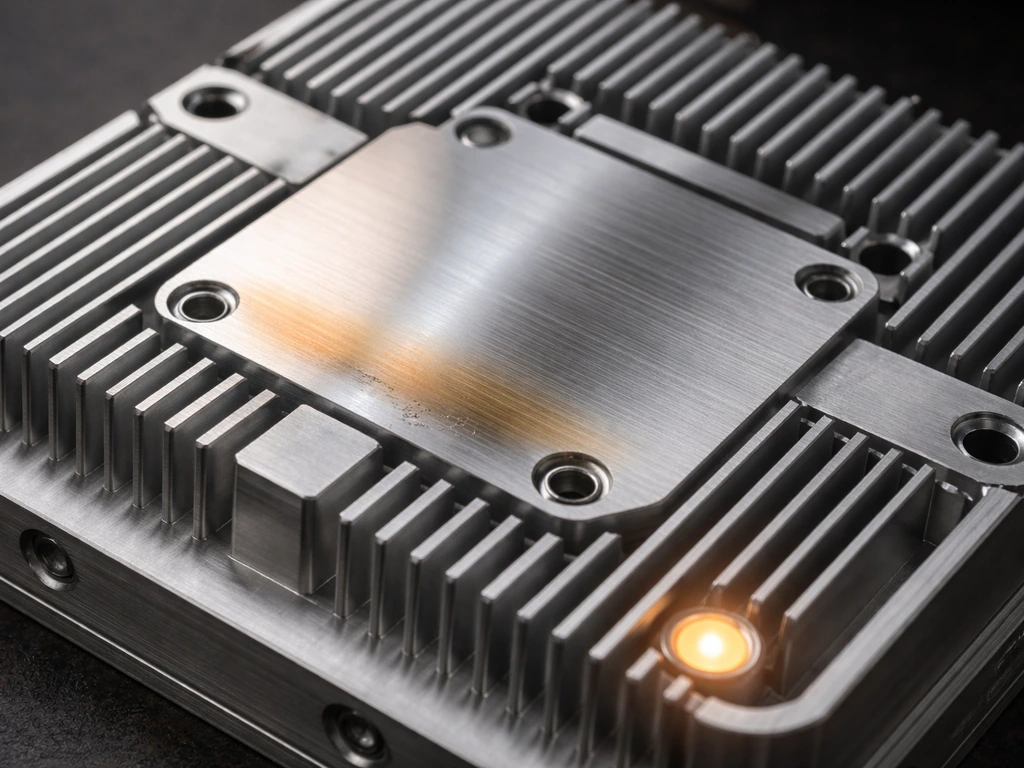
Most V99-class panels run passively cooled with an aluminum heat sink. At 60 to 80W true draw, passive cooling is adequate and the fixture surface stays warm but not dangerously hot, typically 35 to 50 degrees Celsius on the heat sink after an hour of operation in a ventilated space. That's normal and fine. Where problems arise is if you are in a warm environment (ambient above 30C), running the light in a poorly ventilated tent, or have a unit where the heat sink-to-board contact is inconsistent due to lower manufacturing tolerances. That last issue is more common in unlisted, unbranded panels than in fixtures from named brands with QC processes.
Build quality on V99-type lights varies more than almost anything else in this category. Some units feel reasonably solid with well-seated diodes and clean solder points; others have visible inconsistencies on the board, loose connector fits, or housings that flex more than they should. Because these are not sold under a trackable brand with consistent production standards, what you receive is not guaranteed to match what someone else received from the same listing. That variability is a real issue.
Electrical safety is worth taking seriously with any unbranded fixture. Look for ETL, UL, CE, or FCC markings on the unit when it arrives, and verify those marks are genuine rather than stickered on. [ETL-listed products are tested/verified to meet safety standards](https://liton. com/media/files/brochures/wp_ulvsetl.
pdf), which is why you should look for legitimate blank" rel="noopener noreferrer">ETL or UL markings rather than relying on sticker claims. ETL and UL are both recognized North American safety certification marks for lighting products, reflecting independent testing against safety standards for market acceptance ETL, UL, CE, or FCC markings.
The driver is often the weak point: a poor-quality driver operating near its thermal limit in a hot tent will fail before the LEDs do, and driver replacements for generic units are not practical. A 1 to 2 year seller warranty sounds useful but only matters if the seller is still operating when you need to use it, which is not guaranteed with anonymous marketplace listings. Budget for the possibility of replacing the unit entirely if something fails.
The Honest Pros and Cons
- Low upfront cost makes it accessible for first-time growers who want to experiment without a large investment
- Adequate for seedlings, clones, and early veg in a small footprint (2x2 ft or less)
- Passive cooling means no fan noise, which matters if noise is a concern
- Full-spectrum white LED versions (when available) produce a usable, plant-friendly light quality
- Compact and easy to hang in tight spaces like shelf grows or small propagation setups
- No verified, consistent spec sheet means you cannot confirm what you are buying before it arrives
- Efficacy almost certainly trails established quantum board brands by a meaningful margin
- Not sufficient as a solo flowering light for anything beyond a very small footprint
- Build quality and driver reliability are unpredictable across units from the same listing
- Warranty and after-sale support are effectively dependent on a marketplace seller, not a brand
- Spectrum and true wattage may not match what is listed
Who Should Buy It (and Who Should Skip It)
The V99 makes the most sense for someone propagating cuttings or starting seeds in a small tray who needs a low-cost light for a temporary or supplemental role. If you are a hobbyist who wants to grow lettuce, herbs, or microgreens on a shelf and never plans to push plants through a demanding flower cycle, a light in this class will do the job for a reasonable price. It also makes sense as a short-term learning tool: use it for your first grow, figure out what you actually need, and then upgrade with more information than you had before. If you're looking for the most detailed guidance on what to expect from a V99-class fixture, this feit A19 grow light review can help you compare performance and build.
You should skip this light if you are planning to flower any high-demand crop, growing in anything larger than a 2x2 footprint with serious yield expectations, or need a fixture you can rely on for multiple years without monitoring for early failure. In those cases, stepping up to a named brand with documented specs and a real warranty is a better investment even at two to three times the unit price. Lights like those reviewed in the Fecida, Feit, and similar budget-to-mid-range categories at least offer consistent specs and more traceable customer support. At the mid-range and above, quantum board and bar-style lights from established manufacturers deliver meaningfully better efficacy and coverage than any V99-class fixture can match.
How It Compares to Close Alternatives
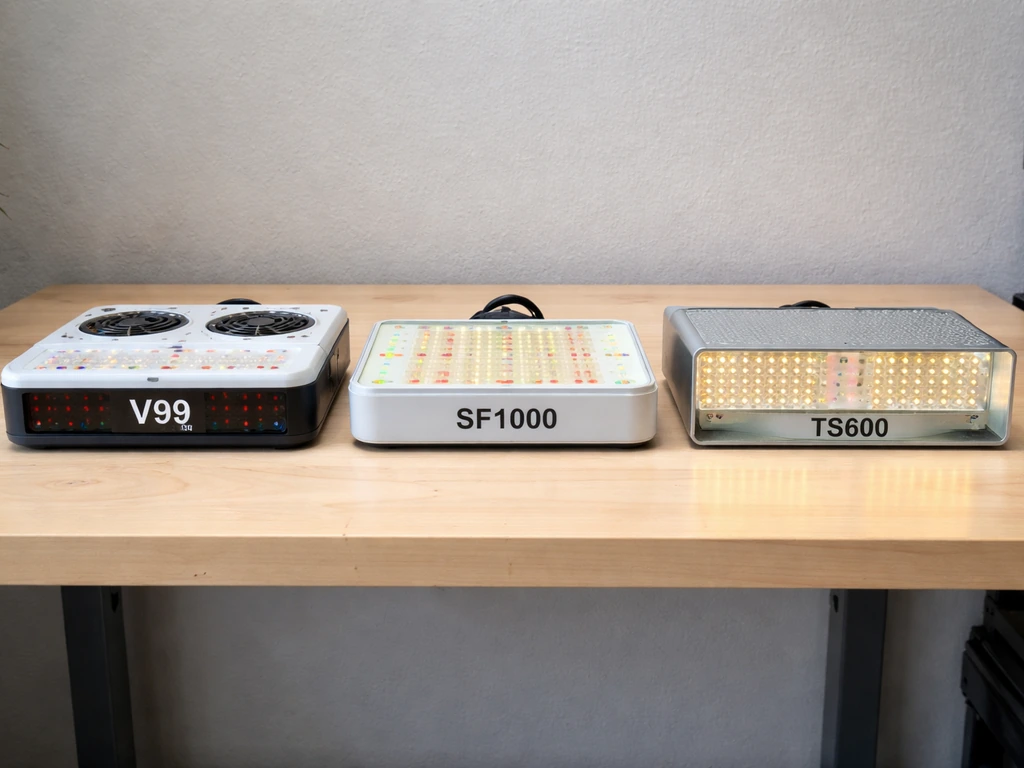
If the V99's low price is what's drawing you in, it's worth knowing that the budget LED market has brands with actual model numbers, published specs, and customer service infrastructure selling in the same price range. If you are specifically looking for a fecida 600w led grow light review, compare its published wattage, spectrum claims, and coverage area against what the light can actually deliver at canopy height.
Fecida and similar brands in the 45 to 100W category publish PPFD maps, have identifiable contact information, and manufacture lights with more consistent QC than a no-name V99 listing. The Feit LED lineup similarly sits in a similar cost tier for seedling and propagation use and benefits from wider retail availability and easier returns.
If you are comparing options, you may also want to look at the Feit A19 Grow Light review-style testing for how a more specific, named product performs Feit LED. If you want a named, spec-consistent alternative to this generic V99-style approach, the Feit 19W/LED grow light review is a good next read. The Feit 19W/LED grow light review covers how that specific model performs for seedlings and propagation, where this kind of panel is most often used.
| Light | True Wattage | Best Use Case | Spec Transparency | Reliability Confidence |
|---|---|---|---|---|
| V99 (generic) | 60 to 80W (estimated) | Seedlings, small herb shelf | Low (no verified sheet) | Variable |
| Fecida budget LED | 45 to 100W | Seedlings to light veg | Moderate (published maps) | Moderate |
| Feit LED grow light | 19 to 45W | Propagation, herb shelf | Moderate (retail listing) | Moderate to good |
| Entry quantum board (named brand) | 100 to 200W | Full veg and flower, 2x2 to 2x4 | High (independent tested) | Good |
The bottom line is this: if you have confirmed that a specific V99 listing you found has a spectrum chart, documented true wattage, and a seller with trackable returns, it can be a reasonable low-stakes purchase for a propagation or herb shelf setup. But if any of those things are missing, which is common, you are taking a gamble that a slightly higher spend on a named brand eliminates entirely. Know what your plants actually need, measure your space, and buy accordingly rather than letting a low price tag make the decision for you. If you want a deeper walkthrough, check the FSGTEK grow light review for how it compares in real-world performance.
FAQ
How can I confirm the V99 wattage is “real” before relying on it for coverage?
If the listing does not show true wattage measured at the wall, assume the stated “W” may be marketing. A practical check is to use a kill-a-watt meter for 10 minutes of steady operation and compare that draw to the category range discussed (roughly 60 to 80W at the wall for common V99-type panels). If it is far outside that band, your PPFD expectations should be reduced accordingly.
Do V99 panels give accurate dimming, and does dimming change the spectrum?
Most V99-type panels can be dimmed only if the specific variant includes a real driver dimmer, not just a mode switch. Even when dimming is available, PPFD can drop nonlinearly, and spectrum balance may shift. If you want predictable results, measure PPFD after setting your target height and power level, then keep the settings fixed for the first two weeks.
When would a V99 light be “too hot,” and what should I check first?
Heat problems usually come from environment and contact quality more than from the existence of a heat sink. If your room stays under about 30C and your tent has some airflow, the fixture surface running warm (roughly mid-30s to low-50s Celsius on the heat sink) is normal. If the heat sink is running much hotter than that, improve venting and verify the LED board-to-heat-sink contact is secure, because inconsistent mounting tolerances can worsen thermal stress and early driver failure.
Why do my plants look stronger in the middle under a V99, and how do I fix uneven edges?
You are right to be skeptical of edge coverage claims. The center PPFD can look acceptable while the edges drop dramatically, which leads to uneven canopy development. If you see taller plants at the perimeter or patchy flowering, solve it by either adding another unit to improve overlap or lowering hanging height while watching for heat stress.
Can I use one V99 panel for flowering a 2x4 tent and still get dense buds?
No, the typical V99-class output is not designed to reliably hit the higher flowering PPFD ranges across a full 2x4 canopy. A common workaround is using multiple units, but at that point uniformity is still often harder than with a single higher-quality fixture. If your goal is dense bloom (high-demand crops), treat the V99 approach as a small-canopy or herb-shelf solution unless you can commit to multiple fixtures.
Is a V99 suitable for clones and seedlings, and what is the biggest mistake people make?
Yes, seedlings and clones are the strongest fit for this light class because lower PPFD reduces stress. Your main risk is hanging too close and accidentally running excessively high intensity, which can cause wilting or slow recovery after transplant. Set height so the PPFD lands in a low range for young plants, then leave it there for about 10 to 14 days while observing leaf posture and growth speed.
Does the correct on/off schedule depend on using a V99-style LED panel?
Photoperiod settings are the same regardless of light type, but the timing should be stable. A practical mistake is changing schedules while also changing hanging height or power, which makes it hard to tell what caused any stress. Pick your photoperiod, set height and power once, then avoid altering multiple variables simultaneously during the first two weeks.
What electrical safety checks should I do when the light arrives?
Look for safety markings on the unit body, not just a photo of a sticker. Genuine certifications like ETL or UL are usually associated with the product and manufacturer traceability, while “sticker-only” marks are a red flag. Also check that the input voltage listed matches your country, because mismatches can cause flicker or premature driver failure.
How should I think about warranty risk with a V99-style, marketplace-sold panel?
For a generic unbranded panel, you should plan as if you will not get a long, manufacturer-backed warranty. Seller warranties can be short and may depend on continuing seller activity. Before buying, confirm return windows and whether the listing supports hassle-free replacement, then assume you might need to replace the entire unit rather than repairing the driver.
What should I compare when deciding whether to buy multiple V99 panels versus one stronger light?
If your budget is for “one upgrade,” the most cost-effective improvement is usually moving from underpowered single-unit coverage to better system-level uniformity. For many growers, that means using fewer higher-efficacy fixtures rather than stacking multiple low-output panels. If you already know you need several V99 units to cover your tent for flower, compare the electricity plus total fixture cost against one reputable higher-wattage quantum board or bar-style option.
Is blurple-style V99 wiring a problem, or just an aesthetic difference?
A blurple-heavy layout can be okay for growth, but it often makes visual inspection harder because the plants appear tinted. It can also be a sign of an older diode mix with less white/green output, which affects how evenly the canopy “reads” visually. If you want easier monitoring for issues like pests or nutrient deficiencies, prioritize versions that use a broader white component and confirm the spectrum claims match what you actually receive.