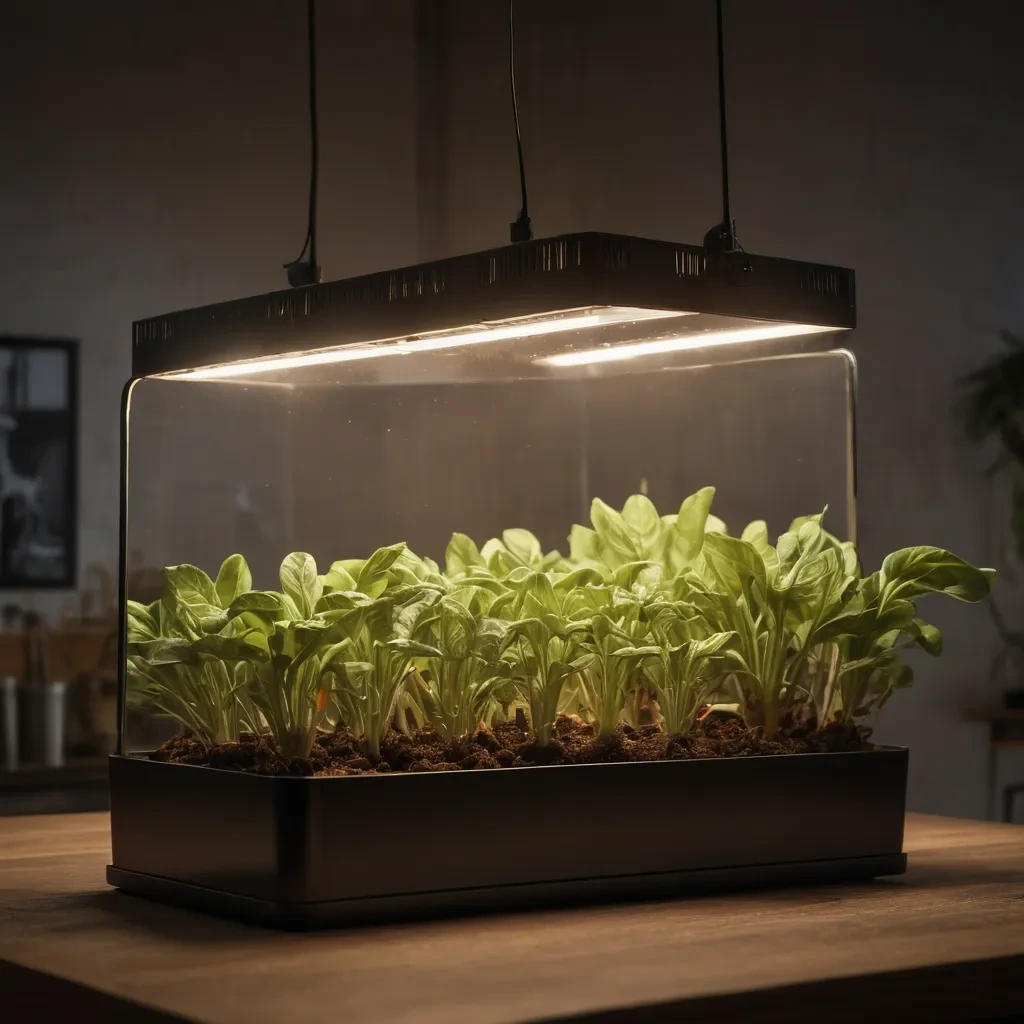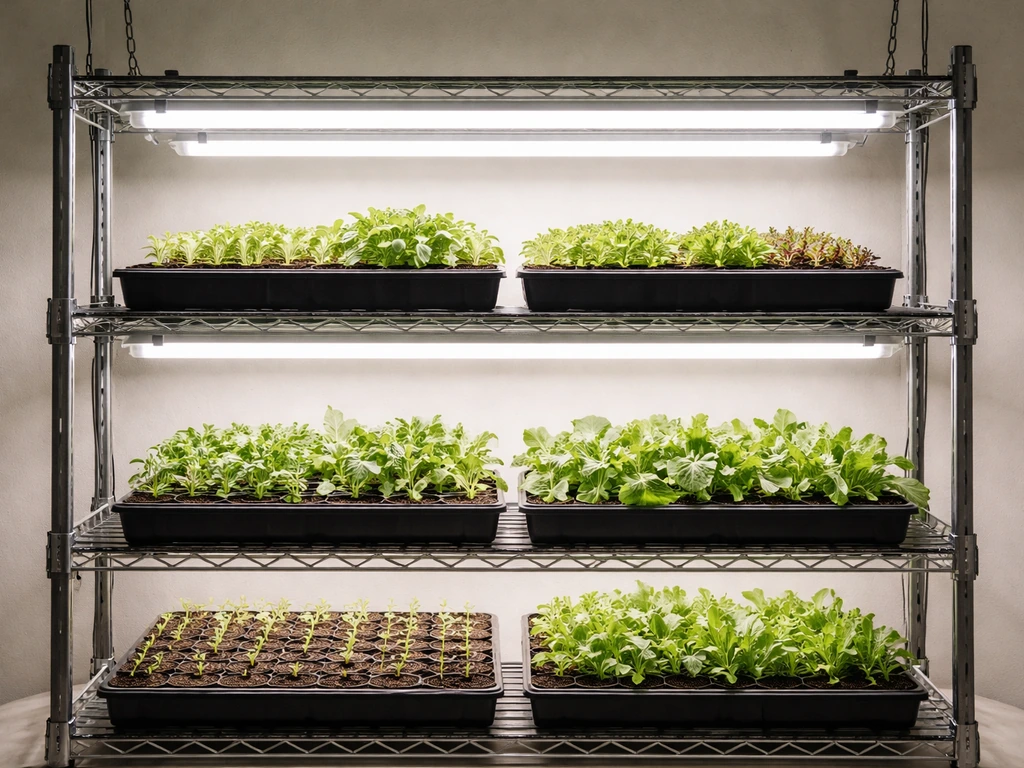
Relassy grow lights are worth considering for hobbyists who need an affordable, no-fuss option for small indoor gardens, seedling trays, or supplemental lighting. The brand makes a few distinct models, and which one makes sense for you depends heavily on your space size, plant stage, and whether you need waterproofing. The short version: the F-45 desktop lamp suits a single plant or small seedling tray, the 150W waterproof panel works in humid environments like greenhouses or basement grows, and the F-300 board covers a larger footprint passively. None of these are high-end commercial lights, but they deliver reasonable results for the price if you set them up correctly.
Relassy Grow Light Review: Best Models, Setup, and Results

Marcus Caldwell
20 May 2026
What Relassy actually makes: the model lineup
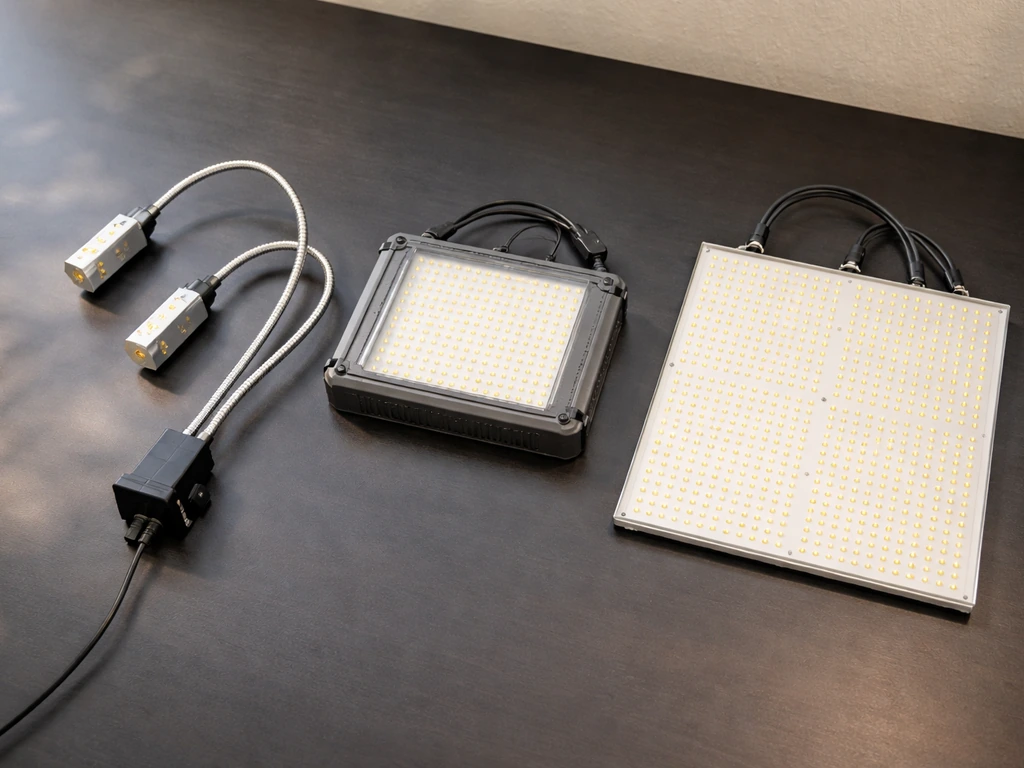
Relassy sells a narrow but distinct range of LED grow lights. The three models you'll most commonly encounter are the F-45 dual-head gooseneck lamp, the 150W waterproof panel (manual model 80101018-fba), and the F-300 board-style light. Each one targets a different grower setup.
The F-45 is a desktop or clip-style unit with two adjustable gooseneck heads, 88 LED emitters, and a 45W marketing label. The Relassy 45W (F-45) listing claims an 88-LED count and describes a dual-switch design for selecting operating modes dual gooseneck heads, 88 LED emitters. It's aimed at windowsill growers, propagation setups, and anyone who needs a compact, repositionable light over one or two pots. The spectrum is advertised as 380–800 nm full spectrum with a 120-degree beam angle.
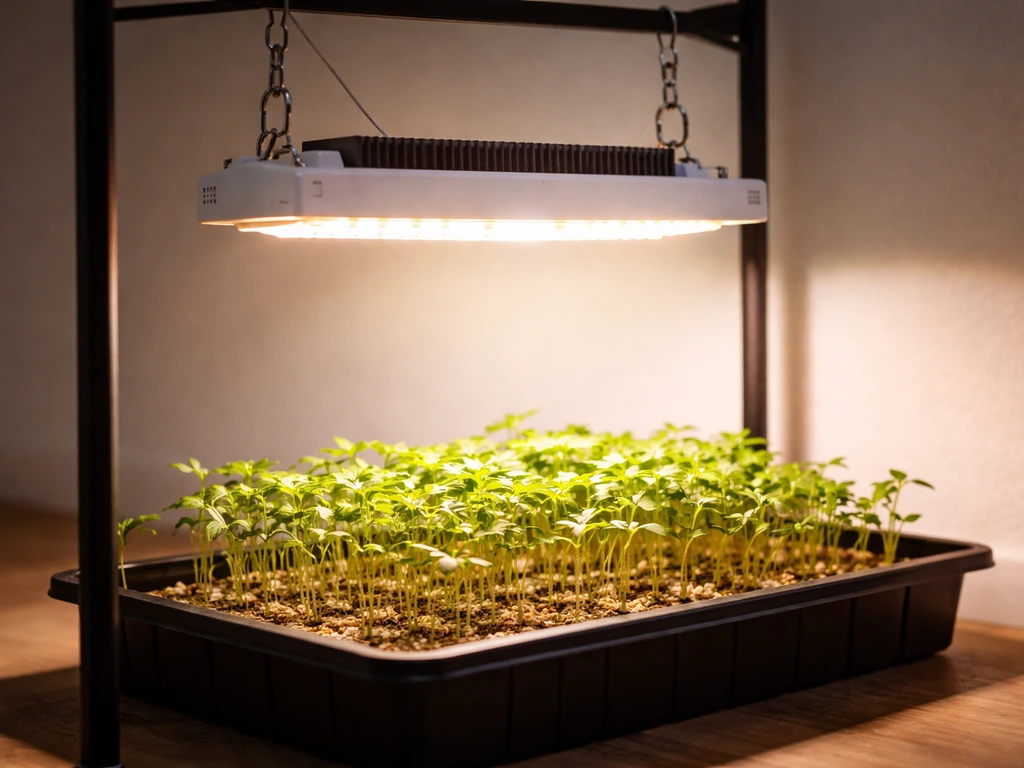
The 150W waterproof panel (model 80101018-fba) is a COB LED fixture rated IP67, meaning it can handle water splash and humid conditions reliably. Its actual power draw is 55W, not 150W, more on that below. It covers the full 380–830 nm spectrum and is intended to support plants from seedling through fruiting. Physical dimensions are roughly 9.5" deep by 7.6" wide by 2.18" tall. It runs on 110V AC, so it's ready for standard US outlets.
The F-300 is a flat board-style panel measuring approximately 56.2 cm x 30.0 cm x 1.8 cm and weighing about 1.33 kg. It uses 338 LED chips and relies entirely on passive cooling, no fans at all. It's the largest-footprint option in the Relassy lineup and is better suited to a full shelf or a 2x2 ft tent than the other two models.
Build quality, design, and thermals
F-45 gooseneck
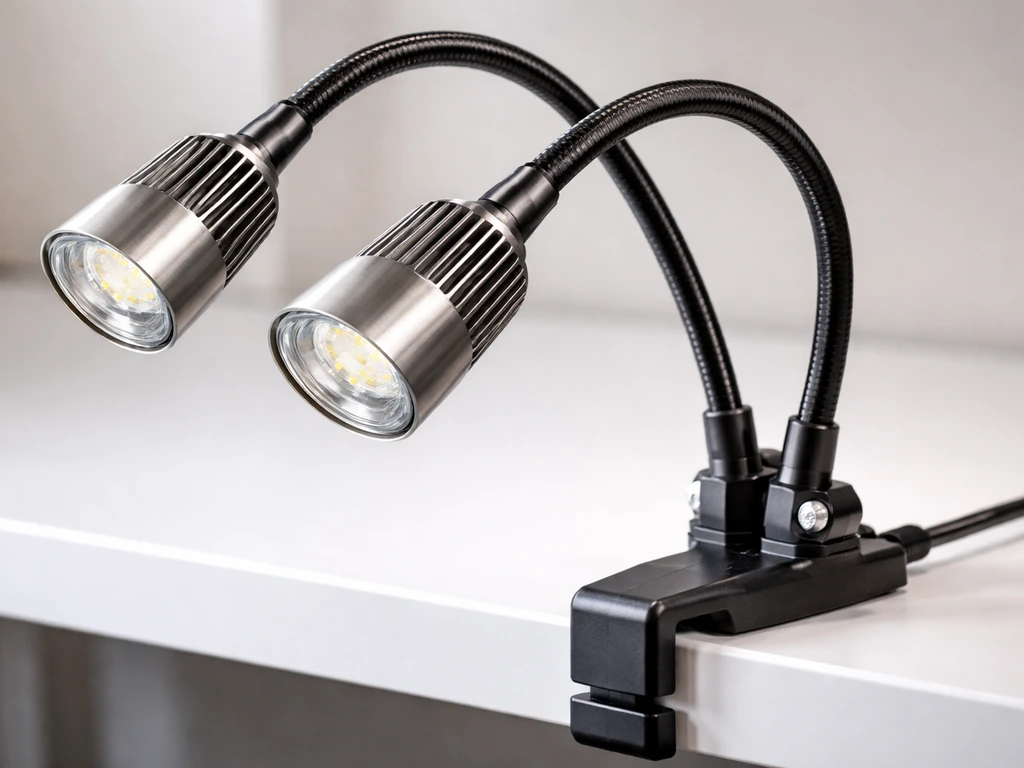
The F-45 is a fairly standard desktop grow lamp. The dual gooseneck design gives you roughly 18 inches of adjustability per head, which is more than most clip lamps at this price point. The dual-switch design lets you run one or both heads independently, which is useful for tailoring light intensity without changing the hang height. Build quality is typical budget-tier: the plastic housing feels lightweight, the gooseneck holds position adequately but loosens with repeated repositioning over time. Heat output is minimal at this wattage, touching the housing after a few hours is warm but not hot.
150W waterproof panel
The IP67 waterproof rating on the 150W model is probably its most credible differentiator. The housing feels more solid than the F-45, and the COB LED construction concentrates emitters into fewer, more intense points rather than spreading dozens of small chips. The unit ships with a power cable that has an integrated on/off switch, an adjustable mounting bracket, and a hanging kit with chains and hooks. Height is adjusted manually using the chains, there's no controller, app, or dimmer included. That's fine for most growers, but worth knowing upfront.
F-300 board panel
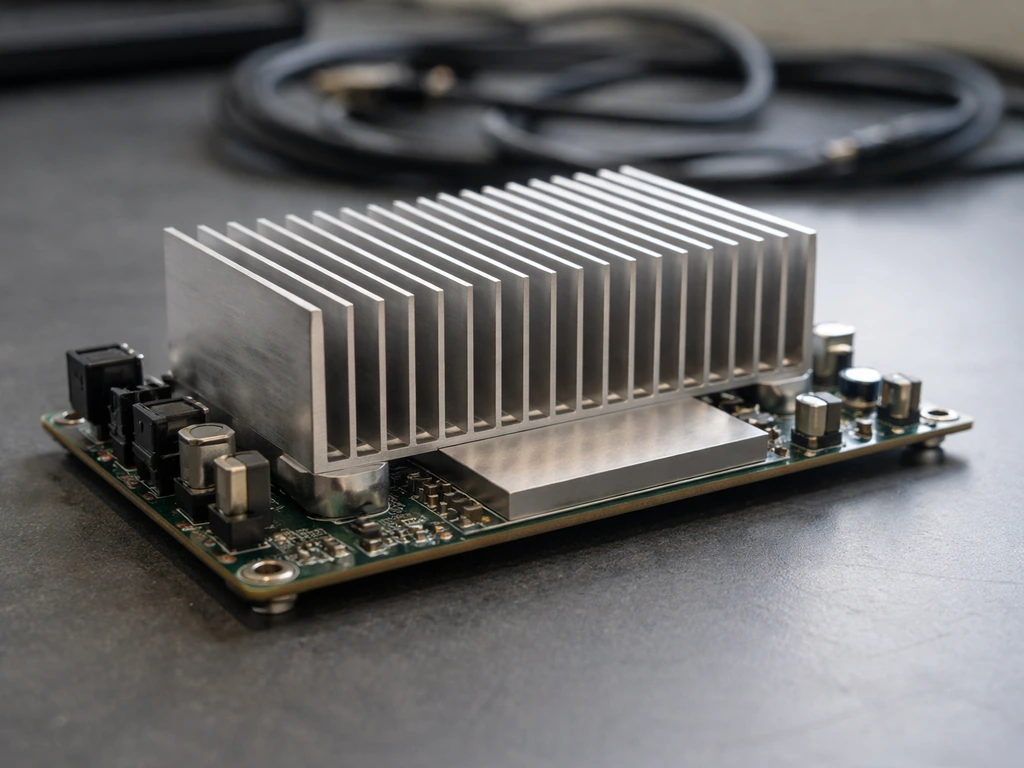
The F-300's passive cooling design is its main thermal story. With no fans, there's no noise, and there's nothing mechanical to fail. The tradeoff is that the heatsink on the back needs adequate airspace, don't mount this flush against a shelf or ceiling with no room for convective cooling. At 1.33 kg it's light enough that the included hanging hardware handles it without issue. The large flat panel design also produces more irregular diffusion across the canopy, which the manufacturer frames as a feature (less shadowing), and it does help with coverage uniformity compared to a single COB point source.
How these lights actually perform
The wattage labeling on Relassy products is the first thing to understand clearly. The 150W and 300W model names refer to marketing labels, not actual wall draw. The 150W panel pulls 55W from the wall. The F-45, similarly, is labeled 45W but user reports suggest actual draw closer to 20W. This isn't unique to Relassy, many budget brands follow this convention, but it means you should not compare these lights to a true 150W or 300W fixture from a performance standpoint. Compare them on actual wattage and coverage claims.
For the F-45, the manufacturer claims 96 μmol/m²/s PPFD at 12 inches. That's a modest but workable number for seedlings and low-light plants like herbs, leafy greens, and foliage houseplants. It won't push fruiting or flowering in high-demand crops like tomatoes or cannabis. The 120-degree beam angle helps spread that output across a small area, but at 12 inches it's covering perhaps a 1 to 1.5 sq ft footprint usefully, realistically, one to three small pots.
The 150W COB panel's coverage is better than the F-45 for a small grow area, but the COB design means PPFD drops off sharply at the edges of the footprint. If you're using it over a 2x2 space, expect the center to be significantly brighter than the corners. For a single large plant or a tight cluster of pots, that's fine. For a full tray of seedlings spread across the whole footprint, you may notice uneven growth at the edges unless you raise the light a bit to trade intensity for spread.
The F-300's 338-chip layout across a larger panel gives it better canopy uniformity than the COB model. The panel's irregular light diffusion (a consequence of the distributed chip layout) reduces hard shadows under leaves and stems. For a shelf garden or propagation tray where uniform coverage matters, the F-300 is the strongest performer in the Relassy lineup.
Setting these lights up correctly
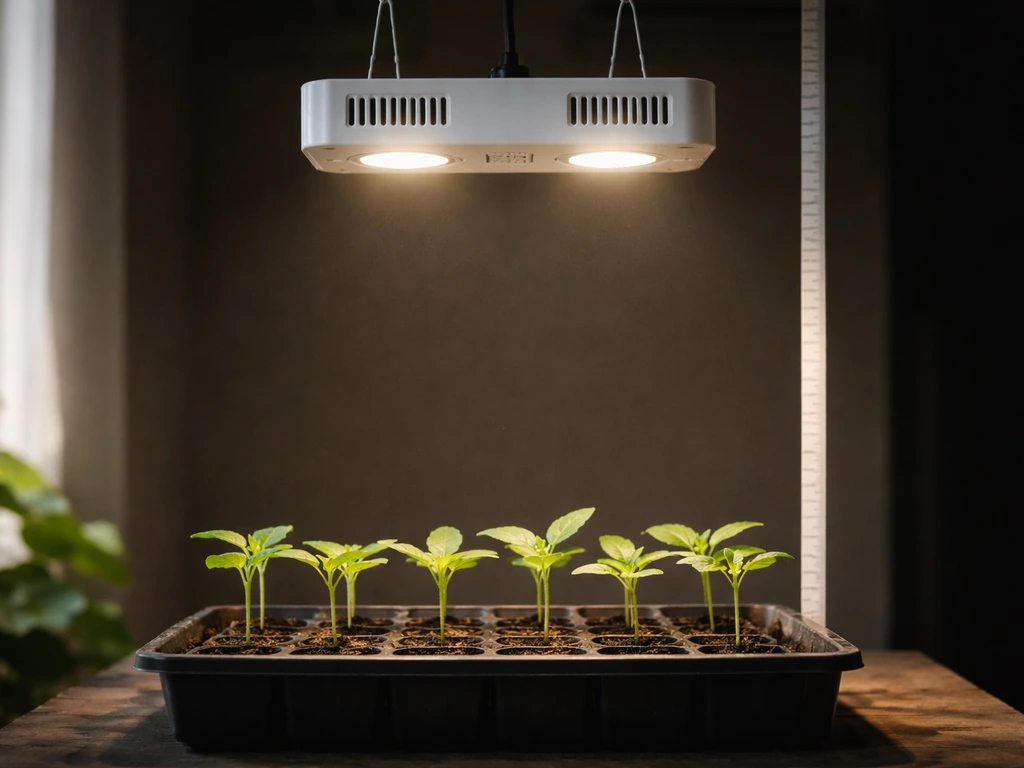
Relassy's own manuals include stage-specific hang height and photoperiod guidance that's worth following, especially if you're new to grow lights. The table below summarizes what the manual recommends.
| Growth Stage | Recommended Hang Height | Daily Light Duration |
|---|---|---|
| Seedling / Germination | 44–48 inches above canopy | 8–12 hours |
| Vegetative growth | 32–40 inches above canopy | 8–12 hours |
| Flowering | 24–28 inches above canopy | 8–12 hours |
| Fruiting | 16–20 inches above canopy | 8–12 hours |
These heights are conservative, which makes sense for a light that isn't particularly intense. If your plants are stretching (long, thin stems reaching toward the light), lower it incrementally by 2–3 inches at a time. If leaf edges are bleaching or curling, raise it.
The manual specifies 8–12 hours daily across all stages, which is a wide range: lean toward 12 hours for vegetative growth and 8–10 hours for fruiting and flowering where you want to control the photoperiod more precisely. The Relassy 150W waterproof grow light manual provides stage guidance that includes a recommended daily lighting duration of about 8, 12 hours for different growth stages The manual specifies 8–12 hours daily across all stages.
No timer is included with any Relassy model, so budget for a basic outlet timer if you want consistent scheduling.
For the F-45 gooseneck, hang height guidance is less critical because you're working at close range over a small area. Start with the heads 12–14 inches above seedlings and adjust based on response. The dual-switch lets you drop intensity by running one head instead of two, useful for sensitive seedlings or shade-tolerant plants.
For the F-300 panel, give it at least a few inches of clearance above whatever it's mounted to, both for thermal reasons and to let the light spread before it hits the canopy. Mounting it too close to a shelf ceiling compresses the beam and reduces uniformity.
Which plant stage and grow type each model suits best
Matching the right Relassy model to your actual use case makes a big difference in results. Here's how to think about it:
- F-45 (45W gooseneck): Best for seedlings, cuttings, herbs, and low-light houseplants. Ideal for windowsill setups or anyone supplementing natural light with a flexible desktop lamp. Not suitable for fruiting crops or anything that needs high PPFD sustained over a large area.
- 150W waterproof COB panel: Best for growers who need moisture resistance — basement setups, garage grows in damp conditions, or greenhouse supplemental lighting. Good for one to four medium-sized plants through all growth stages. The COB intensity is useful for veg and flowering on low-to-medium demand crops. Not the right tool for a full tent canopy.
- F-300 board panel: Best for a full shelf or 2x2 ft grow area where uniform coverage matters more than raw intensity. Works well for propagation trays, leafy greens, herbs, and vegetative stages. The passive cooling means quiet operation, which matters in living spaces. Like the others, it's not a high-intensity flowering light for demanding crops.
If your primary need is propagating seedlings or growing herbs and greens year-round, any of these will do the job competently. If you're growing fruiting crops like tomatoes, peppers, or cannabis to flower and harvest indoors with no supplemental sunlight, the entire Relassy lineup is underpowered for serious results, you'd be better looking at higher-output options.
Energy use, running costs, and lifespan
The actual power draw numbers matter for running cost. The 150W waterproof model draws 55W from the wall. Run it for 12 hours a day and you're using 0.66 kWh daily, or roughly 20 kWh per month. At an average US electricity rate of around $0.16/kWh, that's about $3.20 a month to run, genuinely cheap. The F-45 at approximately 20W actual draw is even cheaper: under $1.20 a month at the same rate and schedule. The F-300 doesn't have a confirmed independently measured wall draw in available data, but based on the chip count and passive cooling, actual draw is likely in the 80–120W range, putting monthly costs in the $4–6 range at 12 hours daily.
Rated LED lifespan on lights like these is typically advertised at 50,000 hours, which is around 11 years at 12 hours a day. Real-world lifespan depends on thermal management (passive cooling models like the F-300 can actually maintain LED longevity well if they have proper airflow) and driver quality. Budget lights sometimes fail at the driver before the LEDs themselves degrade. There's no published independent data on Relassy driver longevity specifically, so treat the 50,000-hour claim as a ceiling, not a guarantee.
Value compared to other brands at this price level
Relassy sits in a crowded budget segment alongside brands like Farmlite and Loriflux, all of which follow similar design and marketing conventions: inflated wattage labels, broad spectrum claims, and Amazon-first distribution. At this tier, the differentiators are build specifics (IP rating, cooling method, accessories included) rather than measurable output superiority. Relassy's IP67 waterproof rating on the 150W model is a genuine differentiator if you need it. The passive cooling on the F-300 is another legitimate selling point for noise-sensitive spaces.
For buyers comparing across brands in this category, the Relassy 150W waterproof panel offers real value for humid-environment growers who'd otherwise need to buy a separate weatherproof fixture. If you are also comparing bigger retail brands, you may want to look at a Lee Valley grow light review for how their fixtures stack up on transparency and performance.
If you want a quick bottom-line verdict before you buy, this Rousseau grow light review compares the same kind of budget models and shows what to expect from real-world performance. The F-45 is competitive with similar desktop gooseneck lamps, though the actual light output is modest. If you are looking at alternatives, a Root Farm grow light review can help you compare real-world output and documentation quality side by side with Relassy.
If you're considering a brand like Root Farm or Lee Valley in a similar price bracket, those tend to have slightly more transparent PPFD documentation and retail availability, but they don't offer IP67 waterproofing at this size. If you want a comparison to other budget options, see the root farm grow light review for how similar lights handle output and real-world performance.
Common issues and buyer concerns
Wattage confusion
The most common frustration buyers report is wattage labeling mismatch. If you want to dig deeper, you can also compare Loriflux grow light reviews to see how other budget fixtures perform in real-world setups wattage labeling mismatch. A light sold as 150W drawing 55W from the wall isn't defective, it's a widespread industry marketing convention, but it does mean you shouldn't expect the output of a true 150W fixture. If you bought the light expecting to cover a 3x3 tent at full intensity, you'll be disappointed. If you bought it for a compact waterproof panel to supplement a small grow space, it delivers on that.
Warranty and returns
The 150W model manual explicitly states that disassembly or unauthorized modification voids the warranty. Relassy operates primarily through Amazon, so the practical return process for most buyers follows Amazon's standard return window (30 days for most listings) rather than a direct manufacturer process. Longer-term warranty claims require engaging Relassy's customer service directly. Community feedback on this is mixed: straightforward returns within the Amazon window are generally smooth, but long-term support responsiveness is inconsistent, which is typical for this brand tier. Buy through a platform with a clear return policy and don't modify the unit.
What's missing from the box
The 150W waterproof model includes a power cable with on/off switch, adjustable mounting bracket, and chains and hooks for hanging. That's a reasonable starter kit. What's not included across the entire Relassy lineup: a timer, a PPFD meter, a dimmer or light controller, and any kind of app or smart control. If you're serious about dialing in photoperiod and intensity for a specific crop, budget an extra $10–20 for a basic outlet timer.
Who shouldn't buy a Relassy
Skip Relassy if you're growing in a 4x4 or larger tent, need high PPFD for fruiting crops with no natural light access, want app-based control or dimming, or need independently verified output data before purchasing. These lights are designed for casual indoor gardeners and supplemental-light use cases, not high-intensity sole-source grows. For those needs, brands with published, third-party-verified PPFD maps and higher actual wattage outputs are a better starting point.
FAQ
Can I use a Relassy grow light as the only light for tomatoes, peppers, or cannabis?
Yes, but only if you treat it as a supplemental light, not a sole-source system. Budget fixtures like the F-45 and F-300 can work for herbs, leafy greens, and propagation, but for fruiting crops in a dark room you will usually need either much higher PPFD or multiple fixtures to avoid slow growth and poor yields.
What hang height adjustment process works best if my plants look wrong?
For Relassy budget models, start with actual coverage based on plant response rather than the “W” label. A practical method is to begin at the manual-recommended height, then adjust by 2 to 3 inches over a week, watching for stretching (lower) or leaf bleaching/curling (raise).
If Relassy does not include a timer, what should I do to keep results consistent?
No timer is included, and that matters for consistency. Use a basic outlet timer to keep a stable daily photoperiod, and if you are experimenting, change one variable at a time (hours first, then height), because sudden schedule changes can make seedlings look like they are stressed when the real issue is light duration.
Why do manufacturer hang-height and PPFD claims not match my tent or shelf?
Be careful comparing “12 inches” claims to your setup because beam angle, reflectivity, and canopy height change real PPFD. If your plants sit higher than the tested height, you will lose intensity, and you may need to lower the light or accept slower growth.
How should I compare Relassy “150W” or “300W” models to other brands?
They are not equivalent. The 150W and F-45 labels are marketing wattage, actual draw is much lower, so your electricity and heat will be manageable, but your light output will also be more limited than a true high-output fixture.
My plants at the edges grow slower with the waterproof COB panel, what should I change?
Look for symptoms of uneven lighting, especially with the COB panel. If seedlings at the corners lag, raise the light a bit to trade intensity for spread, or rotate the tray every few days to even out delivery without buying another fixture.
How much clearance does the F-300 need when mounted on a shelf or inside a closet?
You generally want at least a few inches of clearance for passive cooling on the F-300 so airflow can remove heat. If the heatsink back is pressed against a wall or solid shelf, LED longevity and performance can suffer, even if the fixture still seems to work.
Does the IP67 rating mean I can mist directly onto the connections or submerge the light?
For the F-150W waterproof model, the IP67 rating covers splash and humid conditions, but it does not mean you should submerge the entire fixture setup or let pooled water sit around connections. Keep the power switch and cable routing out of standing water, and ensure mounting is stable to prevent water from running into electronics.
Which Relassy model is better for noise-sensitive rooms?
If your area is sensitive to noise, passive cooling is a plus. The F-300 has no fans, while many higher-output lights use active cooling, so for bedroom or workspace setups the F-300 is usually the easier choice.
What add-ons are worth it if I want to “dial in” my Relassy setup?
Plan on budgeting for accessories only if you need control and measurement. If you want to dial in intensity, an outlet timer is the most useful add-on, and a cheap PPFD meter helps you verify that your adjustments are moving the needle, especially if you are upgrading from a windowsill.
How can I maximize the chances the light lasts the full claimed lifespan?
Relassy budget fixtures can be fine for years, but driver failures are the weak point more often than LED burnout. Keep the light in a location with good airflow, avoid enclosing it tightly, and do not modify the unit, since the manual says disassembly or unauthorized changes void the warranty.