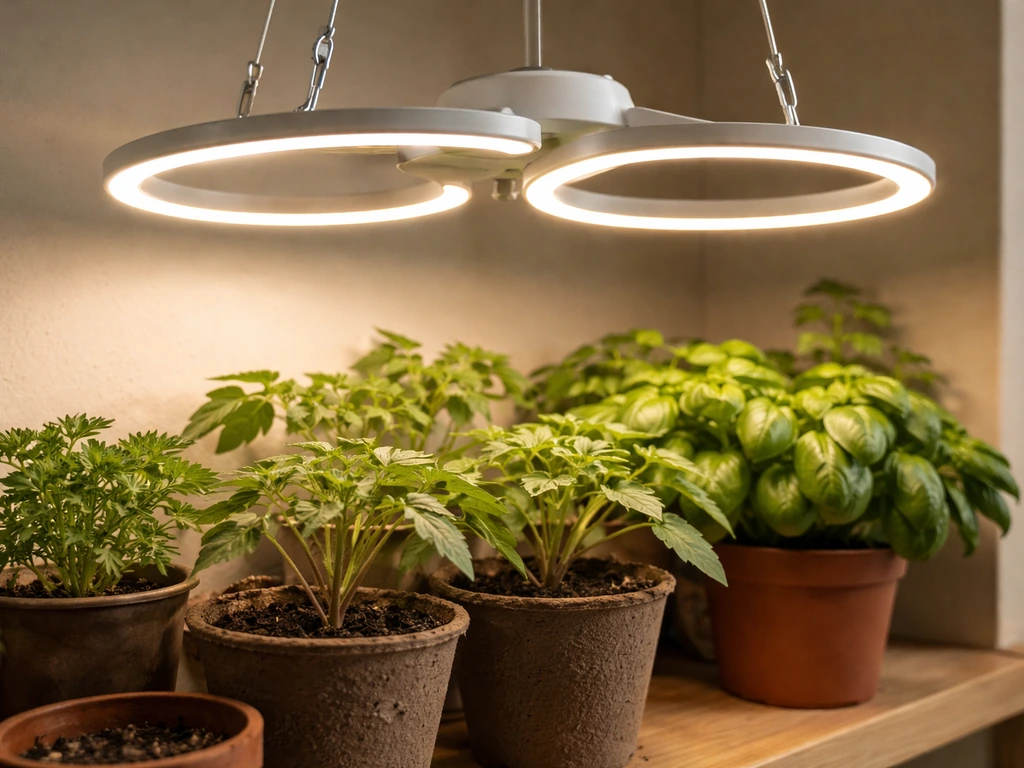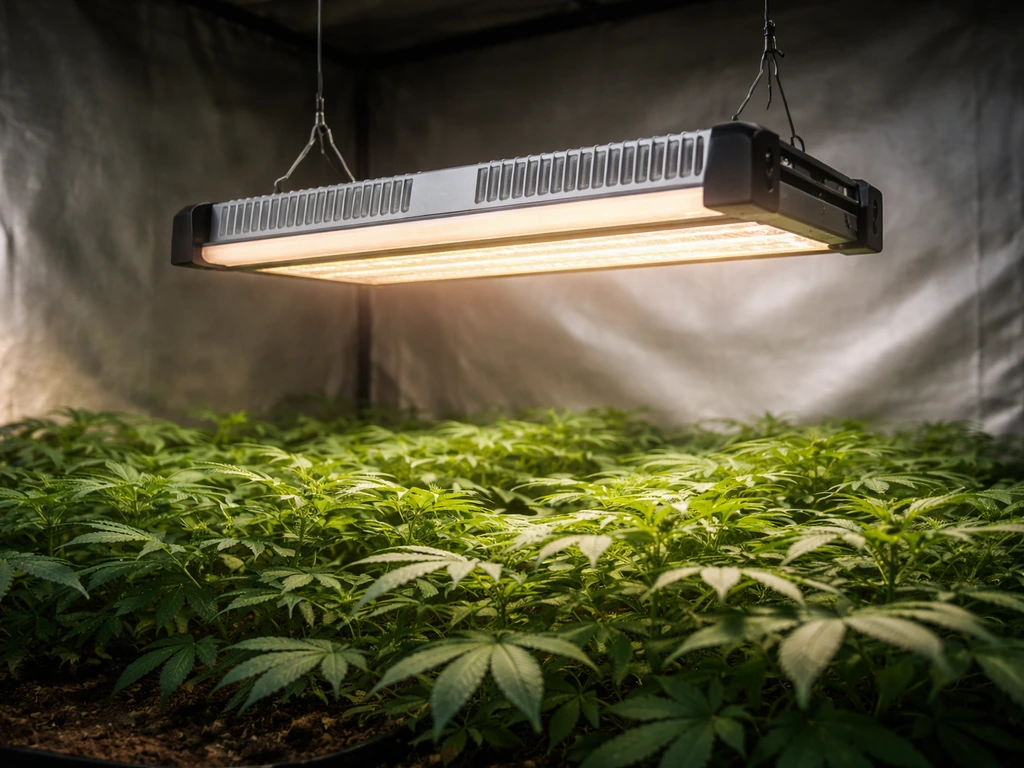
Dommia grow lights are low-wattage, panel-style LED fixtures designed for small indoor growing spaces: windowsill shelves, compact grow tents, propagation trays, and desktop setups. The lineup tops out around 40–50W per panel, which puts it firmly in the supplemental or seedling-to-vegetative category rather than the flowering-powerhouse bracket. If you need a simple, affordable, no-fuss light for herbs, seedlings, or a few houseplants and you're not chasing maximum PPFD for a dense flowering canopy, Dommia is a reasonable option. If you want to flower cannabis or run a 4x4 tent, it isn't the right tool.
Dommia Grow Light Review: Performance, Coverage, Value

Marcus Caldwell
21 May 2026
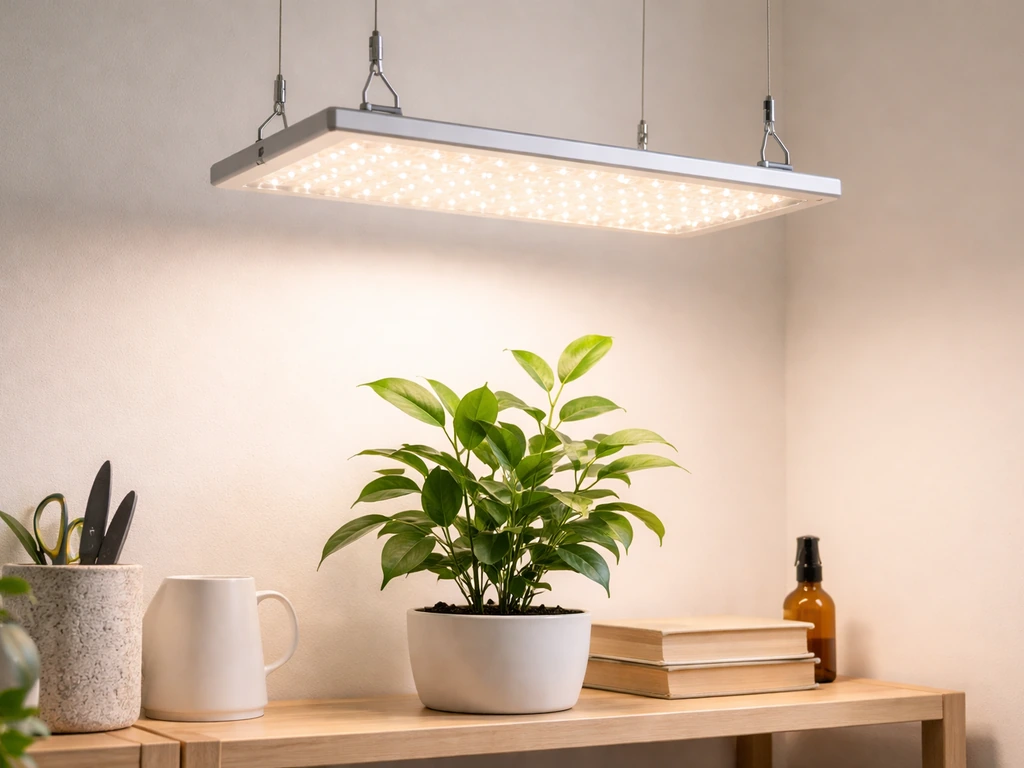
The Dommia lineup: which models are we actually talking about
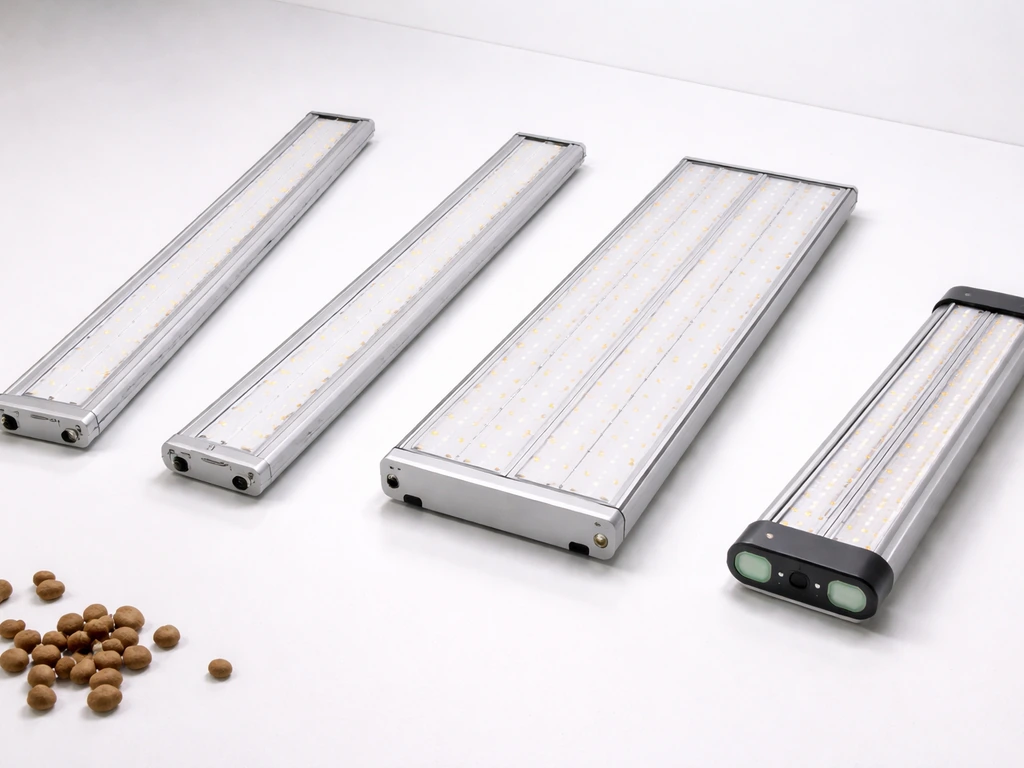
Dommia sells several distinct models, and the one you're comparing matters a lot because the wattage and feature sets are very different. Here's what the current line looks like based on documented specs:
| Model | Stated Wattage | LEDs | Color Temp | Key Feature | Dimensions (inches) |
|---|---|---|---|---|---|
| DS-12RW | 12W | 84 (red + warm white + cold white) | 380–800nm full spectrum | Slim panel, 50,000-hr rated life | 10.2 x 2.4 x 0.04 |
| DS-20W | 20W | 132 (84 warm white + 48 red) | 2500K, CRI 90 | Ultra-thin metal panel | 10.31 x 4.02 x 0.03 |
| DS-40WD | 40W | Not specified | Not specified | 4-level dimming, timer, linkable x4 | Not specified (0.04" thick) |
| DS-50WF | 50W (4-pack) | 288 total | 5500K | Multi-pack value, 100–240V | 10.2 x 3.5 x 0.05 |
| DMGL05 | 12W | Not specified | 2500K | Dual-head clip light, 3-yr warranty | 0.37 x 0.24 x 1.24 |
| SlimGrow | 8–10W | Not specified | 3200K / 3700K / 4200K / 15000K | 4 spectrum presets, USB desk style | Compact clip/desk form factor |
The most commonly searched models are the DS-20W, DS-40WD, and DS-50WF (the 4-pack). The DMGL05 and SlimGrow are more niche: the DMGL05 is a dual-head clip light that works well for individual plants or propagation cells, and the SlimGrow is essentially a desk lamp with grow-light capability. If you searched 'Dommia grow light review' without a specific model in mind, you're most likely looking at the DS-40WD or the DS-50WF pack. If you want a broader look at performance, model differences, and whether Dommia is worth it overall, this leoter grow light review style guide will help you compare options.
Spectrum, wattage, and what the PPFD numbers actually mean
The DS-12RW's manual claims a PPF of 51 μmol/s at 10 inches. To put that in context: most seedling and early vegetative growth targets 100–300 μmol/m²/s PPFD at the canopy. At 10 inches, a 12W panel covering roughly a 6x10-inch footprint will hit useful seedling-level intensities, but the coverage area is small. Spread that 51 μmol/s output over even a 1x1-foot area and you're looking at roughly 50–70 μmol/m²/s at canopy level, which is fine for germination and barely adequate for early veg.
The SlimGrow is the most transparently documented in terms of efficiency: the manual states 2.5–2.7 μmol/J depending on which spectrum preset you use, with a PPF output of 23–25 μmol/s at 8–10W draw. That efficiency number is actually decent for a compact fixture at this price tier. The 15000K 'Bluish White' preset skews heavily blue and is marketed for vegetative growth and leafy plants; the 3200K Warm White is better for fruiting or flowering supplementation.
The DS-20W uses 2500K color temperature with CRI 90, which is a warm, red-heavy spectrum that makes more sense for fruiting plants than vegetative greens. Its 132 LEDs (84 warm white plus 48 red) follow a common budget-panel formula. The DS-50WF pack runs 5500K across 288 LEDs over four panels, which is a cooler, more balanced daylight spectrum suitable for vegetative growth and seedlings. Neither model publishes a verified PPFD map from a third-party meter, so treat any coverage claims as approximations.
Bottom line on efficiency: Dommia doesn't publish μmol/J figures for most models except the SlimGrow. The 2.5–2.7 μmol/J figure for the SlimGrow is reasonable but not class-leading. Budget panel lights from brands like Mars Hydro or Spider Farmer in similar wattage ranges often hit 2.6–2.9 μmol/J. Dommia is competitive but not exceptional on raw efficiency.
Which plant stage each model actually suits
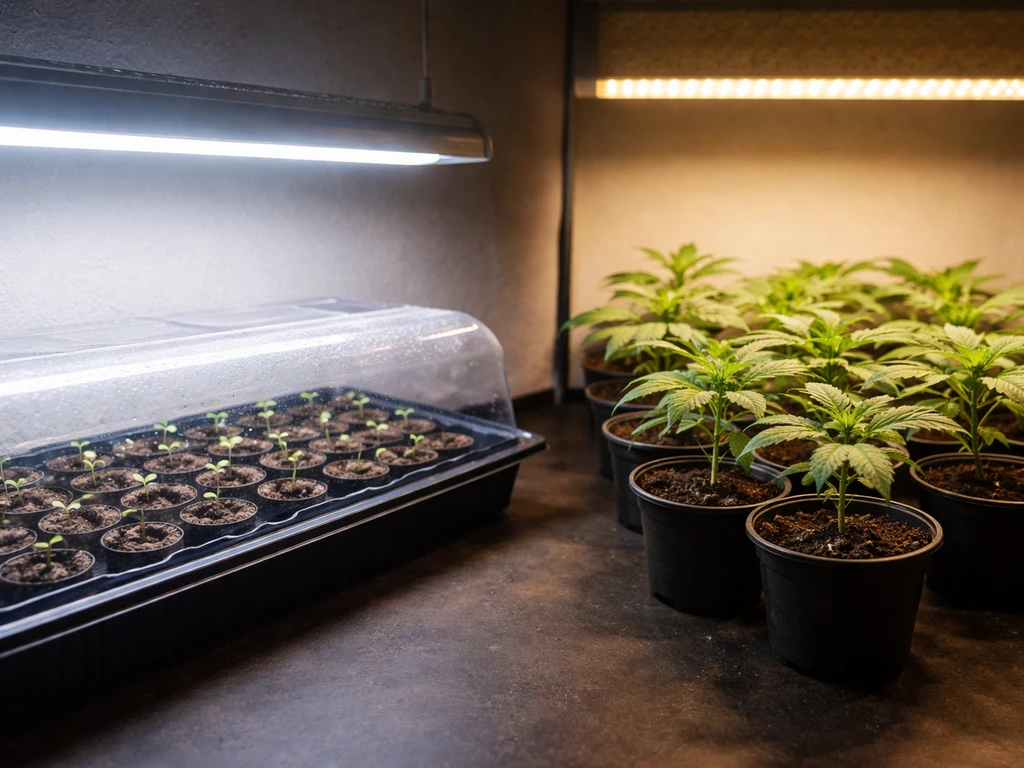
The DS-12RW and DMGL05 (both 12W) are seedling and propagation lights, full stop. They don't have the output to carry plants through a full vegetative cycle without supplementation, but for sprouting seeds, rooting cuttings, or keeping small herbs alive on a shelf, they do the job.
The DS-20W at 2500K and CRI 90 is warmer-spectrum than you'd normally choose for vegetative growth, but it works reasonably well as a flowering supplement over a single plant or a small cluster. Because the DS-20W documentation recommends a hanging height of 12–18 inches above the plant canopy, you have some flexibility to dial in intensity by adjusting height.
The DS-40WD is the most versatile model for actual indoor growing. The four-level dimmer (25%, 50%, 75%, 100%) lets you run it softer for seedlings and ramp up for vegetative growth. The built-in timer (6, 12, or 16 hours) removes one variable from your daily routine. Linkable panels mean you can chain up to four units to cover a longer shelf or a 2x4 tent at roughly 160W combined, though at that point you're approaching the budget of a dedicated grow tent light.
The DS-50WF 4-pack at 5500K is best for vegetative or seedling use across a wider spread. Four panels at 50W total gives you roughly 12.5W per panel, which is quite low per unit but spread across a shelf system or propagation rack with low hanging heights it can work. This is more of a microgreen, seedling tray, or shelf garden light than a tent light.
| Model | Best For | Not Recommended For | Suggested Hanging Height |
|---|---|---|---|
| DS-12RW | Seedlings, propagation, small herbs | Vegetative or flowering cycles | 8–12 inches |
| DS-20W | Single-plant supplemental flowering | Full veg or multi-plant coverage | 12–18 inches (per manual) |
| DS-40WD | Veg + light flowering, small tent or shelf | Dense canopy flowering, 4x4 tent | 12–24 inches depending on stage |
| DS-50WF (4-pack) | Seedling trays, propagation racks, microgreens | Any flowering application | 6–12 inches |
| DMGL05 | Single-plant supplemental, desktop herbs | Any serious grow cycle | Clip-positioned, 6–10 inches |
| SlimGrow | Desktop plants, houseplant supplementation | Any tent or grow room | Desk-mount, 6–10 inches |
Build quality, heat, and how these hold up day to day
Dommia panels are fanless. Every model in the lineup is passive-cooled, which means zero noise. If noise is a dealbreaker for you (running lights in a bedroom or office), that's a genuine advantage over active-cooled lights in this wattage range.
The thermal trade-off is that the panels rely on their thin aluminum housing to dissipate heat. The DS-20W manual specifically notes that the ultra-thin metal construction gives off very little heat, and at 20W that's realistic. These panels are genuinely cool-running at their rated wattages, which also means you can hang them closer to canopy without burning tips. At the 40W level (DS-40WD) the panel will get warm to the touch after extended runs but shouldn't reach damaging temperatures if mounted with reasonable airflow.
The build consistency across the lineup is typical of budget-tier LED panel production: thin aluminum backing, plastic end caps, a power cable, and hanging hardware included. The 50,000-hour rated LED lifespan on the DS-12RW is a standard industry claim for this LED type and roughly consistent with 5–10 years of daily use. The DMGL05 carries a documented 3-year warranty, which is the best warranty in the lineup and worth noting if you're buying for long-term herb or propagation use.
These are not the same construction quality as a Spider Farmer SE or a Mars Hydro TS series. The housing is thinner, the drivers are simpler, and the overall feel reflects the price point. That's not disqualifying for their intended use cases, but you shouldn't expect the same longevity or consistency as a light that costs three times as much.
Controls, timers, dimming, and what's actually included
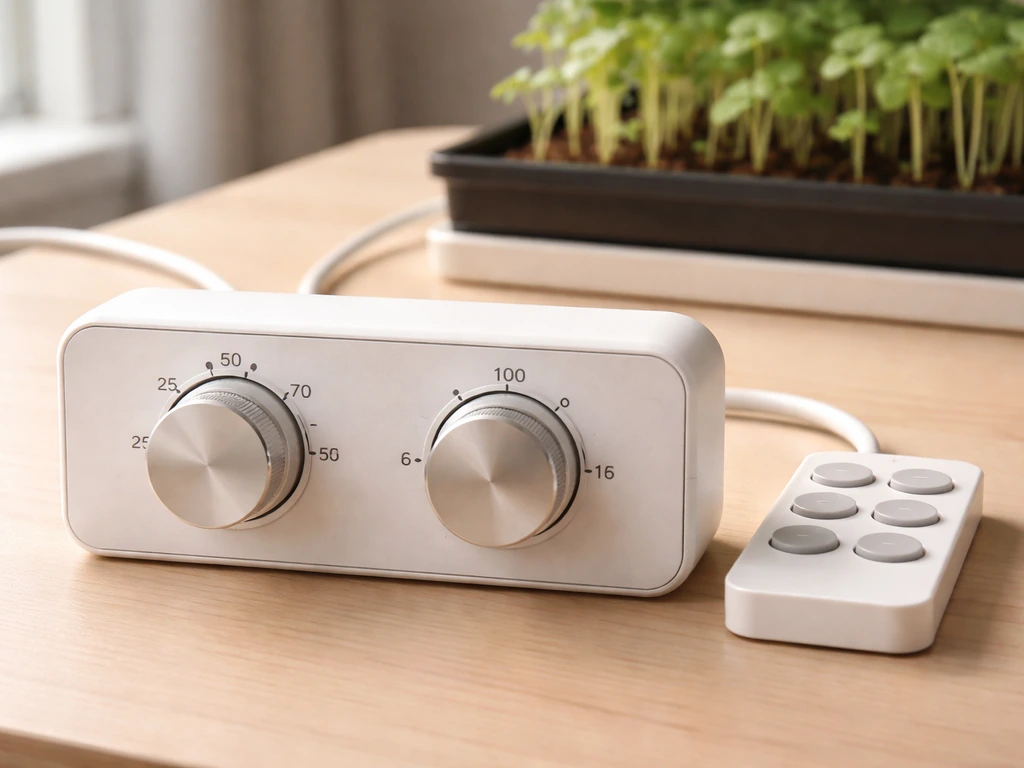
The DS-40WD and SlimGrow both offer four-level dimming at 25%, 50%, 75%, and 100%, combined with a built-in timer that cycles at 6, 12, or 16 hours. This is more functionality than most lights in this price tier offer, and it's genuinely useful: you can set a seedling schedule at 16 hours and 50% power, then shift to 12 hours and 100% for flowering, all without an external timer or controller.
The DS-12RW, DS-20W, and DS-50WF do not appear to include dimming or built-in timers based on available documentation. They're plug-and-play: power on, power off. If you want scheduling with those models, you'll need an external timer outlet, which adds a few dollars but isn't complicated.
The DS-40WD's linkable design is worth calling out specifically: chaining up to four panels in series lets you run a 12- or 24-inch shelf setup from a single power connection. For multi-shelf propagation racks or seed-starting stations, that's genuinely practical. Hanging hardware is included across the lineup, and the panels are thin enough (0.03–0.05 inches in profile) to mount flush against a shelf underside without taking up meaningful vertical space.
How Dommia compares to similar lights in the same class
At the 20–50W shelf and supplemental light level, Dommia competes primarily with other budget panel brands. Comparable alternatives include the Barrina T5 grow light bars, Aspectek broad-spectrum LED strips, and entry-level Mars Hydro or Viparspectra panels. Here's how they stack up on the factors that matter most:
| Brand/Model | Wattage | Spectrum | Dimming/Timer | Linkable | Approx. Price Range |
|---|---|---|---|---|---|
| Dommia DS-40WD | 40W | Full spectrum (details vary) | 4-level dim + 6/12/16h timer | Yes (x4) | $25–$45 |
| Dommia DS-50WF (4-pack) | 50W total | 5500K daylight | None documented | No | $30–$50 |
| Barrina T5 (4-pack, 96W) | 96W | 6500K full spectrum | None | Yes | $35–$55 |
| Mars Hydro TS 600 | 100W draw | Full spectrum, red-heavy | None (basic model) | No | $50–$80 |
| Viparspectra XS 1000 | 100W | Full spectrum | Dimmer knob | No | $90–$130 |
The Barrina T5 4-pack is worth a direct comparison: for a similar or lower price, you get 96W across four tubes, a 6500K spectrum, and linkable panels. If you're building a propagation or seedling rack, the Barrina delivers more raw photon output per dollar. The trade-off is that it lacks a built-in timer and the warm-spectrum coverage you get from Dommia's 2500K models.
Where Dommia's DS-40WD pulls ahead of most in its price class is the integrated dimmer and timer combination. Very few sub-$40 lights include both features, and for someone who doesn't want to buy a separate smart plug or timer, that convenience has real value. If you're comparing within the same niche as other reviewed brands on this site, such as Lordem or Leoter compact grow lights, Dommia sits in a similar tier: functional, affordable, and best suited to small-space or supplemental applications rather than primary canopy lighting for fruiting plants. If you're also considering Lordem, check out our Lordem grow light review for a direct comparison.
Power costs, warranty, and what to know before you buy
Running cost is genuinely low for these lights. At the US average electricity rate of roughly $0.16 per kWh, a 40W light running 16 hours a day costs about $0.10 per day, or $3 per month. The DS-50WF 4-pack at 50W total costs about $0.13 per day under the same schedule. These are not meaningful energy expenses compared to larger grow lights, which is part of the appeal for casual indoor gardeners.
Warranty coverage is inconsistent across the lineup. The DMGL05 is the only model with a clearly documented 3-year standard warranty. DMGL05 documentation lists the DMGL05’s 12W wattage, 2500K color temperature, and a 3-year standard warranty. For the other models (DS-12RW, DS-20W, DS-40WD, DS-50WF, SlimGrow), warranty terms were not clearly stated in available documentation. Before purchasing, verify warranty terms directly with the seller or Dommia's support channel, and check Amazon's return window if that's where you're buying. Most third-party sellers on Amazon offer 30-day returns regardless of brand warranty.
Input voltage on the DS-50WF is 100–240V, making it compatible internationally. For the other models, check your regional compatibility before ordering. The thin panel design means all Dommia lights are lightweight and easy to install in tight spaces, but also means they're not built for humid grow room environments where condensation is a concern. These are shelf and desk lights, not tent lights meant for aggressive environmental conditions.
One practical note on troubleshooting: if your plants under a Dommia light are showing slow growth, leggy stretching, or pale leaves, the most likely culprit is light intensity rather than spectrum. Try lowering the hanging height to the minimum recommended distance, confirm the light is running at 100% if dimming is available, and consider whether you need multiple panels for your coverage area. These lights aren't designed to cover more than about one to two square feet of canopy at useful intensity levels.
The bottom line: who should buy a Dommia grow light and who shouldn't
Dommia grow lights deliver on what they're built for: low-cost, low-power, fanless lighting for small indoor growing projects. The DS-40WD is the strongest all-around option in the lineup because the integrated dimmer and timer add genuine usability that most competitors at this price skip. The DS-50WF 4-pack makes sense if you're outfitting a propagation shelf and want consistent, even coverage across multiple trays without spending much.
Buy a Dommia if:
- You're growing herbs, leafy greens, or houseplants on a shelf or windowsill and want a simple, quiet, low-cost supplement
- You run a seedling or propagation setup and need modest, even output across a tray without a large budget
- You want a built-in timer and dimmer in one package without buying accessories (DS-40WD specifically)
- Noise is a concern and you need a fanless fixture
- You're new to indoor growing and want a low-stakes entry point before investing in higher-end equipment
Skip Dommia if:
- You want to flower cannabis or fruiting plants as a primary light: the wattage ceiling is simply too low for serious canopy penetration
- You're covering more than 2–3 square feet per panel: PPFD will drop to levels that produce weak, stretchy growth
- You want verified efficiency data or independent PPFD maps before buying: Dommia doesn't publish these for most models
- You need a robust warranty with documented terms: only the DMGL05 clearly states a 3-year warranty
- You're running a humid grow tent environment where condensation is a factor
If you find Dommia doesn't quite fit your needs, look at the Sonlipo or Telos grow light options reviewed elsewhere on this site for comparable small-space panels, or step up to a 100W-class light from Mars Hydro or Viparspectra if you're moving into tent growing. For the buyer who just wants something simple, quiet, and affordable for a shelf garden or seed-starting station, Dommia does that job without drama.
FAQ
If my plants are leggy or pale under a Dommia light, what should I check first?
Most Dommia models are best treated as supplemental lights, so if your plants are failing to thrive under them, don’t fixate on spectrum first. Start by matching height and power mode (for DS-40WD, confirm you are at the intended dim level, typically 100% for seedlings). If you still see leggy growth or pale leaves, you likely need more panels to cover a larger area, not just more time.
How close can I hang a Dommia grow light without damaging plants?
Because these panels are fanless and thin, the best practical “max hang height” guidance is to follow the model’s recommended distance and then adjust based on symptoms. For the DS-20W, the manual suggests roughly 12 to 18 inches, but if leaves are bleaching or tips are curling upward, raise the light slightly. If growth is slow and plants stretch, lower it within the safe range and ensure you are not running it at a reduced dimmer setting (DS-40WD).
Which Dommia models let me dim the light and set a timer without extra accessories?
The DS-40WD is the one that clearly supports dimming and built-in timed cycling. The DS-12RW, DS-20W, DS-50WF, and SlimGrow are described as plug-and-play without internal dimming or timer control, so for schedules you typically need an external timer outlet. If you want the easiest setup, pick DS-40WD and avoid adding extra controls later.
Can one Dommia panel cover an entire 2x4 grow tent?
Look at wattage and panel coverage together. A single low-watt Dommia panel can work for propagation cells, one small pot cluster, or a narrow shelf, but it usually cannot deliver useful intensity across a large canopy. If your goal is a wider footprint, use more than one panel, or choose a higher-watt class light intended for tent-level coverage.
Is 2500K or 5500K better for my plants if I’m growing herbs and also trying to flower?
For Dommia, relying on color temperature is only part of the decision. 5500K units (like the DS-50WF 4-pack) are typically better suited to seedling and vegetative shelf use, while 2500K (like the DS-20W) is warmer and can function as a flowering supplement for individual plants. If your use case is mixed, consider keeping the 2500K and 5500K outputs on different shelves or stages rather than trying to cover everything with one spectrum.
How can I estimate whether my Dommia light is actually intense enough if no PPFD map is provided?
If you want more accurate results than marketing coverage, use a phone lux meter only as a rough clue, because lux is not the same as plant-relevant photon output. A real PPFD meter is the proper tool, but since Dommia does not publish verified maps for most models, you can also run a practical test: place the light at your target height, then adjust number of panels and dim level until you stop seeing stretching and pale new growth.
Are Dommia fanless panels safe to use in a humid grow tent or propagation cabinet?
With thin, passive-cooled panels, humidity and condensation are the main environmental risks. If you’re using a tent or putting the light very close to a humid propagation area, avoid splashing water, ensure the panel is not mounted directly where droplets collect, and provide airflow in the room. These are designed more like shelf and desk lights than sealed tent fixtures.
How should I set up the DS-40WD if I want to chain panels for a longer shelf?
Yes, the DS-40WD is designed for linking multiple panels in series for shelf-style layouts. However, chaining increases the number of hot spots and cable load considerations, so keep an eye on cable routing and avoid placing heavy strain on the hanging hardware. Also verify the linked configuration still gives you adequate coverage, since linking four panels does not automatically mean you get tent-grade intensity.
Which Dommia models have the best warranty coverage, and what should I verify before purchasing?
Warranty terms are not consistent across the lineup. Only the DMGL05 is clearly documented with a 3-year standard warranty, while other models have unclear terms in available documentation. If long-term uptime matters, confirm warranty coverage with the seller or Dommia support before buying, and if purchasing via marketplace, check the return window in case warranty is limited.
How do I estimate my monthly electricity cost if I use a dimmer and a timer with the DS-40WD?
The simplest energy model is to base it on total watt draw at your chosen dim level. For the DS-40WD, dimming changes power, so monthly cost will scale with how often you run at 25%, 50%, 75%, or 100%. If you are using an external timer, include timer usage hours, since the lights can still cost money if they run longer than your plants need.
When is it time to replace a Dommia light with a higher-watt grow light?
If your goal is a dense canopy for fruiting crops, Dommia’s wattage ceiling and coverage limits are the limiting factor. A more reliable approach is to use Dommia for seedlings, cuttings, herbs, and early vegetative growth, then switch to a higher-watt tent light when you reach flowering or when plants crowd the canopy.
Is the SlimGrow actually practical for more than one plant at a time?
SlimGrow is essentially a desktop-style fixture, so it is best for one plant or a small propagation station rather than multi-tray coverage. If you’re buying because it’s compact, choose it for desk or near-window use, and if you need more even coverage for a rack, prefer the DS series that is meant for panel-style overhead or shelf mounting.