Lordem grow lights are budget-friendly full-spectrum LED fixtures aimed at hobbyist indoor gardeners, desk plant setups, and small grow spaces. The lineup includes several models spanning from compact clip-on and halo-style lights to panel fixtures, with model numbers like HL-0006, HL-0026, HL-003, HL-0065-2, and HL-116. Most buyers searching for a Lordem review are looking at either the entry-level 10-inch halo/ring light (HL-116) or one of the small panel variants. They're reasonably priced, easy to set up, and honestly fine for seedlings, low-light houseplants, and supplemental veg lighting, but they're not the right tool for flowering cannabis or high-light crops where PPFD really matters.
Lordem Grow Light Review: Which Model to Buy and Why

Marcus Caldwell
17 May 2026
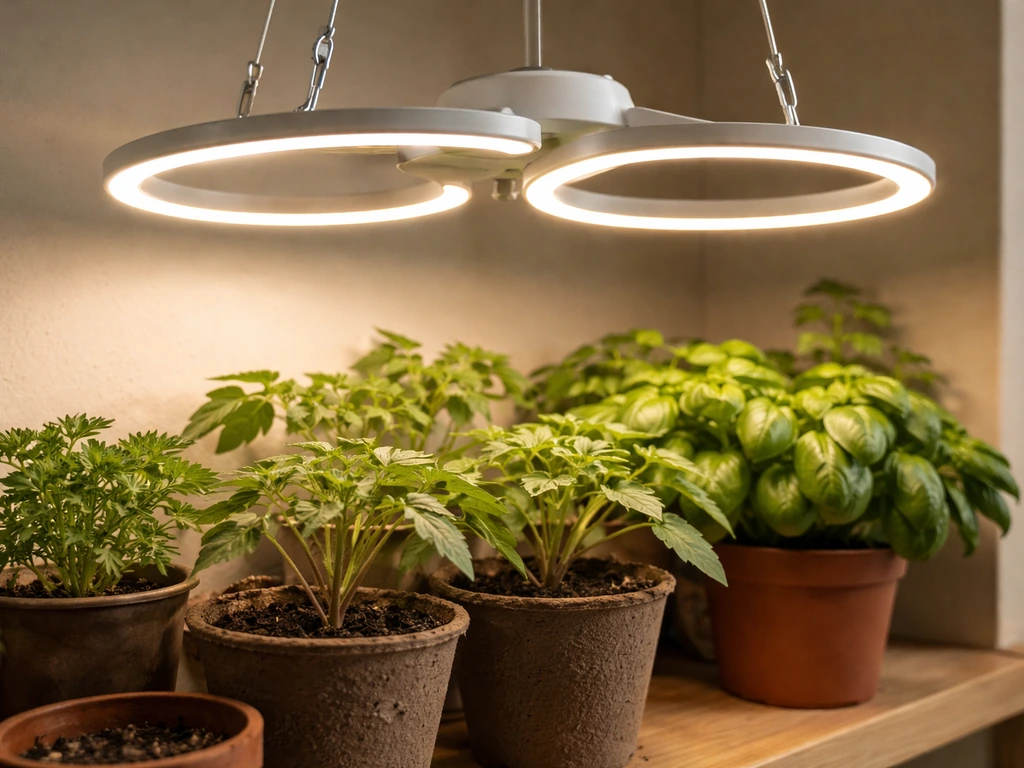
Which Lordem models are covered here
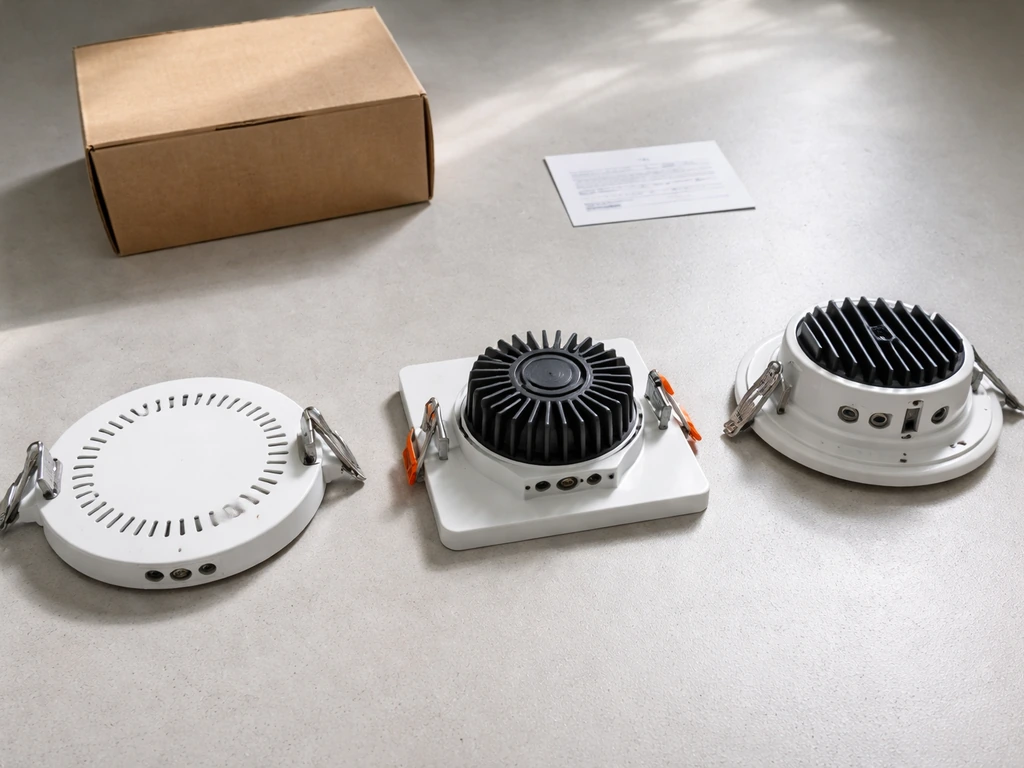
Lordem sells under several internal model numbers, and it can get confusing fast because the listings don't always make the model number obvious. The main ones you'll encounter are the HL-0006, HL-0026, HL-003, HL-0065-2, and HL-116. The HL-116 is the most commonly purchased and best-documented variant, it's marketed as the 'LORDEM 10" Full Spectrum Plant Light' and features a 160-LED halo ring design with telescopic support poles that extend up to 65 inches.
That one is the focus of most of this review because it's what most buyers actually end up with. If you're trying to decide whether the Telos Grow Light is a better pick for your setup, check out our Telos Grow Light review for detailed performance and value. The panel-style models (HL-003, HL-0026, etc. ) share similar LED configuration philosophy but are aimed at shelf or rack growing rather than standalone plant stands.
If you're unsure which model you're looking at, check the manual or the product sticker on the power adapter. The model number is printed there, and Lordem's manual database (hosted on Manuals+) has pages for all the variants listed above. Knowing your model matters because coverage area, mounting recommendations, and timer features vary between them.
Spectrum and what growth stages it actually suits
Lordem markets all of its lights as 'full spectrum,' which in practice means a white LED array balanced to cover both blue (roughly 400-500nm) and red (620-700nm) wavelengths, often with some warm white fill in between. The HL-116 in particular is designed to mimic natural sunlight, you won't see the blurple purple glow of old-school LED grow panels here. That full-spectrum white output is genuinely better for general plant health than single-band red/blue arrays, and it makes it easier to assess your plants visually.
That said, the spectral intensity is calibrated for moderate-light plants and early growth stages, not aggressive flowering. For seedlings and cuttings, the output is well-matched, you want lower PPFD (roughly 100-250 µmol/m²/s) at this stage, and Lordem delivers that without risk of light stress. Vegetative growth for herbs, leafy greens, and low-to-medium light houseplants (pothos, snake plants, ferns, some succulents) is where these lights genuinely earn their keep. Flowering and fruiting plants (tomatoes, peppers, cannabis) need sustained PPFD in the 400-900+ range at canopy level, and Lordem's output at realistic mounting heights doesn't reliably get there for a meaningful coverage area.
| Growth Stage | Required PPFD Range | Lordem Suitability |
|---|---|---|
| Seedlings / Clones | 100–250 µmol/m²/s | Good — appropriate intensity at 18-24" height |
| Vegetative (herbs, greens) | 200–400 µmol/m²/s | Good for small footprint; adequate for 1–2 plants |
| Vegetative (high-light crops) | 400–600 µmol/m²/s | Marginal — works close up, limited coverage |
| Flowering / Fruiting | 600–900+ µmol/m²/s | Not recommended — insufficient intensity |
Coverage area, mounting height, and how to set it up
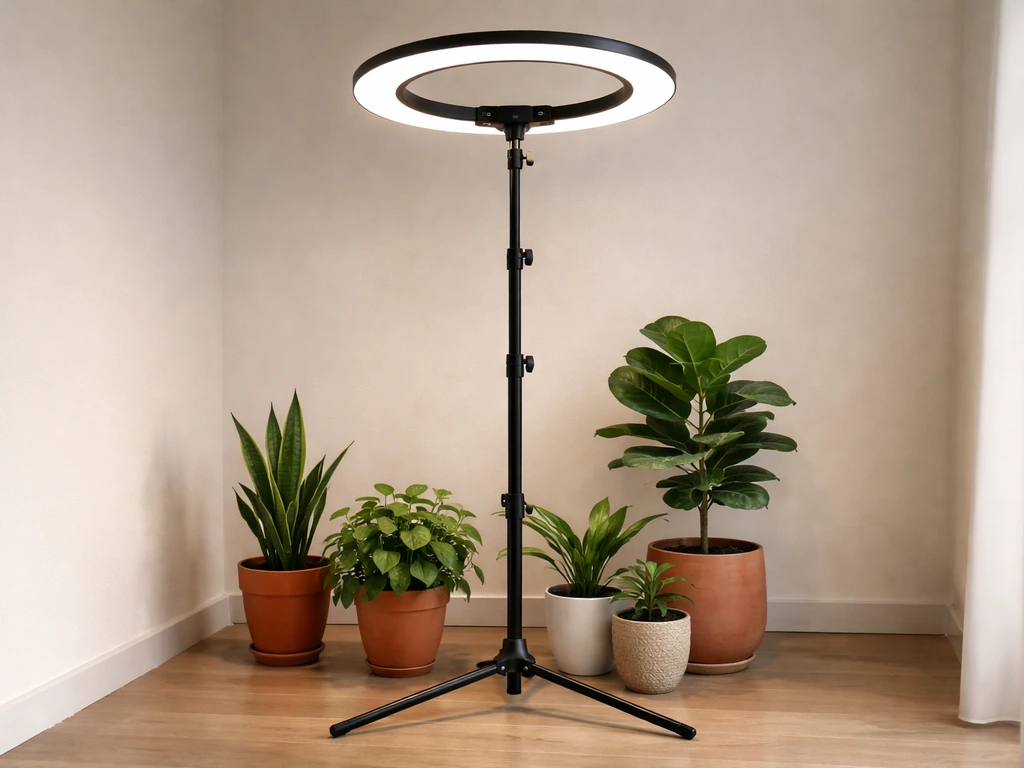
The HL-116 halo light uses telescopic support poles that extend up to 65 inches tall, which gives you good flexibility for potted plants on a table or floor. The 10-inch ring design is built to light a single plant or a small cluster of 2-3 small pots. Realistic effective coverage at useful intensity is roughly a 12-inch diameter circle at about 18 inches of mounting height. At 24 inches, the light spreads more but intensity drops noticeably, fine for low-light plants, thin for anything that needs more than 200 µmol/m²/s.
For setup: the telescopic poles are straightforward to assemble and the clamp or base (depending on variant) is stable on most flat surfaces. Position the light directly above the plant canopy, not angled to the side, to maximize uniformity. If you're using it on a grow shelf or inside a small tent (1x1 or 2x2 ft), center the ring above the tallest plant and adjust height so the ring sits 14-20 inches above the canopy for most herbs and seedlings.
For succulent or cactus species that prefer lower light, 24-30 inches works well. One practical tip: the poles can wobble a little at maximum extension, so if you're running it at full height near a vent or in a spot with air movement, secure the base with a bit of weight or move it to a more sheltered spot.
Real-world performance: intensity, evenness, heat, and build
Light intensity and evenness
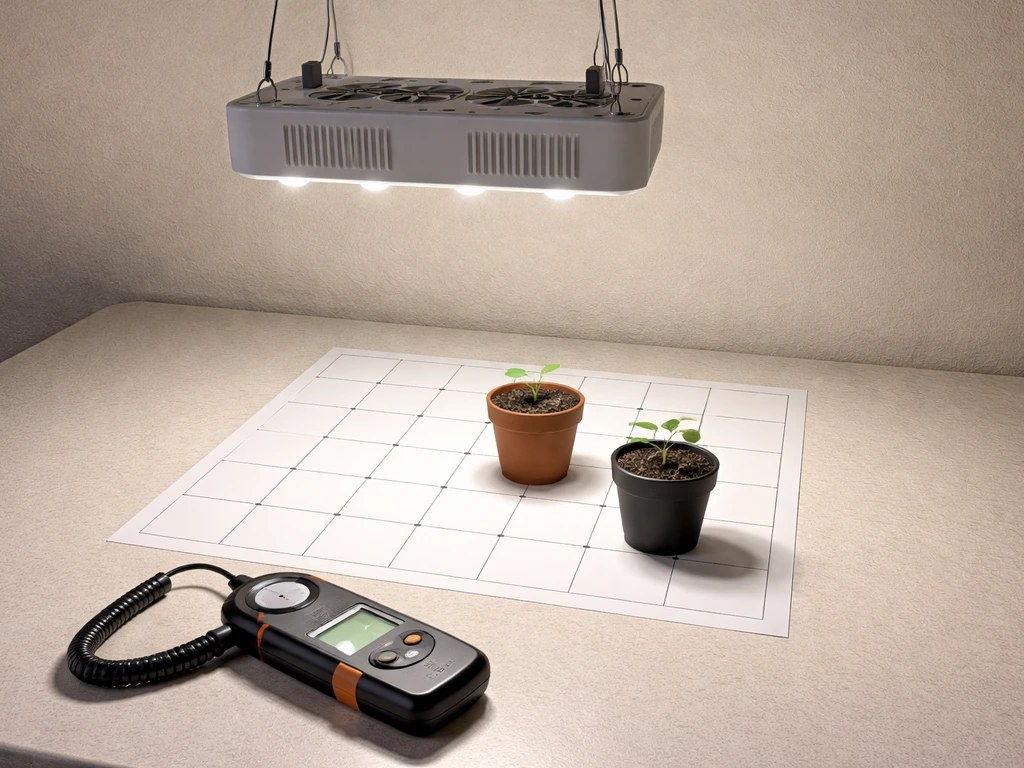
The HL-116's 160-LED configuration puts out decent intensity for its size and price class, but it's not competing with quantum board panels or bar-style fixtures used for serious grows. At 12 inches above the canopy, center readings are solid for seedlings and leafy greens. Coverage evenness is reasonably good directly under the ring, though the center of a halo/ring design naturally gets slightly less light than the ring perimeter, that's a geometry issue inherent to the form factor, not a defect. For a single plant, this is a non-issue. For a flat tray of seedlings, position the tray so the ring sits slightly lower and rotates plant positions every few days to compensate.
Heat output and noise
One genuine plus: Lordem's halo lights run passively cooled. There's no fan, which means zero audible noise during operation. Heat output from the LEDs is low enough that you won't feel warmth from more than a few inches away. This makes Lordem a good fit for bedroom plant setups, home offices, or anywhere fan noise from a grow light would be irritating. The driver (power brick) does get slightly warm during extended use, which is normal, just make sure it's not sitting on or under anything heat-sensitive.
Build quality and reliability
Build quality is acceptable for the price tier. The telescopic poles are lightweight aluminum/plastic composite and feel functional rather than premium. The LED ring housing is plastic with no particular weather or humidity resistance, so this is strictly an indoor, dry-environment fixture. The power adapter is a standard barrel connector type. Long-term reliability data is limited given how relatively new these model numbers are, but the passive cooling design (no moving parts) is a positive sign for longevity, heat and moving parts are the two most common failure points in budget grow lights, and Lordem avoids one of them.
Controls, features, and power efficiency
Depending on the specific model, Lordem lights include some combination of on/off switching, dimming levels (typically 3-5 brightness settings), and a built-in timer function. The HL-116 includes a timer with common intervals (typically 3H/9H/12H auto-cycle settings) and multiple brightness levels accessible via a touch or button control on the cord or housing. These are genuinely useful features for the price, auto-timers mean you don't have to babysit the photoperiod, and even coarse dimming lets you dial back intensity for sensitive seedlings or low-light species.
On power draw: these are low-wattage fixtures. The HL-116 and similar variants draw somewhere in the 10-20W range (check your specific model's label). At that draw, electricity cost is negligible, running 16 hours a day at 15W works out to about 0.24 kWh per day, or roughly $0.03-0.04 per day at average U.S. electricity rates. Efficiency measured as cost-per-PPFD isn't where Lordem excels, larger, more efficient quantum board LEDs deliver much more photon output per watt, but for small supplemental or desktop setups, the raw efficiency math is less important than the fact that running costs are nearly zero.
How Lordem stacks up against similar lights
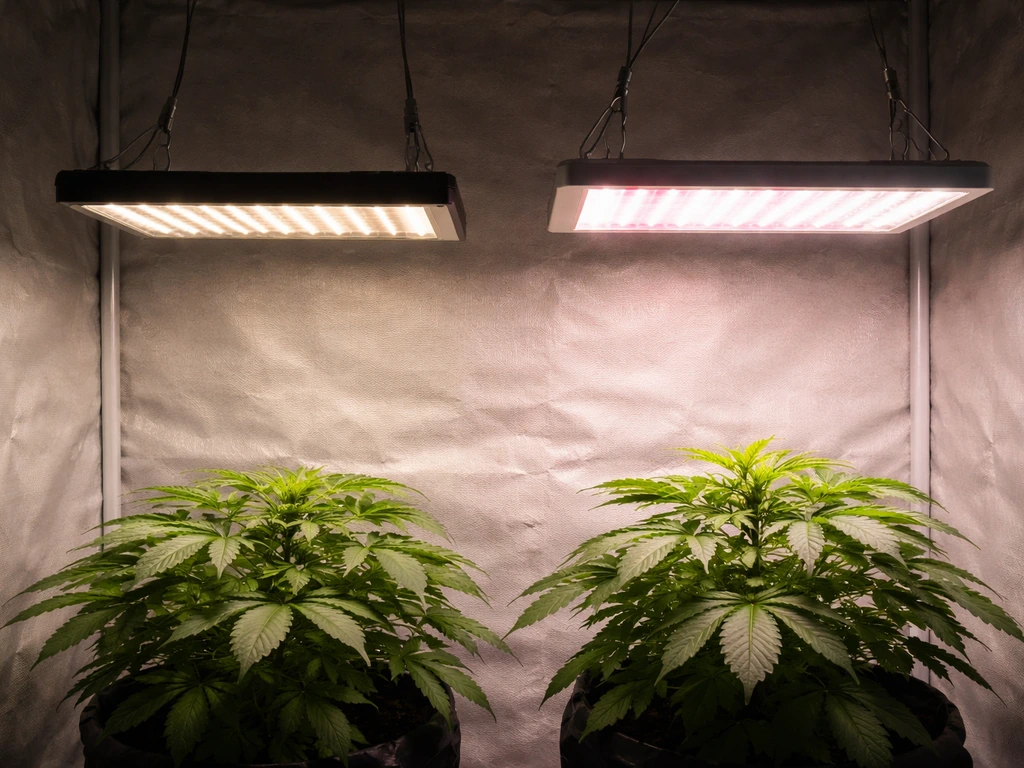
Lordem sits firmly in the budget desktop/hobbyist grow light category, which is a crowded space. The meaningful comparison isn't against commercial horticultural LEDs, it's against other small-format, full-spectrum desk grow lights in the $20-60 range. Brands like Leoter, Sonlipo, and similar small-form lights serve basically the same use case and price point. If you want the full breakdown on whether the Leoter grow light is actually worth it, check out this Leoter grow light review.
Compared to those, Lordem is competitive: the telescopic pole design of the HL-116 is more versatile than many clip-on alternatives, and the passive cooling keeps noise at zero. If you're comparing to larger quantum board panels from brands like Spider Farmer or Mars Hydro at 100W+, those lights aren't in the same category, they're for serious grow tents and produce vastly more PPFD per square foot.
Don't compare a $30 halo light to a $150 panel and wonder why the panel wins.
| Light Type | Approx. Price | Best For | Noise | Coverage |
|---|---|---|---|---|
| Lordem HL-116 (halo) | $25–45 | 1-3 desktop plants, seedlings, herbs | Silent | ~1 sq ft effective |
| Leoter clip-on panel | $20–40 | Single plant, shelf grow | Silent | ~0.5–1 sq ft |
| Sonlipo small LED panel | $25–50 | Small herb garden, seedlings | Silent | 1–2 sq ft |
| Spider Farmer SF-1000 (100W QB) | $100–130 | 2x2 ft tent, veg to flower | Low fan hum | 2x2 ft usable |
| Mars Hydro TS600 (100W) | $70–100 | 2x2 ft tent, veg to light flower | Low fan hum | 2x2 ft usable |
For anyone growing in a 2x2 ft or larger tent with any ambition toward flowering crops, the quantum board options from Spider Farmer or Mars Hydro are a dramatically better investment despite the higher upfront cost. The efficiency, PPFD output, and coverage are in a completely different league. But if your setup is a few herb pots on a countertop, a propagation tray on a shelf, or a couple of tropical houseplants in a low-light room, Lordem does the job at a fair price without unnecessary complexity.
Pros, cons, who it's for, and what to buy instead
What Lordem gets right
- Completely silent operation — no fan at all
- Telescopic poles give real height flexibility up to 65 inches
- Full-spectrum white LEDs are better for plant health (and visual assessment) than blurple arrays
- Built-in timer and dimming at this price point is genuinely useful
- Near-zero running costs at 10-20W draw
- Easy setup with no tools required
Where it falls short
- Insufficient PPFD for flowering and fruiting crops at any practical coverage area
- Effective coverage is small — realistically 1-2 plants maximum
- Ring/halo design creates slightly uneven intensity (brighter at edges under ring, dimmer at center)
- Build quality is functional but not robust — not humidity-rated
- Poles can be unstable at maximum extension
- Limited independent performance data and relatively short track record
Who should buy a Lordem grow light
Buy Lordem if you're growing herbs, leafy greens, or tropical houseplants on a desk, shelf, or countertop and need something quiet, simple, and affordable. It's a strong choice for seedling propagation trays where you just need consistent, gentle light for germination and early growth. It also works well as supplemental lighting for a windowsill setup that doesn't quite get enough natural light in winter. If noise matters (bedroom, office, baby's room), the fanless design is a real advantage over any light with active cooling.
Who should skip it
Skip Lordem if you're growing cannabis, tomatoes, peppers, or any crop that needs high PPFD through flowering. Skip it if you need to cover more than about 1.5 square feet with useful light intensity. And skip it if you're setting up inside a grow tent larger than 1x1 ft, you'll be underserving your plants and wasting time. The same money (or a little more) spent on a proper quantum board panel will produce dramatically better results for serious grows.
What to buy instead
If you've decided Lordem isn't the right fit, here's how to think about alternatives by use case. For slightly more coverage and output in the same budget range, Leoter and Sonlipo offer comparable small-format options worth comparing, they follow the same basic concept and may better suit shelf configurations or multi-pot setups depending on your layout.
If you want to narrow it down further, it can help to compare similar budget models too, including Sonlipo grow light reviews Leoter and Sonlipo. For a step up in seriousness without breaking the bank, the Mars Hydro TS600 or Spider Farmer SF-1000 both run around $70-130 and are purpose-built for 2x2 ft tent grows with the PPFD headroom to take plants through flower.
If budget is the primary constraint and you just need the cheapest functional option for seedlings or low-light plants, any of the comparable $20-30 clip-on full-spectrum LEDs will perform similarly to Lordem for that narrow use case.
What to do before you finalize your choice
Before you order, take five minutes to check three things. First, measure your grow space footprint. If it's larger than roughly 12x12 inches and you want good coverage, Lordem's halo light will leave you with dark corners. Second, identify your plant stage and light requirements. Look up the PPFD range your specific plants need at their current stage, if it's above 400 µmol/m²/s sustained, you need more light than Lordem provides. Third, consider your mounting situation. The telescopic pole setup works well for floor or table plants, but if you're attaching to a shelf or tent bar, you'll need a clip-on or hang-mount option, check which Lordem variant (or which alternative brand) fits your physical setup before buying.
- Measure your canopy footprint in square feet
- Look up the PPFD requirement for your specific plant and growth stage
- Confirm the mounting height you can realistically achieve in your space
- Check whether you need a timer and dimming (Lordem has both; not all budget lights do)
- Compare against at least one alternative (Leoter, Sonlipo, or a low-wattage quantum board) before purchasing
Lordem grow lights are a reasonable buy for what they are: quiet, simple, full-spectrum desktop grow lights for small plants and early growth stages. If you're specifically trying to decide whether the dommia grow light is worth it, compare its output and features to what this Lordem halo provides for seedlings and low-light plants dommia grow light review. They're not trying to be tent lights, and they shouldn't be used as one. Get clear on your plant's needs and your space, and you'll make the right call, whether that's Lordem or something with more horsepower.
FAQ
Can I use a Lordem grow light as a daily photoperiod light for houseplants, and how should I start?
Yes, for many houseplants and seedlings you can run these lights on a simple daily cycle, the key is to keep the ring height consistent so your plants get a stable intensity. If your model has dimming, start at a lower brightness for the first 3 to 5 days, then increase only if you do not see stretching or leaf bleaching.
Why do my seedlings look darker in the middle with a halo-style Lordem light?
If your unit is the common HL-116 style, expect the center to be slightly dimmer than the ring area because of the halo geometry. For seed trays, rotate the tray every few days and keep the canopy centered under the ring to reduce uneven growth.
Is the power adapter actually a heat issue, and where should I place it?
Keep the driver off heat-sensitive surfaces and in a ventilated spot. Even though the LEDs are passively cooled, the power adapter still warms during long sessions, using a non-flammable surface and avoiding tight enclosed spaces helps reduce heat-related failure risk.
What’s the best way to handle coverage if my plants are spread out or my space is bigger than expected?
Long-range coverage is limited by usable intensity at distance. If your planned footprint is bigger than about a single 12-inch diameter circle at a practical mounting height, you will likely get dark corners, the fix is usually adding a second light or choosing a larger panel style fixture.
How do I make sure I’m comparing the right Lordem model when the listings use confusing names?
If you have already confirmed your model number on the adapter sticker or manual page, compare not only wattage, but mounting options and timer behavior. Two models can both be “full spectrum” but differ in how the effective light is delivered (stand-off height, beam spread, and control layout).
If the marketing says “full spectrum,” why won’t it work well for flowering cannabis or peppers?
For most flowering and fruiting crops, the limiting factor is sustained PPFD at canopy level, not whether the light is full spectrum. The practical decision aid is this, if your plant stage needs high PPFD for sustained flowering, skip Lordem and use a fixture designed for tent-scale output.
Can I combine Lordem with natural sunlight or a second grow light without harming plants?
Yes, but treat it as “supplemental.” For low-light greens or herbs, you can pair Lordem with daylight or grow during a partial day. Avoid using it alone for high-light plants, and adjust height rather than only changing brightness to maintain uniformity.
What are the most common signs I have the height or brightness wrong with a Lordem halo?
Do not rely on the advertised “full spectrum” label alone. Use the dimming/timer features if available, and watch for stress signs like bleaching (too intense) or tall, weak growth (too little light). If the leaves are very close to the ring and you still see stress, raise the light first.
Which Lordem variant is easiest to mount for a shelf setup or inside a tent?
If your plants are in a tent with fixed hanging hardware, you may prefer a clip-on or bar-hanging variant rather than the pole stand setup. For shelf growing, confirm the variant you’re buying actually supports attaching to your shelf or tent bar, otherwise you’ll be stuck improvising with unstable mounting.
Will a Lordem grow light meaningfully increase my electricity bill, and what else should I watch for?
Mostly no, because these are low-watt desktop fixtures. The better question is thermal and mechanical, make sure the driver has airflow and the base is weighted or stable at maximum pole extension, that’s where wobble and contact hazards happen.
Is Lordem good enough for a 2x2 ft tent grow if I use it at maximum height?
If you’re aiming for 1x1 ft or smaller, a single HL-116 style halo can work. For 2x2 ft tent targets, budget halo lights typically leave you underpowered in corners, the more reliable approach is a tent-rated panel designed for that footprint.
How should I use dimming and rotation for a propagation tray so all seedlings grow evenly?
If dimming is available, start low and only increase if the plants remain compact and healthy. Also rotate plants in the tray occasionally, because halo geometry can create a mild perimeter-versus-center effect that matters more in flat trays than with a single pot.