AliExpress and Alibaba have genuinely good LED grow lights buried among a lot of marketing noise. If you know what to look for, you can find quantum board (QB)-style fixtures with Samsung LM301H diodes and Mean Well drivers for half the price of branded equivalents. If you don't, you'll end up with an overheated, underpowered panel whose specs were copied from a better product. This guide cuts through that. It covers what the specs actually mean, how we test, which light types work for which scenarios, and exactly how to shop each platform safely.
AliExpress Grow Light Review: Best Picks, Testing Tips

Marcus Caldwell
18 Apr 2026
What the specs actually mean (and which ones matter)
Most AliExpress listings lead with a wattage claim like "1000W" on a fixture that draws 100W from the wall. Ignore the marketing wattage number entirely. The only figures worth your attention are: actual draw (wall watts), PPF (photosynthetic photon flux, measured in µmol/s), PPFD at a stated distance (µmol/m²/s), and efficacy (µmol/J or µmol/W). Samsung’s [LM301H EVO](https://led.
samsung. com/lighting/mid-power-leds/3030-leds/lm301h-evo/) product page also lists plant-relevant metrics such as PPF and PPE for the LED family. PPF tells you the total photons the fixture emits per second. PPFD tells you how many of those photons land on a square meter of canopy at a specific height.
Efficacy ties those photons to power consumption, so you can compare value across different fixtures. A strong fixture in 2026 should hit 2. 5 µmol/J or better. Claims of 2.
7 µmol/J exist but treat anything above 2. 6 with skepticism unless an independent test backs it up.
Driver quality is the single most reliable proxy for overall build quality you can verify from a listing. A Mean Well HLG-series driver with 0–10V dimming is the benchmark. The HLG-240H-C2100B is a commonly cited example on credible QB288-style listings. The HLG-240H’s datasheet describes a “3 in 1 dimming function” with additive 1, 10V DC, 10V PWM (100 Hz, 3 kHz), and resistance-based dimming between DIM+ and DIM-. Mean Well's 0–10V constant-current architecture lets you dim smoothly without flicker artifacts, which matters for timelapse setups and sensitive seedlings. If a listing just says "built-in driver" or gives no driver model, that's a red flag. Ask the seller for the model number before ordering.
Beyond those core metrics, also check: input voltage range (120–277V is ideal for flexibility), power factor (you want >0.95), whether the diode model is named explicitly (Samsung LM301B, LM301H, or Osram 660nm are good signs), coverage footprint at the stated height, and any IP rating for moisture resistance. An IP65 rating is a meaningful differentiator for humidity-heavy grow environments.
| Spec | What to look for | Red flag |
|---|---|---|
| Wall draw (actual watts) | Matches or is close to stated wattage | "1000W equivalent" or similar language |
| PPF (µmol/s) | Published with test conditions | Not listed at all |
| PPFD at distance | Stated height included (e.g., 18 inches) | Single number with no distance reference |
| Efficacy (µmol/J) | 2.4+ for value; 2.5+ for premium | Above 2.7 without third-party verification |
| Driver | Mean Well HLG or ELG series named | "Built-in driver" only |
| Dimming | 0–10V or PWM with range stated | On/off switch only |
| Diode brand | Samsung LM301B/H, Osram, Cree | No diode brand mentioned |
| IP rating | IP65 for humid environments | None listed |
How we test and compare AliExpress grow lights
Our process starts before anything ships. We cross-reference listed specs against known driver output curves and diode data sheets. If a seller claims 2.8 µmol/J from a 240W board with a driver that tops out at 200W of output, the numbers don't add up and we flag it. Once a unit arrives, we measure actual wall draw with a Kill-A-Watt meter at full dimming and at 50% to check linearity.
For PPFD mapping, we use a calibrated quantum sensor in a fixed grid pattern at the fixture's rated hanging height, typically 18 and 24 inches above the sensor plane. Grid points are measured at the center, four mid-points, and four corners of the stated coverage area. This follows the standard approach used in peer-reviewed horticulture research: a quantum sensor array at a fixed height captures both peak PPFD and the uniformity distribution across the canopy.
That uniformity number matters as much as peak output because a hot center with dim edges means uneven plant growth. Consumer apps like Photone can get you in the ballpark but need calibration and have known spectral mismatch issues, so we treat them as directional only.
We also run a thermal assessment: fixture on at full power for two hours in a 75°F ambient environment, then infrared thermometer readings at the heatsink center, driver case, and board edges. Anything over 65°C on the board surface or 70°C on the driver case in those conditions is a concern for long-term reliability. Finally, we inspect build quality physically: solder joint consistency, heatsink thickness (15mm+ aluminum is a reasonable baseline for QB kits), wire gauge, and connector quality.
Best picks by use case
Seedlings and clones
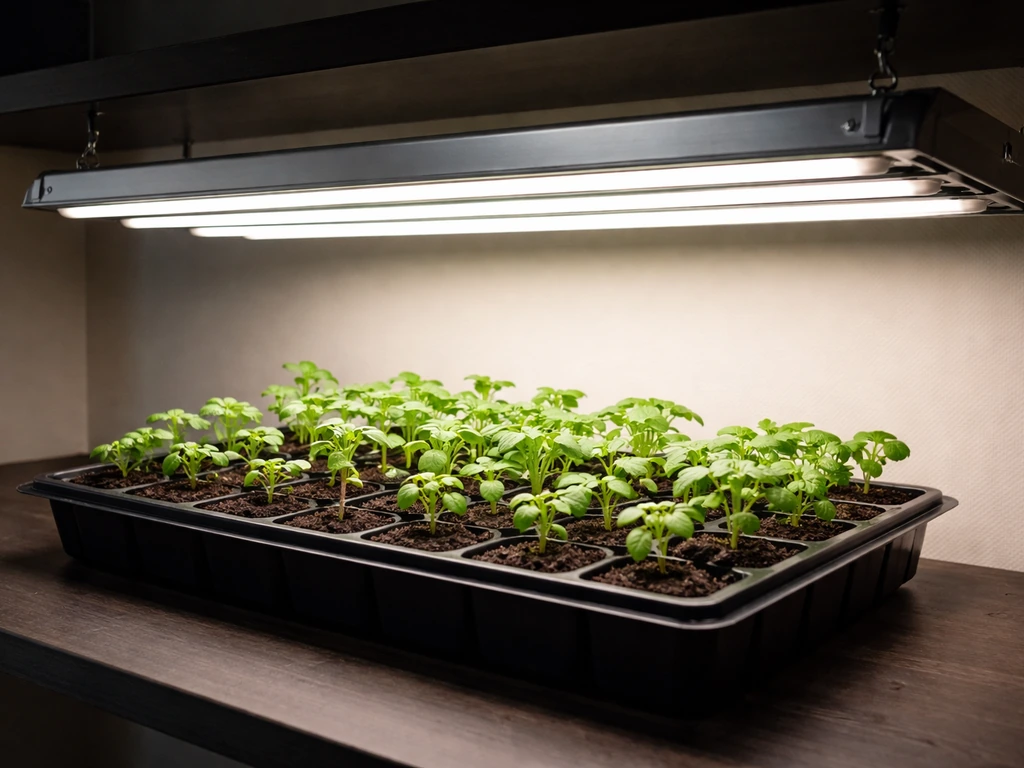
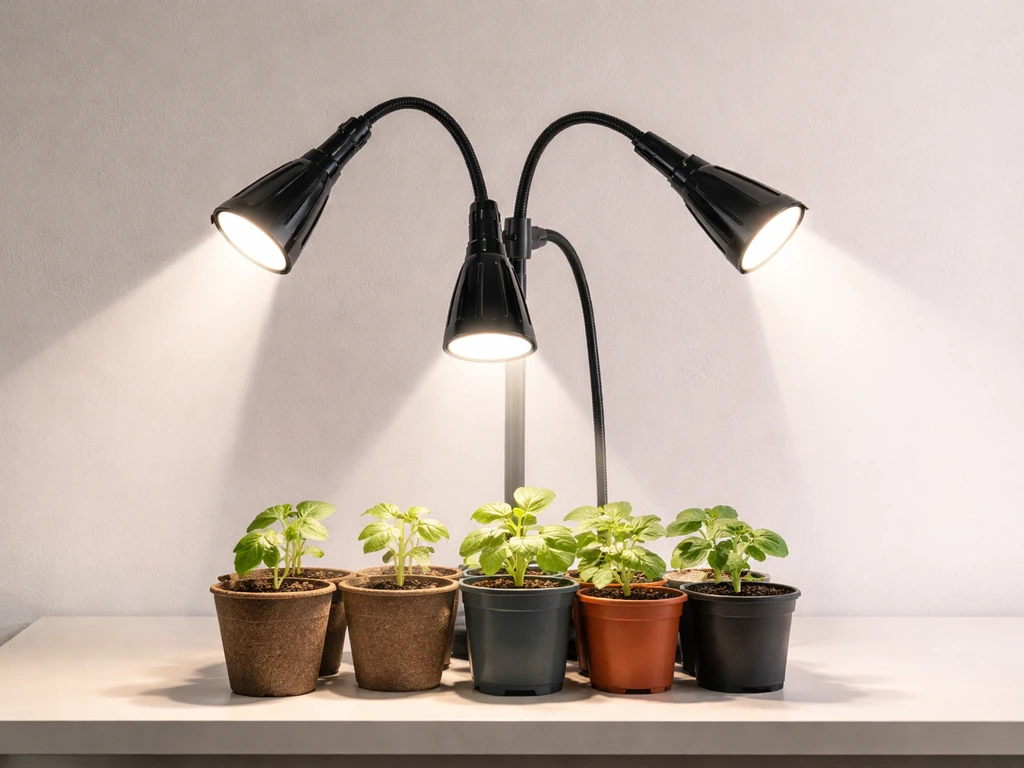
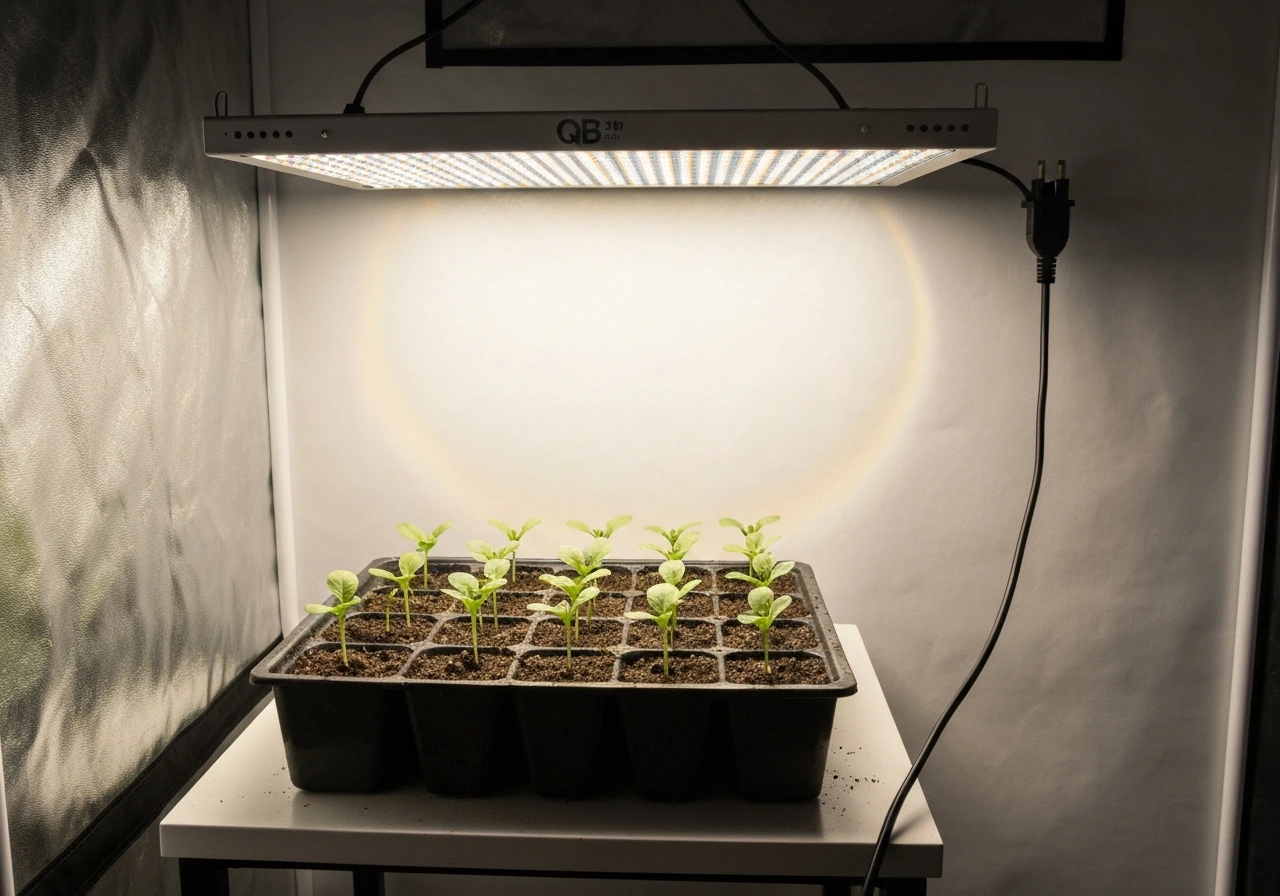
Seedlings need gentle, even light, not intensity. A QB-style board running at 40–60% dimming, positioned 24–30 inches above the tray, is ideal. Look for full-spectrum white LEDs (3000K–3500K) with no UV add-on active at this stage. For a standard 2x4 tray setup, a 120–200W QB board (actual draw) at dimmed output is plenty. The Kingbrite QB288 with Samsung LM301H diodes at 3500K is a consistent performer here: good color temperature for germination and vegging, even spread, and a well-documented driver. For seedling shelves specifically, a 60W QB-style bar light with 3000K LEDs at 18 inches gives roughly 200–250 µmol/m²/s at the canopy, which is right in the target range.
Vegetative growth
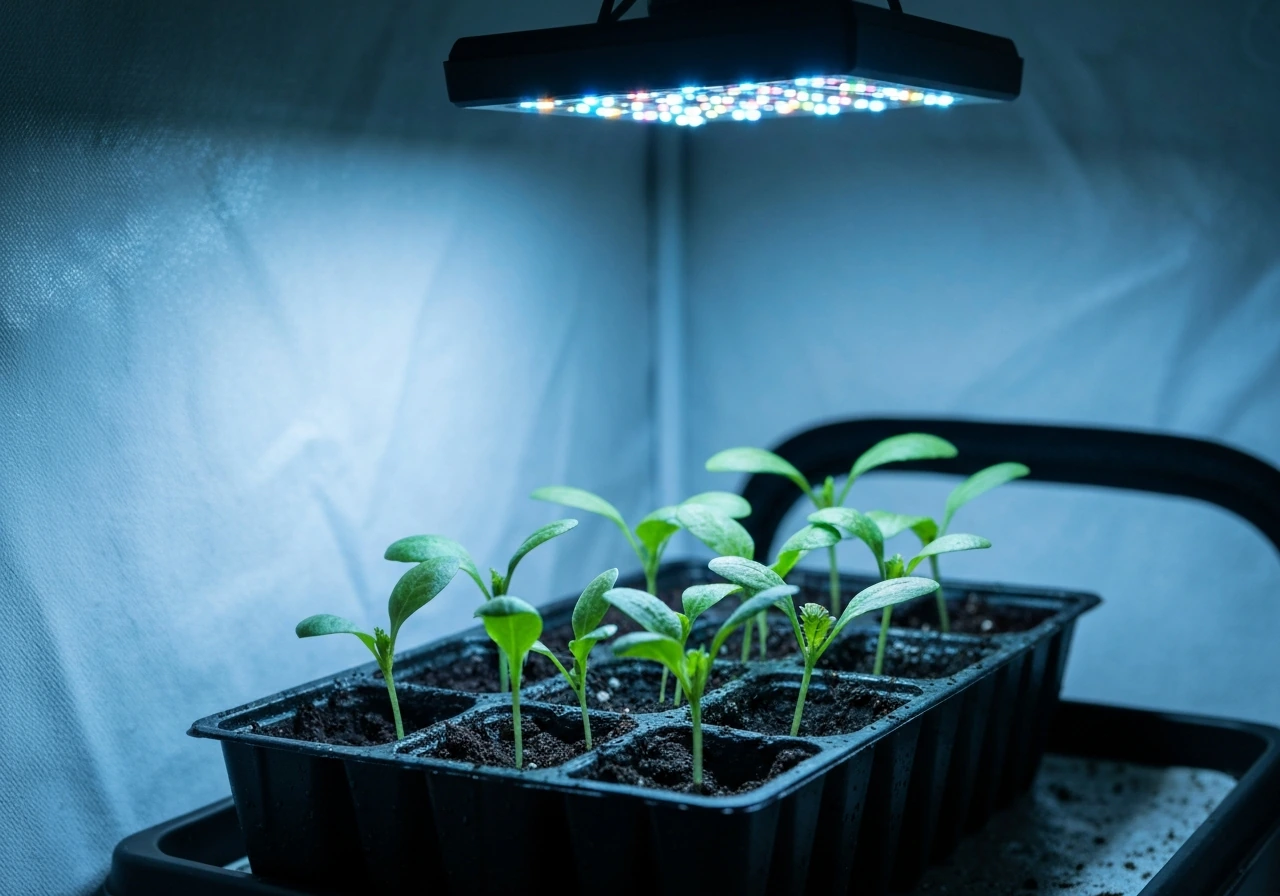
Veg plants want 400–600 µmol/m²/s PPFD and benefit from a bluer spectrum (4000K–5000K boards or a 3500K with blue-channel supplementation). A 240W QB288-style board from a verified supplier like Kingbrite covers a 2x4 foot footprint well in veg at 18–24 inches, typically delivering 500–700 µmol/m²/s at center when the driver is running at 75–80% capacity. That headroom means you can push it harder in bloom without thermal stress.
Flowering and bloom
Bloom needs higher PPFD (700–1000+ µmol/m²/s for light-hungry crops) and warmer spectrum (3000K or 3500K with added 660nm red). The QB288 format with Samsung LM301H plus Epistar 660nm is a well-established combination for exactly this: the 660nm channel targets the red absorption peak in chlorophyll without adding heat the way HPS does. At full power, a 240W board of this type typically produces around 550–650 µmol/s PPF, which at 18 inches over a 2x4 coverage area lands you in the 700–900 µmol/m²/s range at canopy center. For a 3x3 tent in bloom, step up to a 320–480W fixture or two 240W boards.
Small tents and shelf grows
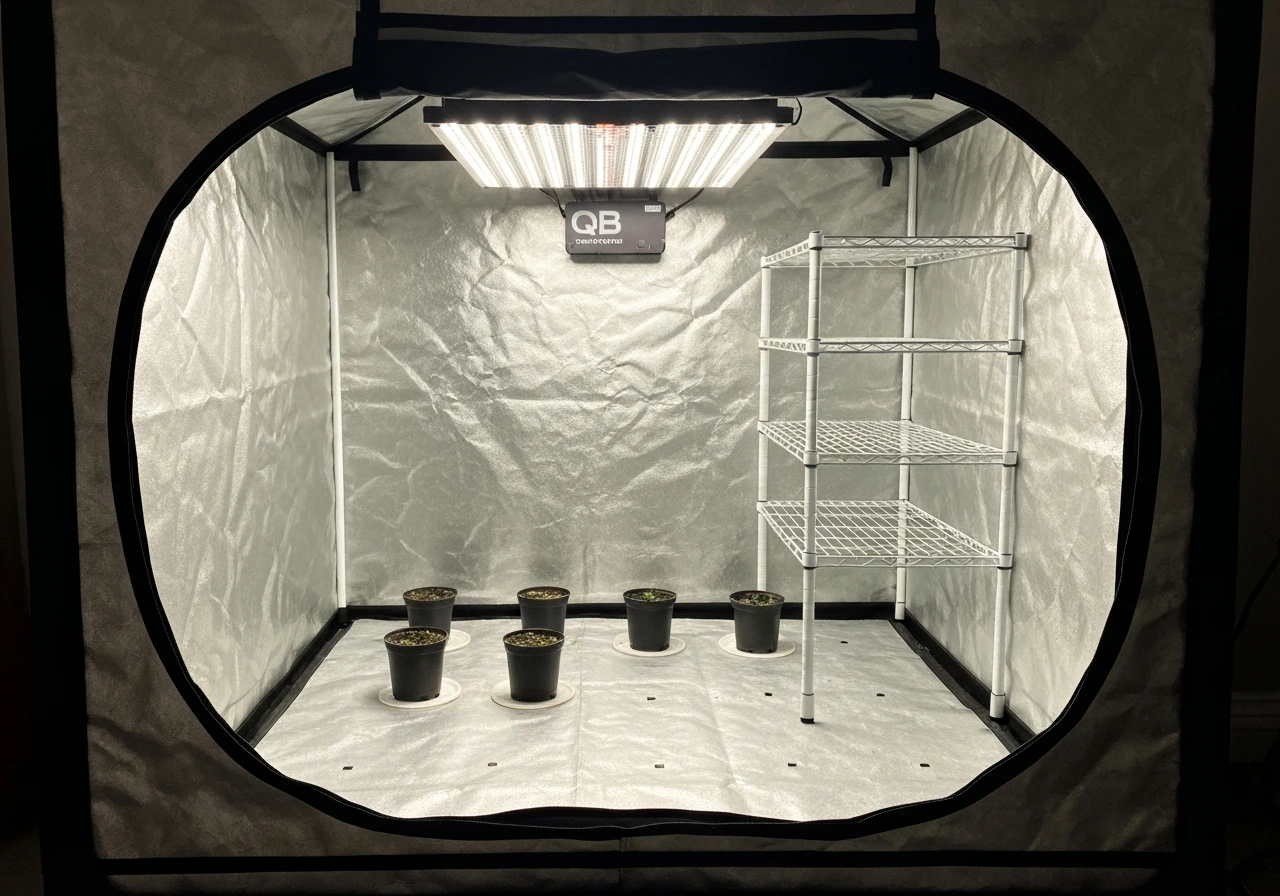
For a 2x2 tent, a single 100–120W QB board is enough. For a 4x4, plan for 400–480W of actual draw across one or two fixtures. Shelf grows (like a wire rack with multiple tiers) benefit from narrow bar-style lights rather than square boards because you can get the fixture closer to the canopy. Look for bar lights with 3000K or 3500K full-spectrum LEDs rated at 30–60W per bar, positioned 8–12 inches above plants.
Best value and cutting through watt claims
The best-value zone on AliExpress for serious grows is the 200–480W QB-style board category with a named Samsung diode and Mean Well driver. You can regularly find 240W kits from suppliers like Kingbrite in the $80–$130 range (prices vary by promotion cycles, so check current listings), which undercuts branded equivalents by 40–60%. The catch is that you're often buying a kit that requires assembly of boards, heatsink, and driver, not a plug-and-play fixture. If that's not your thing, fully assembled options from the same supplier tier exist at a $20–$40 premium.
For pure plug-and-play at a budget, the 150W Samsung LM301B + Osram 660nm boards (like the Casyoo QB288 format) are a frequent recommendation in hobbyist communities. These typically claim around 2.1 µmol/J efficacy, which is accurate in our experience at rated power. That's not class-leading, but it's honest and consistent. Where value breaks down is in the sub-$40 "blurple" or unnamed-diode panels: their real PPF is usually 30–50% lower than claimed, they run hot, and the drivers often fail within a season. Don't chase the lowest price in that category.
If you're comparing AliExpress purchases to what's available through major retail platforms, it's worth checking our Amazon LED grow light review to see how the price-to-performance gap actually looks when you factor in warranty and shipping convenience.
Spectrum and design: QB vs full-spectrum vs UV/IR add-ons
The three main categories you'll encounter on AliExpress are QB-style boards, multi-bar full-spectrum fixtures, and panels with UV/IR supplemental channels. Each has real trade-offs.
QB-style boards
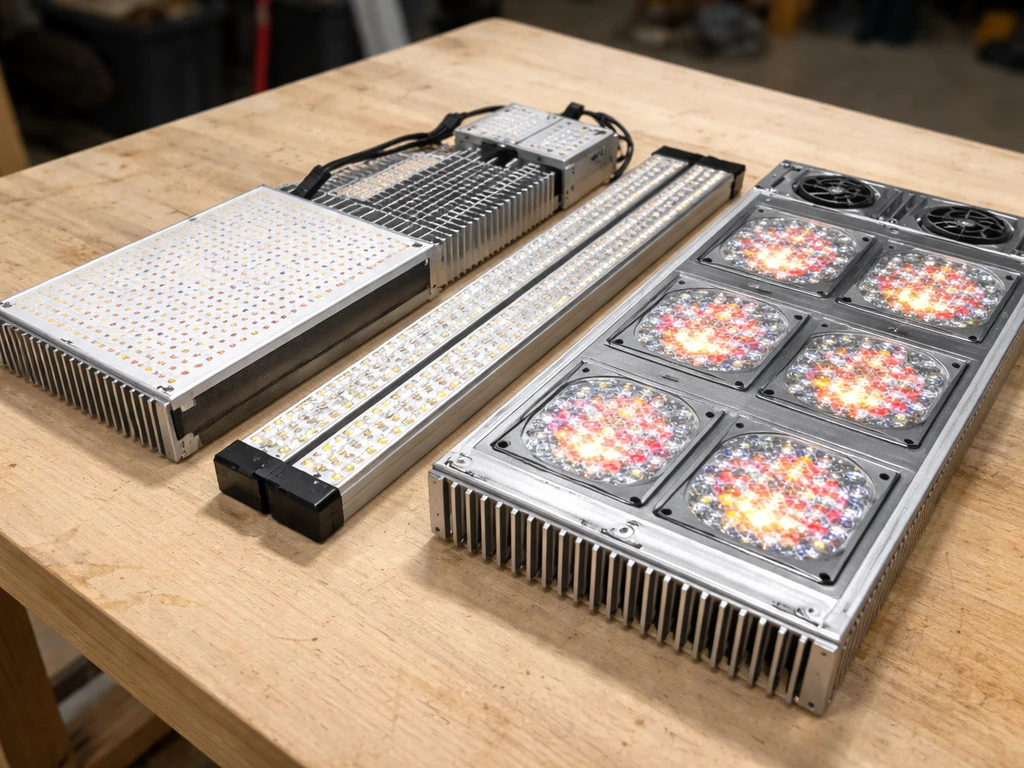
Quantum board designs pack high-density diodes on a single large board or a few tiles. They run cool because the large surface area dissipates heat without fans. The Samsung LM301H + Epistar 660nm combination is effectively the industry standard at the mid-price tier, offering a clean warm-white spectrum with a red boost. These are excellent all-rounders for veg and bloom. Their weakness is that the large square shape doesn't distribute light as evenly over rectangular canopies as a multi-bar design would.
Multi-bar full-spectrum fixtures
Bar-style designs spread multiple light strips across the coverage area, which improves uniformity significantly. A 6-bar or 8-bar fixture over a 4x4 tent can achieve much tighter PPFD uniformity (within 15–20% across the footprint) compared to a single QB board where edge PPFD can drop 40%+ versus center. The trade-off is complexity: more connectors, more potential failure points, and slightly more heat management required per bar. Look for bars with integrated aluminum channels and passive cooling rather than relying on active fans.
UV and IR add-on channels
UV/IR supplemental LEDs are the most oversold feature on AliExpress listings. UV at ~365nm carries real photobiological hazard: IEC 62471 compliance is the standard to look for, and eye and skin protection during UV-on periods is not optional. The practical benefit of UV (increased terpene and resin production in some crops) is real but dose-dependent and easy to overdo. IR (730–740nm) supports the Emerson enhancement effect during far-red-triggered transitions. If a listing just says "UV/IR included" with no wavelength specifics and no safety compliance mention, treat it as a marketing label rather than a functional feature. Listings that specify channel wattage, wavelength, and dimming range for UV/IR separately are the ones worth taking seriously.
| Light type | Best for | Coverage uniformity | Price range (actual draw) | Key watch-out |
|---|---|---|---|---|
| QB-style board (Samsung + 660nm) | Veg and bloom, 2x2 to 3x3 | Moderate (center-heavy) | $80–$150 for 240W kit | Assembly may be required |
| Multi-bar full-spectrum | Bloom, 3x3 to 4x4 tents | High (even spread) | $120–$250 for 400W | More connectors, check bar quality |
| UV/IR add-on panels | Specialized bloom enhancement | Variable | $100–$200+ | Safety compliance (IEC 62471) and real wavelength specs needed |
| Budget blurple/unnamed diode | Not recommended | Poor | Under $40 | Inflated specs, thermal failures common |
If you want a deeper look at how branded full-spectrum options compare, the Agrobrite grow lights review gives a useful baseline for what a mid-tier established brand delivers, which you can use as a benchmark against AliExpress alternatives.
Build quality, heat, and long-term reliability
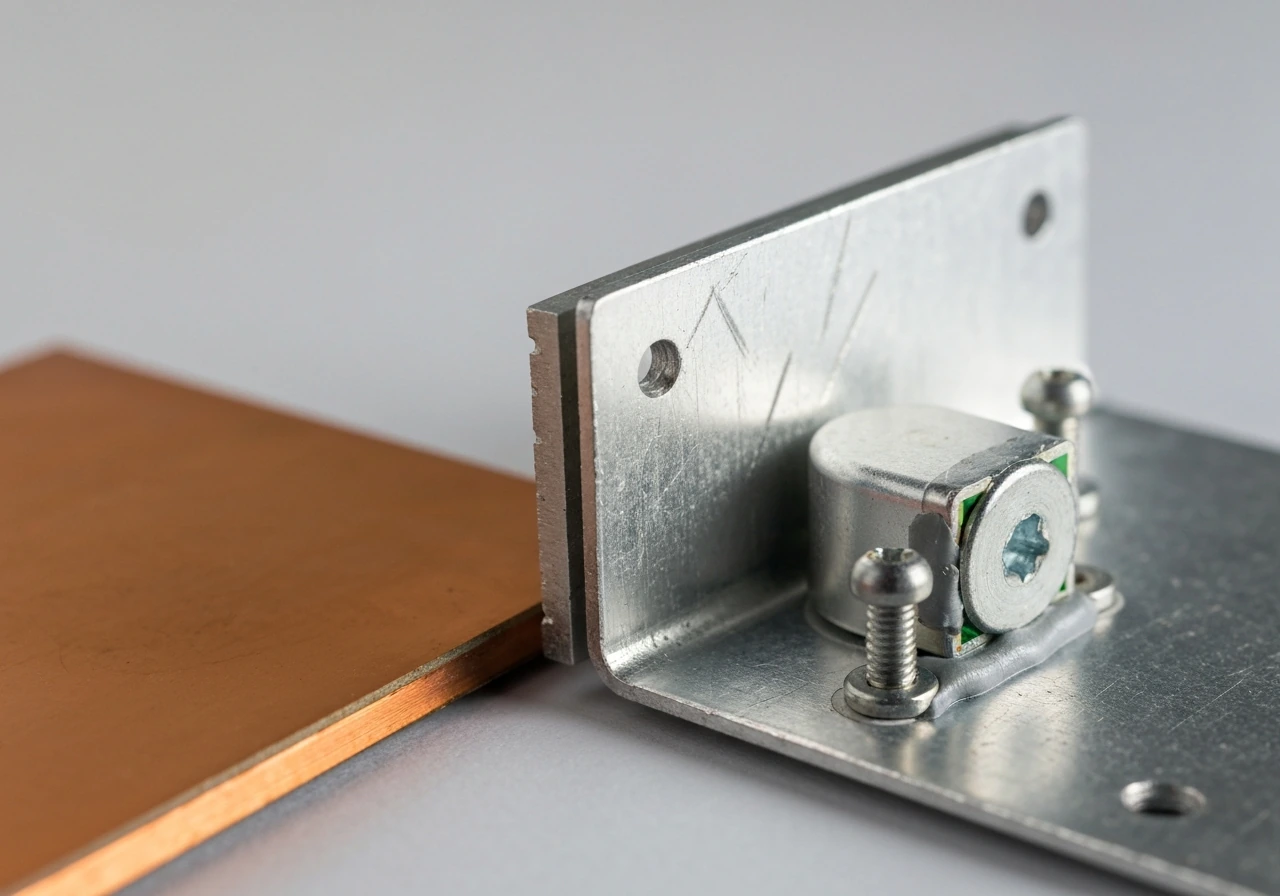
Thermal management is where budget AliExpress lights fail most often. Thin stamped aluminum heatsinks (under 10mm) can't pull heat away from diodes fast enough at full load. Look for heatsink thickness of 15mm or more in QB kit specs. Some listings actually publish this (Kingbrite's QB288 listings have cited 15mm heatsink thickness), which is the kind of concrete detail that separates serious sellers from copycats.
Driver placement matters too. A driver mounted directly to the heatsink runs hotter and can throttle output. Better designs keep the driver separate (an external hanging driver or one mounted away from the board). Passive cooling across the board is fine for QB designs up to 480W if the heatsink is properly sized. Active fans on budget panels are often undersized and fail within a year of constant operation.
On electrical safety: check for CE, RoHS, or ETL certification. UL listing is rare on AliExpress imports but is the gold standard for North American use. CE is the minimum acceptable floor. Listings without any certification mark are using unlisted components, which creates fire and electrical risk. This isn't alarmism; it's a real issue with the lowest-priced panels.
Solder joint quality is hard to assess from a listing photo, but you can request the seller send close-up photos of the board. Uniform, shiny solder joints with consistent spacing around each diode are a good sign. Cold joints (dull, lumpy solder) cause intermittent failures and diode dropouts over time. If the seller can't or won't provide board photos, move on.
For a comparison point on what mid-market build quality looks like from a named brand, our Aglex grow light review covers a brand that sits at the boundary between direct-import and retail-branded, which is useful context when assessing AliExpress listings at similar price points.
AliExpress vs Alibaba: which platform to buy from
The two platforms serve different buyers. AliExpress is optimized for individual retail purchases with buyer protection built in. Alibaba is a B2B wholesale platform where most listings assume you're ordering in quantity, but individual orders are possible from many sellers. For a hobbyist buying one or two lights, AliExpress is usually the right starting point. If you're buying 10+ units or want to negotiate a custom spec (board color temperature, driver model, dimming range), Alibaba gives you more flexibility.
Trade Assurance on Alibaba is meaningful protection: it provides a mechanism to reclaim payment if order terms aren't met, and includes an "Easy Return" option for defective products in eligible countries. For grow lights with a 1-year warranty claim (which is common on Trade Assurance listings), that warranty is backed by Alibaba's AfterSales process rather than just the seller's word. That said, return shipping costs for large fixtures are real, and enforcement takes time. Don't rely on returns as your primary quality filter: vet the seller first.
Our Alibaba LED grow light review goes deeper on seller vetting and Trade Assurance mechanics specifically for grow light purchases if you want more detail on the Alibaba side of this.
How to vet a seller on either platform
- Check store age and transaction volume: 2+ years in operation and 100+ completed orders in the grow light category is the minimum bar.
- Read the most recent negative reviews, not the average score. Look for patterns: dead-on-arrival units, mismatched specs, or unresponsive support.
- Verify that the seller publishes actual driver model numbers, not just "high-quality driver."
- Confirm certification marks (CE minimum, ETL or UL preferred for North American buyers) and ask for documentation if not shown.
- Ask whether the warranty covers boards and driver separately (good listings distinguish these, since the Mean Well driver often has its own 5-year warranty).
- For Alibaba, filter by Trade Assurance enabled and "Easy Return" eligible if your country qualifies.
Shipping timelines vary widely. Standard AliExpress shipping from China takes 15–35 days. AliExpress Premium Shipping (uses express couriers) cuts that to 7–15 days but adds cost. For Alibaba wholesale orders, freight shipping dominates and timelines extend to 4–8 weeks by sea. Plan accordingly if you're working with a planting schedule.
It's also worth knowing that some AliExpress sellers have parallel storefronts on more mainstream platforms. Our Ankace grow light review is a good example of a light that straddles that retail-to-direct-import boundary, giving you a sense of how the same product tier performs when sold through different channels.
Common mistakes and a quick decision checklist
Mistakes that cost people money
- Buying on marketing wattage ("1000W LED") rather than actual wall draw: a fixture claiming 1000W that draws 100W will never cover a 4x4 tent in bloom.
- Sizing for coverage area at seedling PPFD levels, then running the same light for bloom and wondering why flowering is weak: bloom needs 2–3x the PPFD of seedling stage.
- Skipping driver verification: a cheap off-brand driver can fail within 6 months and may take the diodes with it if it fails badly.
- Ignoring thermal design because the listing says "passive cooling": passive cooling only works if the heatsink is properly sized for the driver output.
- Paying a premium for UV/IR marketing language without confirming actual wavelengths, channel power, and safety certification.
- Choosing the wrong spectrum for the growth stage: pushing high-blue spectrum during late bloom, or using a heavy-red spectrum during seedling stage, produces measurably worse outcomes.
- Not accounting for return logistics before ordering: a 5kg fixture returned to China can cost more than the fixture itself in shipping.
Quick decision checklist before you order
- Does the listing state actual wall draw in watts (not "equivalent" watts)?
- Is PPF (µmol/s) or PPFD at a stated height published?
- Is the driver model named (Mean Well HLG or ELG series preferred)?
- Is the diode brand and model specified (Samsung LM301B/H, Osram, Cree)?
- Is there at least CE certification, with documentation available on request?
- Does the seller have 2+ years of operation and a track record in grow lights specifically?
- Have you confirmed the fixture's coverage area matches your actual tent or grow space footprint at the hanging height you'll use?
- If ordering from Alibaba, is Trade Assurance and Easy Return enabled for your country?
- Have you accounted for total cost including shipping, customs duties, and return cost if defective?
- If UV/IR channels are claimed, does the listing specify wavelength, channel wattage, and IEC 62471 compliance?
If you can check all ten of those boxes, you're in a good position. If a listing fails three or more, move to the next seller. The good options exist; they just require a few extra minutes of vetting upfront.
One final note: if you're open to established brands that started as direct-import suppliers and have since built a retail presence, they're worth comparing directly against the raw AliExpress market. Our Agrobrite grow lights review is one reference point, and the broader landscape of what makes a verified mid-tier brand worth the premium over a raw import is a theme we return to across the site. The short answer is: for one-off hobbyist purchases, a well-vetted AliExpress QB kit from a name like Kingbrite often wins on value. For hands-off reliability with easier returns, a branded retail light earns its markup.
FAQ
I keep seeing “1000W” claims on AliExpress grow lights. What should I check instead to confirm the real output?
If the listing does not provide PPF (µmol/s) and only shows claimed wattage, you cannot reliably compare it. Instead, verify the actual wall draw, then look for efficacy (µmol/J or µmol/W) and a named driver model. If those are missing too, treat the listing as “specs unknown,” not a deal.
Do I need to evaluate PPFD and efficacy at full power only, or should I check dimmed performance too?
Yes. Use the same dimming position you plan to run in your grow (full, 75%, or 50%) because PPFD, thermal load, and driver efficiency can change with dimming. If a seller only provides specs at full power, your real canopy PPFD at dimmed settings might land noticeably below target.
How can I tell if a QB kit is truly “LM301H quality” when the listing photos look convincing but the specs are vague?
For the diode count and board size, prioritize named LED models (for example LM301H) and a consistent driver rating that matches the fixture’s stated board design. Listings that mix named diodes with an unknown driver model often end up underperforming because the driver limits current.
What’s the most common mistake people make when matching a grow light to their tent size?
Aim for your canopy to receive the PPFD range for the growth stage, then correct for height and distribution. A light that hits 900 µmol/m²/s at center but drops steeply near the edges will create uneven growth, so check the uniformity across the stated coverage area, not just peak numbers.
Why does thermal management matter so much for long-term AliExpress grow light reliability?
Thermal checks in reviews matter because LED lifetime and driver longevity depend on sustained heat. If the seller heatsink thickness is below your baseline, or if there is no driver thermal description, assume performance may be reduced during long runs even if it looks fine right out of the box.
What images should I ask a seller for if I want to verify driver model, wiring quality, and build quality before ordering?
Request close-up photos of the driver label and any internal wiring, not just the outside of the heatsink. Look for a visible driver model number (for example an HLG series code) and clean cable routing with proper strain relief. If they refuse, that’s a practical red flag.
Can I rely on mobile PPFD apps to dial in my AliExpress grow light setup?
If your photometer or app (like Photone) is not calibrated for the exact spectrum, you can still use it for rough trends, but not for fine tuning. For serious adjustments, calibrate to a known reference or use a calibrated quantum sensor method at your hanging height and distance.
If a listing advertises UV/IR channels, how should I evaluate whether it’s actually safe and useful?
Because UV dose can be easy to overshoot, do not run UV “on top of everything” without a safe schedule. Also, look for explicit wavelength (for example around 365nm) and safety compliance language; if the listing is vague, plan on skipping UV or using it at very low duty cycle.
What’s a practical starting setup for seedlings if I’m unsure about exact PPFD at my canopy height?
If you are growing seedlings or clones, start with the fixture dimmed and slightly higher than you think, then lower gradually while monitoring leaf posture. QB-style boards at around 24 to 30 inches above the tray often give a forgiving starting point, especially when using 3000K to 3500K white LEDs.
How strict should I be about CE, RoHS, and UL markings when buying grow lights from AliExpress?
On electrical certification, do not rely on “looks like CE” photos alone. Confirm the marking is present in the product documentation and on the device label when it arrives, and treat listings without any certification marks as higher risk for electrical and fire safety.
Is IP65 enough for a humid grow space, or are there other details I should check?
If your room humidity is high, prioritize an actual moisture rating like IP65 rather than marketing claims. Also consider that ratings are meaningful only if the driver is protected and the connectors are properly sealed, so inspect the mounting and cable entry design once it arrives.
Can I combine two smaller AliExpress QB boards instead of buying one larger one, and will coverage be better?
Yes, but plan for structural spacing. Hanging multiple QB boards over a 2x4 or 3x3 tent often improves uniformity, and it helps you keep each driver within a more comfortable output range rather than pushing one fixture to extremes.
Does using AliExpress Premium Shipping change the risk profile or testing priorities after delivery?
In most cases, faster shipping does not improve build quality, but it can affect return logistics and how quickly you can test. If you choose express shipping, still test immediately for wall draw, flicker, and thermal behavior, since driver failures can show up during the first long run.
For shelf grows, when should I choose bar-style lights instead of QB boards, and what placement rule helps most?
For wiring and placement on racks, bar lights can reduce edge drop because you can position them closer to the canopy tiers. But you must match PPFD expectations to each shelf height, and you may need a staggered layout so every tier receives similar coverage.