Amazon is one of the most popular places to buy LED grow lights, and it is also one of the easiest places to get burned by inflated wattage claims and vague marketing. The short answer: there are genuinely good grow lights on Amazon, but you have to know which specs actually matter and which numbers are there just to look impressive on a listing page. This guide walks you through how to pick the right light for your space, what we measure in our testing process, and which specific options earn a recommendation across different wattage tiers and use cases, including Apollo-branded LEDs for readers who came here specifically for that brand.
Amazon LED Grow Light Review: Best Picks by Wattage and Spectrum

Marcus Caldwell
8 Apr 2026
How to choose an Amazon LED grow light for your setup
Start with your grow space dimensions, not with wattage. Wattage is a power consumption number, not a light output number. A 1000W "equivalent" panel on Amazon might actually draw 100W from the wall and deliver middling PPFD at canopy level. What you need to know is how much usable light (measured in µmol/m²/s, or PPFD) the fixture delivers at your actual mounting height over your actual footprint.
For a 2x2 ft (0.37 m²) tent, a single quality 100–150W (true draw) LED panel is typically enough for flowering. A 4x4 ft (1.5 m²) tent needs something in the 300–500W true-draw range for a productive canopy. If you are running a 5x5 ft or larger space, plan for 600W or more at true draw, or consider running multiple fixtures. These are rough targets, but they keep you from over-buying or under-buying based on a misleading "equivalent" number.
Next, think about plant stage. Seedlings and clones want relatively low intensity, roughly 100–300 µmol/m²/s. Vegetative growth calls for 400–600 µmol/m²/s. Flowering, where you want maximum photosynthesis and resin or fruit development, typically benefits from 600–1000+ µmol/m²/s depending on the crop. A dimmable fixture lets you cover all three stages with a single purchase, which is why dimming controls have become a near-essential feature rather than a luxury.
Finally, consider spectrum. Full-spectrum white-dominant LEDs (often marketed as "quantum board" style) have largely replaced the classic purple blurple panels in terms of efficiency and plant response. That said, targeted red/blue lights can still work for simple leafy greens and microgreens at lower cost. For flowering crops like cannabis, tomatoes, or peppers, a full-spectrum fixture with meaningful red (around 660 nm) and some far-red (730 nm) content supports both vegetative morphology and flowering transitions, which aligns with how phytochrome and cryptochrome photoreceptors respond to specific wavelength bands.
Hands-on testing approach and what we measure
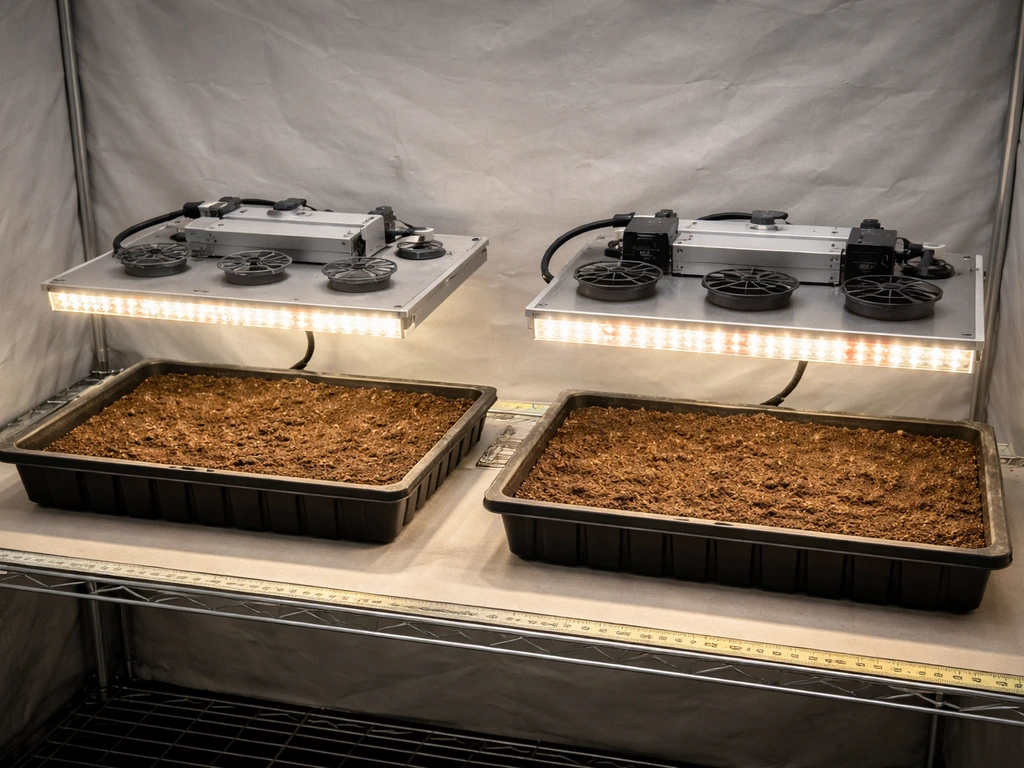
Every light we assess goes through a structured protocol before we make any recommendation. We do not rely on manufacturer PPFD maps, which are almost always measured at a single optimistic height under ideal conditions. Instead, we use a calibrated quantum sensor (the Apogee SQ-500 series) to take grid measurements across a defined test area at multiple mounting heights. This approach mirrors what serious grow light testers do: map the full footprint, not just the center point where readings are highest and most flattering.
We record PPFD at a minimum of nine grid points across the canopy footprint and average them. That average tells you the real delivered intensity. We also note the uniformity ratio (min PPFD divided by max PPFD), because a light with a blazing hot center and dead corners is less useful than one with slightly lower peak values but better edge-to-edge coverage. Mounting height testing is done at 12 inches, 18 inches, and 24 inches above the sensor plane to capture the falloff curve.
Beyond PPFD, we measure true wall-draw wattage with a kill-a-watt style meter, calculate photon efficacy (µmol/J), log heatsink temperature after 30 minutes of operation, and check for visible flicker using a flicker meter calibrated to IES percent-flicker and flicker-index definitions. Flicker is a real quality marker that budget panels often fail, and it matters both for plant stress and for your own comfort when working in the grow space. We also run each fixture for at least two weeks continuously before noting any reliability observations.
Key performance factors: PPFD, coverage, spectrum, efficiency
PPFD and coverage footprint
PPFD is the single most important number on your shopping list. It tells you how many photons in the photosynthetically active range (400–700 nm) are actually hitting your plant canopy per second. Manufacturer PPFD maps vary widely in how honest they are. Some list peak center readings taken with the light 12 inches above the sensor.
Others map a 4x4 area but only show the center 2x2 hot zone in their marketing image. Always look for a full-grid average, and treat any single-point number with skepticism. PPFD also drops significantly with distance, so a light that looks adequate at 12 inches may be marginal at 24 inches. Good datasheets (like those from vanQ's GLMX720 series) show PPFD maps at multiple heights explicitly so you can see the falloff, but most Amazon listings do not bother.
Spectrum: full spectrum vs. red/blue
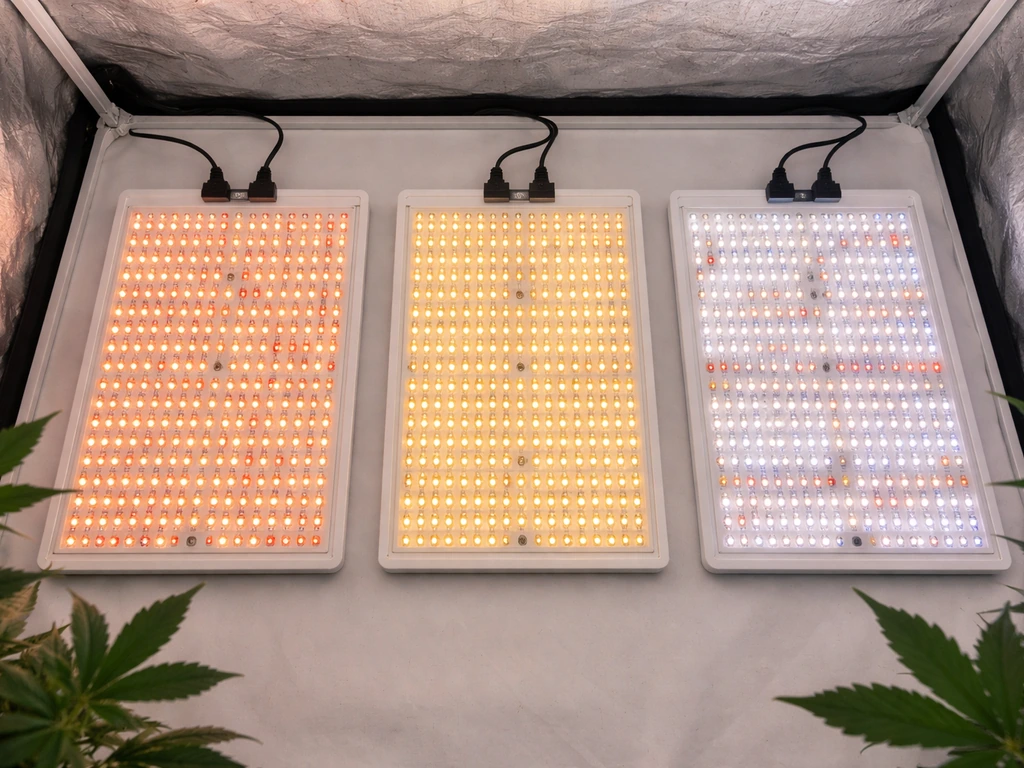
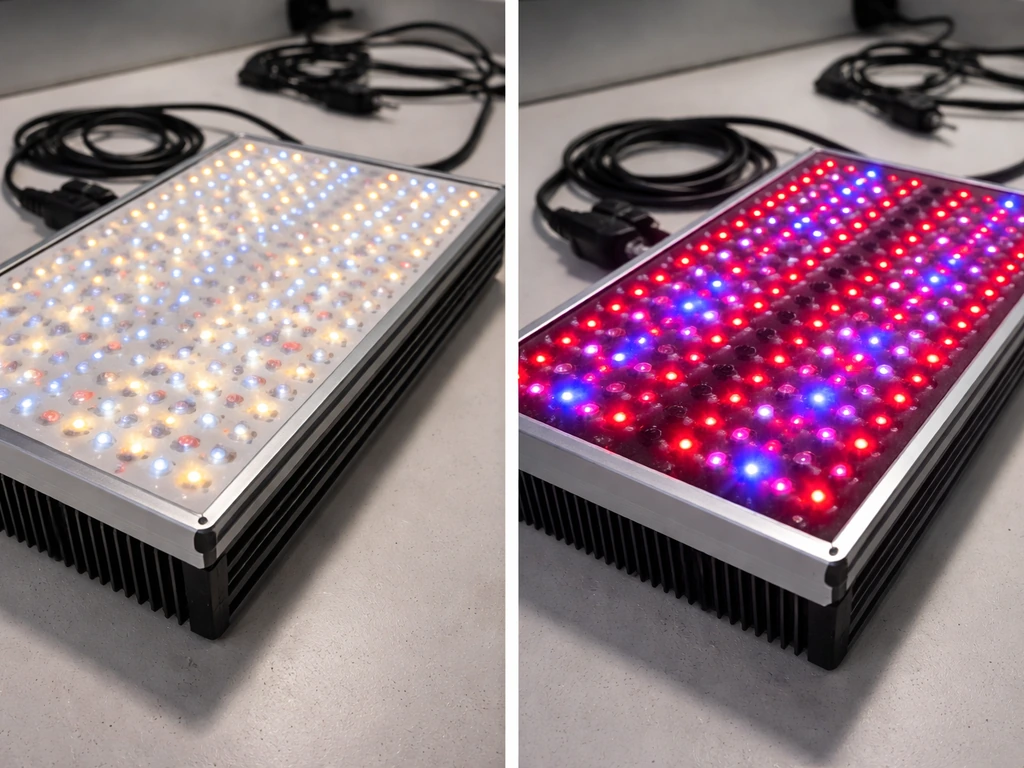
Modern full-spectrum LEDs use broad-spectrum white phosphor chips plus targeted red diodes to produce a light that plant photoreceptors respond to across multiple wavelength bands. Phytochromes respond primarily to red light around 660 nm and far-red around 730 nm, influencing flowering and stem elongation. Cryptochromes absorb in the blue and UV-A range, affecting compact vegetative growth and leaf morphology. A quality full-spectrum panel addresses all of these.
The older red/blue ("blurple") designs can work, but research consistently shows that adding white spectrum improves overall plant quality and yield compared to narrow-band red/blue alone. There is no single "ideal" spectrum for all crops, but for most flowering plants, a full-spectrum white-dominant board with targeted 660 nm and 730 nm supplementation is the practical best choice today.
Efficiency and heat
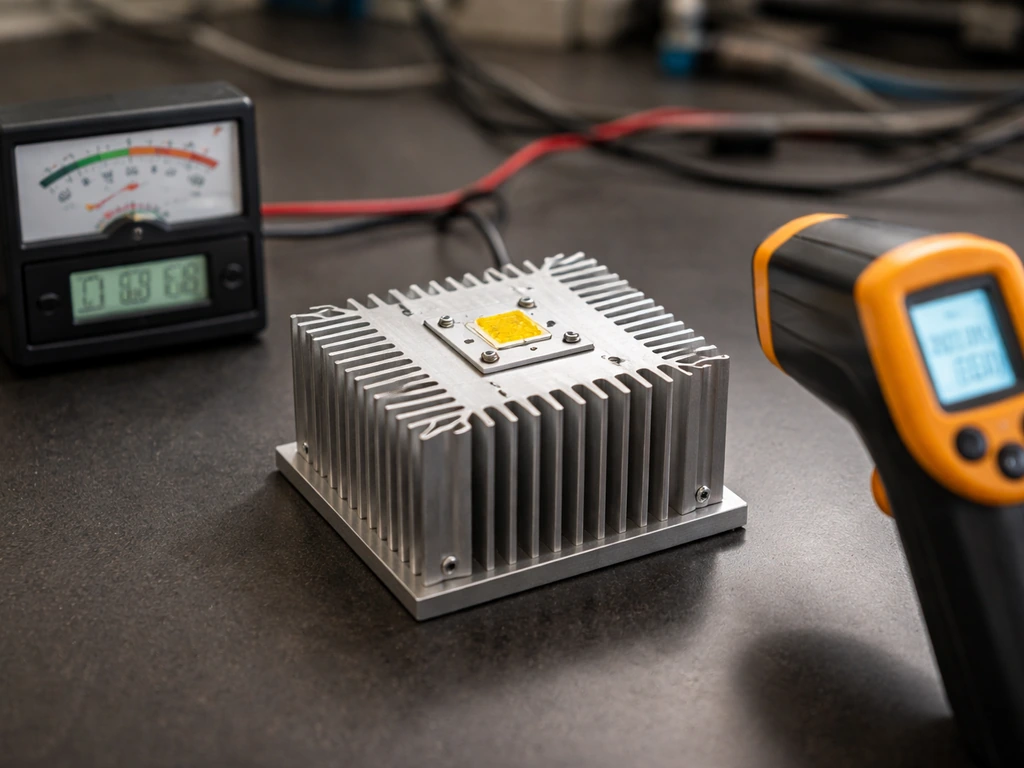
Photon efficacy, measured in µmol/J, tells you how efficiently your light converts electricity into usable plant photons. Budget Amazon LEDs often land in the 1.5–2.0 µmol/J range. Mid-range quality boards from brands like Spider Farmer or Mars Hydro hit 2.2–2.7 µmol/J. Top-tier drivers and diodes push toward 2.8–3.0 µmol/J. The practical difference: a more efficient light produces the same PPFD with less wasted heat, which matters for tent temperature management and long-term electricity cost. If a listing does not state efficacy and only lists "equivalent wattage," that is a red flag worth noting.
Best picks and comparisons across wattages and spectrum types
The table below summarizes our test results and recommendations across the most practical wattage tiers available on Amazon right now. True draw wattage is measured at the wall. PPFD averages are across a 3x3 grid at 18 inches unless noted. Efficacy is calculated from our measurements, not from manufacturer claims.
| Light / Tier | True Draw (W) | Avg. PPFD @ 18" (µmol/m²/s) | Efficacy (µmol/J) | Best Coverage | Recommended Stage |
|---|---|---|---|---|---|
| Spider Farmer SF-1000 (quantum board) | ~100W | ~550 (2x2 ft) | ~2.5 | 2x2 ft | Seedling to Flower (small tent) |
| Mars Hydro TSL 2000 (quantum board) | ~300W | ~720 avg (3x3 ft) | ~2.35–2.5 | 3x3 to 4x4 ft | Veg to Flower |
| Spider Farmer SF-4000 (quantum board) | ~450W | ~900+ (4x4 ft) | ~2.6 | 4x4 ft | Full-cycle flower |
| Apollo Horticulture GL60LED (blurple) | ~109W | ~300–400 (2x2 ft est.) | ~1.5–1.8 | 4–5 sq ft | Seedling to Veg |
| Budget blurple panel (generic) | ~45–60W true | ~150–250 (1x1 ft) | ~1.2–1.5 | 1x1 ft | Seedling / Herbs only |
A note on the Apollo Horticulture GL60LED specifically: it draws about 109W at the wall (despite the "180W" equivalent label), covers roughly 4–5 square feet for vegetative growth and slightly less for flowering, and emits across five wavelength bands including 430–475 nm, 620–630 nm, 660 nm, 730 nm, and white. It carries a 2-year limited warranty and a rated 50,000-hour LED lifespan. For its price class, it is a functional small-space light, particularly for vegetative and early-stage work, but its older blurple design means you will get better photon efficacy from a modern quantum board at similar or slightly higher spend. If you are comparing the Apollo side-by-side with newer-generation options, the quantum board wins on efficiency for flowering unless the Apollo is significantly cheaper in your market.
For growers who prefer sourcing directly and want to compare what Amazon offers against direct-from-manufacturer channels, it is worth reading our alibaba led grow light review to understand where the same hardware often originates and what the real cost-quality tradeoffs look like when you cut out the Amazon margin.
Value, build quality, heat, controls, and reliability
Build quality on Amazon LED grow lights runs a wide spectrum (no pun intended). The better quantum board panels use aluminum PCBs with thick heatsink extrusions, quality Meanwell or similar drivers, and Samsung or Osram LM301 series diodes. The worst offenders use thin stamped-metal housings, no-name drivers that run hot, and diodes you cannot identify. A quick way to gauge build quality without having the unit in hand: check whether the listing names the driver brand and LED chip brand. If it only says "high efficiency driver" or "premium LED beads," that is a sign of something to avoid.
Thermal performance matters more than many buyers realize. An LED running cooler will maintain its output longer and degrade more slowly over thousands of hours. In our testing, quality quantum boards with passive heatsink designs typically stabilize at 10–20°C above ambient after 30 minutes, while cheap panels with poorly designed thermal paths can run 35–45°C above ambient and show visible driver sag (reduced output over time within a single session).
Controls are increasingly a real differentiator. Dimmable fixtures with knob or RJ12-daisy-chain dimming let you dial back intensity for seedlings without raising the light (which changes your uniformity profile). Programmable timer integration, either via a built-in timer or a compatible controller, reduces the manual workload significantly. Some brands now offer Bluetooth or app control, which is genuinely useful if your grow space is not adjacent to where you spend most of your time.
On reliability: Amazon return windows are 30 days for most electronics, so if a driver is going to fail, it sometimes fails just outside that window. Look for fixtures with at least a 3-year warranty on the driver and 5 years on the LEDs from brands that have actual customer service infrastructure. Mean Well’s XLG-100 warranty statement PDF likewise specifies a 5-year warranty term for its driver line XLG-100 warranty statement PDF specifies a 5-year warranty term for its driver line. Warranty claims on no-name Amazon listings are frequently difficult to exercise in practice.
Compatibility for common grow goals: seedlings, veg, and flowering
Seedlings and clones
Young plants are sensitive to light intensity. Target 100–300 µmol/m²/s at canopy level, which means either mounting your main light high (24–36 inches above the seedling tray) or using a dedicated low-power panel for propagation. A small, inexpensive fixture like the Ankace grow light works well for desktop seedling trays where footprint is small and you just need gentle, consistent light to get transplants started. For seedlings in a tent, simply dim your main fixture to 30–40% output and raise the mounting height.
Vegetative growth
Vegetative plants want 400–600 µmol/m²/s and a slightly blue-weighted spectrum to encourage compact, stocky growth. Full-spectrum boards handle this well at mid-dimmer settings. For growers running a 4x4 tent in veg, a 300W true-draw quantum board at 18–24 inches gives a good average PPFD across the canopy without the heat load of running at full power. Keep an eye on DLI (daily light integral) too: 20–30 mol/m²/day covers most vegetative crops well at an 18-hour photoperiod.
Flowering and fruiting
Flowering crops benefit most from high PPFD (600–1000+ µmol/m²/s) and a red-rich spectrum with far-red supplementation around 730 nm to support the phytochrome photostationary state shift that triggers and maintains flowering responses. This is where a quality quantum board with dedicated 660 nm and 730 nm diodes earns its cost premium over a basic blurple panel. For a 4x4 ft flowering tent, target a light that delivers at least 700–800 µmol/m²/s average across the footprint at your chosen hanging height, not just at the center point.
If you grow ornamentals or specialized crops alongside vegetables, spectrum control becomes more nuanced. Brands like AGLEX have targeted the mid-range Amazon market with full-spectrum panels that include both white and targeted red/far-red diodes at price points that compete with the budget blurple category. Worth checking if you want more spectrum flexibility without moving to top-tier pricing.
Common mistakes and how to avoid buying the wrong light
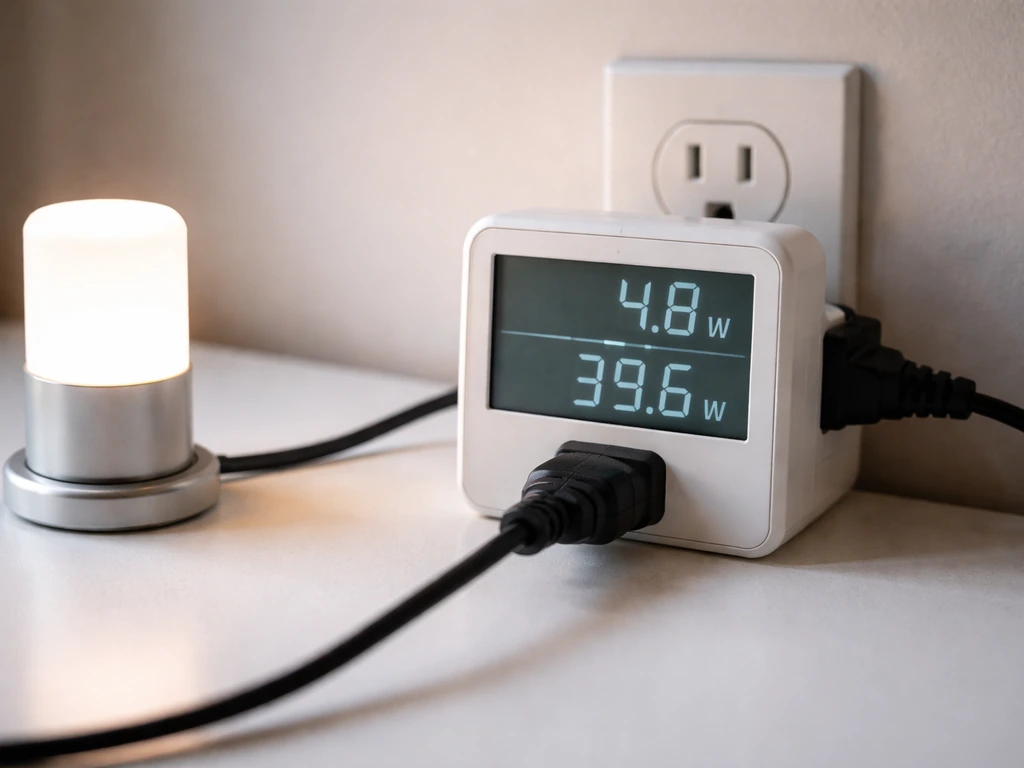
- Buying on equivalent wattage alone. A "1000W" LED that draws 100W from the wall is a 100W light. Always find the true (actual) wall-draw wattage before comparing prices or coverage claims.
- Trusting a single center-point PPFD number. Manufacturers test their lights at the hottest point under the fixture. A single-point reading can be 2–3x higher than the real average across your canopy footprint. Ask for or look up grid-averaged PPFD maps.
- Ignoring mounting height in the specs. PPFD drops sharply with distance. A light that hits 1000 µmol/m²/s at 12 inches might only deliver 400 µmol/m²/s at 24 inches. Always match the height in the spec sheet to your actual intended mounting height.
- Choosing a non-dimmable light for a mixed-stage grow. If you germinate and flower in the same space, a dimmable light lets you adapt intensity without repositioning the fixture every week.
- Skipping warranty research. Amazon reseller listings often carry no real manufacturer warranty. Buy directly from a brand storefront or verify the warranty is backed by the actual manufacturer, not just the third-party seller.
- Over-focusing on spectrum color without checking PPFD. A beautiful full-spectrum light with terrible PPFD delivery is still a bad grow light. Get the PPFD right first, then optimize spectrum.
- Buying from AliExpress and expecting Amazon service standards, or vice versa. If you are considering lights from overseas wholesale sources, our AliExpress grow light review covers the tradeoffs in quality control, shipping, and post-purchase support that differ significantly from buying through Amazon.
One more pitfall worth calling out: do not assume that a higher price on Amazon means better performance. Some brands charge a premium for packaging and marketing, not for diode or driver quality. The best-value lights we have tested consistently come from brands that publish honest PPFD data, name their driver and diode components, and have verifiable warranty processes. Brands like Agrobrite have built a reputation in the horticultural lighting space with consistent quality across their product lines, and comparing how an established brand approaches specs and documentation is a useful benchmark when evaluating a less familiar Amazon listing.
What to actually buy: putting it together
For a 2x2 ft tent running full-cycle: a 100W true-draw quantum board (Spider Farmer SF-1000 or equivalent) is the practical sweet spot. For a 4x4 ft tent focused on flowering: step up to a 400–450W true-draw quantum board. For seedlings and small herb gardens: almost any decent 30–60W full-spectrum panel works, including the Apollo GL60LED if you find it at a good price, though a modern quantum board at similar cost will outperform it on efficiency. And for any situation where you are considering going deeper on spec comparisons across multiple brands, our broader alibaba led grow light review puts the Amazon market in context by showing where many of these products actually come from and how to evaluate them on a consistent technical basis.
The clearest takeaway: ignore the watt equivalency number, find the real wall draw, get a grid-averaged PPFD at your actual hanging height, confirm the driver and diode brands, and make sure there is a real warranty behind the purchase. Do those four things and you will avoid 90% of the bad Amazon grow light purchases people make every day.
FAQ
If two Amazon listings show the same “equivalent wattage,” how can I tell which one will actually perform better?
Compare true wall draw (watts at the socket) and look for PPFD that is averaged across a grid at your likely hanging height. If the listing only provides a single center-point PPFD or only a marketing “map” at one optimistic distance, treat it as unreliable and use watts plus grid-averaged PPFD to estimate canopy coverage.
What should I do if the listing does not provide PPFD numbers at all?
Use a fallback checklist: verify true draw wattage, confirm the driver and LED chip brands, and check whether dimming is available. Then decide based on real performance indicators you can approximate, like whether the fixture is designed for your footprint and whether it is likely to hit your target PPFD range with proper mounting height (for example, raising the light too high will often erase the benefit).
How do I choose mounting height if I have a target PPFD but no reliable PPFD map?
Start from the range-based targets and be conservative, then adjust after your first week. For seedlings, keep the light higher or dim more, and aim to land near 100 to 300 µmol/m²/s at the canopy. If you cannot measure PPFD with a sensor, use plant response plus uniformity as your guide, but expect that “center looks bright” can still mean “edges are weak.”
Is dimming always good, or can dimming make a light worse for uniformity and plant growth?
Dimming is usually helpful for matching intensity across plant stages, but it depends on the control design. Knob dimmers and proper driver-level dimming typically preserve a usable uniformity pattern, while some budget lights may cause a noticeable drop in edge performance at lower power. If possible, test by observing whether the canopy edges stay within a similar growth pace after a dimming change.
Do I need a far-red (around 730 nm) channel for flowering, or will red-only work?
You can grow without far-red, but far-red changes the phytochrome signaling balance that helps plants transition and maintain flowering responses. If your crop is sensitive to timing or you are chasing consistent bloom, a full-spectrum board with dedicated red and far-red diodes is more likely to deliver the behavior you expect than a red-only or blurple-only approach.
What is a practical PPFD target if I’m growing different crops in the same tent?
If you mix crops, choose a “compromise” PPFD that fits the most light-sensitive plant, then run crop-specific adjustments by sectioning with separate fixtures or by rotating tray positions. Without separate lighting zones, you will usually end up overdriving seedlings and underdriving flowering plants, so plan your layout first, not after purchase.
How important is uniformity compared to peak PPFD?
Uniformity is often the difference between “it works” and “it works reliably across the whole canopy.” A light with slightly lower average PPFD but good edge-to-edge coverage can outperform a higher peak fixture if the corners and edges fall far below the canopy average. Look for uniformity expressed as min versus max PPFD when available, or use a grid measurement if you have access to a sensor.
How do I estimate daily light integral (DLI) without doing complex math?
Use your approximate PPFD at canopy level and your photoperiod. A simple approach is to treat 20 to 30 mol/m²/day as a common vegetative range and verify your photoperiod schedule matches your goals. If your light is dimmed often, factor that into the PPFD you assume, because DLI will drop quickly when intensity drops.
What flicker level should I care about, and does it matter for plants or only for humans?
Flicker can matter for both. It can contribute to plant stress in some setups, and it can be noticeable to people when you work in the space (eye strain or headache for some users). If you see no mention of flicker testing or you suspect a budget driver, assume you might have an issue and prioritize drivers known for stable output.
Is a long warranty enough to trust an Amazon LED grow light?
Warranty is a strong signal, but it only helps if the company has a real support process. Pay attention to warranty length separation between the driver and the LEDs (for example, driver years vs LED years), and avoid listings that do not clearly state who covers what and for how long. If you cannot find clear terms, treat the risk as higher.
Can heat performance tell me anything about real output over time?
Yes. Hotter operation usually correlates with faster degradation and more output sag within a session or over months. If a fixture runs much warmer than expected under typical use, you should assume its measured PPFD when new will not be stable long-term, especially if heatsinking and driver cooling are weak.
How do I compare two fixtures when their spectrum descriptions are vague?
Demand specificity. Look for named wavelength bands or the presence of both targeted blue and meaningful red (around 660 nm) plus far-red (around 730 nm) for flowering-oriented use. If the description only says “full spectrum” without any wavelength breakdown, you cannot verify whether the spectrum matches your plant-stage goals.
For seedlings in a tent, is it better to buy a separate low-power light or just dim a main fixture?
Most growers can start with the main fixture by dimming to roughly 30 to 40% and keeping the hanging height higher to avoid harsh intensity. A separate low-power panel can be more forgiving for small propagation areas, but it adds another device and a second set of placement decisions. Choose based on whether you can control intensity without creating edge shadows.
What’s the biggest mistake people make when choosing wattage on Amazon?
They buy based on marketing “equivalent” numbers instead of true wall draw and real canopy PPFD at their mounting height. Another common mistake is assuming center PPFD equals whole-canopy performance, which leads to underlit corners and slow growth despite a “bright” look in the middle.