Updayday grow lights are a mixed bag worth taking seriously if you're on a tight budget, but only if you go in with realistic expectations. The lineup spans several models (the UD-2500 at 270W, the UD-4000 and UU4000 both at 400W, the UA5000 at roughly 500W+, and a smaller 230W entry-level panel) with fanless aluminum bar designs, built-in timers, dimmable output, and multi-mode spectrum switching.
Updayday Grow Light Review: Worth Buying for Indoor Plants?

Marcus Caldwell
19 May 2026
In a Rollitup forum thread discussing whether 2000 total “true watts” is enough, the Updayday “uu4000 400 w” is specifically referenced as part of the LED/assumption list Updayday “UU4000 400W”.
For casual seedling-to-veg grows in a 3x3 or small 4x4, the 400W-class UU4000 or UD-4000 can genuinely work. For serious bloom production in a full 4x4 or anything larger, the marketing coverage claims are stretched, and you'll want to temper expectations or look at alternatives like Mars Hydro's FC series or Bloom Plus before committing.
The Updayday lineup: models and key specs
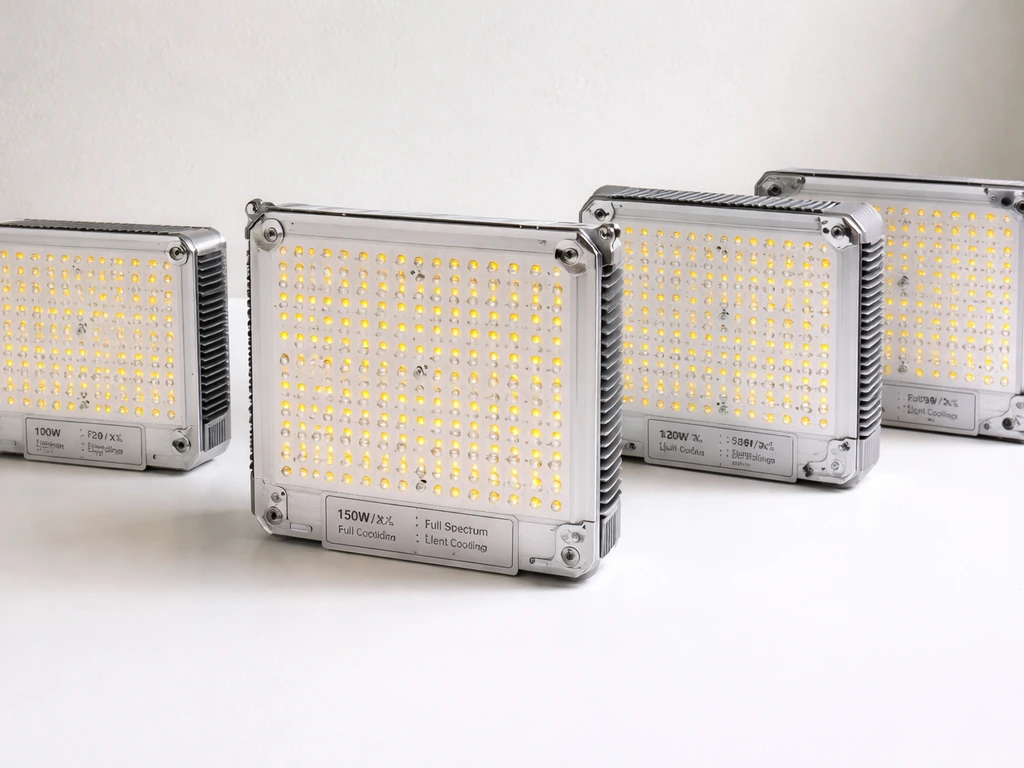
Updayday isn't a single product. There are at least four distinct models floating around retail and import channels right now, and the naming is inconsistent enough that it's easy to buy the wrong one. Here's what's actually on the market as of mid-2026:
| Model | Actual Power Draw | Marketed Coverage | Key Features |
|---|---|---|---|
| Entry-level (230W panel) | 230W | Not officially specified | 25–100% dimmable, 470nm/660nm/740nm diodes, VEG/BLOOM mode, fanless |
| UD-2500 | 270W | Up to 4x4ft (primary) | HPS full spectrum, 390nm + 660nm + IR740nm, built-in timer, fanless aluminum bars |
| UD-4000 / UU4000 | 400W | 4x4ft primary, up to 5x5ft max | 2160 LEDs, 380–780nm, VEG/BLOOM modes, 3.0 µmol/J claimed efficiency, adjustable bar angles |
| UA5000 | ~500–530W (measured) | Not officially specified | 139 spectra claimed, HPS/CMH/MH/SUN presets, AI sunrise/sunset, far-red and UV, fine-tune red/blue |
The UU4000 and UD-4000 are the most commonly discussed models and the ones you'll encounter most often on grow forums. The UA5000 is the flagship, and based on one forum user's hands-on testing, its PAR at roughly 24 inches sits around 700–780 µmol/m²/s depending on which spectrum preset you're running (CMH pushed it higher than the default). The 230W panel appears to be a more budget-oriented, compact option sold through third-party retailers. For coverage planning: Ubuy's own Q&A content states you need at least two UD-4000 lights for a 10x10 tent, and three for best coverage. That tells you something real about what a single 400W unit actually covers.
What the spectrum actually means for your plants
Updayday markets its lights as 'HPS full spectrum,' which is a positioning move meant to say the light mimics the warm, red-heavy output of high-pressure sodium while also covering the blue end. In practice, the diode breakdown across models centers on blue at 470nm, red at 660nm, and infrared at 740nm, with the UU4000 covering a broader 380–780nm range. The VEG mode emphasizes 470nm blue, which promotes compact, bushy vegetative growth and strong root development.
Hydropolis also lists the UPDAYDAY UU4000 as using 2160 LEDs covering 380nm to 780nm, with VEG mode mainly at 470nm blue and BLOOM mode mainly at IR and 740nm red VEG mode emphasizes 470nm blue. The BLOOM mode shifts emphasis toward infrared and 740nm red, which supports flowering hormone activity and helps push plants toward reproductive development.
The UA5000 takes this further with HPS, CMH, MH, and SUN spectrum presets plus adjustable red/blue ratios and an AI sunrise/sunset simulation. One grower using the UA5000 reported noticeably improved trichome development and aroma after switching to the IR-heavy BLOOM spectrum, though this is anecdotal. The 'over 90% of reflected light absorbed by plants' marketing claim refers to the concept that diodes targeted at chlorophyll absorption peaks (around 450nm and 660–680nm) are more efficiently used than broad-spectrum white light. It's real science, but the 90%+ figure is marketing math, not a measured photosynthetic efficiency number from this specific product.
The practical takeaway: Updayday's spectrum approach is reasonable and plant-appropriate. The dual-mode VEG/BLOOM switching is genuinely useful, not just a gimmick. What it isn't is a uniquely advanced spectrum. Brands like Mars Hydro and Bloom Plus at similar price points also cover this range, often with better-documented PPFD distribution maps.
Real coverage, intensity, and efficiency: cutting through the claims
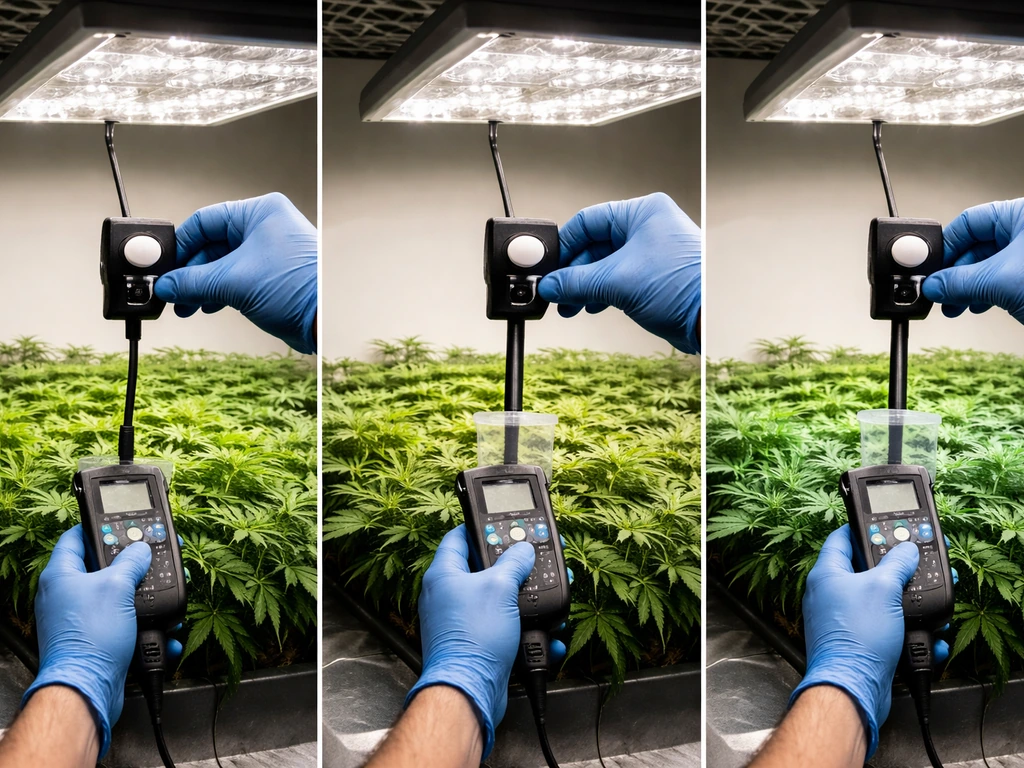
The UU4000 and UD-4000 both claim 3.0 µmol/J efficiency and coverage up to 5x5ft. Let's put those numbers in context. A 400W light at 3.0 µmol/J would deliver 1,200 µmol/s total output. Spread over a true 5x5 (25 sq ft), that gives you an average of about 484 µmol/m²/s, which is adequate for vegetative growth (target: 400–600 µmol/m²/s) but falls short of the 600–900+ µmol/m²/s most flowering plants want for strong bloom yields. The marketing PPFD claim of 1,382 µmol/m²/s for the UD-2500 at peak center point sounds impressive, but center-point PPFD without a full canopy map is almost meaningless for real grow planning.
The UA5000 user data is more grounded: roughly 700 µmol/m²/s at 24 inches under default settings, climbing to about 780 µmol/m²/s on the CMH preset with power draw hitting around 531W. That's a real and useful data point. For a 4x4 tent, 700–780 µmol/m²/s average canopy PPFD at 24 inches is workable for mid-stage veg and early bloom, though you'd want more intensity for peak flowering. The standard grower rule of thumb is 30–40W per square foot for full-cycle grows, meaning a 4x4 (16 sq ft) genuinely needs 480–640W. A single 400W Updayday unit technically falls under that range for bloom.
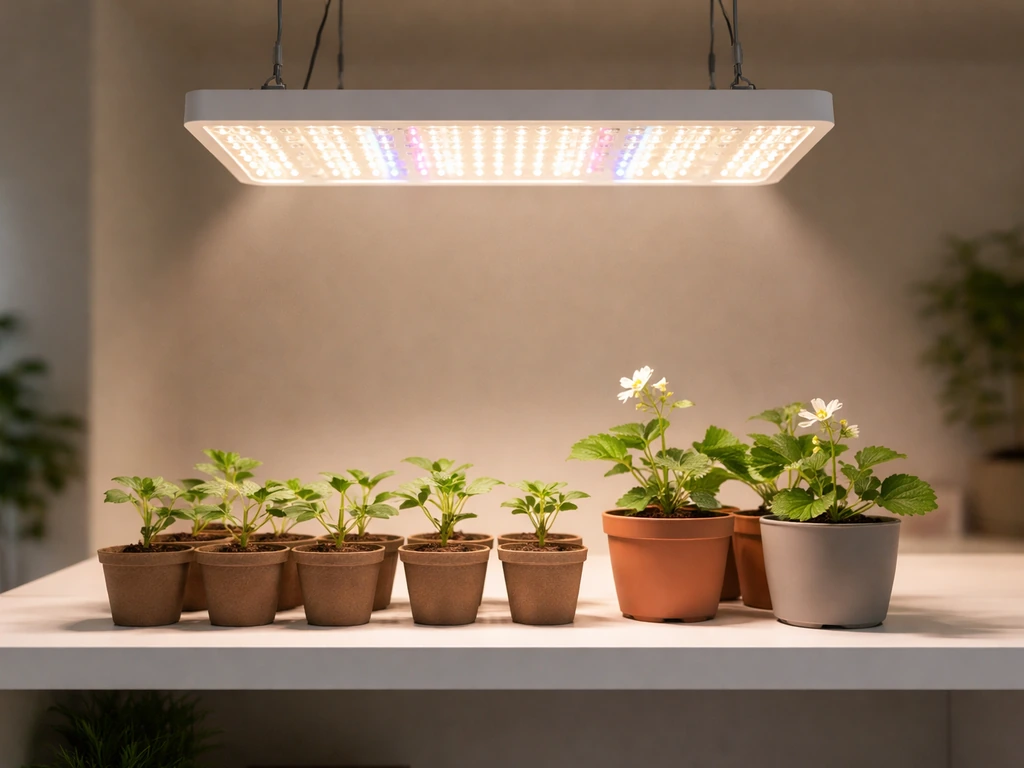
For the 230W panel, a GrowDiaries user referenced running it at around 190W actual draw in a smaller space. At that wattage, you're looking at a 2x3 or 3x3 footprint for seedlings and veg, not bloom production. Managing expectations here is important.
Which Updayday model works at each growth stage
Seedlings and clones
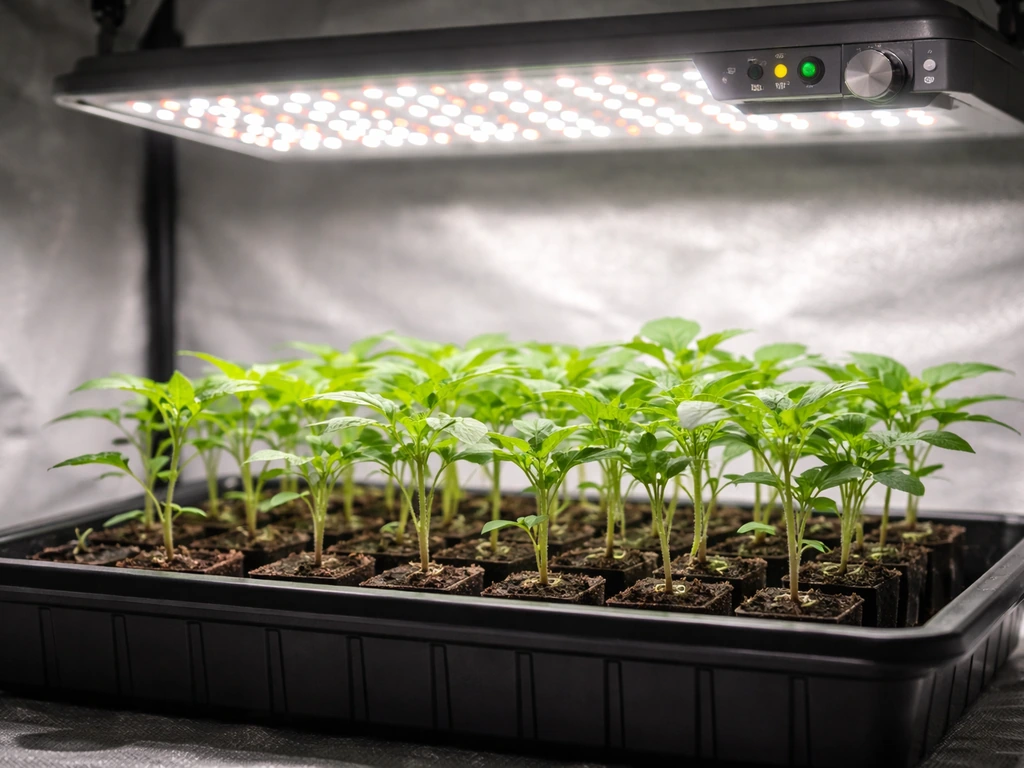
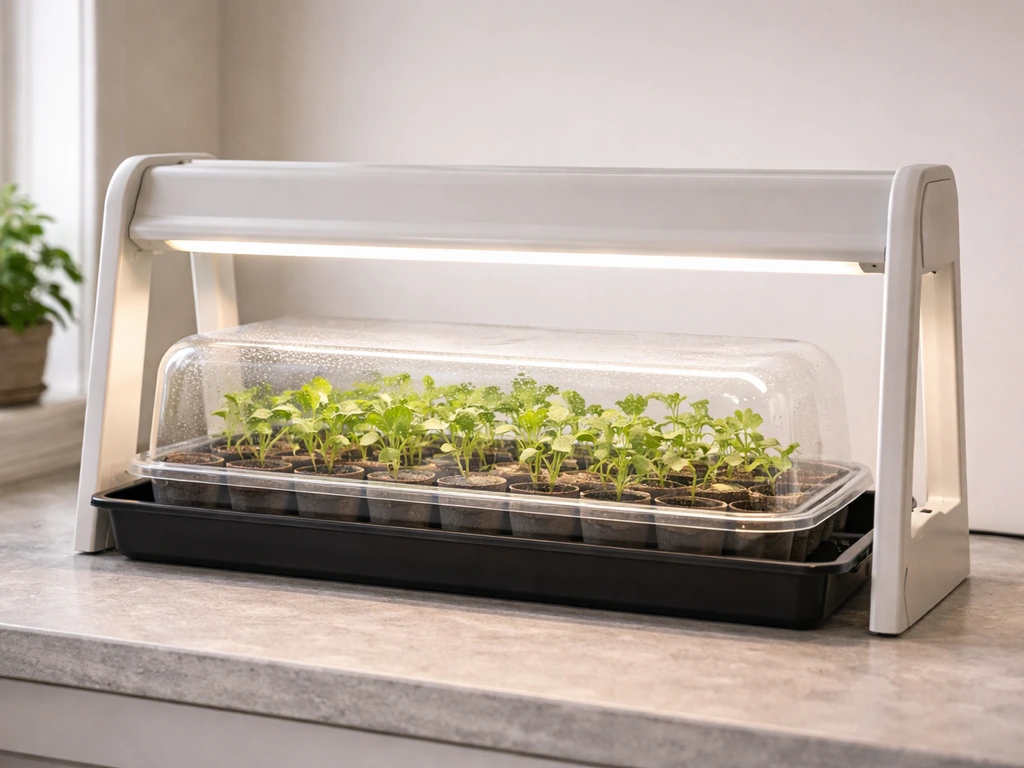
Any Updayday model will handle seedlings well when dimmed to 25–40% and hung at 24–30 inches. Seedlings need low intensity (100–200 µmol/m²/s) and benefit from the blue-heavy VEG mode. The fanless, quiet operation is genuinely nice at this stage since seedling trays often sit close and fans can stress delicate plants. The 230W panel and UD-2500 are both well-suited here.
Vegetative growth
Veg is where Updayday earns its keep. Run the UU4000 or UD-4000 in VEG mode at 60–80% power, hanging around 18–24 inches above canopy, and you'll have solid blue-spectrum output driving compact internodal spacing and good root development. Covering a 4x4 for veg is realistic with a single 400W unit. The adjustable bar angles (up to 30 degrees) help fill the canopy edges, which matters in a square tent.
Flowering and bloom
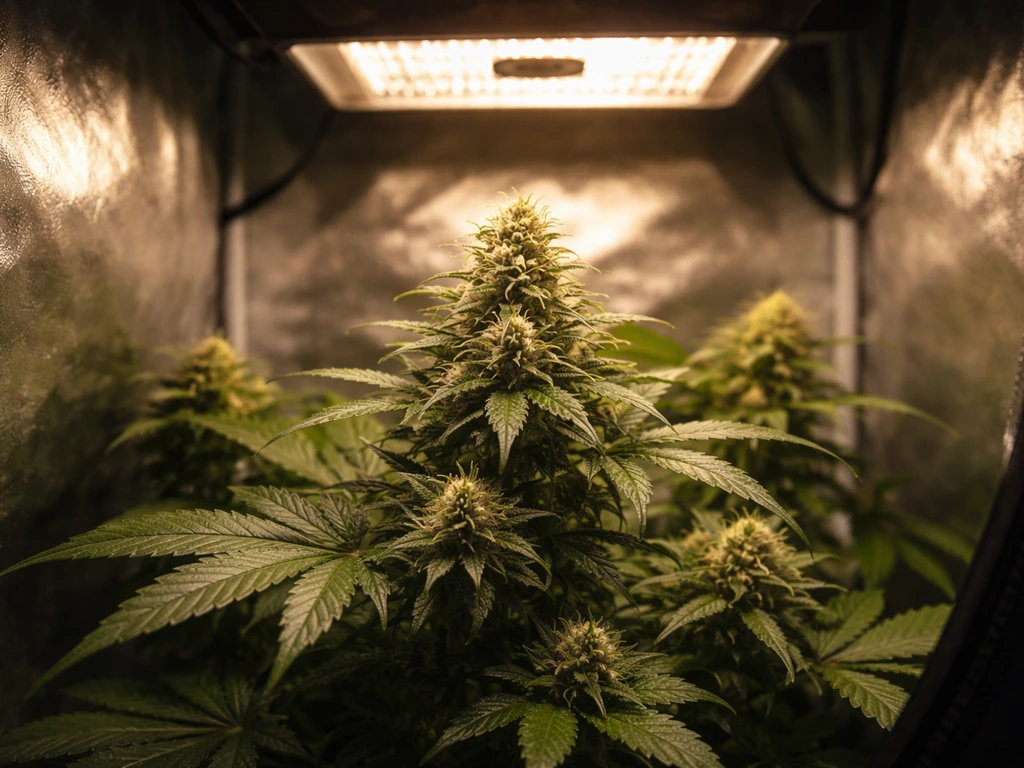
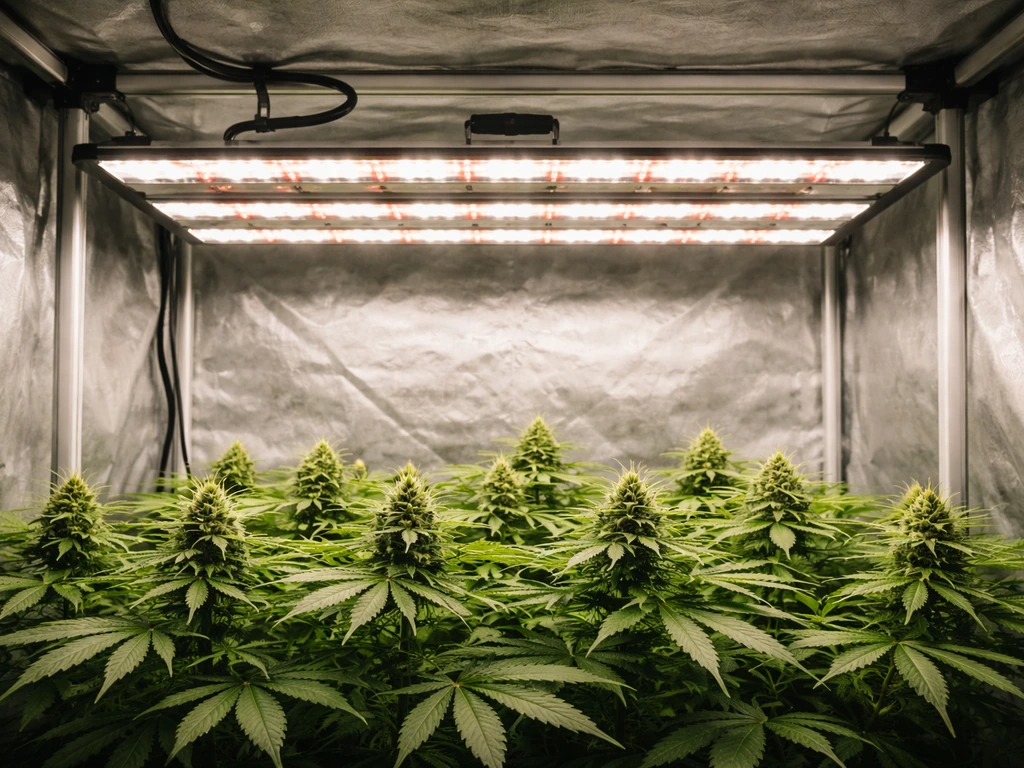
This is where honest assessment matters. A single UU4000 or UD-4000 can flower plants in a 3x3 effectively, and will produce results in a 4x4 at full power in BLOOM mode. But if you're chasing dense, heavy yields in a 4x4, you're running close to the minimum. For a true 4x4 bloom setup with this brand, the UA5000 at full power (530W measured) is the better choice.
If you are comparing options beyond Updayday for your flowering setup, this briignite grow light review can help you judge whether it delivers better results for the money. If you’re reading garland grow light garden reviews to decide what to buy, this is the kind of coverage and intensity reality check that matters most. Alternatively, two UD-4000s side by side in a 4x4 would give you far better canopy saturation.
The IR and far-red wavelengths in BLOOM mode do appear to have a real effect on flowering progress based on forum observations, which is encouraging.
Setup and placement: height, spacing, and using the built-in controls
All Updayday models come with hanging ropes and support wide-voltage input (90–265V AC), so they're straightforward to install globally. The built-in timer supports 1–23 hour cycles with sunrise/sunset simulation on the UU4000 and UA5000, which is genuinely convenient for managing photoperiods without a separate outlet timer. The sync connection feature lets you daisy-chain and control up to 30 lights from one main unit, which is useful if you're scaling up.
Here are the practical placement guidelines to start with, then dial in from there based on plant response:
| Growth Stage | Recommended Height (above canopy) | Dimmer Setting | Mode |
|---|---|---|---|
| Seedlings / clones | 28–32 inches | 25–35% | VEG |
| Early veg | 20–26 inches | 50–65% | VEG |
| Late veg | 16–22 inches | 70–85% | VEG |
| Early bloom (weeks 1–3) | 18–22 inches | 80–90% | BLOOM |
| Mid/late bloom (weeks 4+) | 16–20 inches | 90–100% | BLOOM |
Watch for light bleaching (white or yellow tips on the uppermost leaves) if you're running at 100% closer than 14 inches. With the adjustable bar angles, tilt the outer bars slightly outward to help cover tent corners rather than over-concentrating light at center. The dimmer knob is simple enough that there's no learning curve, but do invest 5 minutes reading the timer instructions since the on/off cycle setting isn't always intuitive without the manual.
Build quality, heat, and long-term reliability
Updayday leans hard on the fanless aluminum design as a selling point, and it has real merit. No fans means no fan noise, no fan bearings to wear out, and no dust accumulation in a spinning motor. The aluminum bar structure dissipates heat passively, and at 270–400W, this is manageable as long as your tent has decent airflow from an inline fan. In a sealed, poorly ventilated space, passive heat dissipation alone won't be sufficient, but that's true of any grow light.
The claimed LED lifespan of 50,000+ hours is standard for quality diodes and is a reasonable expectation if operating temperatures stay within spec. What's less clear is driver quality. Updayday doesn't publish their driver brand or specs, which is common at this price tier but worth noting. Premium brands like HLG and Spider Farmer use Meanwell drivers with documented reliability. Updayday's driver sourcing is opaque. The UA5000 user hasn't reported driver failures in their documented grow, and no widespread failure patterns appear in the forums reviewed, but the sample size is small. Treat it like any budget-to-mid tier brand: it's probably fine, but the warranty support if something goes wrong is less proven than established brands.
The build itself is solid for the price category. The bar design distributes weight well, the hanging hardware is adequate, and at 5.7 lbs for the smaller panel (likely heavier for the 400W bars), mounting in a standard tent is no issue. The product dimensions of roughly 14 x 28 x 2.4 inches for the smaller unit give you a sense of the footprint.
Value for money and how it stacks up against the competition
Updayday sits in the crowded $100–$250 range for the 230W–400W models, competing with lights like the Mars Hydro FC-E3000 and FC4800, Aglex 4000, Bloom Plus BP4000, and similar import-brand bar lights. The UA5000 with its programmable spectrum presets and AI sunrise feature pushes into a more premium tier. Here's a quick comparison of what you're weighing:
| Light | Actual Watts | Key Differentiator | Best For |
|---|---|---|---|
| Updayday UU4000 / UD-4000 | 400W | VEG/BLOOM modes, fanless, built-in timer/sync | 3x3 bloom, 4x4 veg, multi-light setups |
| Updayday UA5000 | ~530W measured | 139 spectra, HPS/CMH/MH/SUN presets, AI sun | Serious 4x4 bloom, spectrum experimenters |
| Mars Hydro FC4800 | 480W | Proven PPFD maps, Samsung/Osram diodes, Meanwell driver | 4x4 bloom, documented efficiency |
| Aglex 4000 | ~400W | Lower price, simpler design | Budget veg, smaller spaces |
| Bloom Plus BP4000 | ~400W | Widely reviewed, consistent performance data | 4x4 veg, budget bloom |
The honest comparison: Updayday's UU4000 competes on features (the built-in timer and sync chain are genuinely convenient) but lacks the independent PPFD testing data that Mars Hydro and Bloom Plus have accumulated. If documented, third-party-verified performance matters to you, those alternatives have more public evidence. If you want flexible spectrum control and convenient built-in scheduling at a competitive price, Updayday holds its ground. The UA5000's spectrum programmability is legitimately interesting and isn't matched at the same price by the other brands listed here.
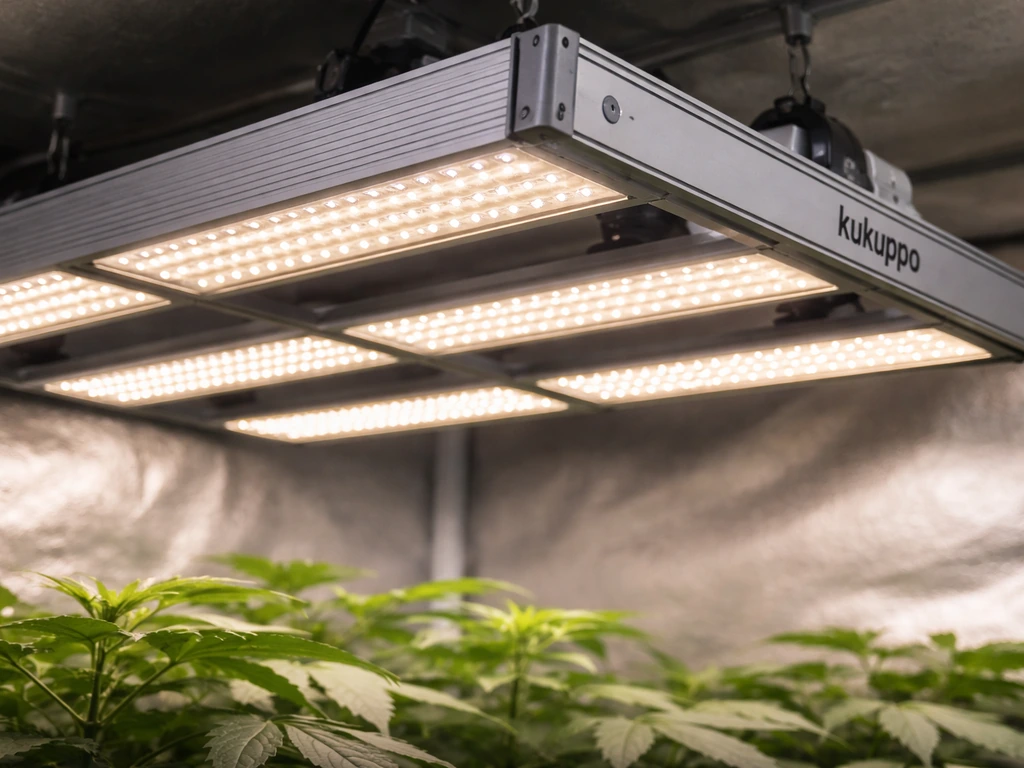
Brands like Briignite, Kukuppo, and Creativity occupy a similar import-brand space with comparable specs and limited independent testing. You can also find plenty of user chatter when comparing similar import brands, including the Creativity grow light reviews people share about real-world performance. Updayday generally edges them on feature set with the sync control and multi-mode spectrum options, though the same caveats about driver transparency apply across that segment.
Pros, cons, and who should buy it
What works
- Fanless design is genuinely quiet and low-maintenance compared to active-cooled lights at similar wattages
- Built-in timer with sunrise/sunset simulation removes the need for a separate outlet timer
- VEG/BLOOM mode switching and adjustable red/blue ratios on the UA5000 give real spectrum control
- Sync connection for up to 30 units is a standout feature for anyone planning to scale
- Wide voltage compatibility (90–265V AC) makes it usable internationally without adapters
- Adjustable bar angles help customize canopy coverage beyond a fixed flat panel
What to watch out for
- Coverage claims are stretched: a single 400W unit is realistic for 3x3 bloom or 4x4 veg, not 5x5 bloom
- Driver brand and quality are undisclosed, which is a transparency gap versus premium competitors
- Independent PPFD mapping data is limited; you're relying on marketing claims and user-reported spot readings
- The UA5000's spectrum features are compelling but the user base documenting them is still small
- Warranty and after-sales support are not well-documented compared to established brands
Buy it if:
- You're growing in a 2x4 or 3x3 tent and want a quiet, low-maintenance light with good veg/bloom control
- You want built-in timer and dimming without buying separate accessories
- You're setting up a multi-light array and want easy sync control from one unit
- You're interested in spectrum experimentation and the UA5000's preset modes appeal to you
- Your budget is under $200 and you understand you're in the import-brand tier
Skip it if:
- You need verified, third-party PPFD data before buying
- You're doing serious bloom production in a full 4x4 and want maximum proven output per dollar
- Long-term warranty support and a track record with the manufacturer matter to you
- You're comparing it specifically to Mars Hydro FC-series lights with published efficiency data and known drivers
Quick checklist: matching a grow light to your space
Before finalizing any purchase, run through this checklist to make sure any light you're considering (Updayday or otherwise) actually fits your setup:
- Measure your tent footprint: multiply length by width in feet. That's your coverage requirement.
- Match watts to space: target 30–40W per square foot for bloom, 20–30W per square foot for veg-only grows.
- Check hanging height clearance: you need at least 16–20 inches between the light and canopy top, plus room for the plant itself. Minimum 6-foot tent height for most full-cycle grows.
- Confirm the light has a dimmer: it's essential for seedlings and for dialing in intensity without burning foliage.
- Decide if a built-in timer matters: if you'd otherwise buy a separate outlet timer, a built-in one saves money and wiring.
- Ask about coverage at bloom PPFD, not veg: a light that covers 4x4 for veg may only cover 3x3 adequately for bloom. Ask for the PPFD map at flowering height.
- Consider your ventilation: fanless lights need good tent airflow from an inline fan to avoid heat buildup at the canopy.
- Budget for scale: if you might expand, check if the light supports sync/daisy-chain control.
The Updayday UU4000 or UD-4000 passes most of these checks for a 3x3 bloom or 4x4 veg setup at its price point. The UA5000 passes for a 4x4 full-cycle grow if you're willing to work with limited third-party validation. If you want something with more independent testing behind it at the same wattage, the Bloom Plus BP4000 or Mars Hydro FC-E series is where to look next. If you want a focused Bloom Plus grow light review, compare its published PPFD and coverage data against the Updayday models before you buy.
FAQ
How do I position an Updayday bar light to avoid dim corners, especially in a 4x4 tent?
LED bar rigs like the UU4000 and UD-4000 can leave edge zones dimmer than the center, so aim to position the fixture so the outer bars partially “reach” the tent corners. In a 4x4, that usually means using the adjustable bar angle and hanging a bit lower than you would for a 3x3, then backing off intensity if you see bleaching. If your tent is very reflective (white walls/mylar), raise the height slightly to reduce hotspots.
What dimmer and mode strategy should I use when switching from seedlings to veg and then to bloom?
Because dimming changes intensity and may also change how the spectrum preset “balances,” start conservatively rather than running VEG or BLOOM at 100% immediately. A practical approach is seedling days on VEG at 25% to 40% power, then increase in steps while watching leaf color and tip condition. If you see rapid paling or clawing, reduce output and/or increase height before changing spectrum presets.
Can I combine Updayday’s built-in timer with an external outlet timer or smart plug without messing up the light schedule?
Updayday’s built-in timer and sunrise/sunset features depend on the internal schedule, so the safest way to avoid overlapping control is to use only one timing system for the light. If you also use a wall outlet timer or smart plug, make sure the plug stays on continuously and let the fixture handle its own cycles, otherwise you can get truncated light periods that confuse plants.
Since Updayday lights are fanless, what airflow setup matters most to prevent overheating or output drop?
Fanless designs rely on your grow space airflow to move heat away from the aluminum bars. If your tent has weak exhaust or you are running with the doors closed for long periods, the light can run hotter, which can shorten driver life and shift output. For best results, prioritize an inline exhaust fan with steady ducting and keep the intake path unobstructed, then check temperatures at canopy height as you increase to higher power.
How reliable is the sync feature for daisy-chaining multiple Updayday lights, and do I still need per-light height or dimmer adjustments?
Yes, but treat it as a “small system” solution and not a guarantee of uniform control across all environments. Using the sync chain, you can control many lights from one main unit, but you still need to calibrate hanging height and dimmer settings per fixture so the canopy receives even PPFD. If one light runs closer to the canopy than another, uniformity problems can appear even though the schedule is synchronized.
My plants look bleached or stressed, should I switch spectrum mode or change height and power first?
If your plants are very near 100% output and you see white or yellowing at the top canopy, that is often light stress rather than a spectrum problem. First raise the light by a few inches or drop power in small steps, then only adjust spectrum mode if the plant is otherwise healthy and you are trying to refine growth form. Spectrum changes help for growth stage and flowering signals, but intensity mismatch is the most common cause of tip bleaching.
If the brand says a single light covers a 4x4, will I get full bloom canopy saturation or is it usually underpowered?
In practice, coverage claims are only meaningful if the light is mounted at the specified height and used at the intended dimming level. If you plan to finish in a full-size bloom area (like a true 4x4), you should assume you are operating near the lower edge of what a single 400W-class unit can saturate. If you want denser bloom yields, either add a second fixture or choose the higher-power model (like the UA5000) and still verify canopy uniformity visually and by measuring if possible.
What is the best way to verify real canopy coverage if I cannot find PPFD distribution maps for my exact Updayday model?
For tent grows, “average PPFD” is more useful than center-point numbers, and the same fixture can behave differently across spectrum presets. The most actionable method is to measure at multiple canopy points (center and corners) at your chosen height and dimmer setting, then adjust height and angles until the corners are close to the center. If you cannot measure, use repeated photo checks and watch for corner undergrowth versus center bleaching.
Are there any special considerations for running Updayday grow lights on different electrical setups or power strips?
You should check compatibility with your power controller habits more than with wattage alone. Updayday accepts wide-voltage input, but the bigger issue is whether your timer or wall controller is rated for the fixture’s draw at max output and whether it can switch without causing power cycling. Avoid using under-rated smart plugs or heavy-duty power strips that are not rated for the expected wattage.
During flowering, do I need to run BLOOM at full intensity the whole time, or should I ramp up gradually?
A common mistake is staying on BLOOM at full power for the entire flowering window, then wondering why plants stretch too much early or lose vigor later. Use a staged ramp, for example increase intensity gradually after the initial transition, then avoid maxing output if you see clawing, excessive leaf curl, or overly dark foliage. Let the plant response guide you more than the preset alone, since seedling size, strain, and ventilation all affect how much intensity is tolerable.
What’s the safest way to start seedlings under an Updayday light without shock?
Seedlings often tolerate less intensity than people expect, and Updayday’s VEG mode is most helpful when kept in a low-to-moderate range. If you are targeting a young canopy and want to avoid stress, run around the lower part of the dimmer range and keep the fixture high enough to prevent sudden brightness jumps. Also, if you germinate in a room with dim ambient light, a sudden switch to a bright grow setup can shock seedlings, so ramp intensity over several days.
How can I reduce the risk of driver problems since Updayday does not publish driver brand details?
Driver quality is not fully disclosed, so the best “risk reducer” is environmental control and stable electrical supply. Avoid frequent power outages, keep the light at a reasonable temperature range by maintaining tent airflow, and do not run the fixture in a fully sealed space. If you are in a hot climate or use minimal exhaust, that is where budget drivers tend to be put under the most stress.