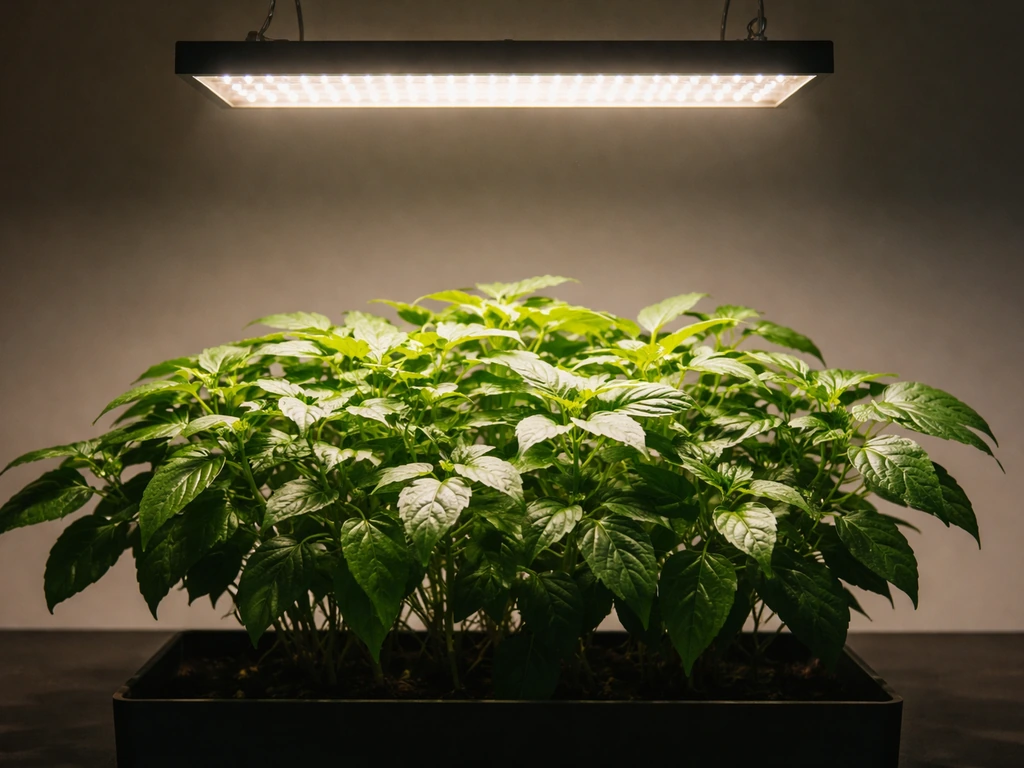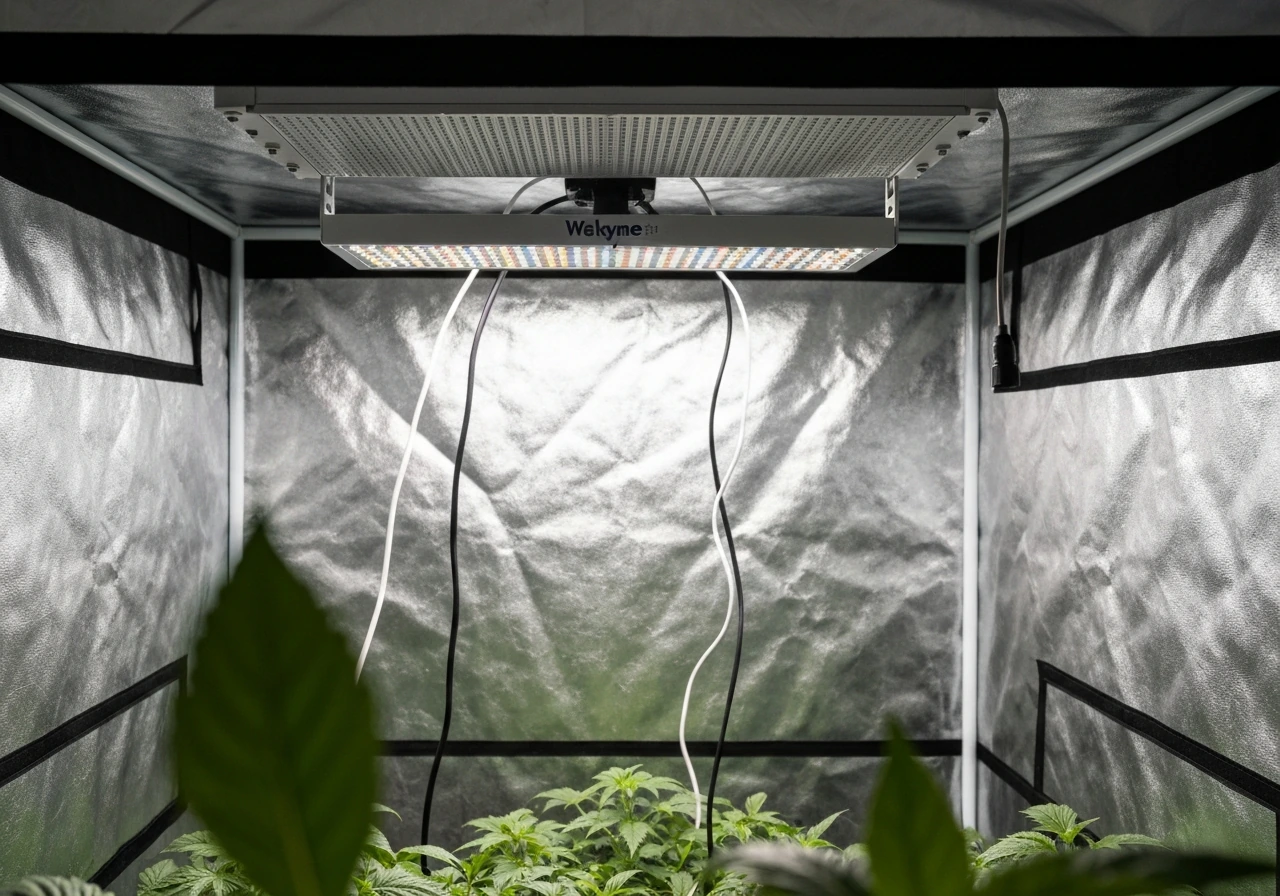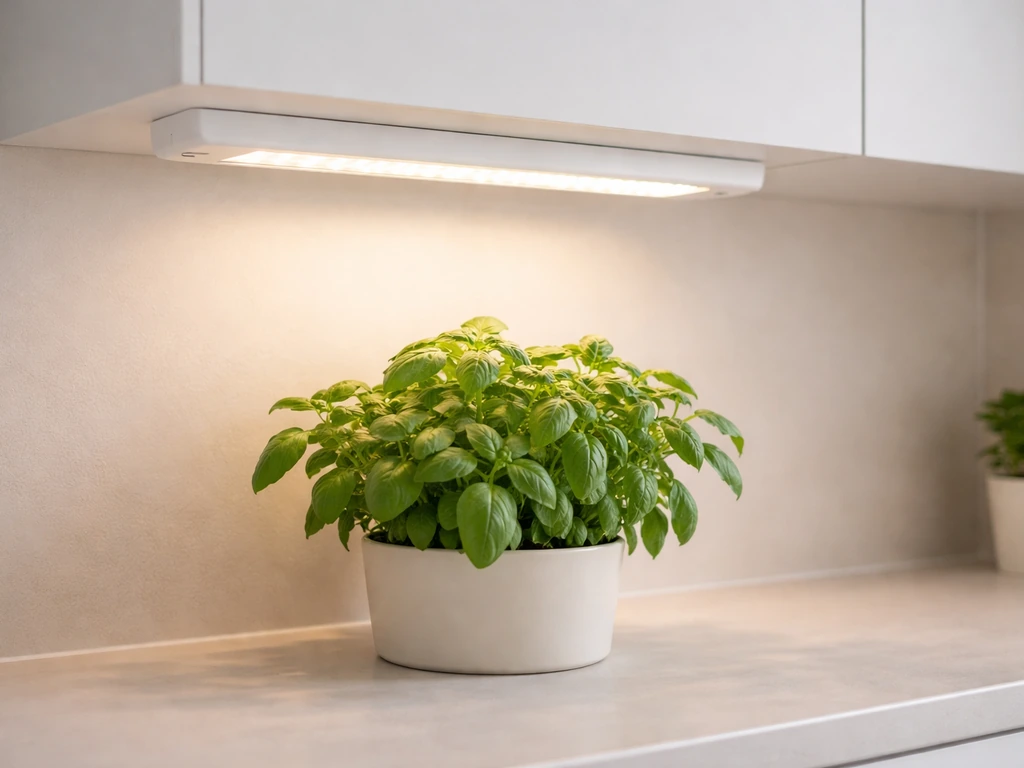
Apelila grow lights show up in searches under inflated wattage labels like "3000W" and "3400W," but the actual wall draw on these units is typically around 200W to 350W. That gap between the marketing number and the real power draw is the first thing you need to understand before spending any money.
Apelila Grow Light Review: Setup, Coverage, and Value

Marcus Caldwell
2 May 2026
After digging through every available listing, forum thread, and reseller page I could find, I have to be upfront: Apelila does not publish verifiable spec sheets, independent PPFD maps, or safety certification data for any specific model. That makes a definitive, model-by-model recommendation genuinely difficult. What I can do is walk you through what is actually known, what to watch out for, and whether this brand belongs in your grow space at all.
What Apelila Grow Lights Are
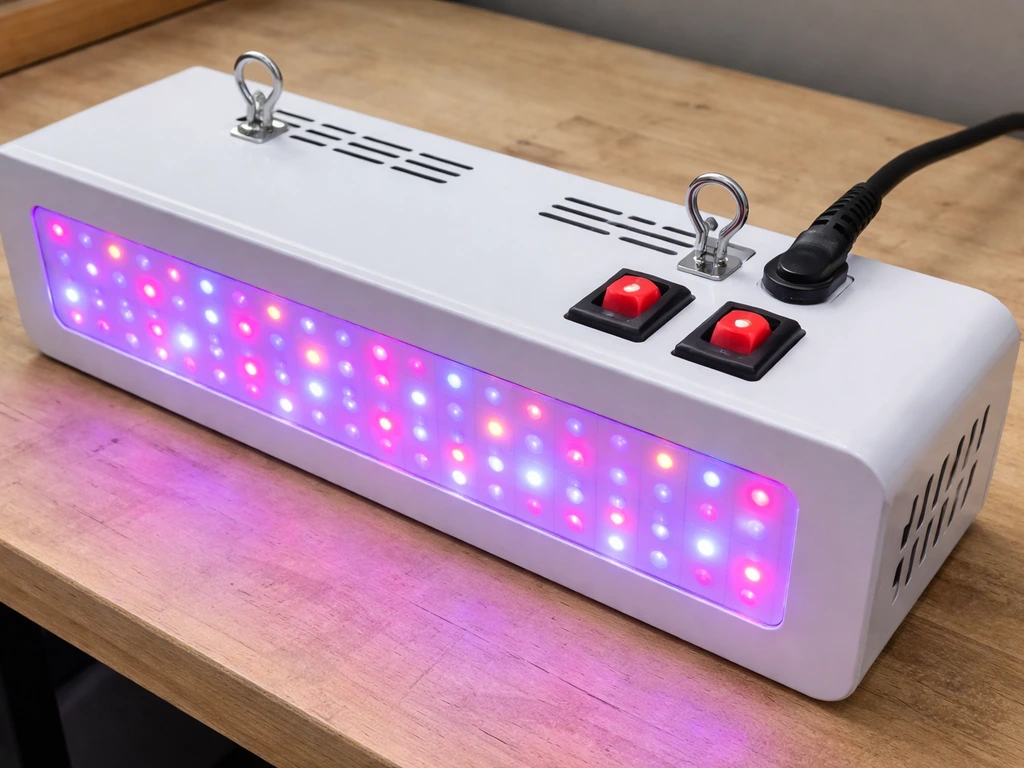
Apelila is a budget-tier LED grow light brand sold primarily through third-party marketplaces like eBay, Amazon, and international retail sites. The most commonly searched models appear under wattage-class labels: 2500W, 3000W, and 3400W. These numbers do not reflect actual power consumption. A listing labeled "3000W" typically pulls somewhere between 250W and 320W from the wall, a practice common across budget LED brands where "equivalent" wattage is compared loosely to older HPS output.
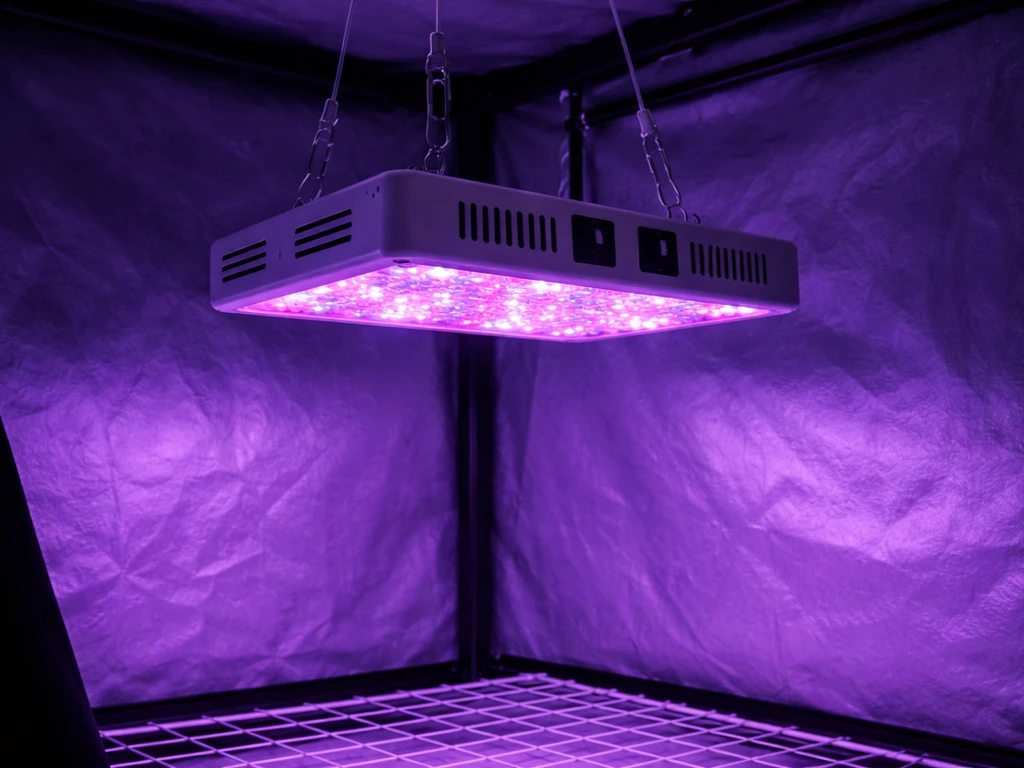
From what can be verified through reseller listings, Apelila lights use a blurple or dual-switch full-spectrum LED configuration. The dual-switch design is a carryover from older budget LED architecture: one switch activates red and blue LEDs for vegetative growth, the other adds additional red LEDs for flowering. Some listings describe the light as "full spectrum," but without a verifiable spectral power distribution chart from the manufacturer, this claim should be treated with skepticism. True full-spectrum lights typically include white, red, blue, and infrared LEDs with measurable output across the PAR range of 400 to 700 nanometers, plus sometimes UV and far-red. Apelila has not published this data publicly.
No driver class (Meanwell, Inventronics, or otherwise) has been confirmed for any Apelila model in manufacturer documentation. The lights appear to use generic drivers, which affects both efficiency and longevity. There is no publicly listed L70 lumen maintenance rating (the point at which LED output drops to 70% of original) from Apelila for any model.
Setting It Up: Height, Coverage, and Controls
Because Apelila does not publish PPFD maps, the following guidance is based on general best practices for budget LED units in the same actual wattage range (250W to 320W wall draw), combined with forum observations from growers who have used these lights.
Recommended Mounting Heights
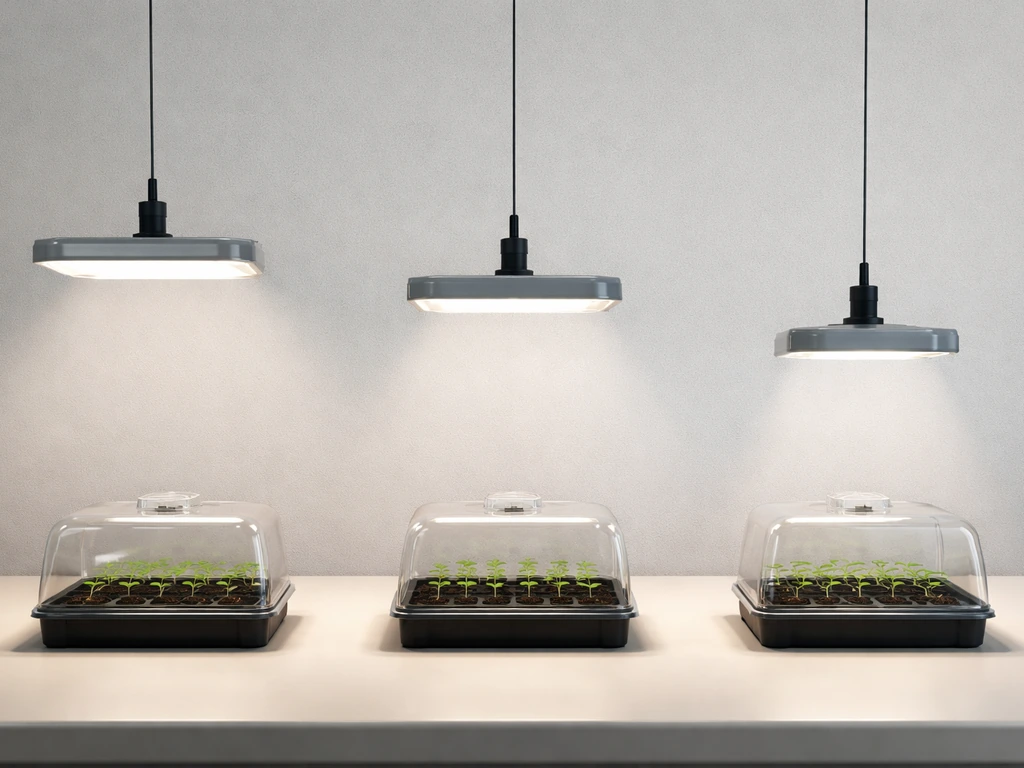
| Growth Stage | Suggested Height Above Canopy | Coverage Estimate |
|---|---|---|
| Seedling / Clones | 24 to 30 inches | Up to 3 x 3 ft |
| Vegetative | 18 to 24 inches | 2 x 2 to 3 x 3 ft |
| Flowering | 12 to 18 inches | 2 x 2 ft (optimal) |
These are conservative estimates. Budget LEDs in this wattage class rarely deliver adequate PPFD (the target is 400 to 600 µmol/m²/s for veg, 600 to 900 for flowering) at the edges of a 3x3 footprint. If you do not have a PAR meter to verify, start at the higher end of the height range and watch for leaf curl or bleaching (too close) or slow growth and etiolation, which is stretching toward the light (too far).
Controls and Features
The dual-switch design means you manually control which LED banks are active. In practice, run both switches during flowering and experiment with just the veg switch during seedling stages to reduce intensity. Apelila lights in this class do not appear to include built-in dimming dials or programmable timers based on available listings, so you will need a separate outlet timer to manage photoperiod. A basic digital outlet timer costs around $10 to $15 and is worth buying regardless of what grow light you use.
Performance: What You Can Realistically Expect
This is where honesty matters most. Because no independent lab has published PAR or PPFD measurements for Apelila lights, and the manufacturer has not released efficiency data (measured in µmol/J), I cannot give you a real efficacy number. If you are specifically looking into what users think, you can compare these findings against wills grow light reviews to see how expectations match real-world results Apelila lights. For context, mid-tier LED brands in 2026 are hitting 2.5 to 3.0 µmol/J. Budget lights like Apelila likely fall somewhere in the 1.5 to 2.0 µmol/J range, which is a meaningful gap when you are paying for electricity over months of grows.
Light Output and Uniformity
Blurple dual-switch designs concentrate intensity directly below the fixture and drop off quickly toward edges. If you are growing in a 2x2 tent, you might get reasonable canopy coverage at the center. In a 3x3 or 4x4 tent, the corners will be significantly dimmer, which causes uneven growth across multiple plants. Single-plant grows in a 2x2 tent are where this type of light performs most consistently.
Heat Output
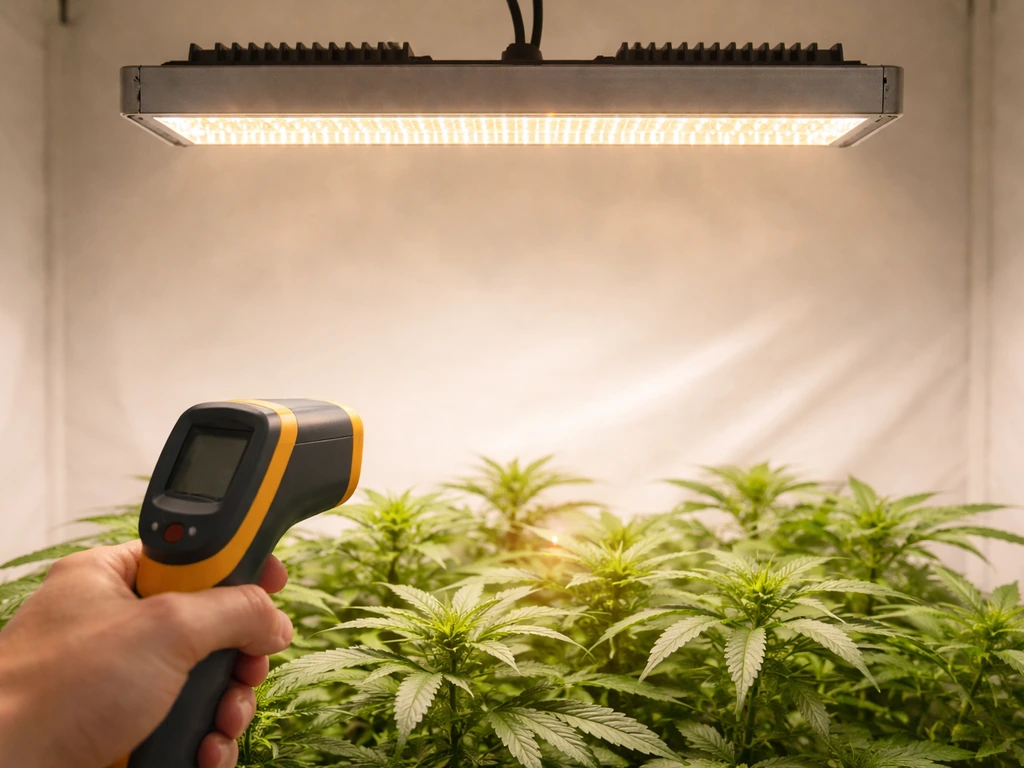
Budget LEDs in this class typically run warm but not dangerously hot at the canopy level when hung at the recommended heights above. The fixture itself can get warm to the touch. Adequate ventilation in your grow tent is still important, both for temperature management and for humidity control. A small inline fan pulling air through the tent is the minimum setup.
Build Quality and Safety
This is a genuine concern with Apelila. No UL listing, ETL certification, CE mark with verifiable documentation, or RoHS compliance has been confirmed in any official Apelila product documentation I was able to locate. Reseller listings sometimes display certification logos, but these are not the same as verified third-party testing. If electrical safety and insurance-related compliance matter to your setup (and they should), this is a significant gap.
Brands that publish verifiable certifications include options from companies like Mars Hydro, Spider Farmer, and AC Infinity, all of which have gone through third-party electrical safety testing. UL Solutions also offers horticultural lighting performance certification, including UL S 8000 for horticultural luminaires, reflecting that these luminaires can be performance- and safety-tested by a third party verified third-party electrical safety testing.
Best Plants and Growth Stages for This Light
Given the actual output limitations of a 250W to 320W budget LED, the most realistic use cases are relatively modest grows. Here is where Apelila lights are most likely to deliver acceptable results and where they fall short.
- Seedlings and clones: Good fit. Low light intensity needs (100 to 300 µmol/m²/s) mean even a modest light can perform well. Keep it higher in the range (24 to 30 inches) and use only one switch.
- Herbs and leafy greens: Reasonable fit. Basil, lettuce, spinach, and similar low-demand plants do not need the high PPFD that fruiting plants require. A 2x2 grow area with this light can produce decent herb harvests.
- Vegetative stage for flowering plants: Marginal. You can veg small plants under this light, but if you are planning to flower more than one or two plants in a 2x2 space, you will likely see stretching and weak structure.
- Flowering stage for fruiting plants (tomatoes, peppers, cannabis): Not well suited. Fruiting and flowering plants need 600 to 900+ µmol/m²/s across the canopy. Budget LEDs in this class rarely hit those numbers uniformly, and the blurple spectrum is less efficient at driving photosynthesis than modern white-LED full-spectrum designs.
Value for Money: Is the Price Worth It?
Apelila lights typically sell in the $30 to $70 range depending on the listed wattage class and the reseller. At first glance, that looks like an attractive entry price. But the cost-per-usable-PPFD calculation changes the picture quickly.
A well-documented budget competitor like the Mars Hydro TS 600 (actual draw around 100W, roughly $45 to $55) or the Spider Farmer SF-1000 (actual draw around 100W, roughly $80 to $100) delivers verified PPFD data, confirmed efficacy ratings, and known safety certifications. Mars Hydro’s official TS Series LED grow lights user manual PDF lists the TS-600 input power as “100W±5%”. When you factor in electricity costs over a 12-month period, a less efficient light at the same price point costs you more in operating expense. For a 300W light running 18 hours a day for 6 months, even a 0.5 µmol/J efficacy gap translates to a meaningful difference in plant output per dollar of electricity spent.
Longevity is also uncertain. Without L70 ratings or driver quality data, there is no reliable way to estimate how many hours the LEDs will maintain useful output. Higher-quality budget brands typically quote 50,000 hours at 70% output. Apelila makes no verifiable claim on this front.
Honest Pros, Cons, and Who Should Buy (or Skip)
Pros
- Very low upfront cost, often under $50
- Physically large fixture that looks capable (though appearance doesn't equal output)
- Dual-switch design gives rudimentary control over which LED banks are active
- Adequate for seedlings and low-demand herbs in a compact space
Cons
- No verifiable PPFD maps, PAR data, or spectrum charts from the manufacturer
- Misleading wattage labeling (3000W label does not mean 3000W output or draw)
- No confirmed third-party safety certifications (UL, ETL, CE with documentation)
- Blurple LED design is less photosynthetically efficient than modern white-LED full-spectrum designs
- No built-in dimming or timer, limiting control over light intensity and photoperiod
- Longevity and driver quality are unknown
- Marginal performance for flowering and fruiting plants
Who Should Buy
If you are a complete beginner starting seeds or growing herbs in a 2x2 space and you have an absolute budget ceiling of $40 or less, an Apelila light can get the job done for low-demand plants. Just go in with realistic expectations and understand you are trading performance data and safety transparency for a low price tag. If you are specifically looking for wakyme grow light reviews, use the same checklist to confirm PPFD, efficacy, and safety data before buying low price tag.
Who Should Skip
Anyone growing flowering or fruiting plants, anyone managing a 3x3 or larger grow space, anyone who needs verified electrical safety compliance, and anyone planning multiple grow cycles where operational efficiency and light longevity matter should look elsewhere. Spending an extra $30 to $50 on a brand that publishes real data will pay off within one or two grow cycles.
Alternatives and a Quick Match-by-Space Checklist
If you landed here because you are shopping for a budget grow light and Apelila came up, these alternatives in the same price range offer more transparency and better-documented performance. Brands like Wolezek, Wakyme, and Wills are in the same budget tier and worth comparing directly before committing. For slightly more spend, Mars Hydro and Spider Farmer offer entry-level models with verified PPFD data and safety certifications. Costco and Walmart occasionally carry branded grow lights worth checking if price is a primary constraint.
Quick Checklist: Match a Light to Your Grow Space
- Measure your actual grow space first. A 2x2 ft area needs a genuine 100W to 200W (wall draw) LED. A 4x4 ft area needs at least 400W to 600W of real draw for flowering.
- Check for published PPFD maps at your target mounting height. If the brand does not provide them, that is a red flag.
- Confirm the actual wall draw wattage, not the equivalent or label wattage.
- Look for third-party certifications (UL, ETL, CE with documentation) before buying any light for an indoor enclosed space.
- Budget for a PAR meter or smartphone PAR app if you are serious about optimizing growth. Guessing on light intensity is the most common reason grows underperform.
- Add a separate digital outlet timer ($10 to $15) regardless of which light you buy. Consistent photoperiod control matters as much as light quality.
- If your goal is flowering or fruiting, budget at least $80 to $120 for a verified-spec light. The efficiency and output difference is real and compounds over time.
The honest bottom line on Apelila: this is a light you can use in a pinch for seedlings and herbs, but it is not something I would build a serious grow around. The missing data is not just an inconvenience; it means you are flying blind on whether your plants are actually getting what they need. For a small step up in budget, you can get a light where someone has done the testing and published the numbers, and that transparency is worth paying for. If you are also comparing store options, a costco grow light review can help you sanity-check brand claims before you buy.
FAQ
How can I sanity-check an Apelila listing that claims “3000W” or “3400W” before buying?
Treat the labeled wattage as marketing. Look for any mention of real wall draw, input voltage and current, or power factor in the listing images. If the seller only provides the inflated number, assume the actual consumption is closer to the 250W to 320W range, and compare the price to other lights that clearly state verified draw.
If Apelila doesn’t provide PPFD or PPFD maps, what height should I start at?
If you do not own a PAR meter, start at the highest recommended hang height (or err even higher than that) and then lower gradually in small steps every few days while watching the canopy. Leaf curl and bleaching indicate you are too close, while slow growth and stretching suggest the light is too far or too weak for the crop stage.
Do the dual switches actually help for seedlings and flowering?
Yes, practically. Use the veg switch only during early stages to reduce intensity and stress, then switch both banks on for flowering. Because edge coverage drops off quickly, consider rearranging plants so the most demanding ones sit nearer the center.
Can I use an Apelila grow light without a dimmer?
You can, but you will be limited to on or off control for each LED bank. For photoperiod control you still need a timer, but for intensity adjustments you will mostly rely on changing height and switching banks, since many listings do not include true dimming hardware.
What photoperiod timer settings should I use with this light?
Use a separate outlet timer and apply crop-appropriate schedules, such as commonly used veg cycles around 16-18 hours and flowering cycles commonly around 12 hours. The key detail is consistency, use the same schedule every day, and avoid “weekend stretching” where the lights turn on and off at different times each day.
Is the warm-to-the-touch housing a sign the light is unsafe?
Warm is not automatically unsafe, but it is a reason to check your setup. Keep the tent ventilated with at least an inline fan, confirm the fixture does not rest in contact with fabric or insulation, and use common sense electrical safety, like avoiding frayed cords and using proper ventilation clearance around the driver housing.
Does the lack of UL, ETL, CE verification mean I should never buy it?
It means you are taking on more risk and less assurance. If your household requires verified electrical safety for insurance or compliance reasons, skip it. If you still buy, reduce exposure by using a quality grounded outlet, keeping cords and connections dry, and never running it with covers removed or damaged wiring.
How do I calculate whether Apelila is actually a good deal versus a verified budget light?
Compare price per usable light output, not just price per labeled watt. In practice, you need real draw (from the wall) and ideally verified efficacy or PPFD. Since Apelila lacks those, the safer approach is to compare actual watt draw and total cost of electricity for your cycle length, then contrast that against a competing light that publishes PPFD and efficacy.
What electricity cost difference should I expect if Apelila is less efficient?
The bigger swing comes over repeated cycles. Example: if one light is about 0.5 µmol/J less efficient and you run it many hours, you may pay noticeably more for less plant usable light, even if the purchase price is lower. If you tell me your local electricity rate and run hours, I can help you estimate the gap.
Will an Apelila light work in a 3x3 or 4x4 tent?
Usually not evenly. Because this style tends to concentrate intensity under the fixture and drop off toward corners, you often get uneven growth in larger footprints. If you try it anyway, plan on multiple plants clustered near the center and consider whether you really need higher output or a broader-coverage model.
How can I reduce the risk of uneven growth with a blurple dual-switch light?
Use plant spacing that matches the expected intensity profile, keep the most light-demanding plants closest to the center, and rotate pots periodically if your tent allows. Also, consider training plants earlier so the canopy stays level and closer to the strongest light region.
What should I do if my seedlings look stretched even after lowering the light?
If you already moved the fixture closer and still see etiolation, the most likely issue is insufficient PPFD for that crop stage. Options include reducing the spread of the grow area (fewer plants), shortening the distance only if you are not causing bleaching, and switching to a light that publishes verified PPFD for the footprint you are using.
How long will Apelila last compared with better-documented budget LEDs?
You cannot reliably estimate longevity because there is no verifiable L70 maintenance rating and no confirmed driver quality details. As a practical rule, budget LEDs without L70 data may show earlier output decline, so plan for potential replacement sooner than you would with a brand that publishes maintenance life and driver specs.
What is the best first upgrade if I start with Apelila and want better results later?
Upgrade based on measurable output transparency, not just higher labeled wattage. A common improvement path is moving to a model with published efficacy and PPFD maps for your footprint, then fine-tuning placement and schedule. This usually improves consistency immediately, especially for flowering and larger tents.