Wolezek grow lights are budget-tier LED fixtures aimed at beginners and casual indoor gardeners who need something simple, small, and affordable. If you searched for a Wolezek grow light review hoping to find out whether one will actually grow your herbs, seedlings, or houseplants, the short answer is: yes, for low-demand plants and early growth stages, these lights work. But the line has real limitations, and which model you're looking at matters a lot before you spend money.
Wolezek Grow Light Review: Coverage, Spectrum, Value

Marcus Caldwell
12 Apr 2026
Who Wolezek lights are built for and what the brand claims
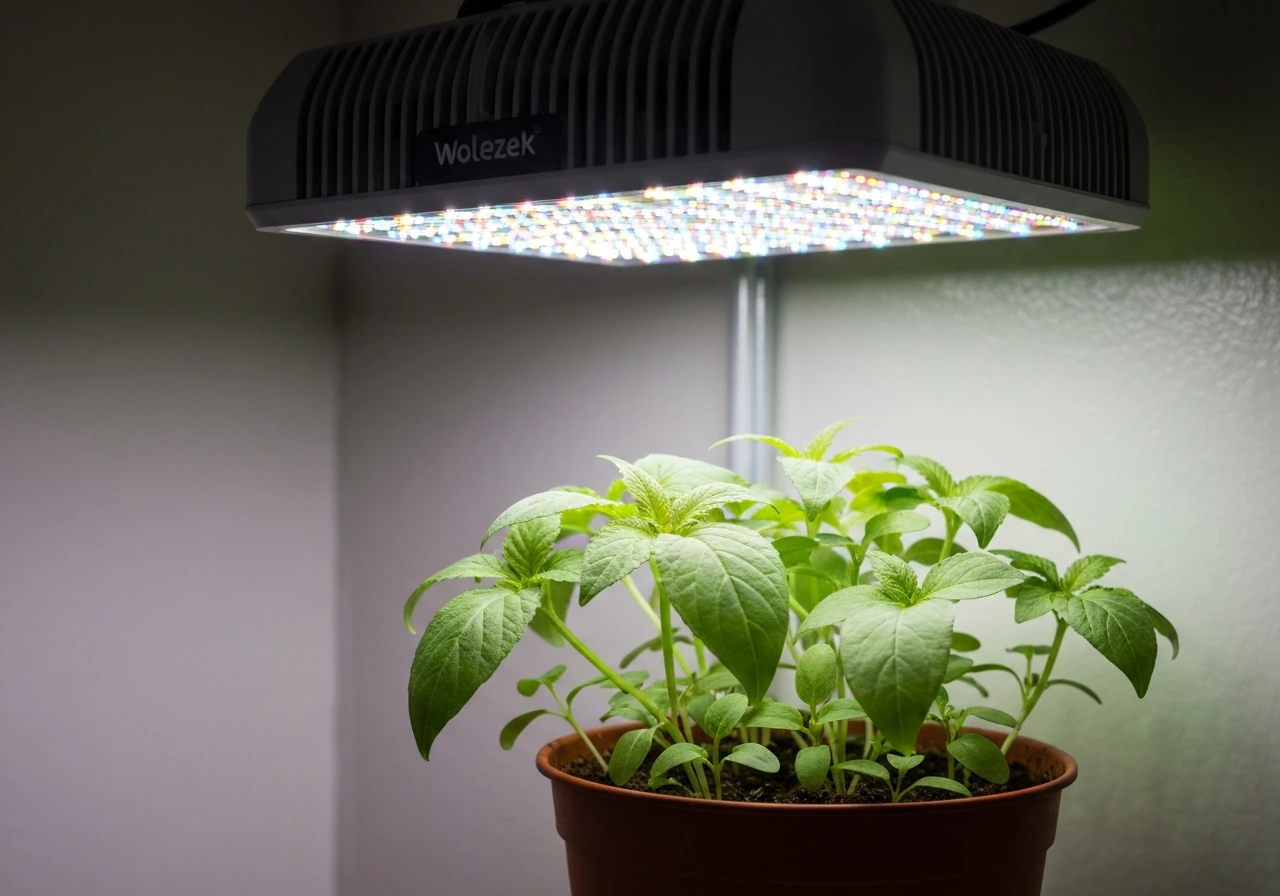
Wolezek markets its grow lights to apartment dwellers, desk gardeners, and beginners starting seeds indoors. The brand's pitch is consistent across models: full-spectrum coverage, flexible mounting, timer convenience, and multiple dimming levels, all at a low price point. These are not commercial-grade fixtures or tent lights for serious cannabis or tomato grows. Wolezek positions itself firmly in the small-space, low-intensity segment alongside other budget brands. If you've been browsing budget options and already looked at a Wakyme grow light comparison, the Wolezek line sits in roughly the same tier, with similar target use cases and similar trade-offs.
The manufacturer claims cover full-spectrum output (typically 380–800 nm across models), multiple brightness levels, auto-timer functionality with a memory feature, and quiet fanless operation. These are reasonable claims for lights in this price range, but they need to be weighed against what the specs actually deliver in practice.
Sorting out the models: which Wolezek are you actually looking at?
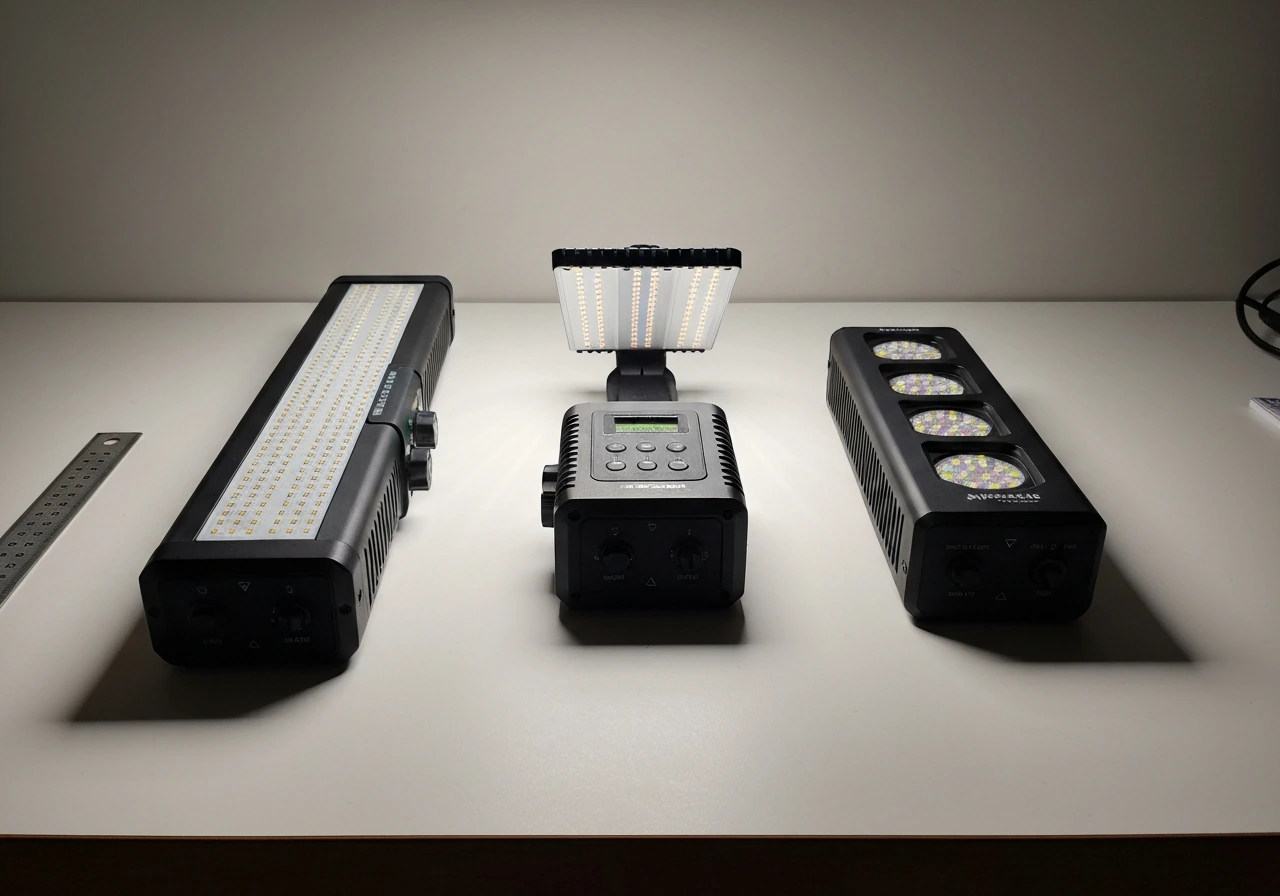
Wolezek sells several distinct models that can look similar in product listings, and buying the wrong one is the most common mistake shoppers make. Here are the three main variants you'll encounter:
BL-C80A (4-Head, 15 W)
This is the most spec-detailed model in the lineup. The BL-C80A runs 80 LEDs total, broken down as 28 x 5000K natural white, 40 x 3000K warm white, and 12 x 660 nm red. Wattage is 15 W at 120V input. The inline push-button controller gives you five dimming levels in 20% increments (20/40/60/80/100%) and a timer with three settings: 6H, 12H, and 16H. Crucially, the timer has a memory function, so it resumes the same setting after a power interruption. The spectrum runs 380 to 800 nm per the manual. This is Wolezek's most fully-featured desk/clip light.
BL-B20A-2 (65-inch plant light, 80 LEDs)
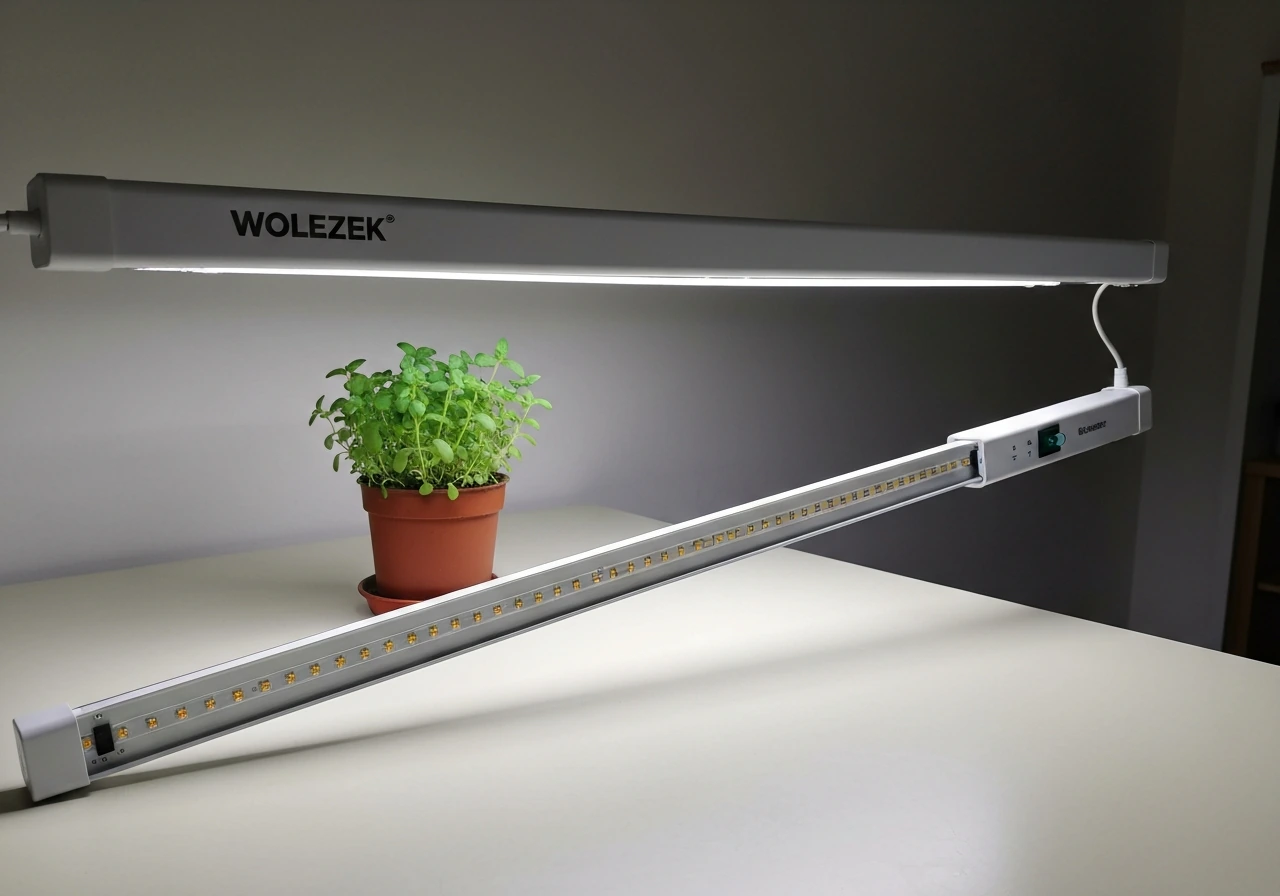
The BL-B20A-2 is a longer-format grow light that also runs 80 LEDs but operates with three distinct color temperature modes: 6500K natural white, 3000K warm white combined with red, and a full "all lights on" mode that combines everything. Brightness adjusts from 20% to 100% intensity, and the auto timer offers the same 6/12/16-hour options. The BL-B20A-2 manual lists three timer durations you can select: 6 hours, 12 hours, or 16 hours timer offers the same 6/12/16-hour options. This model is better suited for shelf or rack installations where you're lighting a row of plants rather than a single pot.
BL-B10B-3 (2-in-1 desktop, 10 W)
The BL-B10B-3 is Wolezek's smallest and lowest-wattage option at 10 W with 48 LEDs. It uses a 2-in-1 design that either clamps to a desk edge or stakes directly into soil. The gooseneck arm offers 360-degree positioning, and it covers the same 6/12/16-hour timer and five dimming levels. Spectrum is listed as 660 nm to 6500K. Wolezek backs this model with a 12-month warranty plus lifetime support per their documentation. This one is really for a single plant or small pot, nothing more.
| Feature | BL-C80A | BL-B20A-2 | BL-B10B-3 |
|---|---|---|---|
| Wattage | 15 W | Not specified in manual | 10 W |
| LED Count | 80 | 80 | 48 |
| LED Breakdown | 28x5000K, 40x3000K, 12x660nm | 6500K, 3000K+Red, All-On modes | 660nm–6500K full spectrum |
| Dimming Levels | 5 (20%–100%) | 5 (20%–100%) | 5 levels |
| Timer Settings | 6H / 12H / 16H | 6H / 12H / 16H | 6H / 12H / 16H |
| Timer Memory Function | Yes | Yes | Not specified |
| Form Factor | 4-head clip/gooseneck | 65-inch bar/strip | 2-in-1 clamp or soil stake |
| Best Use Case | Desk plants, seedlings | Shelf/rack rows | Single pot, desktop |
How the spectrum actually performs across growth stages
The BL-C80A's LED mix is worth unpacking because it tells you a lot about what the light actually does. The dominant element is 40 warm-white 3000K LEDs, which push the output toward the red/orange end of the spectrum. This is a grow-friendly range that supports flowering and fruiting chemistry in plants. The 28 natural-white 5000K LEDs fill in the blue end, which drives vegetative growth and compact, stocky development in seedlings. The 12 dedicated 660 nm red LEDs target the peak absorption wavelength for chlorophyll-a. On paper, this is a reasonable full-spectrum blend for a light at this price.
The BL-B20A-2 takes a more user-controlled approach, letting you toggle between blue-dominant, red-dominant, and combined modes manually. For seedlings and leafy greens, run the 6500K mode or all-lights-on. For plants pushing into bloom, the 3000K+red mode is the right choice. This flexibility is actually useful if you're cycling the same shelf through different plant stages.
The BL-J20B, another model reviewed independently, uses a simpler approach: four arms with 52 red LEDs and 28 blue LEDs each, covering 630–660 nm red and 400–470 nm blue. Independent testing found this model kept seedlings growing fine but was considered too weak for larger, more demanding plants. That finding applies broadly to the Wolezek lineup: the spectrum composition is reasonably balanced, but the intensity is the real limiting factor.
For reference, seedlings and herbs need roughly 200–400 μmol/m²/s PPFD. Vegetative growth requires 400–600 μmol/m²/s, and flowering plants push into 600–900+ μmol/m²/s territory. Wolezek's manuals do not publish PPFD maps or efficacy ratings (μmol/J), and no manufacturer datasheet fills that gap. Based on wattage alone (10–15 W), you're unlikely to hit vegetative or flowering targets across any meaningful canopy footprint. Seedlings and low-light herbs are well within reach; fruiting plants are not.
Coverage area: be realistic about the footprint
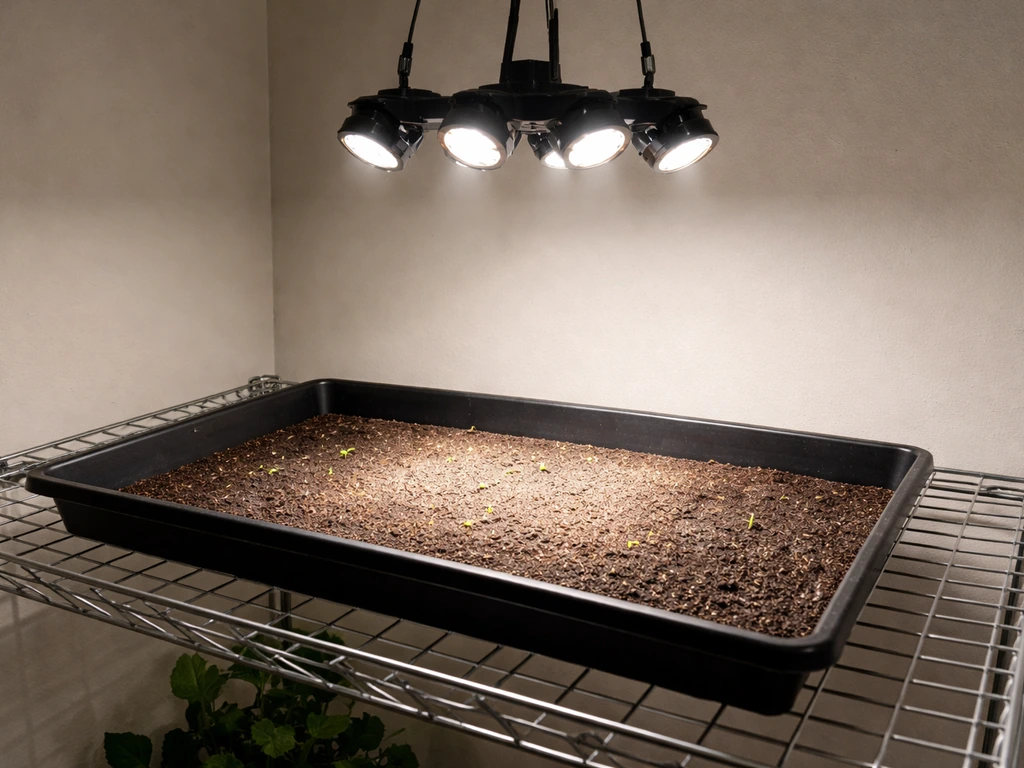
A 15 W LED fixture like the BL-C80A can deliver adequate light intensity to roughly a 1–2 square foot area when positioned at the right height. The four-head design helps spread light across a small cluster of pots, but the overlap zones lose intensity fast. For a single 6-inch pot or a small tray of seedlings, the coverage is practical. Expecting it to cover a 2x2 foot grow tent at vegetative intensity is unrealistic. The 10 W BL-B10B-3 should be treated as a single-plant light, full stop.
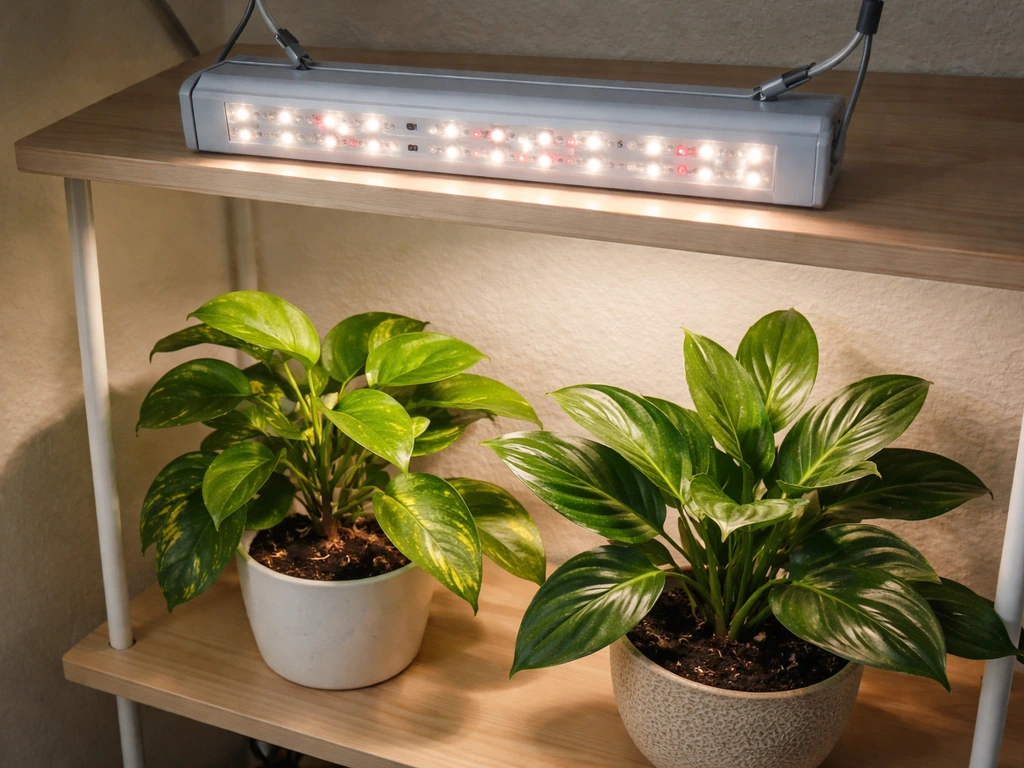
The BL-B20A-2's strip format is better matched to shelf grows with multiple small plants in a row. Positioned 6–12 inches above a shelf, it can deliver usable light across a narrow but longer coverage zone, which suits herb gardens, propagation trays, or small succulents more than it suits deep-canopy plants.
Build quality, heat, dimming, and day-to-day reliability
Wolezek fixtures are fanless, which keeps them silent and low-maintenance. At 10–15 W, passive cooling is sufficient and heat output is minimal. You won't burn your plants by positioning these lights too close in the short term, but you should still follow the hanging height guidance in the manual for optimal light distribution rather than maximum intensity. The inline push-button controllers feel functional rather than premium. Buttons are tactile and the dimming increments are easy to cycle through, but don't expect the build feel of higher-priced brands.
The timer memory function on the BL-C80A is a genuinely useful feature. If your power goes out and comes back, the timer resumes rather than defaulting to an unknown state. For someone running lights on a consistent 16-hour schedule, that's peace of mind without buying a separate timer outlet. The gooseneck and multi-head designs hold position reasonably well when freshly adjusted, but with repeated repositioning over weeks, the joint tension on cheaper units tends to soften. This is typical for the price range and not unique to Wolezek.
Reliability over longer periods is a real question mark with budget grow lights. The 12-month warranty on the BL-B10B-3 is standard, and the "lifetime support" claim from Wolezek's documentation is encouraging on paper, though in practice support quality for budget brands varies. Buy from a retailer with a clear return window as your practical safety net.
Power efficiency and which plants will actually thrive
Wolezek's manuals do not publish efficacy figures, so any claim about lumens-per-watt or μmol/J efficiency beyond the raw wattage figures is speculative. What you can do is work backward from wattage and use PPFD targets as a sanity check. At 15 W, even a highly efficient fixture would struggle to push vegetative PPFD levels across more than a square foot without supplemental reflectivity in the environment. The plants that will do well under Wolezek lights are low-demand species: herbs like basil, mint, and parsley; leafy greens like lettuce and spinach; succulents and most houseplants; and seedlings of almost any species in the early stages before transplant.
Plants that will underperform under Wolezek lights include flowering vegetables like tomatoes and peppers beyond the seedling stage, fruiting plants generally, and high-light tropical plants. For those applications, you need a fixture with a published PPFD map, confirmed efficacy ratings, and significantly more wattage than Wolezek offers.
How Wolezek stacks up against the competition
Budget grow lights compete on price, features, and flexibility rather than raw photon output. Wolezek holds its own against similarly-priced options when you compare the feature set: five dimming levels, a three-setting timer with memory, a reasonable full-spectrum LED blend, and multiple form factors. Where it falls behind more established value brands is in transparency: no PPFD maps, no efficacy specs, and no third-party test data to validate the marketing claims.
If you want more coverage and a more established track record for similar money, brands like Wills offer comparable desktop solutions. You can read a detailed breakdown in our Wills grow light review to see how the feature sets compare side by side. Similarly, Apelila targets the same beginner segment with clip-style designs, and our Apelila grow light review shows where that brand wins and loses relative to Wolezek.
For shoppers who browse mainstream retailers first, it's worth checking whether a retailer-branded or retailer-stocked option at a similar price point gives you better return policy protection. Our Walmart grow light review covers what's typically available there, and our Costco grow light review is worth reading if you want to compare bulk-value options with stronger return policies. On the Scandinavian-design end of the spectrum, the IKEA grow light lineup is also worth a look for small-space aesthetics, though it has its own intensity limitations. The overall comparison here is consistent: Wolezek is a reasonable choice if you accept the low-wattage, low-intensity ceiling, but it's not the only option in that tier.
| Brand/Model | Wattage Range | PPFD Published? | Timer | Best For | Price Tier |
|---|---|---|---|---|---|
| Wolezek BL-C80A | 15 W | No | 6/12/16H + memory | Seedlings, herbs, houseplants | Budget |
| Wolezek BL-B10B-3 | 10 W | No | 6/12/16H | Single pot, desktop | Budget |
| Wakyme (comparable) | 15–45 W | Sometimes partial | Varies by model | Seedlings to light veg | Budget |
| Wills (comparable) | Varies | Rarely | Varies by model | Desktop/shelf plants | Budget |
| Apelila (comparable) | Varies | Rarely | Yes (some models) | Clip/desk plants | Budget |
| Mid-tier brands (e.g., Spider Farmer SE series) | 100 W+ | Yes (detailed maps) | External timer needed | Veg to flower, tents | Mid-range |
Setting it up right and avoiding the most common mistakes
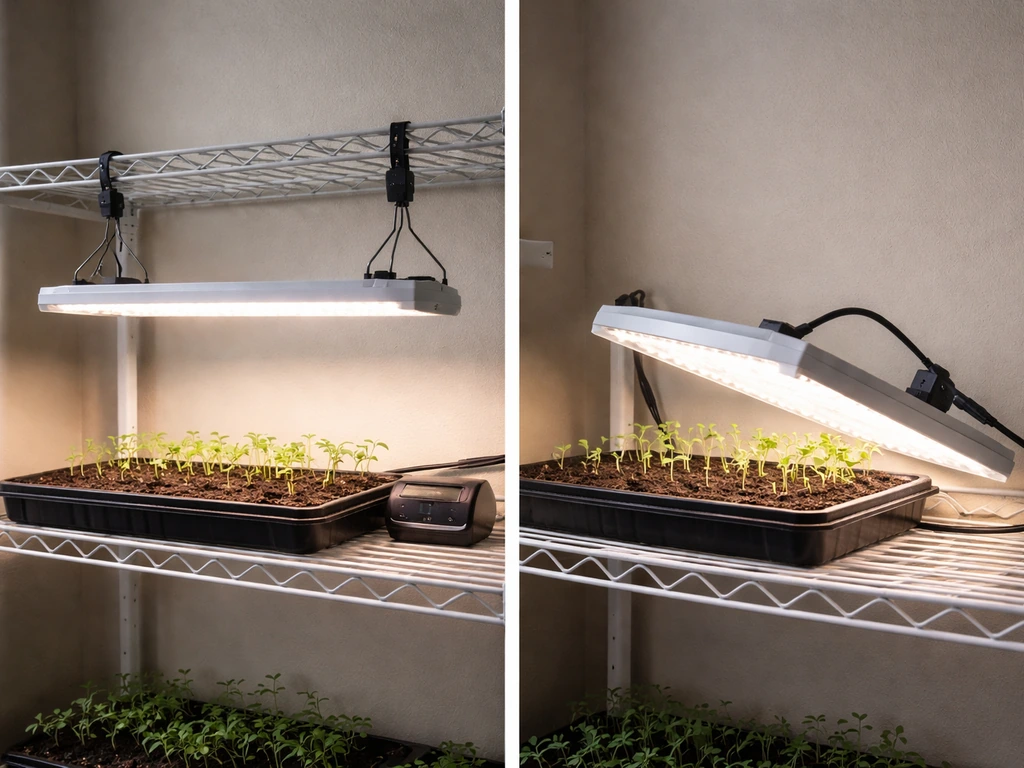
Installation is straightforward: clip or hang the light, set the timer, choose your brightness level, and let the memory function do its job. But there are a few decisions that determine whether you get good results or frustrating ones.
- Hang or position the light at the right height. For seedlings and low-light herbs, 6–12 inches above the canopy is appropriate for the BL-C80A. Too high and intensity drops off dramatically. Too close and you can bleach tender seedlings. Start at 10 inches and watch the plants for the first week.
- Use the correct brightness level for the stage. At seedling stage, 60–80% brightness is plenty. Pushing to 100% on seedlings wastes the light's headroom and can stress young plants. Ramp up to full intensity during active vegetative growth.
- Set the timer to match your plant's photoperiod. Most herbs and leafy greens do well on 16 hours of light, 8 hours dark. Flowering plants typically want 12/12. Use the 16H setting for veg, 12H for bloom.
- Don't expect to cover more than 1–2 square feet of canopy with the BL-C80A. Spreading it across four heads sounds like broad coverage, but the intensity drops significantly as you widen the spread. Cluster your plants rather than spreading them.
- If you're using the BL-B20A-2 on a shelf, use the all-lights-on mode for general growing and switch to the 3000K+red mode when you want to push a plant toward flowering.
- Do not use any Wolezek model as the primary light for tomatoes, peppers, or other fruiting plants past the seedling stage. You will get leggy, light-starved plants that produce poorly. These lights simply do not have the wattage or PPFD output for high-demand crops.
The most common mistake buyers make is treating the multi-head or multi-mode design as a sign that the light punches above its weight class. Four heads at 15 W total is still 15 W total. The flexibility is real, but the photon budget is not expandable. Buying a Wolezek with the expectation of growing fruiting vegetables or maintaining tropical plants with high light needs will end in disappointment. Buying it to nurse seedlings through winter, keep herbs alive on a kitchen counter, or propagate cuttings is a completely reasonable use case where these lights genuinely deliver.
One more practical note: if your grow setup expands, don't stretch a single Wolezek to cover more area. Add a second unit rather than raising the existing one higher. Raising height to cover more footprint always costs you more intensity than it's worth at this wattage level. Keeping one light low and focused on a small zone outperforms one light spread thin every time. If you eventually find yourself outgrowing the Wolezek's capability entirely, that's a good signal to look at our broader Costco grow light review or mid-tier options with published PPFD specs before your next purchase.
FAQ
How do I confirm I bought the right Wolezek model (BL-C80A vs BL-B20A-2 vs BL-B10B-3)?
Check both the LED layout and the form factor in the listing. The BL-C80A has the inline push-button controller and a warm-white plus 660 nm split (28 natural white, 40 warm white, 12 red). The BL-B20A-2 is the strip-style version with mode toggles (6500K, 3000K+red, and all-on). The BL-B10B-3 is the smallest 10 W unit with a clamp or stake option, designed for one pot or a tiny seedling corner.
Is Wolezek strong enough for herbs, or will they get leggy?
Herbs like basil, mint, and parsley are the best match, especially for seedling and maintenance phases. If you notice stretching, it usually means the light is too high or the daily runtime is too short. First lower the light to follow the manual’s height guidance, then increase photoperiod (within your plant tolerance) before you conclude the fixture is too weak.
What daily schedule should I run with the built-in timer?
Start with 16 hours on for propagation or early seedlings, then reduce to around 12 to 14 hours once plants are established, depending on species. Use the timer’s memory feature so restarts keep the same schedule after brief power loss, but still verify the power outage duration does not leave plants with unexpectedly long dark periods.
Can I replace a shop-style grow light timer outlet with Wolezek’s timer, or are there limits?
For most casual indoor grows, the 6/12/16-hour timer is sufficient. The limitation is that it is not a programmable minute-by-minute schedule, so it cannot handle custom ramping or complex day/night patterns. If you need fine control or multiple lights with synchronized schedules, a plug-in timer outlet will be more reliable.
Does the dimming feature change plant growth outcomes, or is it mainly for comfort?
Dimming can matter, because it affects light intensity your plants actually receive, not just perceived brightness. A practical approach is to run at higher levels for shorter periods when plants need more energy, and use dimming only to prevent stress at close hanging heights. If your plants are underperforming, avoid starting at 20% or 40% thinking it will be “safer,” it can undercut PPFD.
How high should I hang or position the light, given the intensity limits?
Use the manual’s recommended hanging or positioning height rather than maximizing distance to “cover more.” With low-watt fixtures, raising the light spreads photons thinner across the same area and reduces intensity quickly. If you see pale color or slow growth, the first adjustment should be lowering within safe guidance, not buying a taller stand.
Should I expect Wolezek to cover an entire 2x2 grow tent?
No, not for vegetative or flowering target intensities. A 10 to 15 W fixture may work for a very small, tightly focused zone, like a single pot or a narrow propagation area. For broader tent coverage, plan on additional fixtures placed closer together rather than relying on one unit spread across the whole footprint.
For the BL-B20A-2 strip light, what spacing works best for multiple plants?
It’s most effective for a row of smaller plants on a shelf or rack. Keep plants within the narrow band directly under the strip, and avoid placing tall plants far from the centerline. If your plants are uneven in growth, it usually reflects uneven placement relative to where the light is concentrated.
Can I use Wolezek during winter indoors, or do I need supplementation?
Wolezek can help substantially for seedlings and low-light herbs during winter, especially if you cannot rely on window light. That said, if your plants are already high-light species or you are trying to push flowering/fruiting, you may still need stronger fixtures and better reflectivity. A simple upgrade is adding a reflective surface around the growing zone, which improves utilization of what your wattage can produce.
Why do my seedlings look fine at first, but later stall or turn pale?
Common causes are insufficient cumulative light (too few hours), the light being too high over time, or moving plants into a stage that needs more intensity. If pale growth starts after transplanting, increase runtime first, then reposition closer to the manual height guidance. If you are already at the recommended height and runtime, that is a signal to move to a higher-PPFD fixture.
What’s the safest way to scale up if I want more plants later?
Add a second unit instead of trying to cover more area with one light. With low-watt LEDs, spreading coverage typically costs more intensity than it gains in footprint. If you keep the light focused on a smaller area and add another, growth tends to stay more consistent across the setup.
Is it normal that Wolezek does not provide PPFD or μmol/J specs, and how should I shop around anyway?
It is normal for this tier to omit detailed PPFD mapping and efficacy figures, but it increases uncertainty. When comparing alternatives, prioritize listings that provide PPFD at distances, documented efficacy (μmol/J), or third-party test results. If a model claims strong performance without those details, treat it as marketing until you can verify the numbers.
What warranty or return strategy should I use with a budget grow light?
Because long-term reliability can be variable, your practical protection is the retailer’s return window. If you are testing the light for the first time, run a short validation cycle with your most sensitive plants (like a small seedling batch). If results are not acceptable, initiate a return before the window closes, rather than waiting for a full season.