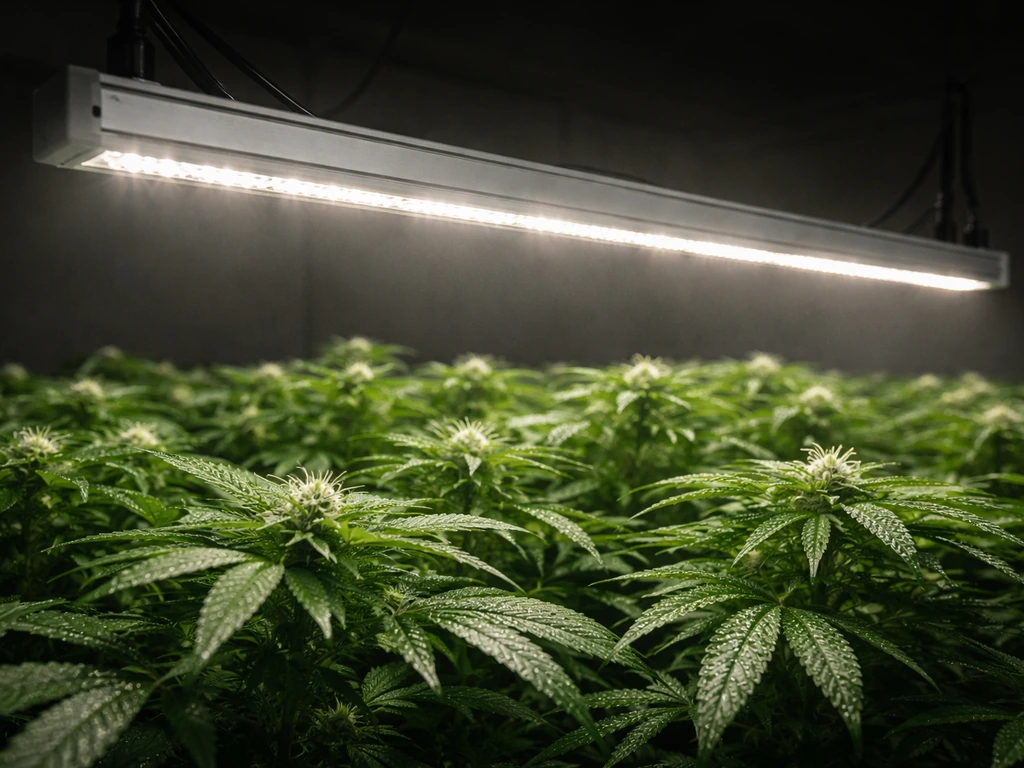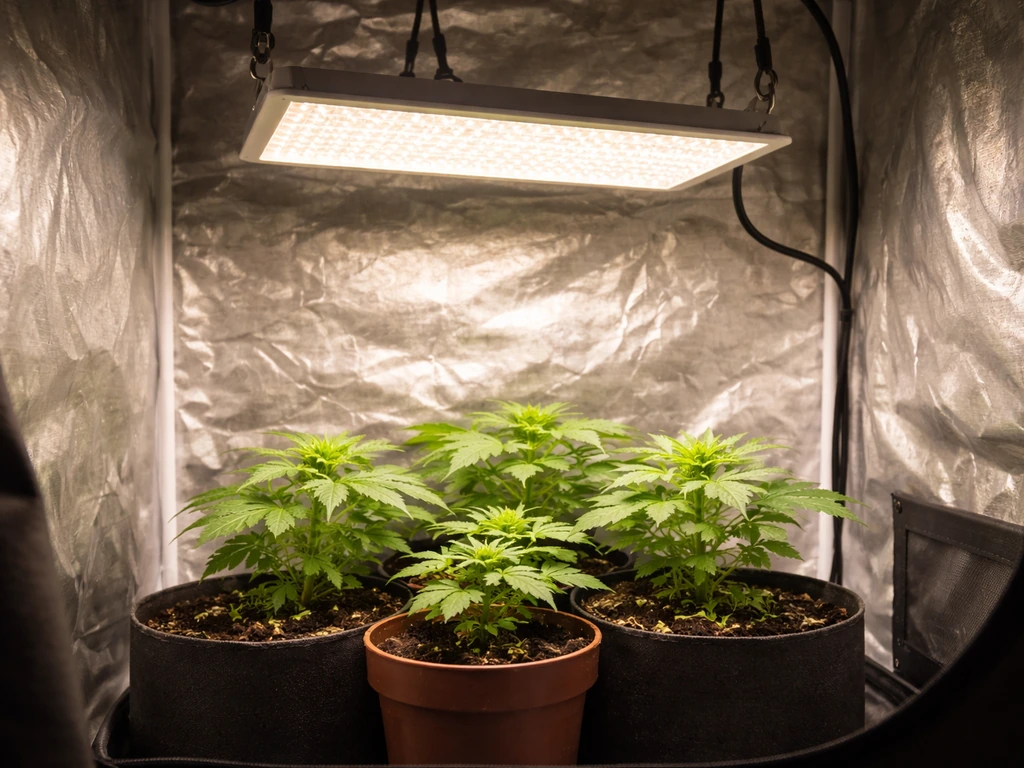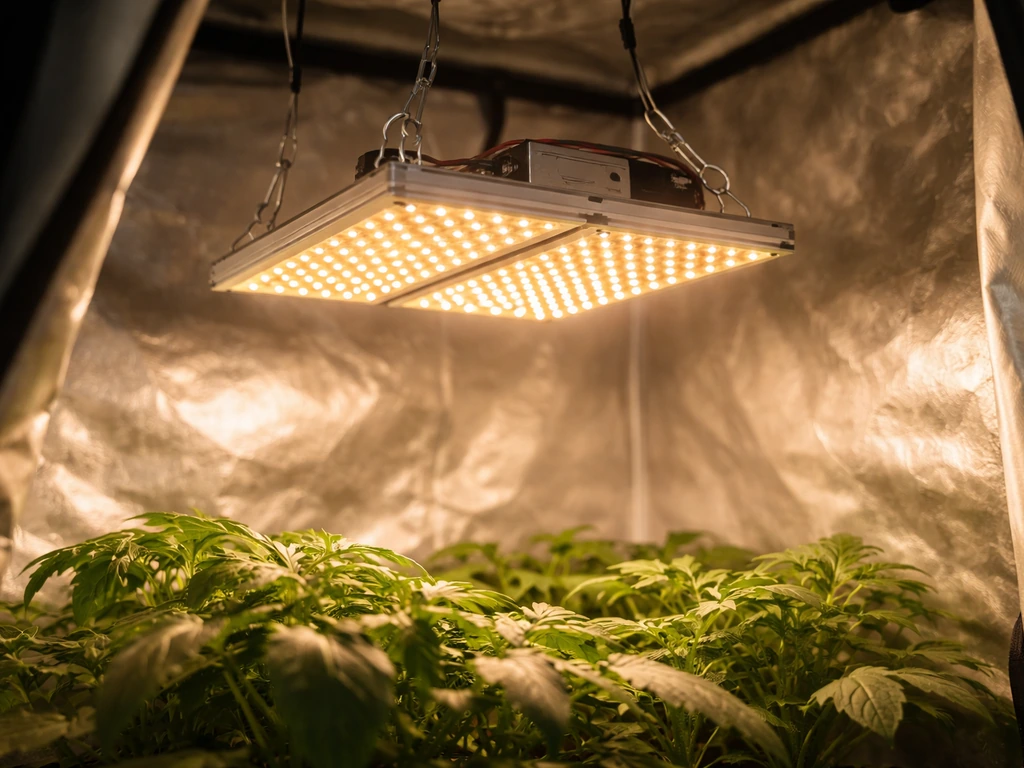
The VIVOSUN VS2000 is a 200W Samsung LM301-based LED grow light that performs reliably for small to mid-size indoor grows, particularly in a 3x3 ft vegetative footprint or a tighter 2x4 ft flowering space. It delivers solid, even coverage and reasonable efficiency for the price, making it a practical pick for hobbyist growers who want a name-brand, full-spectrum board light without spending significantly more on a premium option. That said, it is not the most efficient light in its class per watt, and a few build details are worth knowing before you buy.
VS2000 LED Grow Light Review and Buying Guide

Marcus Caldwell
16 May 2026
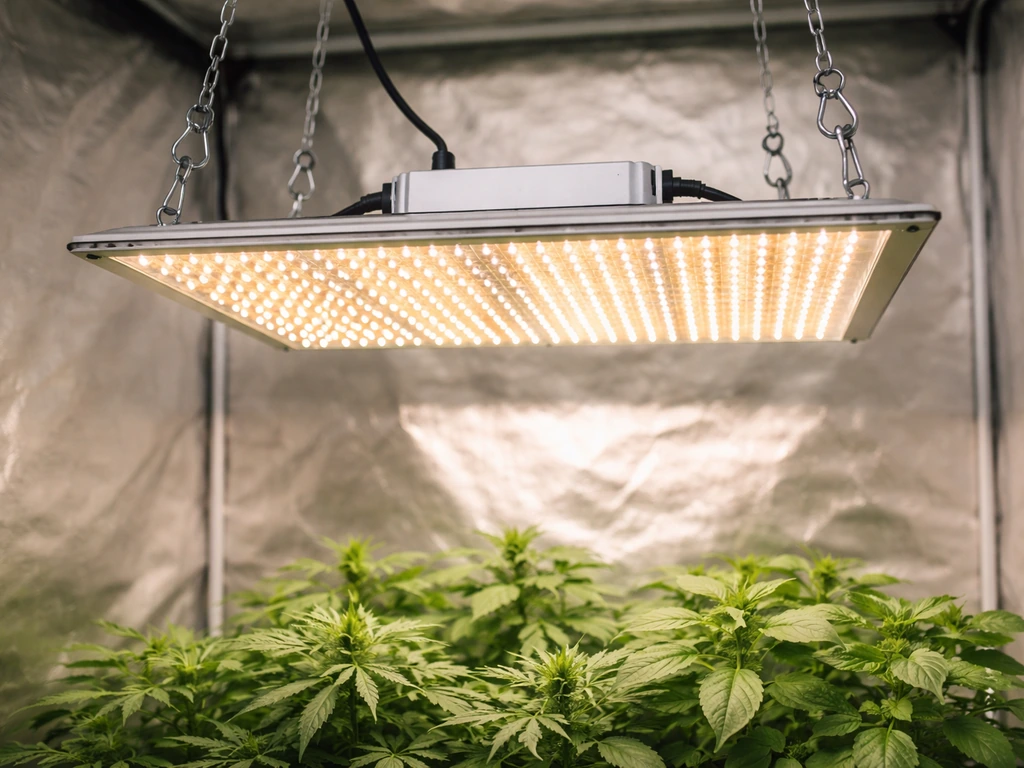
What the VS2000 actually is (and which version you're getting)
VIVOSUN markets the VS2000 as part of its VS-series LED lineup, which spans the VS1000, VS1500, VS2000, VS3000, and VS4000. The number in the name corresponds loosely to the wattage tier: the VS2000 is the 200W model. VIVOSUN published a consolidated user manual for the entire VS family, and the VS2000 appears there as a distinct 200W variant with its own specification row alongside the other board sizes.
The core spec is consistent across listings: 200W actual draw, Samsung LM301 diodes, full-spectrum output, and a dimmable driver. VIVOSUN also sells extended or bundled variants in their broader catalog (notably the VS1000E and VS1000EX2 in the 100W tier), so double-check the model code on any listing you're looking at. For the VS2000 specifically, the listing should show 200W power consumption and Samsung LM301 diodes. If a listing shows different wattage or a different chip brand, you're looking at a different model, even if it shows up in VS2000 search results.
The claimed efficacy is listed at 2.9 μmol/J, which is decent but not class-leading for a 200W board light in 2026. That number matters more than the watt claim when you're comparing value across lights, so keep it in mind as you read on.
Setup basics: grow space, mounting height, and coverage
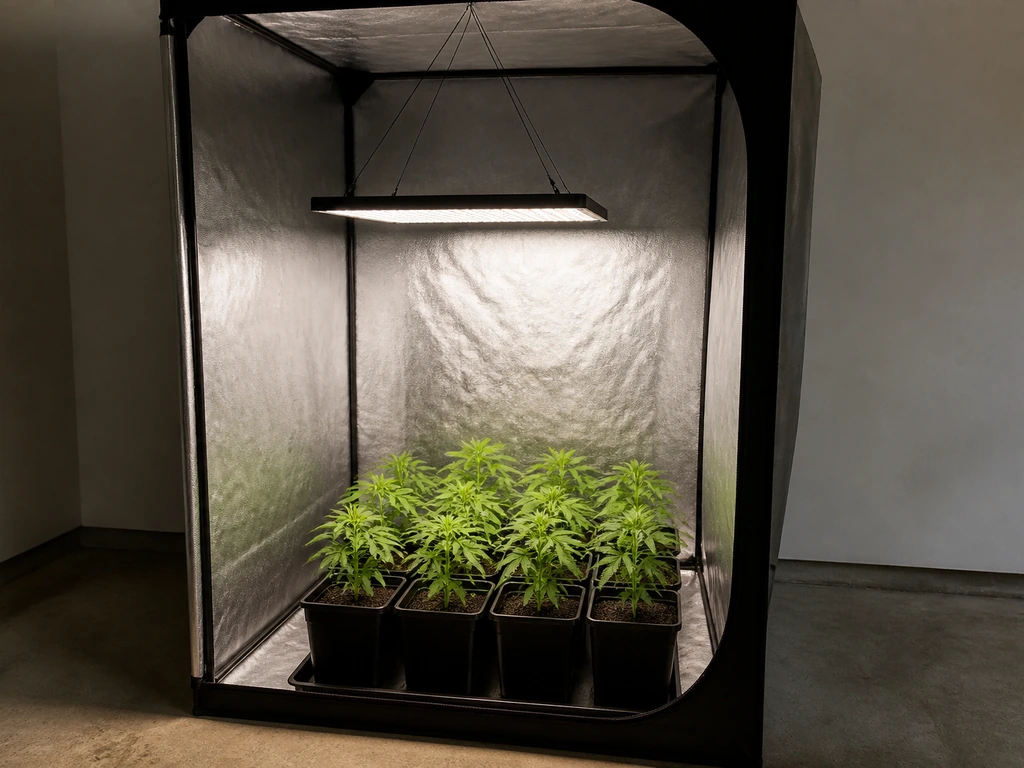
VIVOSUN's own guidance and real-world use point to a 3x3 ft (roughly 0.84 sqm) footprint for vegetative growth and a 2x4 ft or smaller 2x2 ft footprint for flowering. During veg, you can hang the light higher (24 to 30 inches above canopy) and dial intensity down to around 60 to 75 percent. During flower, drop it to 18 to 24 inches and push dimming to 80 to 100 percent depending on plant response and heat below the light.
One practical note: the VS2000 is a single panel, not a multi-bar or rail system. That means center intensity is noticeably higher than the corners of a 3x3, especially at lower mounting heights. If you're running sensitive seedlings or clones, keep the dimmer at 40 to 50 percent or raise the fixture higher than you otherwise would. Rotating plants occasionally helps even out edge exposure during long veg cycles.
| Growth Stage | Recommended Footprint | Mounting Height (above canopy) | Suggested Dimmer Setting |
|---|---|---|---|
| Seedling / Clone | 2x2 ft | 30–36 inches | 30–50% |
| Vegetative | 3x3 ft | 24–30 inches | 60–75% |
| Flowering | 2x4 ft or 2x2 ft | 18–24 inches | 80–100% |
How it actually performs in practice
Plant response and spectrum effectiveness
The Samsung LM301 diodes deliver a broad white-light spectrum with supplemental red (660nm) and infrared (760nm) wavelengths built into the board. In practice, vegetative growth is the VS2000's clearest strength: internodal spacing stays tight, leaf color is healthy, and plants respond well through the early stages. Flowering is where you start to feel the ceiling of a 200W single-board light. Bud density and resin production are solid in the center of the canopy, but plants in the outer corners of a 3x3 during late flower will lag behind plants positioned directly under the brightest zone.
The full-spectrum white output looks natural visually, which matters more than people often admit because it lets you actually inspect plant health without needing to kill the light or use a separate white light. The spectrum is not IR-heavy or UV-supplemented from the factory, so if you're chasing maximum terpene or resin expression, you'd need to add a supplemental UV bar during late flower.
Hotspots and uniformity
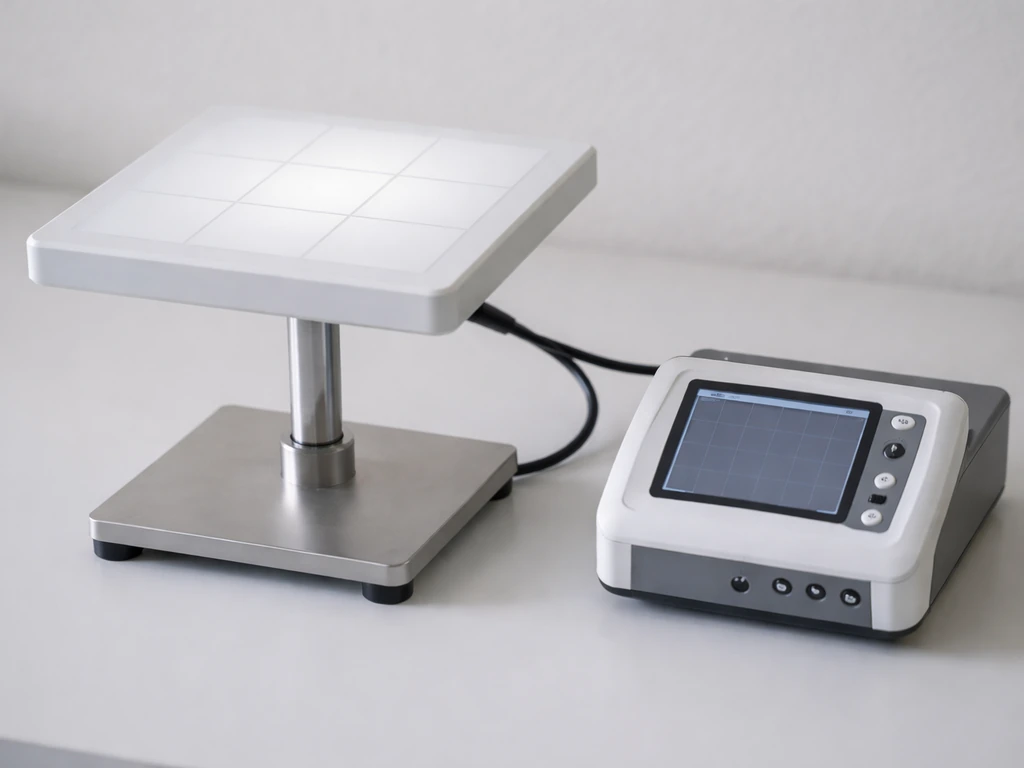
Uniformity is reasonable but not exceptional. At the 24-inch mounting height over a 3x3 canopy, the center reading runs measurably higher than the perimeter. This is normal for a flat panel design, but it is more pronounced than what you'd get from a multi-bar light at similar wattage. Keeping plants within a 2x3 ft core when you're in late flower, or accepting that edge plants may need rotation, is the practical workaround.
Build quality, controls, cooling, and reliability
The VS2000 uses a passive-plus-fan cooling design. There is a small integrated fan on the driver housing, and the board itself uses passive aluminum heat sinking. At full power in a controlled environment, the fan is audible but not loud. In a quiet room, you'll notice it; inside a tent with any kind of intake or exhaust fan running, it effectively disappears. Heat output from the board is moderate and manageable, though you should still account for it when sizing your exhaust fan, especially in warm ambient conditions.
The dimming control is a simple rotary knob on the driver. It works, it's stepless, and it holds its position reliably. There is no app, no scheduling, and no daisy-chain dimming built in, which keeps the setup straightforward but means you're either buying a separate timer and controller or running it manually. The power connection is standard, and the hanging hardware (ratchet hangers) included in the box is functional. The build feels solid without being premium; the frame and housing are standard for this price tier.
Reliability-wise, VIVOSUN's VS series has a reasonable track record in the hobbyist market. Driver failures do happen occasionally, as with any brand in this category, but reports of widespread early failure are not common for the VS2000 specifically. Check the warranty terms before purchasing: VIVOSUN typically offers a limited warranty on the VS series, and coverage length and what's included can vary by retailer and purchase date, so verify that directly.
Real power draw, efficiency, and cost per area
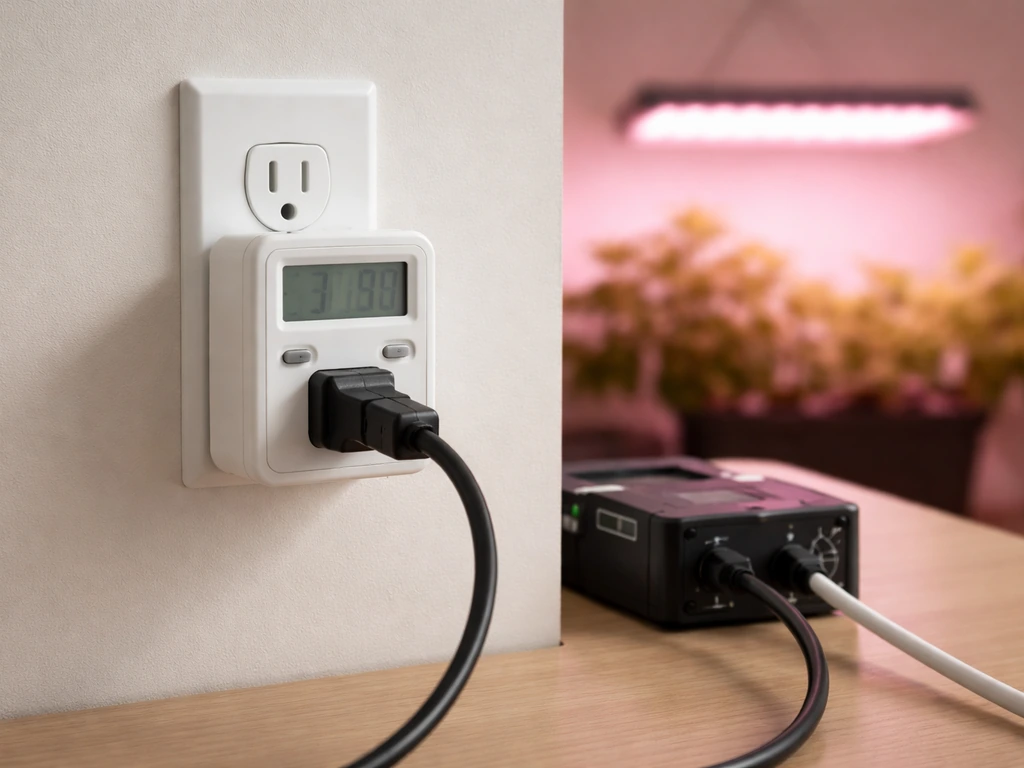
The VS2000 draws 200W at the wall at full power. That is a genuine, measured number, not a misleading 'equivalent' figure. At 200W over a 3x3 ft (roughly 0.84 sqm) vegetative footprint, you're delivering approximately 238W per square meter, which is a reasonable intensity for veg but on the lower end for flowering. Over a tighter 2x4 ft (0.74 sqm) flowering footprint, it climbs to around 270W per sqm, which is workable for most cultivars.
The claimed 2.9 μmol/J efficacy is acceptable for a mid-range board light but sits below what some competitors in the same price range offer. At US average electricity rates (roughly $0.12 to $0.16 per kWh), running the VS2000 at full power for an 18-hour veg cycle costs about $0.43 to $0.58 per day, or $13 to $17 per month. A 12-hour flower cycle runs $0.29 to $0.38 per day, roughly $9 to $11 per month. Those are practical operating costs worth factoring into your total budget, especially if you're running multiple lights.
Honest pros, cons, and who it makes sense for
Where the VS2000 works well
- Solid choice for a 2x2 to 3x3 ft grow space, especially for vegetative growth or mixed herb and vegetable gardens
- Samsung LM301 diodes provide reliable, consistent output over a long lifespan
- Full-spectrum white light makes plant inspection easy without additional lighting
- Simple rotary dimmer is easy to use and holds settings without drift
- Priced accessibly for hobbyists who don't want to spend on premium multi-bar systems
- Manageable heat and noise profile for tent growing with normal ventilation
Where it falls short
- Uniformity across a full 3x3 canopy in late flower is inconsistent; edge plants can lag
- 2.9 μmol/J efficacy is not best-in-class at this wattage tier in 2026
- No smart controls, scheduling, or daisy-chain capability
- No UV supplementation; requires an add-on if you want that during late flower
- A single 200W board is not enough for a serious 4x4 ft flowering tent
Who should buy it
The VS2000 is a good fit for new to intermediate indoor growers running a 2x2 or 3x3 ft tent who want a reliable, no-fuss light from a brand with decent customer support and a track record. It also works well as a veg-only light for growers who use a separate, higher-intensity setup for flowering. If you're growing herbs, leafy greens, or early-stage seedlings and clones, this light is comfortable overkill in the best sense.
Who should skip it
If you're chasing maximum yield in a 3x3 or 4x4 ft flowering tent, or if efficiency per watt is your primary buying criterion, you'll likely find better options at similar or slightly higher price points. Experienced growers who want smart controls, multi-zone dimming, or integrated scheduling will also find the VS2000's feature set limiting.
How it compares to similar lights and what to verify before buying
The VS2000 sits in a competitive bracket alongside the VS1000 (100W, for 2x2 ft spaces) and the VS4000 (400W, for 4x4 ft spaces) within VIVOSUN's own lineup. If you want, you can also compare it directly with the VS1000 using a VS1000 LED grow light review to see which wattage tier fits your space. If you're also considering the higher-output option, this vs4000 led grow light review can help you compare coverage, efficiency, and real-world flowering performance side by side. If your space is a firm 3x3 ft for flowering, the VS2000 is the logical VS-series pick; for anything larger, the VS4000 is a better match. For a smaller 2x2 ft tent, the VS1000 is a more efficient choice.
Outside VIVOSUN, the VS2000 competes with other Samsung LM301-based board lights from brands like Spider Farmer (the SF series is a direct comparison point). Spider Farmer lights in the same wattage range tend to edge out the VS2000 on claimed and measured efficacy, though price differences and availability fluctuate. If you are comparing it to other boards, this spider farmer sf1000 led grow light review can help you judge performance, efficiency, and coverage side by side Spider Farmer lights. If efficacy per watt is your priority, it's worth comparing datasheets side by side before committing. If you are also comparing it against other brand options, you may want to read our spydr led grow light review as a related alternative before deciding.
Before you purchase, run through this checklist to make sure you're getting exactly what's described in this review:
- Confirm the listing shows 200W actual draw (not an inflated 'equivalent' wattage) and Samsung LM301 diodes
- Check that the model code is VS2000, not VS1000, VS1500, VS3000, or a variant bundle
- Verify the warranty length and coverage (driver failure, diode failure) directly with the retailer or VIVOSUN
- Confirm the efficacy claim: 2.9 μmol/J is acceptable, but verify it hasn't been revised down or misrepresented in third-party listings
- Make sure a rotary dimmer is included if you're buying from a third-party marketplace listing, as accessory bundles can vary
- Cross-check your tent size against the coverage recommendations above before assuming it will cover your full footprint at flowering intensity
Bottom line: the VS2000 is a practical, dependable 200W grow light for small tent growers who want a full-spectrum, Samsung-diode board without complexity or a premium price tag. It is not the most efficient option on the market right now, and it won't max out a 3x3 flowering footprint the way a higher-intensity or multi-bar light would. But for the grower it's actually designed for, it delivers what it promises consistently and without fuss.
FAQ
Can I use the VS2000 for flowering in a full 3x3 ft tent, or is it only a veg light?
Yes, but expect noticeable changes in canopy uniformity. Because it is a single flat panel, dialing down power can reduce center heat and brightness, but the corners will still lag more than a multi-bar fixture. If you consistently see edge plants stretching, keep dimming moderate (around the midrange) and fix the coverage issue with plant spacing and occasional rotation rather than relying on dimming alone.
What is the easiest way to automate on/off without messing up the VS2000 dimming knob?
Yes, if your timer is for the wall outlet rather than a dedicated dimming controller. Since the light uses a rotary knob for intensity, you can set the knob to your target level and then use a plug-in timer to handle on/off cycles. Avoid using a dimmer-style controller that conflicts with the driver output, and verify the controller’s watt rating is safely above 200W.
How can I reduce fan noise and keep temperatures stable in a hot room?
If you want to run it cooler and possibly quieter, prioritize tent airflow over fixture temperature alone. Aim for intake/exhaust airflow that keeps the driver housing from roasting, and avoid placing the light where it blocks HVAC vents. In warm ambient rooms, you may need higher exhaust capacity than you would for a similar wattage light because the single-panel design can trap more heat near the canopy.
Does the built-in red (660nm) and 760nm mean I do not need any spectrum add-ons for best resin and terps?
It can, but plan for less even coverage at the edges and potentially slower late-flower development. The built-in red and 760nm components support flowering, but the article notes the spectrum is not UV- or IR-supplemented from the factory. If your goal is maximum resin or terpene expression, you may need an additional UV bar or another targeted supplement during late flower, rather than expecting the standard board to do it by itself.
What should I double-check on a retailer listing to make sure I’m actually buying the VS2000?
When swapping models, do not rely on search results or “equivalent wattage” language. You should confirm the listing shows 200W actual draw, Samsung LM301 diodes, and that it is the VS2000 (not an E or bundled variant from another tier). If the listing claims a different wattage or uses a different LED brand, treat it as a different fixture even if the photo looks similar.
Will raising the light solve the corner under-coverage problem?
A higher mounting height can help reduce center intensity and reduce bleaching risk, but it usually worsens edge coverage for a single-panel board. The practical tradeoff is to use height to manage plant stress and dimming to manage overall output, while accepting that in late flower you may need to keep plants within a tighter core area or rotate plants to equalize exposure.
How should I adjust intensity for clones and seedlings under the VS2000?
For cloning, seedlings, and leafy greens, you typically want gentler intensity and more consistent uniformity than you would for full flowering. If you are seeing droop or color changes, reduce intensity lower than you would for veg, then adjust gradually over a week. Also keep the canopy level, because a flat panel will amplify “high-low” differences across the tent.
What’s the best low-cost way to improve uniformity without buying a different light?
If you want better uniformity without changing lights, combine three actions: keep the canopy level, reduce the effective footprint (for example, concentrate plants in a 2x3 core for late flower), and rotate pots or plant rows. The article emphasizes that multi-bar designs usually spread light more evenly, so rotation and canopy management are the DIY substitutes here.
Can I integrate the VS2000 with smart home controls or multi-zone dimming?
You should not assume this light is automatically compatible with advanced dimming ecosystems. Since intensity is controlled by a local rotary knob with no scheduling or daisy-chain features, any integration requires external control for on/off and manual or separate dimming hardware. If you want multi-zone control, the VS2000’s feature set is likely a mismatch, so plan accordingly before you buy.
What should I do right after purchase to protect myself if there’s a driver or performance issue?
Typically yes, but verify the warranty details at purchase time. The article notes warranty length and what is covered can vary by retailer and date, and driver issues are not unheard of in this category. Save your order receipt, keep the box until the return window closes, and consider registering with the brand if they offer a process, so you are not stuck when you need service.
Citations
The VIVOSUN VS series includes multiple board/power variants commonly sold as “VS2000,” including VS1000, VS1500, VS2000 (200W), VS3000, VS4000, plus related variants like VS1000E/VS1000EX2; the VS2000 appears in VIVOSUN’s consolidated VS-series user manual as a distinct 200W model.
https://image.next.vivosun.com/file-asset/file/63111feae44a60bc984a70875a71329b.pdf
VIVOSUN’s VS2000 user-manual/spec table lists VS2000 input power as 200W (with VS1000/VS1500/VS3000/VS4000 also shown in the same table), indicating the VS2000 name corresponds specifically to the 200W variant in the VS family.
https://image.next.vivosun.com/file-asset/file/d1b1eb80395a9ad5f0e1bd9fa4bfe93a.pdf
Retail listing text associates “VS2000” with a Samsung LM301 diode-based “full spectrum” LED grow light and states a “Watts: 200 W” spec.
https://vivosun.com/vivosun-vs2000-led-grow-light-200w-p68320123310964736-v58820960379612621?variantId=58820960379612621
Walmart’s VS2000 listing describes the VS2000 as “Full Spectrum, Dimmable” and identifies “Power Consumption: 200 Watts.”
https://www.walmart.com/ip/723160226